The S&P 500 fell 0.18%, and the Dow Jones Industrial Average dropped 0.26%; in contrast, the Nasdaq 100 rose 0.21%, while the Russell 2000 was the weakest, down 0.35%. Utilities gained 1.20% to lead the pack, whereas energy declined 0.90% to lag behind; Oracle surged as much as 8.2% during the session, while Apple slipped 2.66%. The U.S. dollar extended its rebound, gold closed up 1.4% at $4,175 per ounce, and Bitcoin remained virtually unchanged.
U.S. Treasury yields have surged to multi-decade highs, and amid falling oil prices and uncertainty over the Federal Reserve's policy trajectory, markets have found themselves directionless under mounting pressures. On the day, the market briefly stabilized on the back of dovish signals, but overall weakness remained evident.
$PHLX Semiconductor Index (.SOX.US)$Up 1.32%.$Arm Holdings (ARM.US)$Up 3.65%, Qualcomm down 1.8%, AMD down 0.05%, and Intel down 0.09%.
$Data storage stock (LIST23925.US)$Most stocks rose, with SK Hynix up 2.62%, Micron Technology up 1.05%, SanDisk up 0.98%, and Western Digital up 0.06%.
$Optical Communication (LIST23979.US)$Overall rebound: Coherent rose 3.46%, AAOI gained 3.98%.$Marvell Technology (MRVL.US)$Up 4.51%,$Corning (GLW.US)$Up 4.70%,$Lumentum (LITE.US)$Up 5.66%.
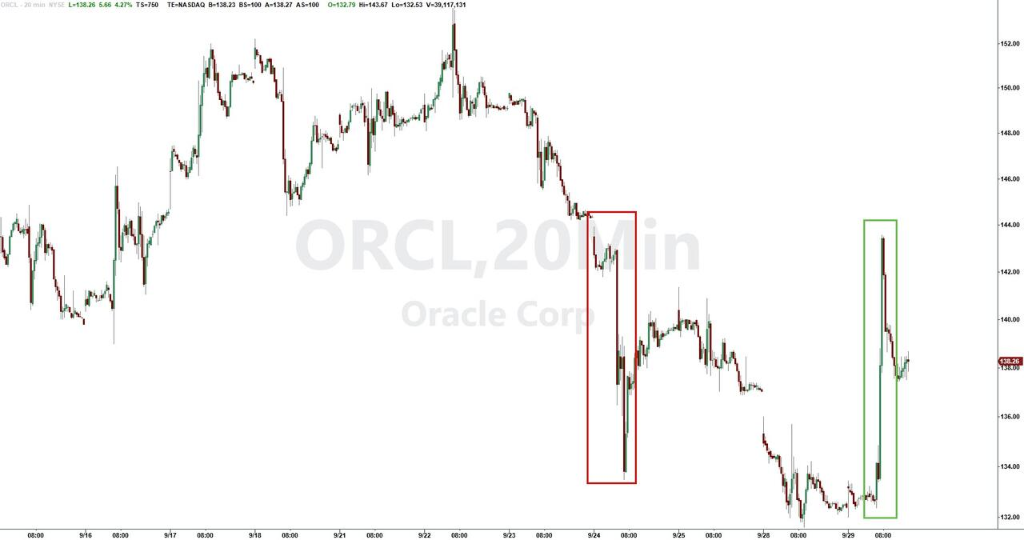
$Oracle (ORCL.US)$The stock closed up 3.91%, having risen as much as about 8% during the session. Driven by news such as OpenAI's annualized revenue approaching $70 billion after the market opened, the share price surged sharply. On the same day, the company also launched the Fusion Claw agent application and announced with NetApp that it would roll out a fully managed OCI NetApp cloud storage service.
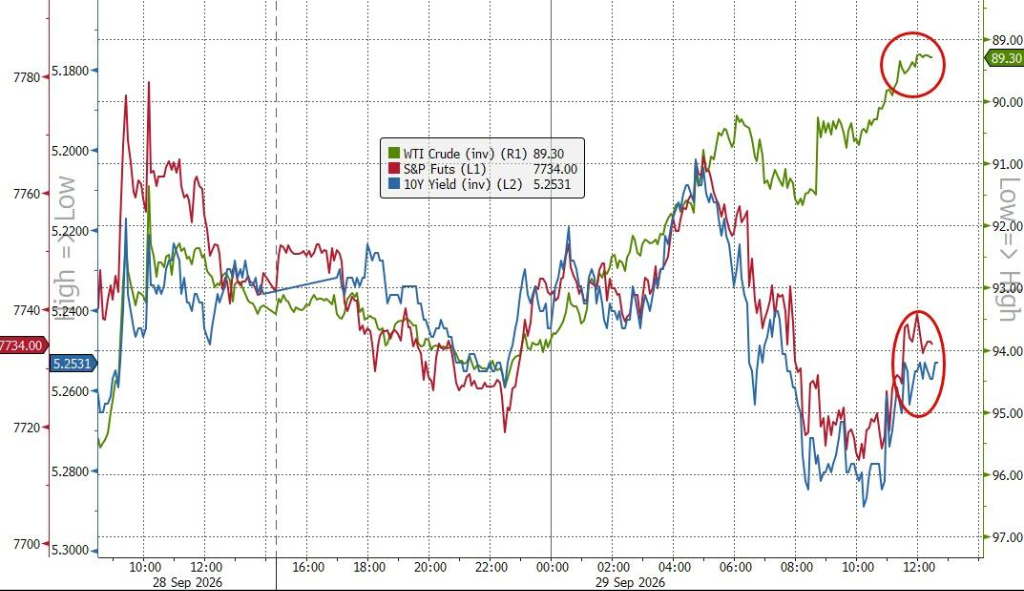
John Williams, president of the Federal Reserve Bank of New York, said on Tuesday that only one more rate hike may be needed this year and that there is no need to act hastily. His remarks quickly dampened market expectations for a rate increase in October, prompting a modest pullback in short-term yields.
Meanwhile, Qatar's diplomatic overtures and the partial resumption of capacity on Saudi Arabia's East–West pipeline sent oil prices plunging more than 3% in a single day, with Brent crude falling below $103 per barrel and the front-month WTI contract settling near $89.
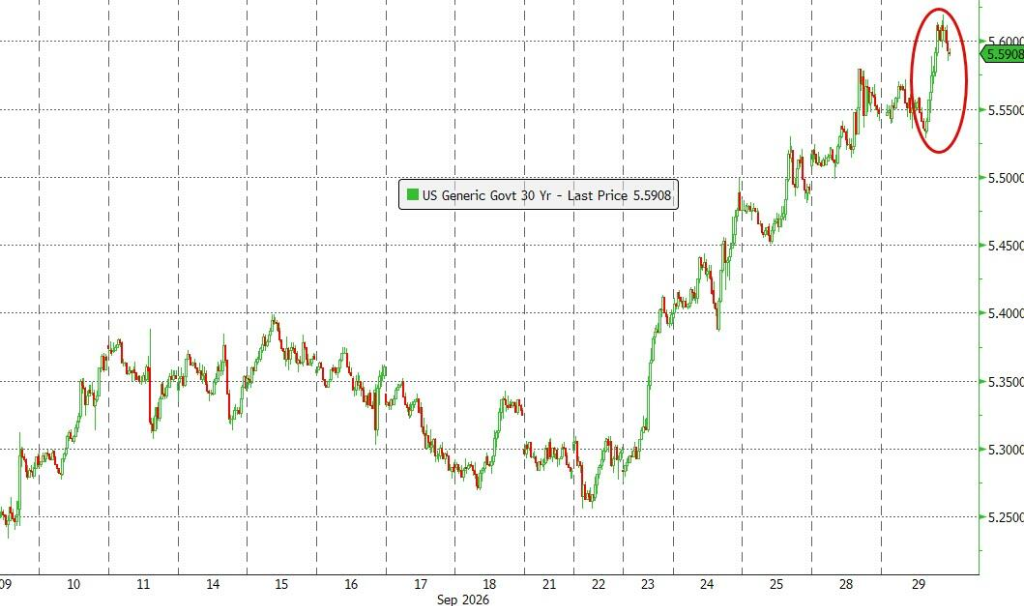
However, long-term yields have not followed suit. The yield on the 30-year U.S. Treasury bond briefly climbed to 5.61%, the highest level since 2002, signaling that market concerns about persistent inflation and fiscal pressures remain unabated.
The stock market also came under pressure. The S&P 500 edged down 0.17%, the Dow Jones Industrial Average fell 0.26%, while the Nasdaq 100 posted a modest gain of 0.2% despite headwinds, boosted by the AI sector. The U.S. dollar extended its rebound, gold closed up 1.4% at $4,175 per ounce, and Bitcoin remained largely unchanged.
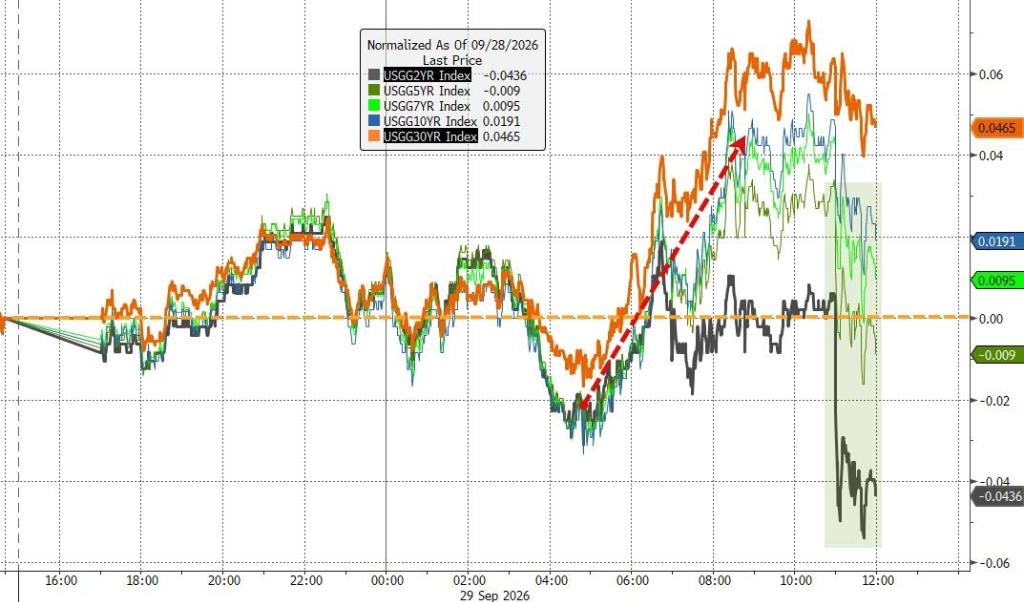
Long-term yields have broken through key levels, further steepening the yield curve.
The core contradiction in the yield curve today is that the short end has come under pressure following Williams' dovish remarks, while the long end continues to climb amid supply-side pressures and inflation concerns, leading to a sharp steepening of the yield curve.
The yield on the 30-year U.S. Treasury bond reached 5.6206%, the highest level since June 2002, while the 10-year yield climbed to 5.293%, the highest since June 2007.
Williams' remarks in Buffalo provided support to the short end, as he stated:
Based on the policy measures already adopted at the September meeting, there is no immediate urgency; we have time to gather further information.
As a result, data show that the market's probability of a rate hike of at least 25 basis points in October has fallen from a previous high near 70% to around 51.5%.
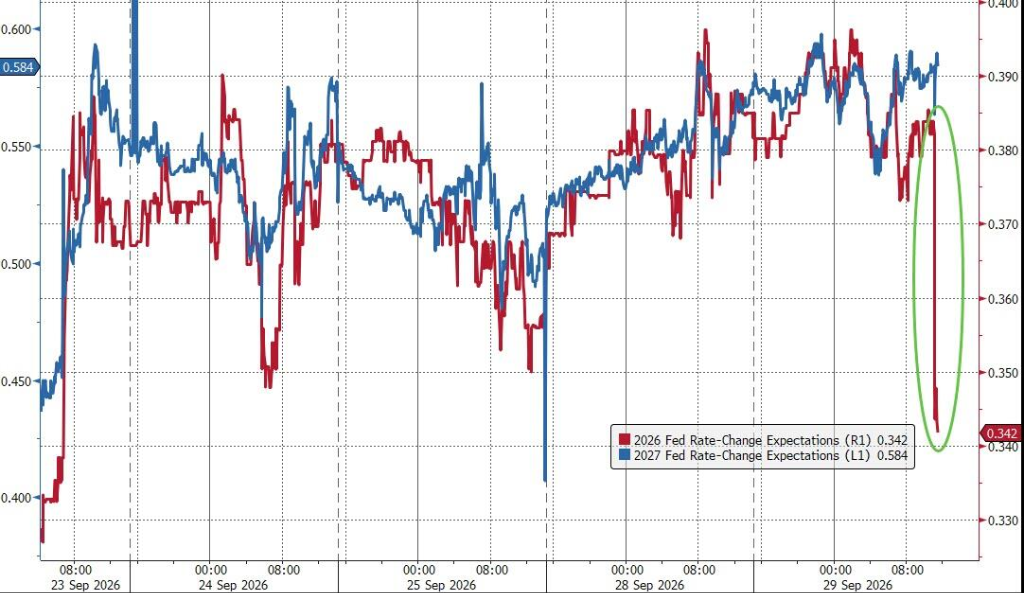
However, pressure on the long end of the yield curve has yet to ease. According to Bloomberg, Paramount Global's ViacomCBS has launched an investment-grade bond offering to finance its acquisition of Warner Bros. Discovery, aiming to raise roughly $32 billion—making it the fifth-largest investment-grade bond deal on record and further intensifying supply-side pressures at the long end. SMBC interest-rate strategist Monty Gandhi stated:
The price action at the long end may be related to this trade.
Michael Cloherty, head of U.S. rates strategy at CIBC, noted that the long end of the yield curve currently appears undervalued by historical standards, yet major buyers remain conspicuously absent. "We've been waiting for more than a month, and they still haven't shown up."
Citigroup strategists have described the current Treasury market conditions as a "moderate buyer's strike." Meanwhile, TD Securities strategist Prashant Newnaha has warned:
As long as the situation in the Middle East remains unresolved, the risk of continued deleveraging in the fixed-income market will persist and could spill over into equity markets.
Diplomatic signals and a rebound in supply are jointly weighing on oil prices.
The crude oil market posted a sharp decline on the day, yet fundamentals remain divergent: futures prices fell, while the tight supply conditions in the physical market have not fundamentally shifted.
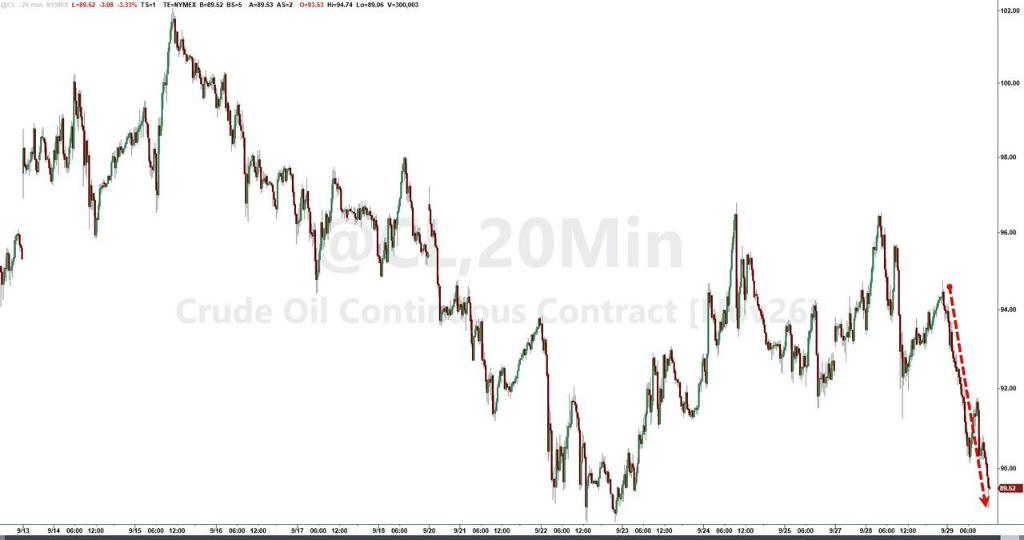
Analysts identify four key factors driving the decline in oil prices:
First, Qatari Foreign Ministry spokesperson Majed al-Ansari stated that Qatar and other mediators are continuing to convey messages to both Iran and the United States, and mediation efforts remain ongoing.
Second, following drone attacks, Saudi Arabia's East–West pipeline has restored roughly half of its transport capacity, providing a crucial alternative route for crude oil exports that bypass the Strait of Hormuz.
Third, the International Energy Agency stated that it stands ready to take action to support the oil market, while the U.S. government announced it would release an additional up to 40 million barrels of crude oil from the Strategic Petroleum Reserve.
Fourth, Trump is reportedly in favor of easing sanctions on Russia conditional on the release of political prisoners; if implemented, this would loosen restrictions on Russian crude oil exports.
However, the decline in futures prices masks the still-tight physical market. Spot Brent crude remains anchored around $120, while WTI's spot premium is also at extreme levels.
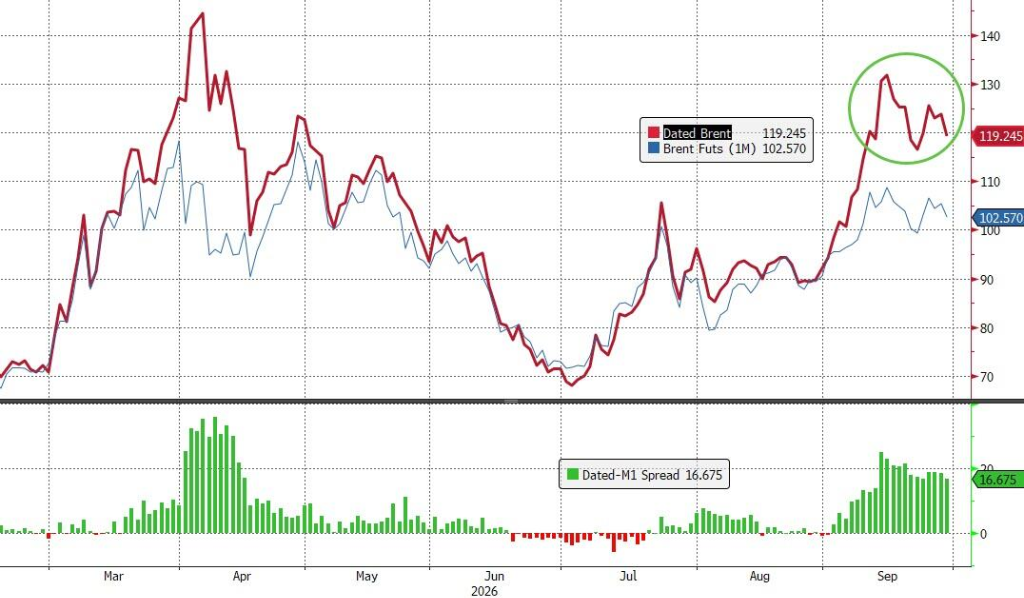
Rebecca Babin, a senior energy trader at CIBC Private Wealth Group, said that increased traffic through the Strait of Hormuz and the resumption of operations on Saudi pipelines have "brought some supply relief to the market," but she also noted:
The question is what this means for Iran: a weakening of its leverage over the Strait of Hormuz could either push Iran to the negotiating table or prompt it to escalate its actions in order to regain its bargaining power.
Meanwhile, Iran's hardline stance has not abated. On the same day, Iranian Parliament Speaker Bagher Ghalibaf reiterated that if Iran's security is not guaranteed, "no infrastructure will be safe," while media reports indicated that Iranian drones once again struck a passing vessel that day.
AI-related positives boost the Nasdaq, but U.S. stocks remain under pressure overall.
The stock market was broadly weak on the day, but technology and AI‑related sectors proved relatively resilient, emerging as rare bright spots.
The Nasdaq 100 index closed up 0.2%, the S&P 500 fell 0.17%, the Dow Jones Industrial Average dropped 0.26%, and small-cap stocks led the declines.
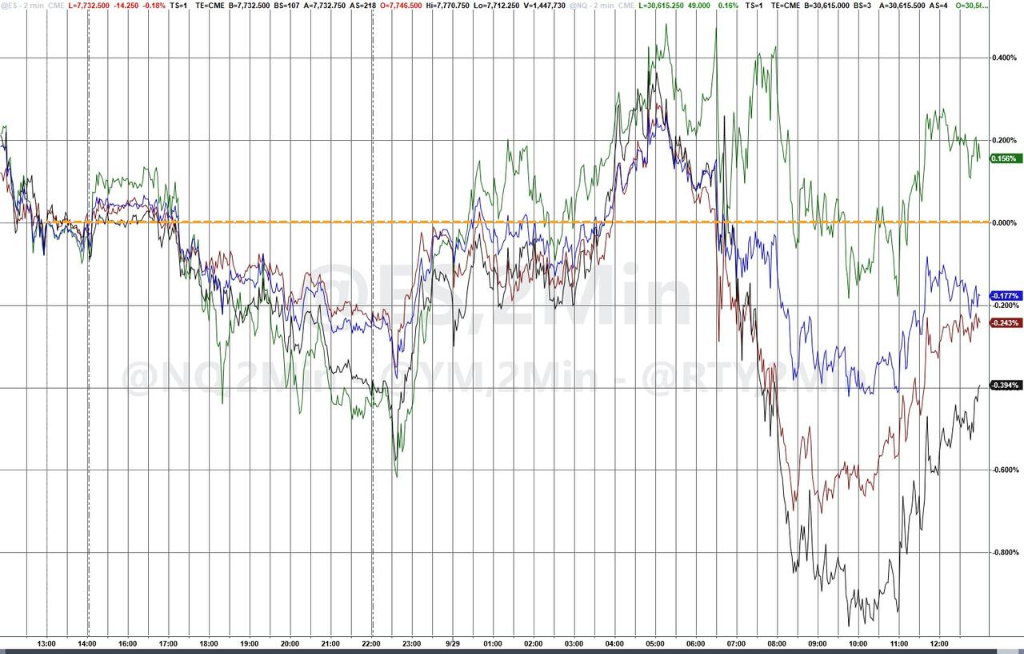
The turning point in market sentiment was partly driven by reports of Trump's meeting with AI and tech industry executives. Trump subsequently announced his opposition to new federal AI regulations, boosting sentiment in the tech sector.
Within the AI sector, Anthropic has filed its IPO prospectus, targeting a valuation exceeding $2 trillion, and disclosed a substantial year-over-year revenue surge—though losses have widened in tandem. Meanwhile, OpenAI's annual recurring revenue is reportedly nearing $70 billion, a development that has boosted market sentiment.$Oracle (ORCL.US)$The stock price once surged by more than 8%.
Anthropic's new model, Sonnet 5.5, has also drawn attention. According to Goldman Sachs, the model comes close to flagship-level performance in multiple benchmarks, with a speed increase of over 30% and costs significantly lower than its predecessor, "cutting-edge intelligence is steadily becoming more affordable."
$Meta Platforms (META.US)$The stock rose 3.3% on the day, despite OpenAI's simultaneous launch of "Dots," a persistent AI agent designed for commercial use, which is seen as a competitor to its Muse agent. Analysts note that the two products cater to distinct market segments, limiting direct competition in consumer‑facing applications.
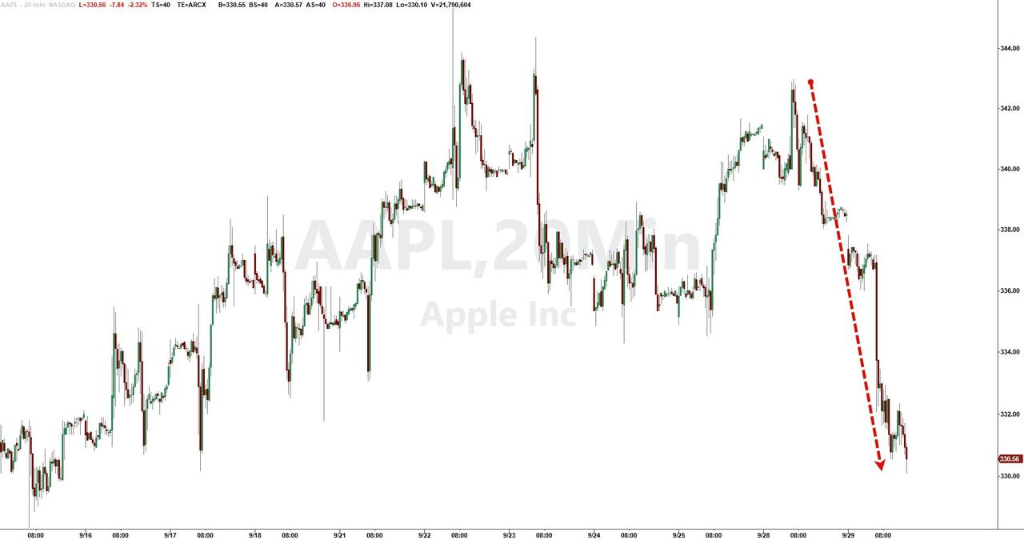
In contrast,$Apple (AAPL.US)$Under pressure. Bank of America warns that the widespread adoption of AI agents like Meta could strip high-value scenarios such as shopping, form filling, and checkout from Apple's device and service ecosystem.
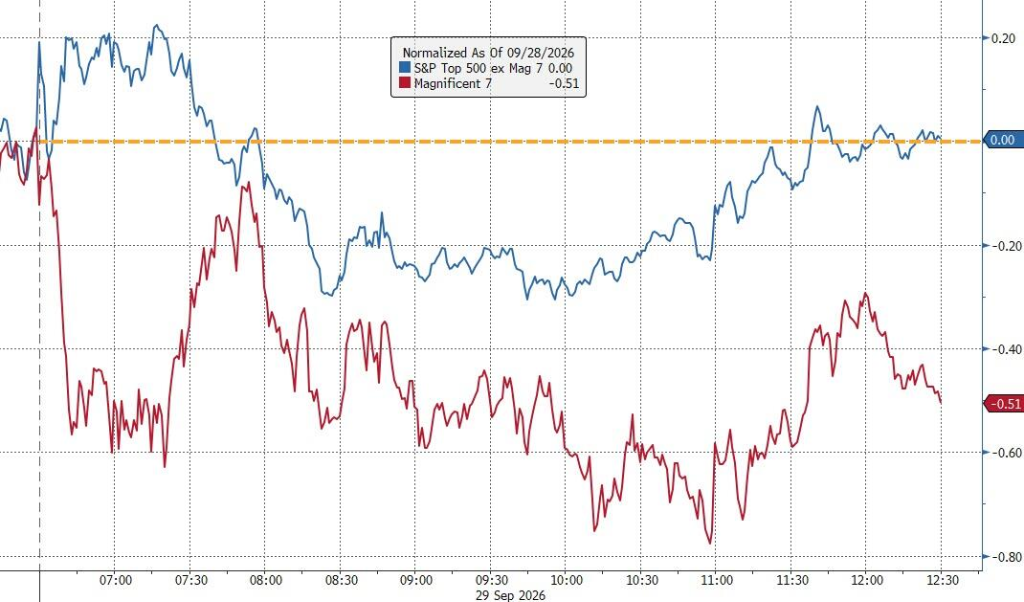
However, the performance of the Mag 7 lagged behind that of the S&P 493 Index.
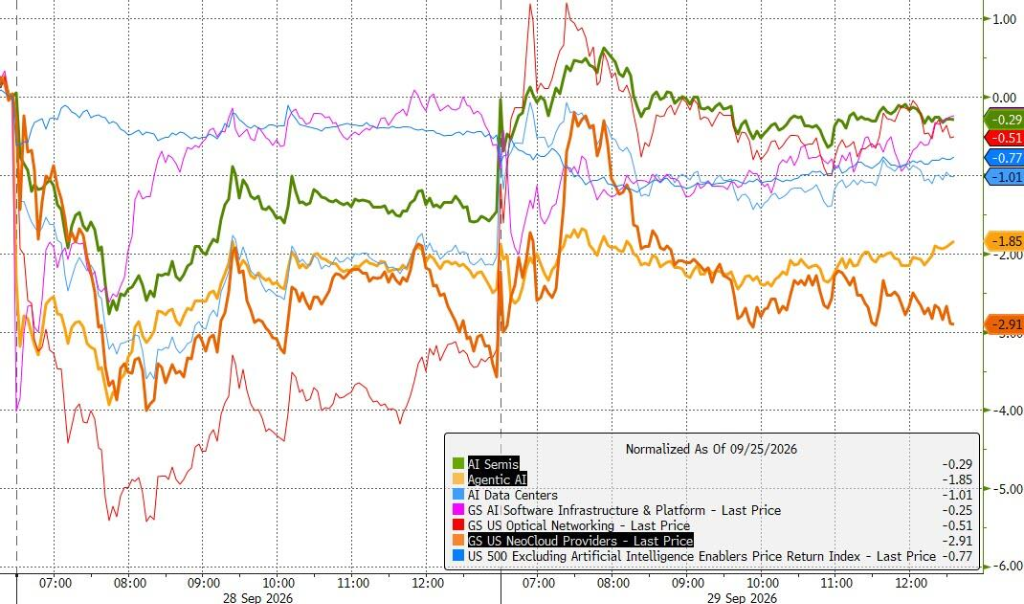
So far this week, the AI‑related and cloud‑services sectors remain in decline, while the semiconductor and software sectors have outperformed them.
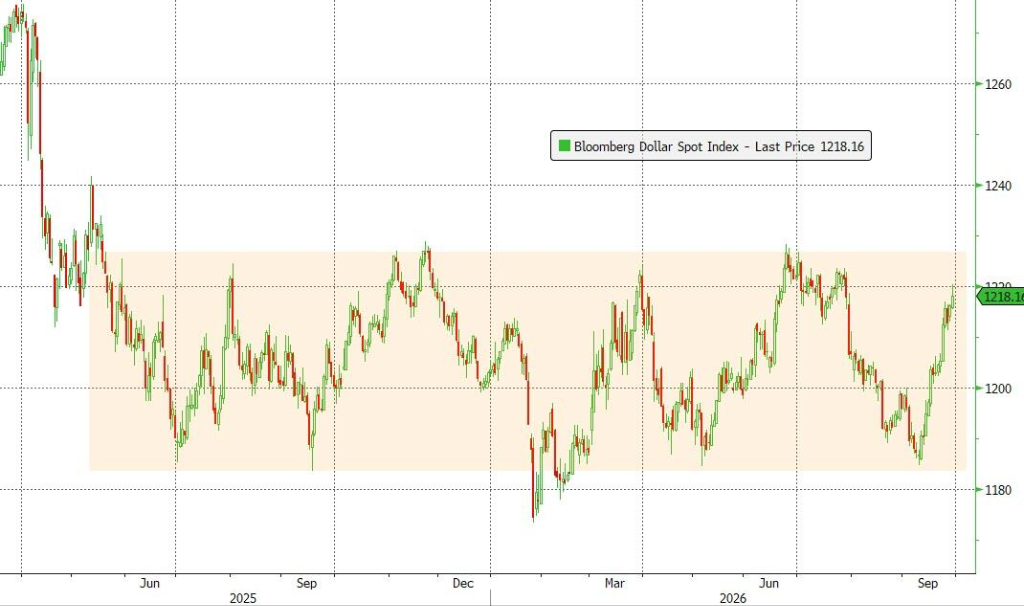
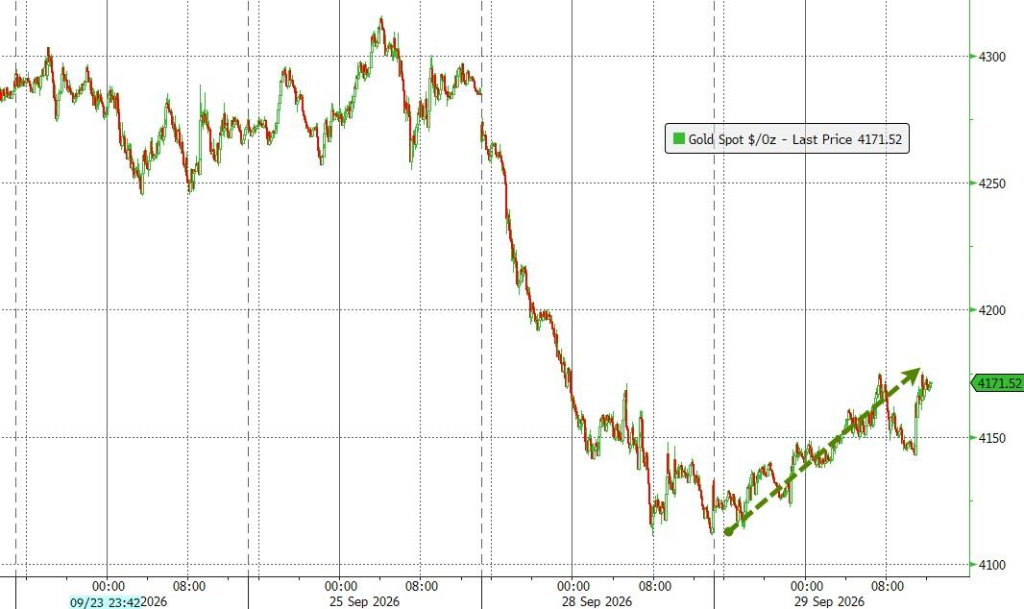
Gold plunged the day before, then rebounded 1.60%, while the U.S. dollar surged to the top of its 17-month range.
The U.S. dollar continued to strengthen. The U.S. Dollar Index, which measures the greenback against six major currencies, rose 0.17% on the day, closing at 101.372 in late New York trading—back at the top of its 17-month trading range—and has gained 1.5% since September. The euro fell to $1.1341, while the dollar traded at 157.22 per Japanese yen.
After a sharp plunge on Monday, spot gold rebounded in late New York trading on Tuesday to $4,180.97, up 1.60%, with the intraday low of $4,113.49 nearly matching Monday's low.
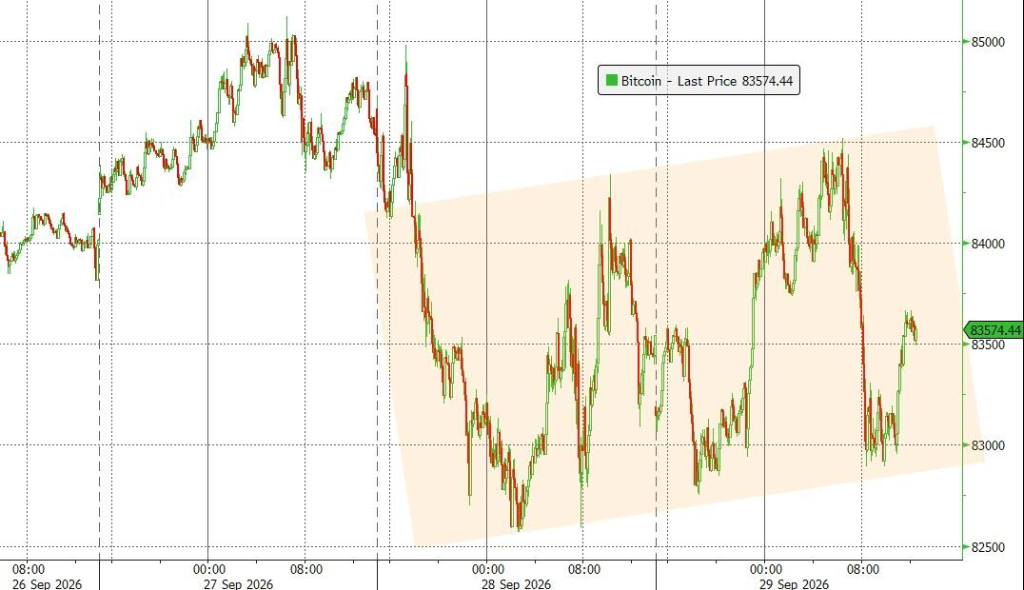
Bitcoin remained largely unchanged throughout the day, closing at $83,634.53, up 0.18%.
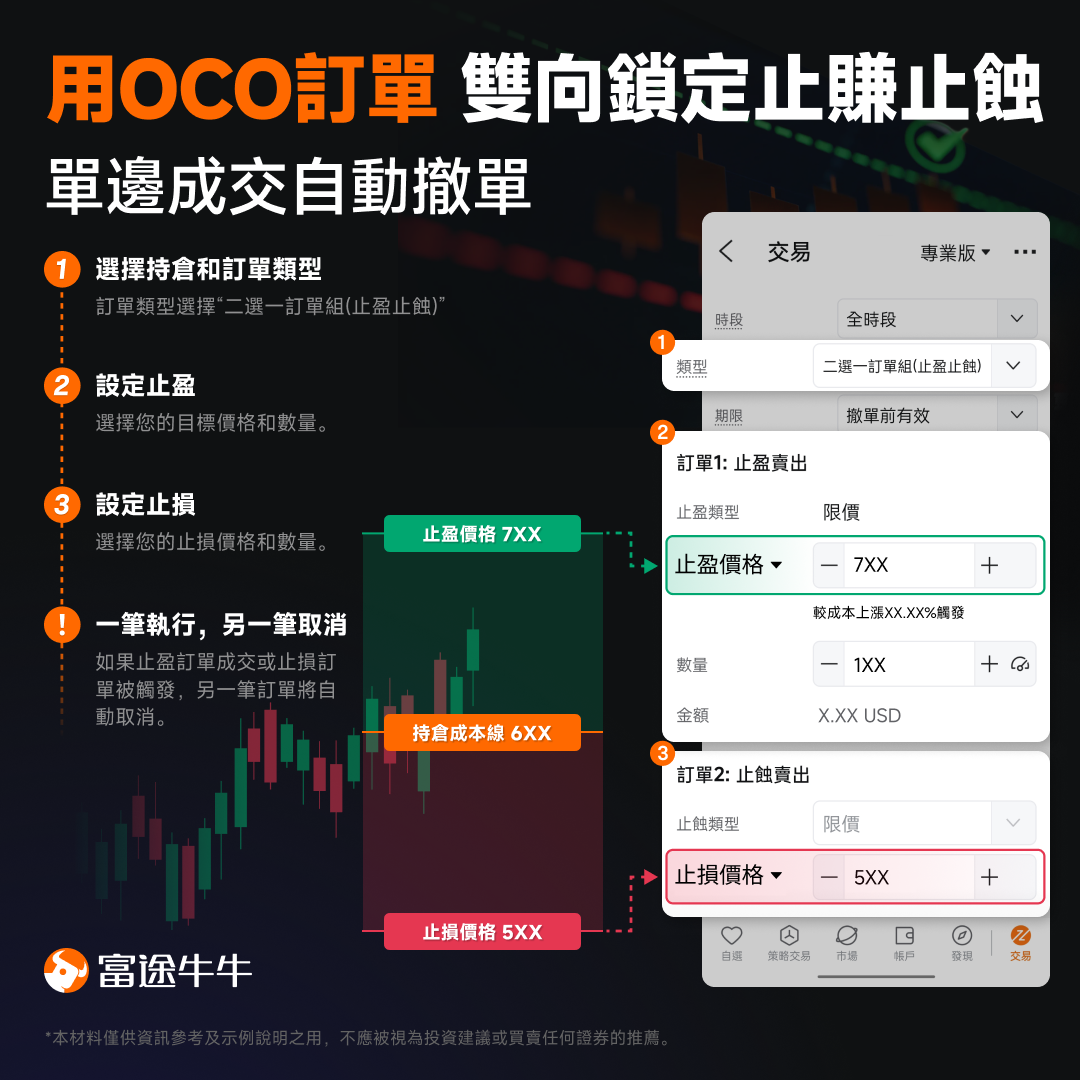
Market conditions can be highly volatile. Rather than rushing to sell once the trend becomes clear, it's better to prepare for both scenarios in advance. OCO (One Cancels the Other) orders let you place two linked orders simultaneously: when one is executed, the other is automatically canceled, giving you the flexibility to adapt to a wide range of market movements.
Editor/stephen