From the late 1970s to the 1980s, the investment world experienced one of its most legendary decades. In that same era, two individuals, each in a wholly different manner, both went on to become legends.
One is Warren Buffett—the helmsman of Berkshire Hathaway, who has written the myth of compound interest through "holding great companies for the long term." From 1977 to 1990, Berkshire's book value grew at an annualized rate of about 23%.
Meanwhile, another figure is working a different kind of miracle in the world of mutual funds. The Fidelity Magellan Fund he manages grew from $18 million in 1977 to $14 billion just thirteen years later, delivering an annualized return of roughly 29%.
 Unlike Buffett, he doesn't have controlling interest or his own capital pool. Yet, amid daily subscriptions, redemptions, and market volatility, he still outperformed the vast majority of investors.
He is—Peter Lynch.
He showed the world that those who know how to observe the world with common sense can also prevail.
And his story begins with a ball boy.

Young Peter: From Caddy to the First Ten-Bagger
On January 19, 1944, Peter Lynch was born in Boston, USA.
My father had once been a professor of mathematics, and later joined John Hancock, where he became the youngest senior auditor. But when I was ten, he passed away from brain cancer. With the family's pillar suddenly gone, my mother was forced to go out to work.
At the age of 11, Lynch also began working—serving as a caddy at a golf course. He carried bags and polished clubs, listening as clients discussed stocks and companies. Though he didn't fully grasp their conversations, he could sense the disparity: some worried about tomorrow, while others were already mapping out the world ten years from now.
That was the first investment lesson of his life.
"If you grew up in the 1940s, the term 'Great Depression' surely echoed in your ears all the time."
Everyone is worried: "The next Great Depression is coming—what do you think?"
Back then, society as a whole was very conservative—everyone feared risk and was reluctant to borrow money.
During those years as a caddy, I heard all sorts of stories.
But when I worked as a caddy at the golf course, those wealthy clients would play while chatting about their stock holdings, dividends, and market trends.
"After I got home, I went straight to check on those stocks. A few months later, I found that they had all gone up. Even though I didn't have any money, I thought to myself, 'This really seems like a solid deal.'"
In 1961, at the age of 17, Lynch was admitted to Boston College, where he majored in finance. He received the "Frances Wimen Scholarship," a hybrid award that combined scholarship and grant funds. The college awarded him $1,000—$300 as a scholarship, with the remaining $700 requiring him to earn back by continuing to work as a caddy.
In the biting Boston wind, this young boy turned his gaze toward the stock market for the first time.
He studied the air transportation industry and, using his savings of $1,000, purchased shares in Flying Tiger Airlines. As the Vietnam War escalated, demand for military air transport surged. Flying Tiger Airlines' performance soared, and its stock price increased tenfold.
That was the first "ten-bagger" in his life—and also the initial capital that enabled him to complete his graduate studies.
A young boy who earned his tuition by working as a caddie encountered a turning point in his life on the stock market.
Developing a Research Methodology at Fidelity
In 1965, Peter Lynch graduated from Boston College and subsequently entered the reserves.
A year later, in the summer of 1966, the owner of the golf club where he had worked for many years said to him, "Young man, would you like to come in for an interview at Fidelity?" That owner was none other than Edward Johnson II, the CEO of Fidelity Investments.
"In 1966, I was a summer intern at Fidelity. Back then, 75 applicants were competing for just three positions, but I spent eight years caddying for Fidelity's president."
That was the only interview of Lynch's entire life—and the first time the door of fate opened wide for him.
At that time, Fidelity Funds epitomized the rise of the U.S. mutual fund industry. Founded in 1946 by Edward Johnson II, it was renowned for "active research and independent judgment." The firm encouraged its analysts to leave the office, visit factories, and meet with company management.
By the mid-1960s, Fidelity had risen to become one of the largest fund management firms in the United States.
"I first joined the Reserve Officers' Training Corps while in college, and later served in the military for two years. After that, I went on to pursue a master's degree in business administration at the Wharton School of the University of Pennsylvania, which took me two years. So by the time I joined Fidelity, I was about 25 years old."
In 1969, Lynch graduated from the Wharton School and officially joined Fidelity, beginning his career as an analyst covering the textile and metals industries.
At that time, the U.S. stock market was climbing to a temporary peak—the Dow Jones Industrial Average was nearing 1,000 points. Subsequently, the major crash of 1972–1974 swept through.
It was against this backdrop that Lynch embarked on his investment journey.
"When I first entered the field, I met a mentor named Alan Gray."
About ten years later, he returned to South Africa. Yet he was the hardest-working person I've ever met. He conducted his own company research and always patiently listened as I shared those "investment stories."
"He is probably the best role model I've ever had in my life."
In Fidelity's culture, Lynch learned a lifelong principle: see for yourself. Never rely solely on financial statements.
From then on, his method began to take shape.
Measuring the company with your feet
During his years at Fidelity, Lynch gradually developed his own distinctive approach to research.
If George Soros is adept at reading the market, then Peter Lynch is the one who understands companies best.
"Stocks are not lotteries. Behind every stock is a company. When a company performs well, its share price naturally rises. People often try to predict the stock market, but that's a complete waste of time—no one can truly forecast it."
He has little interest in trendy slogans. Whether it's the rise of ETFs or the growing momentum behind sustainable investing, both are far removed from his concerns.
He's more concerned with what's in the warehouse, who's footing the bill, and whether the gross margin remains stable.
As long as the topic is fundamentals, cash flow, or product logic, he can talk at length.
Former Fidelity fund manager Karen Firestone recalls:
"He has amassed an enormous trove of corporate information, approaching an "encyclopedic" level."
He is always on the lookout for companies that can unlock new markets—companies that either create an entirely new market or enter at its nascent stage and steadily grow into industry leaders.
Take La Quinta Motor Inns, for example. It was among the first to enter the market when chain hotels were still a rarity, and ultimately became an industry leader.
Lynch was a researcher almost to the point of obsession. In the later years of his tenure at the Magellan Fund, the fund held as many as 1,400 stocks simultaneously. No matter which company he was asked about, he could rattle off details—its business model, the management style, and even the state where its factory was located.
At Barron's Investment Roundtable, he always carried a thick stack of handwritten notes—research memos he jotted down during his train ride from Boston to New York. In the span of an hour, he could articulate the fundamentals of twelve companies with remarkable clarity.
That's not showmanship; it's his way of thinking: to push research to its absolute limits and turn understanding into conviction.
His most iconic principle is: "Buy companies you truly understand."
He buys Taco Bell because he often goes there; he shops at a supermarket chain because he sees people lining up; and he buys Hengshi because his wife loves wearing egg‑socks.
In the early 1970s, his wife bought a new product at the supermarket—pantyhose packaged in plastic egg-shaped containers. She said, "This stuff is really great." It was L'Eggs—egg‑shaped pantyhose—launched by the Hengshi Company.
"At the time, there was a pantyhose brand called L'eggs. Back then, most stockings were sold only in upscale department stores, whereas L'eggs chose to sell its products in supermarkets."
People go to the supermarket once a week. But as for high-end department stores, they might only visit once every few months—my wife goes a bit more often (laughs). Still, yeah… I often accompany her.
He bought the stock. A year later, a competitor launched an imitation brand, so Lynch purchased about 65 pairs of socks and asked his office colleagues to try them on for comparison.
"I asked them to share their feedback, and the response was unanimous: 'No way—this model doesn't measure up to L'eggs.'"
That stock was later acquired. But if it had remained independent, it might have become a thirty-bagger.
"The environment in which you live your daily life is precisely the best place to find "10-bagger" stocks."
He measures the U.S. economy with his own feet. In his view, the best investment ideas often lie hidden in everyday life—on the shopping mall floor, in parking lots, at the supermarket, and right beside his family.
This is his "sole‑of‑the‑shoe research method"—Scuttlebutt: go see, ask, and walk the ground; observe life → refine your reasoning → bet on common sense.
"The best place to start looking for "ten-bagger" stocks is right where you are. If you can't find any near your home, head to the shopping mall—especially by starting with your workplace."
He neither believes in prophecy nor worships genius. He is convinced that, with patience and common sense, ordinary people can also identify their own "ten-bagger" stocks.
The Age of Magellan
In 1977, the U.S. stock market remained shrouded in the shadow of a decade-long slump. Inflation was rampant, interest rates stayed stubbornly high, and the aftershocks of the energy crisis had yet to subside. A sense of gloom pervaded the entire market.
Against this backdrop, 33-year-old Peter Lynch was appointed fund manager of the Fidelity Magellan Fund.
At the time, the fund's assets under management totaled just $18 million. Many were skeptical, dismissing it as a "pilot growth fund" and attributing its performance to an "overly young analyst."
The first thing Lynch did after taking over wasn't to try to predict the market—it was to go and see the companies themselves. In his office, maps, telephones, and research notes piled high on his desk, while stacks of corporate reports reached a towering three feet. He worked virtually nonstop throughout the year, logging more than 100,000 miles annually—averaging four hundred miles a day. He left home at 6:15 a.m. and didn't return until 7:15 p.m., reading in the car and jotting down notes along the way. His mind never stopped.
Within Fidelity, he's known as "The Runner"—the man who's always on the move. Lunchtime is reserved for interviews with the firm's top executives. Each year, he attends two hundred sell-side conferences and fields dozens of calls daily, responding to each within ninety seconds or less. Together with his research team, he follows up on roughly two thousand companies every month, often in brief five-minute phone calls. Forty hours a week are devoted entirely to investigation and verification.
He does not chase grand themes; he seeks only those facts that can be verified in everyday life.
In his view, investing is not about predicting the future, but about understanding the present.
"I won't spend any time monitoring policy shifts, nor will I speculate on what actions certain Asian countries might take—I focus solely on the facts."
"For example, an economic downturn or a worsening situation—these are facts I can confront and analyze."
In the early 1980s, Volcker's contractionary policy finally brought inflation under control, the U.S. economy rebounded, and a wave of emerging enterprises began to rise.
When bank stocks were trading at half their book value, he piled into financial shares that had been overlooked by the market. In the utilities and manufacturing sectors, he unearthed undervalued assets while also betting on rising growth stocks—from Taco Bell to Home Depot, and even Genentech. These names would later become symbols of an era. The fund's assets continued to climb.
From 1982 to 1986, Magellan outperformed the S&P 500 almost every year. By the end of 1986, its assets under management had surpassed $4 billion, making it one of the world's largest publicly offered mutual funds. Yet even in its peak year, a crisis was quietly looming.
In October 1987, Lynch and his wife were on vacation in Ireland—their first break in eight years.
"We set off on a Thursday in October, and that day the stock market dropped 55 points. Then by Friday, it fell another 115 points. So I said to Carolyn—my wife—'If the market keeps sliding next Monday, we'd better head home right away.'"
Monday, October 19. In the early morning, New York was still shrouded in gray fog. At the close of trading that day, the Dow Jones Industrial Average plunged 508 points, a single-day drop of 22.6%.
It was Wall Street's "Black Monday," and also the largest single-day stock market crash in U.S. history. Phones were ringing off the hook, as investors panicked and rushed to redeem their holdings. The Magellan Fund alone lost more than $1 billion in a single day.
"In just two trading days, my fund has already lost a third of its value."
"I figured, at this rate, this week was bound to be a disaster, so I decided to head home first—like going back would somehow fix everything."
Two days later, he returned to Boston. Unfazed, he began re-examining the fundamentals.
In 1982, the Dow Jones Industrial Average stood at 777 points. Four years later, it had risen to 1,905 points, an increase of approximately 145%.
In August 1987, market sentiment was buoyed by optimism, sending indices soaring to a record high of 2,722 points—though the rally had simply moved too quickly.
"The real problem is that the market has been surging relentlessly, unable to pause, with gains that have become downright excessive. By historical standards, valuations are already unnaturally high—whether measured by the price-to-earnings ratio, the relatively low dividend yield, or other key metrics—all pointing to the same warning sign."
But many people overlook the fact that, over the past 12 months, the index has remained virtually unchanged overall.
He began making calls: "Is the order still pending? Is the balance sheet stable? Is the business running smoothly?"
The answers were almost identical: "Everything is normal."
"That plunge was indeed quite alarming. But you have to ask yourself: 'Will this affect ordinary consumers? Will it make people stop buying cars, homes, or home appliances, or even dining out?'"
"And that, precisely, was the most worrying thing at the time."
He bucked the trend by increasing his positions, buying Boeing, General Electric, Ford, Citi, and a host of undervalued consumer and insurance companies.
"When the market declines, both good companies and bad ones fall together—this is precisely the best time to seek out bargains."
As it turned out, he was right once again—the market has stabilized.
In 1988, the market rebounded from the shadow of the crash, and investor confidence was rekindled. Meanwhile, Lynch's Magellan Fund once again outperformed the broader market.
Peter Lynch, in his own way, demonstrated a simple truth: markets may panic, but reason will ultimately prevail.
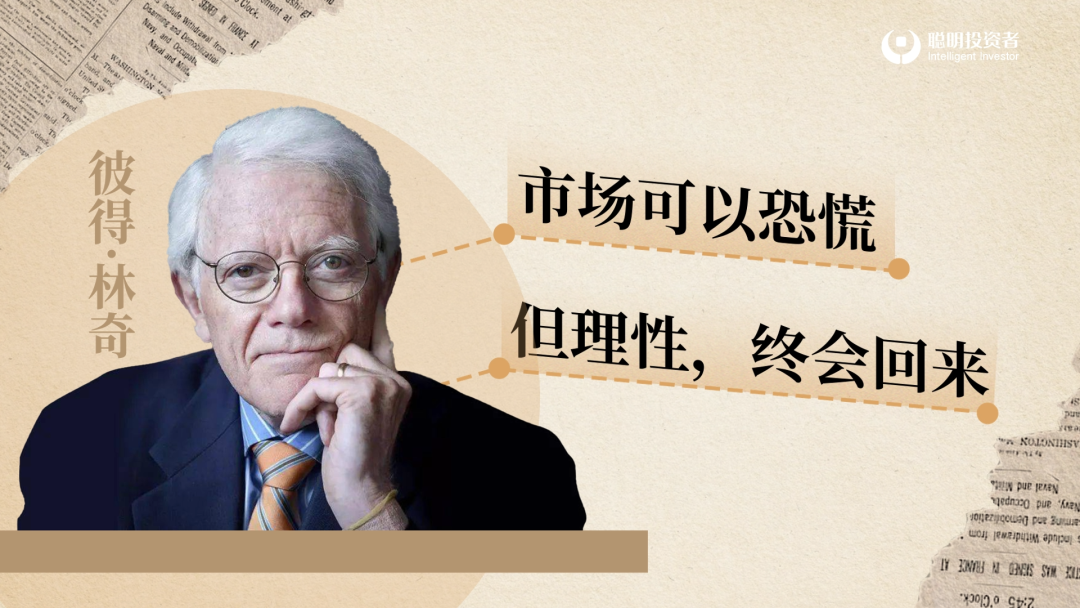
Over thirteen years, the Magellan Fund has grown from an obscure small‑cap fund into one of the world's most celebrated asset‑management success stories. Under his leadership, the team has identified countless companies that have reshaped the markets—spanning retail to technology, and manufacturing to consumer goods.
He turned "common-sense investing" into a creed and made "Magellan" a symbol of that era.
Hope Amid the Ruins
Lynch's investment portfolio has been distinctive from the very beginning. He eschews rigid styles and refuses to impose artificial boundaries. Beyond seeking growth, Lynch excels at spotting opportunity even in seemingly hopeless situations.
He refers to this type of opportunity as a "turnaround."
Those companies that have been forgotten or abandoned often deliver the most remarkable turnarounds.
In 1979, one of America's Big Three automakers—Chrysler—was on the brink of bankruptcy. The company, a symbol of American manufacturing, was dragged into crisis by the oil price shock and soaring costs.
At that very moment, Lee Iacocca—the "renegade general" who had been forced out of Ford—was called upon to take the helm as CEO. He lobbied Congress, pleading for a government-backed loan guarantee. In the end, Chrysler secured a $1.5 billion lifeline.
In Lynch's view, the key to evaluating a "turnaround company in distress" is not its losses, but whether it can survive.
"Most importantly, during a period of operational distress, can a turnaround‑seeking company withstand the pressure of creditors demanding repayment and remain viable? How much cash does the company have on its books, and how much debt does it carry?"
Lynch doesn't just look at the size of liabilities; he also examines their structure: Chrysler holds $1 billion in cash, and after selling its tank division, it secured an additional $336 million in cash from General Dynamics. Combined with government-guaranteed loans, this means the company has some breathing room.
In early 1982, Lynch made a decisive purchase at $6 per share. A year later, the stock had risen to $30, delivering fivefold returns. By 1987, it had climbed to $90. In just five years, the gain exceeded 14 times the original investment.
Chrysler repaid its government loan seven years ahead of schedule, even generating $350 million in interest for the Treasury. This investment became Lynch's quintessential "turnaround" case.
Chrysler's revival has strengthened Lynch's conviction: the key to a turnaround in adversity lies not in hope, but in time.
Where does time come from? It comes from the balance sheet.
In 1985, two high-tech equipment manufacturing companies were both in dire straits: GCA and Applied Materials.
They both manufacture computer chips and have both weathered industry downturns, with their stock prices plummeting. GCA fell from $20 to $12; Applied Materials fared even worse, seeing its share price cut in half from $16. However, the only difference between the two companies lies in their debt structures.
GCA has $114 million in liabilities, almost entirely bank loans; it holds only $3 million in cash, with its primary asset being inventory valued at $73 million.
"In the fast‑changing electronics industry, inventory valued at $73 million this year could depreciate to just $20 million by next year."
Once prices fall and demand evaporates, who can say how much this company will ultimately recover when it liquidates its inventory?
In contrast to GCA, Applied Materials has liabilities of only $17 million, while its cash on hand amounts to $36 million.
When the industry recovered, Applied Materials' stock price rose from $8 to $36—quadrupling. Meanwhile, GCA ultimately went bankrupt and was acquired for 10 cents per share.
Different levels of debt determine different destinies. Cash is a company's armor, while debt is a countdown to time.

At its core, a turnaround in adversity is never a miracle; it belongs to companies that understand the underlying structure, manage cash flow effectively, and have bought themselves time.
Only those who endure their debts can wait for spring.
A perspective on life, the growth of wealth
In 1990, at the age of 46, Peter Lynch left Wall Street.
Under his leadership, the Fidelity Magellan Fund grew from $18 million to $14 billion in assets.
Thirteen years, with an annualized return of 29.2%. At the peak of his career, he chose to step away.
"I enjoy this job every single day, and the team is truly fantastic. By then, we already had three daughters, and I wanted to spend more time with them and my wife."
After retiring, Lynch continued to serve as Fidelity's honorary vice chairman and occasionally returned to the firm to chat with young analysts.
He established a scholarship at his alma mater, Boston College, to support students who, like him, have turned their lives around through hard work.
No matter how the market evolves, Lynch has always believed that investing is never a contest of IQ; rather, it tests common sense, patience, and an understanding of how the world truly works.
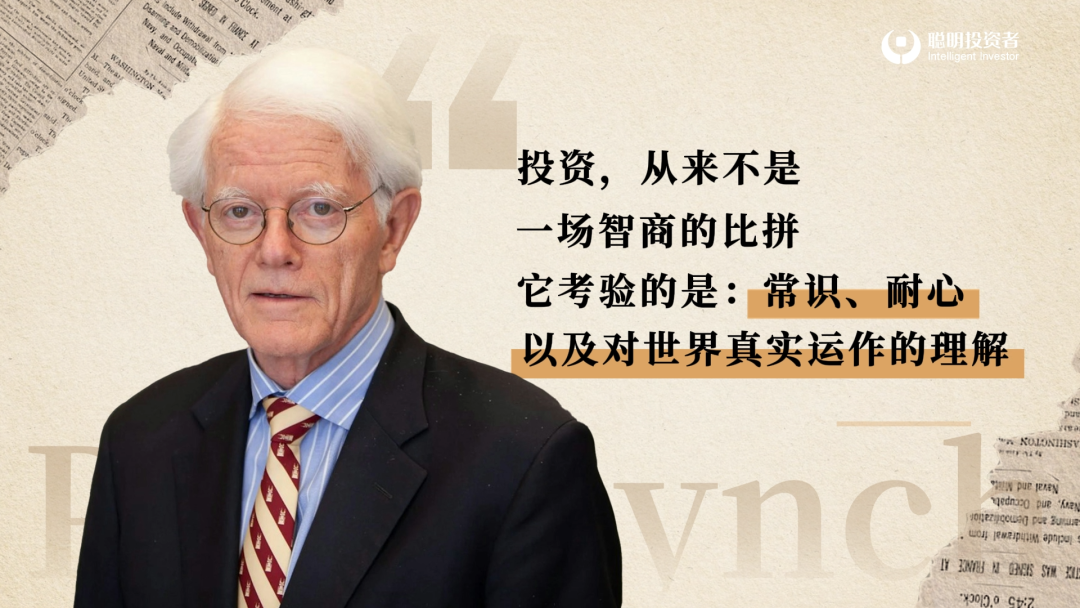
"I've always believed that as long as ordinary people are willing to work hard and apply a bit of common sense, things will go smoothly."
What he left us are five reminders—simple yet the hardest to put into practice.
First, invest in companies you understand.
"If you can't explain to an 11-year-old in under a minute why you're holding this company, then you shouldn't be buying it at all."
The so‑called "circle of competence" does not mean shrinking the world; rather, it means making the most confident decisions within the boundaries of your understanding.
Second, identify investment opportunities in everyday life.
"All the big‑winning stocks I've identified were first spotted in the real world, not by reading analyst reports."
Because ordinary people know themselves best: they understand what this generation loves to drink, wear, and do.
Countless such decisions converge to form the company's growth trajectory, driving its stock price higher.
Third, hold for the long term and let time work in your favor.
"Barring major surprises, stock market performance over a twenty-year horizon is relatively predictable; as for whether prices will rise or fall in two or three years, it's hardly any more certain than deciding by flipping a coin."
The market may be in turmoil in the short term, but corporate growth will deliver in the long run.
Long-term holding is not a creed; it is a respect for the pace of a company's growth.
Fourth, adhere to valuation boundaries and maintain a strong risk awareness.
"Even the best company can turn into a poor investment if you pay too much for it."
Behind every stock lies a company. The key is to ensure that the narrative makes sense and that the numbers stand up to scrutiny.
"If a company's P/E ratio rises from 10 to 40 while its fundamentals remain largely unchanged, you're just dreaming."
Lynch loves growth stocks, but he never acts blindly. He knows that the real risk never lies in the market—it resides within himself.
He believes that sound investing is asymmetric—yielding substantial gains while limiting losses.
Fifth, investing is a combination of diligence and common sense.
From caddie to fund manager, Lynch bridged not just social classes, but also a fundamental shift in how he understood the world.
He understands companies through common sense, measures the economy with his footsteps, and tests his convictions over time. The secret of investing lies not on Wall Street, but in life itself.
Peter Lynch teaches us to see wealth grow through the lens of everyday life.
"Only the one who turns over more stones will win the game."
Editor/joryn