
In an era dominated by algorithms, artificial intelligence, and quantitative models, we have come to largely believe that markets are perfectly efficient. Yet there remains one individual who believes in uncertainty, in human nature, and in the "inefficiencies" that are overlooked, misinterpreted, or forgotten in this fast-paced age.
"I am actually quite optimistic that inefficient markets will persist, even if computers replace humans as asset managers."
Because the essence of market inefficiency lies in human behavior, and computers are trained to mimic human actions."
 He is widely recognized as the person "most like Graham" after Buffett, and is hailed as the "last Grahamite."
Throughout his forty-year investment career, he has rarely made any fatal errors.
He redefined the margin of safety: true margin of safety lies not in price, but in mindset.
He is Seth Klarman.
Act I | The First Investment of Youth
Seth Klarman was born on May 21, 1957, into a Jewish family in New York. His father was a public health economist, and his mother was an English teacher.
When he was six, the family moved to Baltimore. Shortly thereafter, his parents divorced, and he grew up in modest circumstances.
I have been interested in business since childhood and always enjoyed engaging in small entrepreneurial ventures.
Delivering newspapers, shoveling snow, mowing lawns, running an ice cream cone stand, and even hosting a small carnival in my backyard. At the age of 10, he used his pocket money to purchase his first stock—Johnson & Johnson (JNJ)—reasoning that his family frequently used the company's bandages.
I am also well aware that when I bought that stock back then, I had no real idea what I was doing.
During high school, he took the bus every day, at a time when fares were paid with coins.
One day, he noticed that the coin slot contained silver coins that had long been withdrawn from circulation—dimes, quarters, and even "Mercury" dimes.
These coins appeared ordinary, but their metal value was significantly higher than their face value.
He soon befriended the bus driver. The two reached a simple agreement: the driver would set aside the rare silver coins collected at the end of each day and sell them to him at face value the next day.
Thus, Karaman could purchase silver coins with an intrinsic value far exceeding $3 for just $3.
This was his first experience with arbitrage.
That year, he grasped a simple truth: the world is full of mispricings, if only one is willing to look more closely.
Act II | Awakening: The Moment Market Mispricing Becomes Clear
In the autumn of 1975, 18-year-old Klarman entered Cornell University.
Initially passionate about mathematics, he later discovered a greater fascination with economic logic than with formulas, prompting him to switch to economics.
During the summer of his junior year, he interned at Mutual Shares, a legendary value investment firm.
The firm was home to pioneers of value investing—Max Heine and Michael Price. This experience changed the course of his life.
One day, Michael tossed a prospectus directly onto my lap.
I had no idea what it was.
All I saw was that a company called Teleco was planning to spin off its subsidiary, Electro Rent, on a pro rata basis.
For every share of Teleco held, shareholders would receive half a share of Electro Rent.
Teleco itself was a distributor of Japanese products, but its distribution rights had been terminated, and the company was facing liquidation.
The prospectus clearly states that the liquidation value is approximately $7.50, while the market price stands at $8.00.
In other words, you are taking on $0.50 of risk to acquire half a share of Electro Rent, a company with stable earnings.
You are purchasing an operating business at less than one times its cash flow.
At the time, I was entirely uncertain about how the company would be valued in the future.
Prior to the spin-off, market pricing was unpredictable, compounded by the scarcity of comparable companies.
However, I recognized that, from a risk-reward perspective, this transaction offered highly favorable odds for investors.
At that moment, he realized for the first time that market inefficiencies do not always stem from misjudgment; sometimes they arise from procedural, structural, and temporal discrepancies.
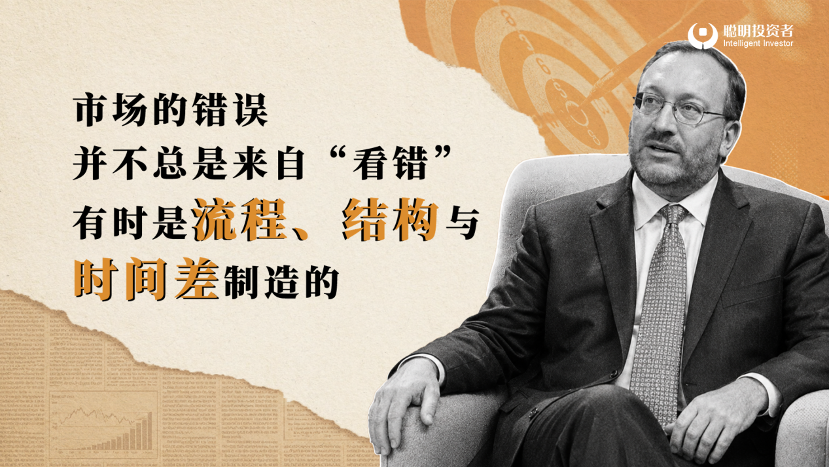
This marked his initial exposure to "special situation investing." Henceforth, he shifted his focus from merely seeking bargains to identifying "value distorted by structural factors."
Arbitrage opportunities exist in the market, and complexity can occasionally give rise to investment opportunities.
Only by dedicating oneself to scrutinizing every detail will hidden opportunities come to light.
At Mutual Shares, Karman also encountered a person who would remain unforgettable throughout his life—Hans Jacobson.
An old-school expert specializing in railway bonds, he spoke with a heavy German accent and could recount a chapter of industrial history from a single worn-out bond certificate.
During that era, there were hundreds, if not thousands, of different railway bonds in the United States: many had been issued decades earlier or even before, and most carried first-lien mortgage status.
Karman often overheard Hans discussing trades with brokers on the phone, which sounded almost like attending a "lecture on American history":
In what year was this railway built? For which expansion project was this bond issued? Why would anyone issue a "century bond"? What is an "equipment trust certificate"?
It was then that I began to realize that becoming an expert in a specific field constitutes significant value in itself.
This period coincided with the later stages of the Penn Central Transportation Company bankruptcy. As one of the largest transportation enterprises in U.S. history, it was struggling to rebuild from the depths of insolvency. The company began to offload a large volume of securities, ranging from bonds to preferred stock and common stock. The value of some securities even depended on the auction proceeds from the "air rights" above Pennsylvania Station.
For ordinary investors, such complexity was tantamount to a "do not touch" warning; for Karman, however, it held a fascinating allure.
This marked my first realization that there exists a vast amount of severely mispriced assets in the world.
Their prices were distorted precisely because they were too complex, too niche, and studied by too few people.
At the age of 23, Karaman entered Harvard Business School, placing him among the youngest students in his cohort.
Harvard’s “case method” is essentially an intellectual contest involving viewpoints, logic, reasoning, and rebuttals. Every student must make judgments in class and take responsibility for them.
He relished the sharp edge of such debates, until one day a particular course left him completely unsettled: “The Efficient Market Hypothesis.”
The theory posits that “all information has already been priced into the market, and no one can consistently outperform it over the long term.”
Karaman disagreed. He had begun arbitraging coins as a child and, at 21, witnessed the mispricing surrounding the Teleco spin-off. The complexity of railroad bonds further confirmed his view that markets are not efficient and human nature is never fully rational.
Markets are inefficient precisely because people participate in them. People are emotional, prone to both greed and fear.
He challenged assumptions in nearly every class. The professor did not refute him but responded calmly: “You don’t have to believe it, but you must understand how these theories are embedded in financial instruments—for example, the Black-Scholes option pricing model.”
In that moment, he realized that studying theory was not about compliance, but about understanding its practical applicability in the real world.
Before arriving at Harvard, he understood stocks, bonds, and arbitrage, but lacked insight into how businesses actually operate.
There, he gained his first understanding of internal corporate mechanisms and, guided by Michael Porter, came to grasp competition and strategy.
He transformed from someone who merely "looks at prices" to someone who "understands businesses."
Act III | Moving in Reverse: A Fund Built on Risk
Before graduating from Harvard in 1982, Klarman met the mentor who would change his life—Professor Bill Poor, a specialist in real estate.
Bill was gentle and restrained, yet possessed an insight that could see through numbers to identify risk. At the time, Bill and several friends were selling Boston’s ABC television station—Channel 5. The transaction was set to generate nearly $200 million in capital inflows. This raised a question: how should such a substantial sum be managed?
Consequently, Bill and his friends decided to establish a new investment firm—the Baupost Group.
They invited me to join as the investment mind behind the institution, although at that time, the so-called "institution" had no actual infrastructure.
Bill and Howard Stevenson were the company's founders.
The initials of their surnames, "PO" and "ST," form the origin of the name "Baupost."
They raised a total of $27 million, seeking a young individual to steward the capital—not one who chased excessive profits, but someone who could comprehend risk and remain calm amidst complexity. That person was Seth Klarman.
Each of them had earned approximately $10 million and was around 50 years old. They had no desire to spend it all again, nor did they wish to "earn it back from scratch." Thus, we began with a DNA centered on "risk avoidance," a style for which I was a natural fit.
Since its inception, Baupost’s core philosophy has been ingrained in its DNA: capital preservation takes precedence, and every decision begins with an assessment of risk.
Our mission is not simply to scale up as an investment institution.
Rather, it is to deliver strong returns for our clients while maintaining strict control over downside risk.
This has always been the core driving force behind our operations.
We protect capital by paying as much attention to downside risk as we do to upside potential.
We conduct thorough fundamental research on every company.
When no attractive opportunities are present, we hold cash.
Our portfolio employs no leverage whatsoever.
Consider Wall Street in the 1980s: an era defined by speed, leverage, and greed. Leveraged buyouts were rampant, junk bonds were all the rage, and Michael Milken’s “financial engineering” sent shockwaves through the capital markets. The famous line from the movie Wall Street—“Greed is good”—became almost a credo.
Klarman, however, chose a different path—one that was slow, complex, obscure, and shunned by others.
Baupost specializes in assets that others are unwilling to touch:
Bankrupt securities
Liquidation assets
Distressed debt
Small-cap value stocks
Commercial real estate mortgage claims
These assets are characterized by opaque information, complex structures, high barriers to research, and a reluctance among institutional investors to devote time to them.
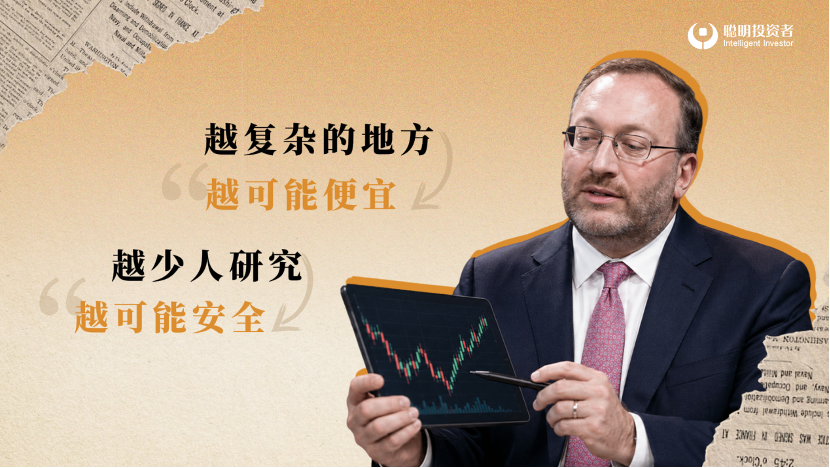
Yet this is precisely Klarman’s advantage: the more complex the situation, the greater the likelihood of undervaluation; the fewer people researching it, the safer it tends to be. This intuition has been his hallmark since the era of Teleco and railway bonds.
On October 19, 1987, known as Black Monday, U.S. stock markets plummeted by 22.6%, triggering panic worldwide. Countless funds faced liquidation, yet Baupost emerged virtually unscathed.
The reason was simple: they maintained extremely low exposure, held ample cash reserves, and employed almost no leverage.
Excessive greed and panic in the market invariably create price distortions. By maintaining composure, investors can identify genuine value amidst these dislocations.
Following a sharp market decline, Karman acquired a portfolio of severely discounted securities. That year, he demonstrated in near-"textbook" fashion that cash is the cheapest option during times of crisis.
Throughout the 1980s, his investment strategy eschewed hot trends in favor of "verifiable value." He evaluated companies not based on news headlines, but on their balance sheets. His focus was not on "how fast it can grow," but on "what its minimum worth would be in a worst-case scenario."
Land, machinery, inventory, and cash—each item must be quantifiable and tangible. In his view, the value of assets is not determined by market sentiment, analyst reports, or media hype, but by those elements that can be truly counted.
The margin of safety is not merely about "buying cheaply," but about "acquiring assets at prices that cannot harm you."

This approach of "buying high-quality assets at low prices" provides investors with a margin of safety, creating a buffer against judgment errors, bad luck, or fluctuations in economic and market conditions.
This entire methodology had quietly matured by the 1980s and was codified in 1991, when Karman was 34, in the book now regarded as a canonical text: Margin of Safety.
Act IV | Amidst the Storm: The Power of Composure
The storm arrived in 2008. Collapsing housing prices, bank defaults, and evaporating liquidity marked the most severe financial crisis since the Great Depression of 1929. Yet, more than a year earlier, Karman had already sensed something amiss in the air.
In October 2007, during a speech at MIT, he warned: "Excessive risk-taking and overly high leverage have permeated the entire financial system."
At the time, the market remained intoxicated by the illusion of prosperity. Housing prices began to decline, and several subprime lenders collapsed, yet Wall Street largely believed these were merely minor disturbances.
Banks continued to increase leverage, rating agencies persisted in assigning AAA ratings, and investors kept chasing growth narratives.
Most investors tend to extrapolate current trends—whether positive or negative—indefinitely into the future, as if today's conditions will persist forever.
It was not until February 2008 that Peloton Partners, a London-based hedge fund, collapsed. Margin calls and a wave of redemptions triggered the forced liquidation of billions of dollars in assets within days.
While others viewed this as an isolated incident, he recognized it as the first crack in the foundation. Consequently, he took immediate action.
In a rare move in Baupost’s history, he opened subscriptions to new investors, raising $4 billion in cash. He understood clearly that the true opportunity had yet to begin, and such opportunities belong only to those holding cash.
On September 15, Lehman Brothers collapsed. The global financial system froze, stock markets plummeted, institutional runs ensued, and trust evaporated.
Amidst the peak of panic, Baupost quietly accumulated assets.
Deploying approximately $100 million daily, it precisely acquired assets that had been indiscriminately sold off due to panic:
Distressed debt
Financial institution bonds
Mortgage-Backed Securities (MBS)
Corporate senior debt during a market crash
Stocks sold off due to redemptions
These assets are often sold at only a fraction of their intrinsic value.
While others panic, he calculates. While others flee, he selects. He is not betting on a market rebound but has confirmed a key fact: "The prices of these assets can no longer harm us."
When CIT Group bonds were sold down to 65 cents on the dollar in the market, he stepped in to buy. A few months later, the bonds recovered to 80 cents. To others, this was speculation; to him, it was mathematics.
By early 2009, Baupost’s bond portfolio had risen by 25%, and its equity investments had also recovered from the trough, resulting in an increase rather than a decrease in assets under management.
Truly skilled investors never start by deciding how much they want to earn; instead, they first ask, "How much risk am I willing to take?" and then assess whether taking that risk is worthwhile.
Karman demonstrated that true defense lies not in predicting crises, but in creating room for them in advance.
"The margin of safety is not about earning more, but about surviving."
Act V | A Decade of Solitude: When Value Appears Too Slow
Seth Klarman’s success in 2008 made him one of the most respected investors on Wall Street. Yet in the decade following the crisis, he was met not with accolades, but with solitude.
Because the market had changed...
In 2009, as the dust from the financial crisis settled, central banks around the world almost simultaneously pressed the strongest "easing button" in history: zero interest rates, quantitative easing, and unlimited liquidity. Tech stocks soared. Apple, Amazon, Google, Meta... their market capitalizations repeatedly broke historical records.
Valuation became sentiment. Growth became faith. People began to believe that good companies could never be too expensive.
Meanwhile, traditional "bargains" were completely forgotten by the market. In this era, Klarman—who emphasized margin of safety, discounts, and downside protection—appeared too slow, too conservative, and too painful.
"Is value investing obsolete?" people began to ask.
His answer lay within his definition of "value":
Many people, especially some academics, tend to interpret value investing as mechanically selecting cheap stocks based on numbers—that is, buying stocks with the lowest valuation multiples.
From the very inception of Baupost, we recognized that this was not the correct definition.
The proper definition involves determining what a business is truly worth.
Clearly, a company with consistent growth holds greater value than one that is stagnant.
I believe that companies today, which are melting away like ice cubes, are doing so at a faster pace than ever before.
If a company has fundamental issues, its value may be eroded at an accelerated rate.
The value investment approach we adhere to focuses on identifying what we can truly ascertain with certainty.
Baupost’s long-term annualized return declined from approximately 20% to around 4% for the period 2014–2024. While still respectable, it appears unattractive in an era of market exuberance.
Karman continues to focus on just two things:
First, adhering to core principles.
Prioritizing risk management, maintaining a margin of safety, and holding cash reserves. He never wavers for short-term performance, knowing that market tides ebb and flow, but only principled discipline can withstand market cycles.
At its core, the story of the stock market revolves around two key concepts: cycles and human nature.
Second, evolve within the framework.
He does not reject technology or resist disruption, but he insists that prices must be reasonable.
When evaluating an investment, we do not merely ask, 'What discount does it offer relative to our estimated intrinsic value?' Instead, we ask, 'What expected return can it generate from this point forward?'
It is insufficient to rely solely on low price. Cheapness alone is far from enough.
He has updated his tools but never altered the underlying logic. Karman remains as he was in 1982, when he first began managing $27 million: breaking down assets, calculating worst-case scenarios, rigorously testing margins of safety, and then waiting.
The four major areas of our focus are:
Public equities, public credit, private equity/credit, and commercial real estate (via private participation)
Today, Baupost’s investments span equities, credit, private markets, and real estate, yet Karman still evaluates them using the same logical chain: expected return → downside risk → liquidity premium.
We will not acquire any asset with an expected return below 15%, a threshold applied even to 'relatively safe' investments, such as stable-performing credit bonds or secure bankruptcy claims.
For publicly traded equities, we target returns in the high teens, whereas for less liquid assets such as real estate, private equity, and private credit, we seek returns ranging from the high teens to the low twenties.
He often poses a question to his team: “Is this stock a better value than that building?”
To answer this, every asset is subjected to the same assumptions—reasonable time horizons, stress test results, and equivalent assessments of downside risk.
In his view, liquidity is also a form of risk. Stocks that are nominally tradable may see only a handful of transactions in a given year. The liquidity discount is not merely a concept; it is an integral component of valuation.
We allocate capital across different sectors through a bottom-up approach by identifying specific investment opportunities.
Consequently, as we identify more distressed asset opportunities, the proportion of distressed assets in our portfolio increases.
We do not force capital deployment, nor do we adhere to top-down asset allocation targets.
He never subscribes to fixed position sizes or static industry allocations. When the bond market lacks appeal, allocation may drop to just 5%; however, in the presence of deep discounts, it can be rapidly increased to 40%, before being reduced back to 10% once valuations recover.
Overall, our portfolio remains relatively balanced: private assets account for approximately 22%–24%; credit investments comprise around 20%; equity holdings stand at roughly 20%; commercial real estate represents a moderate share; hedging instruments make up a portion; and cash levels are maintained in the low double-digit percentages.
In an era obsessed with speed, Kalam still takes pride in being “slow.”
Act VI | The Structure of Trust
In the world of investment, freedom has never been about doing as one pleases; rather, it is a responsibility.
I have always believed that the most important freedom for investors is the liberty to pursue genuine opportunities.
When others panic and sell off, he dares to buy; when the market is noisy, he chooses calmness.
Achieving this requires not only sound judgment but also a deep understanding of your clients.
If you do not have clients with a long-term orientation, you cannot engage in long-term investing. We have always been very careful to avoid "hot money" and clients with a short-term mindset.
There are two keys to finding ideal clients. The first key lies before the client joins. He has always emphasized: "You do not need to accept everyone who wants to entrust their money to you." Klarman believes that clear expectations must be set from the outset.
The ideal state is: "If I consider it a good year, you should also agree that it was a year of strong performance." Alignment of philosophy is the foundation of long-term cooperation. Baupost never accepts clients who operate on a "make a phone call and wire money immediately" basis.
The second key concerns the period after the client has joined.
This is because they find it difficult to predict how they will react emotionally under different market conditions.
Klarman believes that fund managers should help their clients cultivate a long-term mindset.
This is also why Baupost writes several substantial investor letters each year.
These letters not only report investment results but also explain what the firm is doing and the rationale behind its actions.
In a sense, this serves as a form of "mindset training."
Baupost assists its clients in becoming the kind of long-term partners they need.
Trust is not merely a relationship; it is also a structure.
It enables Baupost to navigate steadily through even the most complex markets.
In the 44 years since Baupost was founded in 1982, the firm has recorded losses in only four years,
not due to luck, but thanks to discipline.
Epilogue | Margin of Safety: A Retreat for the Future
In 1991, Karman authored The Margin of Safety. “My purpose in writing this book was to make it accessible to both laypeople and professionals.”
He distilled his lifelong experience into five principles:
First, understand your risk tolerance. Second, prioritize risk avoidance over return chasing. Third, buy at prices below intrinsic value. Fourth, adopt a bottom-up approach by analyzing specific assets rather than attempting to predict global trends. Fifth, seek absolute returns rather than aiming to outperform others.
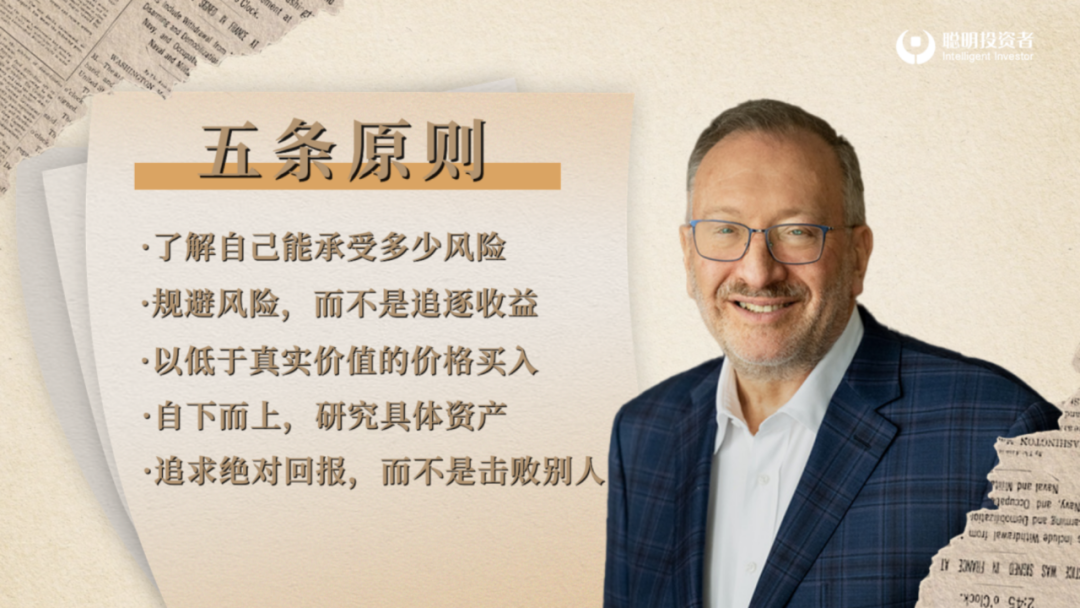
This is not the language of Wall Street, but rather the wisdom of the real world. For him, the margin of safety has never been about “earning more,” but about “surviving.”
Investing is not about predicting the future, but about accommodating it. A system need not always be correct, but it must be resilient enough to withstand errors.
True freedom is not about “winning everything,” but about ensuring that even losses do not lead to ruin. Patience is the most undervalued force in the market.
When there are no bargains, he can choose to do nothing. When others claim he is missing opportunities, he simply smiles: “Cash is not a burden, but an option.”
The next panic will be the next opportunity. He understands deeply that markets are perpetually inefficient because human nature is inherently complex...
Therefore, he asks not only “Where is it cheap?” but also “Why is it cheap?” Cheapness alone is not a justification; reasonable cheapness constitutes the margin of safety.
In an era obsessed with efficiency, he chooses to believe in inefficiency. For it is only within inefficiency that there is room, opportunity, and a margin of safety.
As Klarman stated:
Investors should always remember that the most important metric is not how much was earned, but how much risk was taken to achieve those returns.
Ultimately, the ability to sleep well at night matters more than anything else.
Edited by Jayden