Macro News Highlights
Williams: There may be one more rate hike this year, and at present, there is no reason to expect further rate hikes through 2027.
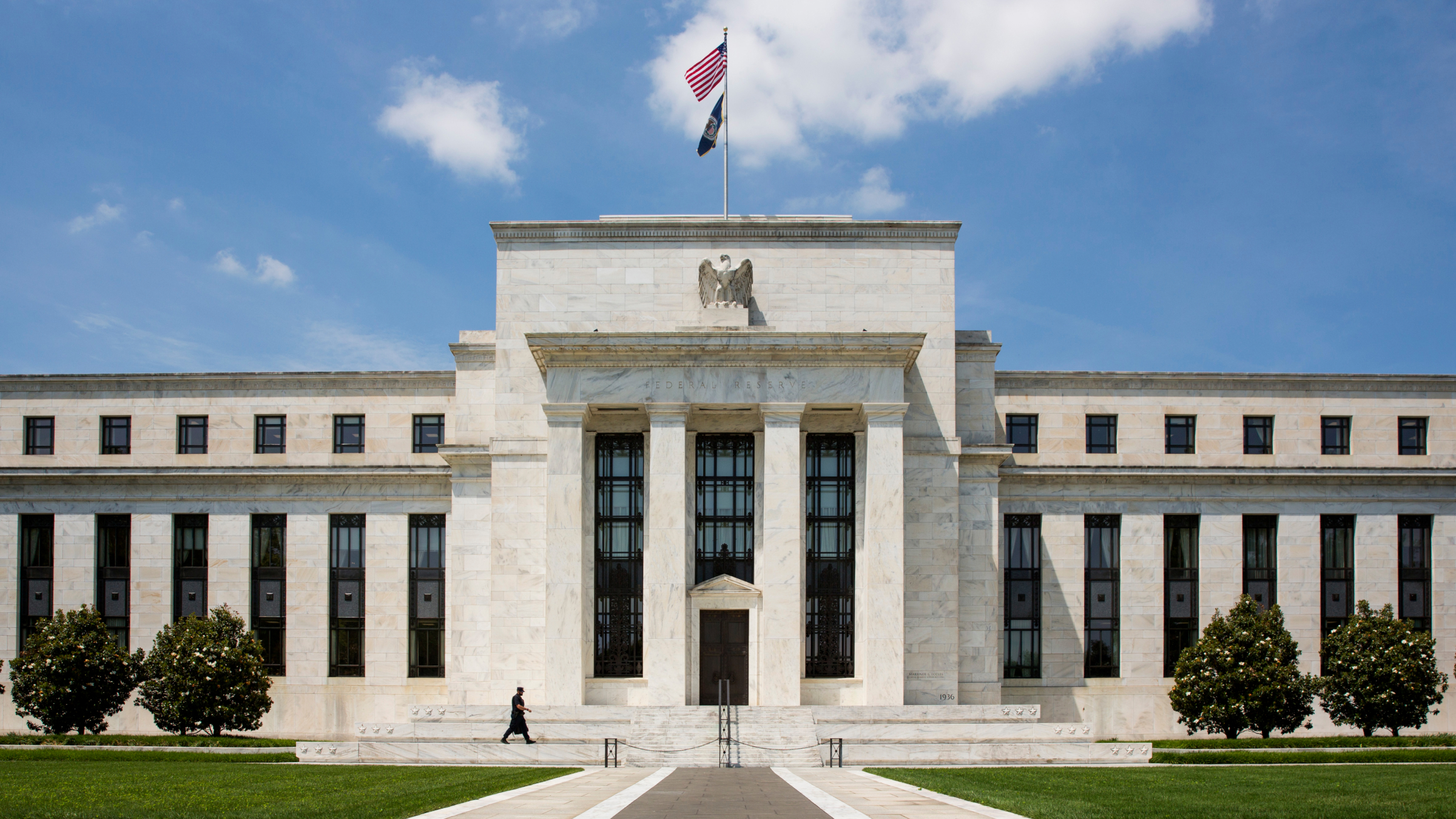
Williams, the "number three" at the Federal Reserve and president of the New York Fed, said in a Bloomberg interview on October 13 that another rate hike this year might still be appropriate, but there is currently no reason to believe that further hikes will be needed in 2027. He expects inflation to slow markedly next year as tariff and energy price shocks subside, bringing it closer to the 2% target, and notes that cooling underlying inflation could help offset some of the price pressures stemming from AI infrastructure investment. Williams added that the U.S. economy is not overheating overall, though the AI sector faces a unique situation where demand exceeds supply, warranting close monitoring of its broader economic implications. Reports indicate that federal funds futures were still pricing in a December rate hike and two additional hikes in 2027 at the time; following his remarks, the yield on the two-year Treasury reversed earlier gains of up to 3 basis points. The Fed's next meeting is scheduled for October 27–28.
Goolsbee: AI demand is spilling over into other sectors; pay close attention to service-sector inflation.
 In a Semafor interview updated on October 13, Chicago Fed President Charles Evans said that the price increases driven by AI investment have begun to spill beyond data centers and related industries, raising growing concerns about overheating demand. Businesses have told him that electricians are hard to hire, construction costs are rising, and some electrical components require up to a year-long lead time, as firms compete with data centers for scarce resources. He believes AI has not yet triggered broad-based overheating in aggregate demand, but it is starting to exert such pressure; if it further pushes up prices across the broader services sector, policy decisions will become more complicated. Regarding the potential for a pullback in AI‑related valuations, Evans noted that the consequences would depend on the extent of leverage, citing the example of internet infrastructure, which was once expanded at 20% annual growth rates but ultimately grew at only 7%. He emphasized that, should inflation return to 2% and employment remain stable, there would still be room for interest rates to fall.
CPI to be released tonight: Overall inflation is expected to pick up, while the core monthly rate is forecast to ease to 0.2%.
The U.S. September CPI will be released at 8:30 p.m. Beijing time on October 14. According to a Wall Street Journal survey, overall CPI is expected to rise 0.6% month-over-month and 3.6% year-over-year, up from August's 0.4% and 3.4%, respectively; core CPI is forecast to increase 0.2% month-over-month, down from the previous reading of 0.3%, while the year-over-year rate is projected to climb from 2.4% to 2.5%. Tony Rodriguez, head of fixed-income strategy at Nuveen, noted that rising energy prices will push overall inflation higher. Reuters reported that some Federal Reserve officials have recently advocated gathering more evidence before deciding whether to continue tightening policy, leaving investors to await guidance from the CPI data. As of October 13, CME FedWatch indicated that the market assigns roughly an 80% probability to the Fed keeping interest rates unchanged at its October 27–28 meeting, up from 51% a month earlier.
Dalio warns that the U.S. Treasury bond bear market is far from over, as the government and AI companies vie for capital.
On October 13, Bridgewater founder Ray Dalio wrote that the imbalance between U.S. Treasury supply and investment demand continues to widen, suggesting that the bond bear market may still have a long way to go. He estimated that, as of the end of September, the outstanding volume of tradable U.S. Treasuries stood at roughly $32 trillion, up 8% year over year, with net issuance totaling about $1.5 trillion in the first nine months of the year and projected at around $2.1 trillion for the full year. Dalio noted that while the Treasury's increased issuance of short-term debt can ease financing pressures at the long end of the yield curve, it also raises the frequency of refinancing and heightens the budget's sensitivity to interest-rate changes. At the same time, the government is competing for funds with corporations and other issuers, as AI‑driven capital spending prompts tech firms to issue more bonds, further squeezing free cash flow. He pointed out that rising yields have yet to significantly weigh on equities or economic activity, but the ongoing rise in borrowing costs could gradually spill over into other asset classes.
U.S. Treasury funds have attracted nearly $14 billion this month, as institutions reassess their 60/40 asset allocation.
The Financial Times reported on October 13 that nearly $14 billion has flowed into U.S. Treasury funds this month, with third-quarter inflows reaching a record $59.3 billion. With the 10-year Treasury yield hovering around 5.24%, institutions such as Blackrock, PIMCO, and Amundi have begun accumulating Treasuries, with some managers favoring the 10-year maturity while remaining cautious about the 20- and 30-year maturities. Reuters also reported that high yields are prompting investors to reassess their 60% equities/40% bonds portfolios, with Royal London Asset Management increasing its bond allocation. According to LSEG Lipper data, in September, short-term U.S. government bond funds attracted $14.5 billion, loan funds drew $4.9 billion, while corporate bond and high-yield bond funds experienced outflows of $4.9 billion and $4.5 billion, respectively; Fidelity believes that floating-rate loans could also be incorporated into broader bond allocations.
Saudi Aramco's headquarters reportedly came under attack and caught fire, while Houthi missiles targeted multiple cities.
On October 13, Bloomberg, citing sources familiar with the matter, reported that during a Houthi missile attack on Saudi Arabia, parts of Saudi Aramco's headquarters in Dhahran, in the eastern region, caught fire before the blaze was extinguished. Saudi Aramco and the Ministry of Energy did not immediately respond to requests for comment. The extent of the damage and the cause of the fire remain unclear, and it has not yet been confirmed whether debris from an intercepted missile was responsible. The Saudi-led coalition stated that Houthi missiles targeted multiple cities, including Riyadh and Dhahran, and that fragments from one intercepted strike landed in a residential area of Dhahran. According to reports, recent attacks on Saudi airports and other targets have left at least 18 people dead and hundreds injured. Earlier, the coalition had ordered residents near an oil facility in Sanaa, Yemen, to evacuate; Saudi Arabia's Jazan refinery remains shut down following an earlier strike, and a key Red Sea oil-export terminal has also been targeted.
U.S. stock market行情
The three major indices fluctuated and weakened, while Apple and Microsoft both hit new highs.
In the face of the official start of a new earnings season and the sharp plunge in the South Korean market, U.S. stocks extended their modest decline overnight, with the tech sector showing mixed performance. In the closing session, John Williams, the "number three" at the Federal Reserve and president of the New York Fed, stated that "there may be one more rate hike this year, but he currently does not believe further hikes will be necessary in 2027," providing some support to the market.
At the close, the Dow Jones Industrial Average ended at 51,670.10 points, down 0.35%; the S&P 500 closed at 7,805.45 points, down 0.02%; and the Nasdaq Composite finished at 27,204.38 points, down 0.15%.

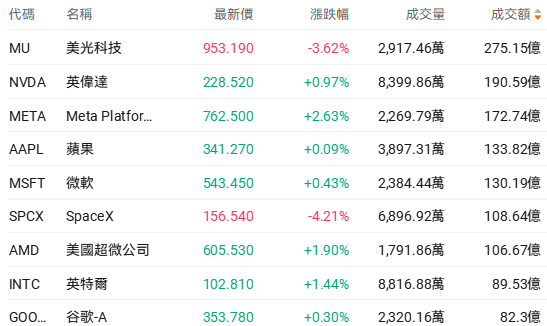
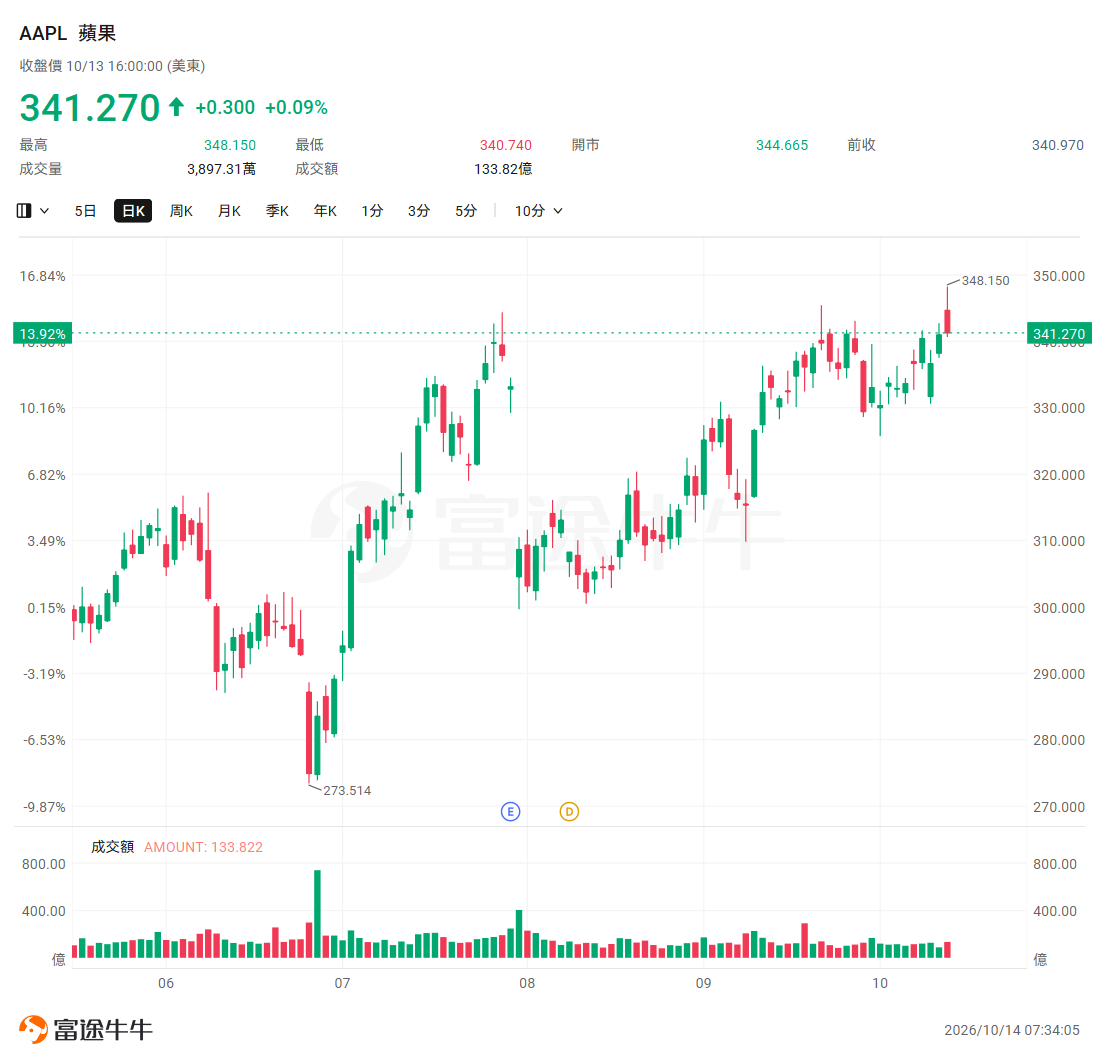
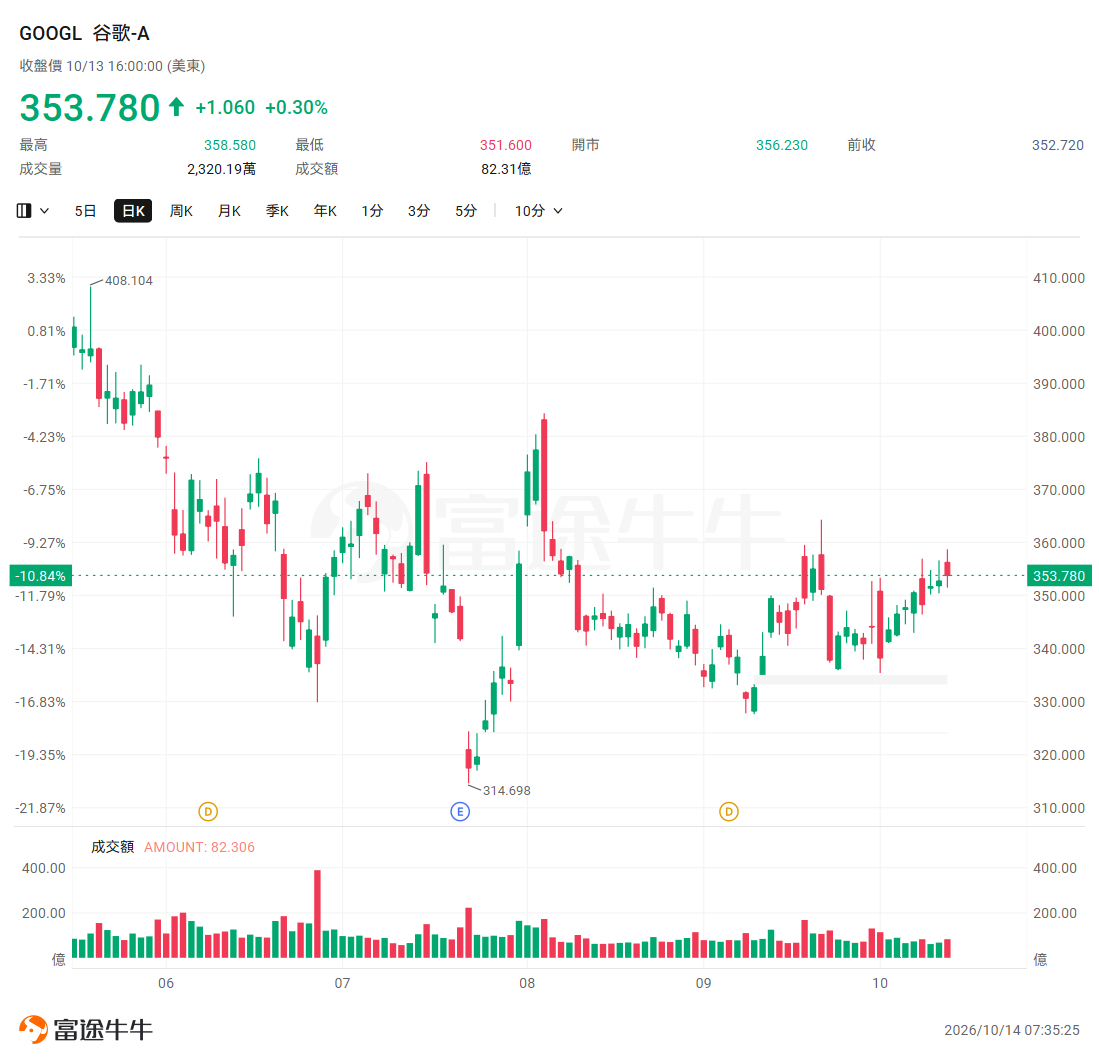
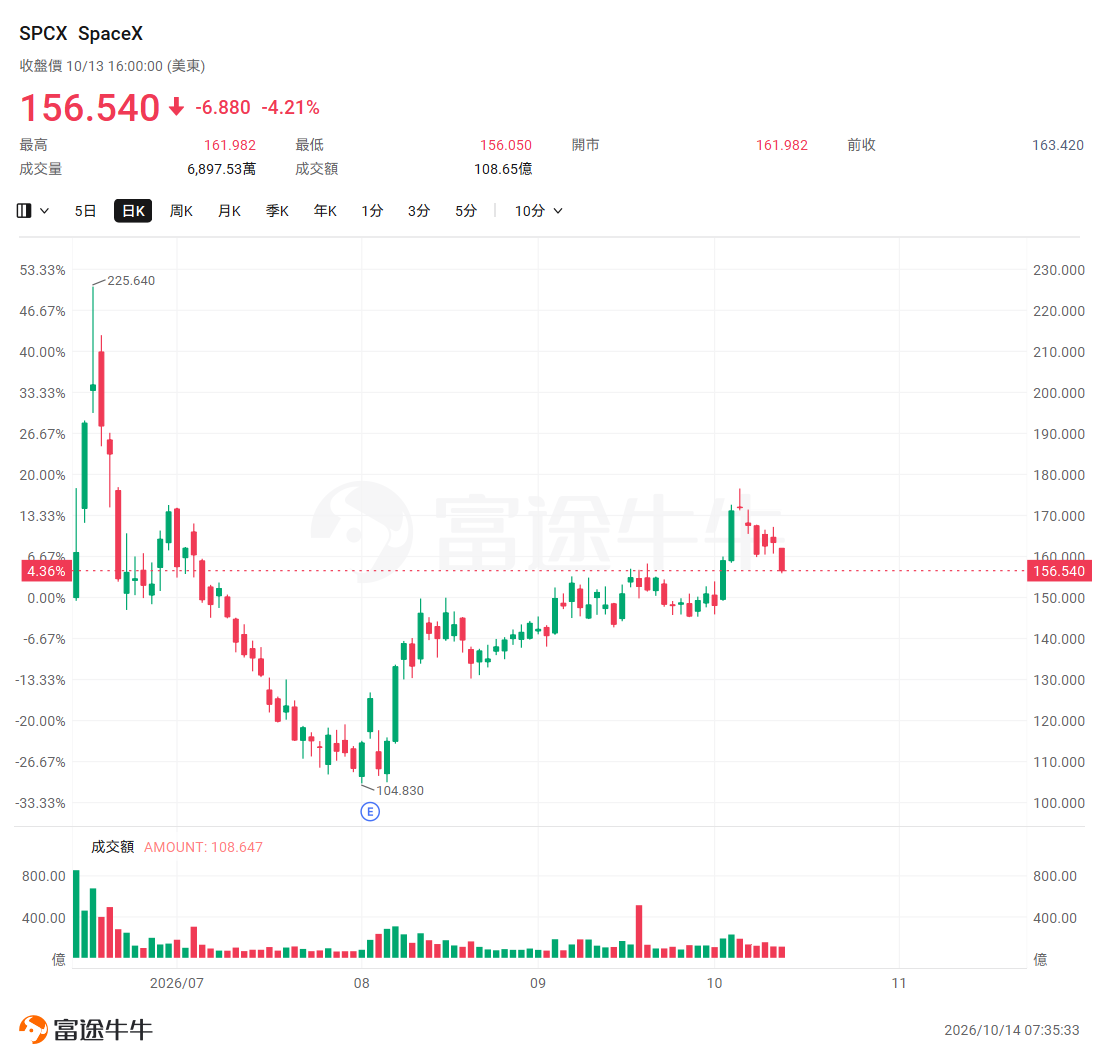
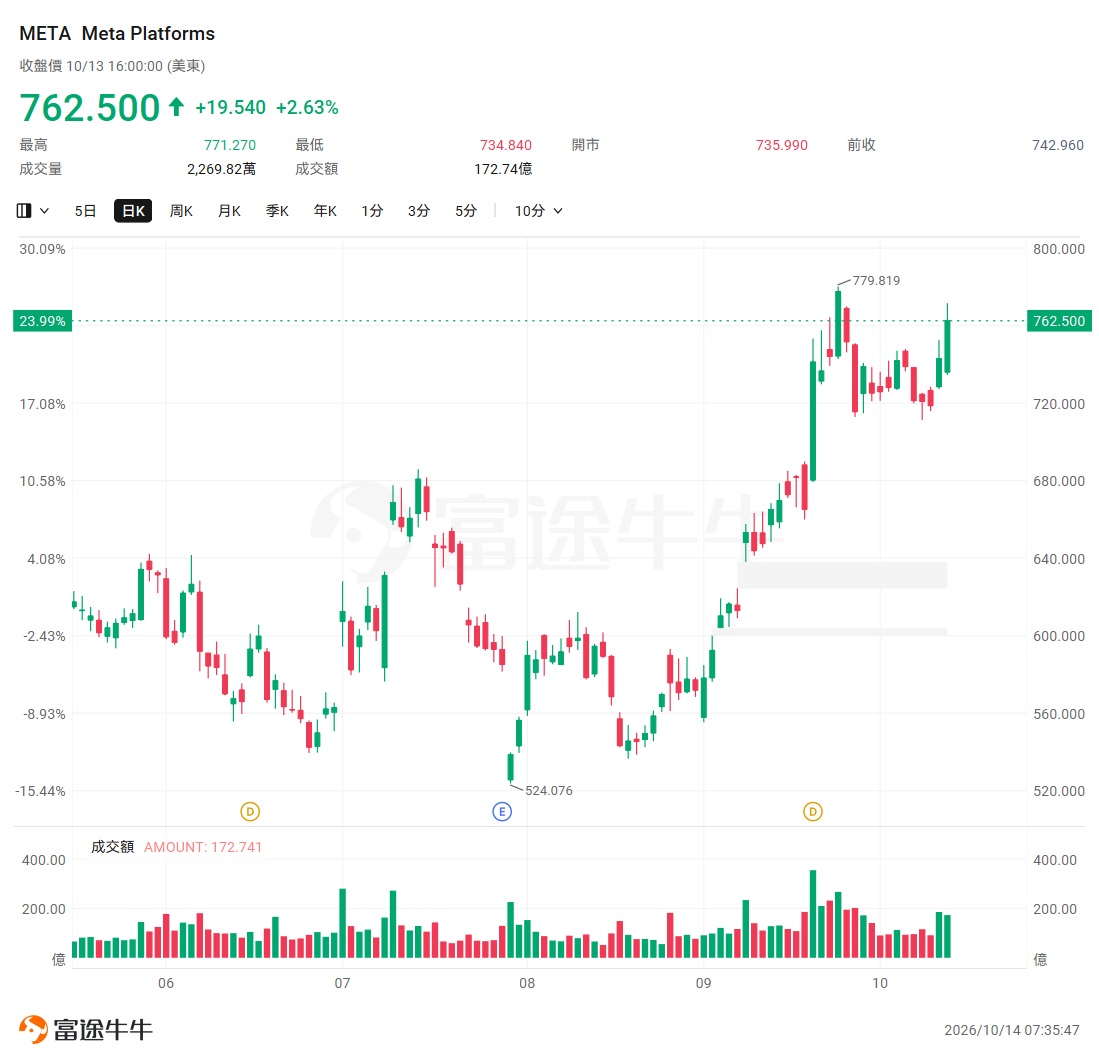
$Star Technology Stocks (LIST2518.US)$Most stocks rose; at the close, NVIDIA gained 0.97%, Apple rose 0.09%, Google-A increased by 0.3%, Microsoft advanced 0.43%, Amazon fell 0.37%, Taiwan Semiconductor climbed 0.17%, SpaceX declined 4.21%, and Meta surged 2.63%.
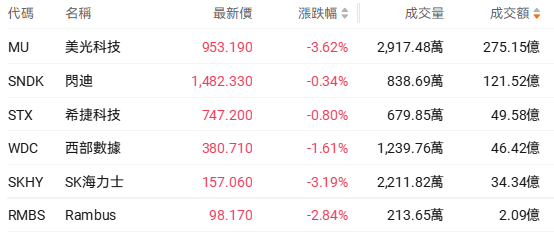
$Storage Concept (LIST23925.US)$On Tuesday, it still ranked among the biggest decliners, but saw a noticeable rally in the closing session. Specifically, SanDisk's decline narrowed from a intraday drop of over 4% to 0.34%, while Seagate Technology's fell from more than 6% to 0.8%.
As reports emerged that the headquarters of oil giant Saudi Aramco had been struck by Houthi forces from Yemen,$Energy Select Sector SPDR ETF (XLE.US)$and also$SONICSHARES GLOBAL SHIPPING ETF(BOAT.US)$It hit a new all-time high on Tuesday.
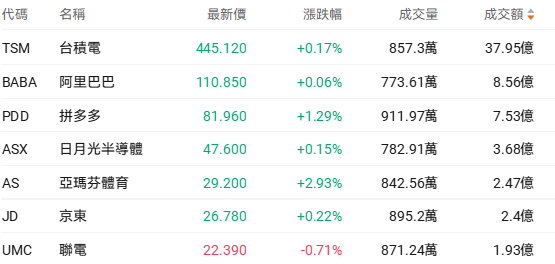
$Popular Chinese Stocks (LIST2517.US)$Market performance was mixed, with Alibaba up 0.06%, PDD Holdings up 1.29%, NetEase down 0.52%, JD.com up 0.22%, Baidu down 0.66%, Ctrip down 0.03%, and Li Auto up 3.07%.
Individual Stock Information
Apple launches HomeView, bringing Siri AI into smart homes.
$Apple(AAPL.US)$On October 13, Apple officially launched its smart home hub, HomeView, equipped with a 7-inch Liquid Retina display. Both the desktop and wall‑mount versions are priced at $299, with pre-orders opening on the same day and sales beginning November 13. The device supports FaceTime, music playback, home monitoring, and smart‑device control, and can use facial recognition to distinguish up to six users, each with personalized information and app interfaces. Powered by Siri AI, the device can access personal context and perform cross‑app tasks when paired with an iPhone or iPad that supports Apple Intelligence. Apple has also introduced the Apple Home Collection of accessories, developed in collaboration with LG and Schneider Electric, which will be rolled out starting in December. The company stated that HomeView will not be available in the European Union for now, as Siri AI has not yet been enabled there.
Google Gemini 4 Argon is now live.
On Tuesday, October 13, Eastern Time,$Google-C(GOOG.US)$It was announced that Gemini 4 Argon is now available worldwide. Google AI Pro and Ultra subscribers can experience the model within the Gemini app and in Google Search's AI Mode, while developers and enterprise users can access it via the paid Gemini API. Ultra subscribers can also use the model in Google AI Studio and Antigravity, and enterprise customers can integrate it through Gemini Enterprise and Antigravity. Google CEO Sundar Pichai announced the official launch of the new model on social media. According to Google DeepMind, Argon is designed to tackle complex problems from start to finish, delivering cutting-edge capabilities in programming, business workflows, and cybersecurity defense.
NVIDIA will take a stake in the French company Doctolib to expand its AI assistant for doctors and patients.
According to a report by Agence France-Presse on October 13, Jensen Huang announced in Paris that,$NVIDIA (NVDA.US)$It will acquire a minority stake in the French healthcare platform Doctolib, with the investment amount undisclosed. Doctolib provides doctor appointment services and enables patients to store and share medical records; in August, the company launched an AI research initiative leveraging data from approximately 50 million users to enhance healthcare service navigation. Its CEO, Stanislas Niox-Chateau, told AFP that the new funding will be used to accelerate hiring and develop proprietary AI models, offering personal assistants to both doctors and patients while handling administrative tasks. Doctolib plans to run these models on NVIDIA chips, while retaining control over both the models and patient data. Jensen Huang also stated that NVIDIA has invested at least $8 billion in Europe over the past year.
SpaceX's AI division has confirmed its attendance at New York City's public safety hearing.
$SpaceX(SPCX.US)$On Tuesday, the stock closed down 4.21% at $156.54. On October 13, the New York City Council announced that SpaceX AI has agreed to attend a technical committee hearing on AI safety at 10:00 a.m. on October 16—22:00 Beijing time. The council had issued a subpoena to the company on September 28, demanding testimony; after the company failed to appear at the October 5 hearing, the council stated it would seek a court order from the New York State Supreme Court to compel compliance. SpaceX AI subsequently requested a meeting on October 7 and confirmed its participation in the follow-up hearing. Legislators are expected to raise questions regarding data privacy, security safeguards, and whistleblower protections. Senior representatives from Anthropic, Google, Meta, and OpenAI already testified at last week's hearing. Speaker Julie Menin emphasized that the public needs to understand how companies mitigate AI risks and how accountability will be ensured if those safeguards fail.
Meta's current head of AI: If Muse and Wonder fail, Meta will go straight bankrupt.
$Meta Platforms(META.US)$In an interview, the current head of AI, Alexander Wang, publicly revealed for the first time: Meta is placing a wildly bold bet. Even before cutting-edge models had been thoroughly validated, Zuckerberg personally approved a massive investment of $100–200 billion in AI. During a team-building retreat in Hawaii, CFO Susan Li desperately warned AI chief Alexander Wang that failure would trigger a financial catastrophe. Under immense pressure, the team developed the Muse Wonder model and successfully entered the top tier of the AI race. Zuckerberg firmly believes that AI will not be a winner-takes-all scenario, and he is strategically building both personal superintelligence and an ecosystem of smart hardware.
SK Hynix has unveiled two groundbreaking technologies: MARS, which boosts performance by up to five times, and HBF, whose capacity is 14 times that of HBM.
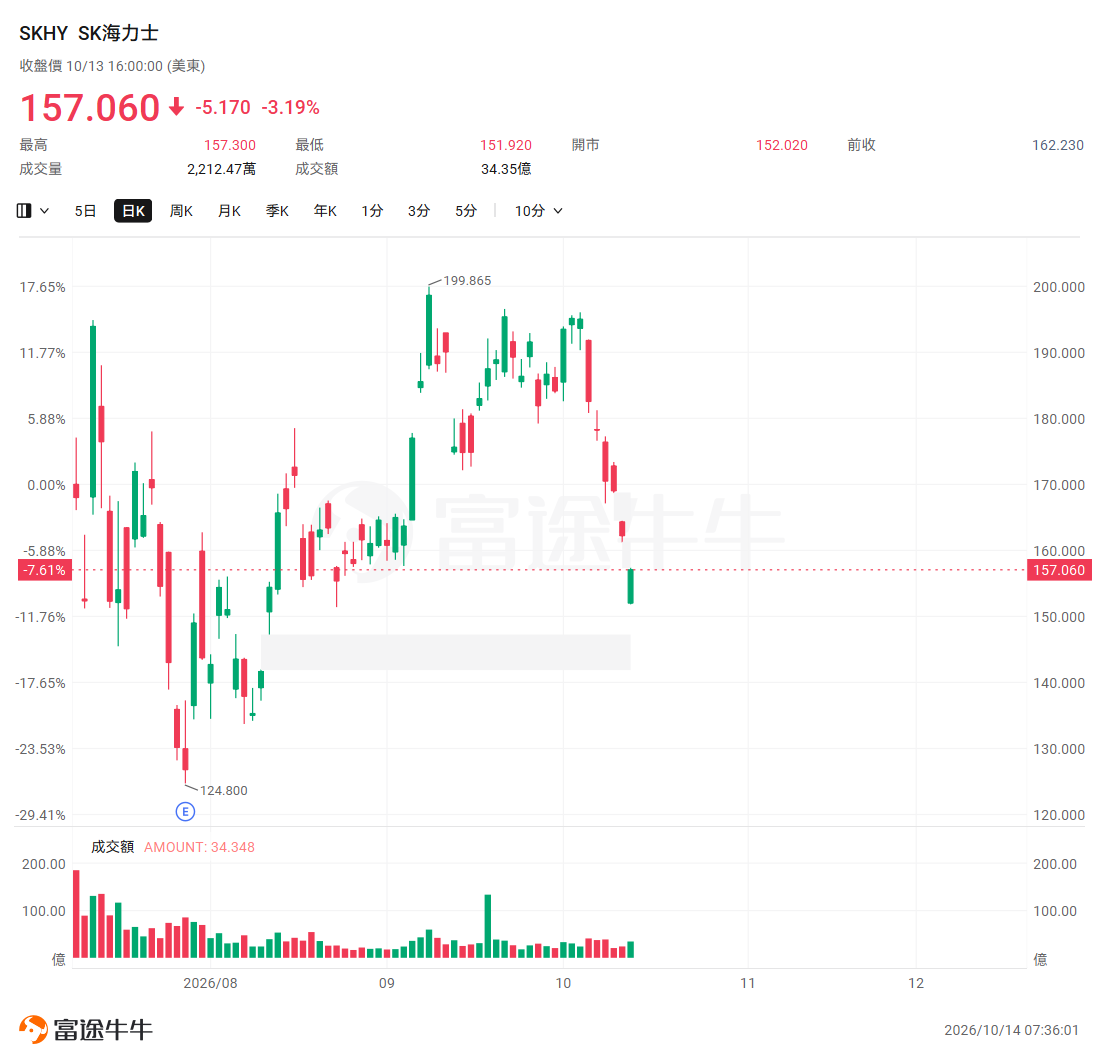
$SK Hynix (SKHY.US)$At the 2026 OCP Global Summit, MARS, a memory‑acceleration architecture, and HBF, a high‑bandwidth flash technology, were unveiled, addressing the memory bottlenecks in AI training and inference. By decoupling memory access patterns, MARS can improve first‑token‑throughput time (TTFT) for multi‑round inference by a factor of 3 to 5. Meanwhile, HBF offers roughly half the bandwidth of HBM while delivering up to 14 times the capacity; sample units are slated for release in early 2028. Together, these technologies are expected to optimize memory utilization and capacity allocation across AI infrastructure.
Visa and MasterCard both hit record highs, with Visa receiving approval from the People's Bank of China to conduct bank card clearing operations in mainland China.
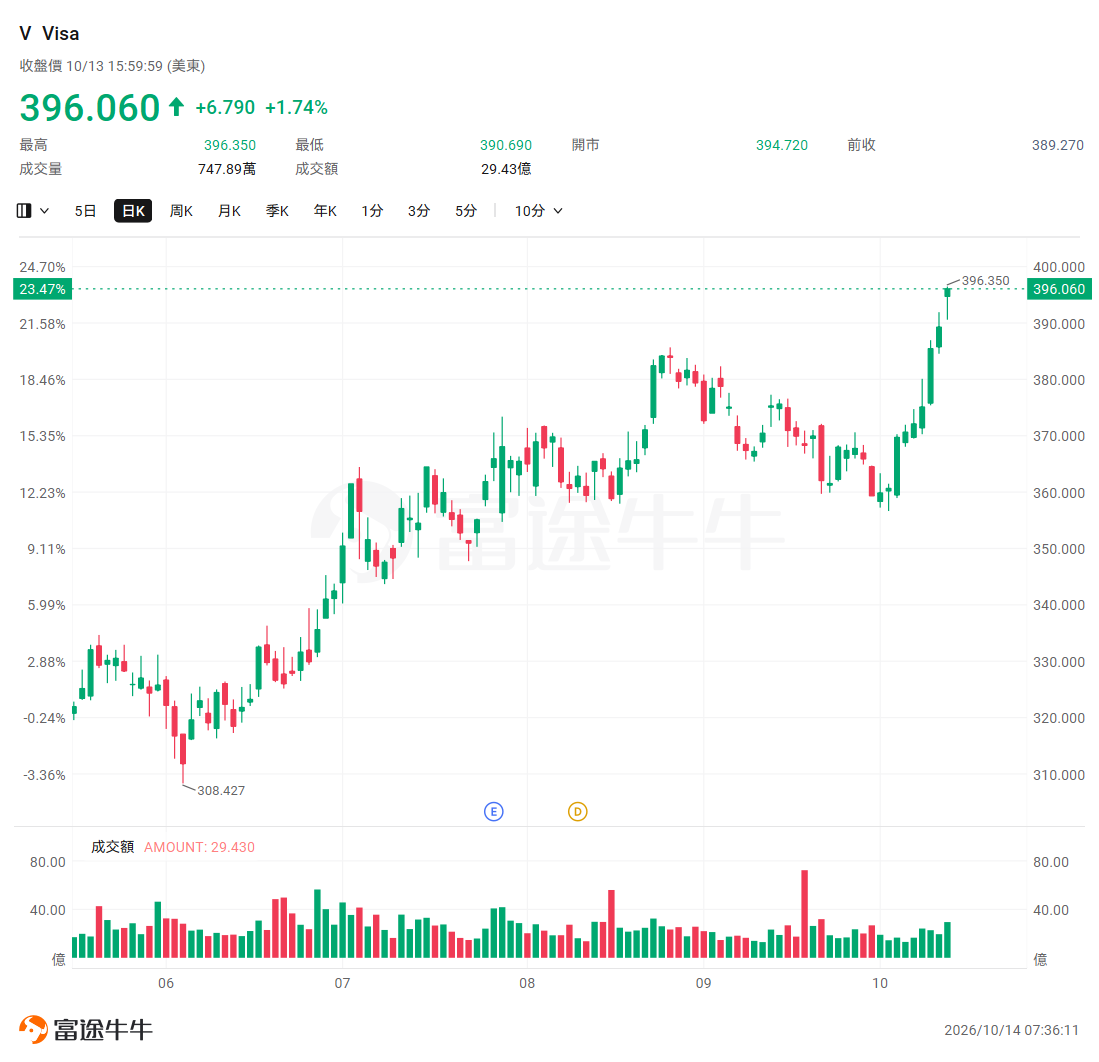
On Tuesday,$Visa(V.US)$ 、 $MasterCard (MA.US)$Closing prices all hit record highs. On the news front, U.S. payment giant Visa announced that it has received approval from the People's Bank of China to set up a bankcard clearing business in mainland China, paving the way for it to follow in the footsteps of rivals MasterCard and American Express and enter China's vast payments market. In a statement, Visa CEO Ryan McInerney said that for more than four decades, Visa has been an active participant in China's vibrant payments ecosystem and looks forward to taking the necessary steps, in accordance with the relevant regulations of the People's Bank of China, to launch local operations in mainland China.
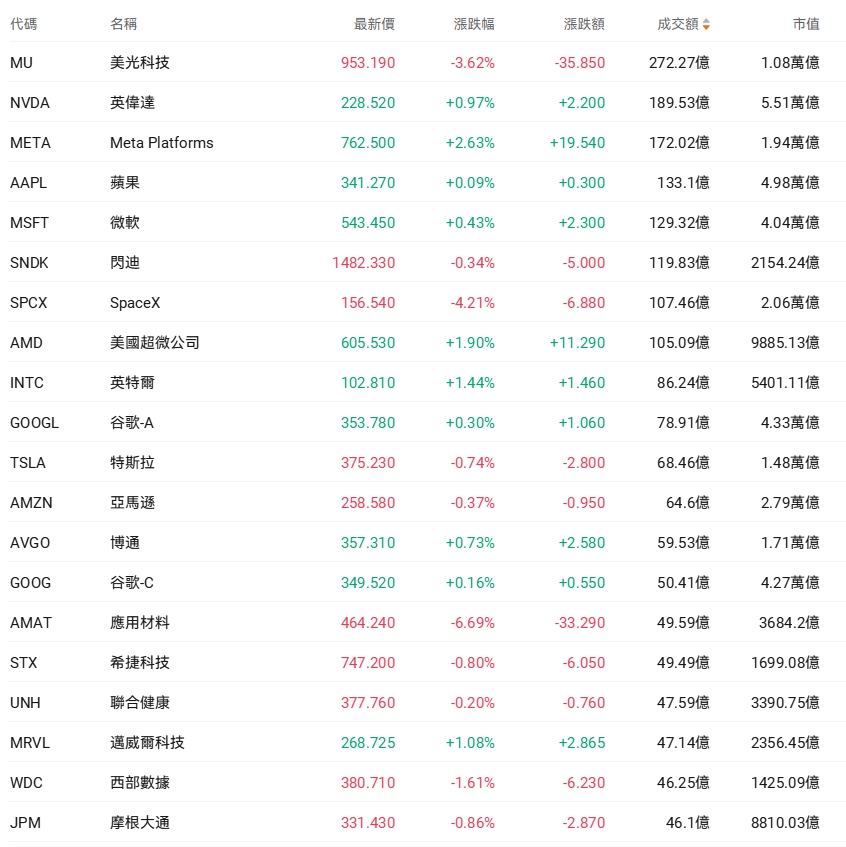
Top 20 in Trading Volume
Hong Kong Stock Market Outlook
Southbound capital net-purchased nearly HK$300 million worth of Cambridge Technology, while net-selling nearly HK$1 billion worth of SMIC.
On Tuesday, October 13, southbound capital net sold HK$457 million worth of Hong Kong stocks.
$Cambridge Technology (06166.HK)$、$JianTao Laminate Board (01888.HK)$They recorded net purchases of HK$262 million and HK$172 million, respectively.
$SMIC (00981.HK)$、$YOFC Fiber Optic Cable (06869.HK)$、$HuaHong Hongli (01347.HK)$They were net sold off by HK$976 million, HK$429 million, and HK$303 million, respectively.
Tencent has issued bonds totaling over US$5.7 billion to raise capital for expanding its AI investments.
On October 13, it was reported that,$Tencent (00700.HK)$Pricing has been completed for RMB 26 billion (USD 3.88 billion) of offshore bonds, and the issuance of USD 1.8 billion in U.S. dollar‑denominated bonds has been launched. The offering attracted aggregate subscriptions exceeding USD 23 billion—more than four times the final size—underscoring strong market confidence in Tencent's creditworthiness. According to reports, Tencent had initially targeted at least USD 4.5 billion, but the final proceeds surpassed expectations. This transaction will be Tencent's largest offshore bond offering since 2020; the company only completed a USD 4.7 billion bond issue in June this year. As global technology firms seek funding for AI‑related initiatives, bond issuance is surging, and Tencent's latest deal is a clear example of this trend.
Jinli Permanent Magnet expects its net profit for the first three quarters to increase by more than 40%, with robot‑related revenue doubling.
$Jinli Permanent Magnet (06680.HK)$On October 13, following market close, the company announced that it expects third-quarter net profit attributable to shareholders of RMB 735 million to RMB 800 million, up 42.59% to 55.20% year over year; non‑GAAP net profit is forecast at RMB 659 million to RMB 724 million, reflecting a year‑over‑year increase of 53.22% to 68.33%. For the third quarter, net profit attributable to shareholders is expected to range from RMB 273 million to RMB 338 million, up 29.58% to 60.45% year over year. The company reported that consolidated revenue for the first three quarters grew by approximately 40% year over year, with revenue from new‑energy vehicles and automotive components rising by about 40%, and revenue from robotics and industrial servo motor businesses surging by roughly 100%. Furthermore, its embodied‑robot motor rotor products have already entered small‑batch deliveries. Non‑recurring gains and losses for the period are estimated at approximately RMB 76 million, while share‑based compensation and related financial expenses associated with A‑share and H‑share equity incentive plans and H‑share convertible bonds total around RMB 175 million.
Today's Focus
Keywords: U.S.-China CPI; ASML Holding earnings report; Fed officials' remarks
On the economic data front, at 9:30 a.m., China's September CPI figures will be released; at 8:30 p.m., the U.S. September CPI and core CPI will be published.
In terms of financial events, at 14:05, Bank of Canada Governor Macklem will participate in a fireside chat at the Institute of International Finance's annual members' meeting; at 16:30, European Central Bank President Lagarde will deliver a speech on Europe's digital future; and at 17:40, Federal Reserve Board Governor Bowman will speak. In addition, at 16:00, the IEA will release its monthly oil market report.
Notably, Anthropic is scheduled to hold a pre-IPO investor day with potential investors on October 14.
In terms of performance,$Bank of America (BAC.US)$ 、 $Morgan Stanley (MS.US)$ 、 $Blackrock (BLK.US)$and$ASML Holding (ASML.US)$Announce financial results.
 Want to pick stocks or analyze them? Curious about your portfolio's opportunities and risks? For all your investment questions,Just ask Futubull AI!

Editor/rocky