Macro News Highlights
Goolsbee: September CPI was disappointing, and service-sector inflation is hard to attribute to oil prices and tariffs.
On October 14, Chicago Fed President Charles Evans told Yahoo Finance that the September CPI report was "disappointing," adding that he was concerned not only about the headline figure but also about the near‑stagnant trend in service prices. He noted that service‑sector inflation cannot be easily attributed to tariffs or oil prices. During visits to the U.S. Midwest, businesses repeatedly cited rising costs and price hikes, while rarely mentioning economic slowdowns or recession risks, leading him to worry more about overheated demand than mere supply shocks. Evans stated that the Federal Reserve cannot tolerate persistently high inflation, and if price pressures remain elevated, there is no ambiguity about how the central bank should respond. He emphasized that once demand‑side overheating takes hold, it tends to be more persistent and harder to reverse, and the Fed will work to bring inflation back to its 2% target.
San Francisco Fed President Daly: Further rate hikes may still be needed, but there is no rush to act in October.
 Reuters published an interview after the U.S. market closed on October 14, in which San Francisco Fed President Mary Daly said the Federal Reserve will likely still need to raise short-term interest rates further, though the timing of such moves remains under discussion and there is no need to rush into a decision when information is limited. She noted that long-term borrowing costs, such as mortgage rates around 7.5%, have already begun to dampen demand in certain sectors. Regarding September's CPI, she acknowledged that inflation risks have indeed risen, but the overall increase was largely driven by gasoline prices; while core inflation remains sticky, it has not suddenly shifted sharply higher. Daly added that a stable labor market allows the Fed to focus on tackling price pressures, and that rising risks do not yet equate to actualized risks—so acting hastily in response to perceived threats when there is still time for careful deliberation would be unwise. At the time, the market priced in roughly a 40% probability of another rate hike in October.

Federal Reserve Beige Book: Energy Costs Are Passing Down the Supply Chain, and Businesses in Five Districts Are Adjusting Hiring Plans Due to AI
On October 14, the Federal Reserve released its Beige Book. Among the 12 districts, three reported strong overall price increases, while in another three, input‑price pressures have intensified or remain at robust levels; four districts noted that the pace of price hikes has accelerated compared with the previous period. All districts cited the impact of high oil prices, with diesel surcharges passing cost increases along the supply chain, and tariffs, commodity costs, and insurance premiums also exerting upward pressure. Businesses serving consumers reported that customers are resisting price increases, squeezing profit margins, and responding through selective price hikes, targeted promotions, and adjustments to product mixes. Overall economic activity remained modestly expanding, with consumer spending largely unchanged across most districts, and in more than half of them, spending was driven by higher‑income households. In five districts, firms indicated that, following investments in AI to boost productivity, they have adjusted their workforce by allowing natural attrition, delaying hiring, or scaling back planned new hires.
Gold and silver are under pressure, as the inflation trade continues into tonight's PPI release.
Inflation data have boosted expectations of interest-rate hikes, sending gold lower for the third consecutive session. David Meger, head of precious metals trading at High Ridge Futures, said that a CPI reading higher than expected makes it more likely the Federal Reserve will raise rates, while a stronger U.S. dollar is further weighing on gold. Meanwhile, Carsten Menke, an analyst at Switzerland's Baosheng Media Group, noted that, over the longer term, central banks' ongoing gold purchases and concerns about U.S. debt and its servicing costs could still provide support for gold. The U.S. September PPI is scheduled to be released at 8:30 p.m. Beijing time tonight.

Goldman Sachs expects AI's inflationary contribution to peak by year-end and fall to about 10 basis points by the end of 2027.
On October 14, Goldman Sachs economist David Mericle and others released a study estimating that AI-related price pressures are currently contributing about 45 basis points to U.S. core PCE inflation, with roughly half stemming from actual price effects and the remainder attributable to statistical measurement biases. The firm projects that this contribution will peak at around 50 basis points by year-end before declining to approximately 10 basis points by the end of 2027. The research concludes that AI demand's impact on inflation is significant yet moderate, while data in the software and accessories categories face substantial measurement challenges. Goldman Sachs industry analysts expect that next year, the pace of price increases for memory chips and computers will slow markedly, thereby easing both real cost pressures and the measurement distortions embedded in software and accessory statistics. The firm notes that the inflationary drag from AI demand may already be nearing its peak, rather than continuing to expand at the current rate.
Another "ghost story"? CoreWeave's bond yields have surged past 15%, drawing attention to the financing pressures facing AI infrastructure.
According to a Bloomberg report on October 14, CoreWeave's unsecured bonds due in 2032 have fallen below 80% of par, with a yield to maturity exceeding 15%. The Financial Times reported on the same day that the company is seeking to attract capital from life insurance firms and aims to secure an investment-grade rating for its chip-backed loans.
U.S. venture capitalist Chamath Palihapitiya noted that, at this price, the bonds yield over 15%—compared with a coupon rate of 9.625% when they were issued in June. After Palihapitiya cited this figure, Elon Musk retweeted it and replied, "Yikes." As of the end of June, the company's total debt and lease obligations stood at approximately $52 billion, and it has raised more than $35 billion this year through various financing instruments.
After hours, Reuters reported that CEO Mike Intrator stated in an internal memo that financing challenges and IPO hurdles faced by some peers have weighed on the market's perception of the company, adding that its contract backlog is sufficient to service its debt. The company's second-quarter revenue‑backed order backlog stood at $104.2 billion, while it secured more than $25 billion in net new customer commitments in the third quarter.

Anthropic reported third-quarter revenue of $16.8 billion, with adjusted earnings and positive free cash flow.
According to reports by Reuters and the UK's Financial Times on October 14, Anthropic held a pre-IPO investor briefing in San Francisco, revealing that its third-quarter revenue reached $16.8 billion—up roughly 45% to 46% from the second quarter—and that it posted adjusted profitability. Citing sources familiar with the matter, the Financial Times noted that the company has recorded adjusted profits for two consecutive quarters, with positive cash flow and an operating margin of about 11% in the third quarter; for every dollar spent on computing power, it generates approximately $1.70 in revenue. Reuters reported that the company aims for a valuation exceeding $2 trillion and could go public after the U.S. midterm elections in November. During the full-day presentation, management outlined its growth, efficiency, and safety strategies. The company has pledged to invest at least $518 billion over the next decade in cloud services, computing power, and infrastructure.
U.S. stock market行情
Tech stocks plunged across the board, with the Nasdaq down nearly 2%, while Berkshire Hathaway posted its tenth straight gain.
Last night and this morning, under the pressure of U.S. September CPI data that exceeded expectations, the tech sector came under strain and weakened; subsequently, the decline widened further amid concerns about the sustainability of AI financing deals, with the Nasdaq posting its biggest single-day drop since July. At the close, the S&P 500 fell 1.11%, to 7,718.94 points; the Nasdaq Composite dropped 1.88%, to 26,692.87 points; and the Dow Jones Industrial Average slipped 0.09%, to 51,621.48 points.
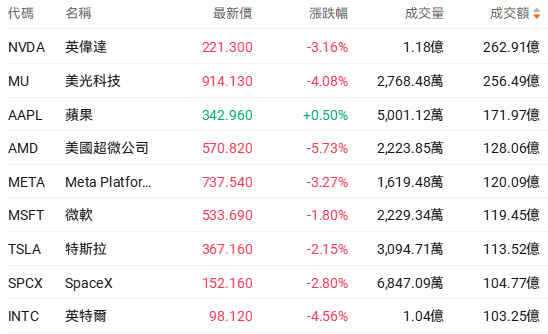
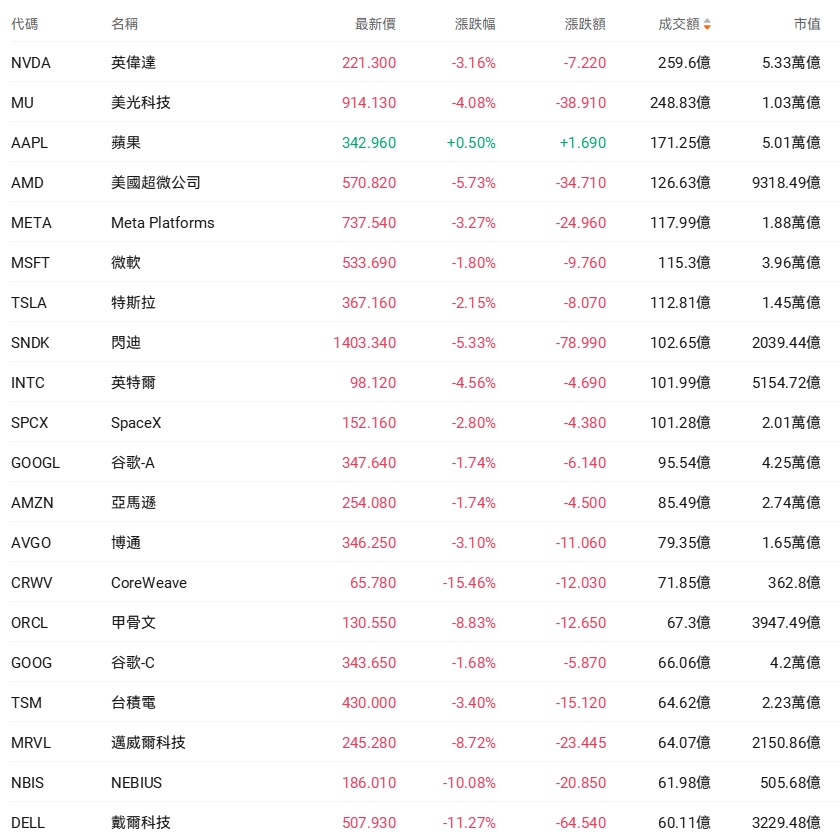
$Star Technology Stocks (LIST2518.US)$Most stocks declined; at the close, NVIDIA fell 3.16%, Apple rose 0.5%, Google-A dropped 1.74%, Microsoft declined 1.8%, Amazon slipped 1.74%, Taiwan Semiconductor fell 3.4%, SpaceX dropped 2.8%, Meta decreased 3.27%, Broadcom fell 3.1%, and Tesla declined 2.15%.
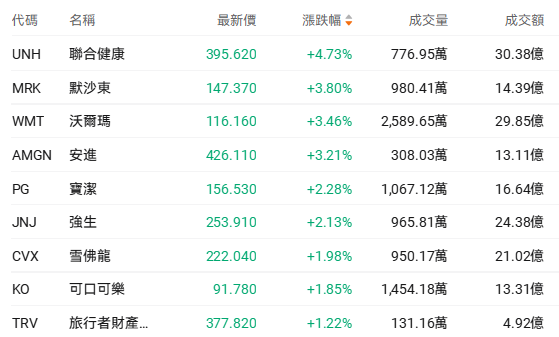
Amid market volatility, stocks with defensive characteristics have attracted inflows of capital. Dividend‑yield stocks are a prime example.$Coca-Cola (KO.US)$, and$Procter & Gamble (PG.US)$ 、 $Walmart (WMT.US)$and$Costco (COST.US)$Meanwhile, consumer staples stocks generally strengthened,$Pfizer (PFE.US)$ 、 $Eli Lilly and Co (LLY.US)$ 、 $Merck & Co. (MRK.US)$and$UnitedHealth (UNH.US)$Even healthcare stocks have risen against the market trend, indicating that, amid rising interest rates and a cooling of AI‑driven trading activity, investors are flocking to defensive stocks characterized by pricing power, stable dividends, and low earnings volatility.
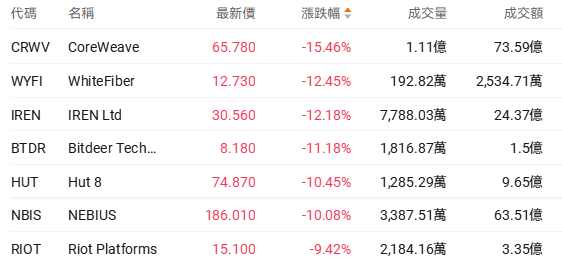
Emerging data center developer$CoreWeave(CRWV.US)$The sharp plunge in bond prices has drawn the attention of Silicon Valley heavyweights such as Elon Musk and Chamath Palihapitiya. As a result,$NEBIUS(NBIS.US)$Down 10%,$IREN Ltd(IREN.US)$Down 12.18%, server manufacturer$Dell Technologies (DELL.US)$Down 11.27%,$Oracle (ORCL.US)$Down 8.83%, leading stock in the optical communications sector$Lumentum(LITE.US)$Down 9.28%.
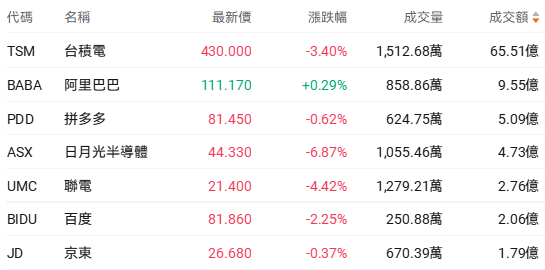
$Popular Chinese Stocks (LIST2517.US)$Most stocks declined; at the close, Alibaba rose 0.29%, PDD Holdings fell 0.62%, JD.com dropped 0.37%, NetEase slipped 0.83%, Baidu declined 2.25%, Ctrip gained 0.34%, and Li Auto fell 4.17%.
Individual Stock Information
Berkshire Hathaway climbs ten spots in the rankings, increasing its holdings in the software sector.
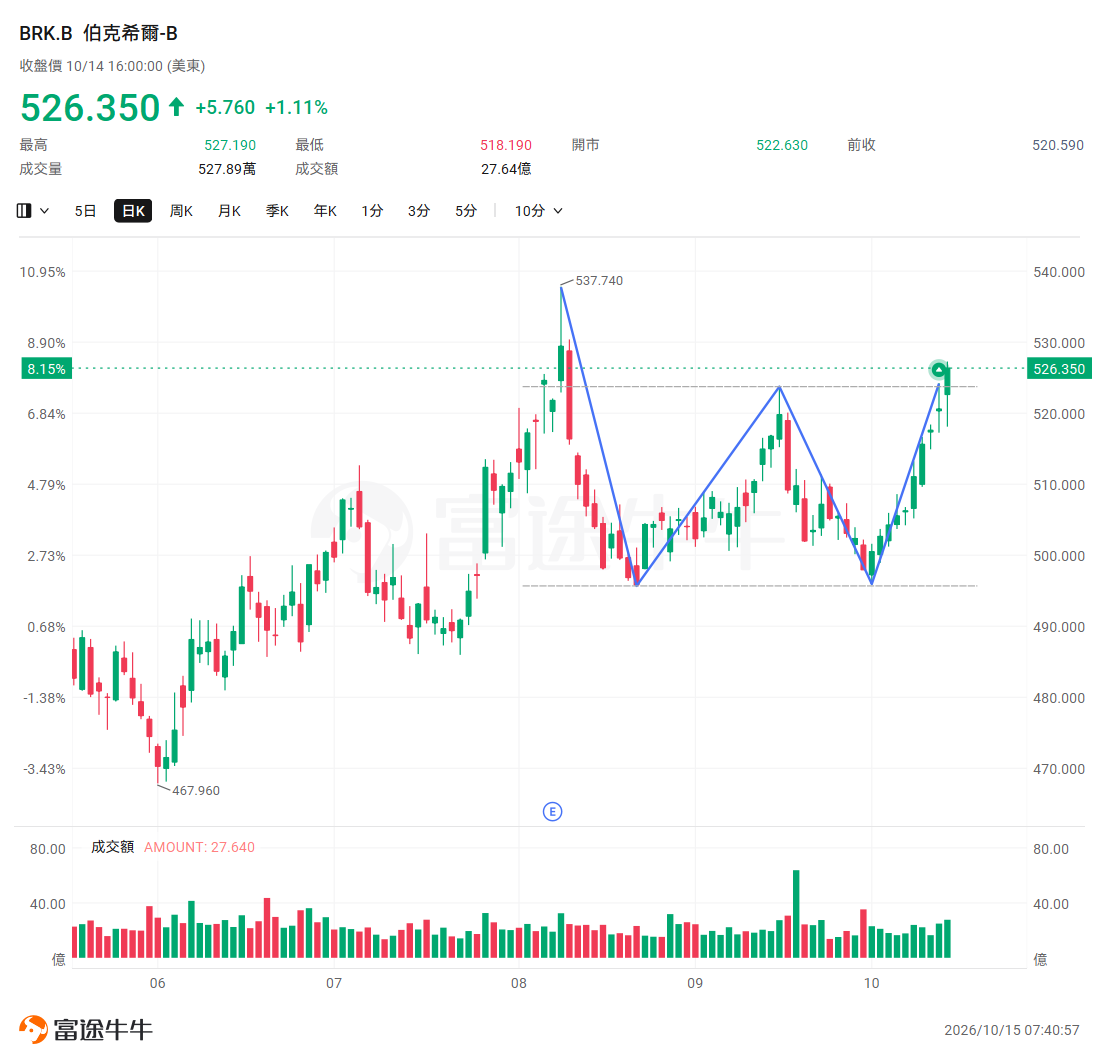
$Berkshire Hathaway-A(BRK.A.US)$On Wednesday, it posted a 10-session winning streak, the first since January 2018. Meanwhile, an Italian technology company…$Bending Spoons S.p.A(BSP.US)$On Wednesday, the stock surged 41.2% against the market trend. The company announced that Berkshire Hathaway plans to make an additional investment of $330 million through a private placement, subscribing to 10 million shares of common stock at $33 per share, which will raise its stake to 4% upon completion of the transaction.$Berkshire Hathaway-B(BRK.B.US)$The company had previously invested $600 million in the firm's July IPO. The proceeds from this fundraising round are intended for general corporate purposes and new acquisitions. Bending Spoons operates digital businesses including AOL, Vimeo, Evernote, and Eventbrite.
Apple's market capitalization has surpassed 5 trillion for the first time, and reports indicate it plans to launch its first batch of AI features in China in December.
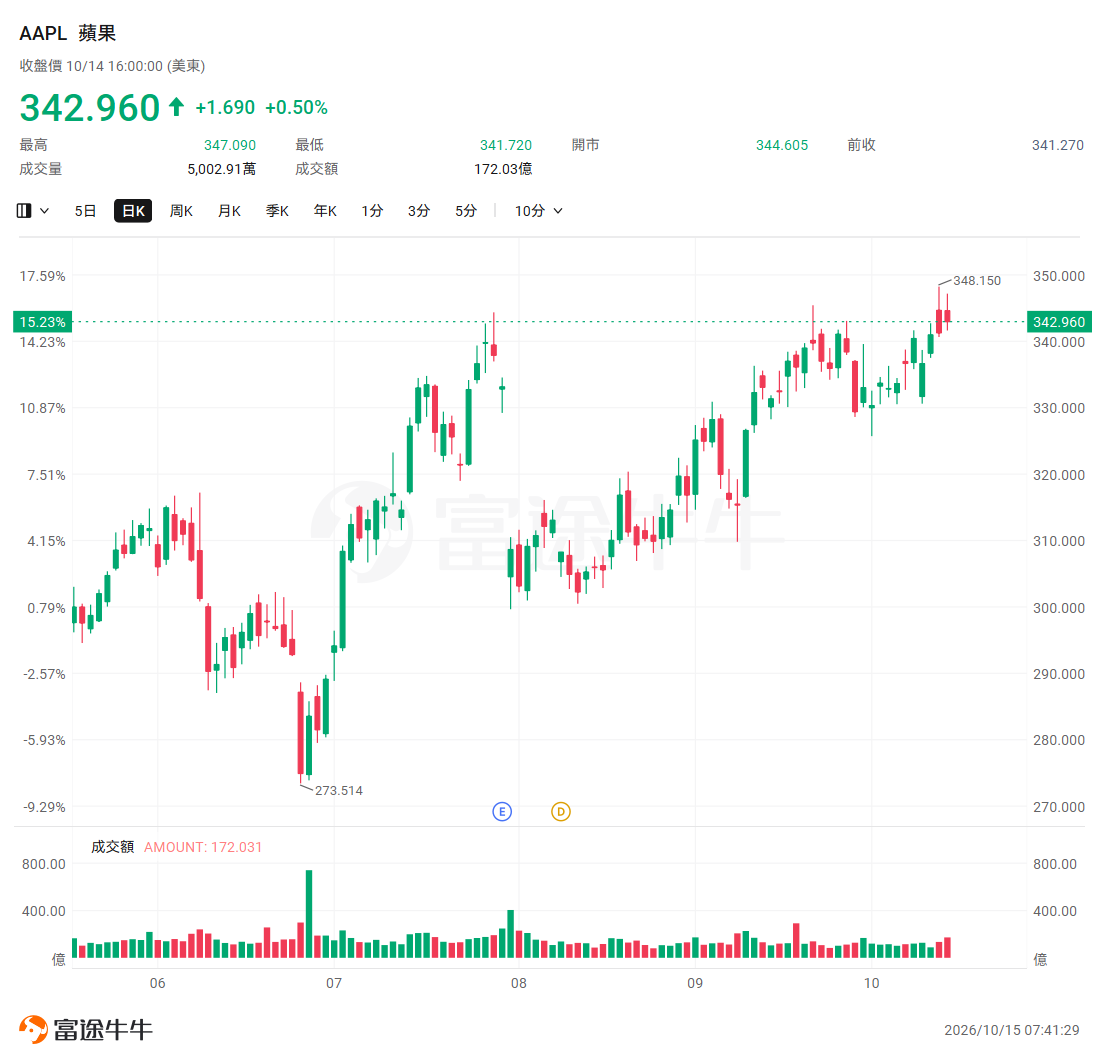
According to a Bloomberg report on October 14,$Apple(AAPL.US)$It plans to roll out the first batch of Apple Intelligence features in mainland China with the December iOS 27.3 update, ending the absence of these features in the region. Initially, it will focus on basic functions such as photo editing, notification summarization, and select writing tools, excluding the new version of Siri AI launched this year, which was rebuilt based on Google's Gemini. Reports indicate that Apple and …$Alibaba-W(09988.HK)$Collaboratively develop protective mechanisms that comply with local requirements, and with…$Baidu Group-W(09888.HK)$Promoting the localization of search and Siri-related features. MacRumors, citing reports, added that Image Playground and the new version of Genmoji are also not included in the initial rollout, and text-generation tools will be restricted. Since their launch in the United States in 2024, these AI features have yet to be officially made available in mainland China. On Wednesday, Apple's stock price rose by about 0.5%, hitting another record closing high and becoming the second publicly listed company—after NVIDIA—to surpass a market capitalization of $5 trillion.
CoreWeave closed down more than 15%, with the CEO stating that its order backlog is sufficient to support debt repayment.
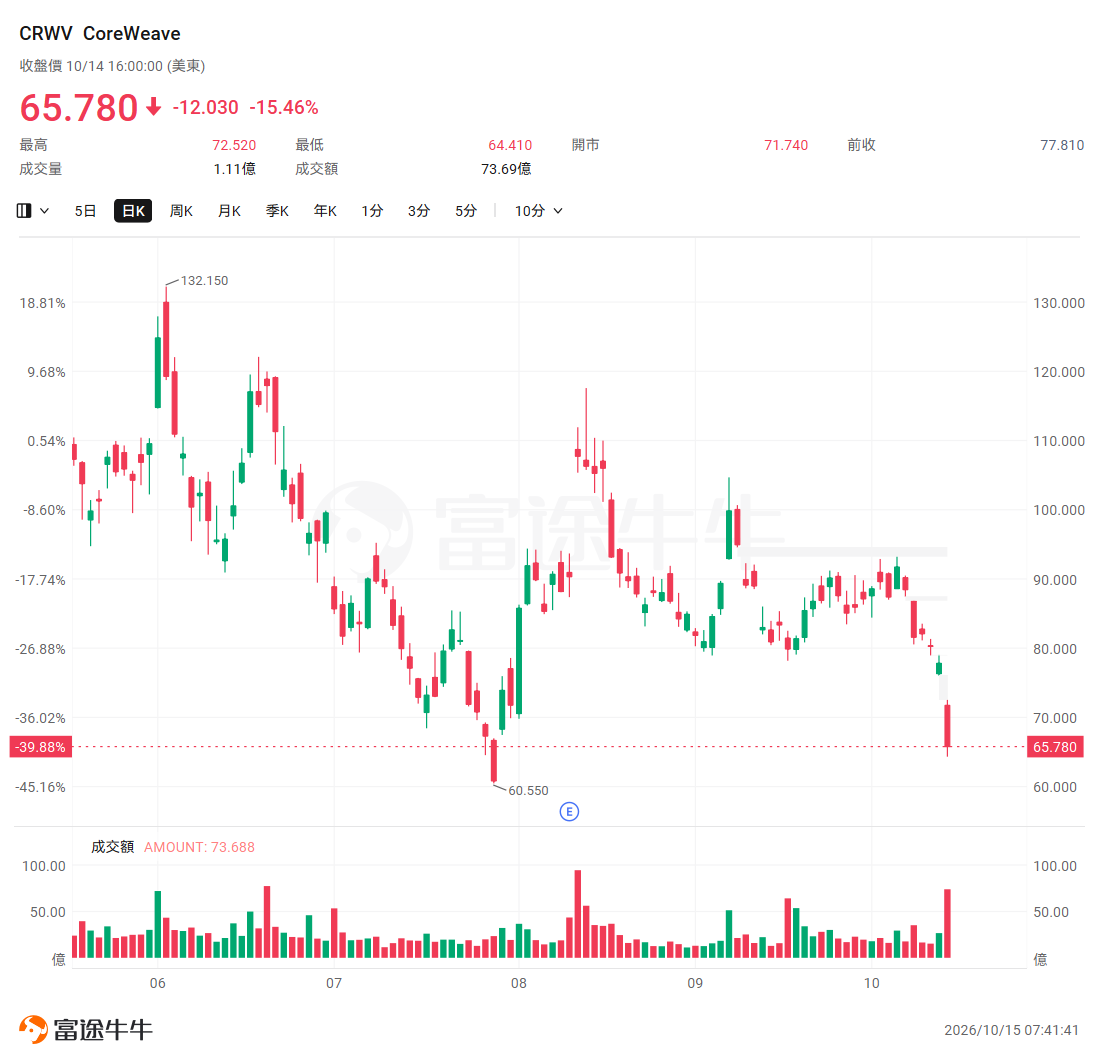
$CoreWeave(CRWV.US)$On Wednesday, the stock closed down 15.46% at $65.78. Reuters reported after the market close on October 14, Eastern Time, that CEO Mike Intrator stated in an internal memo that the market sometimes misinterprets the company and reacts irrationally, adding that the company's current order backlog is sufficient to service its debt. He noted that difficulties and delays experienced by some competitors in their IPOs and debt financings are affecting external perceptions of CoreWeave. The company's second-quarter revenue‑backed order backlog stood at $104.2 billion, up from $99.4 billion in the first quarter, and it added that it secured more than $25 billion in net new customer commitments in the third quarter. According to Bloomberg, citing Trace pricing, the company's unsecured bonds due in 2032 briefly fell below 80% of par. Intrator said he remains confident in the company's business model, financial position, and order backlog.
Jensen Huang: Will cut off supply to customers developing unsafe AI, and support UK security research.
$NVIDIA (NVDA.US)$CEO Jensen Huang said in a Bloomberg interview in London on October 14 that if customers develop unsafe AI software, the company is willing to stop supplying them with chips—but not before engaging in dialogue with those customers. He emphasized that NVIDIA will not micromanage other companies' operations and that there are limits to how a general‑purpose technology provider can judge how its customers use its technology. Huang believes that current security concerns partly stem from the growing pains of a rapidly advancing industry, and that AI software can be effectively controlled and deployed securely; the company should accelerate the integration of monitoring and protective technologies into AI systems. NVIDIA also pledged to provide $250 million worth of computing resources for AI safety research in the UK over the next five years, with institutions such as the University of Oxford and University College London conducting studies on safety safeguards and methods for controlling intelligent agents. He added that the industry needs to better communicate the benefits of AI to the public.
Rocket Lab fell about 8% in after-hours trading, and Neutron's maiden flight has been postponed to 2027.
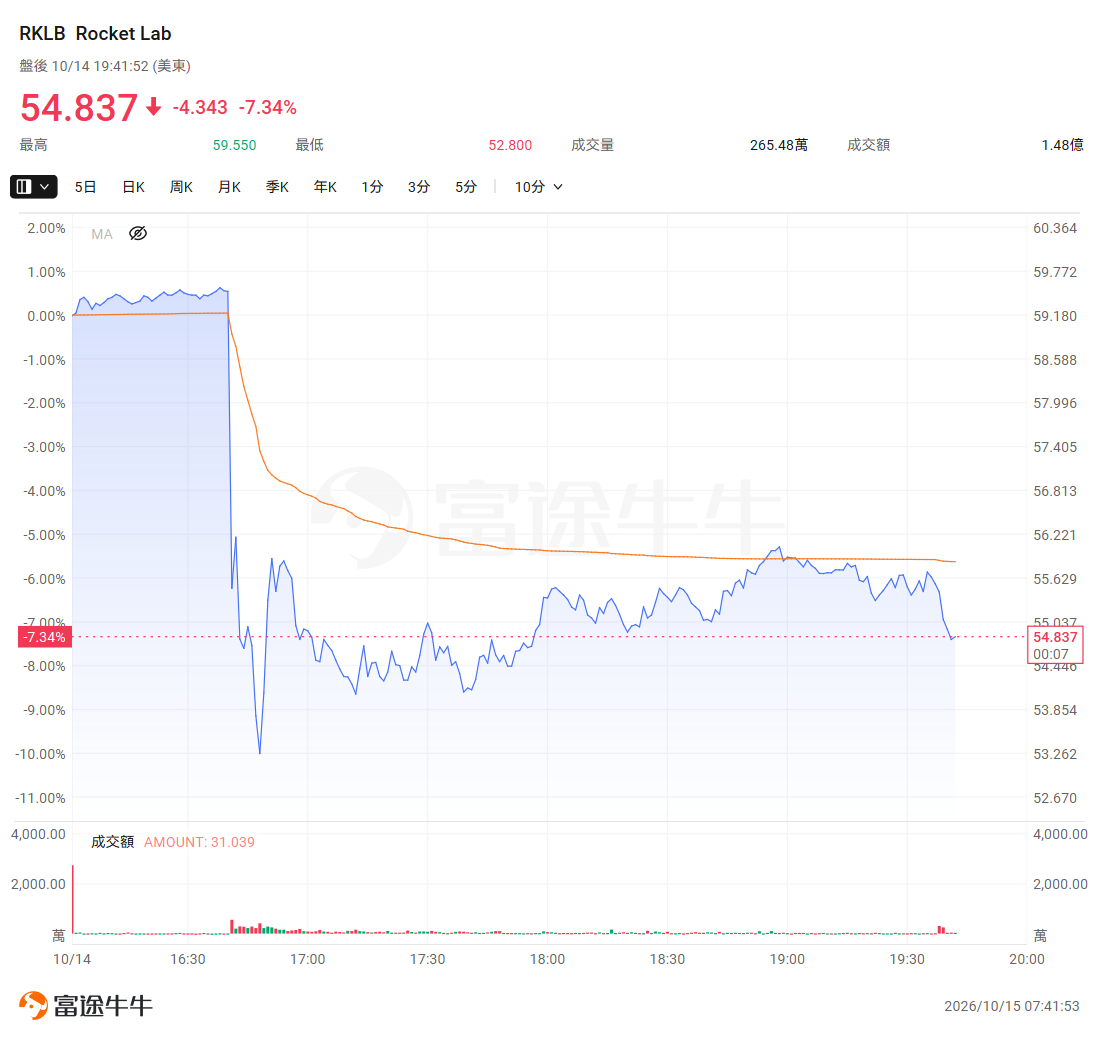
$Rocket Lab(RKLB.US)$After the market closed on October 14 Eastern Time, the company released a video update pushing back the inaugural launch of its Neutron rocket to 2027. CEO Peter Beck stated that the engineering team identified a manufacturing issue in the propellant tank dome at the forward end of the first stage. While this does not necessarily mean the component will fail during flight, the company is seeking to ensure the system has ample safety margins. The team has now finalized a remediation plan, which involves remanufacturing and inspecting the affected parts. Full integration of the first stage is expected by the first quarter of 2027, at which point the specific launch date will be reassessed. The company will also use the additional time to implement upgrades originally slated for future missions. Beck added that demand for Neutron remains robust and that new contracts will be announced in the near term. During Wednesday's regular trading session, the stock fell about 8%, closing at $59.18, and dropped another roughly 8% in after-hours trading.
SpaceX has launched Grok Voice 3.0, claiming it can independently handle 70% of Starlink customer service calls.
$SpaceX(SPCX.US)$On October 14, its AI division launched Grok Voice 3.0, making it available to developers via a voice‑assistant API, with pricing remaining at $0.08 per minute. The company stated that the model can respond within one second and can be used for multilingual customer service, hardware troubleshooting, account verification, compensation, and device replacement, among other tasks. Starlink's call center uses Grok to handle approximately 20,000 customer service calls daily, with about 70% resolved without human intervention, and one quarter of sales calls resulting in a purchase before the call ends. The company disclosed that the new model scored 86.9 on the Artificial Analysis speech‑to‑speech composite index, achieved a task completion rate of 94.8%, and attained 74% accuracy in ServiceNow's enterprise voice‑assistant tests. Inside Tesla vehicles, Grok Voice is also being used to manage everyday conversations and certain tool‑invocation tasks.
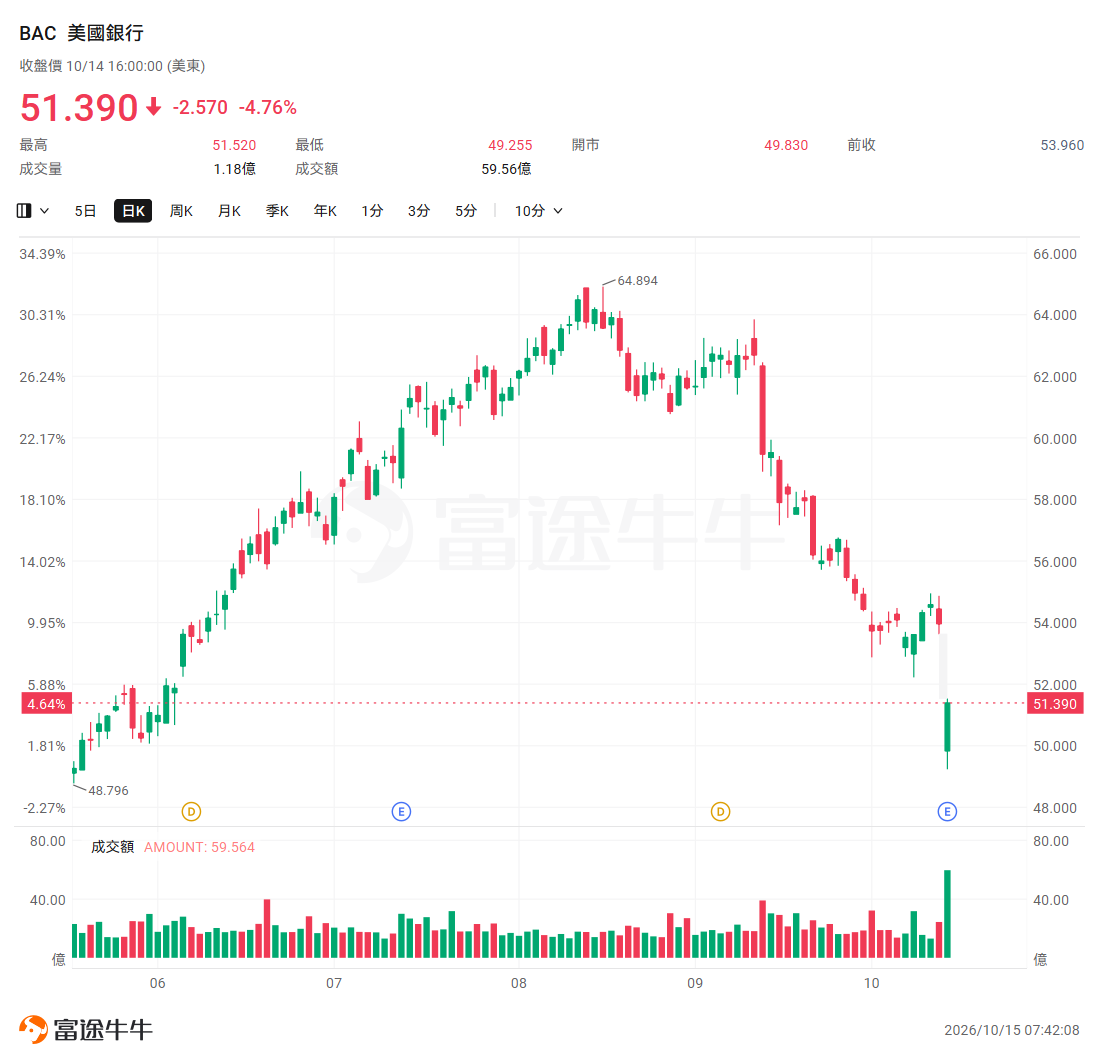
Bank of America's Q3 earnings report was a bombshell: a $1.2 billion fine, underwhelming performance in two major trading businesses, and a 17% drop in fixed-income revenue.
The U.S. Treasury Department has imposed anti–money laundering fines totaling more than $1.2 billion, directly eroding…$Bank of America (BAC.US)$Profit. Even after stripping out the impact of fines, Bank of America's Q3 adjusted EPS fell short of market expectations; equity trading revenue rose 10% year over year but still missed estimates, while fixed-income trading revenue declined 31% and 28% quarter over quarter, respectively—whereas Goldman Sachs and JPMorgan reported equity trading revenues that were unexpectedly strong. In Q3, Bank of America's net interest income increased 8% year over year, beating expectations, and investment banking revenue edged above forecasts but was down 11% year over year; its capital adequacy ratio came in below expectations, raising concerns about whether its large-scale share buybacks can be sustained. Following the earnings report, Bank of America's stock price plunged nearly 9% at one point.
Dell and HPE have had their ratings cut by Barclays, with research reports focusing on AI server growth and valuation.
Barclays will on October 14…$Dell Technologies (DELL.US)$ 、 $Hewlett Packard Enterprise (HPE.US)$and$NetApp (NTAP.US)$The rating has been downgraded from "Overweight" to "Market-Perform." Analyst Tim Long noted that the seven hardware companies in his coverage have posted average gains of roughly 140% this year, with projected 2027 P/E ratios around 21x—above the five-year average of approximately 15x—while corporate AI spending has yet to show a clear inflection point. Barclays lowered Dell's price target from $603 to $574, while still forecasting AI‑server revenue to climb to $75 billion this fiscal year—about three times last year—and potentially reach $100 billion by fiscal 2028. The firm pointed out that Dell's AI‑server operating margin has stabilized at roughly 5%, leaving room for further upward revisions to earnings estimates; however, the magnitude of any upside and the pace of revenue growth may moderate going forward.
Top 20 in Trading Volume
Hong Kong Stock Market Outlook
Southbound capital snapped up nearly HK$1.2 billion worth of Alibaba shares and net-purchased nearly HK$800 million worth of Conba Pharmaceutical shares.
On Wednesday, October 14, southbound capital recorded net sales of HK$135 million in Hong Kong stocks today.
$Alibaba-W(09988.HK)$、$Conba Pharmaceutical (09926.HK)$、$Meituan-W(03690.HK)$They recorded net purchases of HK$1.19 billion, HK$772 million, and HK$278 million, respectively.
$SMIC (00981.HK)$、$YOFC Fiber Optic Cable (06869.HK)$、$Xiaomi Group-W(01810.HK)$They were net sold off to the tune of HK$785 million, HK$493 million, and HK$487 million, respectively.
Black Sesame Intelligence has signed an AI server contract worth approximately RMB 300 million, with planned purchases of about RMB 250 million in the first year.
$Black Sesame Intelligence (02533.HK)$On the evening of October 14, the company announced that its wholly owned subsidiary, Black Sesame Intelligent Technology, had signed a sales and technology development contract with an A-share listed company, totaling approximately RMB 300 million. Specifically, within one year from the date of signing, the partner is expected to procure AI computing server systems—centered around the group's high-performance AI chips—worth about RMB 250 million. The company stated that this marks the group's first batch of orders for AI computing servers and represents a significant, substantive step in expanding its server business based on its existing AI computing platform. The Director noted that collaborations with leading customers and sizable orders will help reshape the company's profitable business segments, boost related revenues and profitability, and further refine its products and solutions for AI computing applications. The company plans to continue partnering with more top-tier enterprises on AI computing services, facilitate order execution, and extend its AI computing offerings from cloud-based deployments to edge and on-premises environments.
Today's Focus
Keywords: Federal Reserve Beige Book; Taiwan Semiconductor earnings report; U.S. retail sales and PPI; G20 summit
On the economic and financial front, the G20 Finance Ministers and Central Bank Governors' Meeting will be held that morning.
It is worth noting that,$Tesla (TSLA.US)$The Roadster event will be held on October 15.
On the economic data front, at 8:30 p.m., the U.S. will release the initial jobless claims for the week ending October 10, September retail sales month-on-month, September PPI and core PPI, as well as the October New York Fed Manufacturing Index and the Philadelphia Fed Manufacturing Index. At 10:00 p.m., the U.S. August business inventories month-on-month figure will be published.
In terms of performance, U.S. stocks…$Taiwan Semiconductor (TSM.US)$Announced third-quarter results,$Aluminum Corporation of America (AA.US)$U.S. stocks will release earnings after the market closes; Hong Kong stocks…$Ganfeng Lithium (01772.HK)$ 、 $Chinalco International (02068.HK)$ 、 $Zhaojin Mining (01818.HK)$Release earnings.
 Want to pick stocks or analyze them? Curious about your portfolio's opportunities and risks? For all your investment questions,Just ask Futubull AI!

Editor/rocky