Why did Jensen Huang ultimately choose Taiwan Semiconductor? One of the details that impressed him was precisely Morris Chang’s clear statement: “We cannot do this.” In Huang’s view, these responses reflected a commitment to operational boundaries, integrity, and long-term relationships. Chip manufacturing is fraught with uncertainties, making it impossible to agree on all details in advance. “What you are truly choosing is not what to buy, but who to work with.”
“Hey, everyone quiet down! Morris Chang is on the phone!”
When he received that call, employees outside Jensen Huang’s office were playing the first-generation PlayStation, their laughter and shouts blending into a cacophony. He had waited a long time to contact Taiwan Semiconductor: flipping through the Yellow Pages, looking up numbers, repeatedly calling the U.S. office, and leaving voicemails, yet never receiving a callback. Finally, he wrote a long letter to Morris Chang.
 It was not until one evening that a voice on the other end said, “This is Morris Chang from Taiwan Semiconductor.”
Years later, Jensen Huang still remembers the excitement of that moment: “Perhaps we won’t have to go out of business after all.”
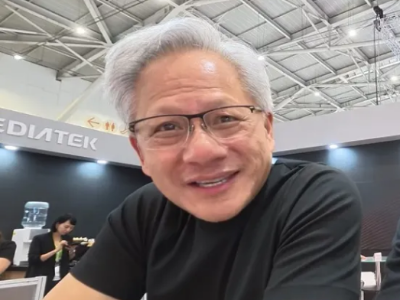
In a lengthy conversation with Lex Fridman—walking, eating, and talking simultaneously—Jensen Huang recalled $NVIDIA (NVDA.US)$ Palo Alto Networks and $Taiwan Semiconductor (TSM.US)$ the process of establishing contact, and also explained an interesting choice: Why did he ultimately choose Taiwan Semiconductor? One of the details that impressed him was precisely Morris Chang’s clear statement: “We cannot do this.” In Huang’s view, these responses reflected a commitment to operational boundaries, integrity, and long-term relationships. Chip manufacturing is fraught with uncertainties, making it impossible to agree on all details in advance. “What you are truly choosing is not what to buy, but who to work with.”
This philosophy of collaboration also underpins his assessment of the current AI competition.
Discussing the Chinese AI companies visited by Lex, Jensen Huang noted that the shortage of computing power is forcing them to design more efficient architectures. “They face very significant constraints,” yet they continue to raise capital and advance their businesses, “striving relentlessly to get things done.”
These serious topics were interspersed with visits to exhibitions, night markets, and breakfast spots. Under the global spotlight, he admitted that he still feels nervous before every public speech; back at the night market, he recalled childhood memories of his family lacking the money to dine out, as well as an incident where he accidentally cut his face and was rushed to the hospital in his father’s arms.
From a phone call that could have altered the fate of a venture to a breakfast he was reluctant to leave, this conversation reveals Jensen Huang’s concrete attitudes toward technology, relationships, and life. One point he repeatedly emphasized is letting others know that you want them to succeed, while also ensuring partners retain sufficient margins to sustain and grow their businesses.
Below is a curated summary of the conversation, with repetitive pleasantries and casual exchanges omitted.
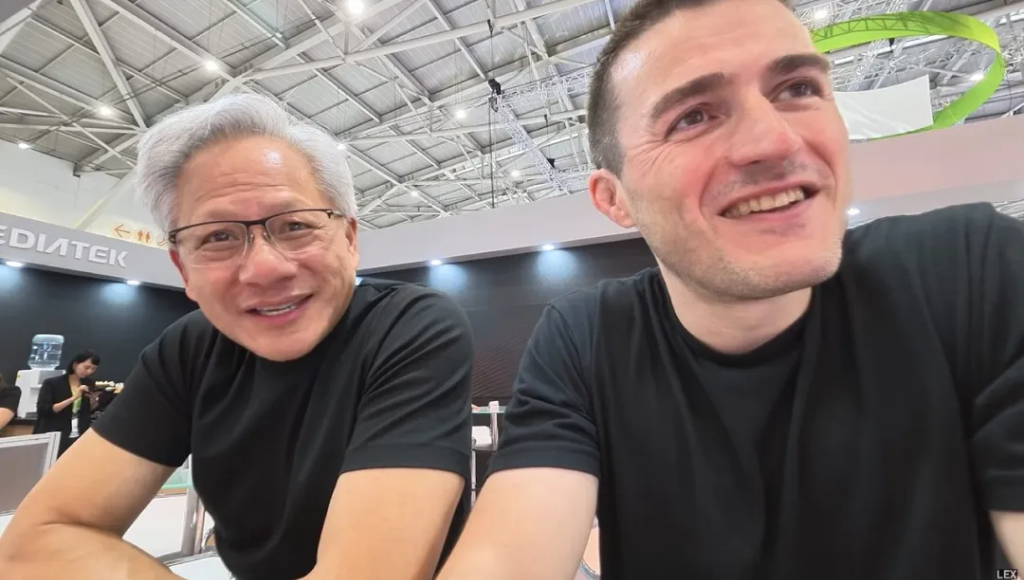
Lex: Do you get nervous before your keynote address? The whole world is watching you.
Jensen Huang: I was extremely nervous at the time. However, I am always nervous. I feel nervous before every public speaking engagement, regardless of the occasion.
Lex: Does this nervousness help keep you sharp?
Jensen Huang: Yes. I do not take anything for granted. I want to perform well. Moreover, everything often comes together only at the last minute, leaving little time for rehearsal; indeed, we did not rehearse. Therefore, I do not know exactly what I will say when the time comes. I also do not use a teleprompter.
If we are to manufacture and sell computing devices worth trillions of dollars in the coming years, all of Taiwan must be involved, and the entire ecosystem must participate.
Every company here will need to invest hundreds of billions of dollars in the coming years. Therefore, they must first understand the initiative, feel inspired to participate, and clearly see the benefits they can derive from it.
Thus, in my keynote address, I strive to clarify these points as concisely as possible.
Lex: By the way, Jensen Huang was exceptionally warm toward me—so much so that I felt somewhat unworthy of such kindness. Yet he treats everyone this way; he is equally gracious to all.
You also remembered to cater to gamers by showcasing gaming laptops and video games.
Jensen Huang: I love gamers. That is where we started. Never forget your roots. No matter how high you rise, keep your feet on the ground.
Lex: Gamers are among the most passionate people in the world. Some of the happiest moments of my life have been playing video games on NVIDIA hardware. Look at this, look at this.
Jensen Huang: Look at these people.
Lex: It is incredible. It is an honor of a lifetime. Thank you for giving me this experience. It is truly inspiring to see an engineer receive a rock-star welcome. Engineers build the world, yet they often do not receive the love and recognition they deserve.
You inspire tens of thousands, even millions, of children to think, “Well, then I want to become an engineer too.”
Jensen Huang: Exactly, that is right.
Lex: How was your trip to mainland China this time?
Jensen Huang: Good heavens, it was sheer chaos. Did you see those scenes? I went to downtown Beijing, and the crowd immediately erupted, completely out of control.
Lex: You went out for food, right?
Jensen Huang: I tasted the dishes at every restaurant. As a result, I became the “spokesperson” for each of them.
They moved quickly; within perhaps half an hour, I appeared online as the promotional face for every restaurant. Tomorrow, we will have an exceptional lunch that will surely surprise you. We will be eating zongzi, which are glutinous rice dumplings wrapped in leaves. The zongzi at this place are truly superb.
Lex: Regarding Computex, thank you for suggesting that I come. I don’t think I have ever experienced such a scene, with outstanding engineers everywhere.
Jensen Huang: This is where computers are manufactured for the entire world. Moreover, the people here are very humble.
Lex: This is also what I felt during my travels in mainland China. I interviewed many individuals in the AI field, and after arriving in Taiwan, China, I sensed the same thing: humility, consistent humility. These young engineers are changing the world without any hint of arrogance.
How Taiwan’s Technology Industry Got Its Start: From Li Kuo-tung and Morris Chang to the PC Revolution
Lex: Why have so many excellent companies emerged here across all levels of the technology ecosystem, particularly in the hardware infrastructure sector? What is your perspective on this?
Jensen Huang: This can be traced back to a man named Li Kuo-tung. He was instrumental in promoting local science and industrial policies, shouldering the associated mission. In the 1950s, he had a vision: to bring science and technology manufacturing to Taiwan.
It was precisely his vision that prompted Morris Chang to come to Taiwan.
Note: On January 28, 1910, Li Kuo-tung was born into a well-off family in Hanxi Gate, Nanjing. In 1926, he was admitted to the Department of Mathematics at Southeast University, soon transferring to the Department of Physics. In September 1934, he passed the competitive examination for the Boxer Indemnity Scholarship with distinction and went to the University of Cambridge in the United Kingdom for advanced studies. He joined the Cavendish Laboratory, studying under the world-renowned physicist and Nobel laureate Professor Rutherford, focusing on research into particles of radioactive substances. He is also hailed as the “Father of Taiwan’s Information Technology Industry.”
There were some prior events, though I do not recall the exact historical sequence clearly. The wafer fabrication plant spun off from Philips later became Taiwan Semiconductor, and its semiconductor manufacturing equipment business eventually became ASML. It is truly remarkable to realize that all these entities trace their origins back to Philips.
Philips was a consumer electronics company, often regarded as the General Electric of Europe. As you may recall, General Electric also engaged in semiconductor manufacturing and various advanced manufacturing activities in its early years. In short, K.T. Li successfully attracted Philips to Taiwan, which marked the true starting point.
Lex: It was akin to planting a seed.
Jensen Huang: Correct. Subsequently, both United Microelectronics Corporation (UMC) and Taiwan Semiconductor were seeking chips suitable for manufacturing, and the PC revolution arrived at precisely that moment, creating an ideal timing.
At that time, IBM made a visionary decision to open up the specifications for what became known as the IBM-compatible PC chipset. Essentially, this referred to the chips constituting the motherboard, including cache controllers, memory controllers, interrupt controllers, as well as VGA and graphics controllers. These specifications were clearly defined and made publicly available.
Consequently, ingenious engineers designed chipsets based on these specifications and contracted Taiwan Semiconductor and UMC for their manufacture. This process drove the initial growth and expansion of the PC industry.
Initially, companies such as Compaq and IBM dominated the PC market. Later, thanks to the PC chipsets supplied by Taiwan, a diverse range of companies were able to enter the market, including a young entrepreneur named Michael Dell.
He purchased motherboards from Taiwan Province, assembled them into PCs, obtained operating system licenses from Microsoft, and thus established himself as a PC manufacturer.
This is how the entire industrial cycle was established. Michael’s connection with Taiwan dates back quite some time.

Lex: This is also related to culture. A kind lady told me that she grew up in Taiwan. She said, "When I was a little girl, I could spell CoWoS before I could even spell Gucci."
I find that remark quite insightful; it also illustrates the status of engineering and technology within the local culture—specifically, what is considered "cool."
Jensen Huang: Correct, CoWoS.
Lex: So, thank you for making engineering and technology cool again, Jensen.
Jensen Huang: Yes, we have made technology appealing once more.
Lex: Does NVIDIA currently have many local teams in Taiwan?
Jensen Huang: The local team comprises approximately 1,000 people. This includes supply chain personnel, extensive systems engineering work, operations engineering, as well as engineers involved in wafer fabrication, packaging, and testing.
Lex: In other words, they are all engineers engaged in core hardware development, correct?
Jensen Huang: Yes. We are planning to construct a building very similar to the one you previously visited, almost a replica. We need to first secure a site and acquire land here. That building can accommodate 4,000 people, so we will hire an additional 3,000 employees. I really like this place, and I also enjoy the night markets here; their fame is well-deserved. My parents loved the food, and we used to visit the night markets frequently.
When we were children, saying "going out for dinner" meant visiting places like this, not restaurants. Our family did not have substantial financial means, so we would go to the night markets and eat at these tables.
On one occasion, I needed to use the restroom and wandered off on my own. I approached a chef to ask if there was a restroom nearby. At that moment, he was wiping his knife, and my face happened to be right next to the blade. The knife slid across, cutting my face.
I was five years old then, or rather, nearly five. My father picked me up and rushed me to the hospital.
Nevertheless, I have always remained fond of night markets and hold cherished memories of them. I appreciate everything about this place, including its people.
Everyone is striving to make a living. Despite the hardships of their work, they still wish to share something with you. They do not have much money; the profit margin on each item may be minimal. Yet they concede these margins to me, simply to express their goodwill.
This reflects the human warmth characteristic of Taiwan, China. Moreover, watching them craft items and showcase their skills is itself an enjoyment.
On Chinese AI Companies: Facing Compute Shortages, Yet Striving Tenaciously for Success
Jensen Huang: Did you go to Shanghai?
Lex: Yes, I visited several AI companies, including MiniMax.
Jensen Huang: Those companies are impressive.
Lex: Then I went to Hangzhou to visit Unitree. The people working in robotics there were remarkably humble. There are many robotics companies in that region. Do you know what those AI companies are saying? They all emphasize: 'We need more computing power.'
Jensen Huang: Indeed. But to some extent, it is precisely the shortage of computing power that has compelled them to develop exceptionally outstanding and highly efficient architectures.
Lex: Yes, exactly.
Jensen Huang: Necessity is indeed the mother of invention. Scarcity of resources drives innovation.
Lex: Right.
Jensen Huang: They face immense constraints, yet they continue to secure funding and press forward, don’t they? They are striving relentlessly to get things done.
"I have always wanted others to succeed"
Lex: You are like The Beatles of the 1960s. Despite everything, you remain humble. Jensen, your life story is extraordinary. With millions of people looking up to you and bearing such responsibility, do you ever feel overwhelmed by the pressure?
Jensen Huang: No, because I don’t view it that way. People have always been kind to me.
Lex: Even when you had nothing.
Jensen Huang: Yes. I have always treated others with kindness and courtesy, and I have always wished for their success and happiness.
When I was in school, I always hoped my classmates would perform well academically. I was also happy to share my assignments with them.
I enjoy seeing others succeed, including peers working at other companies.
Lex: The way the world works is quite interesting. When you genuinely cheer for others and wish them success, somehow you end up becoming more successful yourself.
Jensen Huang: For example, all 43,000 employees at NVIDIA want me to succeed. That’s truly the case—do you understand what I mean?
Lex: And you also want every one of them to succeed. This creates a ripple effect that continuously expands outward.
Jensen Huang: Yes, exactly. Goodwill is not a zero-sum game; it is not bound by the laws of physics.
Lex: On a side note, Jensen, I’ve heard your fried rice is exceptionally good.
Jensen Huang: Yes. I watch AI-related videos, as well as cooking tutorials for fried rice. I also watch videos of dogs, pandas, or otters to unwind.
Without energy, there can be no AI.
Lex: Could you elaborate on your views regarding export controls? You have consistently argued that export controls are not the right strategy for the United States to achieve victory. Could you clearly articulate the most compelling arguments from both the supporting and opposing perspectives?
Jensen Huang: Let’s start with the arguments from one side, which are actually quite straightforward.
If something is valuable and useful, capable of multiplying capabilities—such as rare earth elements or computer technology (broadly speaking, technology amplifies capabilities; one could also argue that knowledge and intellectual property serve the same function)—then possessing these resources while denying access to others can strengthen our own position while weakening that of our counterparts.
Lex: In other words, by keeping certain resources under our control, we gain a competitive advantage.
Jensen Huang: Correct—we must prevent them from falling into others' hands. For physical resources, this logic is not without merit. Consider refined rare earths, or even bullets and bombs. As long as adversaries or other participants cannot manufacture these items independently, this rationale generally holds some weight.
However, the counterargument is that if our goal is long-term national security, as well as sustained domestic stability and harmony, then prosperity is the optimal means to achieve these objectives.
The safest countries in the world are the wealthiest. The United States possesses such formidable military strength because of its immense wealth. This wealth coexists with superior technology, and together they form a mutually reinforcing flywheel. Ultimately, what you should strive to enhance is this flywheel.
Therefore, the question is: Are you pursuing the goal of preventing others from accessing this technology, or are you aiming to make this flywheel spin more effectively?
In my view, a more comprehensive long-term strategy is to keep this flywheel in motion. To achieve this, one must simultaneously maintain technological leadership and wealth.
This flywheel is critically important. Its underlying logic is no different from that of many computing and platform technologies. In these fields, the foundation of wealth lies in customer engagement with your business and the installed base of users who have deployed and are utilizing your technology.
An established user base and customer adoption generate greater demand for technology, which in turn creates more wealth, enabling you to expand technological investment and scale more rapidly than competitors.
Technological leadership drives economic leadership, which in turn supports further technological advancement, thereby reinforcing economic dominance. It is this cycle that allows companies and nations to sustain their competitive edge. Therefore, rather than focusing solely on limited, tangible assets that do not inherently generate positive feedback loops, I advocate for an extremely prudent and selective approach when imposing restrictions on access to certain technologies.
Furthermore, we must foster a virtuous cycle between technology and economics. A balance needs to be struck between the two. I believe we should make every effort to avoid conflict.
Competition is indispensable; we should compete. However, we must also make every effort to avoid conflict. Thus, the question becomes: when parties are in a competitive relationship, some strategies may lead that relationship toward conflict, while others can help avoid it.
Lex: We have previously discussed interdependence. For instance, within the AI technology stack, people use the same hardware and software, study at each other’s universities, build friendships, and engage in scientific research collaboration. While there is amicable competition among different companies, fundamentally, this remains a form of cooperation. The more such connections exist, the harder it becomes to separate the peoples of two nations, thereby reducing the likelihood of global conflict.
Jensen Huang: The harder it is to decouple, the less likely conflict becomes. I agree with this point. Your description just now was entirely accurate. Another point that helps clarify this issue is that AI is not merely a model but an entire technology stack, with each layer supporting AI. Without energy, AI would be impossible.
Competition in AI takes place across the entire technology stack.
Jensen Huang: We know that some countries and regions possess strong leading advantages and capabilities in energy, while others do not. Therefore, looking up and down the entire technology stack, you will find that leadership varies at different levels.
Lex: Personally, I believe the United States has the most innovative people, capable of proposing the wildest, boldest, most imaginative, and ambitious ideas. In this regard, I consider the U.S. to be at the top of the world.
Jensen Huang: You are correct. This powerful innovation capability has been formed by the long-term interaction and accumulation of various factors. One significant advantage we have is that our flywheel is the strongest. One reason for this is that English reaches the vast majority of the world.
If you are a U.S. company developing products based on the U.S. technology stack and adopting U.S. standards, your products are easier to deploy globally.
China does not have the same conditions. Therefore, we possess a flywheel advantage oriented toward the global market. Technology without customers is useless.
Lex: Indeed, you must leverage this advantage rather than take it for granted. As a language, English wields global influence. The United States’ ability to build an ecosystem utilized by people worldwide constitutes a tangible advantage. Therefore, isolating oneself from the rest of the world in pursuit of certain benefits offered by isolationism would incur substantial costs.
Jensen Huang: Correct.
Lex: You would lose that advantage.
Jensen Huang: Precisely. This is why I believe that, on one hand, we wish to retain advanced technologies within our control; on the other, we require that flywheel effect. Every word you just spoke hit the mark. We aim for our platform to cover as broad a market as possible, as this drives the flywheel, generates wealth, and that wealth, in turn, provides the R&D capabilities necessary for sustained innovation.
But this flywheel is also fragile.
As you can see, once the flywheel starts spinning, growth exhibits exponential characteristics. A platform may have been built over ten or twenty years—in our case, thirty years—and then suddenly cross a tipping point, appearing ubiquitous almost overnight.
Conversely, this flywheel can stop or decelerate rapidly. Thus, the challenge with export controls lies in achieving this balance. Every nation has the sovereign right to determine how to utilize the technologies, capabilities, assets, and resources it has created, which constitute its national advantages.
On the other hand, we must ensure that these valuable U.S. national assets—including the technology industry—maintain the largest possible flywheel and the broadest platform coverage, thereby sustaining the virtuous cycle where economic leadership and technological leadership reinforce each other.
This is the balance that must be struck.
Jensen Huang discusses initial contact with Taiwan Semiconductor: Unable to reach them by phone, I wrote a letter to Morris Chang
Jensen Huang: In 1996, the PC revolution was just taking off. The PC chipset industry also developed during that period, with the term "chipset industry" beginning to emerge, and the fabless semiconductor industry rising alongside it.
Cirrus Logic was a major player at the time, along with S3 and the smaller Weitek. Western Digital also used to produce graphics chips.
I competed with a wide variety of companies. At that time, foundries were very strong, and Japanese companies were entering the foundry business in droves. There were few foundries in the United States because Intel focused primarily on manufacturing its own products, AMD was also manufacturing its own products, and Texas Instruments (TI) did the same.
Consequently, chip companies from other countries entered the foundry business, hoping to serve this emerging chipset industry. SGS-Thomson was also engaged in wafer foundry services at the time. We approached them first, but they were unwilling to take our business.
At that time, foundry capacity was extremely limited. If you wanted to use a company's foundry capacity, you had to license your technology to them. This was one of the conditions.
This reminds me of some early agreements signed by AI companies: if you wanted access to computing power, you had to offer something in return for licensing.
In our era, we had to license our intellectual property to the foundries. Later, I heard about Taiwan Semiconductor and United Microelectronics Corporation (UMC) in Taiwan. They did not impose such additional conditions.
Of course, they did not have much capital themselves at the time and were struggling operationally. I recall that Taiwan Semiconductor was a company with roughly $300 million in revenue then. To me at the time, $300 million sounded as immense as $300 billion.
It was actually still a very small company.
Having heard of Taiwan Semiconductor and Morris Chang, I decided to call their U.S. office. In those days, we relied on the Yellow Pages to find phone numbers. I looked up Taiwan Semiconductor, found a number listed below it, and dialed, only to reach an automated recording.
Imagine calling a company and being greeted by an automated recording. I left my name and phone number, briefly introducing NVIDIA: we were a newly established venture developing computer graphics chips...
I was hoping for a callback. I called several times, but no one ever returned my call—not once.
Eventually, I wrote a long letter to Morris Chang and mailed it to him. For a considerable time thereafter, there was no response.
Then one day, around 6:00 or 6:30 in the evening, someone called and said, 'This is Morris Chang from Taiwan Semiconductor.'
At that moment, everyone outside my office was playing video games, laughing and shouting. I recall they were playing the first-generation PlayStation. I shouted, 'Hey, everyone quiet down! Morris Chang is on the phone!'
He actually called me back. I was thrilled that the founder of a major company had personally returned my call. It meant that perhaps we wouldn't have to shut down.
We spoke for a while, and he invited me to visit Taiwan. Thus, I returned to my hometown for the first time.
Lex: Was that your first time returning after many years away?
Jensen Huang: Yes, it was my first time back in thirty years.
Lex: That was the beginning of everything. It marked not only the start of your partnership but also a pivotal point for the entire industry's development.
Jensen Huang: Taiwan Semiconductor and its main competitor, United Microelectronics Corporation (UMC), are literally just across the street from each other. It is a road within the industrial park, essentially the distance between one building and another. I visited UMC first, then Taiwan Semiconductor, in that order. Both companies were very gracious, and I was pleased that they were willing to engage in discussions with us.
Why did NVIDIA choose Taiwan Semiconductor?
Jensen Huang: People often ask me why we ultimately chose Taiwan Semiconductor over UMC.
In fact, I hold both companies in equally high regard; they are both excellent organizations. However, one aspect of Taiwan Semiconductor particularly resonated with me: when I made numerous requests, Morris Chang would say, “We cannot do this.”
I would then ask, “What about this?” He would still respond, “We cannot do this either.” There were many things they simply would not undertake.
He has a distinct management philosophy for his enterprise and a set of core values that he holds in high esteem. He consistently emphasized corporate governance, integrity, partnerships, and long-term thinking. These were the sole topics he addressed, excluding other matters.
He once said, “Jensen, if we collaborate, I assure you that we will exhaust every avenue and overcome all difficulties on your behalf.”
Over the past thirty years, they have consistently honored this commitment.
Lex: He kept his promise.
Jensen Huang: The company’s core values are exceptionally strong and have been present since its inception. You must navigate both favorable and challenging times together, as the future holds many unforeseen events. This is because you are jointly manufacturing a chip. Foundry services are not about purchasing an off-the-shelf commodity; you must collaboratively produce the chip, which is an inherently difficult endeavor.
Therefore, it is impossible to know all the details in advance or make all decisions beforehand. The real choice is not what to buy, but who to work with.
At that time, I made a wise choice regarding this matter. The key was not what to purchase, but whom to choose as a partner. To this day, I still adhere to this attitude and philosophy in selecting partners.
Lex: One remarkable aspect of the technology industry is that you are not only choosing whom to collaborate with, but also committing to decades of partnership. This represents a form of loyalty to the relationship.
Jensen Huang: Exactly. We have been partnering with Taiwan Semiconductor for thirty years. Often, once we understand each other’s intent, we simply say, “Alright, let’s get started.” That has been our approach for three decades.
Why is this considered wisdom? Because how could you possibly specify every unknown variable in a partnership beforehand? It is akin to drafting an airtight prenuptial agreement. The issue is that the more you attempt to stipulate every detail, the more fragile the relationship may become.
Therefore, I choose to retain some flexibility and navigate forward together through exploration. We use a term called “rough justice,” meaning broadly fair over the long term. Sometimes they gain slightly more, and sometimes I do.
At times, the outcome satisfies me more; at other times, it satisfies them more. However, over an extended period, balance is ultimately achieved. Now, can you understand why Taiwan Semiconductor has become such a legendary company?
Lex: Completely understood.
Jensen Huang: I do not know if everyone collaborates with them in this manner. If many others do so as well, I would not be surprised. However, I prefer to work with people in this way. Looking at our employees, I have not bound them here with airtight contracts. We have chosen each other, choosing to work together.
It is impossible to achieve perfect fairness every single time; occasionally, the balance may tilt slightly toward one side. But in the long run, this broad sense of fairness is attainable.
Lex: This also encourages both parties to take greater accountability and execute tasks effectively, as the collaboration is entered into voluntarily.
Jensen Huang: They must understand that I want them to succeed. All my employees know that I wish for their success. Taiwan Semiconductor knows this too. Every day, Taiwan Semiconductor is aware that I am committed to their success.
This is reflected in our partnership, in our business interactions, and in my ongoing efforts to help them become a better company. In turn, they have consistently done the same for me. You are not merely purchasing a product; you are deciding to co-create something together.
Our company is built upon Taiwan Semiconductor’s platform, as well as the industrial ecosystem in Taiwan. Therefore, these relationships are crucial. If you make decisions based on transient dissatisfaction, constantly force everyone to bid competitively for your orders, or prioritize your own profits to the exclusion of others’ gains, people here will remember such actions, and the broader community will take note.
Thus, always leave some margin for your partners. Always consider whether they can sustain their operations and achieve success. Last year, the stock prices of companies across my supply chain rose by 300%, while our stock price remained largely flat. Seeing such strong performance from our supply chain partners brings me immense satisfaction.
Of course, I am not suggesting that I am pleased with our own stock price stagnation. Rather, I am gratified that our platform has grown large enough to enable all partners to grow alongside it. This is a positive development.
Edited by Rice