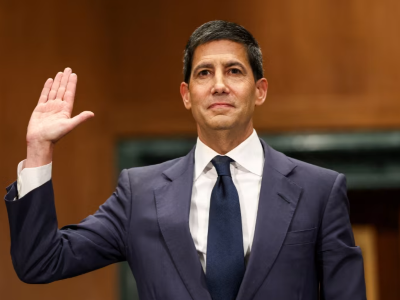
Wash emphasized that the Federal Reserve remains firmly committed to achieving price stability, and he does not support preemptively forecasting the outcomes of monetary policy meetings or publicly signaling potential policy actions at upcoming meetings through 2026. Wash noted that inflation is not a problem unique to the United States. He has learned from his central bank counterparts around the world that all countries share a strong resolve to achieve price stability. At present, most regions globally are simultaneously tightening monetary policy, which means no country can afford to "free ride."
On October 16, local time, Federal Reserve Chair Kevin Warsh engaged in a fireside chat with IMF Managing Director Kristalina Georgieva on the sidelines of the 2026 Annual Meetings of the International Monetary Fund and the World Bank Group in Bangkok, Thailand, discussing topics such as artificial intelligence, monetary policy, global inflation, and financial stability.
AI is the most profound economic transformation of my lifetime.
Wash stated that artificial intelligence is the most far-reaching economic transformation of his lifetime. In the United States, people now refer to AI as "SI."
 He believes that the impact of artificial intelligence on the demand side of the economy will become apparent before any supply-side shocks emerge. AI will transform the real economy, but its short-term effects on employment remain uncertain.
Moreover, artificial intelligence will help central banks bolster their confidence in economic data and their assessments of monetary policy.
The October and December monetary policy meetings are of paramount importance.
Wash stated that the remaining monetary policy meetings in 2026 will be pivotal in shaping clear policy judgments, particularly those scheduled for October and December.
He emphasized that the Federal Reserve remains firmly committed to price stability, does not endorse preemptively forecasting the outcomes of monetary policy meetings, and does not advocate publicly signaling the policy actions it may take at the remaining meetings through 2026.
The Federal Reserve will not pass judgment on technology investments, but it must remain vigilant about financial risks.
Wash stated that the United States is ramping up investment in emerging technologies through the private sector, and that the Federal Reserve will not seek to judge which of these investments are sound or ill‑advised, but must nonetheless assess risks to financial stability.
He also noted that the Federal Reserve's working group bears the important responsibility of generating new intellectual capital and supporting decision-making by the Federal Open Market Committee (FOMC).
Global synchronized monetary tightening leaves no "free riders."
Wash noted that inflation is not a problem unique to the United States. He has learned from his central bank counterparts around the world that all countries are committed to achieving price stability.
At present, most regions around the world are simultaneously tightening monetary policy, which means no country can "free ride."
He also stated that the Federal Reserve's monetary policy generates spillover effects on other regions of the world, but that policies in other countries, in turn, can influence the United States.
Editor/lambor