
Source: Qilehui
Pabrai is an investor I deeply admire; the first chapter of "Richer, Wiser, Happier" is devoted to him, and the book concludes with six principles he has articulated:
1. Copy like crazy.
2. Associate with people who are better than you.
3. Treat life as a game, not a struggle for survival, nor a battle that lasts until death.
4. Follow your true nature; don't do what you don't want to do, and don't take on tasks that aren't right for you.
5. Use an inner scorecard to rate yourself—don't worry about what others think of you, and don't live for the approval of others.
6. Adopt a simple idea and take it seriously.
This time, we're sharing a presentation he gave at Columbia Business School in 2009—The Investment Checklist.
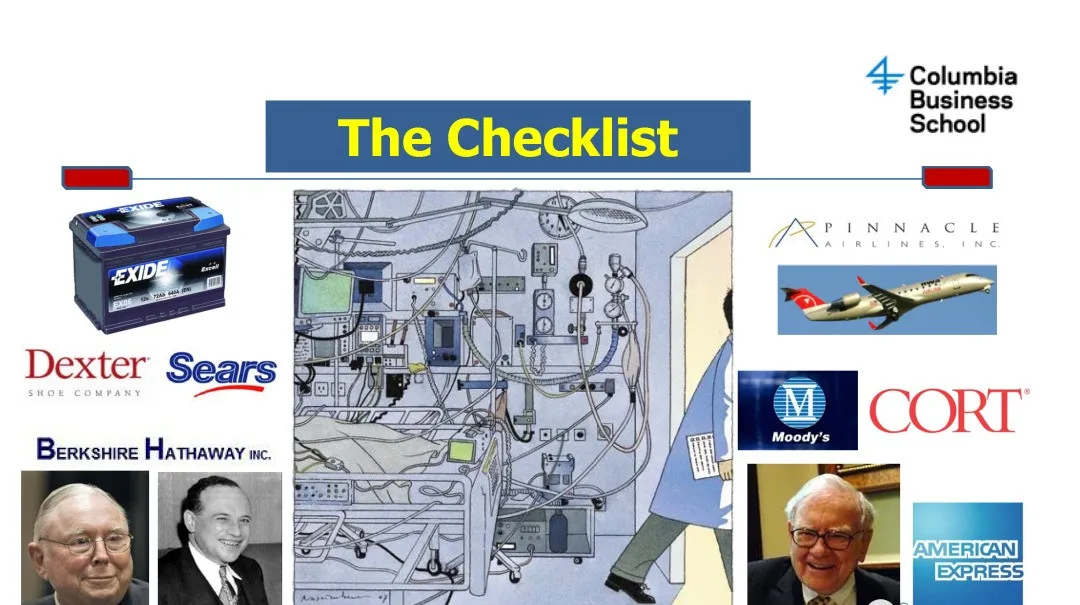
① Dexter
In 1993, Buffett acquired Dexter Shoe Company through a stock swap. After 1995, Dexter's profits declined and it frequently posted losses; the 433 million shares paid at the time are now worth 3.05 billion yuan, an investment Buffett considers the worst of his career.
Before acquiring Dexter Shoe, Buffett had invested in two other shoe companies that performed exceptionally well, leading him to conclude that the footwear industry is a sound business. Buffett believed that Dexter's management was outstanding and its workers highly skilled, so he saw little cause for concern from the threat posed by inexpensive foreign-made shoes.
However, the reality is that the price gap between domestically produced and imported shoes in the United States is simply too wide, while the performance differences are not particularly significant. As a result, consumers have increasingly turned to imported footwear, plunging Dexter Shoe Company into crisis.
Buffett acquired this company by issuing an additional 25,203 shares of Berkshire Class A stock, rather than paying cash directly. Today, those 25,203 shares are worth $10.456 billion, equivalent to roughly RMB 67.5 billion. This ranks among the most significant failures in Buffett's investment career (the footwear and apparel industry is a very poor sector).
②Berkshire
Buffett reflected in his 1989 letter to shareholders:
First, the very first mistake I made was acquiring controlling interest in Berkshire Hathaway's textile business. Although I was well aware that the textile industry had little future, I was lured by its extremely low price. While investing in such stocks did indeed yield substantial profits in the early days, after taking a stake in Berkshire in 1965, I began to realize that this was ultimately not an ideal investment strategy.
If you buy a company's stock at a very low price, it should be relatively easy to sell it later at a decent profit—even if, over the long term, the company's performance turns out to be dismal. I call this investment approach "cigarette‑butt investing": picking up a discarded cigarette butt by the roadside may give you a quick fix and satisfy your craving, but for the smoker, it's hardly more than a trivial gesture.
However, unless you're a liquidation expert, snapping up such companies is nothing short of folly. For one thing, what initially seems like a bargain may turn out to be far from worthwhile in the long run. In struggling businesses, as soon as one problem is resolved, another one tends to surface almost immediately—after all, if you spot a cockroach in the kitchen, there's rarely just one.
The initial valuation discount will quickly erode if the company's performance falls short. For example, suppose you acquire a company with a liquidation value of $10 million for $8 million. If you can dispose of it—whether through a sale or liquidation—immediately, your return could be quite substantial. But if it takes you ten years to unwind the investment, and during that time you receive only meager dividends, then trust me: while time is an ally of good companies, it is the worst enemy of poor ones.
Let me say it three times: A great company with a fair stock price is better than an ordinary company with an extremely low stock price—again, a great company with a fair stock price is better than an ordinary company with an extremely low stock price—once more, a great company with a fair stock price is better than an ordinary company with an extremely low stock price.
③Sears Department Store
The retail industry is also a very challenging sector; Buffett once invested in Hochschild-Kohn and Tesco, but ultimately exited both with losses.
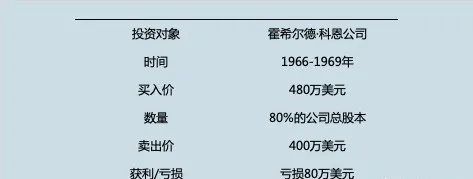
In his 1995 letter to shareholders, Buffett said the following about the retail industry:
Retail is a tough industry. Throughout my investing career, I've seen countless retailers enjoy spectacular growth and sky-high returns on equity for a time—only to plunge suddenly, often all the way into bankruptcy. This meteoric rise-and-fall pattern is far more common in retail than in manufacturing or services. In part, that's because retailers must stay razor‑sharp day in and day out. No matter what you do, your competitors are always copying—and then outpacing you. Meanwhile, shoppers are constantly lured, in every possible way, to try one new retailer after another. In retail, following the herd almost invariably leads to failure.
In contrast to industries where you have to get smarter every day, there's a type of business I call "one‑time‑smart." For example, if you're savvy enough to acquire an online TV network early in the game, you can hand it over to a laid‑back, underperforming nephew to run—and that business will still thrive for decades. Of course, bringing Tom Murphy on board would boost results significantly, but even without him, you could comfortably stay profitable. For a retailer, hiring such a nephew is nothing short of a fast track to bankruptcy.
④ Aviation industry
Buffett said the following about the airline industry in his speech at Sun Valley:
From 1919 to 1939, the United States was home to more than 200 airlines. Imagine: if you had lived during the era of the USS Hornet, could you have foreseen the future trajectory of the aviation industry? You might have glimpsed a world beyond your wildest dreams.
Historically, no stock investment in the airline industry has turned a profit—much like the situation just a few years earlier. In fact, as of 1992, the combined net profits of all airlines were zero; that's right—zero cents.
So I want to tell you this: I truly would have preferred to think that—when I returned to the days of the Little Eagle, I would have had enough foresight and a spirit of standing up for what's right to bring Orville Wright down. But I didn't succeed, and I feel deeply indebted to the future investors in my venture.
The aviation industry is not a very promising sector, for the following reasons:
Buying an aircraft is very expensive; even a mid-sized passenger jet costs at least $100 million.
Maintaining aircraft is very expensive—more so than buying a new one. An aircraft serves for decades, yet the spare parts provided by Boeing or Airbus are outrageously pricey.
Maintaining aircraft is expensive, with substantial costs for routine maintenance.
Training pilots is expensive, and the more you have, the more it costs.
Training pilots is extremely expensive; a single real‑aircraft flight session at the base can cost as much as a pilot's ten fingers adorned with gold rings, effectively burning through an entire day's budget.
Airlines frequently engage in price wars, competing to offer the lowest fares. As long as their planes are in the air, they operate at a loss—and the more flights they run, the greater the losses.
Airlines often follow the lead of their peers, opting to purchase the most advanced aircraft to project an image of safety, which in turn drives costs sharply higher.
Most airlines are excessively bloated, with countless sinecures that require pilots to be kept on staff.
The aviation industry is highly susceptible to external factors; when the economy falters, passenger numbers plummet, and a single year of losses can wipe out years of profits.
The automotive industry was also one of the greatest industries of the 20th century, but even investing in it can result in devastating losses.
If you had invested in Ford Motor stock, from 1956 to 2019, the annualized return would have been 7.8%, roughly on par with the S&P 500; if you had invested in General Motors stock, from 1926 to 2008, the annualized return was 3%, far behind the S&P 500's 6%; Toyota Motor's share price quadrupled over 30 years, yielding an annualized return of 5.6%; and Volkswagen's share price posted an annualized return of only 6.6% over the past three decades.
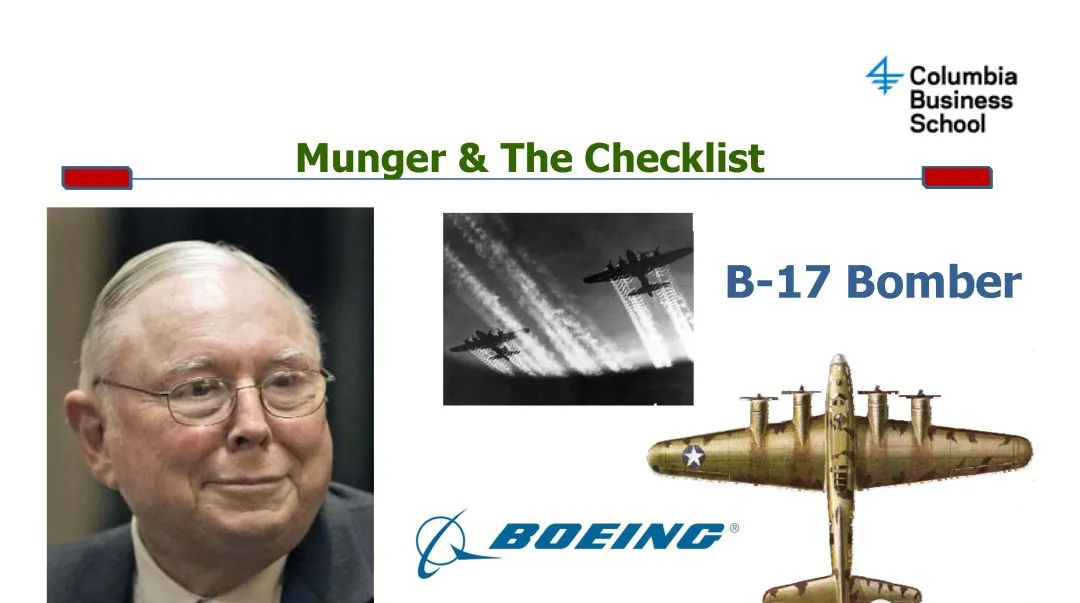
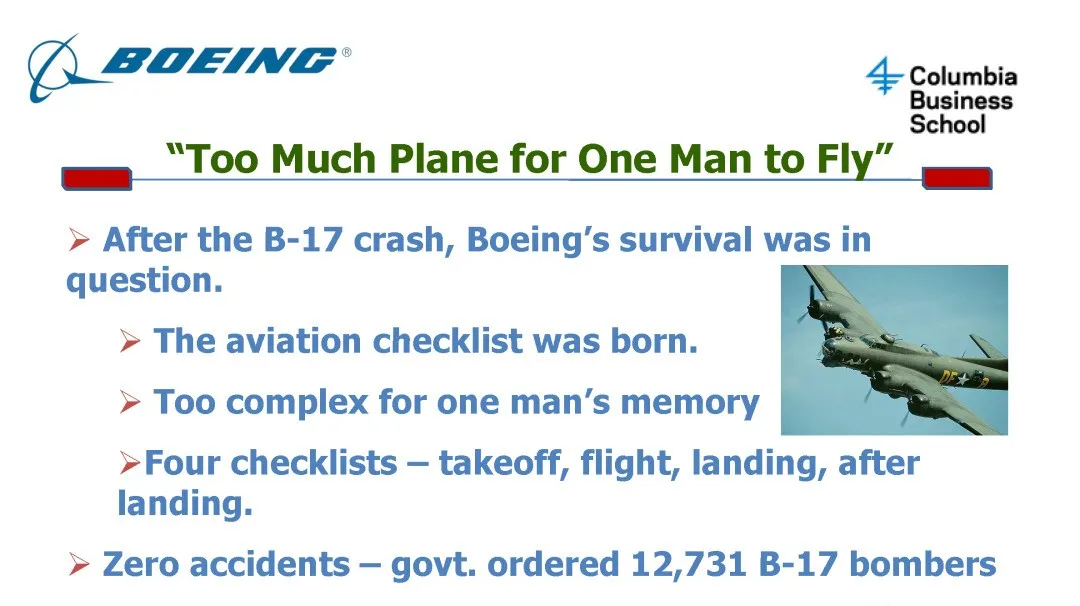
One person cannot pilot such a large aircraft.
(It is an advertising slogan for the Boeing 747, emphasizing the aircraft's advanced and high-tech performance. This slogan has also been widely quoted to describe certain tasks or jobs that are so large or complex that they require the collaboration of many people to complete.)
After the B-17 bomber crashed, Boeing came under scrutiny.
Aviation checklists came into being.
This list is far too complex for one person to remember.
Four checklists—Takeoff, Enroute, Landing, and After Landing
After implementing this checklist, zero accidents occurred—following which the government ordered the production of 12,731 B-17 aircraft.
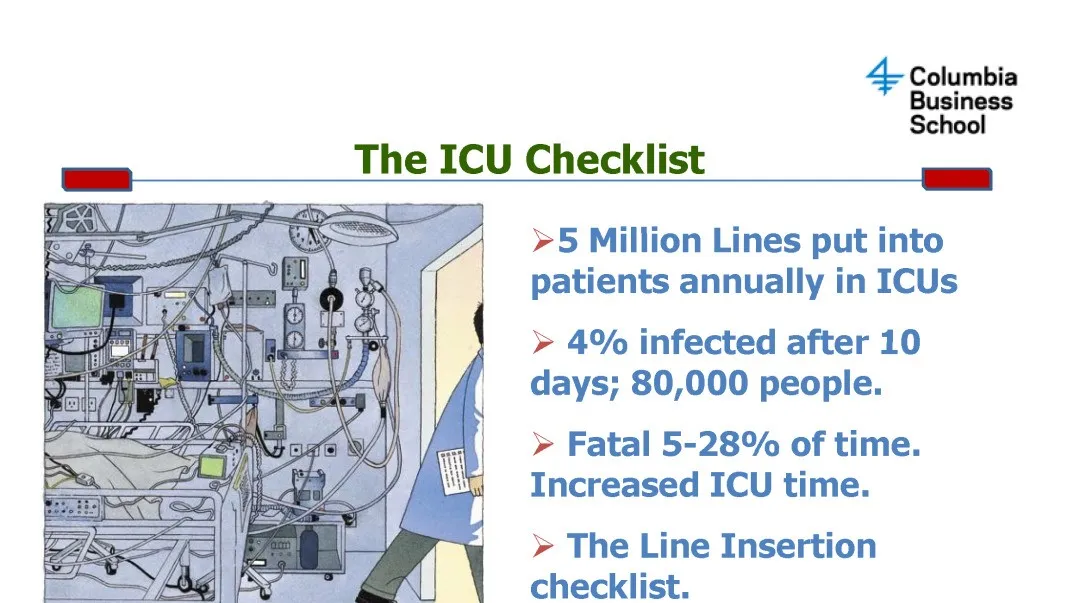
ICU Checklist
Each year, 5 million catheters are placed in patients in the intensive care unit (ICU).
After 10 days, the infection rate was 4%, corresponding to 80,000 cases.
The mortality rate ranges from 5% to 28% and may prolong ICU stay.
Therefore, a catheter insertion checklist is required.

ICU Catheter Insertion Checklist
Wash your hands with soap.
Clean the patient's skin with a chlorhexidine antiseptic.
Place a sterile drape over the entire patient.
Wear a sterile mask, cap, protective gown, and gloves.
After inserting the catheter at the insertion site, apply a sterile dressing.
Why are checklists so effective?
Our brains are naturally inclined to take shortcuts and make quick decisions.
When you see a lion, you'll run. You won't weigh your options—you'll just flee immediately.
We, too, are a blend of reason and emotion.
When we spot a great company that's undervalued, we research, ponder key questions, and make a decision—but this approach isn't as effective as using a checklist.
Checklists are so effective because they provide a structured, systematic approach to task completion, helping to reduce errors and omissions. They also enable us to standardize procedures, ensuring consistency across individuals or teams.
Our brains tend to take shortcuts and make quick decisions based on past experiences and biases, which can lead to errors and oversights. Checklists help counteract this tendency, ensuring that all necessary steps are completed and preventing omissions.
The Federal Aviation Administration's Approach to Aviation Safety
Extremely effective; the probability of dying on an airplane is lower than that of crossing a street.
A person's life is valued at 3 million U.S. dollars.
Aviation safety stems from the meticulous analysis of every aircraft accident worldwide.
Changes to checklists, pilot training, equipment, procedures, air traffic control, and other areas
The results are highly compelling.
Investment and List
Investing is not a science; it is an art.
Things I've learned from Graham, Buffett, Munger, Klaman, Fisher, Templeton, and others
Margin of safety, moats, simple businesses, and so on
Create a real checklist.
Examine all the mistakes that led to your permanent capital loss—airplane crash
Add it to the list.
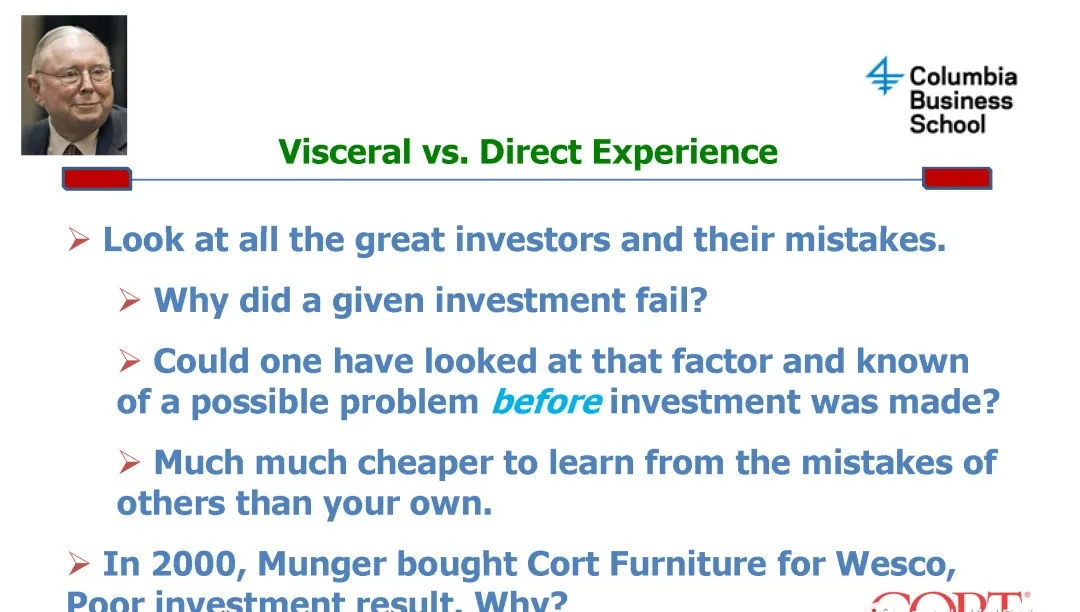
Instinctive Experience and Direct Experience
Take a look at all the great investors and their mistakes.
Why does a particular investment fail?
Before investing, can you identify that factor and understand the potential issues that may arise?
Learning from others' mistakes is far cheaper than making your own.
In 2000, Munger purchased Cort Furniture for Wesco, but the investment turned out poorly—why?
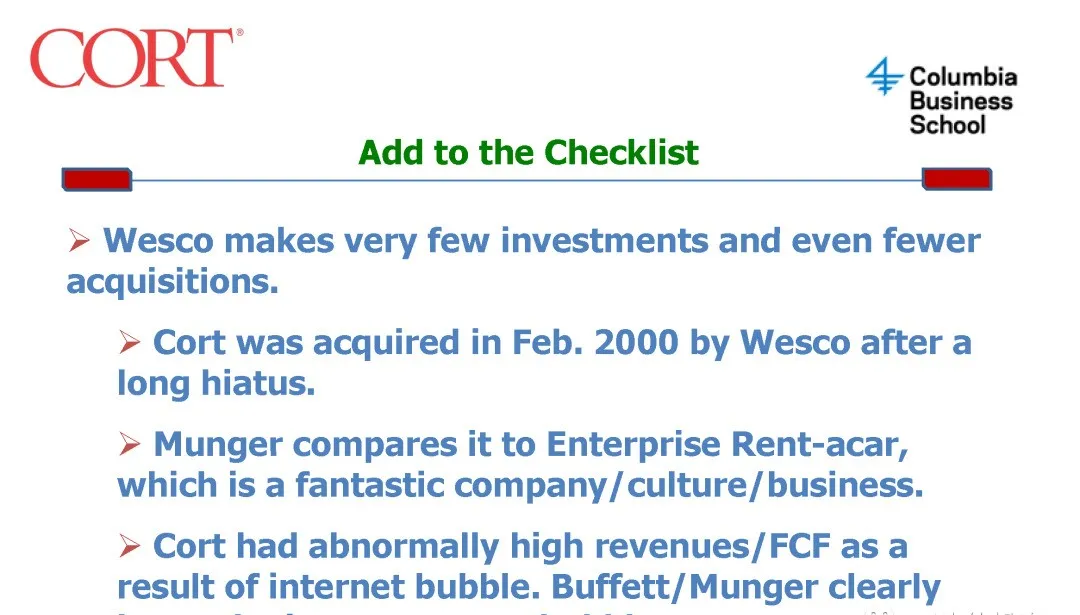
Add to wishlist
Wesco hardly makes any investments, and even fewer acquisitions.
After a prolonged period of stagnation, Cort was acquired by Wesco in February 2000.
Munger compared it to Enterprise Rent-a-car, which is an excellent company/culture/business.
Due to the impact of the internet bubble, Cort's revenue/free cash flow was exceptionally high. Buffett/Munger clearly knew that the internet was a bubble.
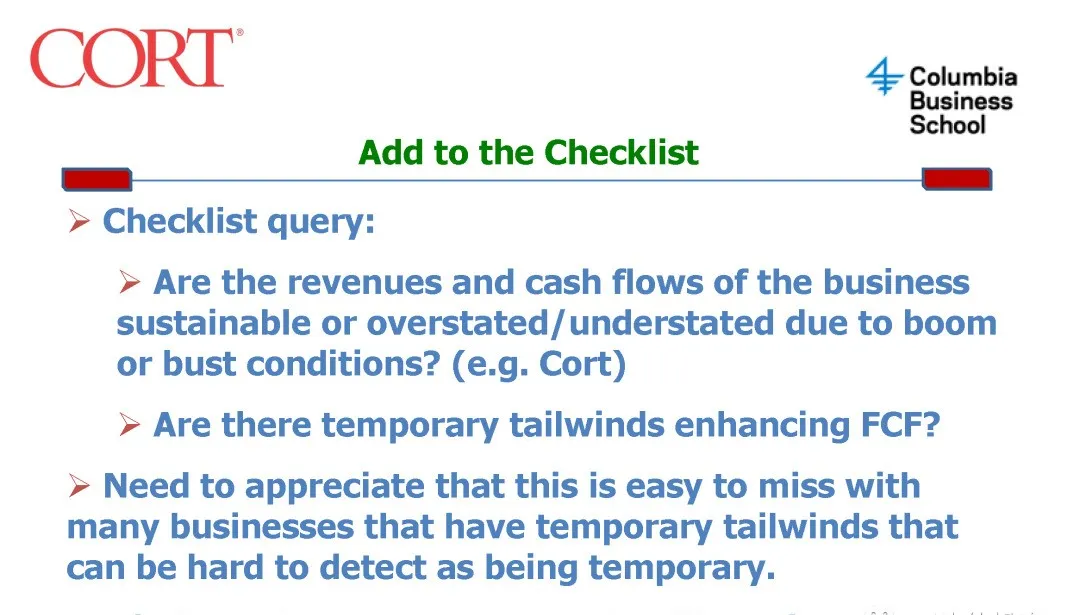
Add to wishlist
Are the company's revenues and cash flows sustainable, or are they overstated or understated due to boom‑and‑bust cycles (as in the case of Cort)?
Is there a temporary tailwind that has boosted free cash flow?
It is important to recognize that many firms benefit from temporary tailwinds, and the transient nature of these factors can be difficult to detect—something that is all too easy to overlook.
Even sharp minds like Munger's and Buffett's can miss it.
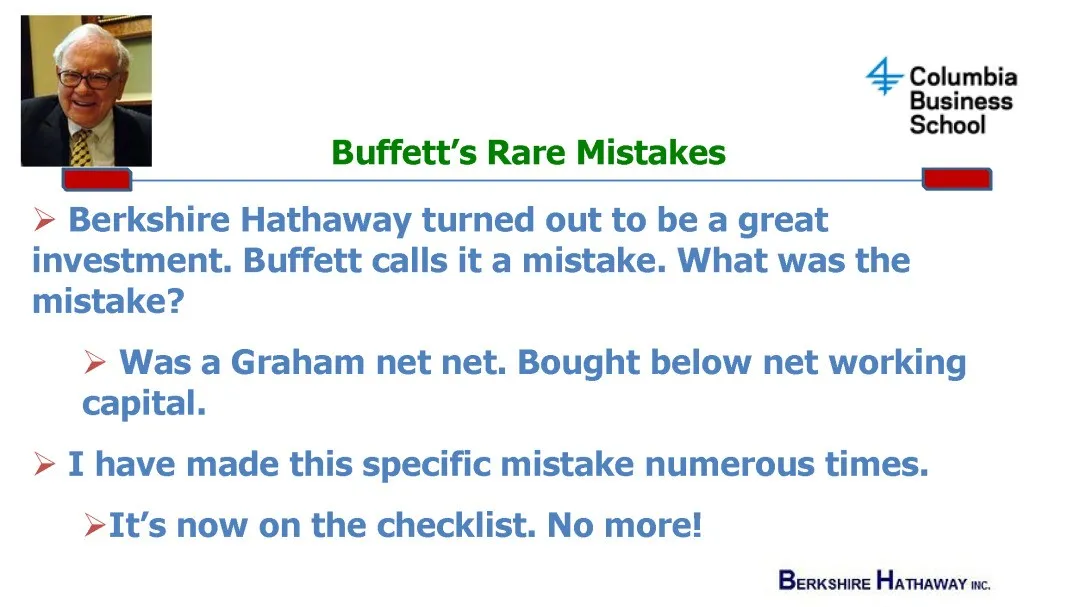
Buffett's rare mistake
Berkshire Hathaway ultimately became a massive investment, but Buffett called it a mistake. So what was that mistake?
It is a Graham‑style net‑net investment, acquired at a price below net working capital.
I've also made this specific mistake many times.
It has now been added to the list, so I won't make the same mistake again.
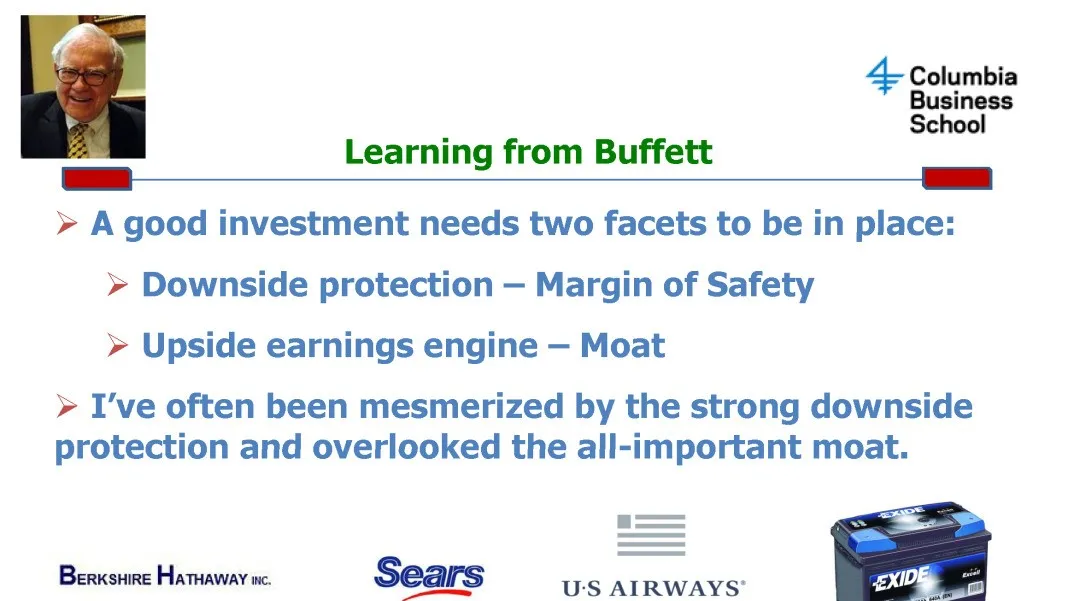
Learning from Buffett
Downside Protection – Margin of Safety
Upstream Profit Engine – Moat
I often get misled by strong downside protection, while overlooking the critically important moat.
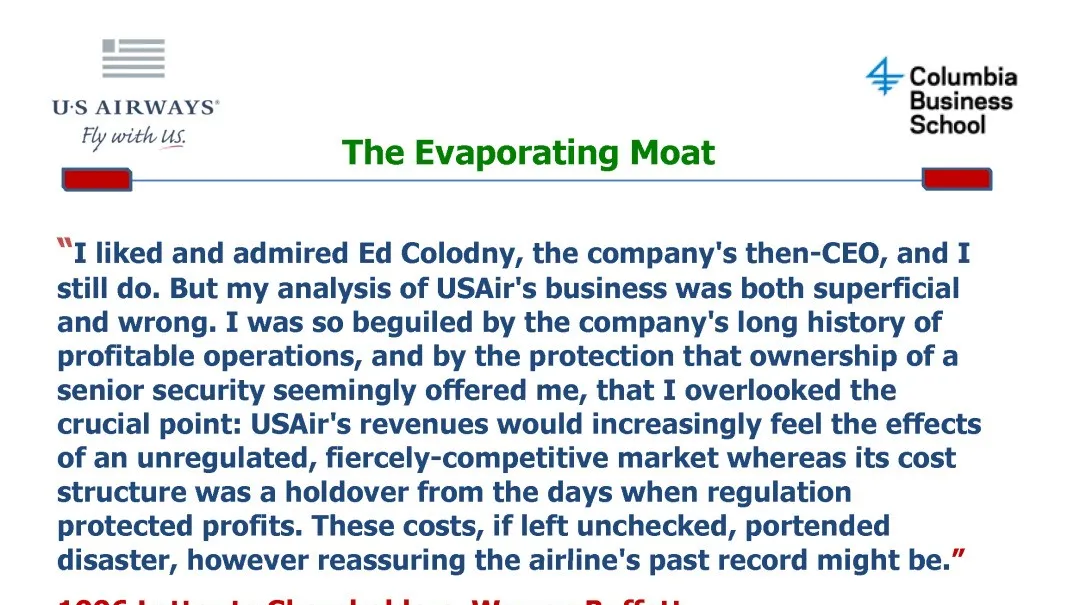
The Vanishing Moat
I liked and admired the company's then-CEO, Ed Colodny, and I still do. However, my analysis of American Airlines' business was both superficial and flawed. I was misled by the company's long history of profitable operations and the protection afforded by its holding of senior securities, overlooking a crucial point: American Airlines' revenues would increasingly be subject to the pressures of an unregulated, highly competitive market, while its cost structure remained a legacy of an era when regulatory protections shielded profits. If these costs were not brought under control, even the airline's reassuring past performance would portend disaster.
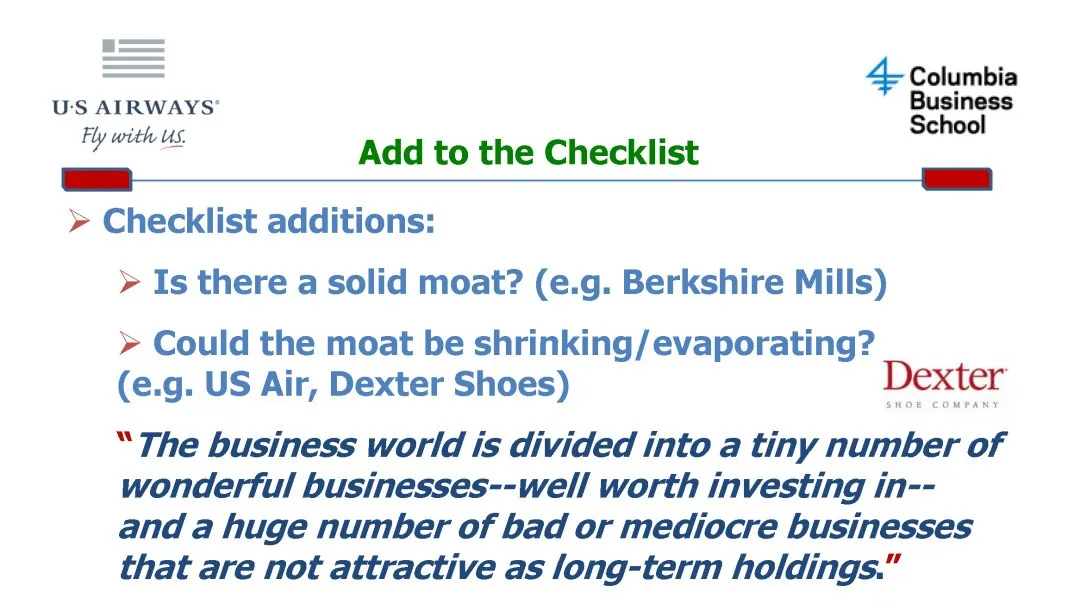
Add the following to the list:
Does a strong moat exist (e.g., Berkshire Mills)?
Is the moat shrinking or evaporating (e.g., US Air, Dexter Shoes)?
Determine whether a company falls into the category of a "great business" or a "poor/mediocre business" (in Warren Buffett's words).
Assess whether a company is worthy of investment for long-term holding.
Checklist:
I've reviewed every investment mistake I've made and am now compiling the mistakes of other great investors.
To date, the list includes 60 projects, but none have been completed yet.
No company passed all 60 inspection items.
This is different from the healthcare or aviation industries.
Investments will have one or more issues.
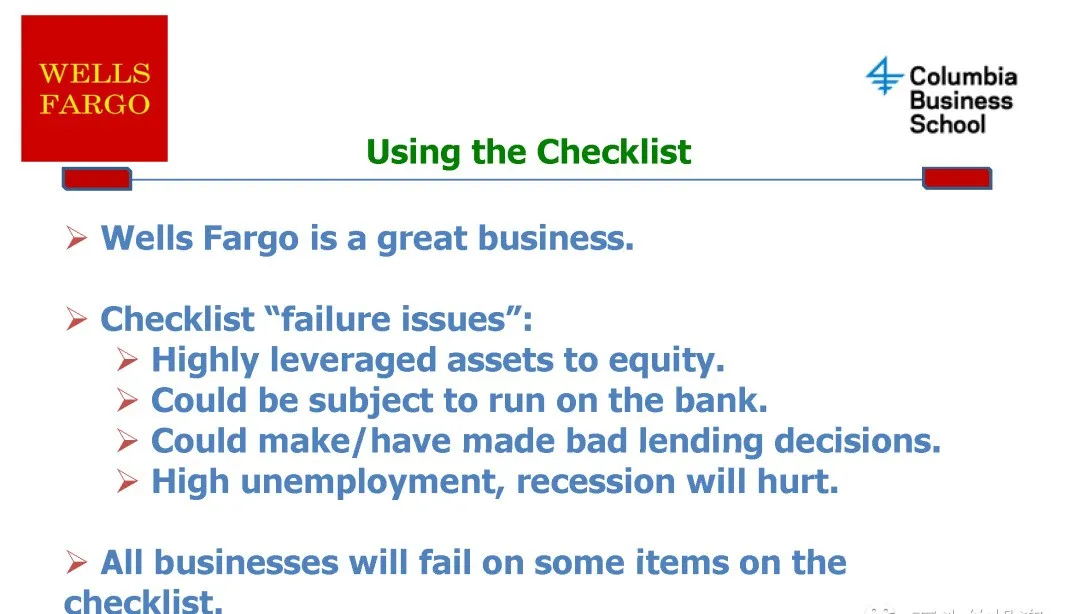
Use Checklist
Wells Fargo & Co is a very good company.
List "Failure Issues":
Highly leveraged assets
May face a run risk.
May have made/have already made poor lending decisions.
High unemployment and economic recession will have an impact on it.
All companies will fail on certain checklist items.
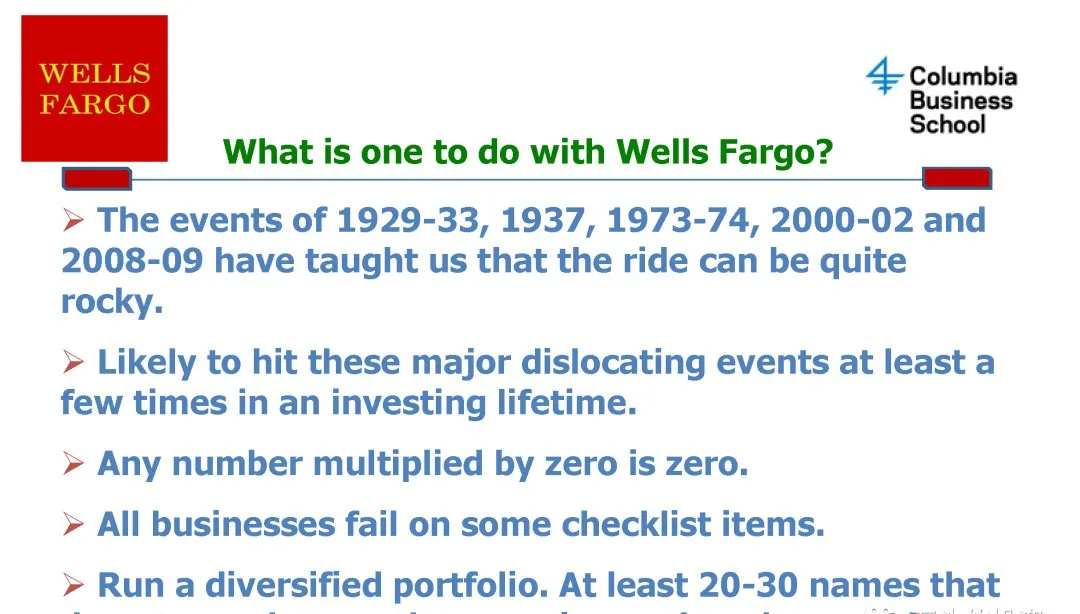
Strategies for dealing with Wells Fargo & Co
The events of 1929–33, 1937, 1973–74, 2000–02, and 2008–09 teach us that stock market movements can be highly volatile.
Throughout one's investment career, one may encounter several such major events.
Any number multiplied by zero is zero.
All companies will fail on certain checklist items.
Run a diversified portfolio. Include at least 20–30 holdings that are uncorrelated across the same risk factor (e.g., leverage ratio).
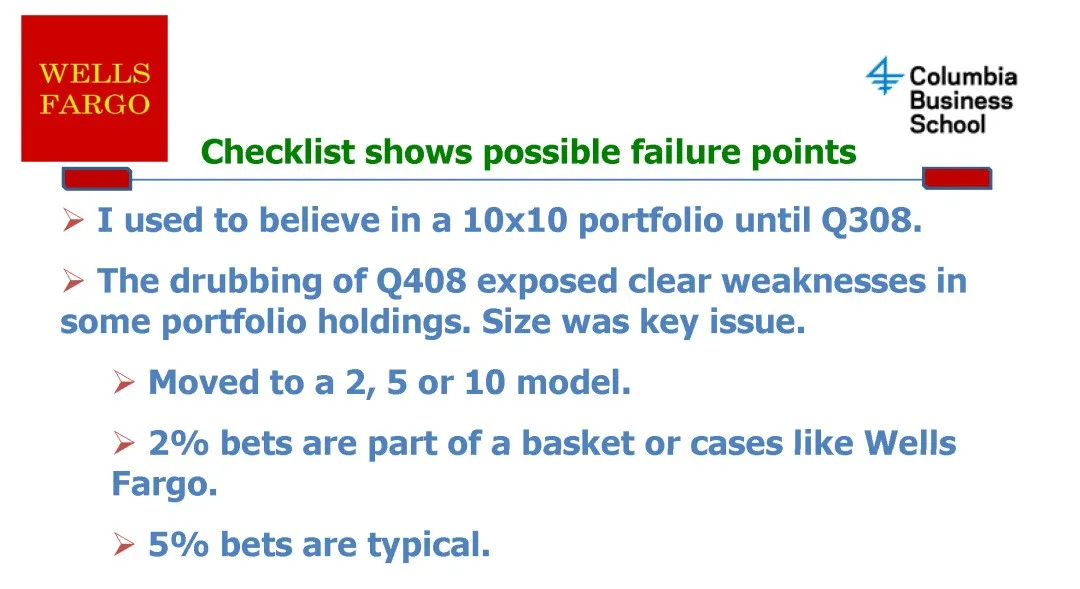
The checklist identifies potential failure points.
I used to believe in the 10x10 portfolio, until Q3 2008.
The disastrous performance of Q408 laid bare some glaring weaknesses in the portfolio's holdings, with scale emerging as a critical issue.
Switch to the 2-, 5-, or 10-model
A 2% stake is part of the basket, or as in the case of Wells Fargo & Co.
A 5% rake is typical.
When seven moons align in a row, a 10% bet is placed.
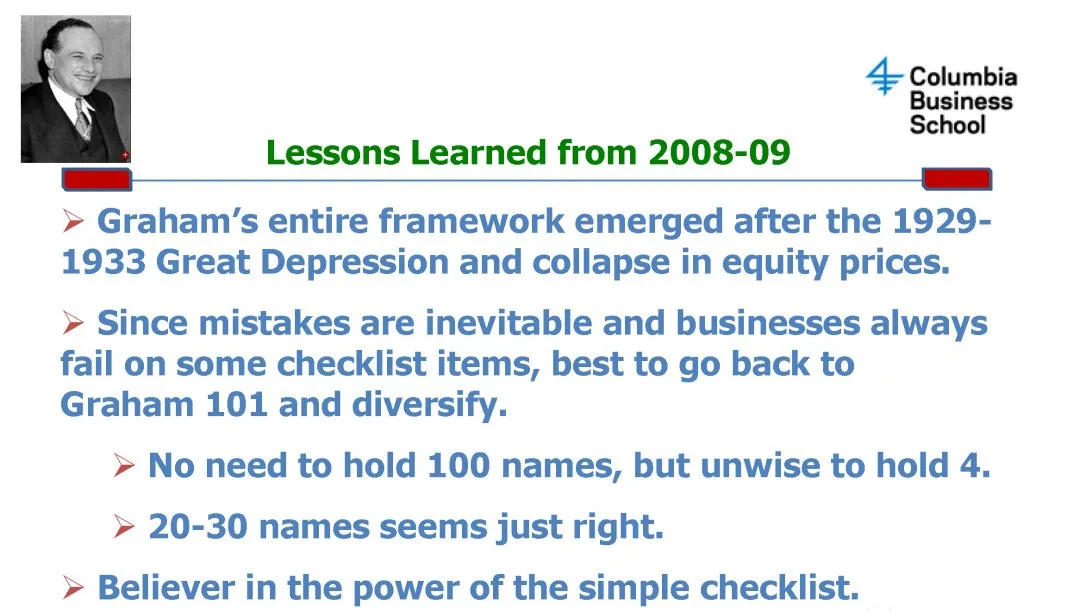
Lessons learned during the 2008–09 period
Graham's entire investment framework emerged in the wake of the Great Depression and the stock market crash of 1929–1933.
Since mistakes are inevitable, companies will inevitably fall short on certain items in their checklists; therefore, it is best to return to Graham's fundamental principles and adopt a strategy of diversified investing.
There's no need to hold shares in 100 companies, but holding stocks in just four is unwise.
Holding stocks in 20 to 30 companies is appropriate.
Firmly believe in the power of simple checklists.
In closing, Munger said: "It's remarkable that people like us enjoy so many long-term advantages precisely because we strive to avoid doing foolish things, rather than striving to become exceptionally smart."
 When big players make a move, you'll know right away! Futubull's [Smart Money Tracker] feature has been completely upgraded—stock gods, institutions, and politicians adjusting their portfolios? You'll be alerted instantly!

Editor/rice