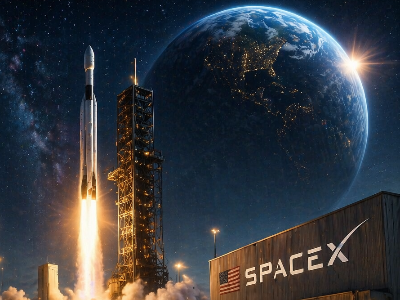
$SpaceX (SPCX.US)$The company will release its earnings report after the market closes on October 20, Eastern Time. Analysts expect revenue of $12.978 billion and earnings per share of $0.167 for Q3 2026.
As the second full‑year financial report since the companies went public, this quarter marks the first time the market has been able to fully assess the "inflection point in AI compute revenue" thesis. Since July, two major contracts—Anthropic's and Google's—totaling roughly $26 billion annually in compute capacity have entered their substantive execution phase. Coupled with the ramp-up of a $6.7 billion cloud‑services pipeline beginning in October, the trajectory by which the AI sector is poised to leap from Q2's $2.56 billion quarterly revenue into the "multi‑billion‑dollar range" will be quantified for the first time.
Meanwhile, at the end of September, Starship's 14th test flight achieved true orbital insertion for the first time, deploying 26 Starlink V3 satellites; on October 8, it announced the acquisition of 800 MHz of nationwide spectrum from Grain Management. These two developments respectively signal a mid-to-long-term reassessment of the narratives surrounding "the sustained decline in launch costs" and "a new revenue stream from direct‑to‑mobile connectivity."
 However, the market's biggest divergence today lies not on the revenue front but on the capital‑expenditure side: Q2's $18.4 billion in Capex—of which $15.8 billion was allocated to AI—sent the stock plunging more than 10% in after‑hours trading. Whether Q3 can provide clearer guidance on the peak‑out timing for Capex and the inflection point for free cash flow will be a far more decisive factor in shaping the stock's trajectory than the revenue numbers themselves.
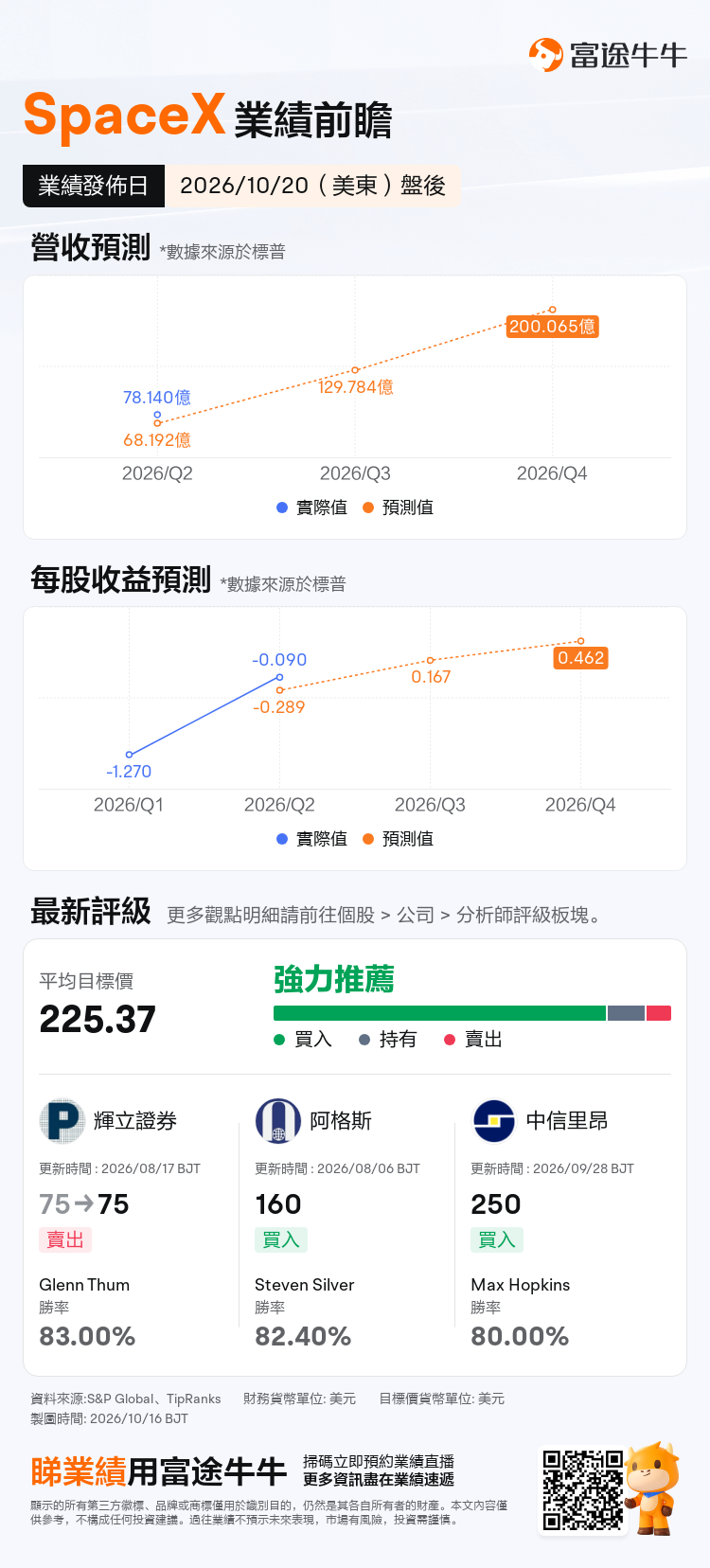
AI Business: Progress on computing‑power contracts is expected to make a relatively certain contribution to Q3 revenue.
The AI segment was the most resilient driver of revenue in this quarter's earnings report and the key engine underpinning the $12.978 billion revenue consensus.
Based on disclosed contracts, SpaceX has currently secured three major, clearly defined AI computing‑power leasing deals: Anthropic is paying $1.25 billion per month, with the contract running from May through May 2029;$Alphabet-C (GOOG.US)$US$920 million per month, corresponding to approximately 110,000 units.$NVIDIA (NVDA.US)$GPU, which has been operating at full capacity since October and will continue through June 2029; at the Goldman Sachs conference in September, SpaceX CFO Bret Johnsen disclosed a fourth contract worth $1.11 billion per month, effective December 1.
The three deals combined represent an annualized run rate of approximately $39.3 billion, and when factored in the $6.7 billion cloud‑services pipeline that management previously disclosed—set to ramp up over six months starting in October—the total recognized value of the AI contract backlog has now surpassed the $46 billion mark.
The distinct feature of this Q3 performance is that it marks the first full quarter in which these contracts have achieved "substantial, overlapping revenue realization" for the first time. In Q2, AI‑related revenue totaled $2.56 billion, with the Anthropic contract contributing roughly two to three months' worth of revenue, while the Google contract was still in the ramp‑up phase and operating below full capacity. By Q3, Anthropic had reached full‑capacity operations, and Google's production capacity transitioned from partial utilization in September to full‑speed operation in October.
UBS Group's Q3 AI segment revenue forecast is $7.6 billion, while Citi takes a more conservative stance at $6.9 billion. Even using Citi's estimate, the quarter-over-quarter surge in AI revenue compared to Q2 is nearly 2.7 times, serving as the key driver behind the full-quarter revenue jump from $7.8 billion in Q2 to the consensus $13.0 billion in Q3.
Space Business: Starship's 14th test flight achieves orbital insertion for the first time, extending the long-term narrative.
On September 28, Starship's 14th test flight for the first time truly reached Earth orbit and successfully deployed 26 Starlink V3 satellites, marking the most significant single engineering milestone since the company's founding in 2023. Its true significance lies on a long-term strategic level: it paves the way for reducing reusable launch costs by another 90%, expanding the constellation size tenfold, and enabling the AI‑driven orbital data center Starmind, while providing the first engineered proof‑of‑concept node for a space‑based computing flywheel.
The Q3 earnings report itself will not directly reflect the revenue contribution from the 14th test flight; rather, it will be reflected in the financial outlook for 2027 and beyond. UBS Group's forecast for Q3 space segment revenue is $1.3 billion, still up year over year, primarily driven by Falcon 9 commercial launch services.
Looking ahead to Q3, investors should watch for whether management discloses, during earnings calls and conference calls, the timeline for the next, 15th test flight, the planned number of remaining Starship launches for the year, as well as the production ramp-up and reuse‑rate trajectory for Starship V3.
Starlink Business: Can the revenue contributions from price hikes and spectrum acquisitions sustain rapid growth?
Starlink remains the company's sole, reliably profitable cash cow. In Q2, it generated $4.29 billion in revenue, up 66% year over year, with operating income of $1.66 billion and an operating margin of 38.6%. Subscriber numbers reached 12 million, doubling from the same period last year, while enterprise and government revenue totaled $1.8 billion, a 108% year-over-year increase. For Q3, consensus estimates project revenue of approximately $4.9 billion, up 59% year over year—though growth has edged down slightly from Q2, it remains at a robust level.
The price hikes implemented since June will, for the first time, be fully reflected in Q3's average revenue per user (ARPU) figures. If these increases succeed in stabilizing or even boosting ARPU in Q3, it would demonstrate that Starlink possesses genuine pricing power at the consumer level, providing direct support to its valuation.
On October 8, SpaceX announced the acquisition of Grain Management's nationwide 800 MHz spectrum portfolio, aligning with the combined trillion-dollar mobile‑communications market accessible to the three major U.S. telecom operators. The deal remains subject to FCC approval and will not contribute any revenue to Q3 earnings; however, investors will view the availability of the spectrum assets and the timeline for commercial deployment as key indicators of the likelihood that Starlink will deliver on its second growth trajectory.
Accordingly, forward-looking analysis should focus on whether management provides, during the earnings call, a timeline for the initial commercial rollout of the direct‑to‑mobile service, as well as its relationship to existing…$T-Mobile US (TMUS.US)$ 、$AT&T (T.US)$and$Verizon (VZ.US)$Cooperative or competitive strategies.
Valuation, Capital Expenditures, Share Lock-up Releases, and CDS Risk
Valuation Pressure: Currently, SPCX's share price implies a forward P/E ratio of approximately 92x and a forward P/S ratio of about 85x, making it the most expensive large-cap stock in the entire market—more than three times as pricey as NVIDIA. Based on Goldman Sachs' reference price of $158.96, this corresponds to P/E multiples of 122x/40x/23x for 2026/2027/2028, respectively, and EV/EBITDA ratios of 55x/25x/15x—meaning that valuation sustainability hinges heavily on the realization of EPS growth from $1.3 to $7 between 2027 and 2028.
If the Q3 earnings report exceeds expectations on the revenue front but profit margins continue to widen losses, the valuation‑recovery timeline will be pushed back once again; conversely, if management provides a clearer roadmap for profit realization, valuations could shift from faith‑based pricing to cash‑flow‑driven pricing.
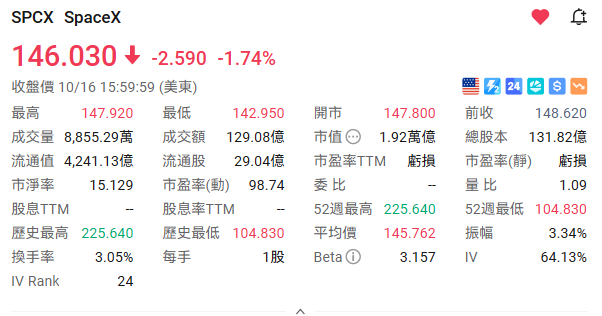
Capital Expenditures: In Q2, capital spending totaled $18.4 billion, with $15.8 billion allocated to AI—39% above expectations. This outperformance triggered a post‑earnings after‑hours sell-off of over 10%, directly explaining why the quarter's better‑than‑expected revenue still drew market punishment. The market's primary concern today is not how much is being spent, but when the company will halt its exponential expansion. Looking ahead, key metrics to watch include whether the capex‑to‑revenue ratio begins to decline from its Q2 level of 2.4x, and whether free cash flow losses narrow compared to the roughly $14 billion loss recorded in Q2.
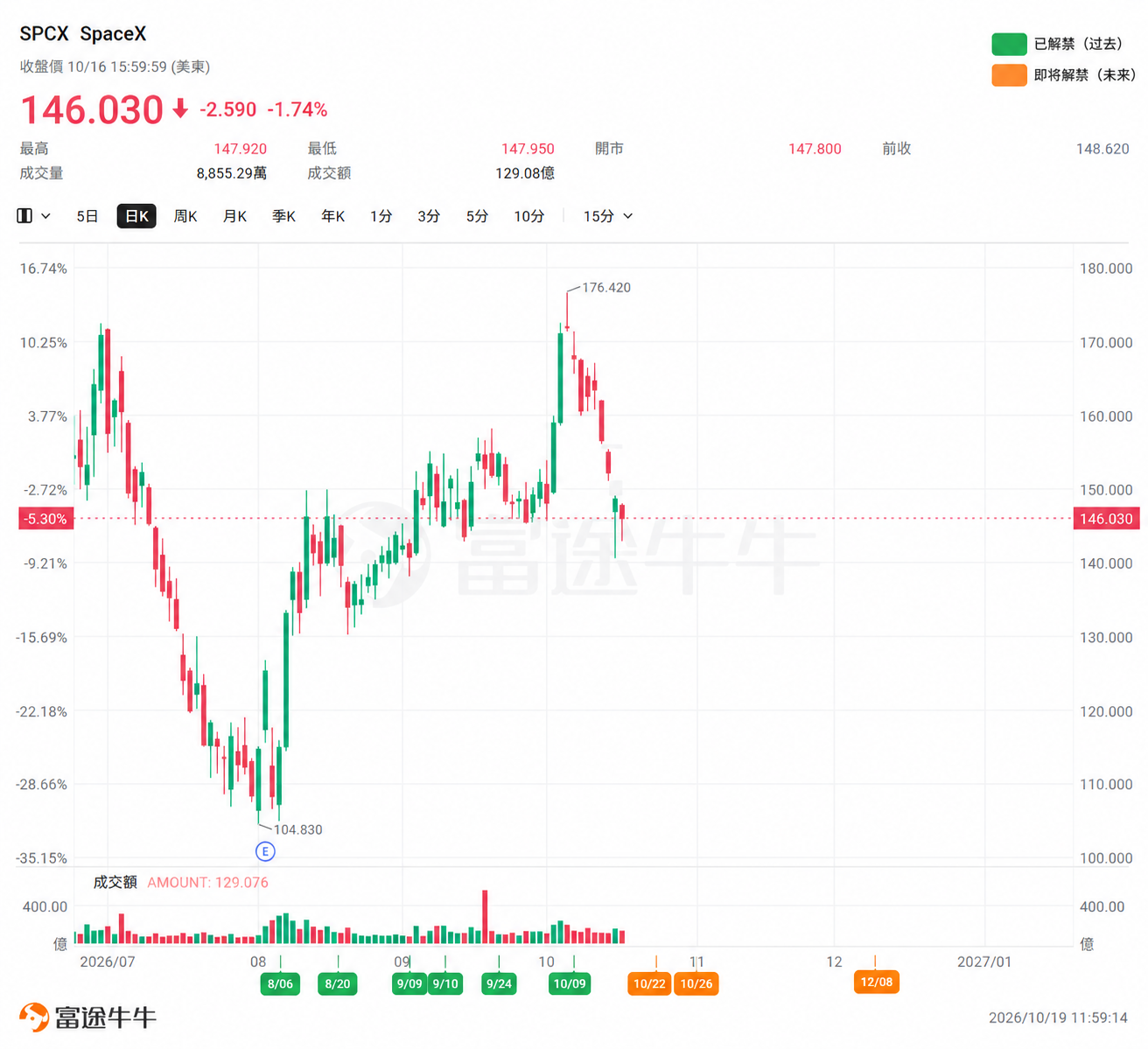
Impact of share unlocking: According to the IPO lock-up schedule, following the release of 911.5 million shares on August 6, the proportion of tradable shares has risen to approximately 30%. Additional tranches are set to unlock on October 24, as well as in November and December; notably, around 28% of previously restricted shares will become eligible for trading during the week of the Q3 earnings report in November, coinciding with this reporting period. The company has a strong incentive to deliver results that exceed expectations in Q3 to mitigate selling pressure from the upcoming unlocks. However, this also implies that, regardless of the post‑earnings direction, liquidity‑related selling pressure could be amplified.
CoreWeave CDS risk: mid-October$CoreWeave (CRWV.US)$The five-year credit default swap spread once surged to around 1,195 basis points, hitting a record high and elevating the debt sustainability of AI‑related stocks to a market‑sensitive issue. SpaceX's AI revenue is currently highly concentrated among two customers—Anthropic and Google—accounting for roughly one-third of the company's total revenue. Should the global AI capital‑expenditure cycle reverse between 2027 and 2028, or if counterparty credit conditions deteriorate, SpaceX would face a triple blow: downward revisions to its revenue outlook, a sharp spike in CDS spreads, and a compression of its valuation.
Summary: Strong revenue growth is virtually assured; keep a close watch on capital expenditures and free cash flow.
SpaceX's Q3 results confirm strong revenue growth, with the AI segment's quarter-over-quarter surge serving as the key driver. Meanwhile, Starship's 14th orbital test flight and its spectrum‑related acquisitions are set to prompt a reevaluation of the company's medium- to long-term narrative. However, what will ultimately shape the stock's trajectory in this earnings report remains the pace of capital expenditures, the inflection point in free cash flow, and the quality of AI‑related revenue.
 Earnings Flash: AI Insights into Key Points, Build an Options Strategy in Three Steps! Open Futubull > Stock Page > Tap [Company] >Earnings Flash Report

Editor/Rocky