Macro News Highlights
Hassett acknowledged that inflation remains a challenge, and robust consumer spending keeps the interest-rate trajectory under close scrutiny.
According to a CNBC interview on October 19 with Kevin Hassett, Director of the U.S. National Economic Council, despite price declines in certain goods such as beef and eggs, September's consumer price data indicate that overall inflation still requires further attention. He noted that while the previous three months had suggested inflation was under control, the latest rebound could signal a break in the downward trend or merely reflect short-term volatility. On monetary policy, Hassett emphasized respect for the Federal Reserve's independence, stating that Chair Jerome Powell will make the decisions he deems appropriate. He also pointed out that consumers remain optimistic about economic conditions and are increasing their spending—factors that the central bank must take into account. Earlier, the U.S. Bureau of Labor Statistics reported that the CPI rose 0.6% month-over-month in September, marking the largest increase in five months; meanwhile, the core CPI, which excludes food and energy, climbed 0.3% month-over-month, unchanged from August.
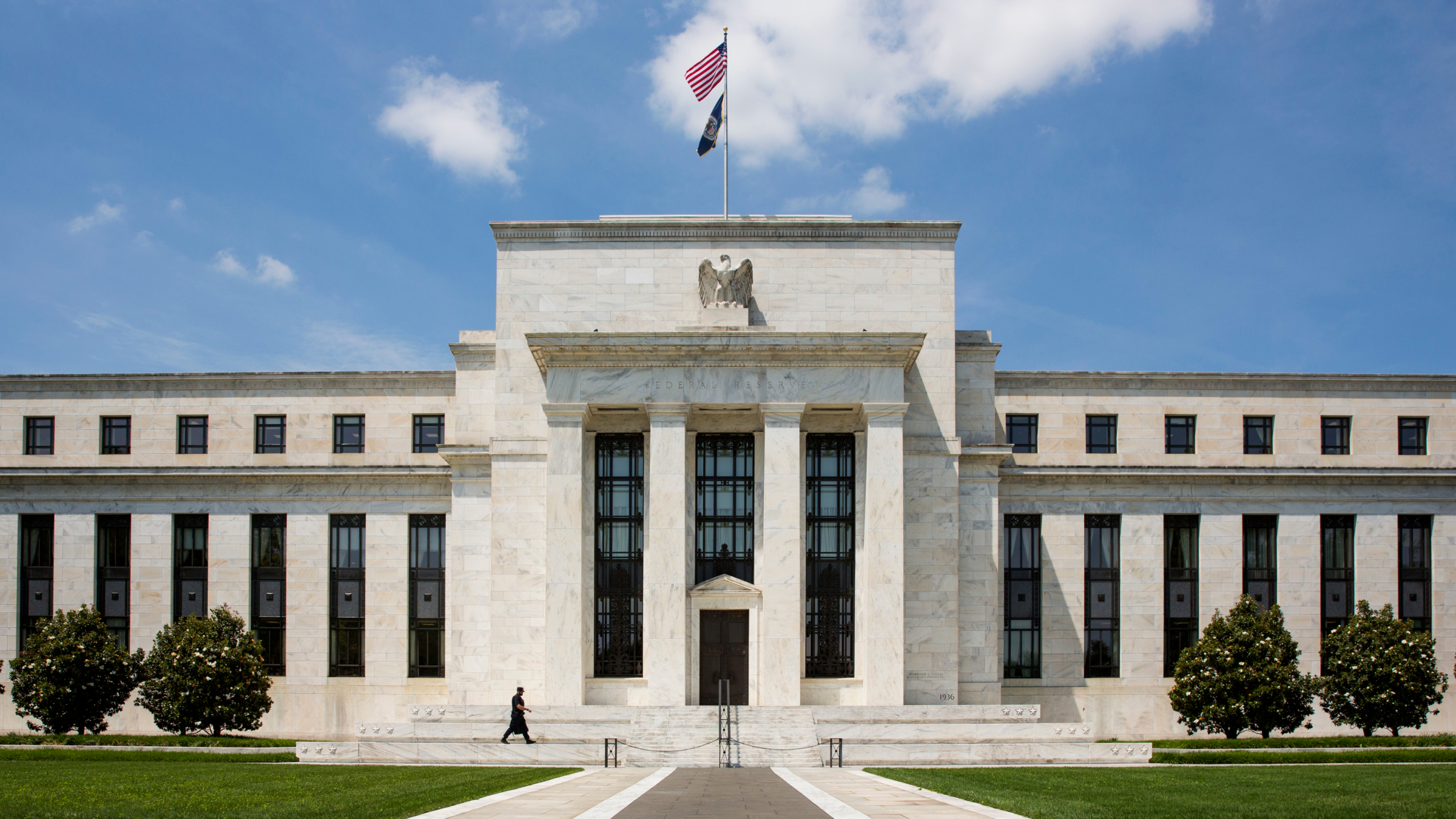
U.S. Treasury yields have rebounded, and the market continues to bet that the Federal Reserve will raise interest rates again in December.
 According to a report by The Wall Street Journal on the 19th, as oil prices reversed earlier losses, the yield on the U.S. 10-year Treasury note rose by about 5 basis points to 5.148%. A Reuters report from New York in the afternoon, citing interest-rate futures pricing, indicated that traders expect the Federal Reserve to hold rates steady at its October 27–28 meeting, though the probability of a December rate hike remains around 91%. Consequently, an October pause does not signal a shift toward dovish pricing; inflation and energy costs continue to shape the path of future monetary tightening. From a trading perspective, the recovery of AI‑related stocks must contend with both profit-taking pressures and discount‑rate constraints, while highly leveraged computing‑intensive firms, real estate companies, and utilities are particularly sensitive to financing costs.
Trump once again disqualifies Zelenskyy from negotiations: "It's time to bring in someone else to negotiate."
According to CCTV NewsOn the afternoon of October 19, local time, U.S. President Trump told the media at the White House that he believes Ukraine should be represented by someone other than President Volodymyr Zelenskyy in negotiations aimed at ending the conflict with Russia. Trump said, "Perhaps it's time for Zelenskyy to bring in someone else to negotiate." Recently, Trump has repeatedly criticized Zelenskyy publicly, claiming that Zelenskyy "may never have wanted to end the war" and calling on Ukraine to replace its president. Trump added that the United States continues to share intelligence with Ukraine and is considering allowing Ukrainians to remain in the United States under temporary protected status until the war ends. Meanwhile, Trump revealed that he has held "negotiations" with Russian President Putin on the Ukrainian issue, during which they also discussed diesel supplies and the Iranian question. Trump further commented that Russia has "performed reasonably well" on the Ukraine issue, adding, "They haven't done much."
The U.S. Strategic Petroleum Reserve has fallen to its lowest level since 1982, once again drawing attention to the country's energy supply buffer.
According to data from the U.S. Department of Energy and a Reuters report on October 19, the U.S. Strategic Petroleum Reserve fell to 282.7 million barrels last week, the lowest level since October 1982. This round of inventory drawdown is part of the United States' earlier commitment to release 172 million barrels from its reserves, which forms part of a broader plan by International Energy Agency member countries to tap a total of 400 million barrels of emergency stockpiles. On the 16th, the U.S. Department of Energy also announced a swap tender for up to 17 million barrels of crude oil, with this volume constituting part of the final tranche of 40 million barrels under the current release program. The department previously stated that the swap mechanism requires participating companies to return the borrowed crude within an agreed timeframe, along with an additional quantity of oil. The Strategic Petroleum Reserve is an emergency crude oil stockpile held by the U.S. government, primarily intended to address supply disruptions and fulfill obligations under international energy cooperation frameworks.

OpenAI seeks to accelerate its fundraising efforts ahead of Anthropic's IPO.
According to a Reuters report on October 20, OpenAI is racing to secure investor commitments before its rival Anthropic is expected to go public in mid-November. The pace of this funding round is unusually rapid, potentially pushing OpenAI, the developer of ChatGPT, to a valuation exceeding $1.4 trillion. The swift timeline partly reflects OpenAI's desire to get ahead of Anthropic, as the two cutting-edge AI labs increasingly vie for the same pool of investors. They also added that OpenAI aims to leverage recent revenue growth to advance fundraising following the launch of its new model. A source familiar with the matter said SoftBank Group, Abu Dhabi–based MGX, and other existing investors in OpenAI are in talks to participate in this round, which could raise around $30 billion.
The central bank plans to establish a liquidity facility for non-bank redemptions and advance adjustments to the policy interest rate framework.
According to a speech by Pan Gongsheng released by the People's Bank of China on the 19th, the central bank will, together with relevant departments, establish a liquidity support tool to address large-scale redemptions by non-bank financial institutions. This tool will be activated under specific circumstances, such as when asset management firms face systemic liquidity risks or when the bond market experiences a negative feedback loop of redemptions and sell-offs. Operations under this mechanism will comply with macroprudential requirements and require high‑quality collateral. Meanwhile, the central bank plans to expand the scope of its Standing Lending Facility and facilitate the interconnection between the interbank and exchange‑traded bond markets. On the interest rate framework, it will study the possibility of shifting the primary tenor of open market operations to overnight, adjust key policy rates accordingly, and promote diversification of loan pricing benchmarks.
Related Reading:Pan Gongsheng announced that a liquidity support tool for large-scale redemptions by non-bank institutions will be launched.

South Korean President plans to explore measures to stabilize the market, with improving corporate governance emerging as a policy priority.
South Korean President Lee Jae-myung stated on the same day, during a briefing with reporters at the presidential office, that the Korean stock market remains significantly undervalued and that the government will review a comprehensive report, conduct deliberations, and take appropriate measures. He noted that corporate governance, market transparency, geopolitical risks, and uncertainties in industrial and economic policies are all contributing factors to the discount in Korean market valuations. While policy uncertainty has improved, investor confidence in corporate governance has yet to be fully restored. President Lee added that the government is continuously assessing the policies needed to normalize the stock market, emphasizing the need to address issues such as the abuse of managerial control by controlling shareholders and to foster a culture that respects shareholders. He also stressed that direct government intervention in financial and securities markets would be both difficult and undesirable, underscoring that the priority of policy efforts lies in enhancing market transparency and formulating and implementing industrial and economic policies in a predictable and consistent manner.
U.S. stock market行情
AI-related stocks rebounded, pushing the Nasdaq up more than 1%, while the memory and chip sectors staged a notable recovery.
On Monday (October 19), the three major U.S. stock indexes closed mixed. After last week's sharp sell-off in artificial intelligence (AI)-related stocks, investors returned to the market, driving the Nasdaq to rebound by more than 1%. At the close, the Dow Jones Industrial Average fell 0.07%, ending at 51,966.03 points; the S&P 500 rose 0.41%, closing at 7,690.73 points; and the Nasdaq Composite gained 1.11%, finishing at 26,430.89 points.

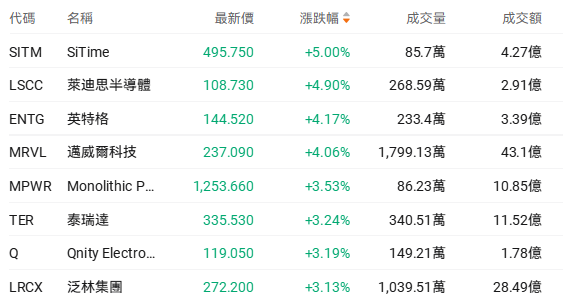
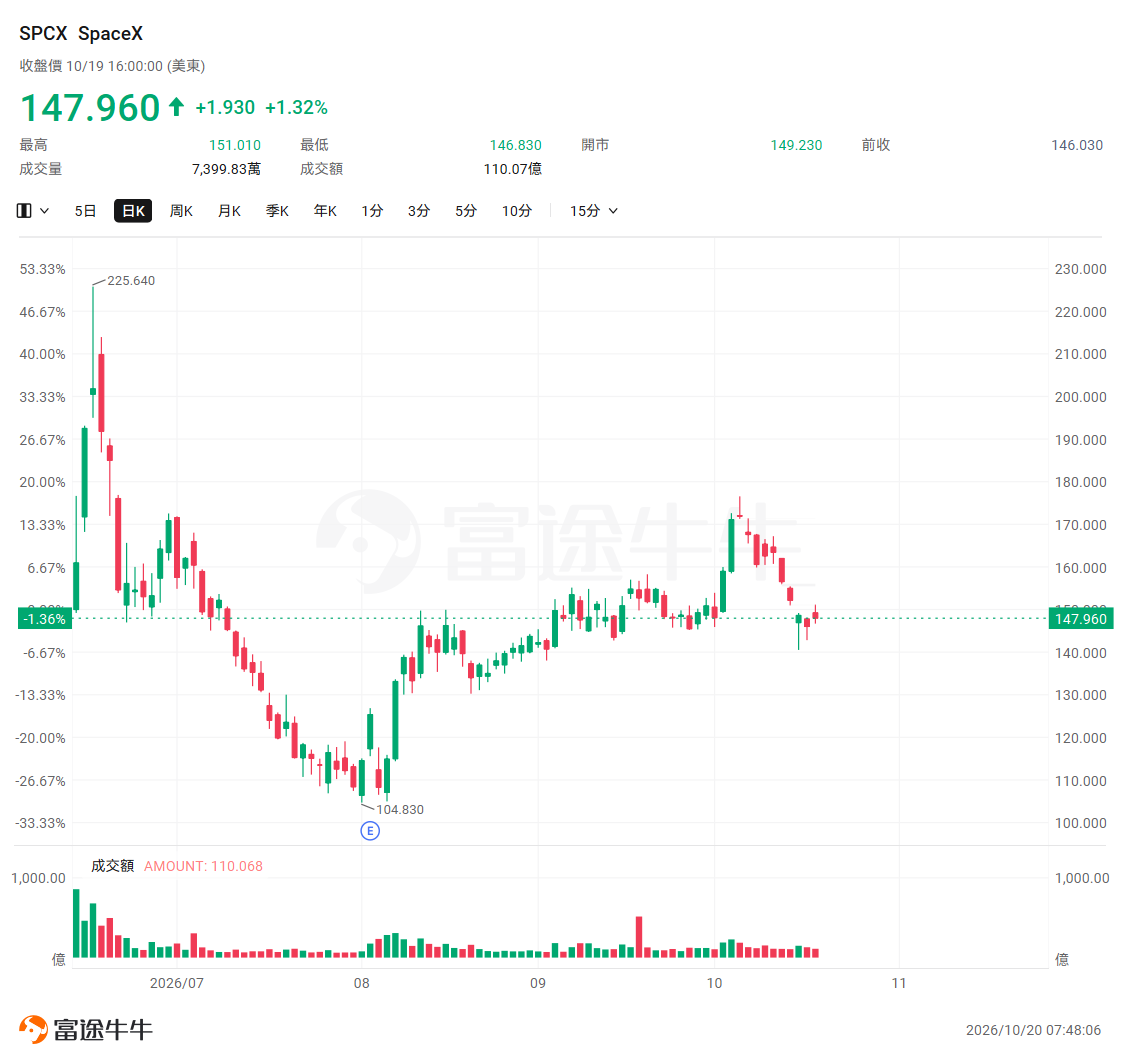
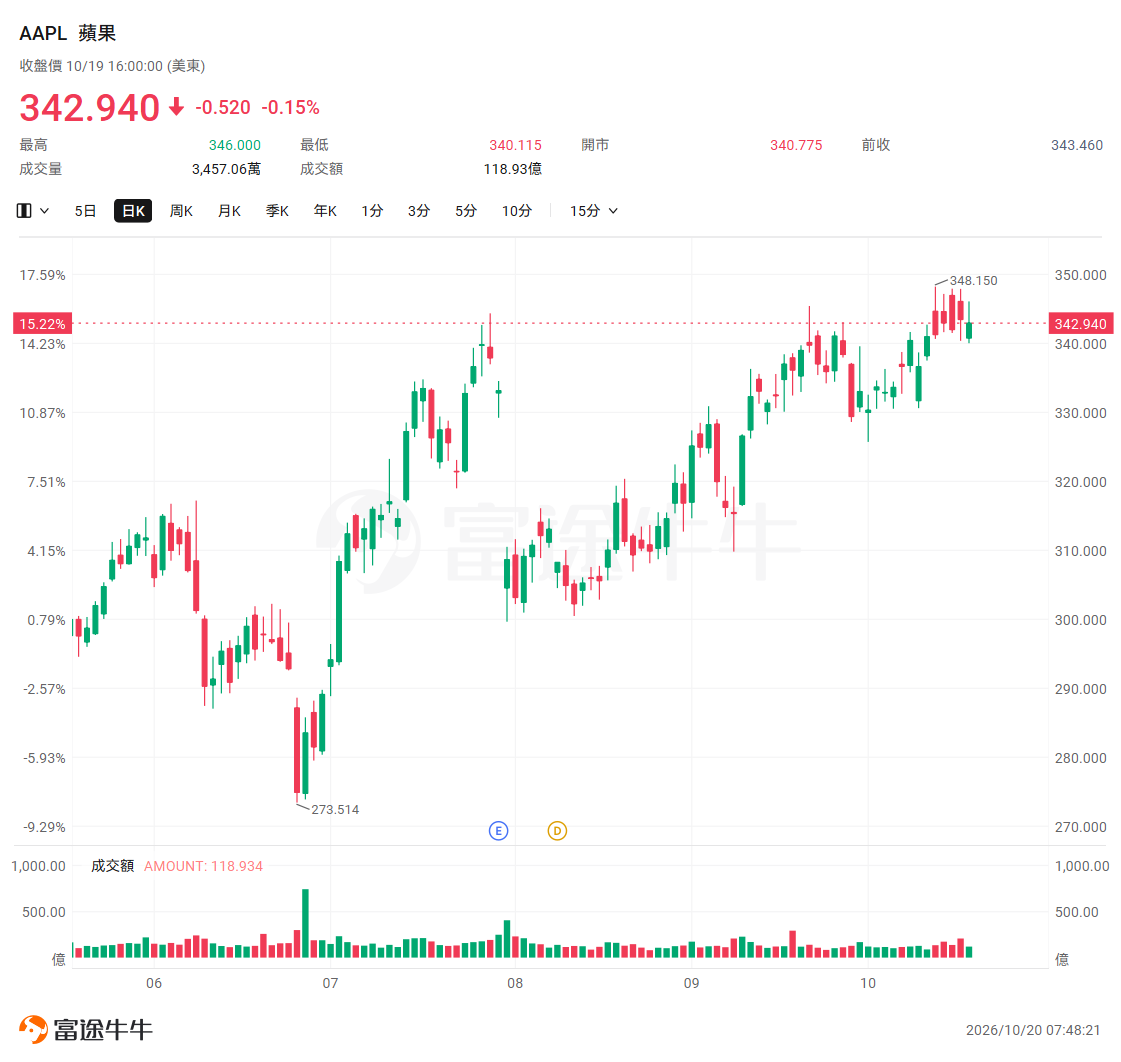
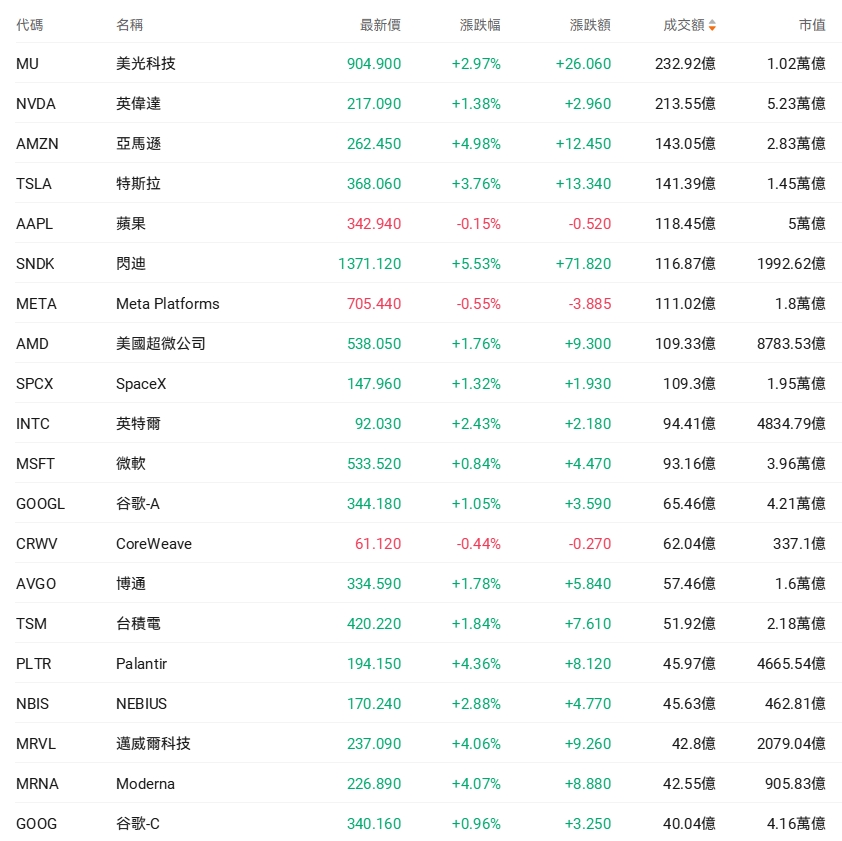
$Star Technology Stocks (LIST2518.US)$Most stocks rose, with NVIDIA up 1.38%, Apple down 0.15%, Google C up 0.96%, Microsoft up 0.84%, Amazon up 4.98%, SpaceX up 1.32%, Meta down 0.55%, and Tesla up 3.76%.
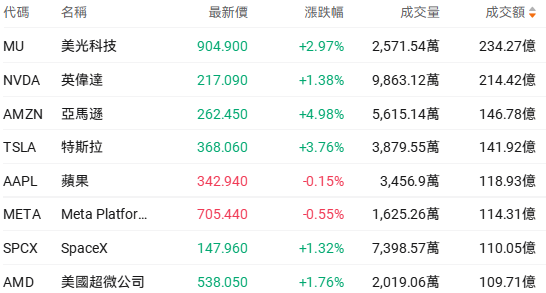
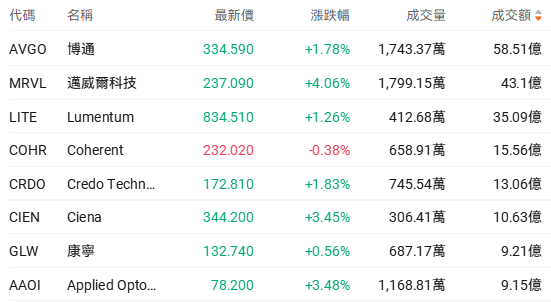
$Philadelphia Semiconductor Index (.SOX.US)$Up 1.61%, with only 4 out of the 30 constituent stocks declining. SiTime rose 5%, Lattice Semiconductor gained 4.9%. Intel advanced 2.43%, Taiwan Semiconductor increased 1.84%, Broadcom climbed 1.78%, and AMD rose 1.76%.
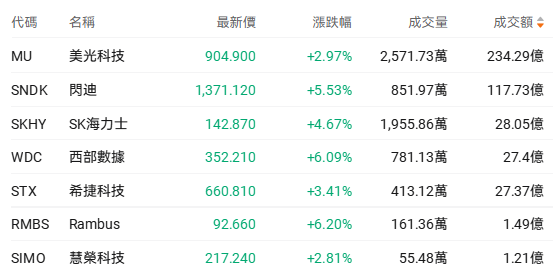
$Storage Concept (LIST23925.US)$Stocks rose across the board, with Western Digital up 6.09%, SanDisk up 5.53%, SK Hynix up 4.67%, Seagate Technology up 3.41%, and Micron Technology up 2.97%.$Roundhill Memory ETF(DRAM.US)$Up 4.05%.
$Optical Communications (LIST23979.US)$Most are strengthening,$Roundhill Photonics & Optics ETF(LYTE.US)$Up 0.96%. Marvell Technology rose 4.06%, AAOI gained 3.48%, CRDO increased by 1.83%, Lumentum climbed 1.26%, while Coherent fell 0.38%.
$Popular Chinese Stocks (LIST2517.US)$Market performance was mixed, with Hesai up 4.03%, Zai Lab up 3.75%, GDS Holdings down 2.64%, and Nio down 1.17%.
Individual Stock Information
NVIDIA has completed a fault-tolerant simulation of 104 qubits, with GPUs and quantum computing advancing in tandem.
According to$NVIDIA (NVDA.US)$On the 19th, it was announced that researchers leveraged 8,192 GH200 GPUs on the JUPITER supercomputer in Jülich, Germany, to perform a fault-tolerant quantum‑computing simulation involving 104 physical qubits and to validate a "magic state distillation" protocol under realistic noise conditions. According to the company, compared with existing approaches, this scheme reduces the number of required physical qubits by approximately 90% and shortens the simulation timeline from several weeks to just a few days. The project employed cuQuantum software and the CUDA‑Q platform, with initial testing conducted on the GB200 NVL72 system. This advancement underscores the pivotal role of GPUs as foundational infrastructure in quantum hardware development, error‑correction validation, and system design. However, the nearly 90% reduction in qubit requirements applies only to a specific technical approach; it does not signify an overall decline in the total hardware demands of quantum computing, nor does it indicate that practical, commercially viable quantum computing has yet been achieved.
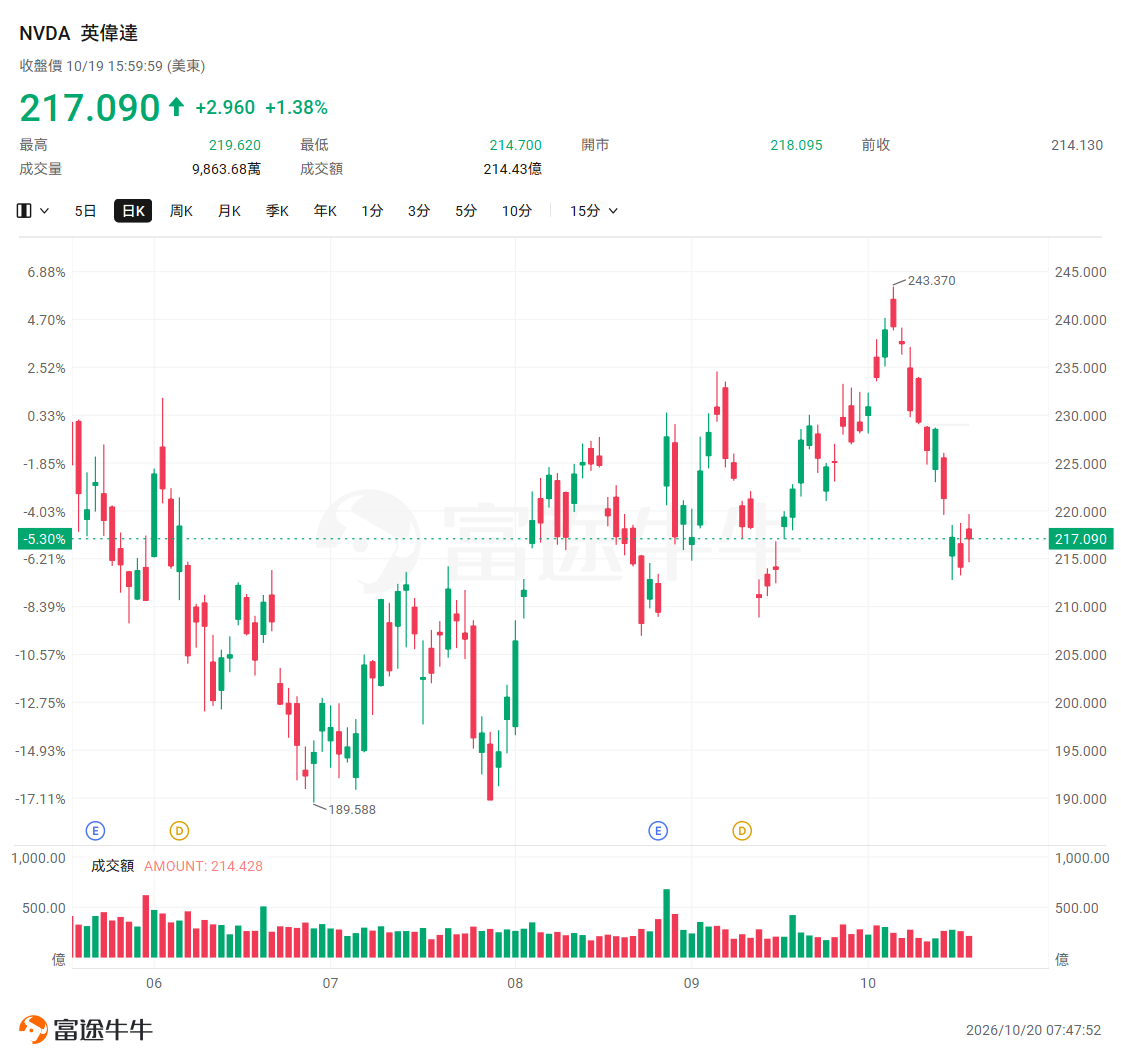
NVIDIA's GTC Berlin conference kicked off today, and Jensen Huang will deliver a keynote speech at 5 p.m. Beijing time tomorrow.
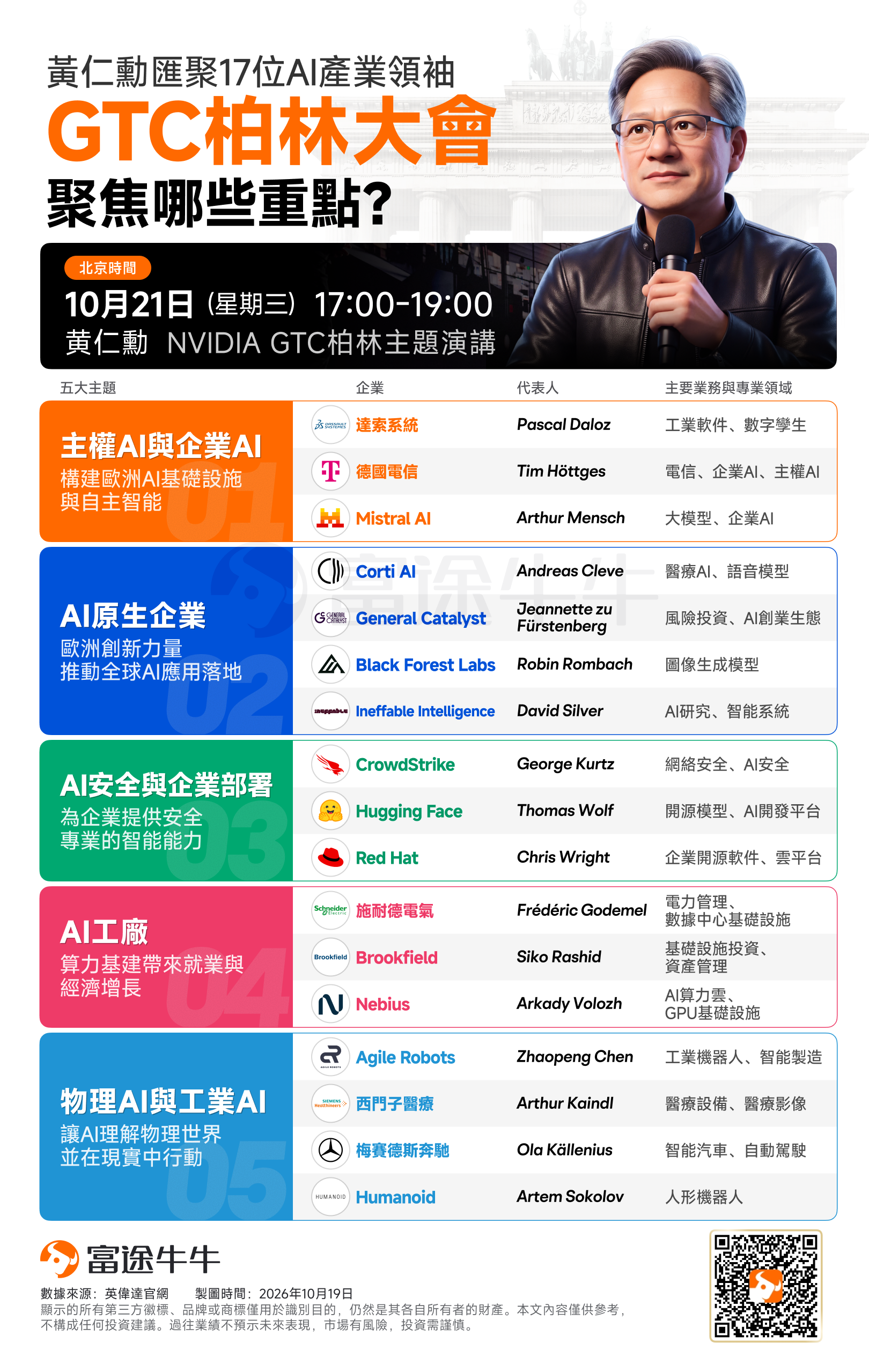
According to$NVIDIA (NVDA.US)$According to the official website, GTC Berlin 2026 will be held in Berlin, Germany, from October 20 to 22 local time. Technical workshops will take place today, with the conference and exhibition scheduled for the 21st and 22nd. Jensen Huang, the company's founder and CEO, will deliver a keynote speech from 11:00 a.m. to 1:00 p.m. on the 21st, which corresponds to 5:00 p.m. to 7:00 p.m. Beijing time on the same day. This year's event features more than 100 sessions covering AI infrastructure, CUDA and accelerated computing, AI agents, open models, physics-informed AI, and robotics. Prior to the keynote, live-streamed discussions will focus on European sovereignty and corporate AI, AI factories, safety, and industrial applications, with guests including executives from Deutsche Telekom, Mistral AI, Nebius, Schneider Electric, and MERCEDES-BENZ GROUP AG UNSP ADR EACH REP 0.25 ORD SHS. The conference will also offer training and certification programs related to AI inference, robotics, and infrastructure.
Related Reading:Jensen Huang made a blockbuster appearance on Wednesday! NVIDIA's GTC event unveiled five major highlights—can the AI market reverse its slump?
SpaceX is set to release its earnings after the U.S. market closes on Tuesday, with AI revenue realization and Starlink's cash flow expected to be the main focus.
According to the company's announcement,$SpaceX(SPCX.US)$The company will release its third-quarter results after the market closes on October 20 Eastern Time and host an earnings call at 4:30 a.m. Beijing time on October 21. According to LSEG data cited by Reuters on the 19th, market expectations project revenue of approximately $12.74 billion and earnings per share of about $0.14 for the quarter. In the second quarter, the company reported revenue of $7.8 billion, a net loss of $541 million, and AI capital expenditures of $15.8 billion. Key highlights of this earnings report include whether Starlink's revenue growth can be sustained, whether AI‑related compute‑power leasing can accelerate its conversion into revenue, and how capital spending, financing arrangements, and free cash flow align. Against the backdrop of the market reassessing the return on AI infrastructure investments, management's guidance on new compute‑capacity deliveries, peak spending levels, and funding needs will serve as critical benchmarks for evaluating the quality of growth.
Apple has confirmed its new-product event on October 28, with the touchscreen MacBook taking center stage in the product lineup.
According to$Apple(AAPL.US)$According to event information released on the 19th and a report by Bloomberg journalist Mark Gurman, Apple will hold a new-product event titled "Pro and tell" in Los Angeles on October 28. The report anticipates that the lineup will include the first MacBook Pro equipped with an OLED touchscreen, an entry-level MacBook Pro powered by the M6 chip, an updated iMac, and an iPad mini. The touchscreen MacBook is expected to feature the M5 Pro and M5 Max chips and incorporate a Dynamic Island–like interface similar to that of the iPhone. While the event date has been confirmed, the specific product specifications and sales arrangements remain subject to the report's projections and are contingent upon the official launch.
UK AI infrastructure company Nscale is reportedly in talks for another $45 billion computing power deal, drawing attention to NVIDIA's Rubin demand.
According to a Reuters report on the 19th, citing sources familiar with the matter, Nscale (unlisted) is in talks with Anthropic (unlisted) about a new computing‑power supply agreement valued at approximately $45 billion. The deal would involve the second facility at Anthropic's Monarch campus in West Virginia, which is planned to have a capacity of 460 megawatts and is slated to employ…$NVIDIA (NVDA.US)$Vera Rubin chip. Negotiations are ongoing, and details may still change; the deal cannot yet be considered a signed order. Deal‑flow signals indicate that leading‑edge‑technology companies continue to pursue long‑term computing capacity, but their valuation of suppliers hinges on whether projects can be completed and delivered on schedule. For the GPU, data‑center power, and networking‑equipment sectors, it will be crucial going forward to monitor customers' funding sources, grid‑connection approvals, construction timelines, and contract‑performance terms. Large‑value contracts can bolster revenue visibility, yet the time lag between actual cash collection and upfront capital outlays remains a key factor in financing assessments.
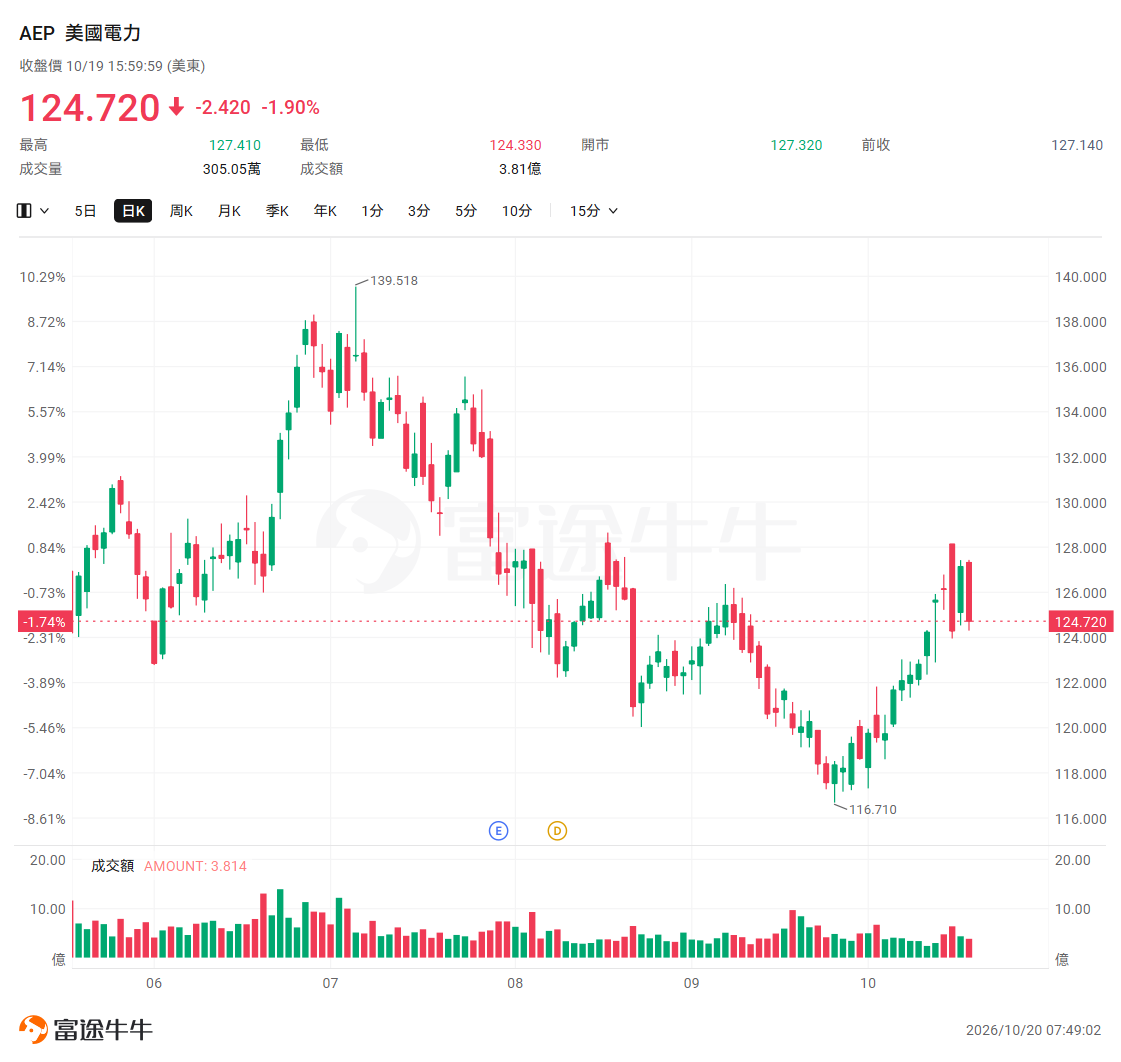
American Electric Power (AEP) is partnering with Amazon and X-energy to develop a 960-megawatt advanced nuclear power project.
American Electric Power$American Electric Power (AEP.US)$Announced, and with$Amazon (AMZN.US)$and Advanced Nuclear Energy Technologies Company$X-Energy(XE.US)$A joint development agreement has been reached, with plans to explore the construction of a 960-megawatt nuclear power project in Indiana. Amazon intends to purchase electricity from this project through a long-term power purchase agreement, and the revenue from the contract will cover the facility's costs. The project will employ advanced nuclear energy technology, aiming to meet the growing electricity demand in data centers and other sectors.
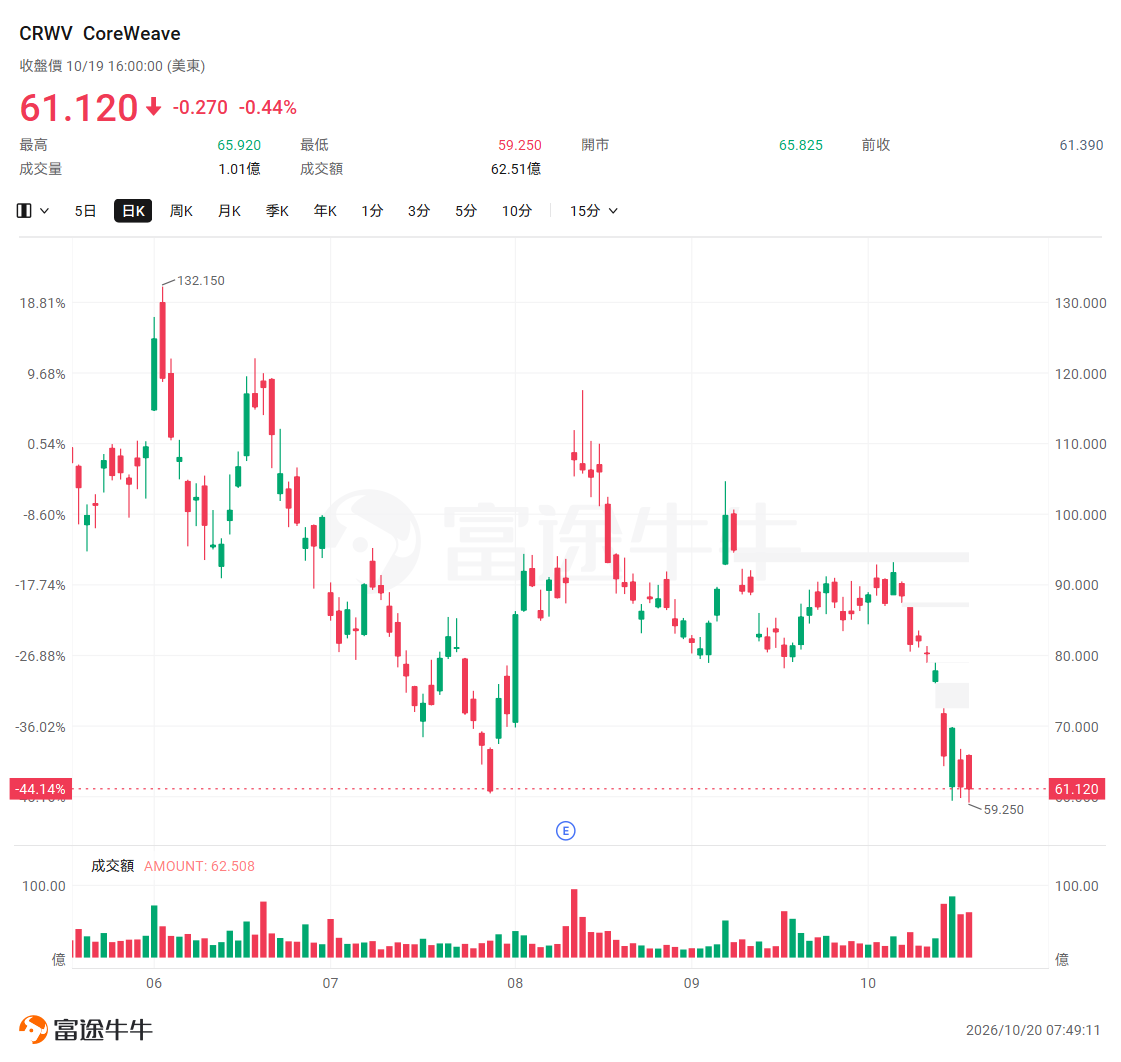
CoreWeave rebounded before giving back its gains, as Goldman Sachs remains optimistic about the economics of computing power leasing contracts.
According to a Reuters report during trading on the 19th, Goldman Sachs will$CoreWeave(CRWV.US)$The rating was upgraded from "Neutral" to "Buy," with analysts citing tight computing‑power supply and the company's relative competitive advantages as likely drivers of rising annual recurring revenue per megawatt over the next two years. According to Tradeweb, the yield on its 2031‑maturity bond fell by roughly 19.5 basis points to 15.13% at the time; meanwhile, the stock erased its morning gains to close down about 0.4%. As a result, the spread between financing costs and computing‑power leasing revenues remains the key metric for assessing the stock. The upgrade reflects analysts' views on valuation and business prospects but does not mitigate the execution challenges posed by high leverage. Future earnings reports will need to confirm order conversion rates, equipment utilization, and cash flow, while also monitoring new financing terms and customer concentration to gauge whether the divergence between equity and credit markets is narrowing.
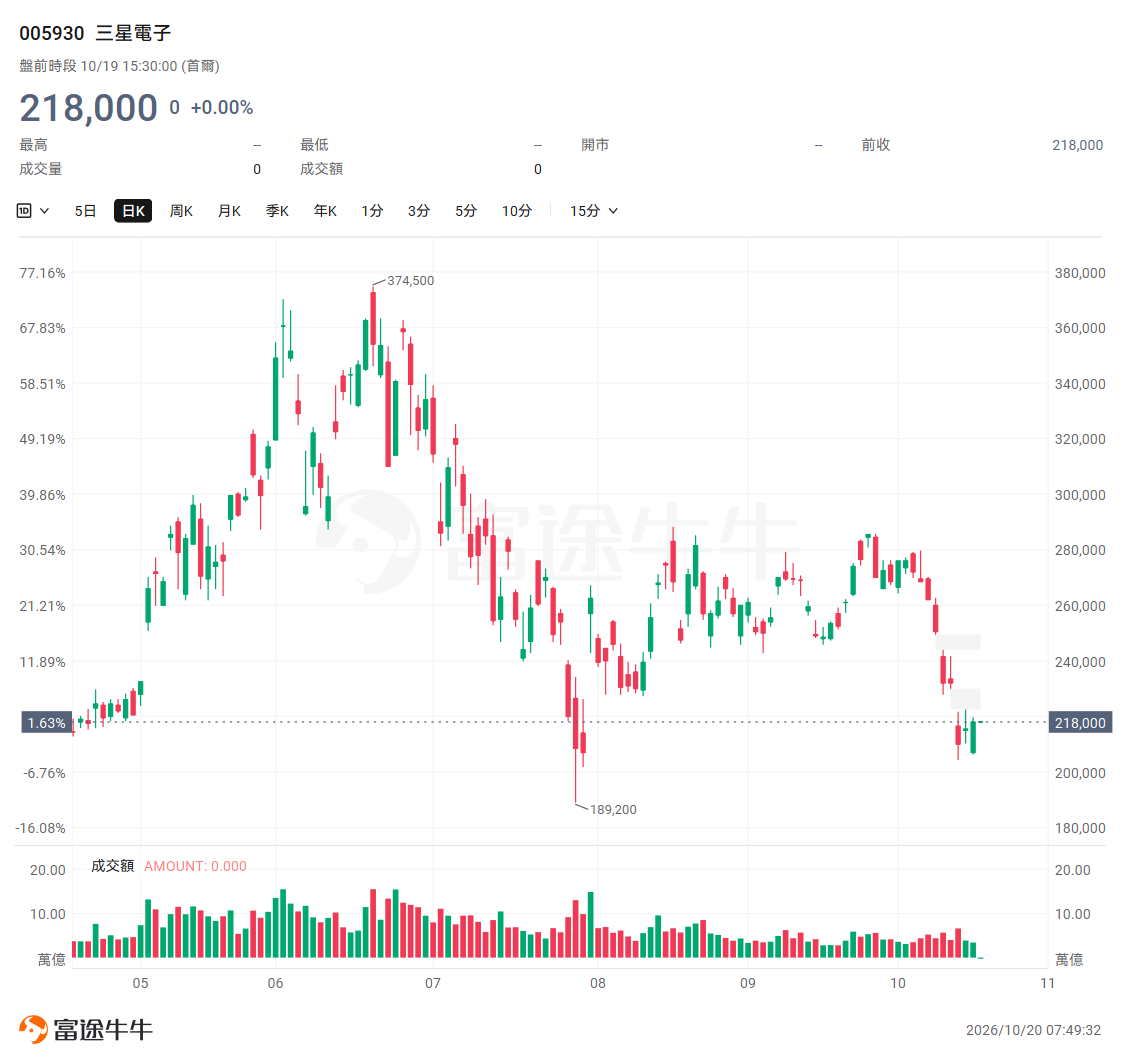
Reports indicate that Samsung Electronics plans to make a full-scale entry into silicon photonics by 2027.
South Korean media outlet MTN reported on the 16th, local time, that…$Samsung Electronics (005930.KR)$The plan is to make a full-scale entry into the silicon photonics (SiPh) field by 2027, starting with using 12-inch technology to provide foundry services for photonic integrated circuits (PICs), and subsequently expanding into PIC–EIC integration and optical packaging. Taiwan Semiconductor currently holds a leading position in the silicon photonics wafer‑foundry sector and has already achieved a series of development milestones. An insider at Samsung Electronics believes that the gap between the company and Taiwan Semiconductor in silicon photonics lies in market share rather than technology itself. Samsung Electronics will compete with Taiwan Semiconductor by leveraging its full‑stack solutions spanning memory, logic, and packaging. Additionally, Samsung Electronics is considering mergers and acquisitions of companies related to silicon photonics to accelerate its own technological advancement.
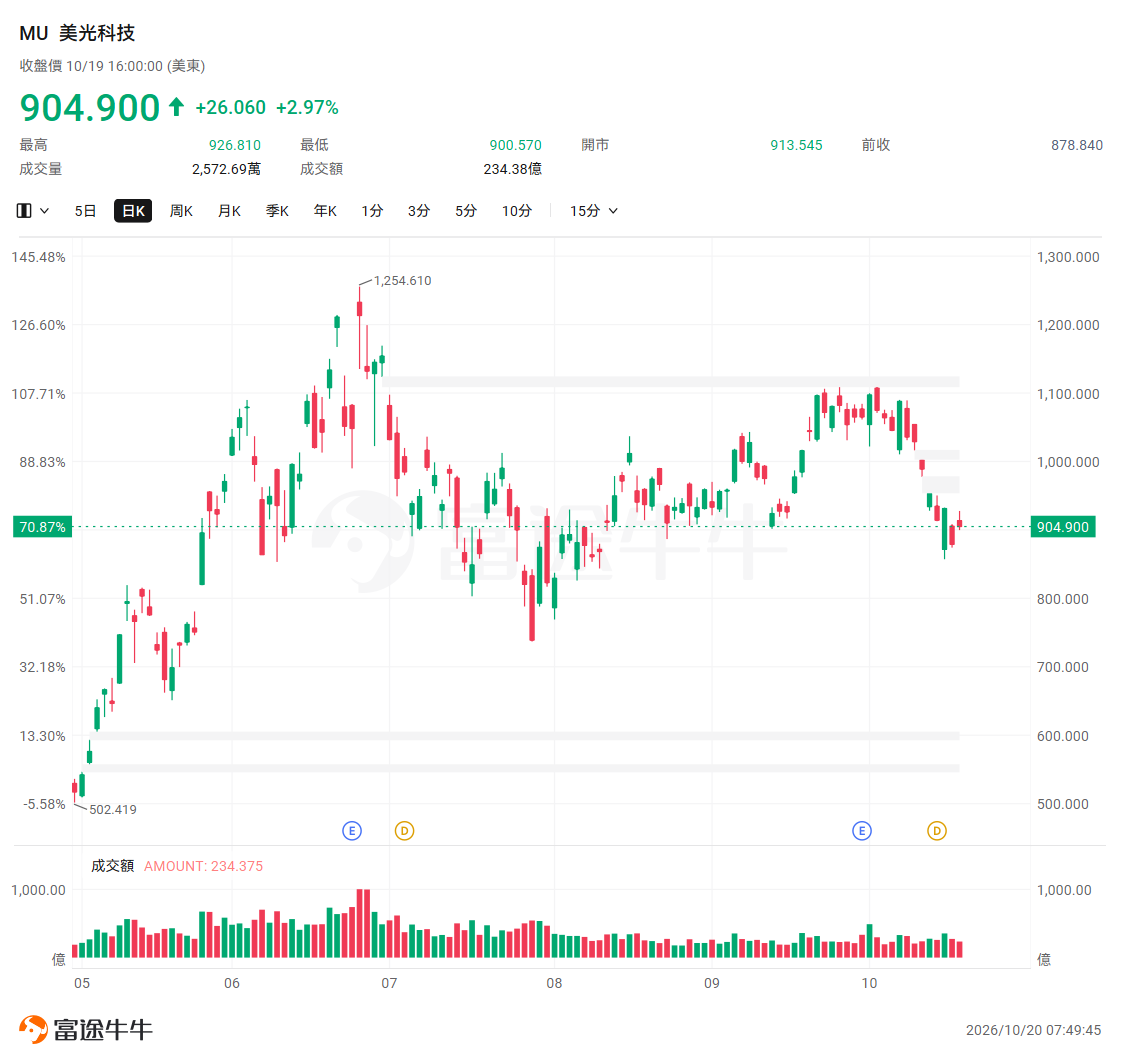
Micron Technology will host a technical webinar on October 21, focusing on innovations in DRAM, HBM, and NAND.
$Micron Technology (MU.US)$It was announced that a technical webinar will be held at 8:00 a.m. local time on October 21, presented by Scott DeBoer, President and Chief Technology and Product Officer, to discuss technological innovations in the DRAM, HBM, and NAND sectors. Micron stated that next-generation AI infrastructure will demand higher bandwidth, greater capacity, and improved efficiency in data transfer, storage, and access. The webinar will outline the company's multi‑generation technology roadmap, co‑design initiatives with customers, and long-term research strategy, with the goal of further solidifying its technological leadership over the next decade.
Top 20 in Trading Volume
Hong Kong Stock Market Outlook
Southbound capital reduced its holdings in Hong Kong stocks by nearly HK$3.6 billion, while AIA and Tencent were net bought for approximately HK$800 million and HK$400 million, respectively.
On October 16 (last Friday), southbound capital net sold HK stocks worth HK$3.568 billion.
$AIA (01299.HK)$、$Tencent (00700.HK)$、$China Hongqiao (01378.HK)$They recorded net purchases of HK$764 million, HK$388 million, and HK$66.46 million, respectively.
$Wuxi Bio (02269.HK)$、$Xiaomi Group-W(01810.HK)$、$JianTao Laminate Board (01888.HK)$They were net sold off by HK$668 million, HK$506 million, and HK$305 million, respectively.
MiniMax has released M3.1 Flash, with reported agent usage costs reduced by 70%.
According to$MINIMAX-W(00100.HK)$In an official technical blog post published on the 19th, the company unveiled M3.1 Flash and confirmed that Space Bunny—previously run anonymously and processing over 200 trillion tokens—was an early version of the model. According to the company, the new model achieves online inference speeds nearly three times faster than its predecessor, reduces overall agent‑task costs by 70% compared to the previous generation, and delivers a daily output rate exceeding 200 tokens per second. The API pricing is $0.15 per million input tokens and $0.60 per million output tokens; the model has already been integrated into the API, M Plan, and MiniMax Code, with model weights to be released at a later date. These performance metrics represent the company's disclosed figures and should still be validated through real‑world task testing. For the Hong Kong‑listed large‑model sector, competitive focus is increasingly shifting to task completion rates, inference efficiency, and paid‑user conversion; going forward, it will be worth monitoring whether growth in call volumes can offset price cuts and rising compute costs.
CATL will announce its third-quarter 2026 results today.
$CATL (03750.HK)$CATL will release its third-quarter 2026 results on October 20. Market attention for this quarterly report is focused on the structural growth in energy storage and overseas shipments, as well as the impact of raw-material price volatility—particularly lithium carbonate—on profitability. JPMorgan issued a research note, reiterating CATL as one of its top picks in the global energy-storage sector, citing its leading market share, strong overseas exposure, and attractive valuation following recent corrections, with a target price of HK$725. Meanwhile, a Citi report notes that the global battery industry may be entering a new downturn cycle, but there is no need for excessive pessimism, as Chinese battery companies are accelerating their penetration of the European market, and CATL continues to advance its capacity‑building efforts in Europe.
In the first three quarters, Zijin Gold International reported a 123% year-on-year increase in net profit attributable to shareholders, with both production output and cash flow rising in tandem.
According to$Zijin Gold International (02259.HK)$Unaudited financial data disclosed on the Hong Kong Stock Exchange on the 19th show that, for the first three quarters, revenue totaled approximately US$5.809 billion, up 70% year over year; profit attributable to owners of the parent company reached about US$2.015 billion, an increase of 123%; and net operating cash flow stood at roughly US$2.778 billion, up 157%. Cumulative mined gold output amounted to approximately 41 tonnes, up around 28% year over year; all-in sustaining costs were US$1,649 per ounce, a 5% year‑over‑year rise, primarily driven by higher gold prices, which pushed up royalty payments and the costs of certain raw materials and inputs. The company stated that the mine‑technology upgrades and equipment improvements initiated in the third quarter are expected to support capacity ramp‑up in the fourth quarter and through 2027. For gold‑sector stocks, key considerations include the combined impact of gold prices, production volumes, and costs; further monitoring will be needed to assess mine operations, recovery rates, and the implementation of expansion projects, as the relevant data remain unaudited.
Today's Focus
Keywords: NVIDIA GTC, SpaceX, CATL earnings report
On the economic data front, at 09:00, China will release its October LPR; at 14:00, the UK will report its August three-month ILO unemployment rate, September unemployment rate, and number of unemployment benefit claims; at 17:00, Germany and the eurozone will publish their October ZEW Economic Sentiment Index; at 20:30, the U.S. will release its annualized total of new housing starts and total building permits for September; and at 22:00, market attention will turn to the U.S. September pending home sales index.
In financial news, NVIDIA's GTC AI conference opened in Berlin and will run through October 22. The 33rd APEC Finance Ministers' Meeting was held in Hong Kong, China, and at 12:15, the European Central Bank's Chief Economist Lane delivered a speech in Shanghai.
In terms of performance,$GE Aerospace (GE.US)$ 、 $RTX Corp (RTX.US)$ 、 $3M(MMM.US)$and$General Motors (GM.US)$Released its earnings report before the U.S. stock market opened;$SpaceX(SPCX.US)$It is scheduled to release its second post-IPO earnings report after the U.S. stock market closes.$Netflix(NFLX.US)$It will also release its earnings report after the market closes; Hong Kong stocks.$CATL (03750.HK)$、 $Tianyue Advanced (02631.HK)$、 $Dazhu CNC (03200.HK)$The results will be announced after the Hong Kong stock market closes.$China Mobile (00941.HK)$Disclosed its performance for the first three quarters.
 Want to pick stocks or analyze them? Curious about your portfolio's opportunities and risks? For all your investment questions,Just ask Futubull AI!

Editor/rocky