
① Influenced by reports of Houthi attacks on Saudi infrastructure and incidents involving vessels in the Gulf region, Brent crude oil surpassed the $110-per-barrel mark; ② Over the past two weeks, at least 18 ships have been targeted, with two tankers struck by mines in the Strait of Hormuz on Tuesday, further driving up the market's risk premium.
Affected by Houthi attacks on Saudi infrastructure and a series of reported vessel attacks in the Gulf region, traders continued to factor in a geopolitical risk premium, driving international oil prices higher on Tuesday. Brent crude surpassed the $110 mark, hitting a five-month high.
On Monday, Yemen's Houthi rebels claimed to have launched multiple rounds of attacks against Saudi energy facilities, airports, and military targets, including Saudi Aramco facilities in Yanbu, the Shaybah oilfield, King Khalid International Airport in Riyadh, and Abha Airport.
 In response to this news, international oil prices rose on both Monday and Tuesday. Brent crude futures climbed as high as $111.05 per barrel on Tuesday, hitting their highest level since May; however, at press time, they had edged back to $110.80 per barrel, up 1.1% for the day.
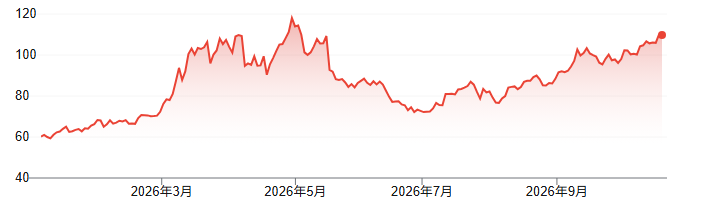
U.S. West Texas Intermediate (WTI) crude oil touched $104.94 per barrel on Tuesday, its highest level since September. As of press time, the latest price stood at $104.80 per barrel, up 1.1% on the day.
Europe's natural gas market has also been heating up in tandem. On Tuesday, the benchmark TTF natural gas futures in Europe settled at €88.59 per megawatt-hour, marking another record high since late 2022.
ING Groep analysts stated in a research report on Tuesday:
"International oil prices are under strong support… Amid ongoing geopolitical volatility, the market is pricing in a substantial risk premium."
"However, even amid heightened geopolitical tensions, as long as crude oil shipping lanes remain unimpeded, this risk premium is likely to gradually dissipate. Yet, at present, no such signs have yet emerged."
The ship-tracking firm Kpler reported on Monday that at least 18 vessels have been attacked over the past two weeks. On Tuesday afternoon, Iran's Islamic Revolutionary Guard Corps stated that two oil tankers had struck mines in the Strait of Hormuz, further driving up the market's risk premium.
Recent, back-to-back attacks in the Middle East have heightened market concerns about regional stability, underscoring ongoing pressure on energy supplies in the region and supporting oil prices above $100 per barrel.
In addition to supply volatility, U.S. inventory expectations are also supporting oil prices. A preliminary Reuters survey on Monday showed that analysts broadly expect both crude and refined‑product inventories in the United States to have declined last week.
ANZ analysts also warned in their report that preliminary data suggest oil flows from the region could slow again, as attacks on vessels in the Gulf continue to mount.
Editor/rice