① NVIDIA has unveiled the DSX POD reference design, intended for building a full-fledged AI factory based on the Vera Rubin platform, which is expected to reduce the deployment cycle from approximately six months to 14 days; ② NVIDIA has launched the Agile ONE SN reference humanoid robot platform powered by Isaac GR00T, slated for release in 2027.
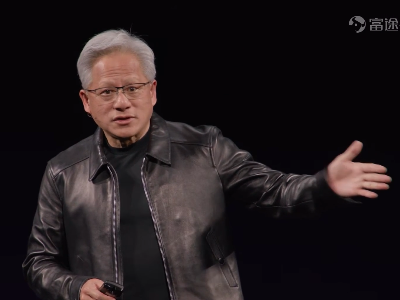
On Tuesday local time, NVIDIA CEO Jensen Huang delivered a keynote address at GTC Berlin, showcasing the company's latest initiatives across AI infrastructure, intelligent agents, open models, industrial robotics, and autonomous driving. From modular AI factories to enterprise-grade intelligent agents, and to an open technology platform for humanoid robots, NVIDIA is extending its competitive edge from GPU chips to a full-stack ecosystem encompassing hardware, software, models, and industry applications.
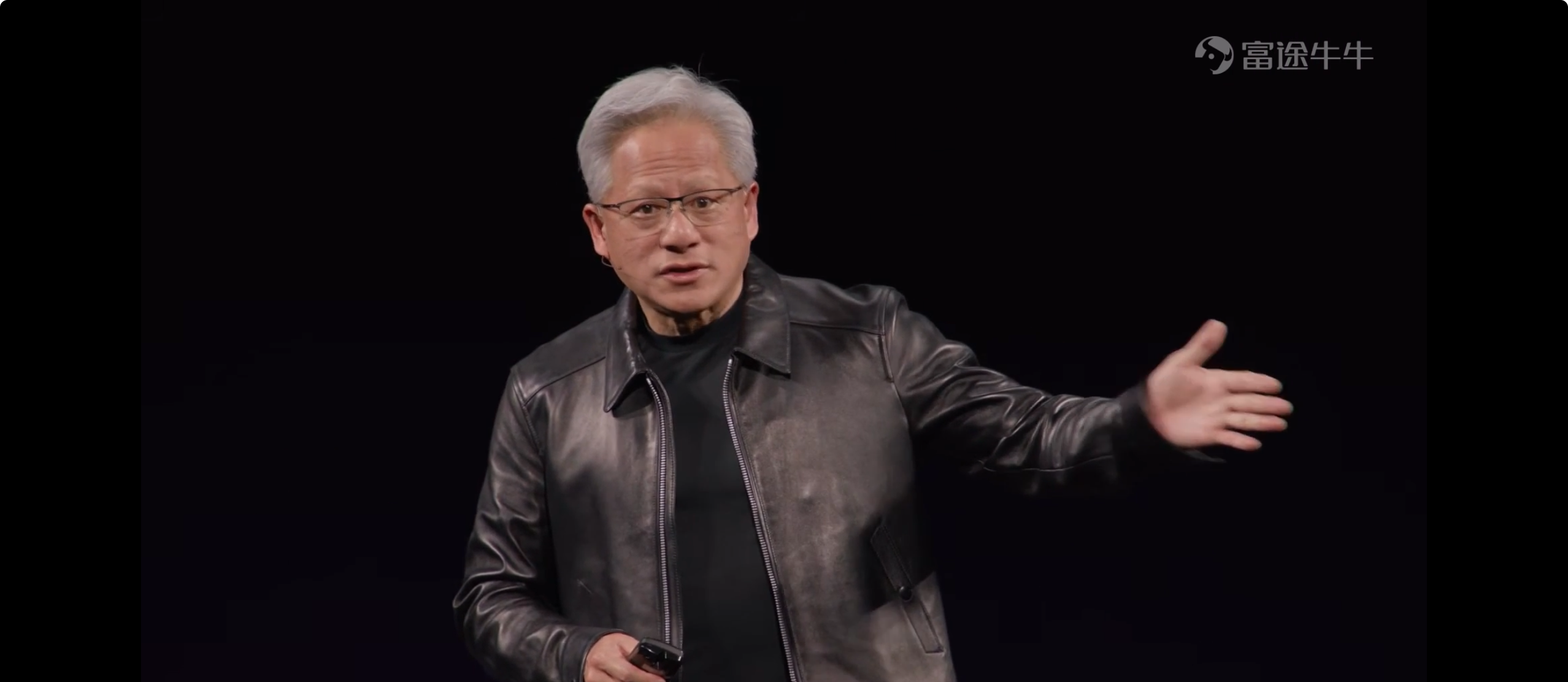
Jensen Huang stated that the computing industry is at the cusp of a new industrial revolution. As AI evolves from a content-generation tool into an intelligent agent capable of autonomous reasoning, tool invocation, and task execution, enterprises not only need to adopt AI but also must develop the capability to produce and deploy it.
AI factories are accelerating their deployment, and infrastructure development is moving toward standardization.
 Jensen Huang likened the AI industry to a five-layered system: energy, accelerated computing, AI factories, AI models, and digital intelligence embedded in various applications. He pointed out that before AI models can emerge, the underlying infrastructure must first be in place. As AI applications expand, power supply, data center construction, and the efficiency of computing resource deployment are becoming critical factors for industry development.
To accelerate infrastructure development, NVIDIA has announced the launch of the DSX POD reference design, intended for building a full-fledged AI factory based on the Vera Rubin platform. Partners can complete system integration and validation within modular containers. NVIDIA stated that, once on-site utilities are in place, this solution could reduce the deployment cycle from approximately six months to just 14 days.
NVIDIA also stated that its DSX AI factory platform can reduce cooling water usage to near zero and cut energy consumption by up to 30% while delivering the same AI output.
By standardizing hardware, software, and infrastructure designs, NVIDIA aims to reduce the complexity of data center construction and accelerate the deployment of computing power. The company stated that it has launched AI collaborations with European enterprises such as L'Oréal, Spotify, Vodafone, Porsche, Nestlé, and HSBC, and plans to invest nearly $10 billion in Europe's technology ecosystem, working together with more than 12,000 partners.
Jensen Huang emphasized that Europe should not merely consume AI services but also develop the capability to produce AI. This also underscores NVIDIA's aspiration to further expand its influence in the European market through local computing infrastructure and industry-specific applications.
Intelligent agents are becoming the new computing platform.
Agents are another key focus of this presentation. Unlike chatbots, which primarily answer questions, agents can reason, invoke tools, access knowledge bases, and execute workflows. As the tasks they handle grow increasingly complex, token consumption is expected to rise further.
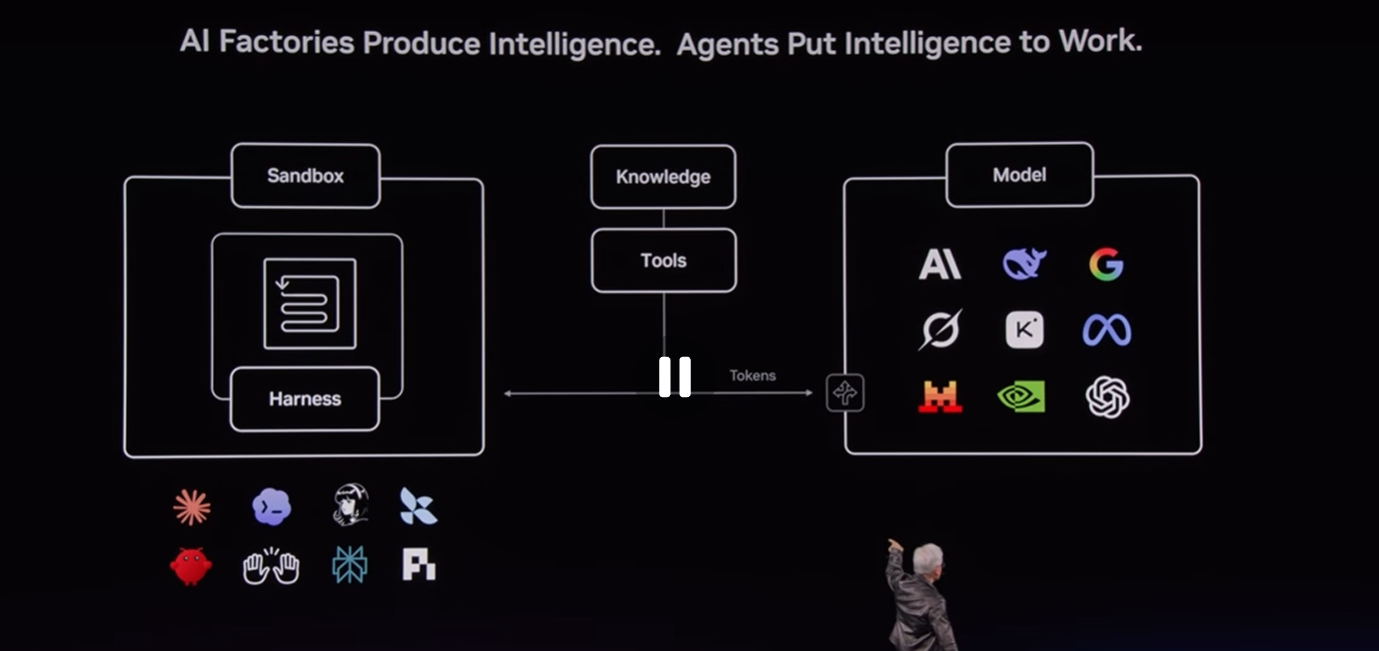
However, the enhanced execution capabilities of intelligent agents also introduce security risks. Because they may access corporate files, networks, and business systems, improper permission management could lead to data breaches or other issues.
In response to this challenge, NVIDIA has launched the OpenShell secure agent reference architecture, which uses an open-source runtime environment, kernel-level sandboxing, and policy control mechanisms to restrict the resources accessible to agents and monitor their behavior. Jensen Huang stated that agent permissions should be dynamically adjusted based on the specific task at hand.
NVIDIA also launched Agent Knowledge Foundation, which helps agents access internal information such as corporate documents and databases, and provides tools for document parsing, information retrieval, and structured data prediction.
Jensen Huang believes that proprietary corporate knowledge is key to enhancing the capabilities of intelligent agents. Companies can leverage NVIDIA's open models and fine-tune them with their own data, enabling the models to meet specific business needs. He refers to this process as building "sovereign intelligence."
At the model level, NVIDIA showcased open models spanning multiple specialized domains, including Nemotron for language tasks, Cosmos for foundational world models, GR00T for humanoid robots, and Alpamayo for autonomous driving, among others.
Meanwhile, NVIDIA continues to strengthen the role of its CUDA-X accelerated computing library. The company stated that its accelerated computing platform now has over 11 million developers. These tools enable agents to invoke simulators, computational solvers, and data-processing engines, translating AI capabilities into tangible results.
From chips to models, software, and development tools, NVIDIA is striving to enhance customer loyalty and expand its value share within the AI industry chain by building a full-stack ecosystem.
AI applications are moving from the digital realm into real-world industries.
Physical AI is another major theme of this conference. NVIDIA showcased the applications of intelligent agents in industrial design, laboratories, and factories: on the Lila Sciences platform, intelligent agents help design potential treatments for lymphoma; at a Siemens factory, they use digital twins to test production schedules for new products; and in Dassault Systèmes' engineering design scenarios, they leverage simulations to identify vehicle design issues and optimize solutions.
In the medical field, NVIDIA and Siemens Healthineers are developing an AI-driven adaptive radiotherapy solution. The system uses digital twins to simulate both the equipment and the patient's anatomy, and integrates real-time imaging and sensor data to adjust the radiotherapy target as the patient's body and tumor change.
In the autonomous driving sector, Volvo Cars is adopting NVIDIA's Hyperion computing platform and the Alpamayo software stack. Jensen Huang also announced that the next-generation models of Volkswagen Commercial Vehicles, Jaguar Land Rover, Volvo, and MERCEDES-BENZ GROUP AG UNSP ADR EACH REP 0.25 ORD SHS will be compatible with the Hyperion platform, with applications spanning L3 and L4 levels of autonomous driving as well as future Robotaxi fleets.
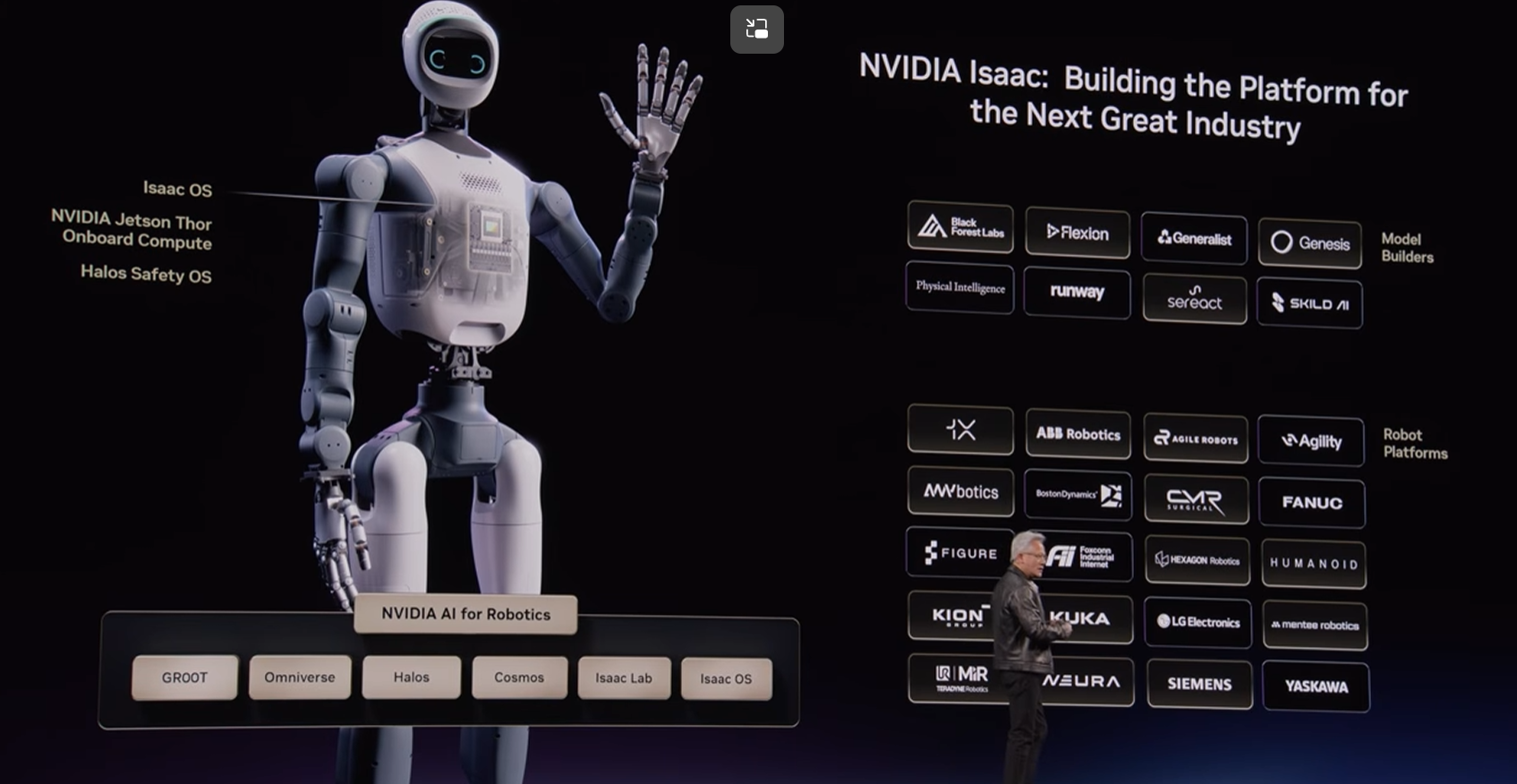
In the robotics field, NVIDIA has launched the Agile ONE SN reference humanoid robot platform based on Isaac GR00T, featuring 31 degrees of freedom and slated for release in 2027. This platform integrates open models, simulation training tools, and an operating system, aiming to lower the barriers to entry in robot development. Companies such as Agility Robotics, Figure, KUKA, and NEURA Robotics are also leveraging NVIDIA's related technologies.
These strategic moves indicate that NVIDIA aims to expand the scope of accelerated computing from data centers to real-world settings such as factories, hospitals, automobiles, and robotics. The company does not need to manufacture all end devices directly; instead, it can participate in the development of related industries by providing computing platforms, models, and software tools.
Editor/rice