
November's U.S. stock market is packed with highlights: On the macro front, the outcome of the midterm elections could reshape market expectations for future fiscal and regulatory policies, while a flurry of employment and inflation data releases will set the tone for the Federal Reserve's December interest-rate path. Mid-month, the Fed's "Productivity and Employment Working Group" AI hearing and the minutes from the October monetary-policy meeting will both be unveiled. On the industry side, tech giants such as Apple, AMD, and NVIDIA are set to release their earnings reports in quick succession; NVIDIA's Seoul AI Day, Taiwan Semiconductor's October revenue report, and Anthropic's IPO launch are also events worth keeping an eye on.
To help fellow investors better grasp the market's main trends and investment opportunities, Niuniu has carefully compiled a list of must-know U.S. stock market news events for November.

Starting November 1, North America will observe standard time, with U.S. financial markets and economic data releases shifting one hour later compared to daylight saving time.
 On November 3, the United States will hold its midterm congressional elections.
This election will determine control of both chambers of the U.S. Congress for the next two years and will be a key determinant of the direction of fiscal expansion, tariff policy, energy policy, defense spending, restrictions on chip exports, and AI regulation.
Currently, the betting market's implied baseline scenario leans toward a divided Congress—Democrats retaking the House while Republicans retain control of the Senate—with the odds pricing in a greater than 90% probability of a House flip.
Analysts point out that if the Democratic Party gains control of the House of Representatives, or even sweeps both chambers, the impact on the market will be threefold: first, regarding U.S.-Iran tensions, a Democratic victory—whether by taking control of the House or winning both chambers—would strengthen checks on Trump and help prevent a significant escalation of conflict; second, fiscal policy would face tighter room for further expansion, with the debt ceiling becoming a new focal point; third, AI regulation would see limited prospects at the federal level, as regulatory risks would primarily lie at the state and local government levels, imposing only modest constraints on the industry as a whole.
From November 9 to 10, NVIDIA's Seoul AI Day will be held at COEX in Seoul.
On the first day of the event, the focus was on physics‑based AI and agent‑based AI, with participation from Samsung Electronics, SK Hynix, advanced packaging, HBM, networking, robotics, and South Korea's cloud ecosystem. Market attention is not only on product demonstrations but also on whether NVIDIA will send new signals about Asian demand for AI infrastructure: whether partners have secured orders or commitments to deliver, whether the technology roadmap has shifted HBM and networking requirements, and whether physics‑based AI collaborations have moved from demos to mass production.
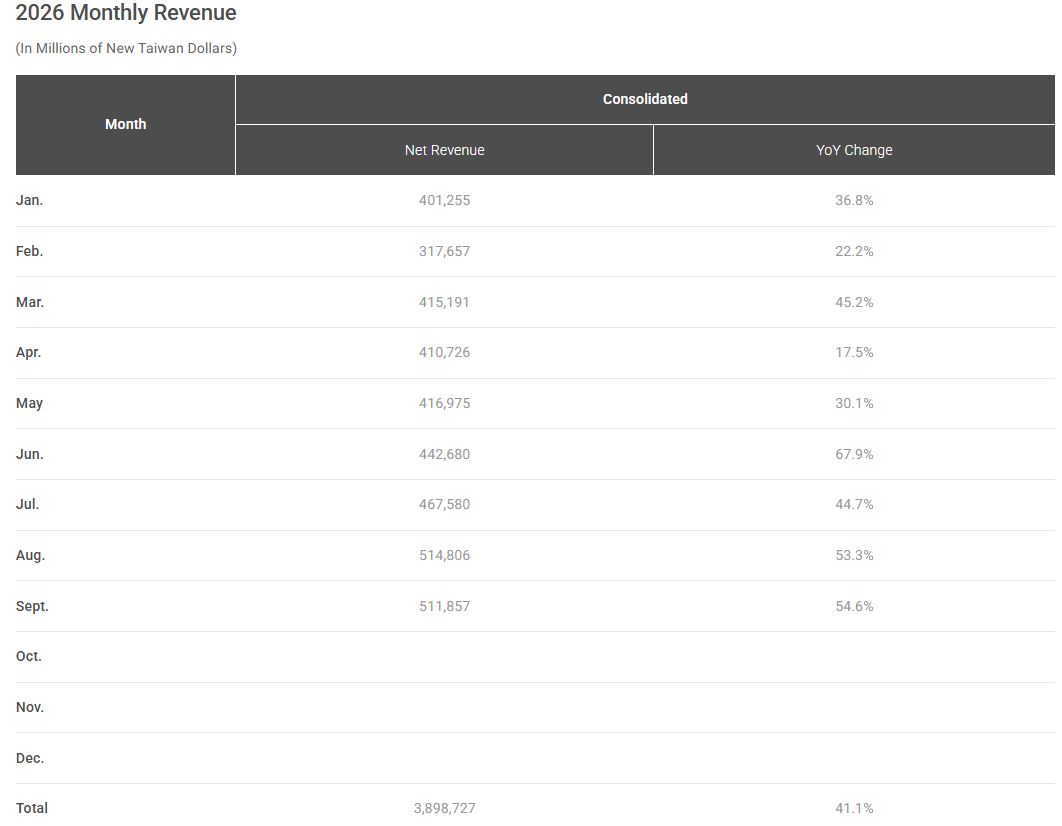
On November 10 at 13:30, Taiwan Semiconductor routinely released its October revenue report.
$Taiwan Semiconductor (TSM.US)$In September, consolidated revenue totaled approximately NT$511.857 billion, up 54.6% year over year but down slightly by 0.6% month over month. Over the longer term, Taiwan Semiconductor's overall revenue performance in the first three quarters remained strong, with cumulative revenue reaching NT$3,898.727 billion, a 41.1% increase compared to the same period last year.
On Wednesday, November 11, Eastern Time, the U.S. Treasury cash market will remain closed for the entire day, as recommended by SIFMA, in observance of Veterans Day, while U.S. equities will trade as usual.
On November 16, Eastern Time, the Federal Reserve's "Productivity and Employment Task Force" held an in-person hearing, which was attended by Walsh.
The Federal Reserve's "Productivity and Employment Task Force" will hold in‑person hearings in the San Francisco Bay Area to examine the impact of AI on productivity, employment, financial stability, and the monetary policy framework. Market attention is focused on whether the Fed will factor an "AI productivity dividend" into its assumptions about disinflation. If Chairman Powell and the task force acknowledge that AI could, over the medium to long term, suppress unit labor costs, there would be room to ease the pace of rate hikes, softening long‑term U.S. Treasury pricing. Conversely, if they emphasize risks such as concentrated computing‑power investments, model‑related uncertainties, the employment implications of automation, or the challenges of managing AI use at financial institutions, this could intensify debate over an AI bubble, credit cycles, and tighter regulatory scrutiny.
On November 16, Eastern Time, the deadline for disclosing third-quarter 13F holdings expired.
The 13F filing is a quarterly snapshot of U.S. equity long positions that the SEC requires institutions with assets under management exceeding $100 million to disclose, excluding short positions, cash, and overseas holdings. Despite a lag of roughly 45 days, it remains a rare and valuable source for observing the behavioral patterns of "smart money."
This round of 13F filings reflects institutional holdings as of September 30. Against the backdrop of a sharp setback in AI‑related trading during the third quarter, these data serve as a key window for gauging institutional risk appetite and capital flows, with position adjustments by leading firms such as Berkshire Hathaway drawing particular market attention.
In the week of November 16, Anthropic plans to launch its IPO and seek a listing on the Nasdaq, with the ticker symbol "ANT."
$Anthropic (ANT.US)$The publicly filed S‑1 prospectus reveals that in the first half of 2026, revenue is projected at $16.286 billion, up roughly 13-fold year over year, with adjusted operating profit turning positive. However, net loss stands at $80.7 billion, including more than $70 billion in non‑cash fair‑value adjustments, and the company still carries hundreds of billions in rigid commitments to purchase computing capacity. Market observers view this offering as an "AI valuation stress test," with the IPO pricing essentially answering whether the growth rate of large‑model revenues can outpace the trajectory of capital expenditures on compute. A strong pricing could boost risk appetite across the AI value chain; by contrast, subscription demand below expectations might impose temporary downward pressure on valuations of high‑valuation AI‑related stocks.
On November 18–19, the 33rd APEC Economic Leaders' Meeting will be held in Shenzhen, with the Business Leaders' Summit taking place concurrently on November 17–18. This year's theme is "Building an Asia-Pacific Community for Shared Prosperity," anchored in three key pillars: openness, innovation, and cooperation. Market attention will be focused on the signals regarding tariffs, export controls, and macroeconomic policy coordination that emerge from the meetings between China and the United States, as well as other major economies.
At 3:00 a.m. on November 19, the Federal Reserve will release the minutes of its October monetary policy meeting.
At 3:00 a.m. on November 26, the Federal Reserve will release its Beige Book on economic conditions.
On Thursday, November 26, U.S. stocks were closed for the entire day in observance of Thanksgiving, and the next trading day ended three hours early, closing at 1:00 p.m. Eastern Time (which corresponds to 2:00 a.m. Beijing Time on the 28th).
Earnings season is set to enter its critical phase.
Apple and Palantir kicked things off at the beginning of the month, with AMD, Circle, and the optical‑communications stocks Coherent and Lumentum set to follow in succession, while NVIDIA will save its big showpiece for mid-month.
$Apple (AAPL.US)$、$Palantir (PLTR.US)$It will release its earnings report after the market closes on November 2, Eastern Time.
$Advanced Micro Devices (AMD.US)$It will release its earnings report after the market closes on November 3, Eastern Time.
$Circle (CRCL.US)$It will release its earnings report before the market opens on November 4, Eastern Time.
$Coherent (COHR.US)$The company will release its earnings report after the market closes on November 4, Eastern Time.
$Lumentum (LITE.US)$It will release its earnings report after the market closes on November 5, Eastern Time.
$Rocket Lab (RKLB.US)$The company will release its earnings report after the market closes on November 9, Eastern Time.
$NVIDIA (NVDA.US)$It will release its earnings report after the market closes on November 17, Eastern Time.
Economic data are being released one after another, setting the tone for the December FOMC policy outlook.
Finally, a host of October economic indicators—including nonfarm payrolls, the unemployment rate, CPI, PPI, and PCE—will be released throughout the month, providing critical reference points for the Federal Reserve's December FOMC policy trajectory.
At 11:00 PM on Monday, November 2, the U.S. October ISM Manufacturing PMI will be released.
On Wednesday, November 4, at 9:15 p.m., the October ADP nonfarm employment figures will be released.
On Friday, November 6 at 9:30 p.m., the October nonfarm payroll employment and unemployment rate will be released.
The October CPI data will be released at 9:30 p.m. on Tuesday, November 10.
The October PPI data will be released at 9:30 p.m. on Friday, November 13.
On Tuesday, November 17 at 9:30 p.m., the month-on-month change in October retail sales will be released.
The October PCE data will be released at 9:30 p.m. on Wednesday, November 25.
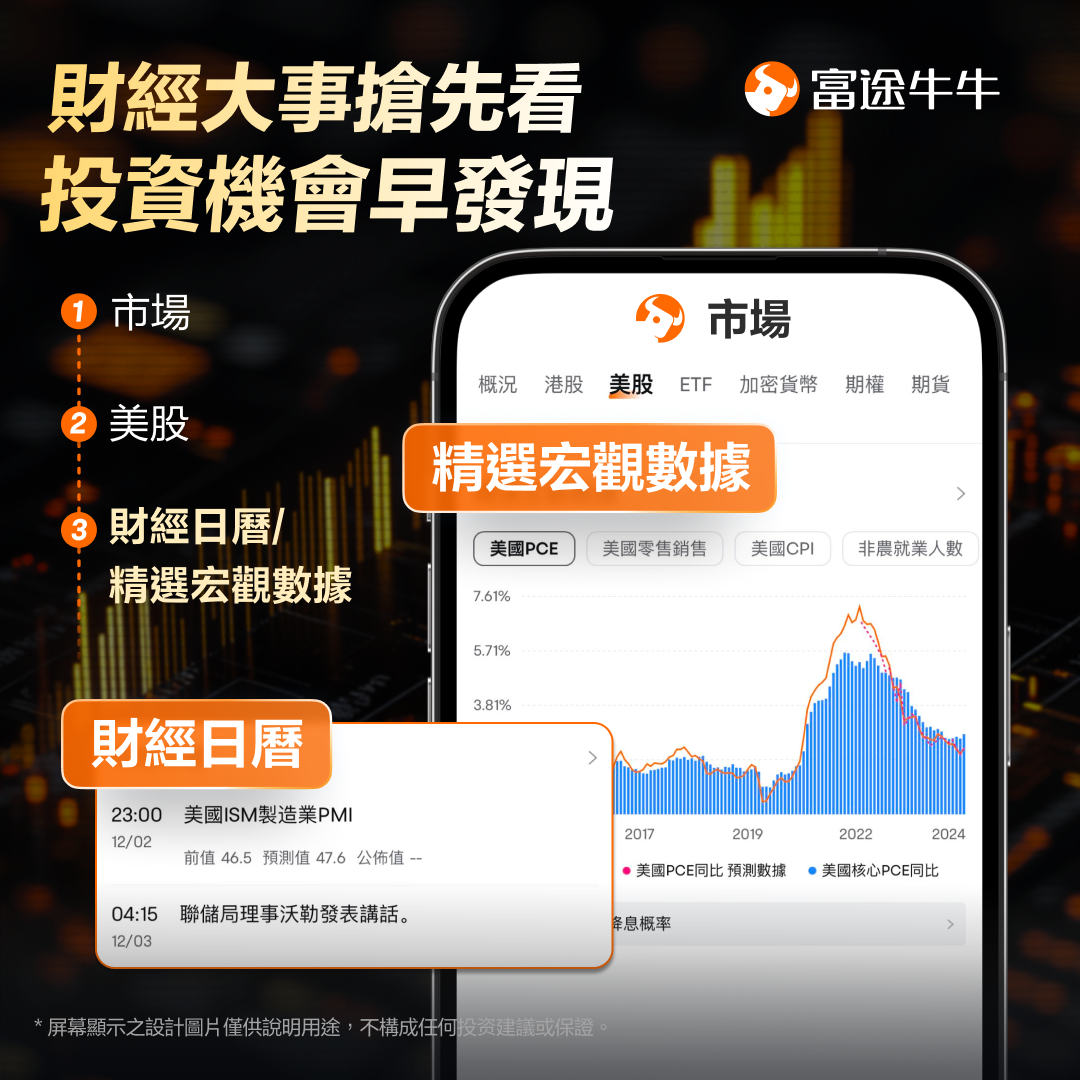
 Stay ahead of the financial news and spot investment opportunities early! Open Futubull > Market > U.S. Stocks >Economic Calendar/Selected Macroeconomic Data, seize the investment opportunity!
Editor/joryn