
Revenue has entered a plateau, and growth momentum is shifting.
The Hong Kong Stock Exchange disclosed on October 22 that,$CSG SMART SCIENCE & TECHNOLOGY CO., LTD. (811078.HK)$The company has filed a listing application with the Main Board of the Hong Kong Stock Exchange, with Huatai International and Guoyuan International serving as joint sponsors. It had previously submitted its listing application to the HKEX on January 19, 2026.
With both the power‑equipment and energy‑storage sectors, as well as industrial robotics, currently riding strong growth cycles, the market has readily positioned Keda Intelligent as a rare play driven by the dual engines of "grid digitalization plus robotics." However, a closer look at its prospectus reveals that what truly warrants valuation is not the sector labels themselves, but rather whether its earnings recovery can break through the revenue plateau—and whether emerging themes such as energy storage, virtual power plants, and quantum encryption can transition from pilot projects to scaled‑up revenue streams.
 Revenue has entered a plateau, with growth momentum shifting.
According to the prospectus, Keda Intelligent's business structure can be summarized as a dual‑engine strategy: "grid‑centric core business plus energy storage and robotics as its second growth curve." The power equipment and energy storage segment serves as the revenue backbone: with over two decades of deep expertise in smart distribution and utilization, the company offers products ranging from primary–secondary integrated circuit breakers to ring main units, FTUs, and DTUs. These solutions have been deployed across all 31 provincial power grids nationwide and continue to support China's largest state‑owned grid operator. By 2025, the company ranked second in the primary–secondary integrated circuit breaker market, fourth in FTUs, and sixth in ring main units, underscoring strong customer stickiness and clear demand visibility in grid automation. Quantum‑encrypted smart switches remain at the pilot stage, so they should not be counted toward scaled‑up revenues in the near term. On the energy storage side, the company ranks among the top ten nationwide in commercial‑industrial energy storage shipments and within the top three in high‑energy‑consumption segments. Its grid‑forming energy storage systems have completed engineering prototypes and are already in operation within microgrids, while its electricity‑trading and smart microgrid management platforms are still being piloted at a limited number of sites, with no significant revenue generation yet—making this a quintessential "ranked, scenario‑driven, volume‑waiting" option‑type business. The robotics segment represents the second growth curve: industrial robotic arms generated the highest cumulative revenue in China from 2020 to 2025, and SRM stacker cranes hold the top spot in the lithium‑battery sector, with thousands of projects delivered across new energy, automotive, construction machinery, and rail transit industries, demonstrating robust cross‑scenario deployment capabilities. However, given the project‑based nature of this business, attention must be paid to order continuity and the ability to replicate solutions across different industries.
From a financial performance perspective, Keda Intelligent's operating revenue for the period from 2023 through the first half of 2026 stood at RMB 3.025 billion, RMB 2.687 billion, and RMB 3.015 billion, respectively, remaining broadly stable around the RMB 3 billion level, with modest momentum in scaling up. However, in the first half of 2026, the company reported revenue of RMB 1.524 billion, up 15.2% year over year from RMB 1.323 billion in the same period last year, indicating that, amid increased grid‑related investment and a surge in energy‑storage business, the company's revenue is regaining its growth trajectory.
Even more striking is the dramatic recovery in profitability: the company's gross margin has steadily risen from 20.8% in 2023 to 24.9% as of the first half of 2026. Despite revenue not yet experiencing a significant surge, this counter‑trend improvement in gross margin is primarily driven by a higher share of high‑margin robotic solutions and grid‑forming energy storage products, coupled with the successful implementation of supply-chain cost‑reduction measures.
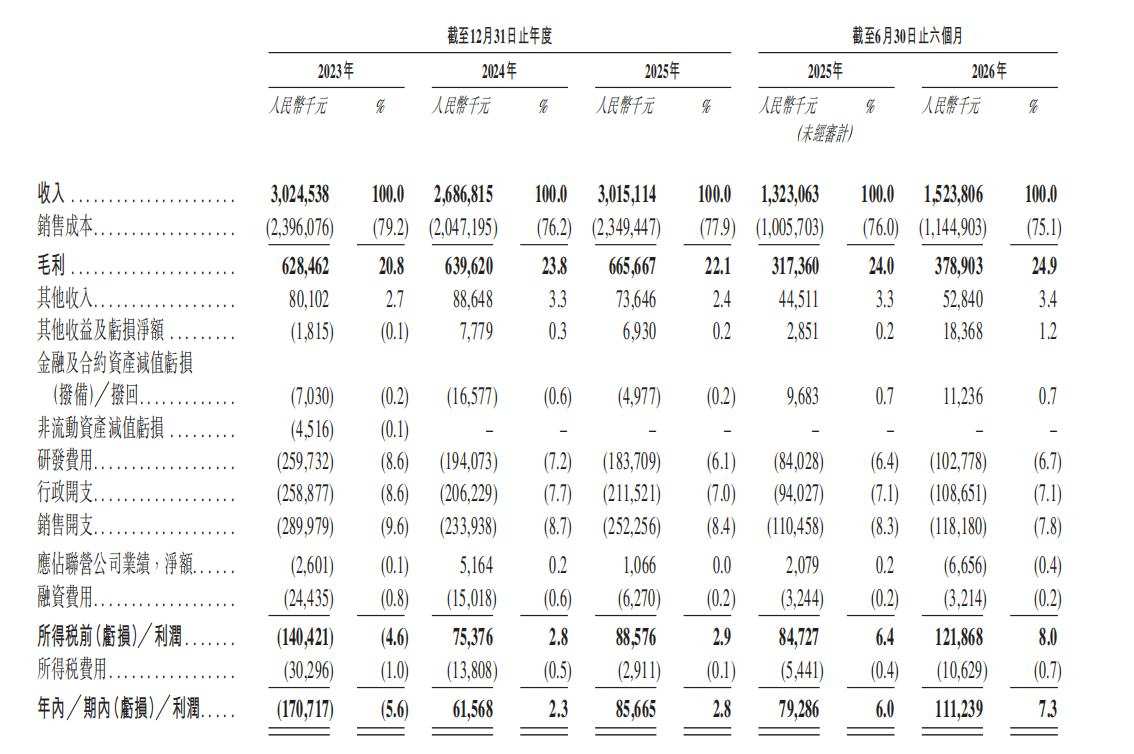
More specifically, the explosive growth in profitability has not only been driven by improved gross margins but also by aggressive cost-cutting and efficiency gains. Keda Intelligent's net profit reversed sharply from a loss of RMB 171 million in 2023 to RMB 61.56 million in 2024 and RMB 85.66 million in 2025, with the first half of 2026 delivering an even stronger result of RMB 111 million, yielding a net margin of 7.3%. This performance reflects a comprehensive reduction in expense ratios: selling expenses fell from 9.6% in 2023 to 7.8% in the first half of 2026, administrative expenses declined from 8.6% to 7.1%, and financing costs were slashed from 0.8% to just 0.2%, underscoring effective optimization of its debt structure and financing costs. Notably, however, R&D spending has decreased in absolute terms, dropping from RMB 259 million in 2023 to RMB 183 million in 2025.
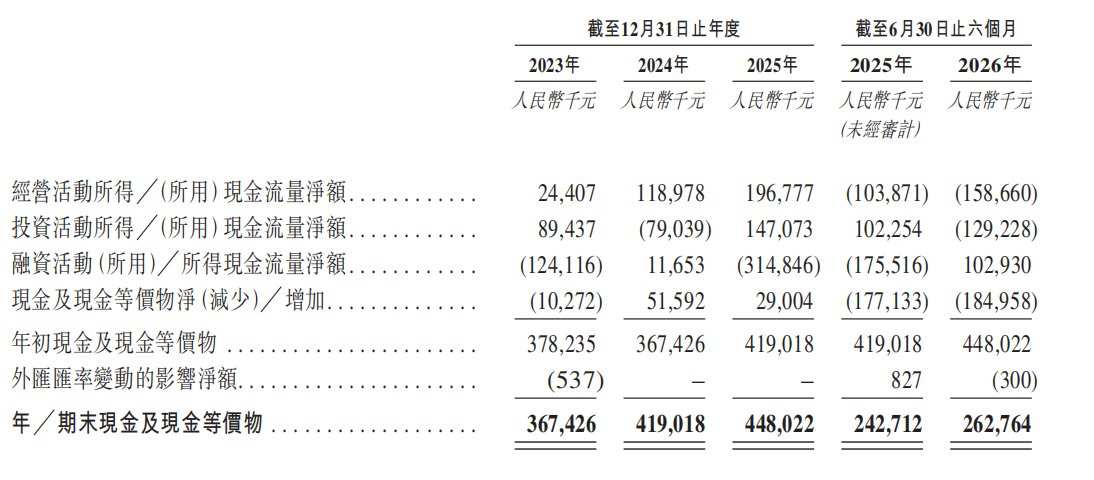
However, a closer examination of its earnings quality reveals underlying concerns beneath the reported profits. From 2023 to 2025, the company's net cash flow from operating activities stood at RMB 24.4 million, RMB 119 million, and RMB 197 million, respectively—figures that appear healthy and on an improving trend. Yet, when broken down by half-year periods, the first half of 2025 saw a substantial net outflow of RMB 104 million, which widened further to RMB 159 million in the first half of 2026. This sharp volatility—characterized by strong collections in the second half and significant cash outflows in the first half—is highly consistent with the company's business model, which is heavily reliant on major clients, including State Grid and other large state-owned enterprises as well as sizable industrial customers. It underscores the considerable working-capital pressures and extended payment cycles the company faces within the supply chain. Coupled with these first-half cash outflows, the company's cash and cash equivalents had dwindled to RMB 263 million as of June 30, 2026—a substantial decline from year-end 2025—and its financing activities generated a net inflow of RMB 103 million during the same period. This tightening liquidity situation highlights the company's pressing need for external financing and serves as a key practical driver behind its active pursuit of a Hong Kong‑listed IPO.
Dual-engine growth from power equipment and energy storage, coupled with robotics, mitigates reliance on the cyclical nature of any single industry.
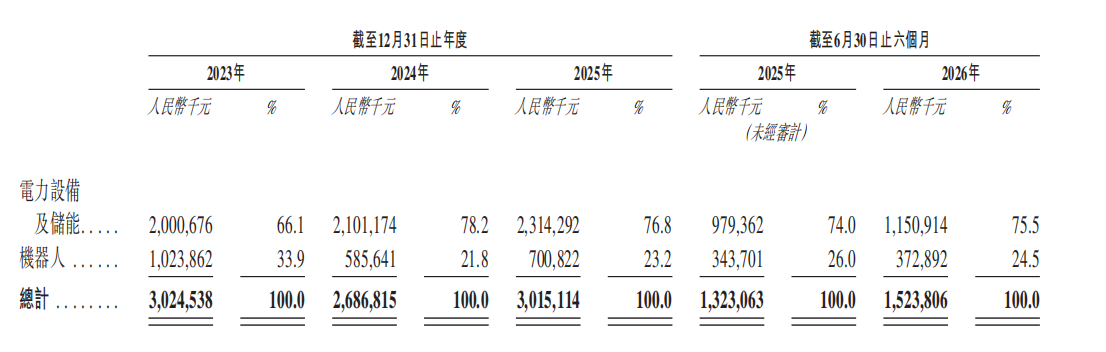
From the perspective of revenue composition, the power equipment and energy storage segment is Keda Intelligent's core business, with its stabilizing role continuing to strengthen. The share of this segment in total revenue has risen steadily from 66.1% in 2023 to 78.2% in 2024 and 76.8% in 2025, remaining at 75.5% in the first half of 2026. Meanwhile, the absolute revenue scale has grown steadily from RMB 2.00 billion in 2023 to RMB 2.31 billion in 2025.
Against the backdrop of building a new‑type power system and upgrading distribution‑network automation, the company, leveraging its leading position in smart distribution and utilization—covering products such as circuit breakers, FTUs, and DTUs—continues to benefit from the medium‑ to long‑term investment momentum of major customers like State Grid. Particularly noteworthy is the marginal improvement in its energy‑storage business: gross margins, which had posted a substantial loss of 66.4% in 2023, have rebounded rapidly, with gross margins stabilizing above 10% in 2024 and 2025, and further rising to 17.3% in the first half of 2026. Although current revenue from energy storage remains relatively modest in absolute terms, the turnaround and steady increase in gross margin signal that its commercial‑and‑industrial‑scale and grid‑forming energy‑storage products are gradually emerging from the incubation phase and beginning to generate their own cash flow. This represents a key growth driver for breaking through the company's revenue ceiling.
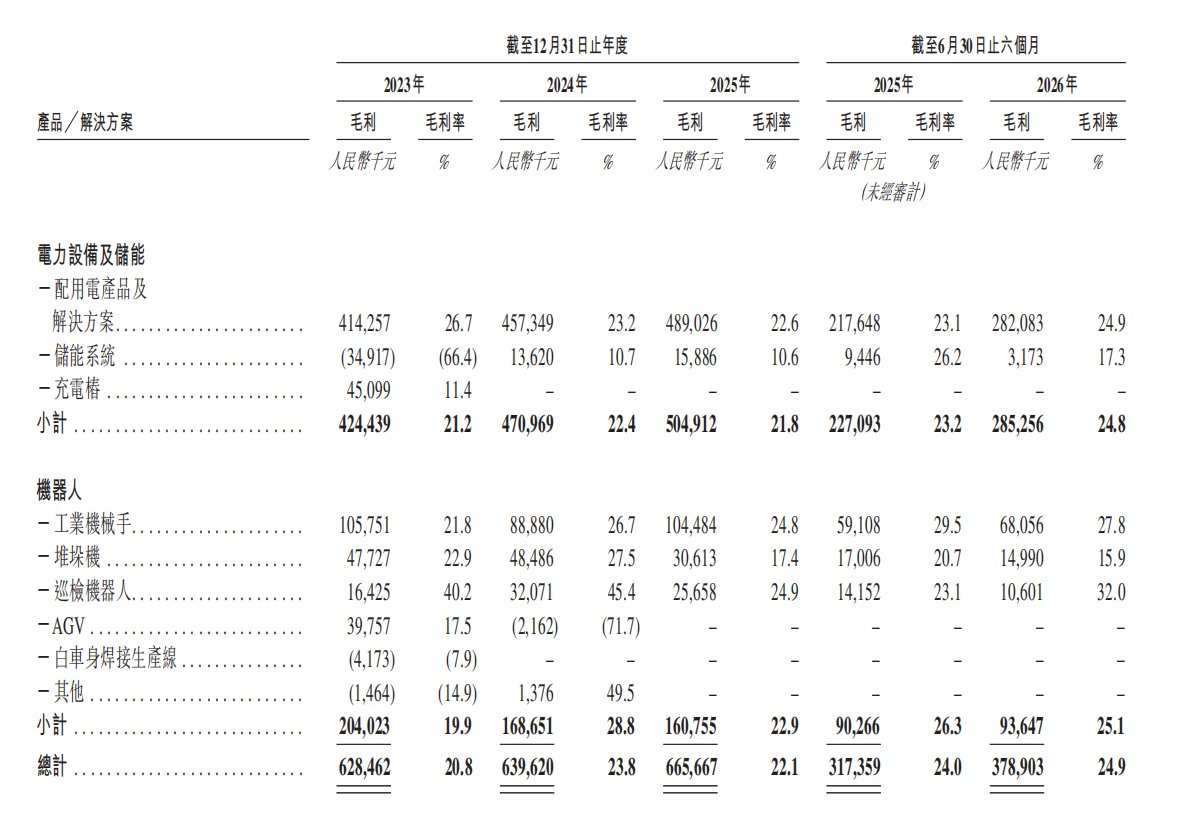
In stark contrast to the stability of the core business, the robotics segment has undergone a dramatic restructuring and endured significant cyclical pressures over the past three years. Revenue in this segment plummeted from RMB 1.024 billion in 2023 to RMB 586 million in 2024, before rebounding gradually in 2025 and through the first half of 2026—yet its share of total revenue has shrunk from 33.9% to around 24.5%. This precipitous decline was not solely driven by market conditions; rather, it resulted from the company's deliberate "surgical cleanup." Marginal‑profit data reveal that, in 2024, the company decisively discontinued its loss‑incurring AGV and body‑in‑white welding production lines and divested low‑margin "other" product categories. Following this strategic retrenchment, the remaining core businesses have demonstrated remarkable profitability resilience: the gross margin for industrial robots rose from 21.8% in 2023 to 27.8% in the first half of 2026, while the inspection‑robot segment, after a period of volatility, regained momentum at a robust 32.0%, effectively offsetting the drag on the stacker‑crane business caused by the slowdown in lithium‑battery capacity expansion (with its gross margin falling from 27.5% to 15.9%). This strategic shift—prioritizing quality over scale—has directly fueled a steady improvement in the company's overall gross margin.
From an industry‑level perspective, the dual‑track environment in which Keda Intelligent operates offers substantial growth potential, characterized by a structural dividend of "broad‑market stability combined with localized high‑growth segments." Its core businesses in power equipment and energy storage are anchored in expansive markets, with China's overall market size projected to reach RMB 727.6 billion by 2030. Specifically, the energy‑storage segment is expected to double to RMB 160.4 billion, while integrated primary‑and‑secondary circuit breakers could hit RMB 22.3 billion. As the second‑largest player in the circuit‑breaker market, the company enjoys a solid foothold on the grid side, while commercial‑industrial applications and grid‑forming energy storage represent the key levers for breaking through its current revenue ceiling—though it still faces the challenge of transitioning from pilot projects to large‑scale commercialization. In the robotics sector, China's industrial robot market is forecast to approach RMB 200 billion by 2030, with a compound annual growth rate of 15.3%. Leveraging the sector's high beta, the company must move beyond reliance on the lithium‑battery cycle, scaling its industrial manipulators and inspection robots across multiple application domains—including automotive and construction machinery—to unlock sustained value creation.