Market Snapshot
Ahead of Tuesday's open, futures for the three major stock indexes were higher, with Dow Jones Industrial Average futures up 0.18%, Nasdaq 100 futures up 0.34%, and S&P 500 futures up 0.23%. The Federal Reserve begins a two-day policy meeting today, while this week marks the peak of the earnings season for tech giants.

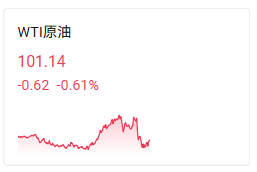
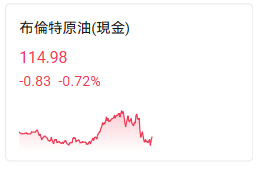
International oil prices declined, with WTI crude falling 0.61% to $101.14 per barrel and Brent crude dropping 0.72% to $114.98 per barrel. According to Iranian official sources, the country's Supreme Leader stressed that Iran's conditions must be met to bring the war to an end, prompting a brief pullback in oil prices; however, the U.S.-Iran situation still carries risks of escalation.
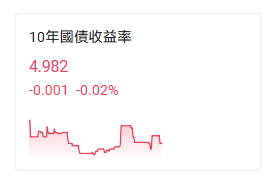
U.S. Treasury yields were broadly unchanged,$U.S. 10-Year Treasury Yield (US10Y.BD)$Reported near 4.98%.
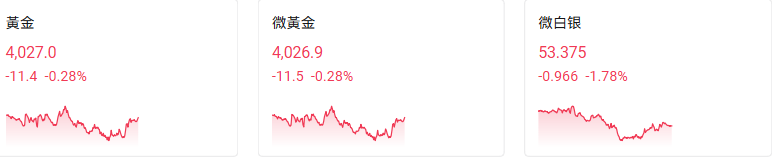
 Bitcoin fell 0.33%, trading at $79,748. Precious metals declined, with COMEX gold futures down 0.28% at $4,027 per ounce and silver futures dropping 1.78% to $53.37 per ounce.
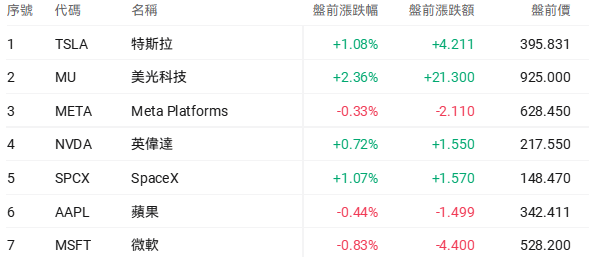
$Star Technology Stocks (LIST2518.US)$Pre-market trading was mixed,$Microsoft (MSFT.US)$Down 0.83%,$Apple(AAPL.US)$Down 0.44%,$Meta Platforms(META.US)$Down 0.33%,$NVIDIA (NVDA.US)$Up 0.72%.
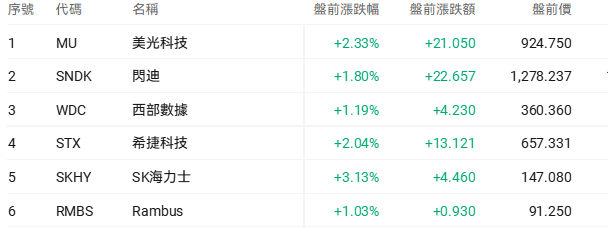
$Storage Concept (LIST23925.US)$General increase,$SK Hynix (SKHY.US)$Up 3.13%,$Micron Technology (MU.US)$Up 2.33%,$SanDisk (SNDK.US)$Up 1.80%.
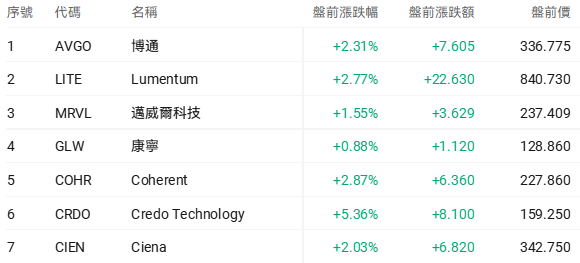
$Optical Communications (LIST23979.US)$Go higher,$Corning(GLW.US)$Up 0.88%,$Coherent(COHR.US)$Up 2.87%,$Lumentum(LITE.US)$Up 2.77%.
Individual Stock News
Expectations for a merger between Tesla and SpaceX are rising, while the share of sell ratings on Wall Street has fallen to a more than 11-year low.
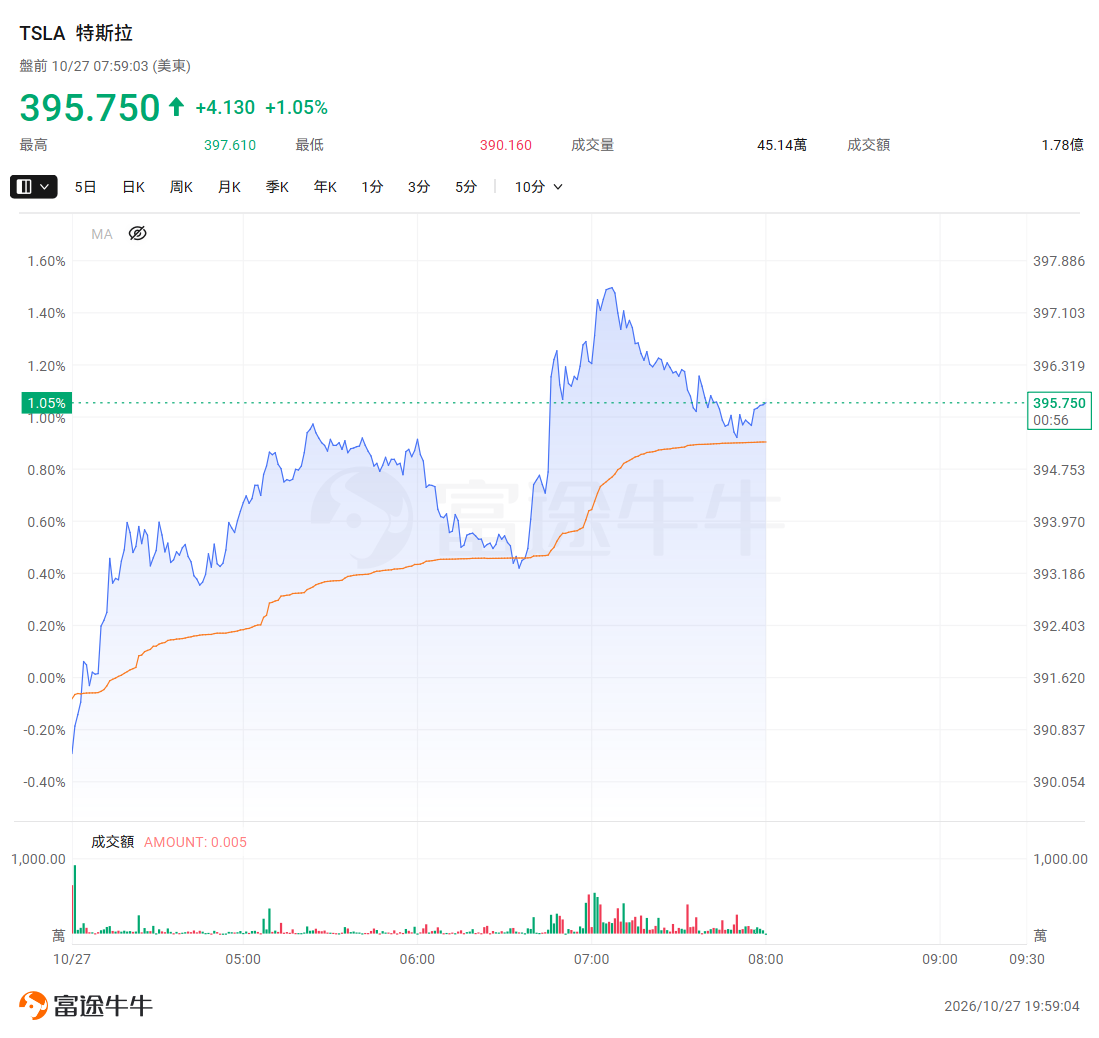
According to Bloomberg, as…$Tesla (TSLA.US)$and$SpaceX(SPCX.US)$The potential merger is gradually becoming a reality, and Wall Street analysts are rapidly turning bullish on Tesla. Among the 60 analysts tracked by Bloomberg, only 5 have issued a sell rating on Tesla, the lowest share since early 2015; as of January 1 this year, 15 out of 71 analysts had given it a sell rating. Last week, BNP Paribas and CLSA upgraded their ratings on Tesla from "sell" to "neutral" and "hold," respectively, with BNP raising its price target from $266 to $420. On Monday, Barclays raised its rating on Tesla to "overweight" and increased its price target from $370 to $450, citing the anticipated merger as a key rationale for its bullish stance. Last week, Musk stated that the boards of both companies have each established special committees to evaluate the merger. Tesla closed up 5.2% on Monday, but is still down roughly 13% year-to-date. As of press time, Tesla was trading more than 1% higher in pre-market trading.
Corning's third-quarter core sales grew 19%, and sales of generative AI products doubled.
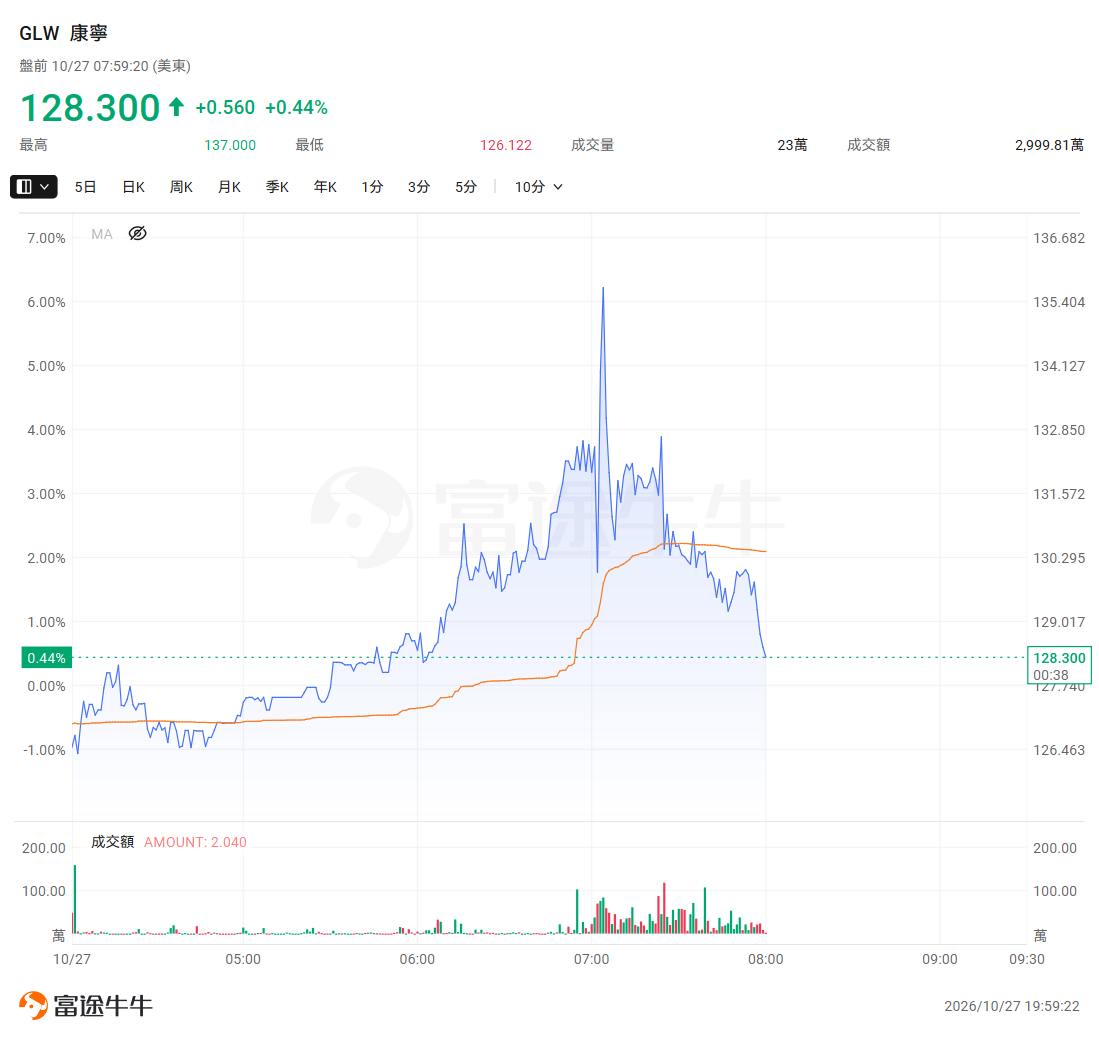
$Corning(GLW.US)$Announcing its third-quarter results, Corning reported core sales up 19% year over year to $5.08 billion, marking the fastest growth since the launch of the "Springboard" program; core earnings per share came in at $0.91, nearly twice the pace of core sales growth, both exceeding the company's guidance and market expectations of $5.02 billion and $0.88, respectively. Optical communications sales rose 44% year over year to $2.38 billion, with enterprise networking growing 84% and generative AI product sales more than doubling; solar business sales increased by 37%. CEO Wendell Weeks stated that in the optical communications segment, generative AI sales growth has outpaced GPU shipment growth. In the third quarter, Corning signed four long-term, multi-billion-dollar contracts with customers including Verizon and AT&T. The company forecasts fourth-quarter core sales to grow approximately 19% year over year, reaching $5.2 billion to $5.3 billion, with core earnings per share rising about 36% to $0.96 to $1.00. As of press time, Corning was up more than 6% in pre-market trading.
Coca-Cola's third-quarter results exceeded expectations, and the company raised its full-year guidance.
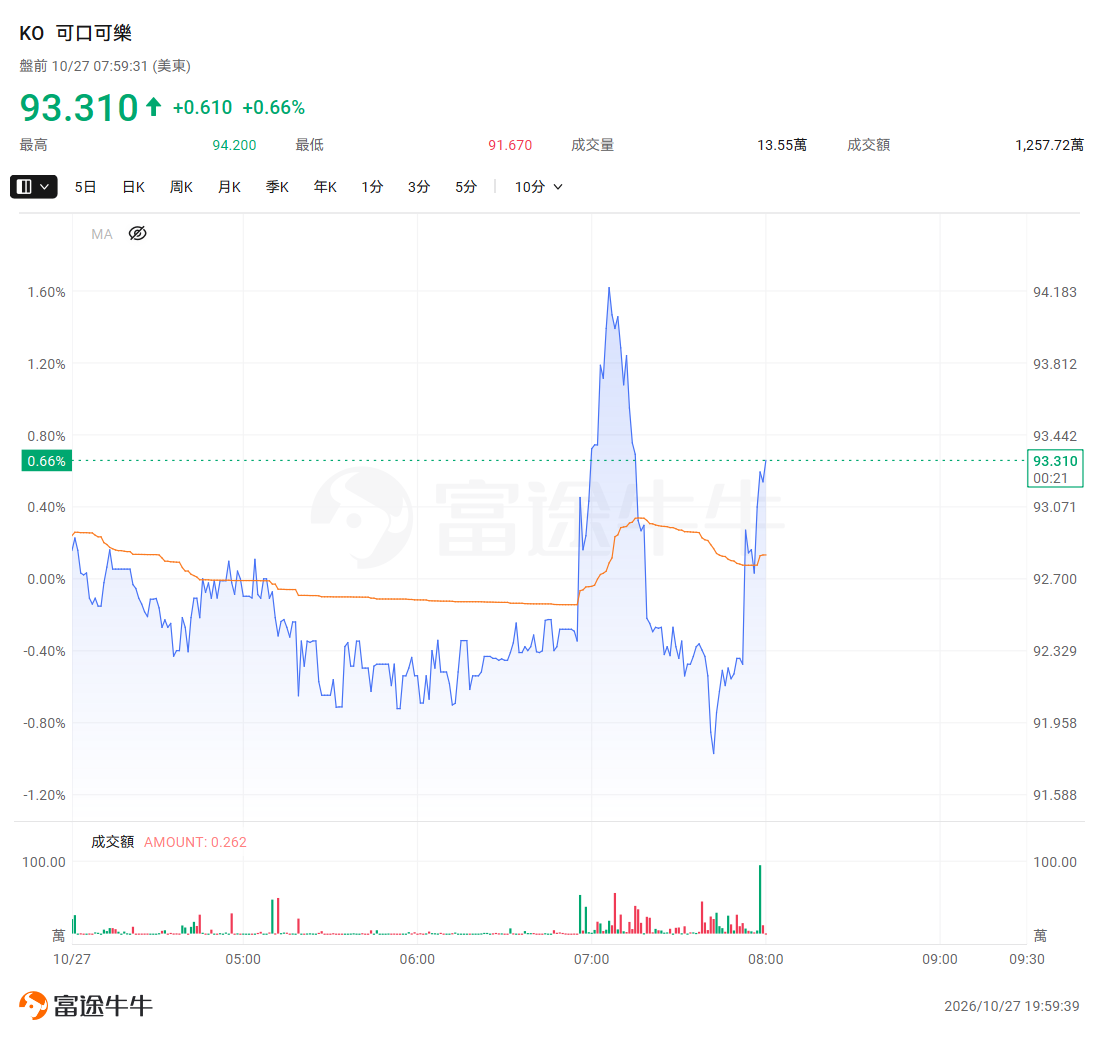
$Coca-Cola (KO.US)$Coca-Cola reported its third-quarter 2026 results, with net revenue rising 7% year over year to $13.4 billion, surpassing LSEG analysts' estimate of $12.92 billion; comparable earnings per share increased 11% to $0.91, above the expected $0.88. Global unit case volume grew 5% in the quarter, while organic revenue expanded 7%; comparable operating margin stood at 32.9%, compared with 31.9% in the same period last year. In North America, unit case volume was flat, whereas Latin America and the Asia-Pacific region both posted 6% growth. The company also raised its full-year guidance, now forecasting at least 5% organic revenue growth for 2026, up from its previous estimate of around 5%; comparable earnings per share are expected to grow by at least 11%, compared with the prior range of 9% to 10%; and free cash flow is projected to reach at least $13 billion, up from roughly $12.4 billion previously. CEO Henrik Branson stated that this quarter's performance demonstrates the company's system maintaining steady growth momentum, bolstering confidence in its full-year outlook. As of press time, Coca-Cola was trading more than 1% higher in pre-market trading.
Meta has completed pricing for two equity offerings, with a combined size of approximately $37.5 billion, and NVIDIA subscribed to $3 billion.
$Meta Platforms(META.US)$Announcement: The two concurrent offerings previously announced have now been priced. The Class A common stock offering has been upsized from $22.5 billion to $25.0 billion, with an issue price of $625 per share, structured as a forward sale and expected to settle by November 19, 2027. Simultaneously, 250 million mandatory convertible preferred depositary shares will be issued at $50 per share, carrying a 6.50% annual dividend, raising approximately $12.5 billion net, with mandatory conversion scheduled around August 2029. Both offerings are expected to close on October 29. Earlier, Meta had disclosed a financing plan totaling up to $95 billion, with the remaining up to $60 billion slated for future completion through market‑based offerings. In addition, NVIDIA announced Tuesday that it will invest $3 billion in Meta's current equity offering. Meta will expand its deployment of NVIDIA's Vera Rubin GPUs and Vera CPUs, and the two companies will further deepen their collaboration on the AI assistant Muse and its model family.
SoFi's third-quarter revenue rose 44% to a record high, prompting the company to raise its full-year guidance and deliver a 2027 outlook that exceeds expectations.
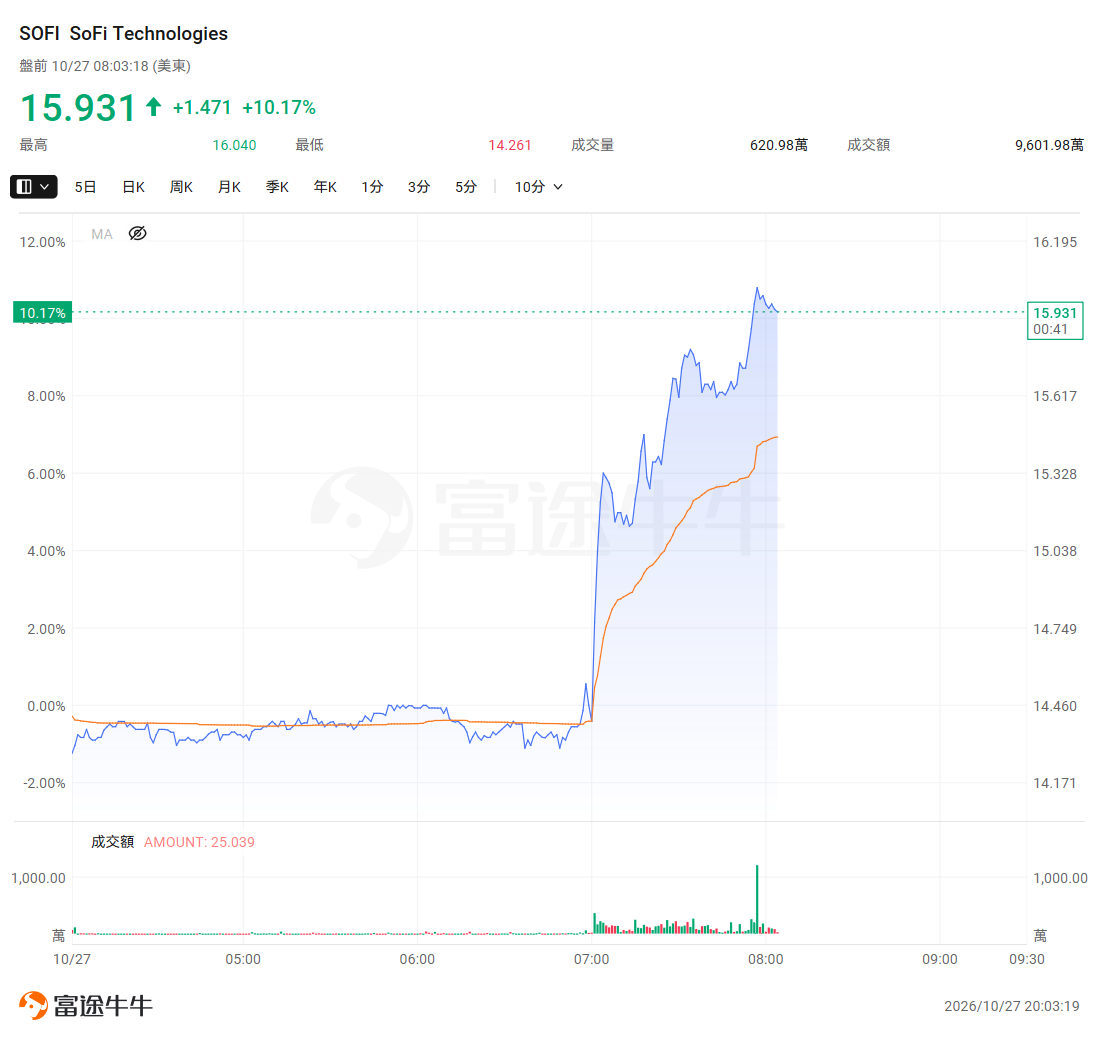
$SoFi Technologies(SOFI.US)$The company reported its third-quarter 2026 results, with adjusted net revenue rising 44% year over year to $1.39 billion—a record high and above the market's expectation of $1.25 billion. Adjusted earnings per share came in at $0.18, slightly ahead of the $0.17 forecast. Adjusted EBITDA surged 70% year over year to $470 million, marking the 12th consecutive quarter of profitability. During the quarter, the company added 1.2 million new members, bringing its total membership up 35% year over year to 17.1 million, while loan originations hit a record $16.9 billion. The company raised its 2026 adjusted net revenue guidance to $5.04 billion, reflecting roughly 40% year-over-year growth, and increased its EPS outlook to $0.61, both exceeding market expectations. It also provided its first-ever 2027 outlook, projecting adjusted net revenue of approximately $6.4 billion and EPS of $0.90—both above analysts' estimates of $6.14 billion in revenue. As of press time, SoFi was up more than 10% in pre-market trading.
Broadcom, in partnership with Wall Street, has secured $63 billion in financing to provide AI computing power for Anthropic.
Bank of America, Blackstone, Citi, and Morgan Stanley announced on Monday that they would provide $63 billion in financing through a newly established special-purpose entity to purchase$Broadcom (AVGO.US)$Broadcom's XPU AI accelerators and networking equipment will be leased to Anthropic, with deliveries expected to begin in 2027. The first lien portion is arranged by Bank of America, Citi, and Morgan Stanley, while Blackstone is the sole provider for the second-lien commitment. Broadcom offers residual value support for the portion equal to the first lien; the company disclosed that its peak exposure is estimated at approximately $43 billion, which will be amortized linearly to zero over a five-year lease term, without any direct cash outlays. Reuters, citing sources familiar with the matter, reported that the senior debt amounts to about $43.5 billion, accounting for 69% of the total. According to the Wall Street Journal, Broadcom CEO Hock Tan spent nearly two months lobbying banks to clinch this deal. Previously, Apollo and Blackstone had agreed to finance Anthropic's $35 billion computing capacity expansion, with Broadcom's guarantee on that transaction capped at $29 billion.
Microsoft is offering a voluntary severance package to approximately 60,000 employees, accounting for more than one-quarter of its total workforce.
$Microsoft (MSFT.US)$On Monday, it announced that it would offer a "voluntary separation" program to certain employees in the U.S., Canada, India, and the U.K. at or below level 70. According to CNBC, citing sources familiar with the matter, about 60,000 employees are eligible—roughly 27% of Microsoft's 223,000 workforce—covering roles up to the vice president level; some marketing, sales, and engineering teams chose not to participate. Employees must make their decisions by early December, and those who opt in will depart on December 31. Microsoft first launched a voluntary retirement program in April this year and announced layoffs of 4,800 people in July. CNBC noted that Microsoft is ramping up investment in data centers, having previously projected capital expenditures for the quarter ending September to exceed $50 billion, compared with $34.9 billion in the same period last year, as the company seeks to advance its AI infrastructure while maintaining financial stability. Microsoft is set to release its earnings report after the market closes on Wednesday Eastern Time.
Apple has acknowledged that a small number of iPhone Duo devices have issues with their inner screens and will replace them for users.
$Apple(AAPL.US)$On Monday, the company responded that it has noticed issues affecting the inner screen on a "small number of iPhone Duo" devices, and affected users can contact AppleCare to obtain a replacement. Apple stated that most devices are not impacted, and defective models tend to develop problems relatively quickly; users can exchange their devices without purchasing AppleCare+. The iPhone Duo is Apple's first foldable phone, which began shipping last week at a starting price of $1,999. Over the past weekend, social media users reported cracks and bright lines along the central hinge on the inner screen. According to teardown and simulation analyses by repair service iFixit, the damage is concentrated near the central support strut, suggesting that this component may fail to yield promptly during folding, creating localized stress points. Apple has not yet disclosed the cause of the issue. Reuters noted that analysts had previously anticipated supply constraints for the iPhone Duo due to its complex manufacturing process.
Anthropic is reportedly planning to go public during the week of November 16, with potential fundraising reaching as much as $100 billion.
Previously$Anthropic(ANT.US)$It has publicly filed its prospectus, seeking a listing on the Nasdaq. According to reports from The Wall Street Journal and other media citing informed sources, the company plans to go public during the week of November 16, though the timing could still change. The IPO could raise as much as $100 billion or even more, with market expectations placing the valuation between $1.5 trillion and $2 trillion. The price range and number of shares to be issued have not yet been disclosed. The prospectus shows that Anthropic's revenue for the first half of this year was approximately $16.3 billion, compared to about $1.2 billion in the same period last year; net loss for the same period totaled $80.7 billion, primarily due to changes in the fair value of convertible bonds and other instruments. The prospectus also notes that nearly half of the company's revenue depends on the three major cloud providers, and identifies competition and antitrust risks as key factors.
Boeing's third-quarter revenue rose 4%, beating expectations, while its core loss per share exceeded forecasts.
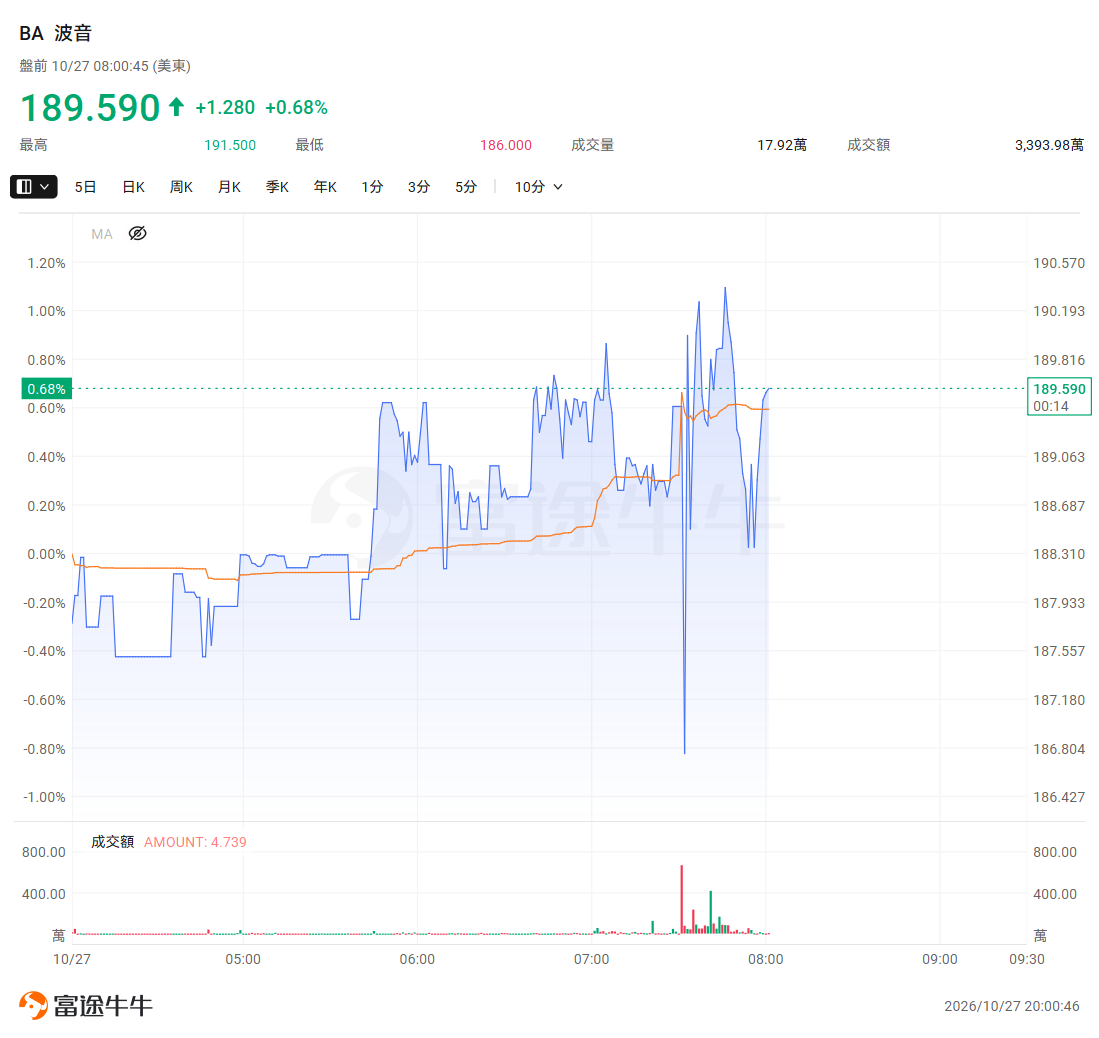
$Boeing (BA.US)$The company reported its third-quarter 2026 results, with revenue of $24.19 billion, up 4% year over year—above the market consensus of $23.84 billion as compiled by LSEG. Core loss per share was $0.34, wider than the expected $0.21. GAAP net loss stood at $116 million, a significant narrowing from $5.34 billion in the same period last year. Operating cash flow for the quarter totaled $1.5 billion, and free cash flow was approximately $500 million, while total order backlog climbed to a record $745 billion. By segment, commercial aircraft revenue declined 3% to $10.72 billion, with an operating margin of –6.5%, attributed by the company to an unfavorable delivery mix, cost increases stemming from future production adjustments, and rising supply-chain expenses. The quarter saw 161 aircraft delivered and 300 net orders placed. Meanwhile, the defense, space, and security segment posted a 15% revenue increase to $7.94 billion and was selected by the U.S. Navy to undertake the F/A‑XX next-generation fighter program. In addition, the 737‑7 received a revised type certificate from the U.S. Federal Aviation Administration this quarter, the 737‑10 was approved in October, and the 777X remains on track for its first delivery in 2027.
Intel plans to acquire quantum software company Classiq for $2.3 billion.
$Intel (INTC.US)$On Monday, it was announced that a final agreement has been reached to acquire the Israeli quantum computing software company Classiq for approximately $2.3 billion, with the transaction to be paid in cash and Intel stock. Classiq offers a hardware-agnostic quantum algorithm synthesis platform, which Intel plans to integrate with its silicon spin qubit technology and chip manufacturing capabilities to build a full-stack quantum computing platform. The deal remains subject to regulatory approval and is expected to close in the first half of 2027; until then, both parties will continue to operate independently.
Celestica's third-quarter revenue rose 83%, and it issued its first-ever guidance of $40 billion in revenue by 2027.
AI server and network equipment manufacturer$Celestica (CLS.US)$After the market closed on Monday, the company reported third-quarter results: revenue of $5.83 billion, up 83% year over year; adjusted earnings per share of $3.30, exceeding both the company's prior guidance and the market consensus estimate of $2.99. The company raised its 2026 revenue outlook to $21.0 billion and its adjusted EPS forecast to $11.55, while also providing its first-ever 2027 guidance: revenue of $40.0 billion, adjusted EPS of $21.50, and an adjusted operating margin of 9.0%. The company noted that demand is driven primarily by AI infrastructure spending from hyperscale cloud providers and leading AI research labs, with customer forecasts for 2028 significantly above the 2027 guidance levels.
Applied Materials plans to increase its stake in BE Semiconductor to approximately 20%, deepening its collaboration on advanced AI packaging.
$Applied Materials (AMAT.US)$On Monday, after the U.S. stock market closed, Applied Materials announced that it has signed an accelerated share-purchase agreement to increase its stake in Dutch chip-packaging equipment maker Besi from approximately 9% to about 20%. The share transaction still requires approval from U.S. antitrust authorities. Applied Materials first acquired a stake in Besi in April 2025 and has since remained its largest shareholder. The company stated that this investment is intended as a long-term commitment and that it currently has no plans to raise its holding above roughly 20%, nor does it seek a seat on Besi's board of directors. Since 2020, the two companies have been collaborating on hybrid bonding technology, which is regarded as a key enabler for next-generation AI chips. Earlier this month, they announced that their cooperation would expand into areas such as 3D integrated circuits, logic-and-memory integration, and thermocompression bonding. Besi's share price, which had fallen by half from its June peak of €317, surged nearly 9% in early trading in Amsterdam on Tuesday. As of press time, Applied Materials was up more than 1% in pre-market trading.
Global Macro
Iran's Supreme Leader stated that Iran's conditions should be met to bring the war to an end, while U.S. media reported that the U.S. military could launch strikes within 96 hours.
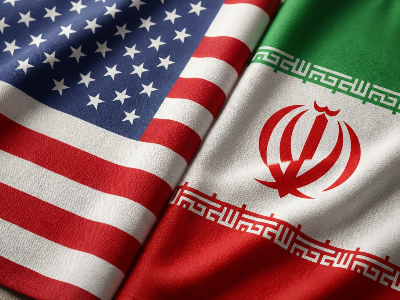
According to official Iranian sources, Supreme Leader Ayatollah Ali Khamenei emphasized during a meeting on Tuesday with Rezaei, Secretary of the Supreme National Security Council, that Iran must safeguard the rights and interests of its people and the Resistance Front by fulfilling the relevant conditions proposed by Iranian officials, in order to bring an end to the war and the "neither war nor peace" situation. Following the announcement, both U.S. and Brent crude oil prices briefly fell by about $0.80. Earlier, Iran had put forward conditions to the U.S., including lifting the maritime blockade, ensuring the safe passage of ships through the Strait of Hormuz, rescinding unilateral sanctions, and unfreezing frozen assets, while stating that it would not resume formal negotiations until the U.S. implemented these measures. Meanwhile, CNN, citing two U.S. officials, reported that U.S. forces in the Middle East are prepared to launch a new round of large-scale military operations against Iran within 96 hours upon receiving orders from Trump; targets could include energy infrastructure, military facilities, and nuclear sites. However, Trump has yet to make a decision. Iranian security officials stated that, should Iran come under attack, it would respond in kind.
U.S. media: Mediators are pushing for a five-day "mutual concession" agreement between the United States and Iran, under which the reopening of the Strait of Hormuz would be exchanged for the lifting of the maritime blockade.
According to The New York Times, as concerns mount that the United States and Israel may soon launch another round of strikes against Iran, senior representatives from Saudi Arabia, Turkey, and Pakistan held talks with Iranian officials in Tehran on Monday. Two diplomats said Qatari mediators have been working to broker a deal between the U.S. and Iran, under which both sides would make a series of concessions within five days: Iran would reopen the Strait of Hormuz to commercial shipping, while the U.S. would lift its maritime blockade of Iranian ports. The main sticking point is the sequencing of these concessions, with the mediators seeking Iranian steps on its nuclear program early in the implementation phase. Following the meeting, the four countries agreed to continue consultations and strengthen regional security cooperation. However, Reuters quoted a senior Iranian official as saying that the talks do not address nuclear issues and that Iran will not discuss its nuclear program until the U.S. meets its demands. Meanwhile, the chief of staff of Iran's armed forces stated that the Strait of Hormuz remains under the control of the Islamic Revolutionary Guard Corps Navy.
The Federal Reserve begins its interest-rate meeting today, with the market assigning roughly a 90% probability to holding rates steady.
The Federal Reserve will hold its FOMC interest-rate meeting on October 27–28, with the rate decision scheduled for 2:00 a.m. Beijing time on Thursday. Chair Powell will hold a press conference at 2:30 a.m. At its September meeting, the Fed raised rates by 25 basis points, lifting the target range to 3.75%–4.00%. According to CME's "FedWatch," there is an 89.5% probability that rates will remain unchanged this week, and a 10.5% chance of a 25-basis-point hike; by December, the odds of a cumulative 25-basis-point increase stand at 73.9%. This meeting will not release the Summary of Economic Projections or the dot plot, so markets will be watching how the statement balances rising inflation against slowing hiring, as well as whether Powell leaves room for another rate hike in December. Mark Zandi, chief economist at Moody's Analytics, said the Fed neither should nor will raise rates this week. The European Central Bank and the Bank of Japan are also set to announce their interest-rate decisions on Thursday and Friday, respectively.
Starting November 1, the United States will observe daylight saving time, and U.S. stock market trading hours and the release times of economic data will be delayed by one hour.
At a rally in Mississippi on Monday, Trump said the practice of changing clocks twice a year is "absurd" and "drives everyone crazy." He once again urged the Senate to pass legislation to make daylight saving time permanent, warning lawmakers that with only a few days left before most of the U.S. resets its clocks, they must act quickly. The Sunshine Protection Act, which would abolish the switch between standard and daylight time, was approved by the House earlier this year but remains stalled in the Senate. If no progress is made, the U.S. will begin observing standard time on November 1—this Sunday—when, according to Beijing time, U.S. stock market trading hours will shift to 10:30 p.m. to 5:00 a.m. the next day, and economic data releases will also be delayed by one hour: nonfarm payrolls and CPI will now be released at 9:30 p.m. instead of 8:30 p.m., while the Federal Reserve's interest-rate decision will be pushed back from 2:00 a.m. to 3:00 a.m. According to the schedule, October's nonfarm payrolls and CPI are set to be released on November 6 and November 10, respectively.

Sources report that OPEC+ plans to keep its December production target unchanged at Sunday's meeting.
According to Reuters, citing three sources familiar with the matter, OPEC+ is likely to keep its December oil production target unchanged when it meets this Sunday (November 1), while shifting its focus to negotiations over 2027 output quotas. The meeting will be held virtually and will involve seven core member countries: Saudi Arabia, Russia, Iraq, Kuwait, Algeria, Kazakhstan, and Oman. From April to September this year, these seven nations raised their monthly production targets; since then, they have kept those targets steady for two consecutive months, in October and November. Reports indicate that, amid Iran-related tensions, oil exports from Gulf members were temporarily disrupted for several months. While these countries are now working to boost exports, most still produce far below their official targets. OPEC data show that the seven nations' combined daily output in August was around 25 million barrels, roughly 5 million barrels short of pre‑war levels in February. Sources say no final decision has yet been made.
Japanese Finance Minister Katsuya Okada: The government is prepared to take decisive action in the foreign exchange market.
On Tuesday, Japanese Finance Minister Katsura Katsuyama told parliament that the government is prepared to take decisive action in the foreign-exchange market, adding, "We are closely monitoring market developments with a strong sense of urgency, including at this very moment." She made these remarks in response to questions about how the government's fiscal policy might affect the yen and long-term interest rates, emphasizing the need to ensure that the yen's movements reflect economic fundamentals. She also expressed hope that transparent, consistent communication would help maintain market confidence in the yen and in the fiscal policies of Prime Minister Kishida Fumio's administration. On the same day, a report released by the Bank of Japan showed that, excluding fresh food and one-off factors, consumer prices rose 3.2% year-on-year in September, up from 2.6% the previous month, while measures of underlying inflation reached their highest level in three years. The Bank of Japan raised its policy rate to 1.25% in September—the fastest tightening cycle since 1990—and is scheduled to announce its next interest-rate decision this Friday; markets widely expect no change to monetary policy.
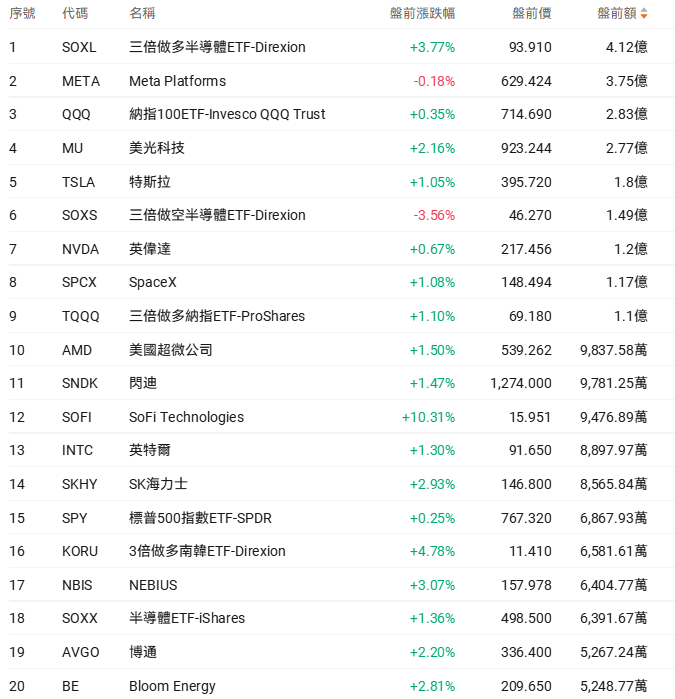
Top 20 Stocks by Pre-Market Trading Volume in the U.S. Market
U.S. Stock Market Macro Calendar Reminder
(The following is in Beijing Time)
20:30 U.S. September Durable Goods Orders Month-on-Month Preliminary Reading
21:00 U.S. August FHFA Home Price Index month-on-month, U.S. August S&P/CS 20-City Home Price Index year-on-year
22:00 U.S. October Conference Board Consumer Confidence Index, U.S. September New Home Sales Annualized Total, U.S. October Richmond Fed Manufacturing Index
After-hours earnings
$Seagate Technology (STX.US)$ 、 $Visa(V.US)$ 、 $SK Hynix (SKHY.US)$ 、 $NXP Semiconductors (NXPI.US)$ 、 $Teradyne (TER.US)$ 、 $F5 Inc(FFIV.US)$ 、 $Enphase Energy(ENPH.US)$ 、 $Logitech (LOGI.US)$ 、 $Baker Hughes(BKR.US)$ 、 $BigBear.ai Holdings(BBAI.US)$
 Want to pick stocks or analyze them? Curious about your portfolio's opportunities and risks? For all your investment questions,Just ask Futubull AI!

Editor/rocky