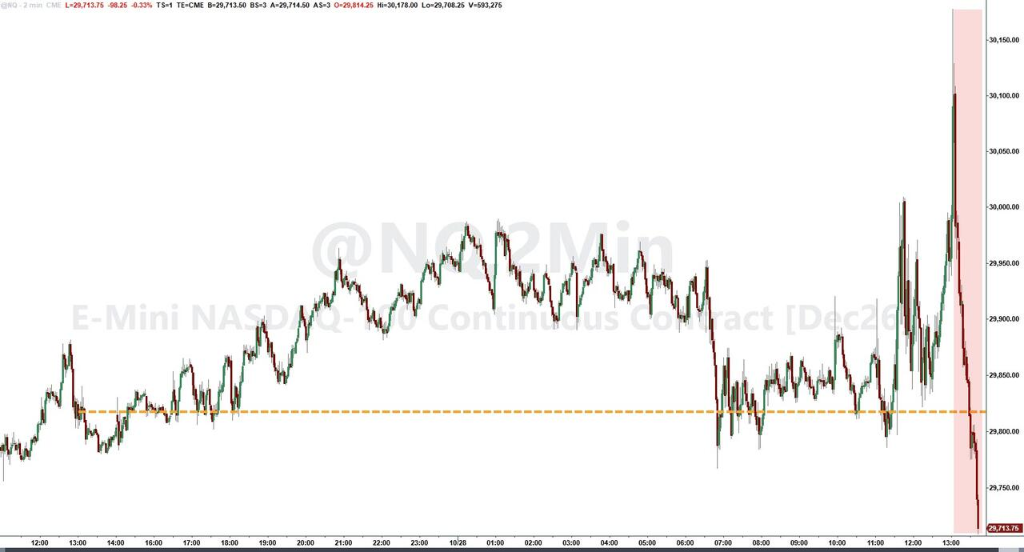
The S&P 500 Index closed up 0.3%, and the Nasdaq 100 Index rose 0.5%. In after-hours trading, Microsoft surged approximately 6% on strong cloud business performance, while Google plummeted about 8% due to disappointing earnings. Nasdaq futures turned negative in after-hours trading, largely erasing gains driven by Oracle. The yield on the 10-year U.S. Treasury note rose 3 basis points to 5.03% during the session. Gold prices rebounded to near flat levels, supported by a weaker U.S. dollar. WTI crude oil gained 1.6%.
The Federal Reserve paused interest rate hikes as expected, but its hawkish tone made market interpretation difficult. Earnings results among tech giants diverged, leading to significant volatility in after-hours trading. Meanwhile, ongoing geopolitical risks in the Middle East continued to disrupt oil prices, and Latin American markets remained under pressure amid political uncertainty in Brazil.
The Federal Open Market Committee (FOMC) voted 10-2 to maintain the federal funds rate target range at 3.75% to 4%. The post-meeting statement used moderate language and provided no clear signals regarding the policy path for December.
 At the press conference, Federal Reserve Chair Walsh emphasized his opposition to forward guidance, stating, "I do not believe in predicting meeting outcomes; many things can happen." He expressed optimism about the employment and economic outlook but noted that inflation remains a core pressure nearly six years after exceeding target levels.
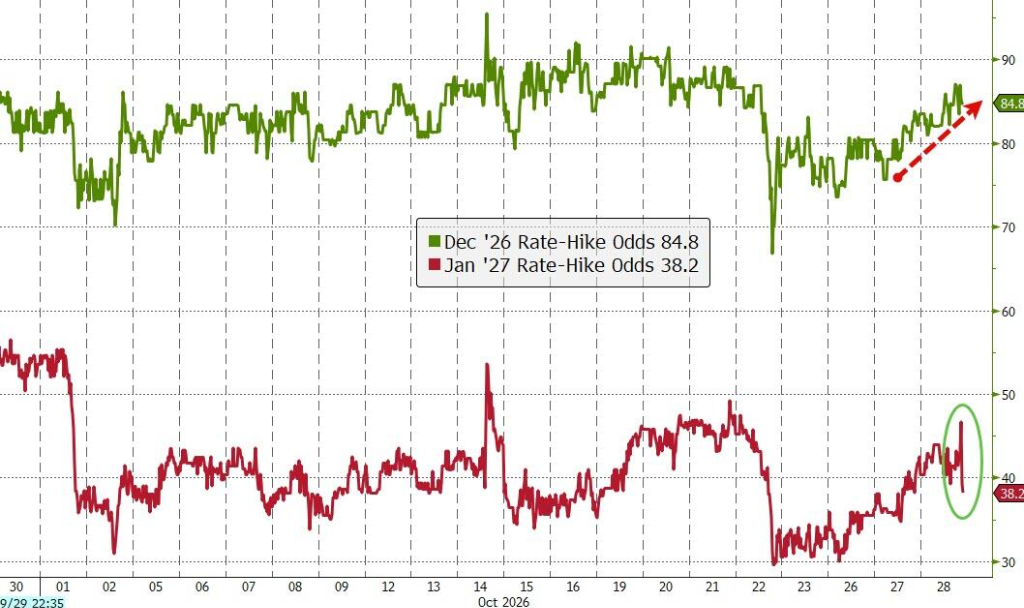
Futures markets maintained high bets on a December rate hike, but expectations for hikes in 2027 declined, with the market no longer fully pricing in the possibility of more than three additional hikes in this cycle.
In the technology sector, $Oracle (ORCL.US)$ surging 11%, which lifted other cloud computing stocks. $CoreWeave (CRWV.US)$ rising 7.32%, $NEBIUS (NBIS.US)$ gaining 6.96%. This boosted market sentiment; the S&P 500 Index closed up 0.3%, and the Nasdaq 100 Index rose 0.5%.
$SK hynix (SKHY.US)$ Quarterly profits increased more than sevenfold, hitting a record high, which bolstered confidence in demand for memory chips and drove a broad rise in stocks within the memory sector. $SanDisk (SNDK.US)$ Rose 7.66%; Silicon Motion Technology rose 7.56%; $Seagate Technology (STX.US)$ Rose 4.51%.
In after-hours trading, Microsoft surged approximately 6% on strong cloud business performance; Google plummeted roughly 8% due to disappointing results. Nasdaq futures turned negative in after-hours trading, essentially wiping out gains driven by Oracle.
The Federal Reserve paused interest rate hikes, but its hawkish tone deepened market divergence.
The Federal Reserve's decision aligned with market expectations, yet the interpretation of policy signals remains challenging. The post-meeting statement indicated that policymakers intend to accumulate more data to guide future actions and made no commitments regarding the direction in December.
At the press conference, Waller reiterated his consistent stance—opposing policy pre-commitment—and assessed the current situation with more hawkish language. He described the labor market as "quite robust," but noted that inflation has remained above target for "nearly six years," emphasizing that bringing down inflation is the Federal Reserve's responsibility. He also pointed out that financial conditions are tightening overall, suggesting that "these dynamics are moving toward achieving more sustained economic growth and price stability," implying that markets are already substituting for some of the effects of monetary policy tightening.
The Federal Reserve also announced adjustments to its meeting schedule. Waller confirmed that one meeting in 2027 will focus on reviewing macroeconomic monetary policy strategy without an interest rate vote, meaning only seven rate decisions will be scheduled next year, further reduced to six in 2028.
According to Ian Lyngen of BMO Capital Markets, this change represents the most significant structural adjustment of the day, noting that "the key question is which meetings will be used for matters other than potential interest rate adjustments."
Tony Miano of Wells Fargo Investment Institute believes the new meeting schedule aligns with Waller's stance on reducing forward guidance and lowering the frequency of policy signals. Luis Alvarado from the same institution cautioned:
The Federal Reserve is currently content to remain patient, but patience should not be misinterpreted as complacency.
The bond yield curve is steepening, with the short end benefiting from cooling expectations of interest rate hikes.
The bond market experienced significant volatility around the Federal Reserve's decision, ultimately resulting in a steepening yield curve.
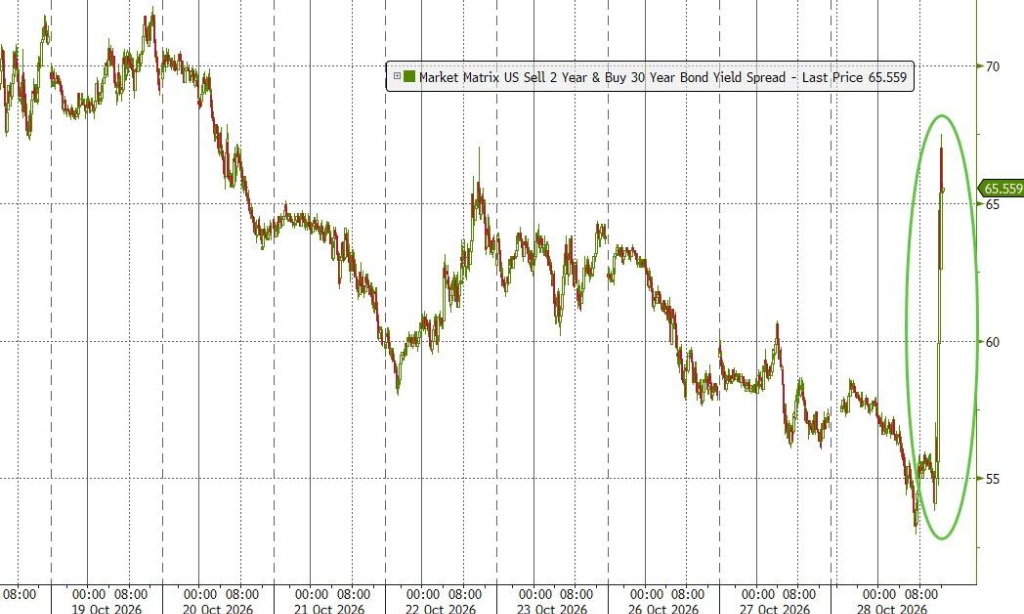
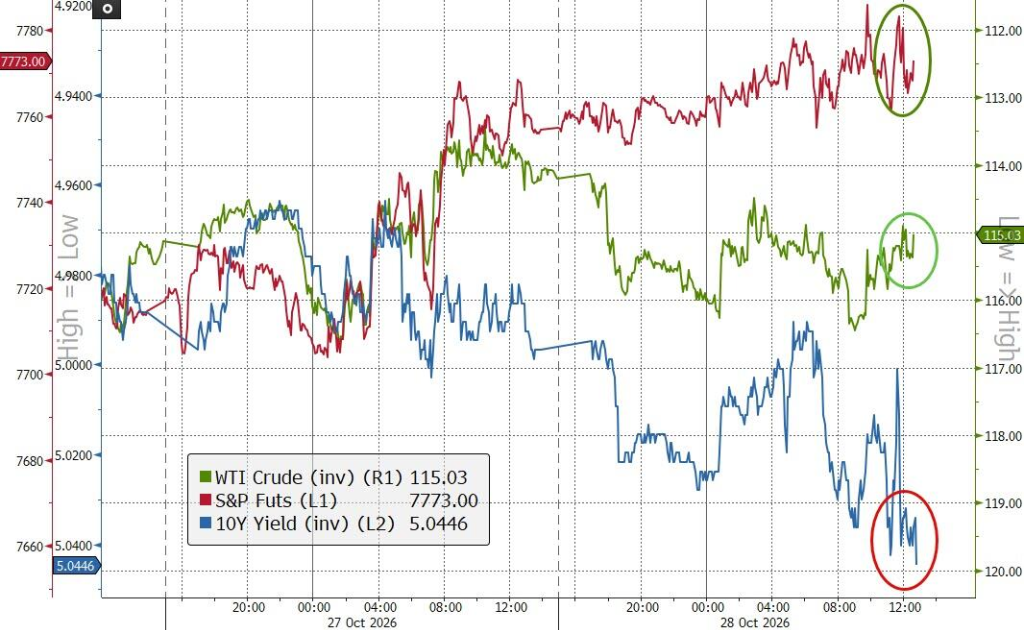
The yield on the 10-year U.S. Treasury note rose by 3 basis points to 5.03%, while the 30-year yield increased by 4 basis points to 5.35%. Meanwhile, the 2-year yield fell by 3 basis points to 4.71%, providing support for short-end bonds.
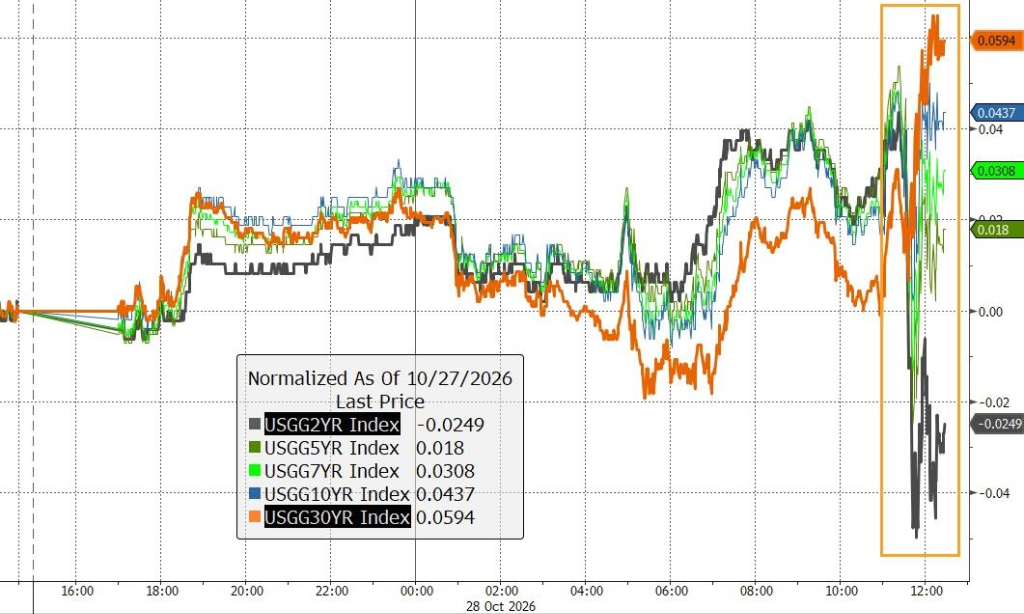
Lyngen noted that declining short-term rates suggest the market perceives the initial effects of September's rate hike are becoming evident. If another hike occurs in December, the necessity for a third additional tightening measure may diminish.
Futures market data indicates that traders' bets on a December rate hike remain largely unchanged, but expectations for further hikes in 2027 have been trimmed. The market is no longer fully pricing in a path of three cumulative rate hikes for this cycle.
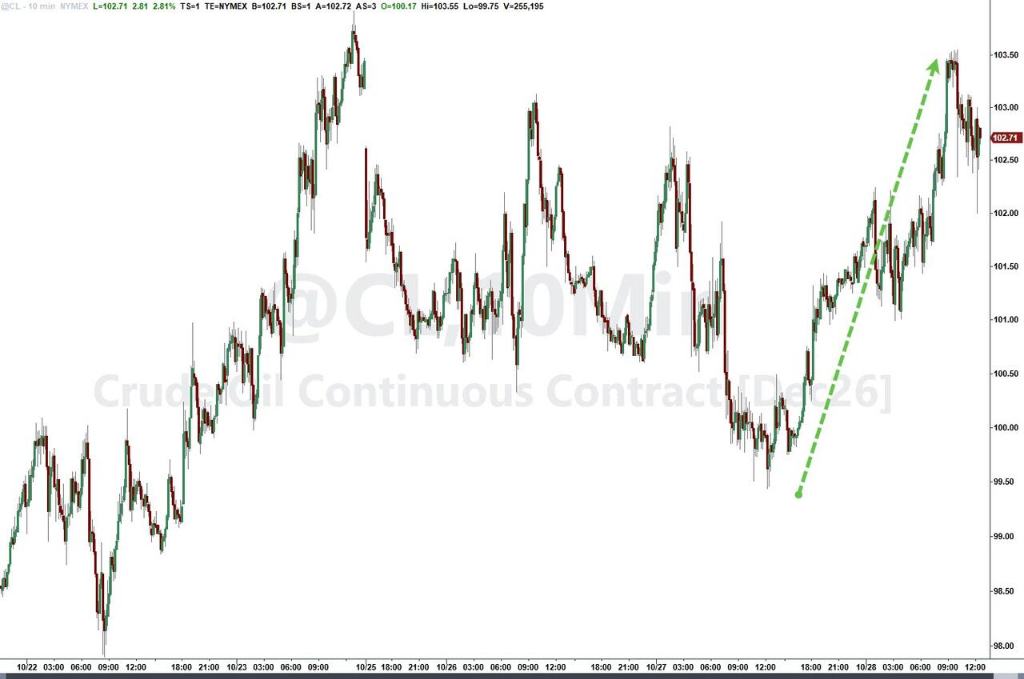
Oil prices fluctuated at high levels, with the Middle East situation continuing to dominate energy markets.
Oil prices briefly surged to $103.50 per barrel during trading before retreating following reports of new diplomatic developments involving U.S. Vice President Vance engaging with Iranian hardliners. WTI crude ultimately closed up 1.6% at $101.52 per barrel.
According to The Wall Street Journal, the United States has notified several Persian Gulf countries to prepare for a "short and intense" military operation. However, Iran had previously rejected Qatar's ceasefire proposal, labeling it "unacceptable."
Against this backdrop, Houthi forces claimed responsibility for a ballistic missile attack on Saudi Arabia's Ras Tanura refinery, which has a daily processing capacity of 550,000 barrels and serves as one of the kingdom's key crude oil export hubs. The Saudi-led coalition stated that it had intercepted the missiles and drones.
Supply and demand fundamentals also provided support: U.S. commercial crude oil inventories declined more than expected for the fourth consecutive week, while crude oil exports surged to a historical high of nearly 5 million barrels per day.
Divergence in tech earnings; after-hours volatility dominates sentiment
Oracle surged 11% on the day, becoming the market's strongest catalyst. The company announced an additional $20 billion cap for capital raising for fiscal years 2027 to 2030, demonstrating confidence in the long-term outlook for free cash flow. This move drove a collective rally in data center and cloud computing-related sectors, while credit spreads narrowed significantly.
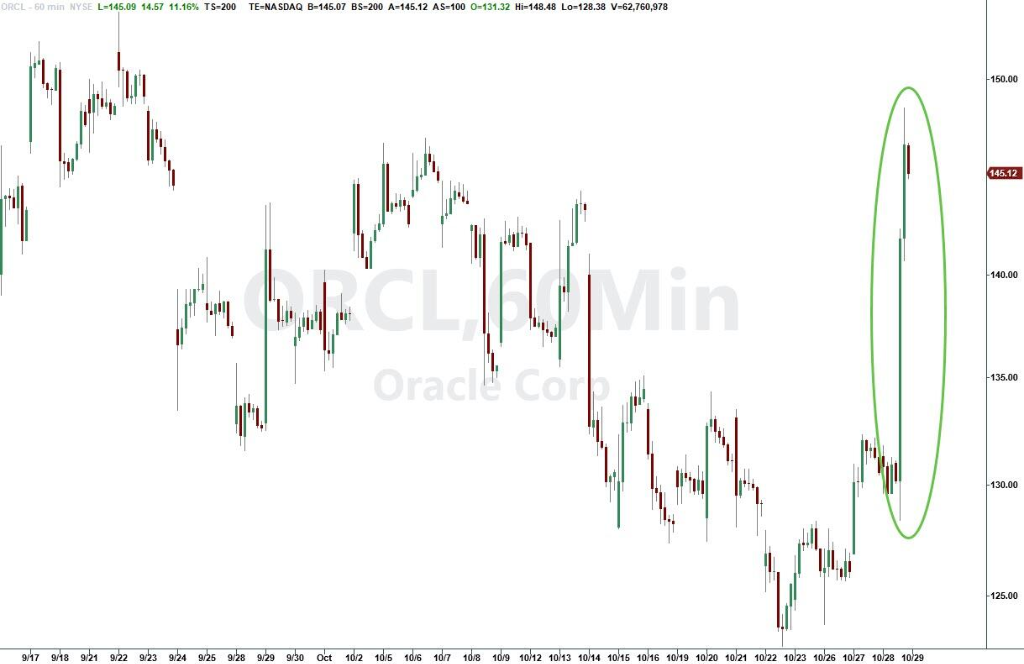
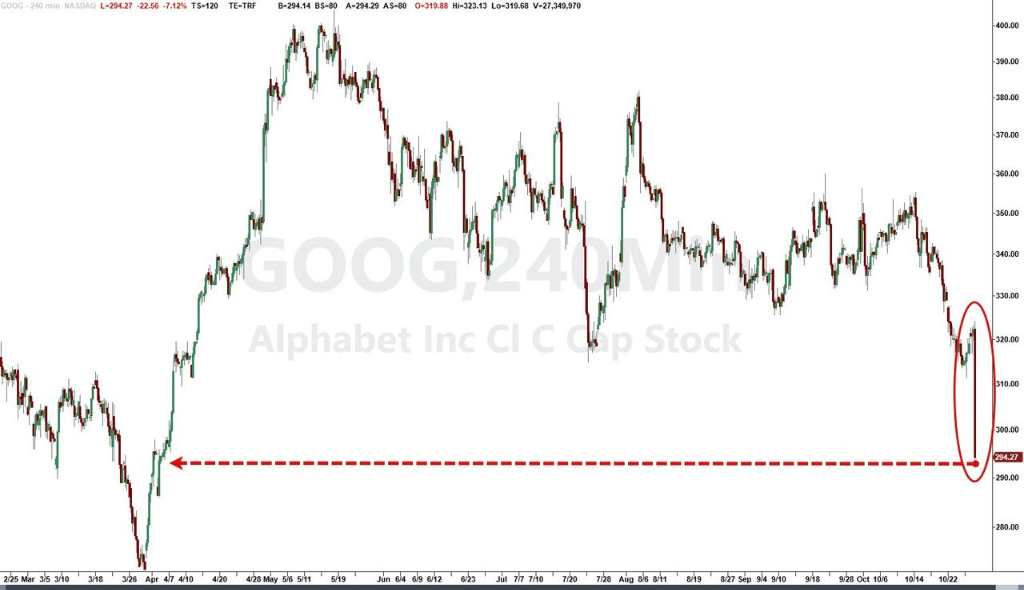
However, the situation reversed in after-hours trading. $Microsoft (MSFT.US)$ reported strong growth in its cloud business, with shares rising approximately 6% in after-hours trading; $Alphabet-C (GOOG.US)$ disappointing results led to an approximately 8% drop in after-hours trading, hitting a new low since April. Coupled with weak performances from Fortinet and $ServiceNow (NOW.US)$ , Nasdaq futures turned negative in after-hours trading, essentially erasing daytime gains.
Although ServiceNow's quarterly subscription sales outlook matched analysts' expectations, it failed to alleviate market concerns that artificial intelligence could disrupt traditional software business models.
At the corporate level, $FedEx (FDX.US)$ raised its full-year profit and revenue guidance, sending positive signals for the upcoming holiday shipping peak season; Ford raised the lower bound of its full-year profit forecast; Trian Fund Management, led by Nelson Peltz, proposed taking Wendy's private for approximately $1.4 billion, arguing that the restaurant chain would find it easier to pursue multi-year transformations as a private company; Chipotle's third-quarter same-store sales growth exceeded expectations.
Latin American markets under pressure; political uncertainty in Brazil weighs on sentiment
Latin American markets continue to show weakness.
Brazil's benchmark stock index fell 2.6%, while the real edged down 0.1% against the U.S. dollar, following its largest single-day drop since 1999 the previous day. Banking stocks were hit hardest: Santander Brasil plunged 5.6% after reporting a 15% decline in net profit in the Brazilian market, while Banco Bradesco and Itaú Unibanco dropped 6% and 3.1%, respectively.
Market focus is on President Lula's cabinet selections. According to insiders, Vice President Geraldo Alckmin and Piauí Governor Rafael Fonteles are among the candidates for finance minister.
Lula's unexpected victory in securing a historic fourth term caught markets off guard. Investors had previously bet on a win by right-wing candidate Flavio Bolsonaro, anticipating stricter fiscal consolidation policies. Uncertainty regarding the new government's fiscal stance remains a primary source of pressure.
The Israeli shekel fell 2%, and local equities dropped 2.5%, as markets worried that Prime Minister Netanyahu's efforts to form a coalition government would prolong political deadlock. Hasnain Malik, Managing Director of Geopolitical Risk and Emerging Markets Equity Strategy at Tellimer Research, stated:
The economic impact may be limited, but the risk of deepening social divisions is rising.
The Central Bank of Chile held its benchmark interest rate steady at 4.5% as expected, while the Chilean peso declined 0.4%. The Colombian peso softened slightly as markets awaited the local central bank's decision on Friday, where a 25-basis-point rate hike to 12.50% is anticipated.
Performance of Other Major Asset Classes
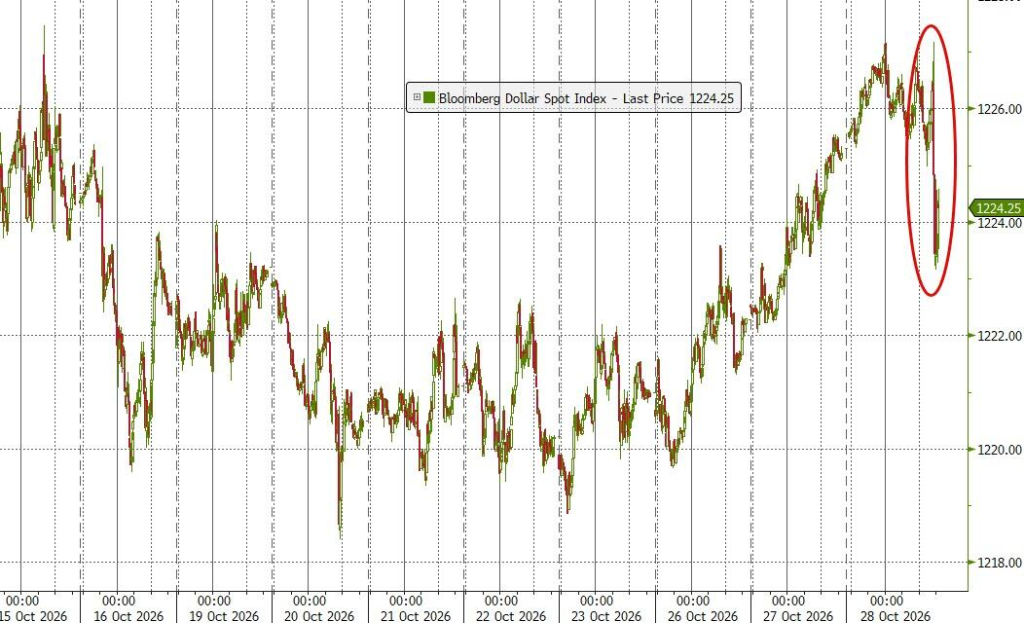
The U.S. dollar closed lower, continuing its decline during Waller's press conference.
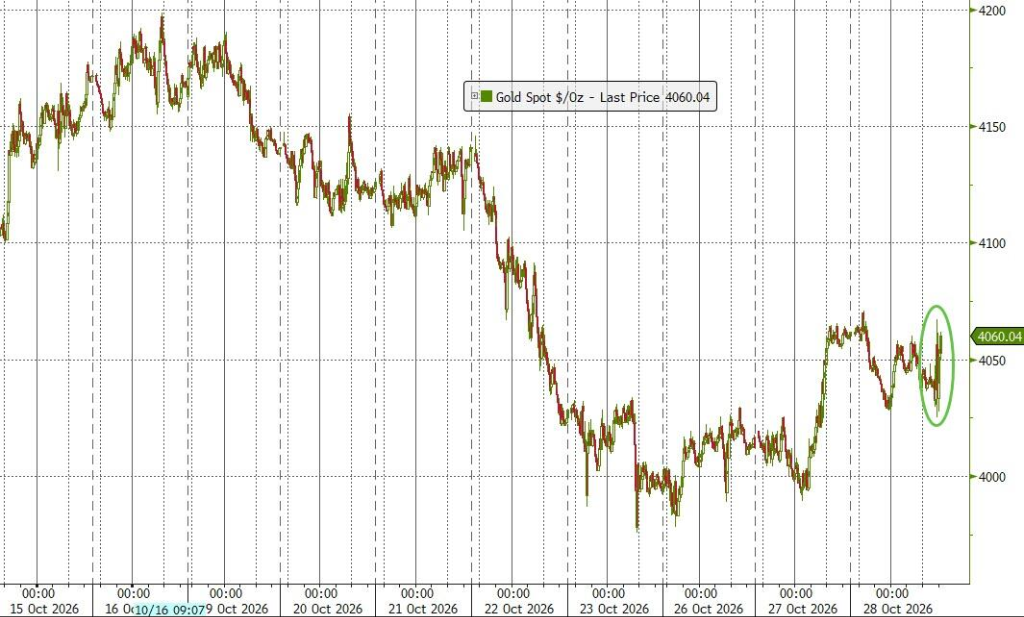
Gold prices rebounded to near-flat levels, influenced by a weaker U.S. dollar.
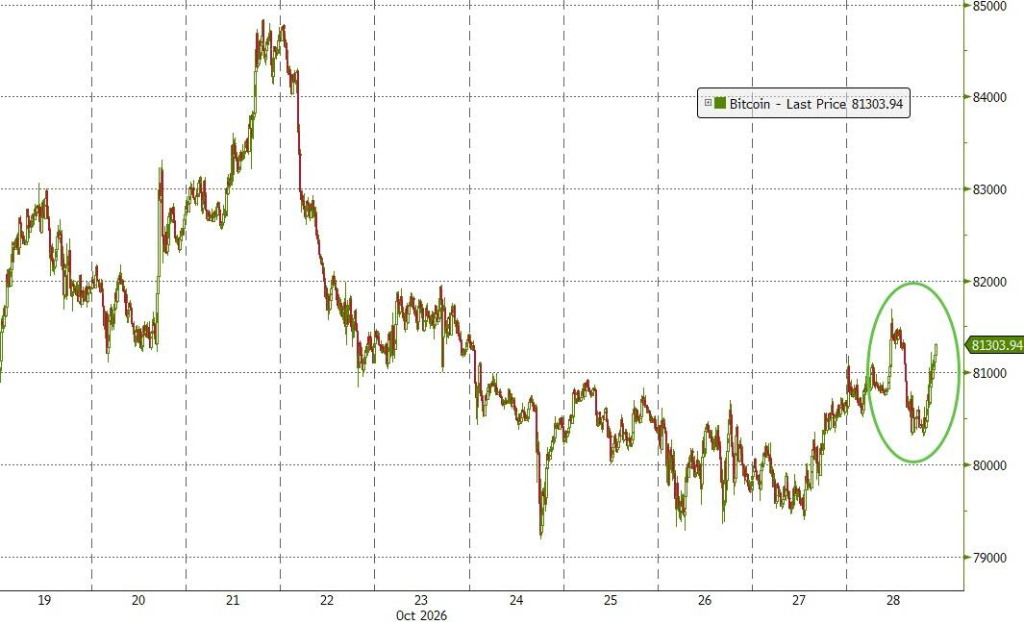
Bitcoin edged higher.
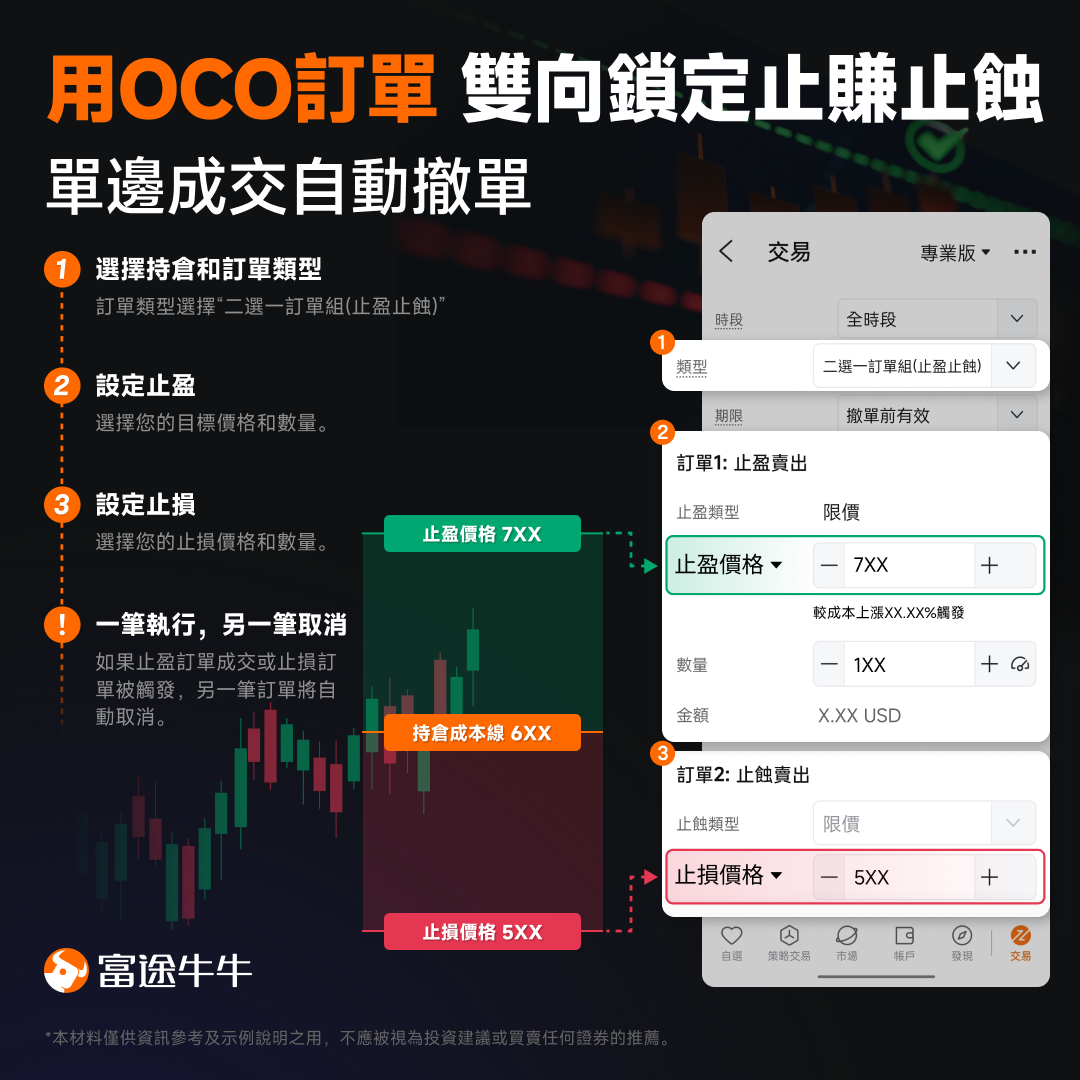
Market conditions are volatile. Rather than rushing to chase trends after the direction becomes clear, it is better to prepare in advance. OCO (One-Cancels-the-Other) orders allow you to place two linked orders simultaneously; when one is executed, the other is automatically canceled, enabling you to respond flexibly to various market movements.
Edited by Stephen