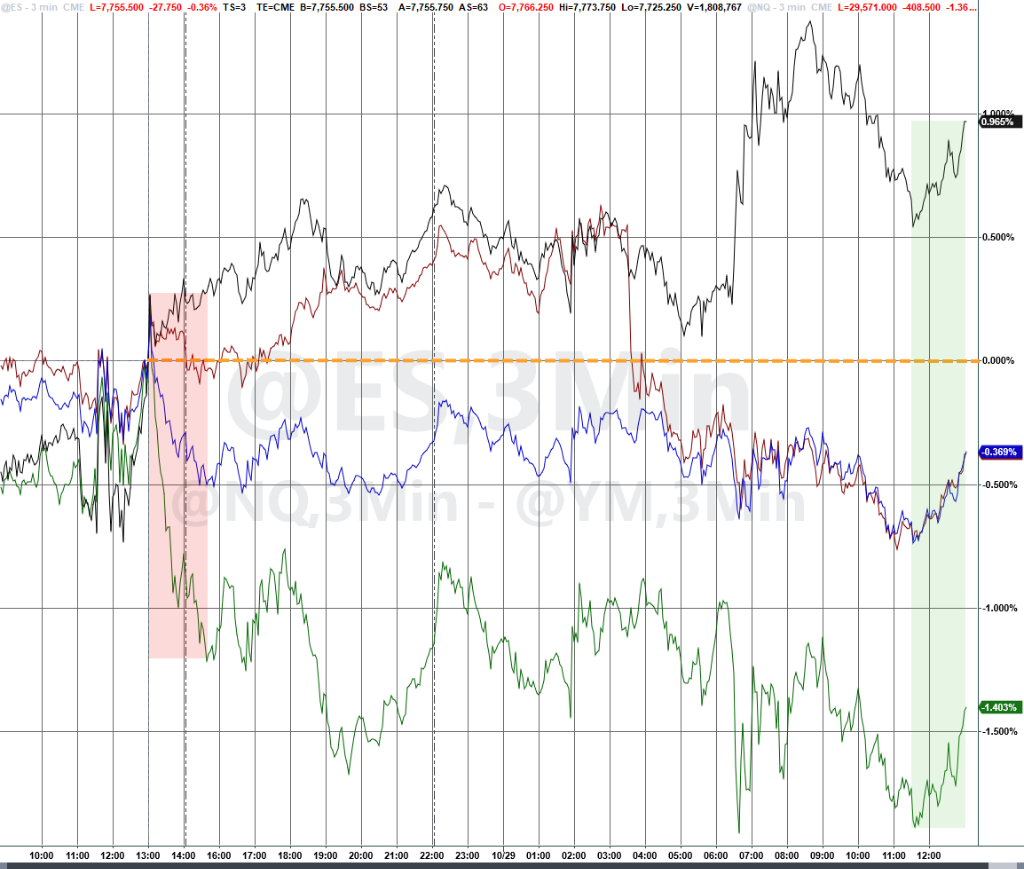
The Nasdaq fell 1.4%, while the small-cap index rose 1% against the market trend. Caterpillar dropped 9.25%, leading the Dow lower. Google plunged 13%, marking its largest single-day decline since its 2004 IPO; during the session, its market capitalization evaporated by more than $500 billion, the second-largest one-day loss in U.S. corporate history. Emerging cloud service providers fell 5%, with Nebius down nearly 6% and CoreWeave down 5%. The yield on the 10-year U.S. Treasury note stood at 4.97%, down 5 basis points. Gold declined 1%, while silver fell more than 3%.
$Alphabet-A (GOOGL.US)$A record‑breaking one‑day plunge triggered a chain reaction, sending the Nasdaq sharply lower and prompting a rapid rotation of capital into non‑tech sectors such as value stocks and small‑cap equities, while U.S. Treasury yields strengthened in tandem.
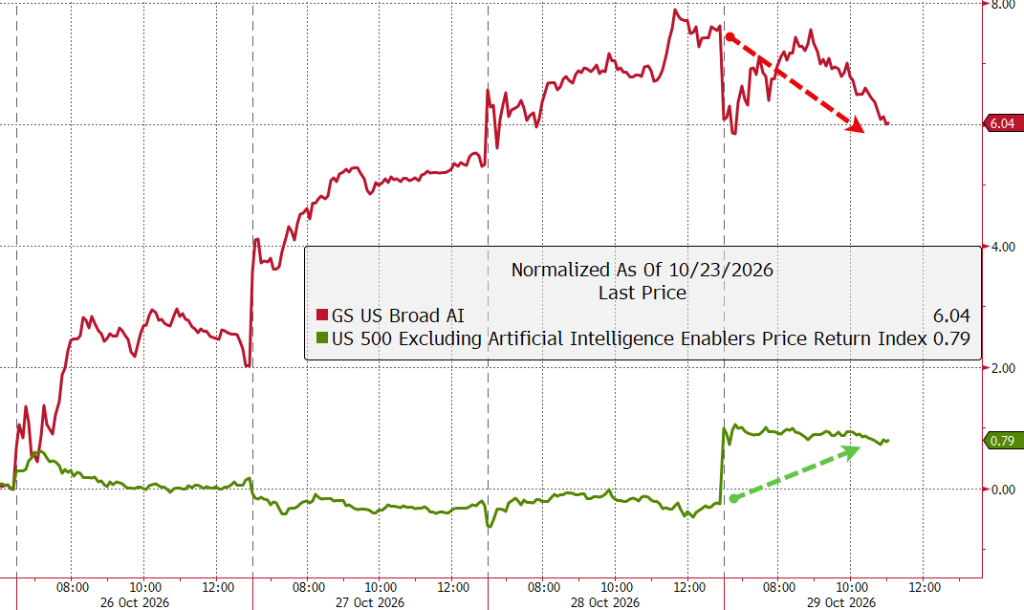
After hours$Amazon (AMZN.US)$Profits came under pressure due to a surge in AI infrastructure spending, sending the stock down by about 12% at one point.$Intel (INTC.US)$Revenue guidance also fell short of expectations, plunging 20%.
 As tech stocks come under pressure, signs of capital rotation are becoming increasingly evident. More than 400 S&P 500 constituents posted gains, with the healthcare sector surging 2.5%, while small-cap stocks were the sole winners and value stocks outperformed growth stocks by a wide margin.
U.S. GDP expanded at its fastest pace this year in the third quarter, while the Fed's preferred inflation gauge, the PCE price index, rose 0.5% month-on-month in September—the largest increase in six months. Mixed economic data have further complicated market expectations about the Federal Reserve's policy trajectory.
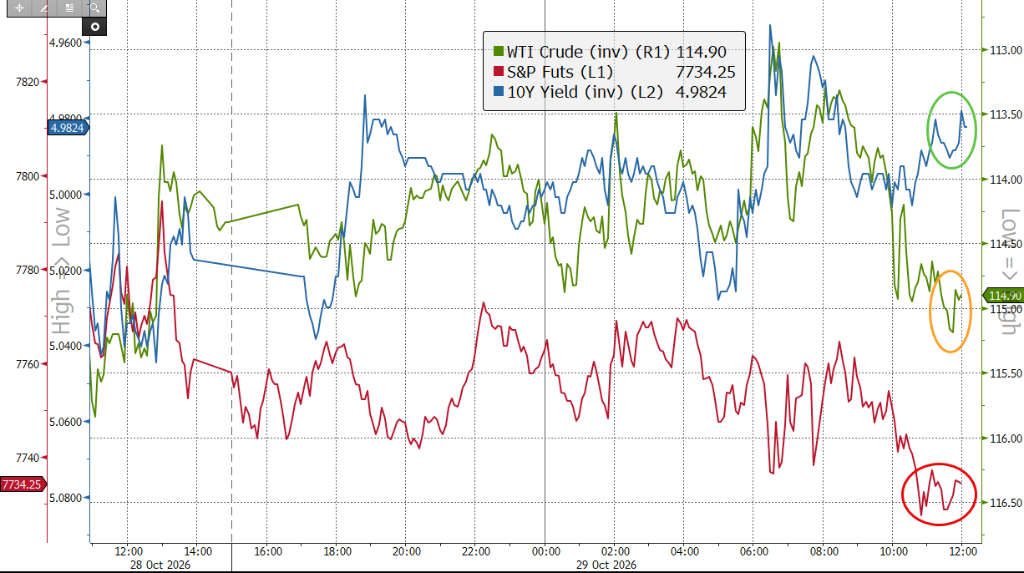
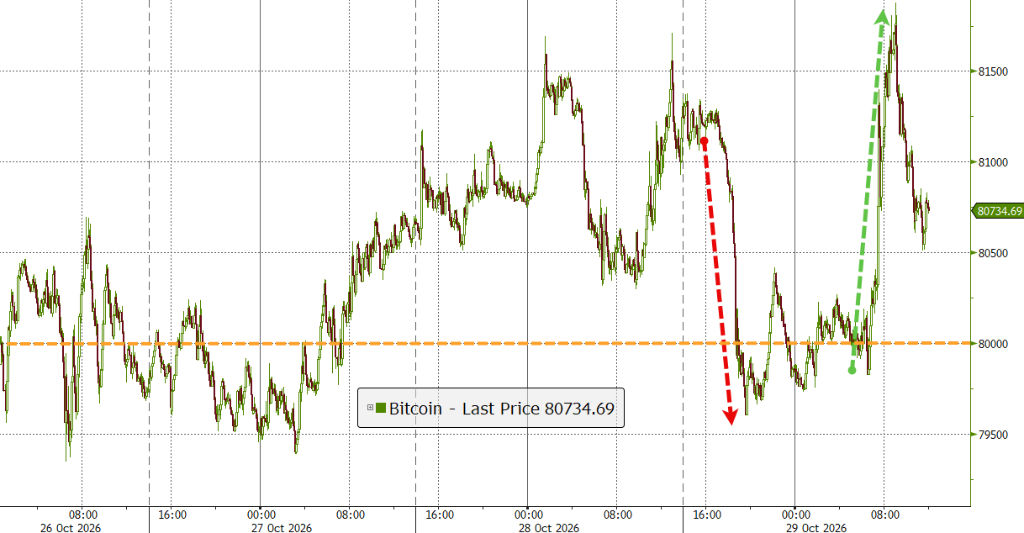
The 10-year U.S. Treasury yield fell by 8 basis points to 4.94%, with short-term Treasuries performing particularly well. Gold edged down 0.9% to $4,029.47 per ounce, briefly approaching the $4,000 mark during the session. Bitcoin experienced sharp volatility around the $80,000 level.
Morgan Stanley's Chris Larkin said that the day's market performance was a microcosm of the entire month of October—concerns over AI trading continued to weigh on the technology and communication services sectors, while other sectors remained relatively unaffected.
Google's earnings report fell short of expectations, marking its largest single-day drop since going public.
Alphabet's third-quarter results fell short of expectations, and the company's announcement that it will significantly accelerate its AI investments has sharply heightened market concerns about whether tech giants can turn their massive AI spending into profitability.
On Thursday, the three major U.S. stock indexes ended a three-day winning streak. The S&P 500 closed at 7,720.39 points, down 0.30%; the Nasdaq Composite fell 1.38%; the Dow Jones Industrial Average dropped 0.25%; and the Russell 2000 rose 1.01%, the only major index to close higher that day.
Google reported third-quarter revenue of $127.58 billion, up 25% year over year, below the market's expectation of $128.22 billion; adjusted earnings per share came in at $2.12, falling short of the consensus range of $2.99 to $3.02.
Search and other revenues totaled $63.35 billion, up 12% year over year—slower than the market's expectation of 14.7%. Equity investments posted a quarterly loss of $8.66 billion, including a pre-tax impairment of approximately $11 billion related to SpaceX holdings. Capital expenditures reached $51.36 billion, up 114% year over year, while free cash flow stood at negative $9.07 billion.
Google's stock plunged 12.64% in a single day, marking its largest one-day drop since its 2004 IPO. During trading, its market capitalization evaporated by more than $500 billion, the second-largest single-day loss in U.S. corporate history.
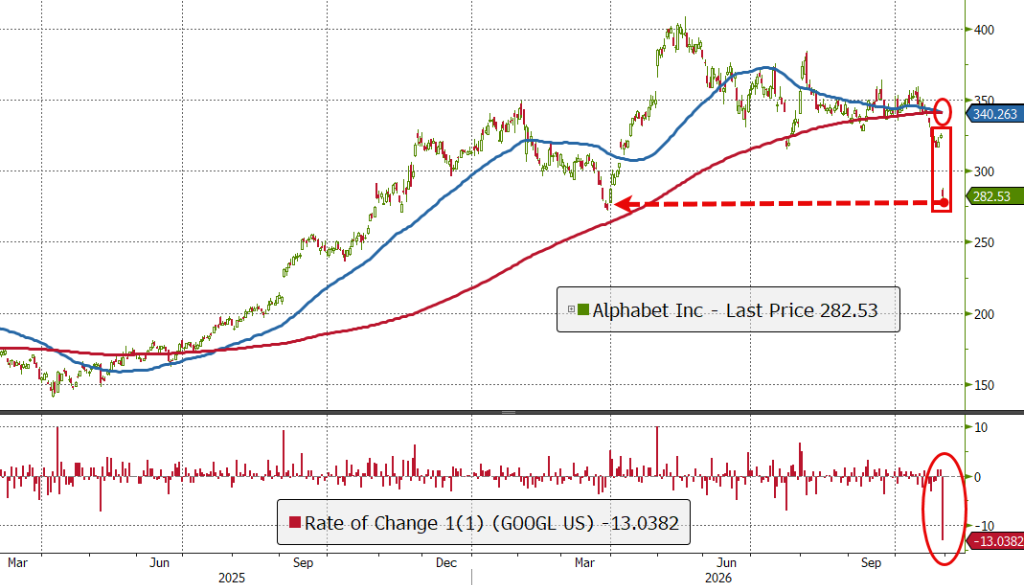
Michael O'Rourke, Chief Market Strategist at JonesTrading Institutional Services, said that with the exception of cloud revenue, nearly every key metric fell short of expectations. Google is entering the AI race from a position of weakness, and the underperformance of its advertising business is precisely what investors are most concerned about.
Melissa Otto, head of research at S&P Global Visible Alpha, said that Microsoft posted moderate, steady growth, while Google continues to burn cash and its core business still fell short of expectations; the two companies' free cash flows differ by approximately $27.7 billion.
$Microsoft (MSFT.US)$It closed down 0.16% on the day. Its capital expenditures and finance leases totaled $45.2 billion, below the market's expectation of $50.7 billion.
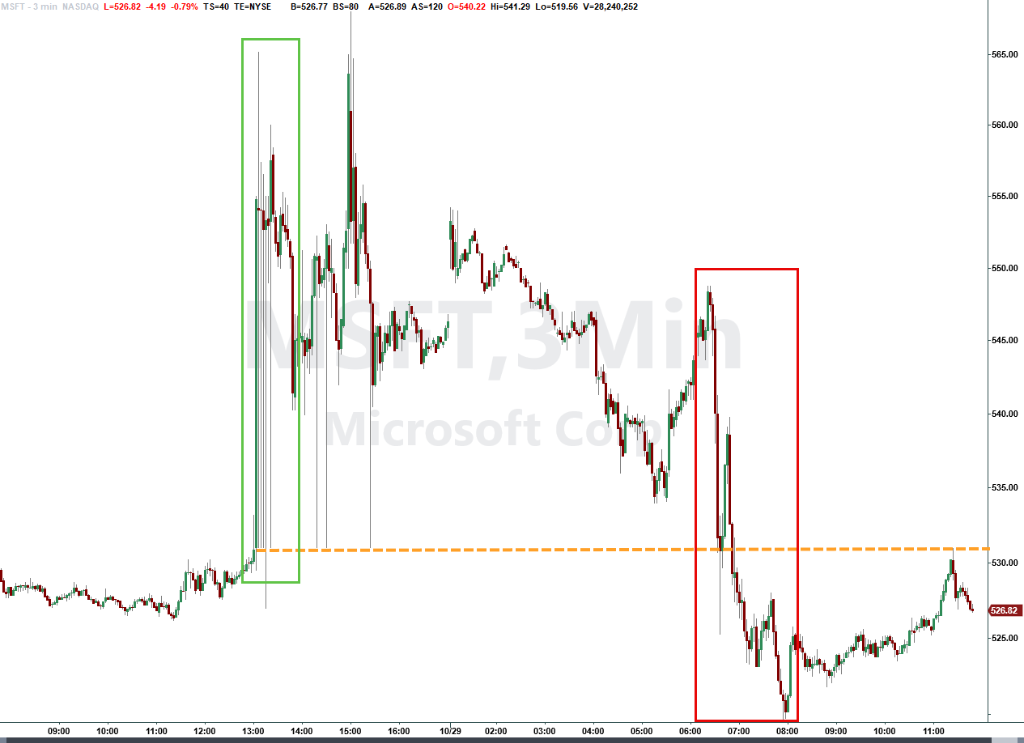
After three consecutive trading days of a strong rebound, the emerging cloud service provider fell 5% on the day. Among them,$NEBIUS (NBIS.US)$Down 5.68%,$CoreWeave (CRWV.US)$Down 4.99%,$IREN Ltd (IREN.US)$Shares fell 8.98%, while Applied Digital dropped 4.81%, as the market worries about the delivery timeline for data centers from its infrastructure partners.
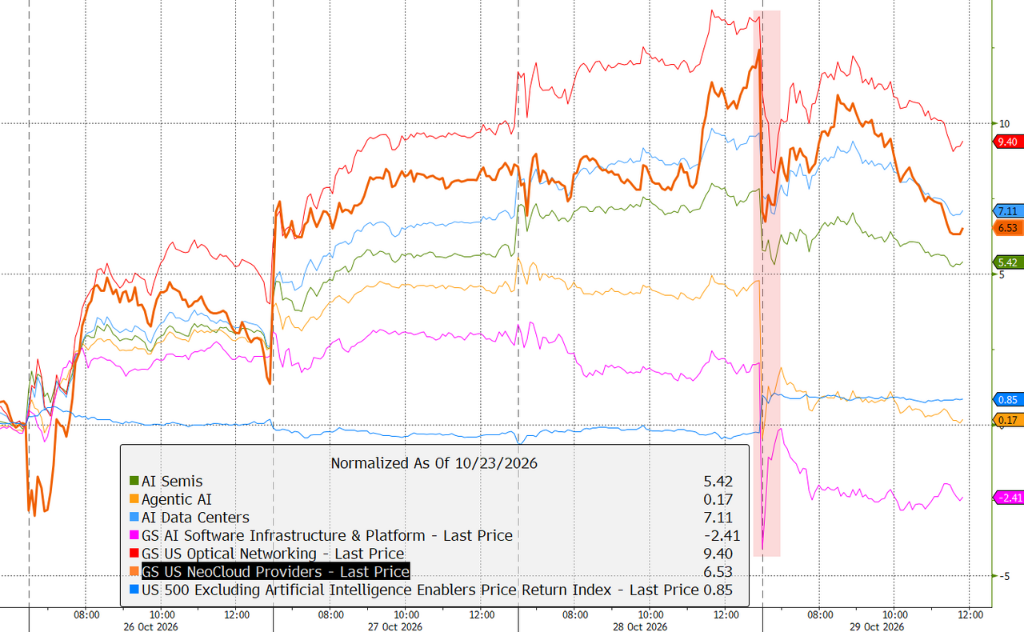
Software-sector earnings reports fell far short of expectations, with earnings quality replacing narrative as the primary pricing metric.
$ServiceNow (NOW.US)$It fell 26.95%, marking the largest intraday decline since 2016;$Fortinet (FTNT.US)$It plunged 20.09%, marking its worst single-day performance on record. Both companies reported earnings that fell short of expectations, further intensifying concerns about the impact of artificial intelligence on traditional software business models.
$Caterpillar (CAT.US)$It fell 9.25%. Third-quarter adjusted earnings per share came in at $7.20, only slightly above the market consensus of $7.06, while revenue edged below expectations. Orders and backlog hit record highs, and the stock has retraced roughly 40% from its June peak.
Oppenheimer estimates that the tariff refunds contributed approximately $0.21 per share to Caterpillar's earnings, exceeding the expected $0.14 and raising questions about the quality of its profits.
$Marvell Technology (MRVL.US)$Down 13.24%,$Lumentum (LITE.US)$Up 0.61%. Reports indicate that Marvell Technology is in advanced talks to acquire Lumentum, with the deal potentially announced as early as next week.
Mitul Kotecha, head of Asian macro strategy at Barclays, said that risk assets are heavily influenced by such news, and the market is becoming more discerning, paying closer attention to whether AI investments can deliver returns.
Selling pressure has not spread; capital is shifting toward value stocks, small-cap stocks, and the healthcare sector.
After three days of relative weakness, value stocks outperformed growth stocks by a wide margin on the day.
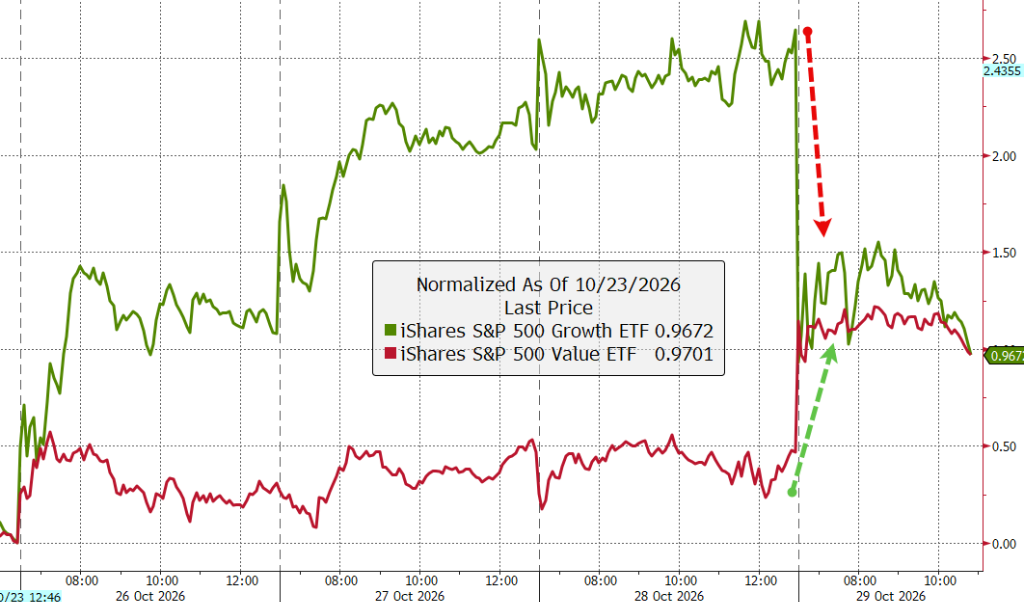
The equally weighted S&P 500 rose 1.20%, while the seven major U.S. tech giants collectively fell 2.19%, with the divergence between these two trends directly reflecting the day's structural differentiation. Excluding the heavyweight stocks, the remaining constituents helped to support the index, resulting in a much smaller decline at the index level compared to the heavyweights.
$Eli Lilly and Co (LLY.US)$Shares rose 6.57%, with third-quarter revenue reaching $24.397 billion, up 39% year over year. The full-year guidance was raised to $91.0–$92.0 billion—the third upward revision this year—while the stock hit an intraday record high, making it the first pharmaceutical company to achieve a market capitalization of $1.3 trillion.
$Merck & Co (MRK.US)$Shares rose 3.83%, with Chipotle up 8.88% and Crocs surging 25.54%—the latter marking the third upward revision to its full-year guidance—and eBay gaining 2.69%. Meanwhile, the healthcare and consumer sectors absorbed capital flowing out of AI‑related positions that day.
UBS Group's trading desk said that the stock market is in better health than the indices suggest, with capital shifting from crowded AI and growth exposures to value, small-cap, consumer, and other rate-sensitive cyclical stocks—without exiting the equity market.
Goldman Sachs' trading desk reported that intraday activity rose to 5 on a 10-point scale, with an overall bias toward selling; institutions net sold approximately $1.5 billion. Within the technology, media, and telecommunications sectors, they bought information technology and sold communication services, with Microsoft serving as the source of capital.
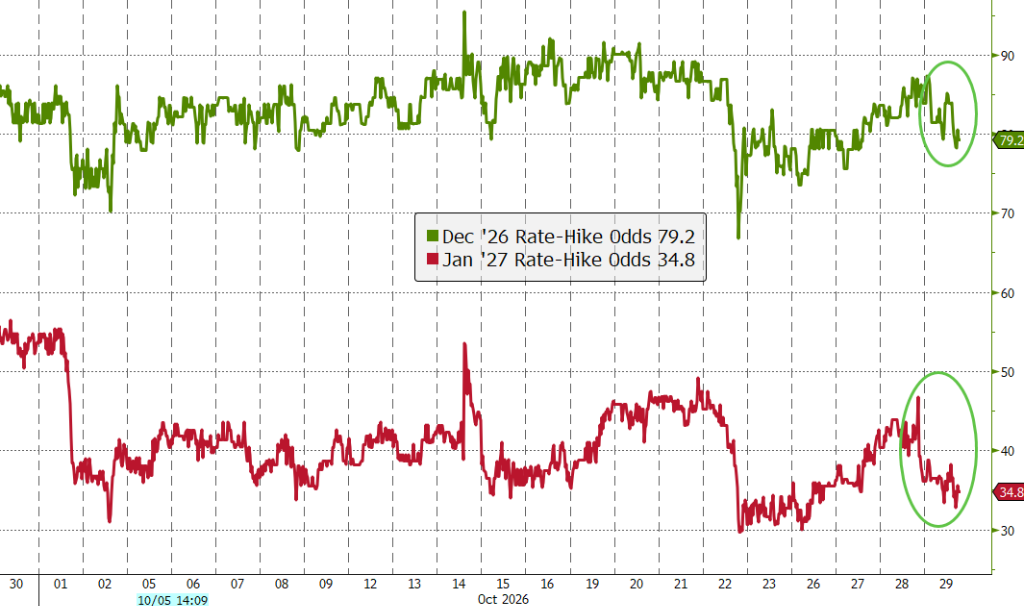
Both GDP and core PCE came in stronger than expected, while yields have retreated, yet the probability of a December rate hike has risen to 79%.
According to Wallstreetcn, the U.S. third-quarter real GDP posted an annualized quarterly growth rate of 3.4% in its preliminary reading, surpassing both the market consensus estimate of 3.2% and the previous quarter's 2.2%, marking the fastest pace in a year. In September, the core PCE price index rose 0.3% month-over-month and 3.1% year-over-year, with the year-on-year increase exceeding the prior reading of 3.0%.
Overall PCE rose 3.6% year over year, the highest level since May. Initial jobless claims last week came in at 194,000, below the market consensus of 198,000.
The bond market responded with yields falling across the board. The 10-year Treasury yield stood at 4.97%, down 4.76 basis points; the 2-year yield was 4.6373%, down 6.43 basis points; and the 30-year yield settled at 5.3114%, off 3.23 basis points, with shorter-term rates declining more sharply than longer-term rates.
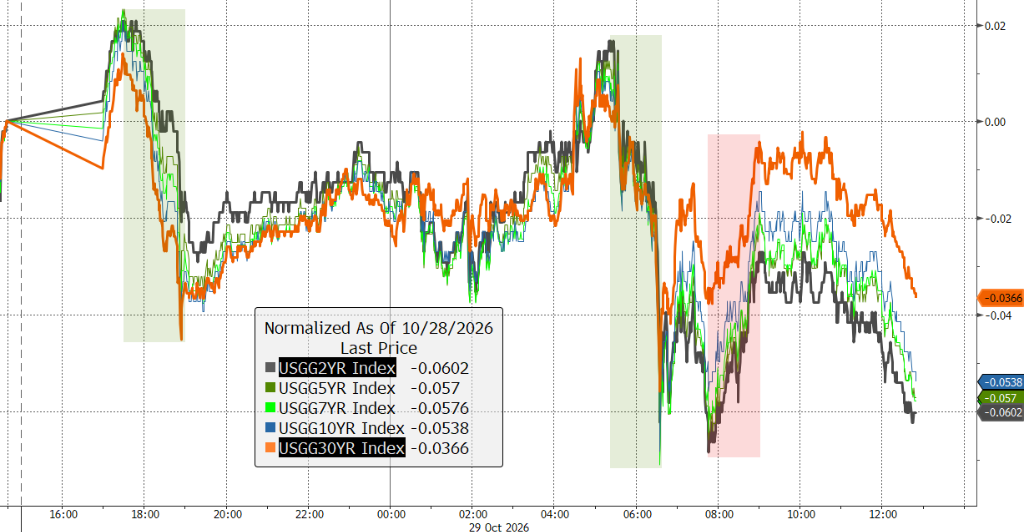
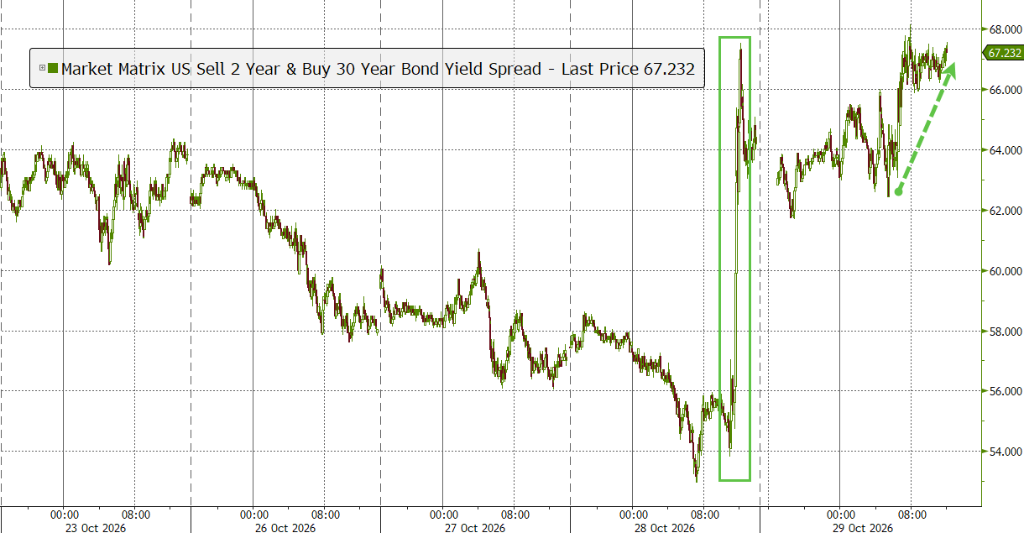
The 2-year–10-year yield spread widened by 0.85 basis points to 32.65 basis points, as the yield curve continued to steepen.
The market is pricing in a 79.2% probability of a rate hike in December and a 34.8% probability of one in January 2027.
Mike Medeiros, a macro strategist at Wellington Management, said that Mr. Walsh's press conference was once again puzzling and vaguely worded, with an overall dovish tone. However, given persistently high oil prices and the lack of a slowdown in employment growth, he expects interest rates to rise again in December.
Gennadiy Goldberg, head of U.S. rates strategy at TD Securities, said the October meeting can essentially be considered off the table, as it would be difficult to send a hawkish signal of a pause. Chris Osmond, chief investment officer at 53 Wealth Advisors, noted that the day's data supports another rate hike in December.
The credit market tightened in tandem. Google's 5-year credit default swap rose by as much as 5.3 basis points to 84 basis points, marking the largest increase since September 21; Meta and Broadcom's CDS also climbed, while investment-grade spreads widened to their widest levels in recent times.
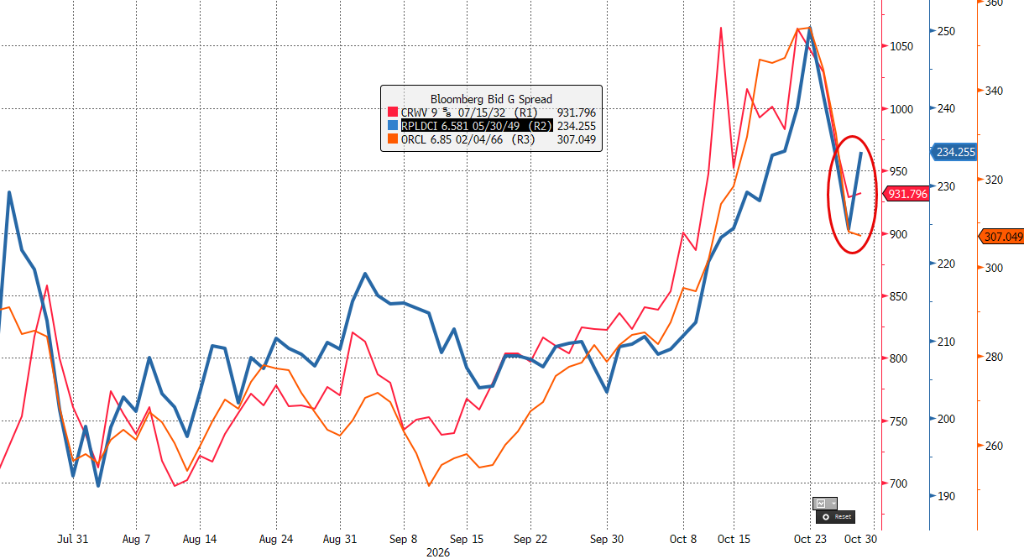
Gavan Nolan, Executive Director of Fixed Income Pricing at S&P Global Market Intelligence, stated that bond investors are closely watching when capital expenditures and AI revenues will turn into positive free cash flow, and that the story told by the credit market differs from that of equities.
European stock markets all advanced, with the UK's FTSE 100 rising 0.26% to 10,722.07 points, Germany's DAX gaining 1.31% to 26,039.68 points, and France's CAC 40 climbing 1.05% to 7,970.00 points.
The European Central Bank kept its deposit rate at 2.50%, its main refinancing rate at 2.65%, and its marginal lending rate at 2.90%, marking the first pause after consecutive rate hikes in June and September. President Lagarde announced that she will step down on February 7, 2027.
Diplomatic engagement and joint strategic petroleum reserves releases have suppressed oil prices, pushing WTI settlement down to $102.
The WTI crude oil December contract settled at $102.00, down 0.76%, with an intraday range of $99.84 to $102.98. Brent crude settled at $114.88, down 0.38%.
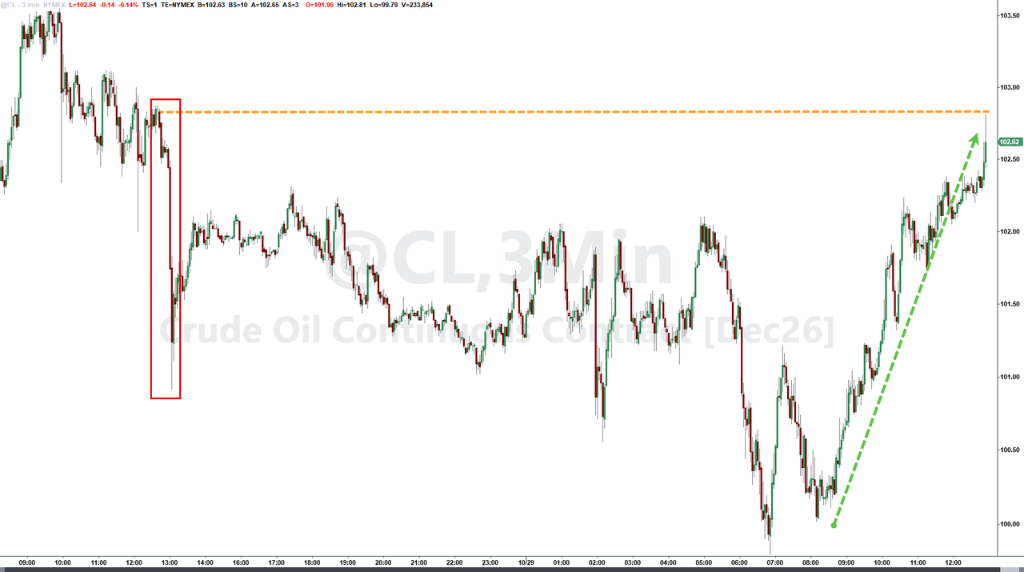
U.S. Vice President Harris sent a letter to Iranian National Security Council Secretary Rezaei in an effort to revive negotiations, while Qatar put forward a new proposal. Oil prices initially fell nearly 2% at the open, with WTI dipping below $100 during trading.
Twelve European countries have pledged to jointly release 42.6 million barrels of crude oil by the end of January, as part of a Group of Seven agreement. Iranian Parliament Speaker Mohammad Bagher Ghalibaf denied that negotiations had made progress, while Iran's Islamic Revolutionary Guard Corps stated that three oil tankers struck mines south of the Strait of Hormuz, prompting oil prices to recoup their earlier losses in the afternoon.
Rebecca Babin, a senior energy trader at the Canadian Imperial Bank of Commerce's Private Wealth Group, said that as long as there are signs of communication between senior officials on both sides, it could prompt some investors to take profits and eliminate part of the risk premium.
Rising inflation expectations have increased holding costs, sending gold down 1.02% and silver down more than 3%.
Spot gold traded at $4,025.92, down 1.02%, with an intraday low of $4,005.37, approaching the $4,000 mark. Spot silver was at $52.12, down 3.14%.
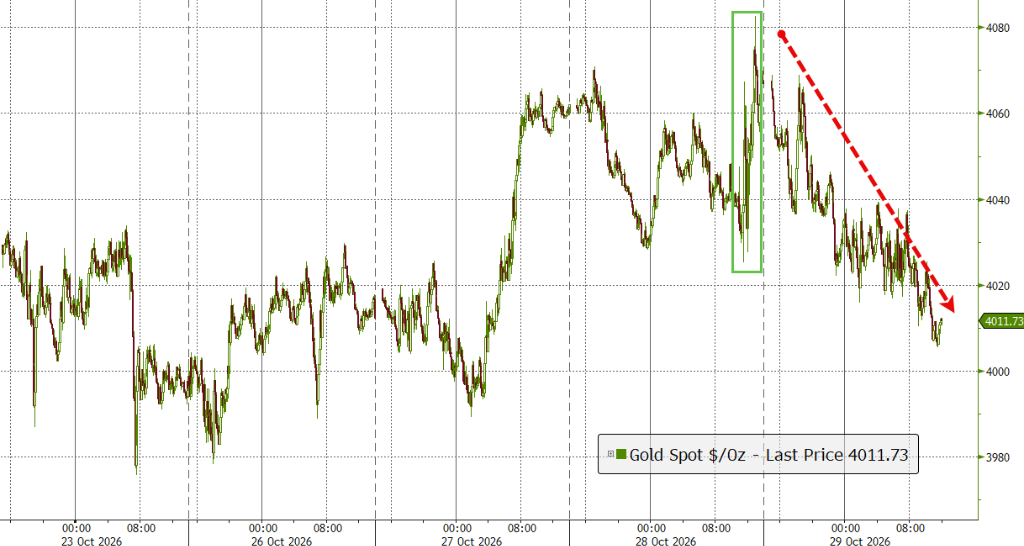
David Meger, head of trading at HighRidge Futures, said that persistently high inflation remains the biggest downward pressure on gold prices. With the 10-year U.S. Treasury yield hovering around 5%, the cost of holding non-yielding assets has risen.
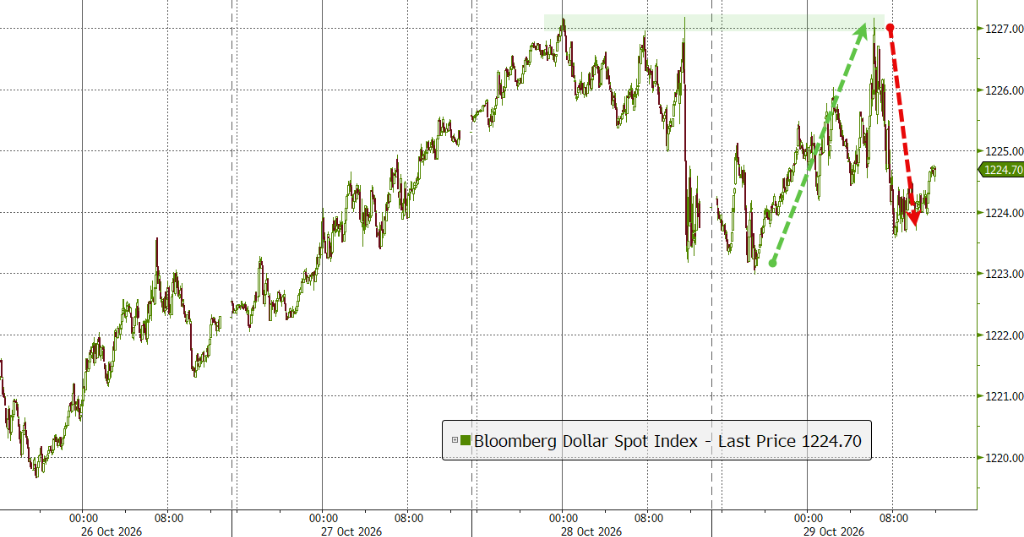
The U.S. dollar index closed at 102.037 in late trading, down 0.17%. The euro was quoted at 1.1162 against the dollar, and the dollar stood at 157.96 per yen. During the session, the euro fell as low as 1.11095, its lowest level since May 2025, before rebounding in late New York trading.
Bitcoin is trading near $80,700.
Market conditions can be highly volatile. Rather than rushing to sell once the trend becomes clear, it's better to prepare for both scenarios in advance. OCO (One Cancels the Other) orders let you place two linked orders simultaneously: when one is executed, the other is automatically canceled, giving you the flexibility to adapt to a wide range of market movements.

Editor/stephen