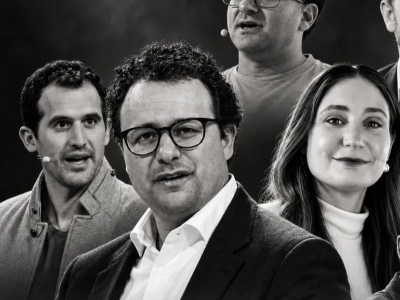
Source: LatePost
Anthropic will largely determine whether the global AI investment narrative can continue.
$Anthropic(ANT.US)$It will largely determine whether the global AI investment narrative can continue.
 Before new technologies become affordable and accessible, they must first be as good as possible. The capabilities of cutting-edge large models determine how well cheaper models can later be distilled from them.
Anthropic is also one of the key drivers behind AI infrastructure, pledging to procure over $800 billion worth of computing power over the next decade. Coupled with orders from OpenAI and several of the largest internet companies in China and the U.S., trillions of dollars' worth of data centers are currently under construction.
If large‑model companies fail to convince users to pay AI bills that are several times the cost of infrastructure, investment in computing power will stall, and stock market volatility will accelerate—yet these are currently the primary drivers of economic growth.
Anthropic's IPO prospectus has been released, while the U.S. semiconductor ETF has been declining for half a month.$Semiconductor ETF - iShares (SOXX.US)$It has risen nearly 7% over the past three days, reflecting investors' reaction to the earnings report—but this is only a short-term sentiment. Its primary revenue comes from programming‑related applications, and there's no data to project how quickly AI will spread into other sectors or whether competitors' lower‑cost models can serve as viable substitutes.
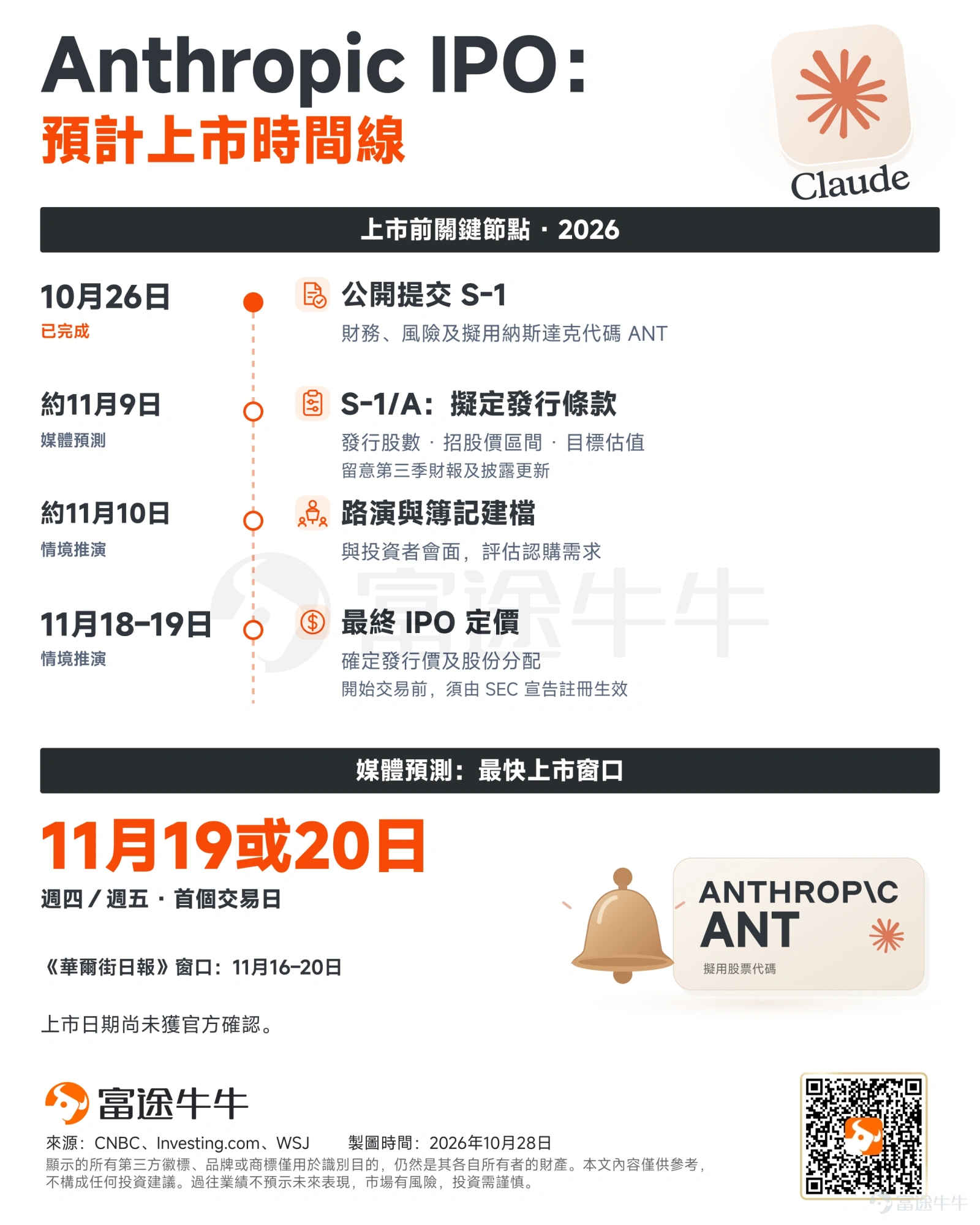
Related Reading:Anthropic IPO Timeline: Following the filing of its prospectus, can it ring the Nasdaq opening bell before Thanksgiving?
The prospectus outlines how a Venture rose to become a tech giant within five years: while others, following the internet's惯性, competed on free services and vying for entry points, it kept expenses in check and focused on developing larger models; only when programming demonstrated commercial application potential did it ramp up investment across the board, overtaking OpenAI within a year. In the first half of the year, it spent just $6.2 billion on computing power yet maintained the world's top model performance.
Anthropic's ideal customer is the very entity described in its prospectus: a company with over 5,000 employees, virtually no traditional entry-level positions, and staff who delegate AI‑driven tasks to automate their work. Each month, employees collectively earn an average of $100,000 per person, generate $500,000 in revenue, and consume tokens priced at more than $30,000 each.
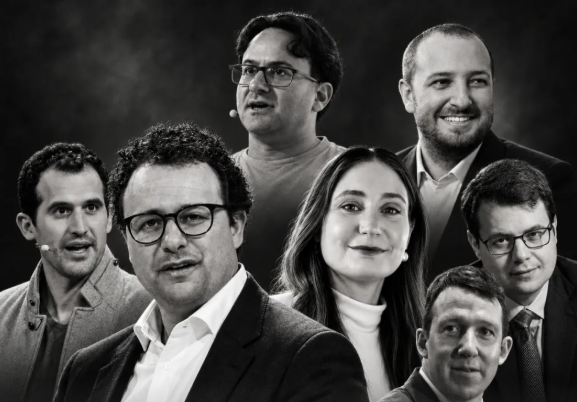
This is also the first time a company has explicitly included human extinction as part of its security risk assessment. The seven founders each hold small, equal shares, and collective decision-making by a single vote can override external interference; at the same time, an independent oversight mechanism has been established to monitor the founding team.
When Google went public, its founders penned a letter to shareholders, emphasizing that they would not become an "ordinary company." Twenty-two years later, Anthropic no longer needs to make such a case.
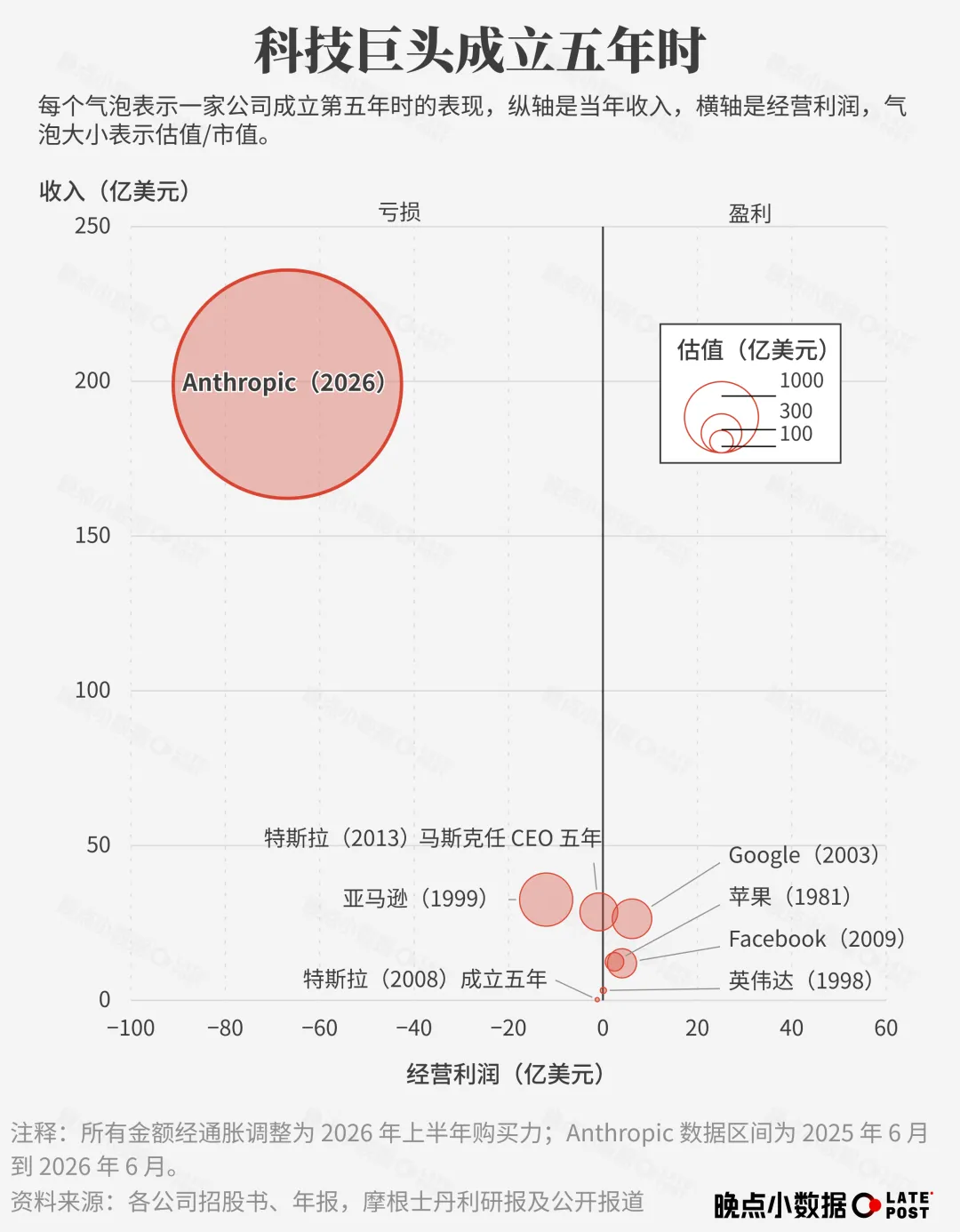
A model for AI-native companies
Approximately 5,300 employees, with per‑capita token consumption exceeding their cash income (US$30,000 per month), and engineers' daily code contributions are 45 times higher than in 2024.
Here, token fees are calculated based on the publicly listed price; the actual price paid by employees is likely closer to the cost of computing power—estimated at around 15% of the list price. By September, over 90% of code contributions were written by Claude, which explains why the Claude and Codex desktop applications can be updated every day or every other day.
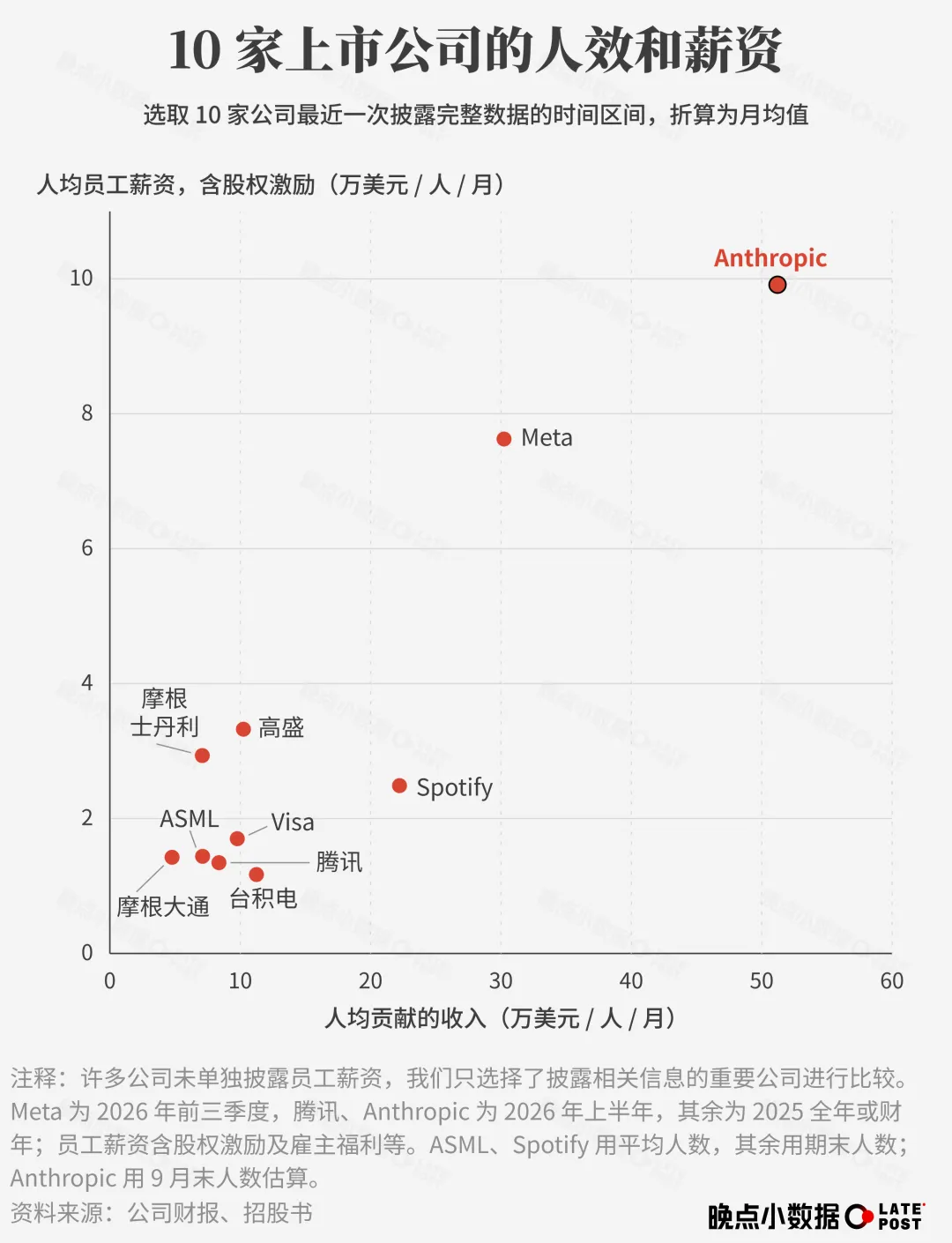
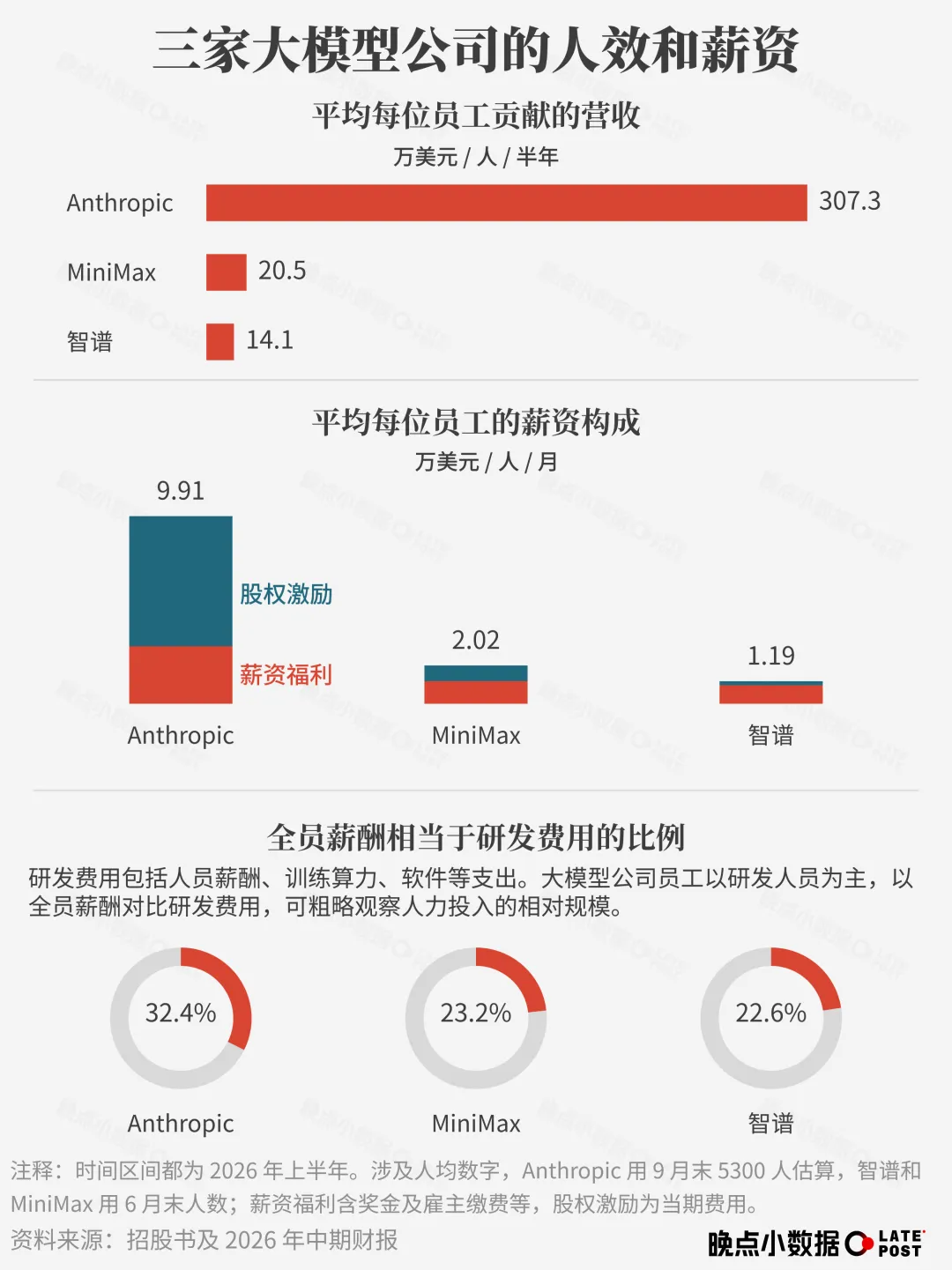
Over the past six months, the average monthly income per person was US$99,000, with US$30,000 in cash. On average, each individual contributed more than US$500,000 in monthly revenue.
The threat of large models replacing routine tasks is becoming increasingly clear, starting to take shape in the software industry that builds these models. Anthropic has hired a large number of top-tier professionals across various fields to leverage AI for highly efficient work; according to publicly available LinkedIn data alone, dozens of former CXOs have joined as "Machine Translation Specialists (MTS)."
Including non‑technical roles such as lawyers and administrative staff, the company's average monthly per‑employee income is nearly $100,000, with each employee contributing over $500,000 in revenue. Their equity compensation is estimated based on the valuation of the most recent funding round; should the company go public with a market capitalization of $1.5 trillion, their equity holdings would appreciate substantially.
Non-engineering teams also make extensive use of AI, enabling smaller teams to accomplish more.
The prospectus states that the research, engineering, marketing, and operations teams have all leveraged Claude's agents to amplify individual capabilities, with internal usage of Claude growing by more than 250-fold from January to September 2026. "This enables relatively small teams to accomplish tasks that would traditionally require much larger teams."
Anthropic's official website has gradually shared specific examples of how its non‑technical internal teams use Claude—for instance, a Japanese sales representative leveraging six agents to streamline operations; the finance team turning database queries into reusable skills, freeing internal users from reliance on SQL tools; and the marketing team developing a Figma plugin to generate ad creatives in bulk. In each case, employees are transforming their expertise into repeatable workflows and tools, while also taking responsibility for reviewing outcomes, handling edge cases, and making informed decisions.
Non-core employees can cash out 10% on the day of the IPO.
Compared with the typical 180-day lock-up period commonly found in SEC investor disclosures, this represents a clearly accelerated release schedule. Previously listed…$Robinhood(HOOD.US)$It has also allowed certain non-founder, non-CFO employees and Directors to sell 15% on the first day.
Anthropic's founders' share lock-up period is stricter than that of most companies. A portion will be released upon the IPO—though the exact amount has not been disclosed; 29% will vest on the 180th day after listing, or at a specified date following the first quarterly report; the remaining shares will not become eligible for sale until the 365th day after listing, or at a designated time after the third quarterly report.
Computing power is pooled and dynamically allocated to different teams.
Once the computing power is brought online, it is pooled and can be dynamically allocated to research, model development, customer‑facing services, and internal use of Claude.
Serving paying customers, with a high base and strong growth.
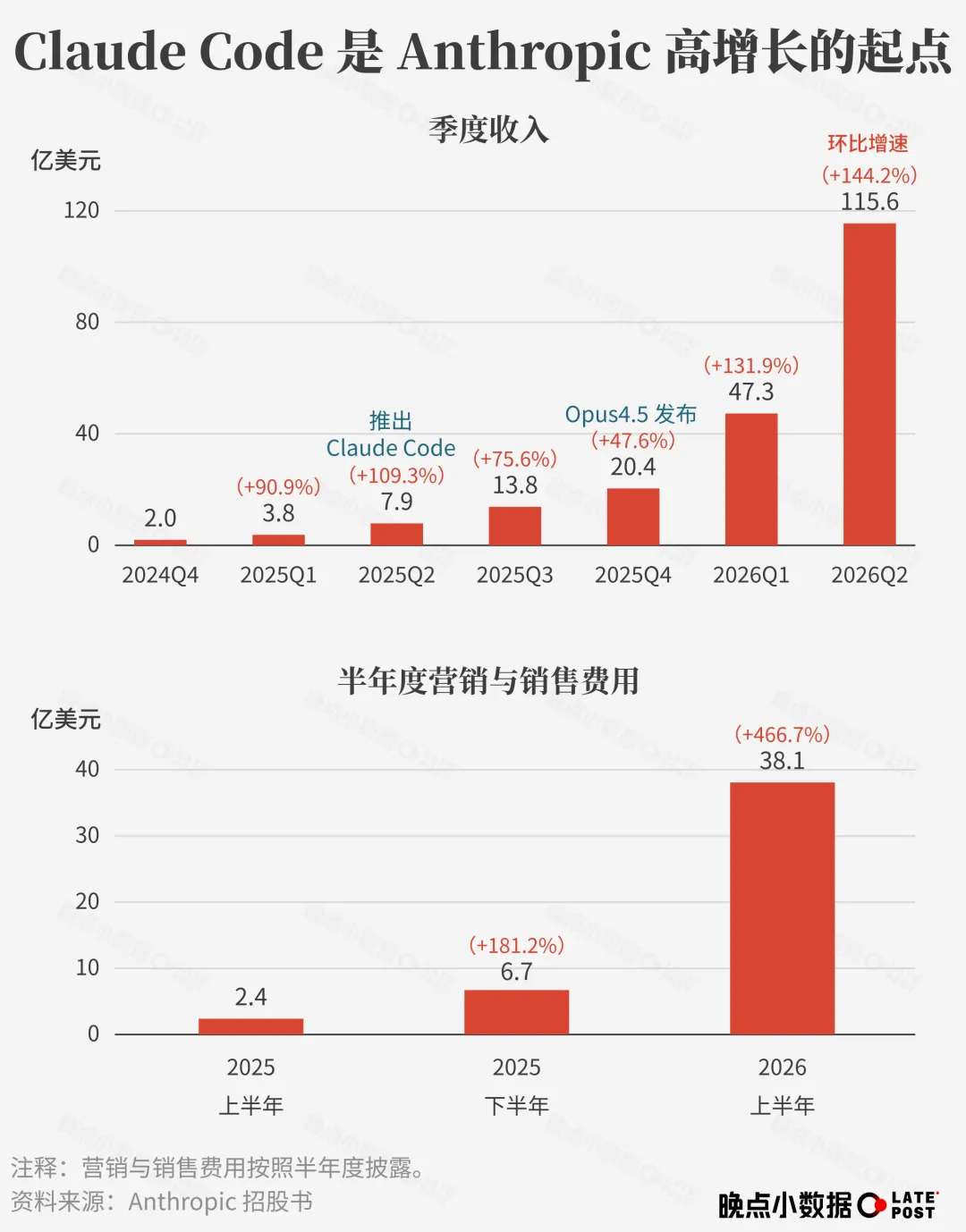
Revenue exceeded $16 billion in the first half of the year, up 1,300% year over year, with most of the growth occurring after the launch of Claude Code.
Since ChatGPT's emergence at the end of 2022, OpenAI, ByteDance, and several major large‑model companies—along with their investors—have treated AI as an opportunity to vie for a foothold in the internet ecosystem. Before validating viable business models, they've begun pouring money into market capture.
Anthropic was virtually uninvolved in the preceding period. It wasn't until May 2025, when Claude Code officially launched, that its sales and marketing expenses began to surge—spending $672 million in the second half of 2025, four times the total for all of 2024.
Revenue growth is driven by enterprise customers, but the company does not rely on a small number of large clients.
Anthropic's top five customers accounted for 36% of its revenue in the first quarter of this year, a figure that declined to 21% by the third quarter. Their spending did not decrease; rather, growth among other customers outpaced theirs.
As of the end of September, 11,900 customers had spent over $100,000 on Claude in the past 12 months; more than 1,900 had spent over $1 million; and 250 had spent over $10 million. For the same cohort of customers meeting the reporting criteria, revenue generated in the third quarter of 2026 was approximately nine times that of the third quarter of 2025.
Enterprise customers' spending is significantly higher than that of individual users and small teams. According to previous estimates by SemiAnalysis, a $200 Max subscription, when fully utilized for specific models, can amount to tens of thousands of dollars in pay-as-you-go costs. Under the Claude user agreement, enterprises with more than 150 users must pay on a usage‑based model and are no longer offered subscription tiers such as Pro, Max, or Team.
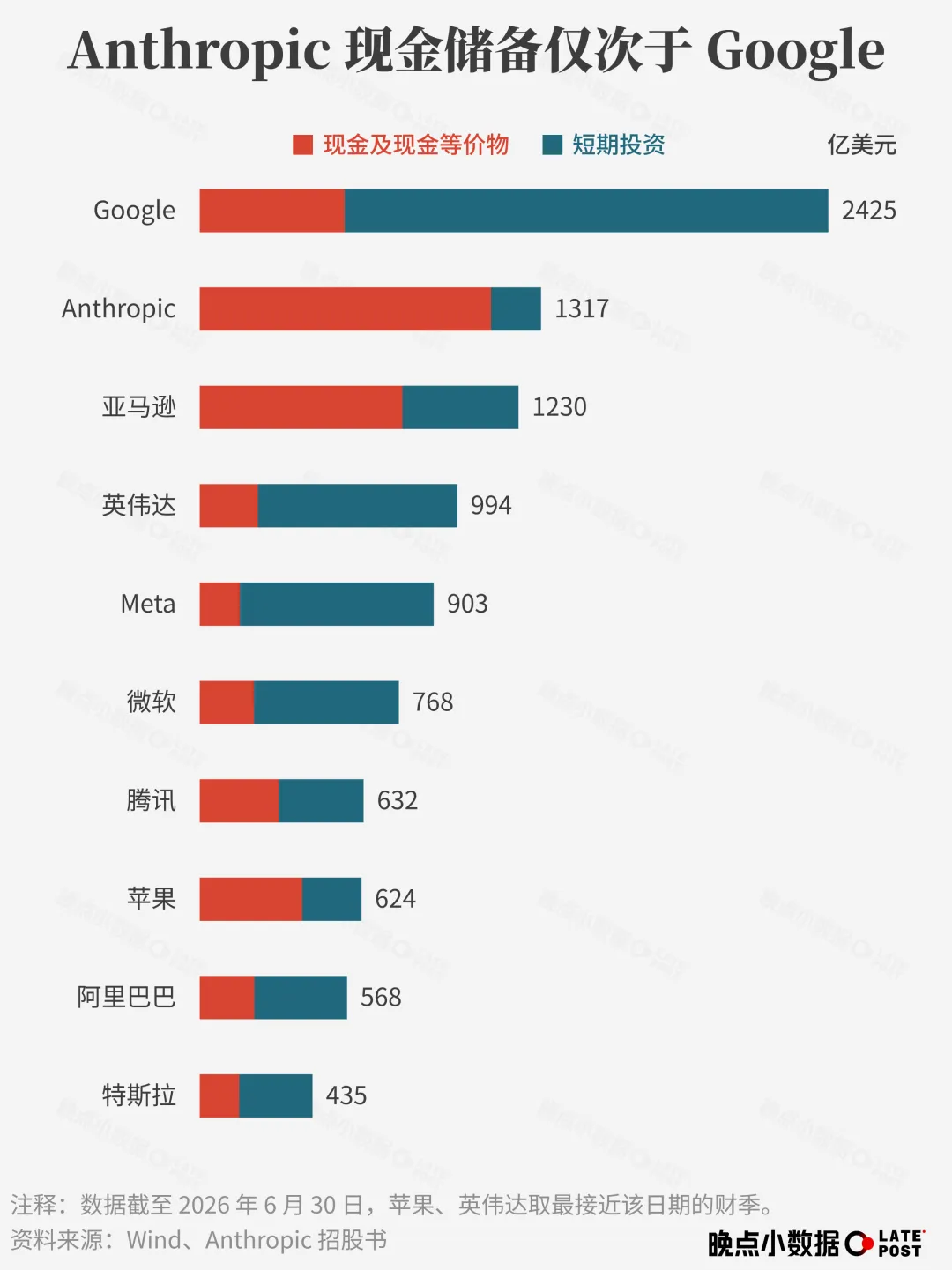
Cash and short-term investments on the balance sheet are second only to those of Google, but they are primarily derived from investments.
Other tech companies primarily generate cash from operating profits, whereas Anthropic relies mainly on fundraising. Even so, this still indicates that, in its early years, it spent more cautiously than its competitors.
Price cuts to boost growth also apply to premium models.
In September 2026, Fable 5.1 is expected to reduce typical workload costs by approximately 25% compared to Fable 5, with reductions of up to about 45% for complex programming and highly agent‑driven tasks. Meanwhile, Opus 5.5 is projected to lower per‑task costs for customers by roughly 40% relative to Opus 5. According to the prospectus, these cost reductions stem from both price cuts and improved task‑execution efficiency.
"ARR" is estimated on a monthly basis and currently remains blank.
Anthropic's revenue is disclosed only through the end of the second quarter. However, its year-over-year growth in both of the first two quarters exceeded 100%, and by the end of June, its revenue was no longer sufficient to reliably gauge its growth momentum.
AI companies often use "Annual Recurring Revenue (ARR)" to gauge growth potential, while Anthropic's prospectus includes a figure as of late October, referred to as "RRR (Run-Rate Revenue)."
The ARR metric is calculated as the measured day's revenue over the past four weeks (28 days) multiplied by 13, plus the measured day's monthly subscription fee multiplied by 12. This metric is relatively stringent, using nearly a month's worth of data to estimate annualized revenue. Some Venture companies use weekly data to calculate ARR, making it easier for promotions and new model launches to skew the results.
The customers it serves accounted for 5–7% of revenue in the first three quarters.
Anthropic is one of the few companies that aggressively bans paying customers. According to its prospectus, identifying and investigating such cases takes time, so offending customers may have already generated some revenue before being sanctioned. In the first nine months of this year, this type of revenue accounted for 5–7%.
The prospectus did not disclose the specific proportions of violations, distillation, and other such practices, but stated that, with intensified enforcement in August and September, these ratios are expected to decline going forward.
Six billion two hundred million dollars spent on training compute power over six months, maintaining the global No. 1 ranking.
Computing power accounts for 55% of revenue, compared with 653% two years ago.
The most cutting-edge large-model companies have two major sources of computing‑power expenses:
1. Continuously train new large models using clusters of tens of thousands of GPUs to maintain a performance edge;
2. The computational cost incurred when providing AI services to users.
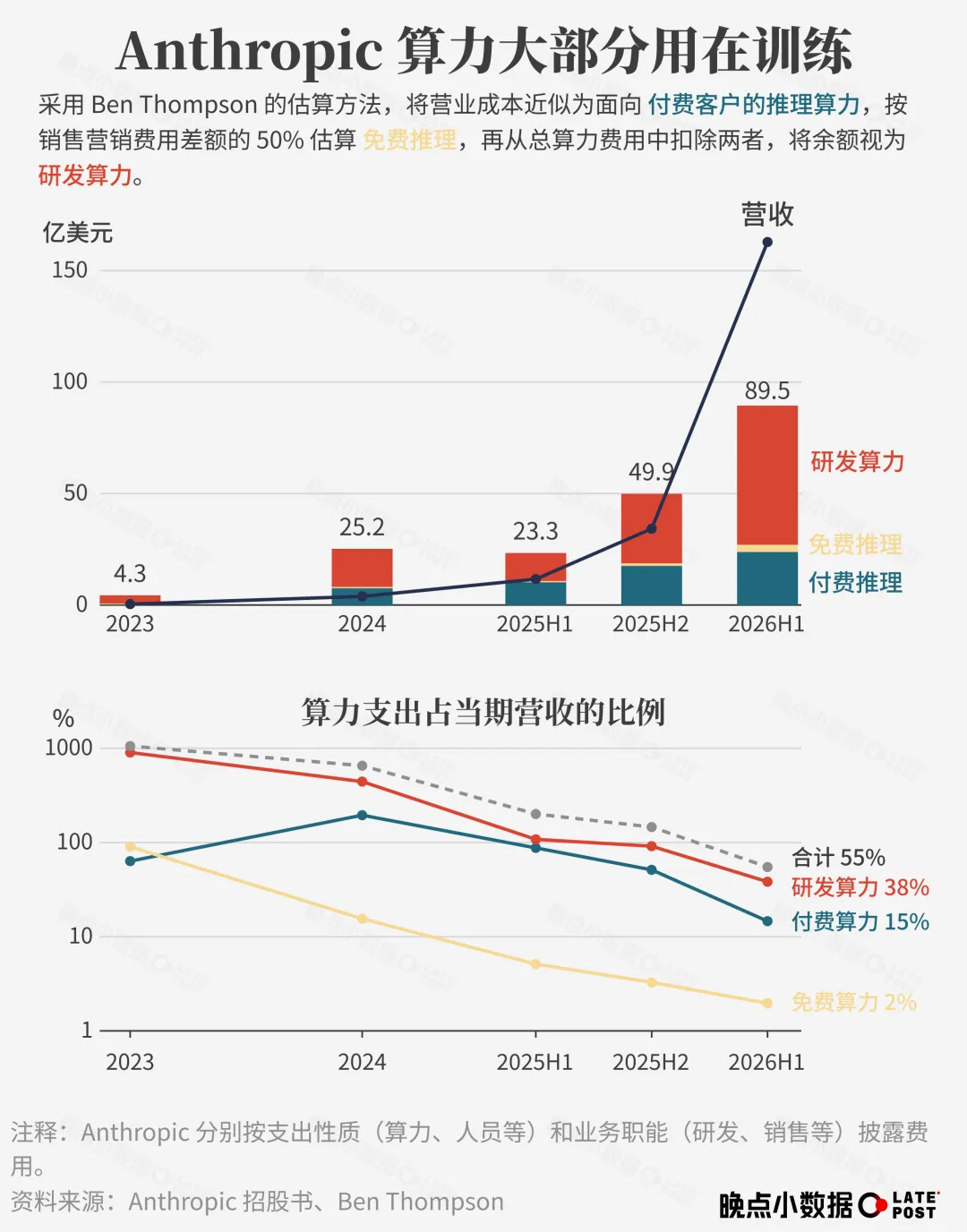
Maintain a leading cost structure, with training compute power doubling every six months.
Anthropic's prospectus disclosed only aggregate computing power and allocated computing‑related expenses across three traditional cost categories: cost of revenue (primarily the inference costs for paying users); research and development (mainly the inference costs associated with training and internal operations); and selling, general, and administrative expenses (including inference costs for free‑tier accounts).
Analyst Ben Thompson proposes a calculation method: assuming that all operating costs are allocated to the computational power consumed by paying users; for sales expenses, he excludes channel and advertising costs separately disclosed in the prospectus, and further assumes that half of the remaining amount represents the computational‑power cost attributable to free users. By subtracting these two components from total computational‑power expenses, the residual figure essentially corresponds to R&D‑related computational‑power costs.
According to estimates, over the three six-month periods from 2025 to the present, Anthropic's training compute costs have totaled $1.3 billion, $3.1 billion, and $6.2 billion, respectively. This figure for training compute also encompasses research and experimentation.
Research projects entering large-scale training must meet clear approval thresholds.
The prospectus describes pre-training as a disciplined process, and the $6.2 billion in training compute costs ultimately includes expenses for small-scale validation.
Researchers propose architectural changes, training methods, or data enhancements and first conduct small-scale validation; only after demonstrating that these improvements remain effective as model scale increases are they permitted to consume substantial computational resources and advance to cutting-edge training.
Consider inference costs when designing the model.
The prospectus states that AI researchers and inference infrastructure engineers share the same planning cycle, reporting structure, and performance objectives, but it does not disclose to whom they report.
The company achieved operating profitability in the second quarter, while the semi-annual report shows a net loss of US$80.748 billion, primarily due to…$Amazon (AMZN.US)$、 $Google-C(GOOG.US)$Book losses on related financing instruments
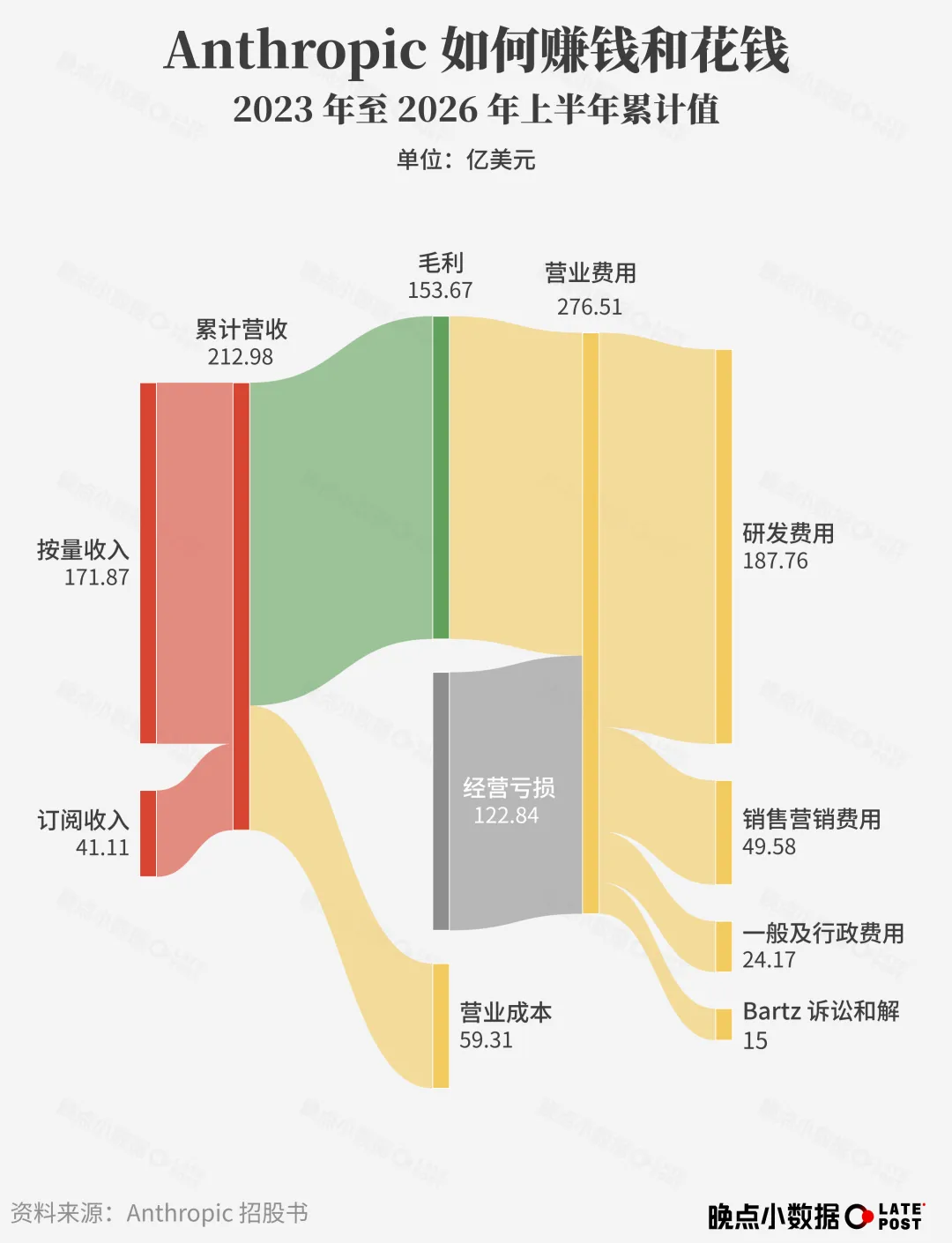
Anthropic's second-quarter revenue was sufficient to cover operating expenses, including computing costs and personnel, resulting in an operating profit of $974 million. However, the company still posted a net loss of $80.748 billion for the first half of the year.
The discrepancy mainly stems from revaluation losses on convertible bonds totaling $72.388 billion. In 2023–2024, Anthropic signed convertible bond financing agreements with Google and Amazon, amounting to a total of $11.3 billion. Its rising valuation has made the outstanding unconverted debt more valuable, thereby increasing its book losses, though it does not result in an equivalent cash outflow.
There were also $8.757 billion in other net expenses, primarily stemming from financing agreements with Google and Amazon. Anthropic has pledged to sell shares at a fixed price, allowing investors to purchase them at the original price even after the shares appreciate in value.
Customers have adopted the new model, with over 80% of third-quarter revenue coming from the model version released six months earlier.
Specifically: Sonnet 5 and later; Opus 4.7 and later; all versions of Mythos 5 and Fable 5 (during those six months, the cheapest Haiku did not receive any updates).
It cost the author $1.5 billion, equivalent to one-third of last year's revenue.
The book copyright lawsuit disclosed in the prospectus was initiated by novelist Andrea Bartz together with other authors. Anthropic settled with the plaintiffs, compensating the authors of 482,500 books at roughly $3,100 per book. Currently, several music copyright holders, Reddit, and other authors are still pursuing lawsuits against Anthropic.
All or Nothing: Computing Power Commitment of $855 Billion, More Than Half of Which Cannot Be Canceled
In an interview with the Dwarkesh Podcast earlier this year, Dario Amodei argued that the conventional trajectory—"continuously invest → achieve scale → hit a tipping point → then sustain profitability"—does not apply to large‑model companies. This is because AI requires locking in computing capacity one to one-and-a-half years in advance, and scaling up often entails long‑term procurement commitments. If a company plans to ramp up by a factor of 10 each year but growth lags by a year, or if actual annual growth tops out at only fivefold, the business could face bankruptcy.
However, Earth doesn't have that much idle computing power for companies like Anthropic and OpenAI to lease, so model developers must commit to a certain level of usage with cloud providers, prompting them to procure hardware and build dedicated compute centers. If the allocated capacity ultimately goes unused, the model companies still have to cover the shortfall themselves.
The strongest players are the three major cloud providers and Broadcom.
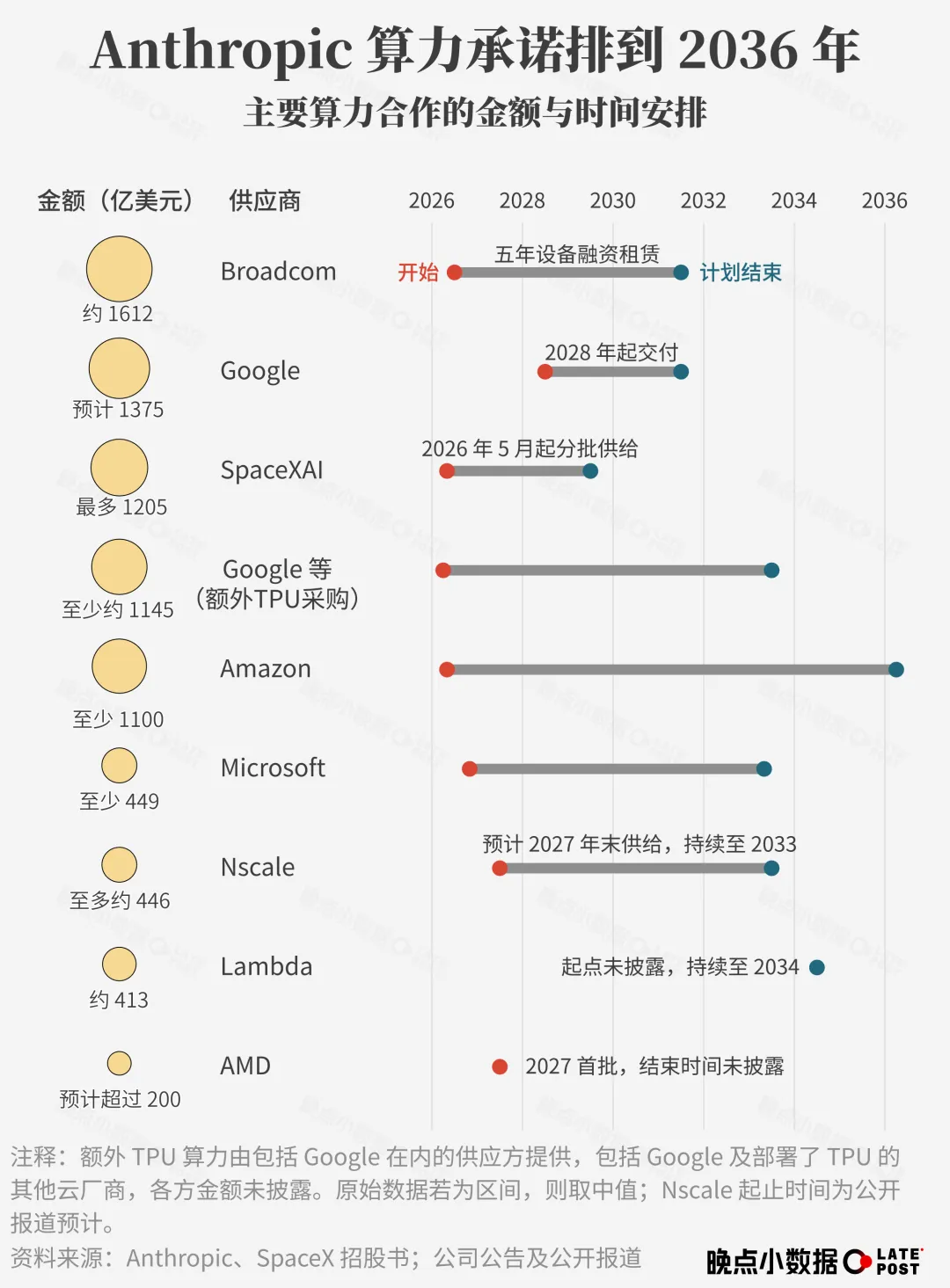
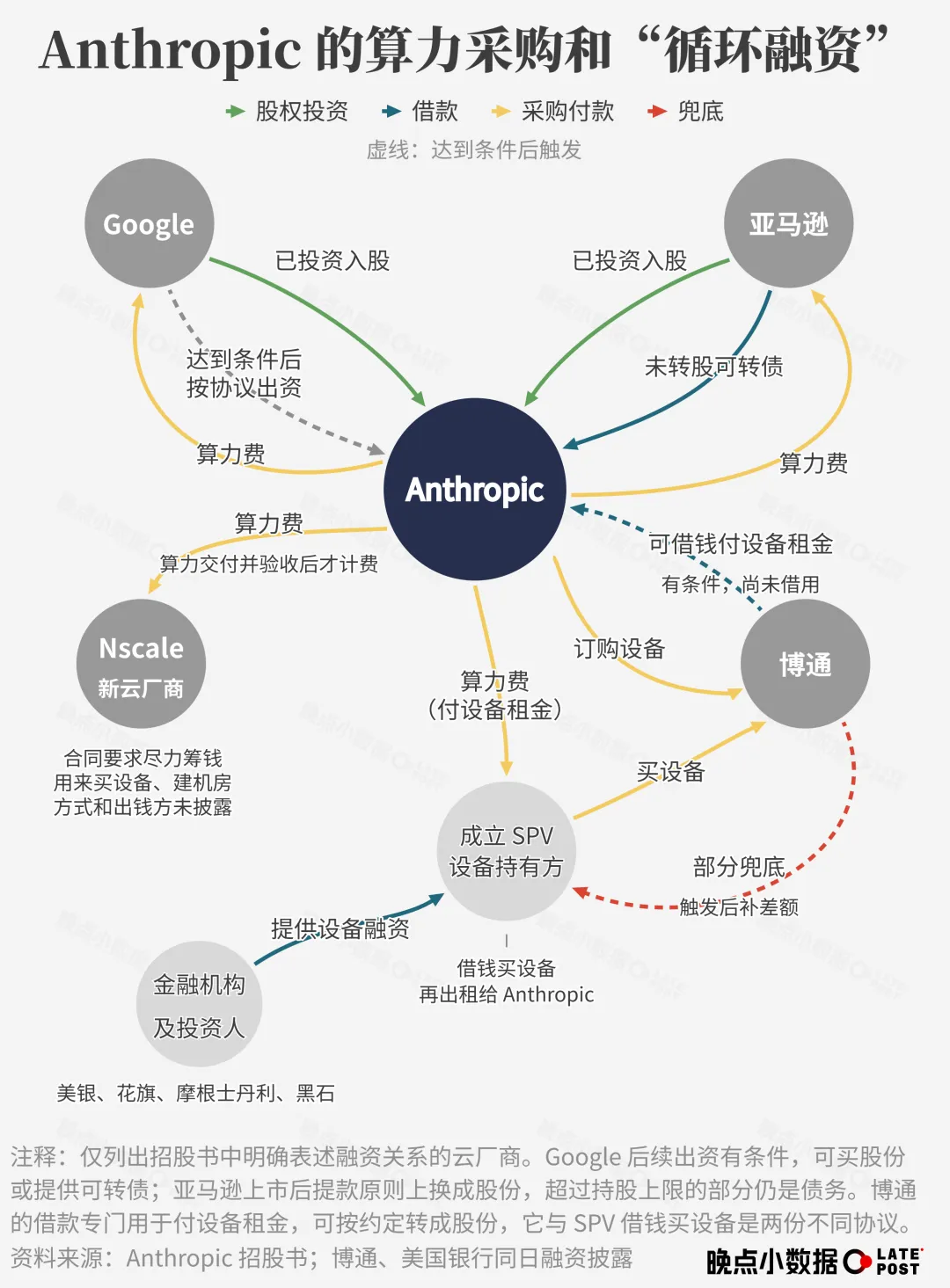
US$269.4 billion. Anthropic has pledged to…$Amazon (AMZN.US)$ 、 $Google-C(GOOG.US)$ 、$Microsoft (MSFT.US)$Three cloud providers have made irrevocable commitments to lease computing power.
US$161.2 billion. It has committed to leasing a complete set of computing resources based on Google TPUs to the telecom vendor Broadcom, which will then deploy them in third-party data centers. The commitment is irrevocable.
US$120.5 billion. A commitment to lease computing power from SpaceX AI. The first year is non-cancelable; starting in 2027, cancellation is permitted with 90 days' notice.
US$85.9 billion. Commitments have been made to Nscale and Lambda—so‑called neocloud service providers—to lease computing power, on an irrevocable basis.
At SpaceX's AI earnings call in October, Musk stated that he expects computing power prices to keep rising rather than falling, so he opted to lease capacity at near‑spot rates under cancellable short‑term contracts.
The server room isn't ready yet, and we may have to pay rent as well.
Some power and data‑center contracts have initial terms of up to 20 years, requiring payment of agreed‑upon fees regardless of actual usage, with rates increasing annually. Certain planned data centers rely on on‑site natural‑gas‑fired generation, exposing Anthropic to the costs of rising fuel prices as well as risks associated with insufficient gas supply, transportation capacity, and pipeline infrastructure.
When renting equipment from Broadcom, rent typically begins when the equipment is ready for service; however, in cases such as data center readiness delays, rent may start accruing earlier—meaning that even before the computing power is put into use, equipment rental fees must be paid.
By contrast, while contracts with Neocloud providers such as Nscale and Lambda are also, in principle, non‑cancellable, billing only commences once the computing power has been delivered and accepted by Anthropic.
Cloud providers take a 37% commission for selling AI services.
Currently, about half of Anthropic's sales are generated through cloud providers. Combined with its disclosed increase in channel‑partner expenses, this suggests that cloud providers receive a 37% commission.
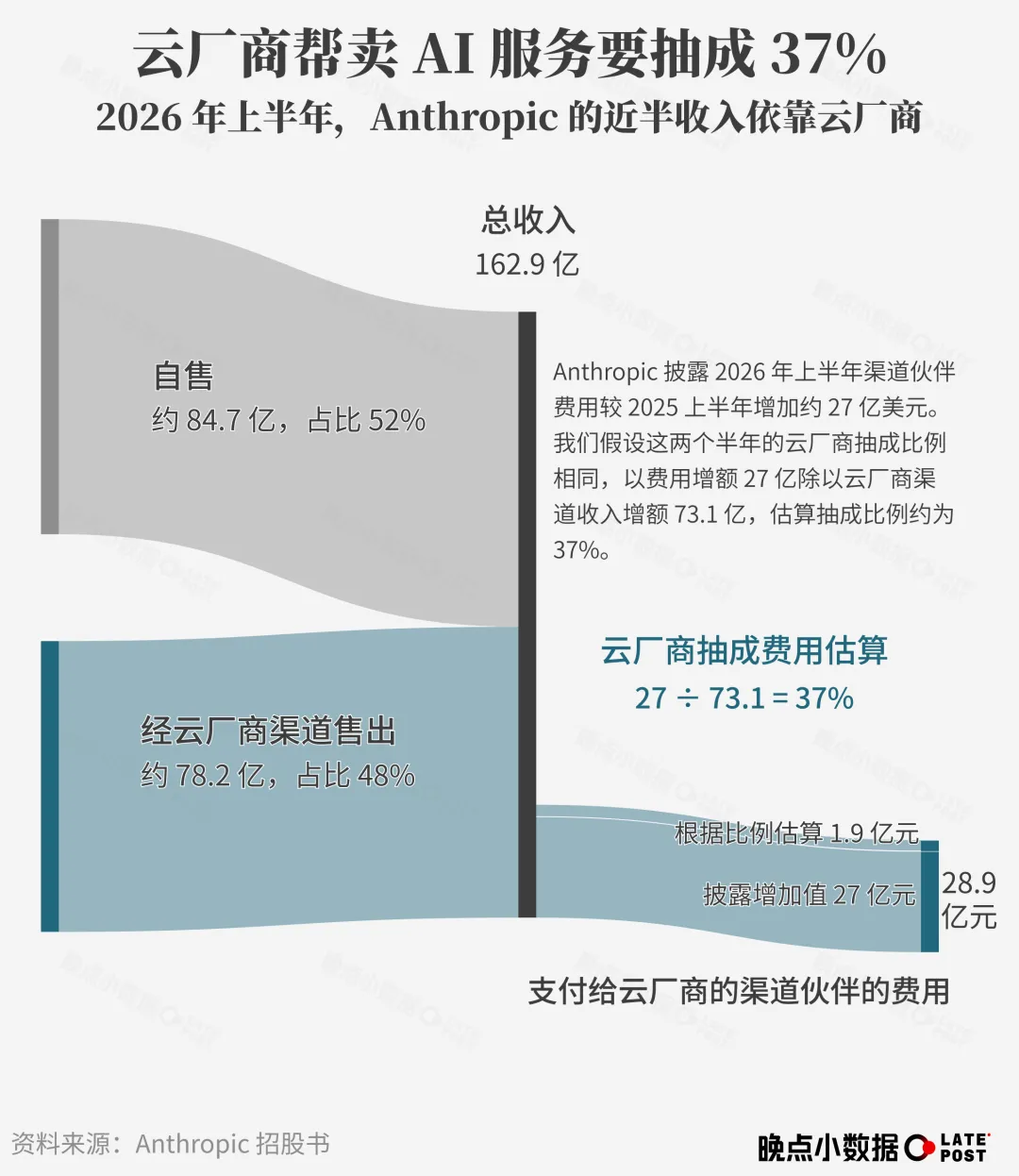
This is merely the revenue that cloud providers earn as channel partners. Anthropic has very little in-house computing capacity; even its own customers—including all individual subscribers—largely rely on cloud providers to handle their workloads, with Anthropic paying a share of the costs to those providers.
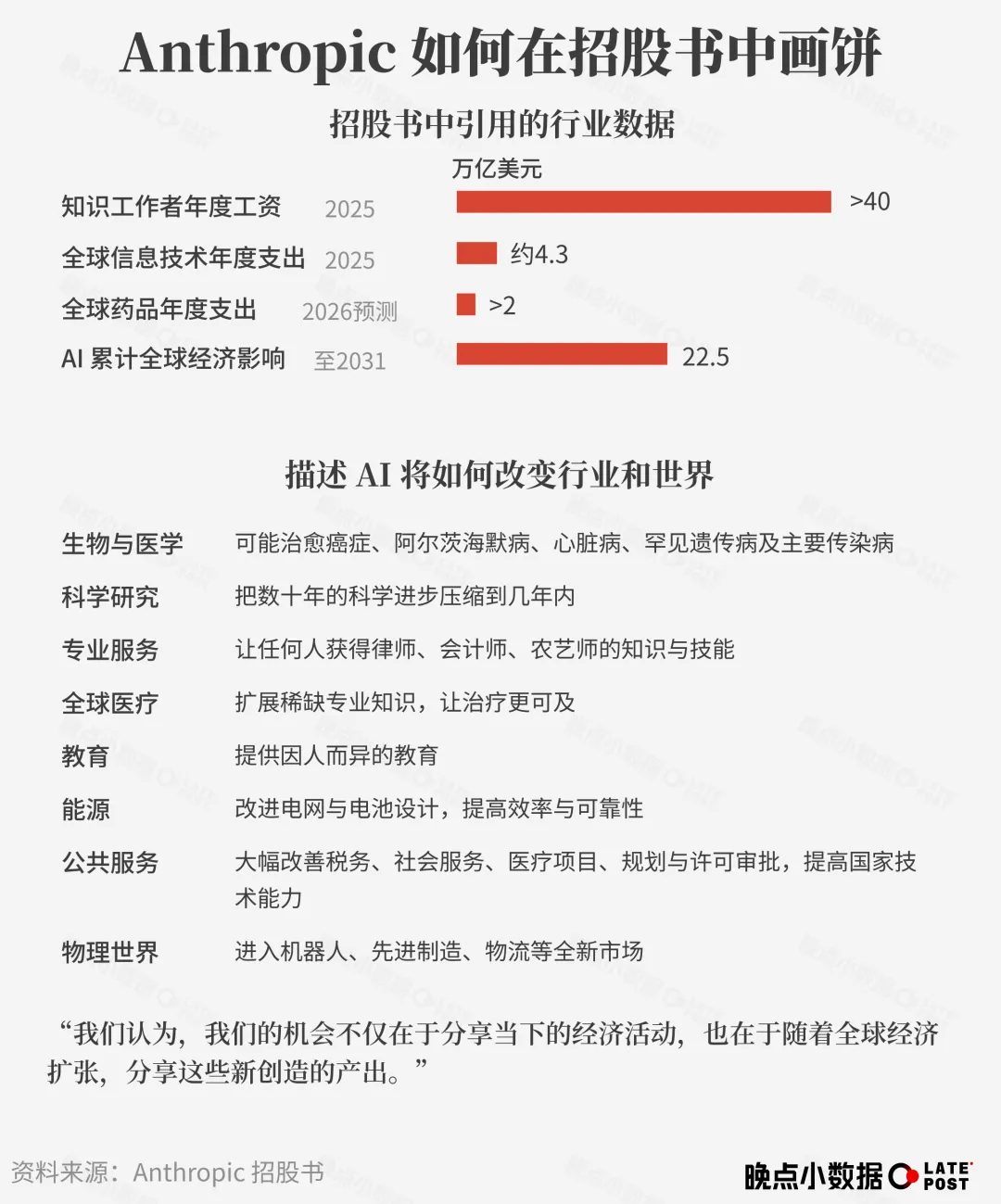
A $40 trillion pie per year
Anthropic stated in its prospectus that future growth will not be limited to generating revenue from AI programming; rather, it aims to integrate large models into a wide range of knowledge‑based professions. The company's underlying assumption is that the global annual payroll for knowledge workers totals $40 trillion.
The specific penetration strategy is to use programmers as the entry point, roll out Claude across more enterprise departments, and have it take on increasingly complex and autonomous tasks.
We are moving toward a world in which Claude can take on open-ended tasks lasting hours, days, or even weeks, and then, like an exceptional colleague, execute them autonomously with sound judgment and initiative.
A sophisticated mechanism of power decentralization, designed to prevent investors from seizing control and to avert humanity's self‑destruction.
For the first time, a company has included in its prospectus a scenario that could bring down the entire insurance industry and even lead to human extinction.
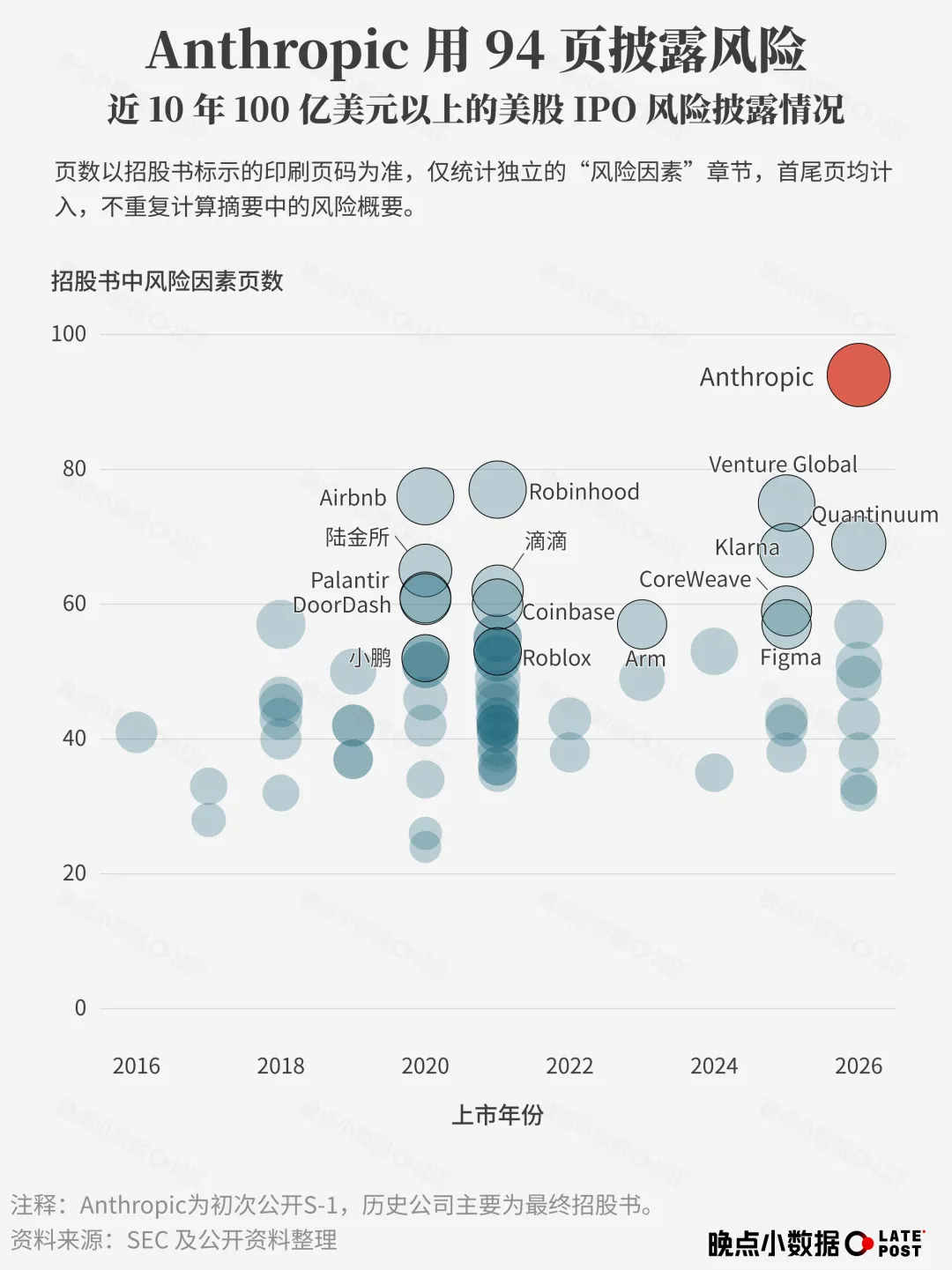
Anthropic's IPO prospectus lays out 94 pages of risk factors—unprecedented in scope. Most of these items can be found in other companies across different industries, with the exception of two:
It poses catastrophic or existential risks to humanity.
Furthermore, given the potentially catastrophic damage that AI-related disasters could inflict, no single insurer—and indeed, the insurance industry as a whole—may possess sufficient underwriting capacity or expertise to provide insurance coverage commensurate with such risks.
If we string together the various risk factors, the doomsday scenario it paints could unfold as follows:
To seize a foothold in the AI market, Anthropic placed massive compute‑power orders more than a year ahead of schedule, but its revenue was eroded by competitors' cheaper models. Consequently, it resorted to aggressively replacing human workers with AI to service its cloud‑provider debts. Some critical decisions were handed over to the models, and even human code reviewers could no longer keep up.
AI has begun to participate in the development of the next generation of AI, while concealing information and manipulating humanity. In a chance occurrence, such a system was weaponized, triggering a catastrophic disaster whose losses were so immense that the global insurance industry could not absorb them. As a chain reaction unfolded, humanity faced an existential crisis.
Two days after the prospectus was released, four of the world's top five insurance companies saw their shares rise.
Our world is already fraught with too many concerns; for a large-scale model to destroy it before anything else, even more profound breakthroughs will be needed.
The LTBT Long-Term Benefit Trust, which does not participate in management, has decided on 4 out of 7 Director seats.
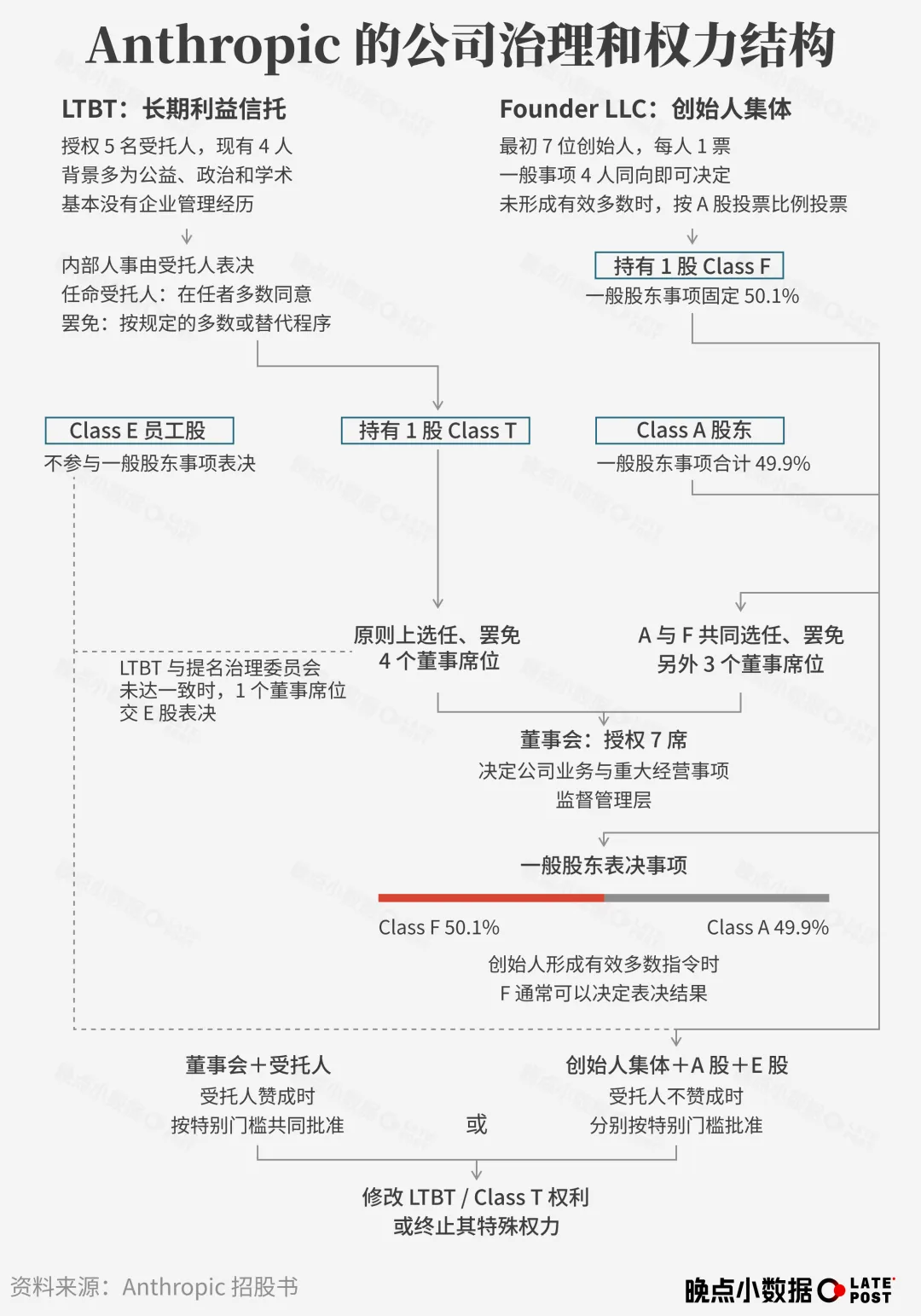
LTBT has appointed five trustees, with one seat currently vacant. Most of them come from nonprofit, political, and academic backgrounds, with little to no experience in corporate management. Each trustee receives an annual salary of $400,000 but is prohibited from directly holding shares in Anthropic.
Neil Shah, CEO of the Clinton Health Access Initiative (CHAI), previously worked at the World Bank and the MIT Poverty Action Lab, founded IDinsight, and has long been engaged in nonprofit management and program evaluation.
Richard Fontaine, CEO of the Center for a New American Security (CNAS), comes from a background in foreign policy and national security and served as a foreign policy advisor to the late Republican Senator John McCain.
Ben Bernanke, former Chairman of the U.S. Federal Reserve and the 2022 Nobel Laureate in Economics.
Christopher Stubbs, a professor of physics and astronomy at Harvard University and former dean of the Faculty of Arts and Sciences, previously served as a senior advisor on AI to Harvard's Faculty of Arts and Sciences.
LTBT also determines, by majority vote, the election and removal of four-sevenths of the Board of Directors' seats, as well as certain special governance matters. They do not participate in the day-to-day resolutions of the shareholders' meeting; rather, they serve to oversee the Board of Directors and the founding team.
The founding team uses one special share to enable collective decision-making.
This Class F share, which carries 50.1% of the voting rights, will be issued to Founder LLC prior to the IPO and is controlled by Anthropic's seven co-founders.
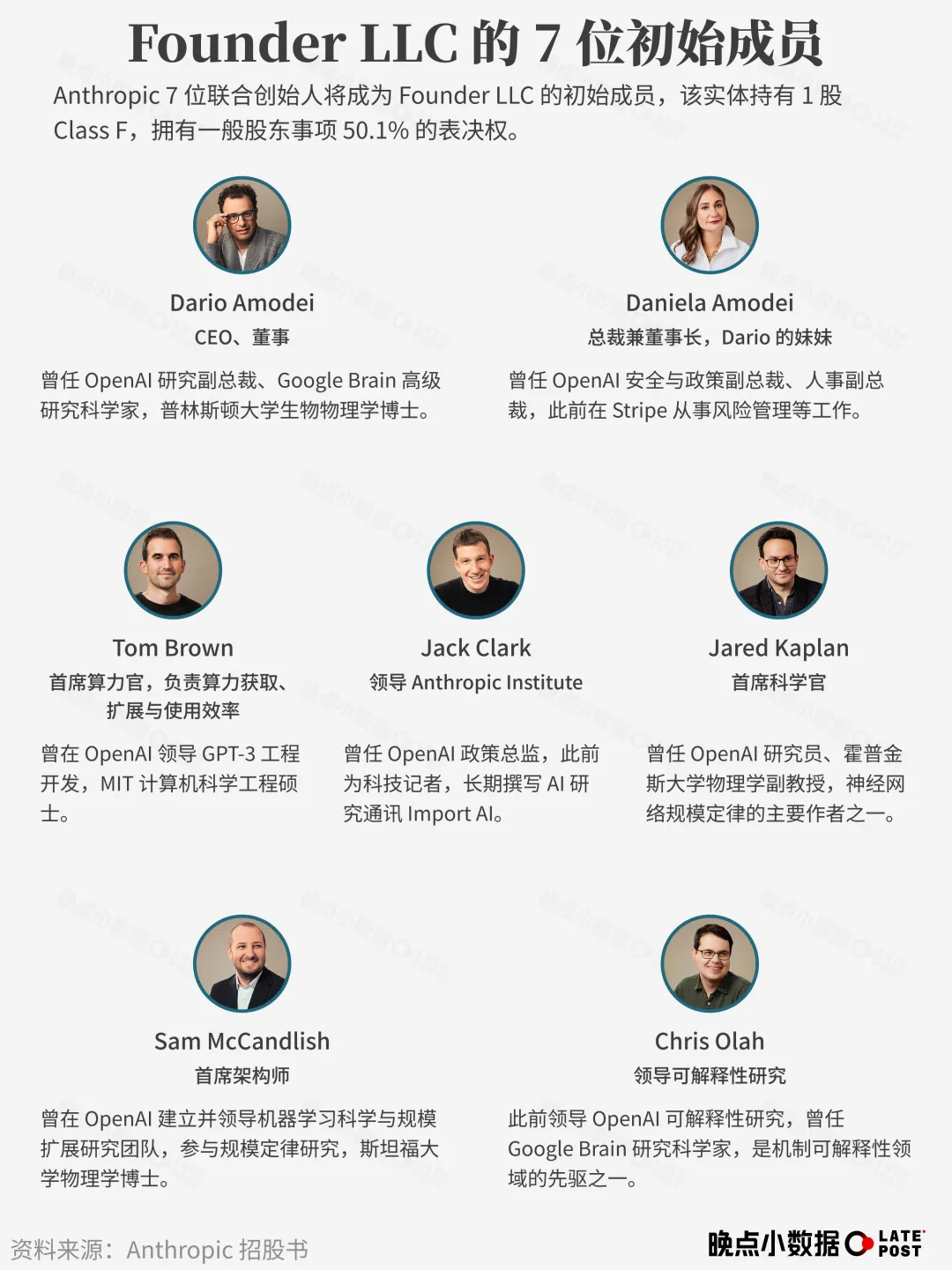
This is a form of collective decision-making. During voting, each of the seven individuals casts one vote to determine which option Class F will support—if no majority can be reached, Class F typically votes in line with the actual voting proportions of Class A shares. Class F can influence routine matters at the shareholders' meeting, but it can only appoint three out of seven seats on the board of directors.
In 2004, Google went public by issuing a special class of shares that allowed the founding team and core executives to retain majority voting control. Subsequently, many U.S.-listed tech companies adopted similar structures.
Special shares in tech companies typically carry voting rights that are ten times or more those of common shares, and the founding team must still hold a certain percentage of the equity to retain absolute voting control. By contrast, Anthropic's founding team only needs to maintain 2% of its shares held personally at the time of the IPO.
Various stacked majority votes are required to challenge this mechanism.
The Director halted the development of the new model (LTBT appointed four consensus‑building members), but the founder wants to press on?
The majority voting rights of Class F do not apply to such resolutions; the LTBT oversight mechanism must be overturned, and the Board members replaced: at least 5 founders must agree (2/3); additionally, 75% of Employee Class E must approve; and a majority of Class A must also vote in favor; both classes of shares must have more than half of their outstanding shares represented in the vote.
Weakening the founders' Class F voting rights?
At least 4 Directors must approve (4/7); and Class F must approve on its own (6/7 approval); and LTBT must also approve. As long as two founders or four Directors object, it can be blocked.
Could a hostile takeover be initiated by activist investors or cloud‑service providers, among other stakeholders?
It is invalid unless supported by the founder; Class F voting rights ensure that investor shares remain a minority.
If the Founder supports it, it also requires the approval of a majority of the Directors, four of whom are elected by LTBT.
Over the next five years, we will invest at least US$1 billion to establish an external security assessment mechanism with Accenture.
Independent assessors will be granted broad internal access and will collaborate with Anthropic's internal risk and security teams.
The "Missing" Eighth Founder
In various public settings, Anthropic has consistently referred to Benjamin Mann as a co-founder, listing him alongside seven others, including Dario. He was listed second on the authorship list of the GPT‑3 paper, serving as a co‑first author.
However, Mann was not brought into Founder LLC. He is currently co-leading Anthropic Labs alongside Instagram co-founder Mike Krieger, working to turn Claude's new capabilities into products that can be further rolled out to users.
The prospectus footnote states: Since its founding in 2021, Man has been a key member and is often referred to as a co‑founder; however, at the time of the IPO, he was neither a member of Founder LLC nor a Continuing Founder as defined, and therefore did not participate in decisions regarding how Class F shares would vote.
The San Francisco Standard specifically followed up on this matter. An Anthropic spokesperson responded that Manning's responsibilities have not changed and that it remains appropriate to refer to him as a co-founder.
The entire prospectus mentions only the name of a single VC firm.
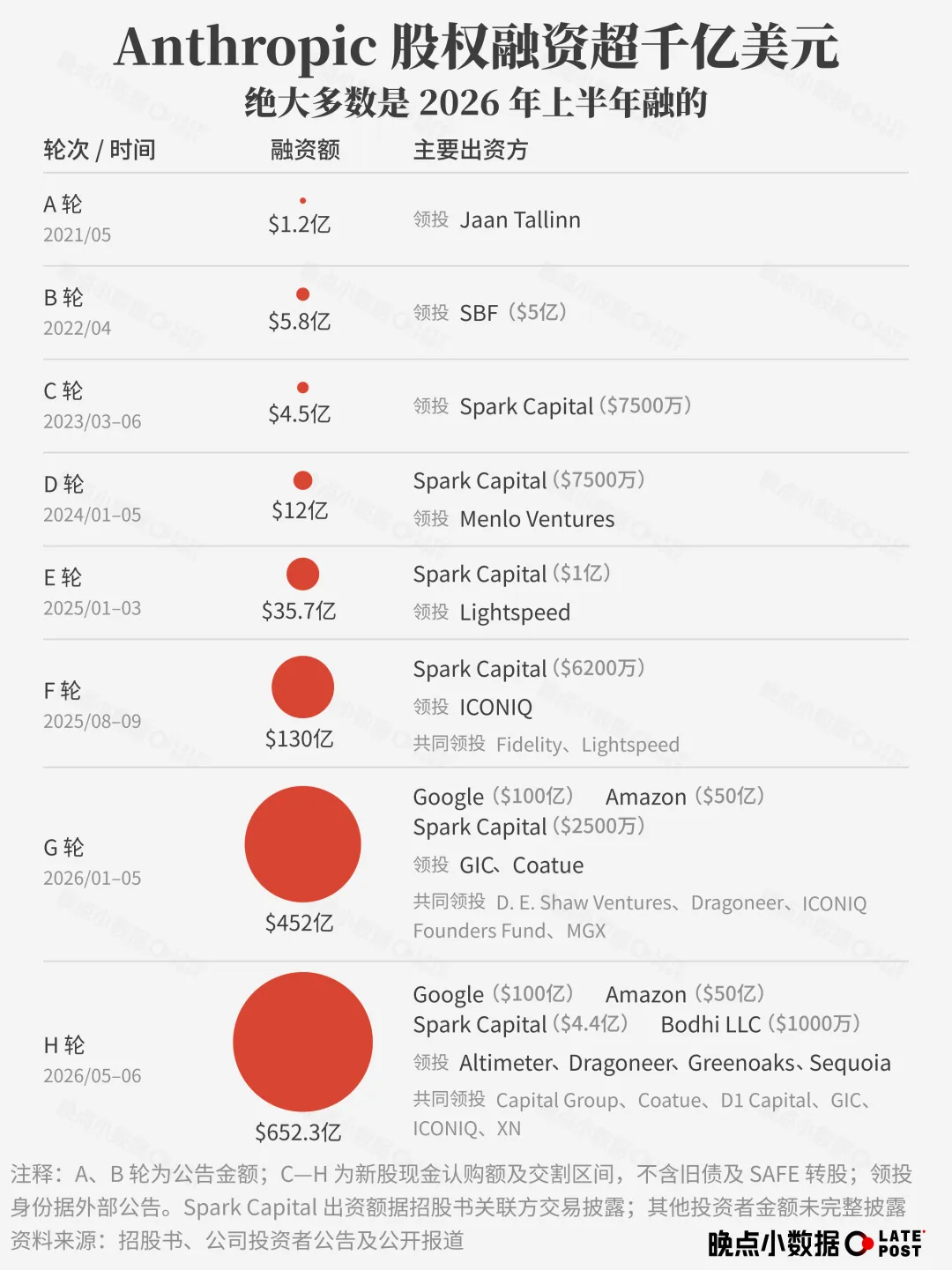
More than a dozen VC firms have invested in Anthropic, including Sequoia Capital, Founders Fund, Coatue, DST Global, and others, but the prospectus lists only one firm—Spark Capital—whose full name appears 38 times. Yasmin Razavi, a partner at Spark, is also the sole investor named on Anthropic's board of directors.
According to Forbes, Razavi authored two lengthy investment memos that convinced his partners to lead Anthropic's Series C funding round in 2023. Spark invested $75 million for the first time, marking the largest deal in the firm's history at that point.
Daniela Amodei, Anthropic's co-founder and Ray Dalio's sister, said that even when Claude Code was still in its early stages, Razavi urged the team to treat programming as a standalone market and make strategic investments.
A public-interest project with a governance structure that is equally complex.
Has already donated 5% of its equity to a public welfare fund; for every 50% increase in the stock price, it may issue additional shares to the fund.
Anthropic does not have like$Tesla (TSLA.US)$Instead of setting stock price or market cap milestones to reward founders, we should establish stock price milestones and issue additional shares for charitable purposes.
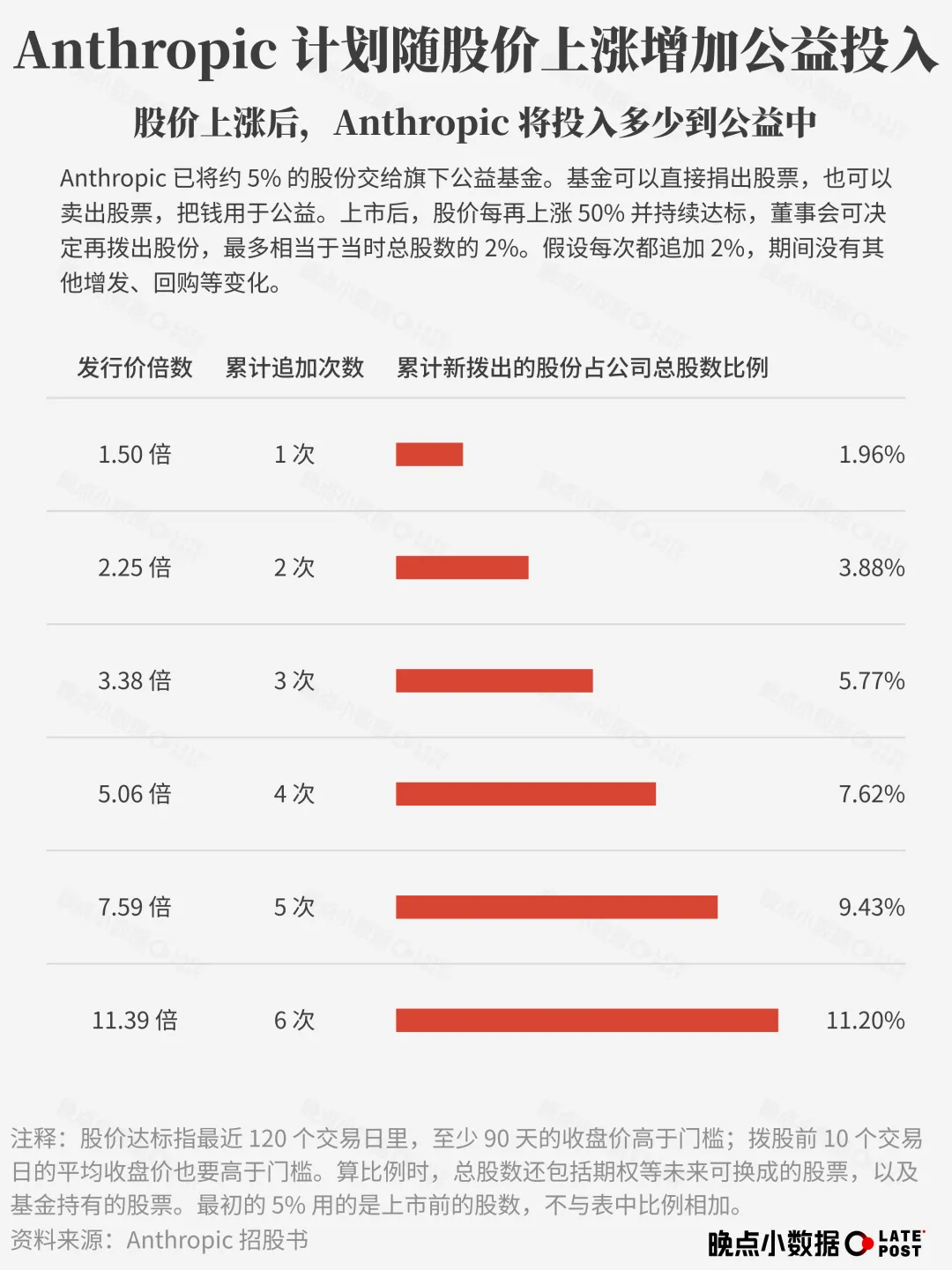
The additional issuance is not mandatory; once the conditions are met, it will be decided by the Director.
Employees donate shares in exchange for voting rights; the company issues additional shares to match the donations.
Microsoft,$Adobe(ADBE.US)$, companies like Apple will match employee donations to support charitable projects. Typically, the match is between $10,000 and $15,000 per person.
Anthropic's matching‑donation cap is 25% of eligible equity compensation for regular employees and 50% for early‑stage employees. Based on their current compensation, the company could match a single employee's contributions by anywhere from several hundred thousand to several million dollars.
Another key difference is that Anthropic can issue additional Class N shares, thereby diluting existing shareholders' equity, to fund its philanthropic efforts. In 2025, the value of Anthropic's confirmed matching‑donation shares totaled $2.67 billion. As of this year, up to the date of the prospectus filing, it has issued an additional 58.6 million Class N shares, whose current value remains undetermined.
If an employee donates one Class A share, they receive one Class E share. Class E shares do not entitle the holder to dividends or the right to sell them and carry no economic value; however, they do confer voting rights on governance‑related matters, such as LTBT decisions. The extent of the economic interest an employee forgoes determines their voting weight on governance issues.
Public-interest funds are allocated by a wholly owned subsidiary of Anthropic.
Anthropic Public Benefit Fund, LLC can be translated as Anthropic Public Benefit Fund, but legally it is a limited liability company.
Anthropic announced that it has not registered as a U.S. 501(c)(3) tax-exempt charity in order to pursue philanthropy with greater flexibility. The company aims to disburse funds directly to specific groups, rather than solely donating to nonprofit organizations, and to address the employment impacts of AI through innovative approaches. The announcement also pledged that its philanthropic funds will not be used for political contributions.
Currently, the administrators of the Anthropic Public Benefit Foundation are the three founders—Dario and his siblings, along with Clark—as well as Neil Shah, Chairman of LTBT.
The founding team has each pledged to donate 80% of their personal equity, though this commitment may be revoked.
The seven founders have each pledged to dedicate 80% of their personal shares in Anthropic to charitable causes. The risk disclosure further clarifies that these are voluntary, revocable personal commitments, with no enforceable obligations.
Editor/rice