Source: The Intelligent Investor
"The best way to prevent irrational exuberance is for the market to experience occasional setbacks."
Last Friday (October 30), U.S. technology stocks faced significant selling pressure,$Nasdaq Composite Index (.IXIC.US)$It once fell by nearly 3%,$S&P 500 Index (.SPX.US)$Down nearly 2%,$Intel (INTC.US)$It plunged by nearly 30% instead.
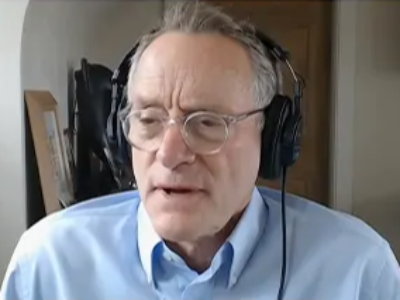
 Amid this market sentiment, Howard Marks, co-founder of Oaktree Capital, granted a live interview to CNBC's Kelly Evans.
The host's key concerns are highly relevant: How should we interpret the day's sharp market plunge? Will the Federal Reserve continue raising interest rates? And, with inflation still under pressure, where are interest rates likely to head over the next few years?
As usual, Max did not offer a straightforward market forecast, but his stance was fairly clear.
He believes that the period of ultra-low interest rates from 2009 to 2021 was itself an anomaly and that we are unlikely to return to that era. Given that inflation remains a cause for concern, he is fairly certain that future interest rates will not fall much below current levels.
Overall, he expects interest rates to remain broadly near their current levels over the next few years.
Even more worth listening to than his assessment of interest rates is his understanding of market volatility.
Max believes that markets invariably tend to amplify everything. Over the past year to a year and a half, the market has already endured several pronounced swings, including the recent pullback in AI and technology stocks. In his view, these setbacks are not negative; on the contrary, they are a sign of health.
The real danger arises precisely when everyone believes that nothing can go wrong. When investors begin to assume that no investment can possibly fail, the most severe bubbles and irrational booms are often set in motion.
This is also one of his key observations on the current AI boom.
Max acknowledges that AI is the most difficult thing he has ever tried to predict in his entire investing career, but he does not advocate avoiding it altogether. He even draws a parallel to baseball, suggesting that the AI industry cycle may have only just reached the third inning.
However, given such substantial uncertainty, he prefers to participate in a relatively low‑risk manner and specifically cautions investors to pay close attention to the power‑supply constraints underlying data‑center development.
The conversation was brief, and Smart Investor (ID: Capital-nature) has compiled and shared it with everyone.
01. The market always magnifies everything.
Kelly, you've also seen that rather alarming market chart on the screen—what's your take on today's sharp market plunge?
Max, I've written many memos myself, and one of them is a particular favorite of mine, titled "What Does the Market Know?"
We investors have the opportunity to make money precisely because, at times, we know more than the market does. Therefore, we shouldn't do the opposite—letting the market tell us what to do.
The market always magnifies everything.
Kelly: So, you think there's nothing in the market that truly goes beyond what professional investors already know?
Max: Right, I think that's pretty much it.
However, I have to say that AI has indeed proven to be extremely challenging for me. Throughout my entire investing career, AI has been the most difficult thing to grasp and the hardest to predict.
Think about it: when evaluating any AI company, how can you predict how its products will be used five years from now? How many units will it sell? At what price? What will the costs be? What will the profit margins look like? Which companies will succeed, and which will fail?
How would you respond to these questions? The uncertainty we're facing right now is unprecedented. I've never seen anything like it.
Kelly, but some would also say that this implies extraordinary upside potential, right?
Max, that's right.
Kelly, every day you have to decide which companies to invest in and support businesses across various sectors of the economy. Under what circumstances do you feel sufficiently confident in a company's ability to meet its debt obligations? And in what situations—such as when evaluating certain software firms—do you conclude that you simply can't be sure and it's best to step back?
Max, there are some truly outstanding companies, and then there are those that aren't quite as good.
When it comes to AI investing, one point is particularly important. As I noted in a memo last December, if you're looking to invest in AI, you might want to consider buying stocks.
At the very least, if you buy stocks and everything goes smoothly, there's still plenty of room for them to rise.
Kelly, are you referring to stocks of AI companies, such as Anthropic and OpenAI? However, these companies aren't yet publicly listed. So, are you talking about firms that develop AI models, or other companies across the broader AI industry chain?
Max, I don't have a deep enough understanding of this field yet, so I can't tell you specifically which company you should buy.
But the key issue is that when you buy a debt security, there's no room for price appreciation.
What's the best outcome? You receive the agreed‑upon interest, and your principal is repaid on schedule. Beyond that, all that remains is downside risk—varying in degree.
Therefore, you should only lend money when you have a high degree of confidence that the borrower will be able to repay the debt and when the yield you receive is sufficient to compensate for the uncertainty you are taking on.
But if you're venturing into a highly uncertain field where even whether you'll be able to recover your investment is far from certain, then don't lend them money.
If you really want to get involved, then go buy stocks. At the very least, by investing in stocks, you still have a chance of seeing your investment appreciate.
02. Electricity will become one of the true bottlenecks in AI development.
Kelly, but that's the exact opposite of my impression of Oaktree Capital. In my view, you're a firm that makes credit‑related investments.
Max, we are indeed a credit investment firm.
Therefore, we will only participate in select investment opportunities, primarily those related to AI infrastructure, such as data centers and AI‑focused manufacturing facilities.
Kelly, are you still investing in AI data centers? And will you also invest in the business models of those new‑generation cloud service providers (Neocloud)?
Max, that's a different matter. The new‑generation cloud service providers are tenants; what we support are long‑term projects.
Kelly—so you're talking about investing in and building data centers?
Max: That's right, and we try to select locations where competition isn't overly intense and where there are certain development constraints, in order to prevent any one region from hosting too many data centers.
Oak is now a Brookfield Asset ($Brookfield (BN.US)$) as part of it, while Brookfield has strong advantages in the power sector.
I believe that electricity will become one of the true bottlenecks in the development of AI.
Everyone is saying that, over the next few years, the scale of data centers and other infrastructure will need to expand to three to ten times its current size. But the question is: where are they going to find three to ten times the amount of electricity?
This is a very good example.
In the investment industry, whatever you choose to do, there are both relatively safe approaches and higher‑risk ones.
Those riskier strategies typically also offer the greatest upside potential. By contrast, relatively safe investments, precisely because they are low‑risk, do not need to promise such high returns to attract capital.
This is a very fundamental choice.
Faced with AI—a field brimming with immense potential yet fraught with uncertainty—I prefer to adopt a relatively cautious approach to engagement.
03. I don't think some corporate bonds are cheap enough to make buying them a no-brainer.
Kelly, but you've still invested in AI after all. Does that mean you don't view the entire AI sector as a bubble, nor do you believe the risks associated with infrastructure development have risen to a level that would compel Oaktree Capital to steer clear entirely?
Max: Whenever someone asks me, "Is AI a bubble?" I always counter with, "What exactly do you mean? Are you saying that AI itself is an illusion?"
Of course not. AI is a real, tangible force that will undoubtedly reshape our lives—whether for better or for worse.
So are you saying that the current scale of corporate investment has already turned into a bubble?
I don't know. That's because I have no idea how much revenue they'll generate in the future, nor do I know what the corresponding return on investment will be.
Or are you referring to the investment assets currently available to individual investors—do they exhibit signs of a bubble? Are their prices excessively high? Have investors become overly enthusiastic?
I don't know either. However, given today's market volatility, I believe it at least underscores one thing: there was a great deal of optimism in the market beforehand, and now some of that optimism has been dispelled.
Kelly, so what's your take on these tech companies' large-scale entry into the bond market to raise capital?
Could this pose challenges for the investment-grade and high-yield bond markets? Has it led to a widening of credit spreads? Do you think spreads will continue to widen going forward, or could this instead represent a once-in-a-generation opportunity?
For credit investors, the range of investment opportunities available today is broader than ever, and some of these companies are widely regarded as virtually immune to default.
Of course, on the other hand, we've also seen companies like Meta pour resources—equivalent to 70% of their revenue—into this round of infrastructure development.
So, how should you think about tech companies continuously issuing large amounts of debt in the credit markets?
Max, this indeed gives investors plenty of options.
However, the problem is that companies with clearly strong debt‑repayment capacity typically offer relatively modest returns. Moreover, these investments still entail a certain degree of technical risk.
So, I don't think these companies' bonds are cheap enough to make them a no-brainer purchase.
04. Interest rates will broadly remain near their current levels.
Kelly, do you have your own view on how the Federal Reserve is likely to adjust interest rates going forward? Before attending today's meeting, did you form any particular outlook?
Because Kevin Warsh, in response to a question on Wednesday, essentially said: "That rate hike we implemented— I recall it was in September— occurred before the sell-off hit the new‑generation cloud service providers. Perhaps this round of monetary policy tightening has indeed helped deflate some of the excessive optimism in the AI bubble."
So, do you think interest rates will continue to rise going forward? Given the state of the U.S. economy and what's unfolding in the AI sector, do you believe further rate hikes are appropriate?
Max, you know I don't make predictions, nor do I trust them—especially not my own.
In fact, I'm not particularly concerned about whether the Federal Reserve will raise interest rates again or by how much. In my view, the real question is this: Over the next few years, will interest rates be significantly lower than they are today, remain roughly at their current level, or rise substantially above where they stand now?
I'm fairly certain that interest rates won't fall much below their current levels, as I believe inflation remains a cause for concern.
Moreover, the period from 2009 to 2021, characterized by exceptionally low interest rates, was itself an anomaly; we will not return to that era.
Over the past four years, I have consistently maintained this view.
If inflationary pressures persist, interest rates could rise slightly from their current levels.
If the economic environment experiences some volatility, thereby reducing the risk of overheating, interest rates may also stabilize as a result.
Think about it: if interest rates really ought to be much higher than they are today, they would have already risen sharply by now.
As for the trajectory of interest rates, I really don't have any particularly insightful remarks to offer. My view is that rates will broadly remain around their current levels.
05. AI may still be in a relatively early stage of its cycle.
Kelly, lately we've been revisiting Alan Greenspan's approach to economic forecasting. As you just mentioned, you're not particularly fond of forecasts—and neither was he, for that matter.
But Greenspan often sought to understand business cycles. And now, we are clearly in the midst of a major business cycle driven by AI.
The White House has also repeatedly cited investment data to illustrate the changes taking place in the U.S. economy. Clearly, the current situation is highly unusual.
Max: Of course.
Kelly, if someone were to ask you, "Howard, where do you think we are in the AI business cycle?" how would you describe it? Where do you believe we stand at this point?
Max, I think we may still be in the early stages of this cycle, as everyone has been building infrastructure to meet future demand—demand that continues to materialize.
At present, market demand for computing power remains robust, and companies have numerous large-scale expansion plans.
But at the same time, the questions raised earlier remain unanswered: for instance, how will AI ultimately be deployed in the future? How much of a boost to profitability can it deliver to companies that adopt it? And how much revenue can firms offering AI services expect to generate? Ultimately, who will win, and who will lose?
If we were to use the familiar analogy of a baseball game, I'd say we're probably only in the third inning.
Kelly, do you and your team at Oaktree Capital use AI tools like Claude internally? If so, to what extent? What has your personal experience been like?
Max, I've been using it myself all along.
In February this year, I wrote a memo on AI. After finishing it, I handed it to Claude and asked, "What do you think?"
It offered me some advice and even told me that most of what I'd written was quite good. So the next time, I said to it, "Please be as critical of me as you can." To which it replied, "Do you want me to be especially nitpicky, or just a bit hypocritical?"
Look, it's actually starting to tease me.
However, I think this is really great. I love the back-and-forth of communicating with it and making revisions, round after round.
Kelly, could you elaborate a bit more? For instance, has your AI deployment grown to such a scale that you're tracking company-wide metrics like total token consumption, or are you still mostly conducting isolated pilot projects?
Max: No, no, our entire company is using AI.
Think about it—these days, who still doesn't use AI to organize data? And in many other tasks, like writing code, you no longer have to do it yourself.
The key isn't whether you can write better code; what truly matters is whether you can draw better conclusions based on the data in your spreadsheet.
And this part, we will not leave to anyone else to do for us.
Kelly: So, you still need human involvement to interpret this data, and then…
Max, think about it: in the years ahead, if you want to excel in any field more than others, where exactly will that edge come from?
As I understand it now, everyone will eventually have access to AI models of roughly comparable capabilities. The question remains: who will be able to leverage these models to deliver the best outcomes?
Kelly: In other words, who has the best talent.
Max, that's right.
Kelly, has your company—or for that matter, other U.S. enterprises—also seen a similar trend, with an increasing share of budgets being reallocated to AI, much like…$Microsoft (MSFT.US)$Just as such large tech companies are doing.
Does this mean that companies will consequently reduce their workforce?
Max, I think this is only just the beginning. As far as I can tell, computing power is still heavily concentrated in the hands of a handful of companies.
A few days ago, I was told that if you added up the expenditures of all the companies in the S&P 500, they would account for only about 0.1% of their total revenue.
Therefore, AI has not yet achieved widespread, large-scale adoption across the enterprise sector.
Moreover, large corporations themselves harbor numerous factors that hinder innovation.
What we're discussing right now are precisely the big corporations.
They will proceed with caution; to achieve truly large-scale AI adoption, they still need to make adjustments in many areas.
I believe the use of AI will undoubtedly increase significantly in the future, but I'm not sure by how much.
Moreover, this also depends on another issue.
We know that deploying AI can be costly—so can businesses derive clear, measurable returns from these investments? That's the real question.
06. Major market volatility is actually healthy.
Kelly, I'm curious—you've personally lived through the tech boom and bust of the 1990s. How would you compare today to back then?
Of course, one obvious difference is that back then, many startups boasted sky-high valuations yet generated almost no profits.
But what I'd like to ask is about the evolution of the entire cycle. Is it possible to prevent today's AI boom from turning into a bubble? Are there ways to avert an eventual crash? Should the Federal Reserve play some role in this regard?
Max, I don't think it's the Fed's job to protect people from making mistakes.
If we define a bubble as "irrational exuberance," I actually find that to be a rather useful definition. So how do you prevent people from falling into irrational exuberance? The best way to curb it is for the market to experience occasional setbacks.
Just as we've seen recently.
Over the past year to a year and a half, the market has already weathered several such bouts of volatility. The so‑called "SaaS apocalypse" earlier this year was one instance; the market turbulence two weeks ago was another; and what's unfolding this week is yet another.
These fluctuations are actually healthy.
Because you'll find that the most severe bubbles and the most extreme episodes of irrational exuberance often emerge when people begin to believe one thing: "No matter what we do, it's bound to succeed."
Kelly, there's nothing to worry about.
Max: That's right, there's nothing to worry about.
Kelly, one last question: Is there a specific sector or company where your view diverges significantly from the market's? For example, telecoms, software firms, utilities, or any other area you find particularly interesting?
Mark Twain once said, "The thing that gets you into trouble is not what you don't know, but what you're sure you know—when in fact it's completely wrong."
As for the issue of AI, there isn't a single thing I would dare to say I'm 100% certain about.
And to be honest, the things I know are very limited as well.
So, I don't think I know enough to confidently assert that everyone else is wrong and that only I am right.
Kelly: So until you have more information, you're not going to make any big bets?
Max won't.
Kelly, we'll have to wait until more information becomes available.
Max, that's right.
Editor/rice