
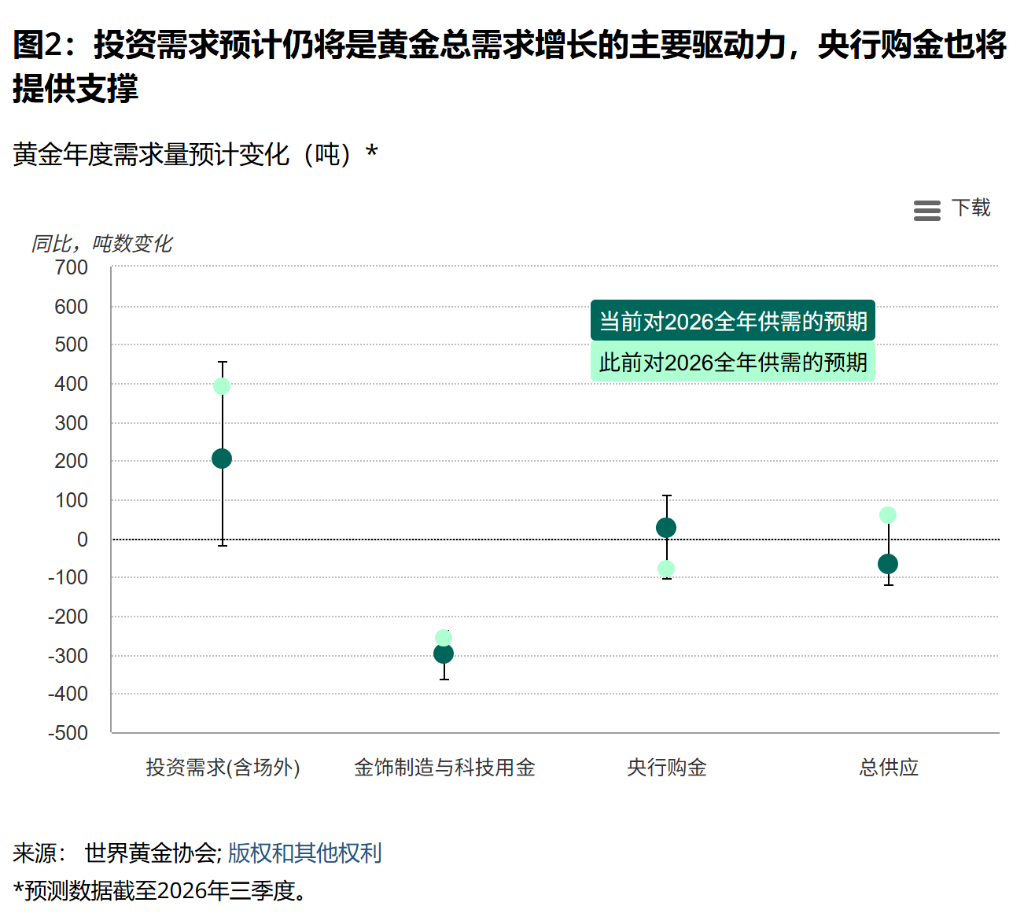
The World Gold Council has lowered its 2026 growth forecast for global gold investment demand to 200 tonnes. As gold prices retreated approximately 29% from historical highs, retail buying enthusiasm cooled significantly. Central bank gold purchases rose 42% year-on-year to 321 tonnes, while gold ETFs saw net inflows of 211 tonnes, pushing holdings to record highs. Jewelry consumption fell to its lowest level for the period on record, whereas robust strategic allocation demand from institutions and central banks continues to provide key support to the gold market.
Driven by a significant retreat in gold prices from their historical highs, the global physical gold market has shown marked divergence: institutional demand remains robust, while retail buying has cooled considerably. On Tuesday, the World Gold Council (WGC) lowered its full-year 2026 forecast for growth in gold investment demand from 400 tonnes to 200 tonnes, citing a noticeable slowdown in demand for bars and coins, despite physical gold ETFs performing better than previously expected.
According to the WGC’s latest Global Gold Demand Trends report for the third quarter of 2026, total global gold demand (including over-the-counter transactions) fell by 1% year-on-year to 1,369 tonnes in the third quarter, roughly持平 with the record levels seen in 2025.
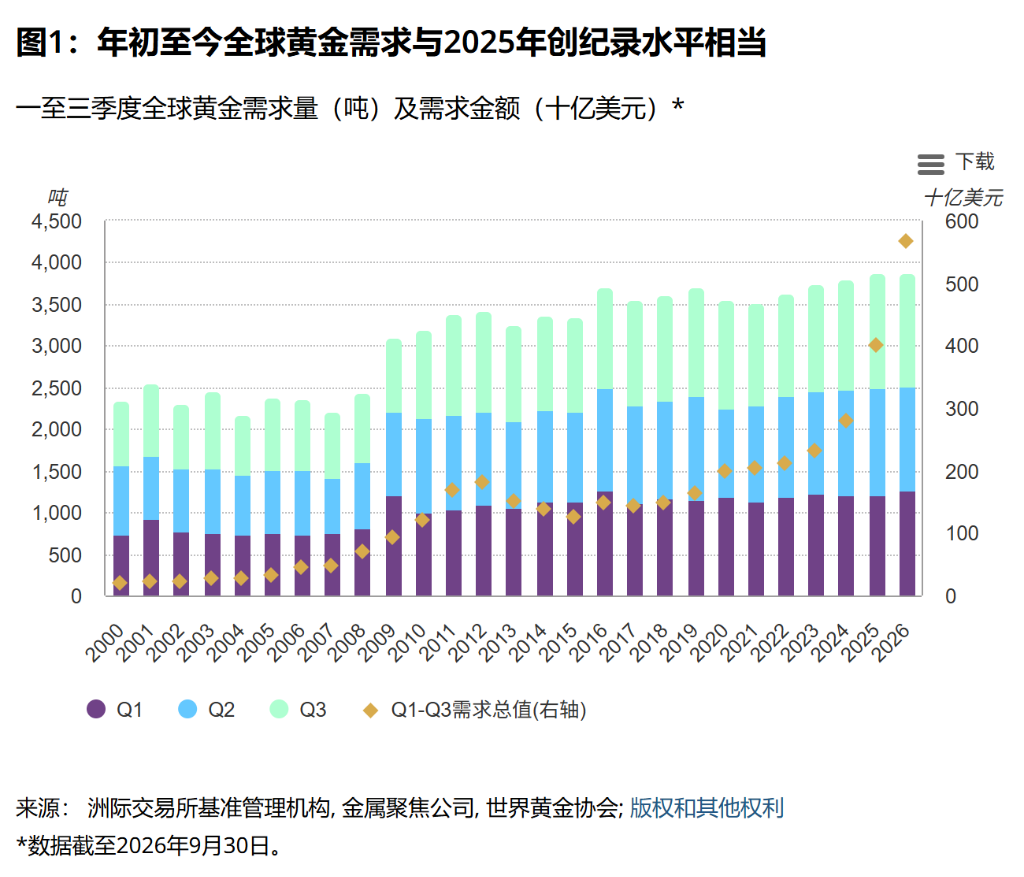
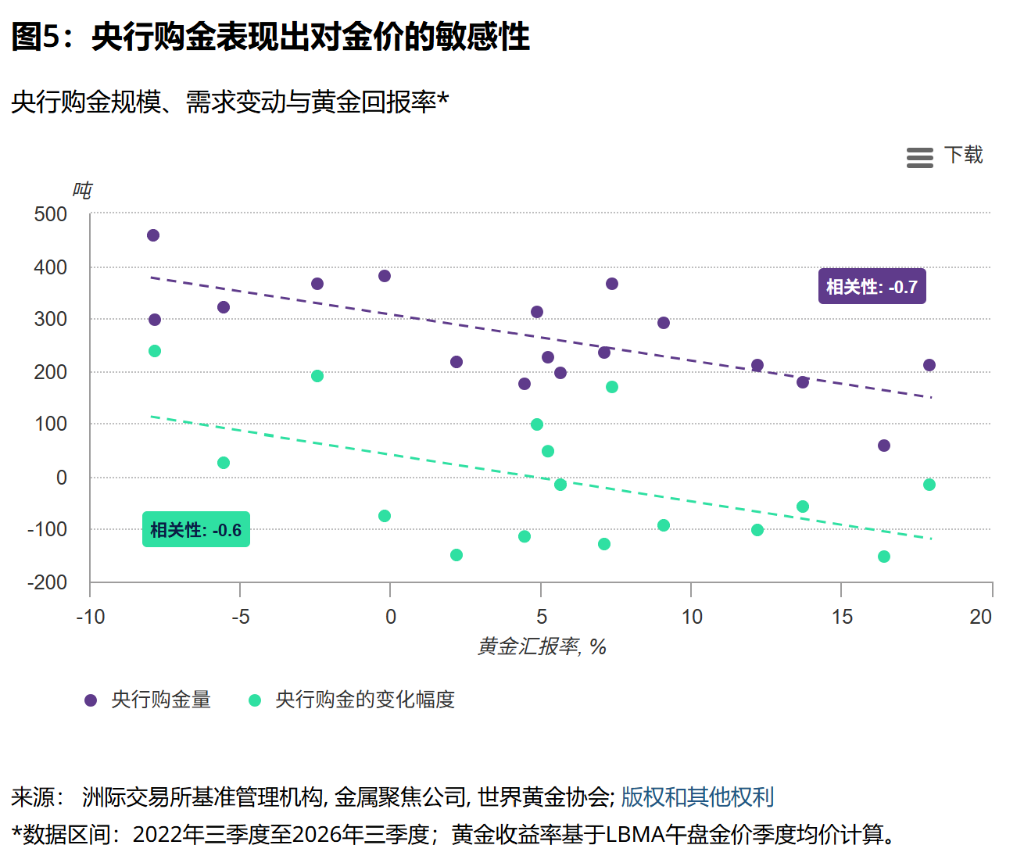
 Meanwhile, global central bank gold purchases surged to 321 tonnes in the third quarter, a 42% year-on-year increase and the highest quarterly volume since the fourth quarter of 2024. This prompted the WGC to revise its full-year central bank buying expectations upward, projecting levels at least equal to those of 2025.
After hitting a historical high of $5,595 per ounce in January this year, gold prices have cumulatively fallen by approximately 29%, driven by rising oil prices due to the war in Iran and heightened market expectations of interest rate hikes. The combination of sustained high price levels and macroeconomic headwinds has significantly pressured the willingness of retail investors and consumers to buy gold. In contrast, strategic allocation demand from institutions and central banks has demonstrated greater resilience, becoming a key support for gold prices.
Central Bank Gold Buying Accelerates, Led by China and Poland
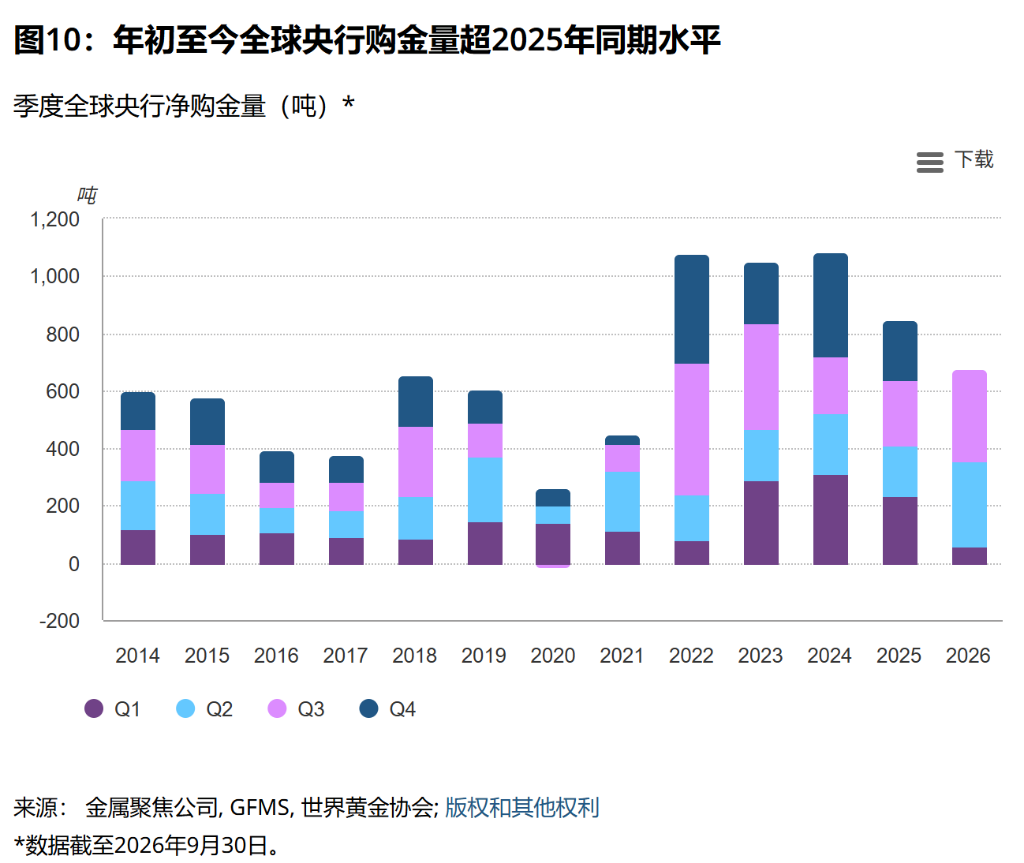
In the third quarter, global central banks recorded net gold purchases of 321 tonnes, far exceeding the five-year quarterly average and representing an 8% quarter-on-quarter increase from the second quarter. Year-to-date net central bank purchases have reached 675 tonnes, a 6% year-on-year increase, slightly higher than the same period last year.
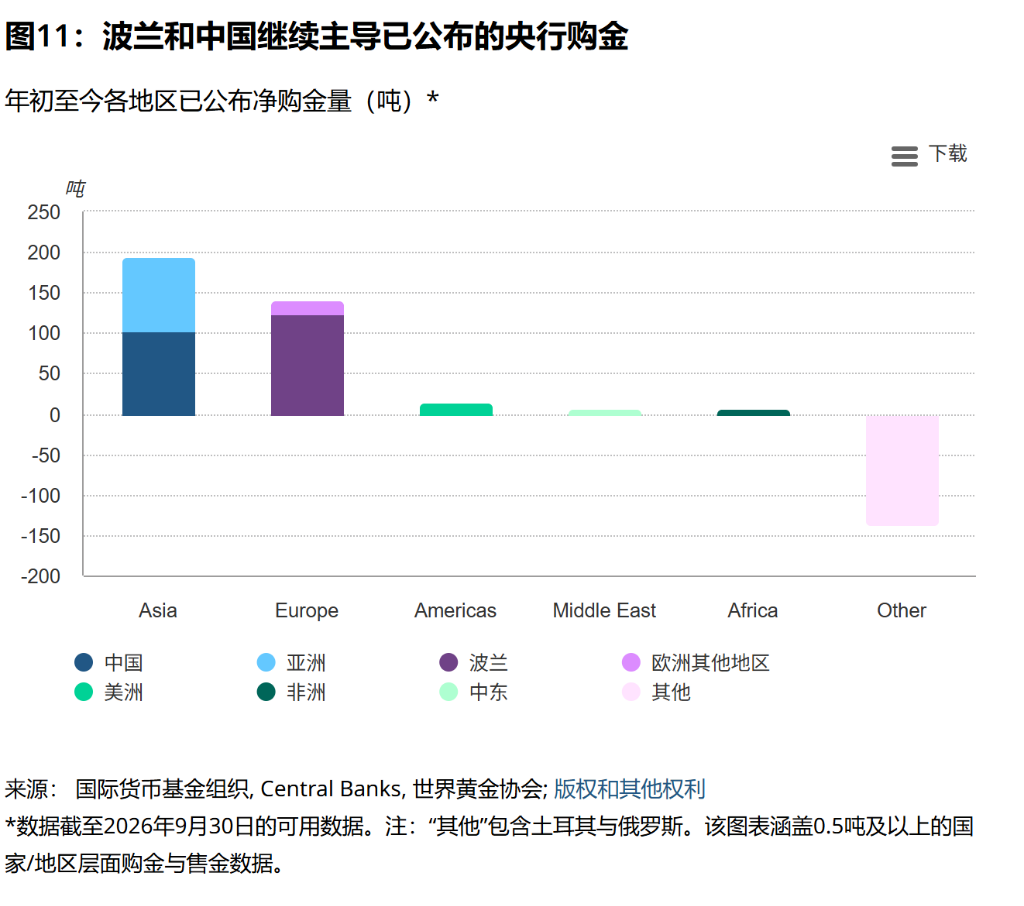
Among reported buying data, the People's Bank of China added 63 tonnes in the single quarter, making it the largest disclosed buyer; the National Bank of Poland added 40 tonnes, ranking second. Together, these two central banks accounted for approximately 86% of the reported net purchases for the quarter. Kazakhstan and Uzbekistan each added 14 tonnes, being the only other two central banks with single-quarter increases exceeding 5 tonnes. Russia was the only significant seller during the quarter, disposing of a total of 19 tonnes.
Notably, approximately 63% of total central bank gold purchases in the third quarter came from undisclosed buyers, continuing a market trend observed since 2022. John Reade, Senior Market Strategist at the WGC, stated that the pullback in gold prices during the third quarter may have encouraged some central banks to increase their buying activity. For central banks bearish on the US dollar, the greenback’s strength has actually enhanced the appeal of converting reserves into gold.
"If you believe the US dollar will weaken in the long term, and your short-term US Treasury holdings are maturing and rolling over, you might use these relatively expensive dollars to buy gold," said Reade.
Given the stronger-than-expected performance in the third quarter and a slight upward revision of second-quarter data, the WGC has raised its full-year central bank gold buying forecast to at least 848 tonnes, matching the actual purchase volume of 2025. Krishan Gopaul, Senior EMEA Analyst at the WGC, noted, "It is possible that total central bank gold purchases for the full year will exceed last year's levels."
Physical gold ETFs return to net inflows, with holdings reaching a record high
Against the backdrop of weakening retail demand, institutional investors' gold demand via ETF channels strengthened counter-cyclically, emerging as a notable highlight of the quarter.
In the third quarter, global physical gold ETFs recorded net inflows of 211 tonnes, completely reversing the outflow trend seen in the second quarter. This pushed total global holdings to a historic high of 4,256 tonnes, corresponding to quarterly net inflows of approximately USD 31 billion, also setting a new record.
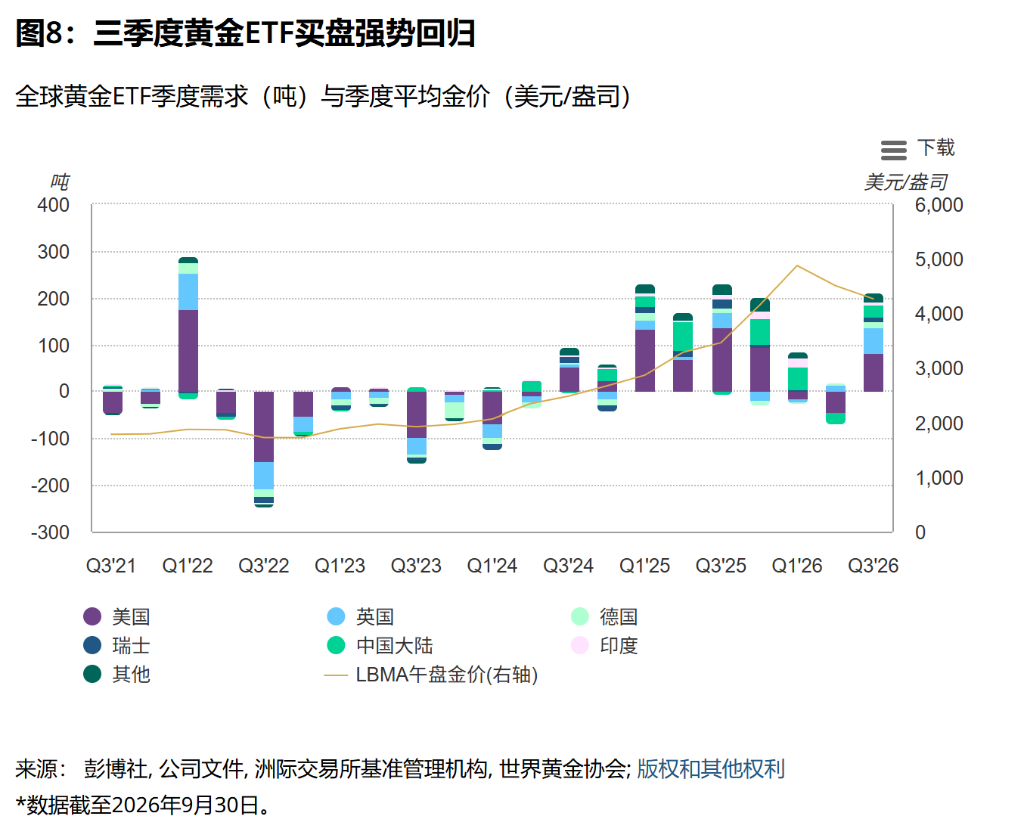
European funds led the growth this quarter with net inflows of 92 tonnes, marking the largest single-quarter increase since the first quarter of 2022. Concerns regarding fiscal sustainability, inflation, and sovereign bond markets enhanced gold's appeal as a hedging instrument. Among these, UK funds saw net inflows of 53 tonnes, while France, Germany, and Switzerland recorded net inflows of 16 tonnes, 13 tonnes, and 9 tonnes, respectively. North American gold ETFs posted net inflows of 81 tonnes in the third quarter, thoroughly reversing the weak performance of the first half of the year. Asia experienced net inflows for the third consecutive quarter, totaling 34 tonnes, with the Chinese market remaining the primary driver of regional growth; a weakening domestic stock market and declining government bond yields boosted gold's relative attractiveness.
The WGC noted that despite a significant rise in bond yields, a stronger US dollar, and a decline in the geopolitical risk index, ETF demand remained robust. "This indicates that concerns over fiscal matters and broader uncertainty have, to some extent, offset the adverse effects of rising opportunity costs associated with holding gold."
Demand for gold bars and coins falls to a four-year low
In contrast to ETF demand, retail enthusiasm for physical investment has clearly waned. In the third quarter, global demand for gold bars and coins declined by 19% year-on-year to 268 tonnes, the lowest quarterly level in nearly four years.
The WGC attributed this weakness to a combination of factors: gold prices fluctuated within a range during the third quarter without a clear trend; market expectations that US interest rates would remain higher for longer persisted; and rising equity markets diverted some capital.
By region, China was one of the few major markets to achieve demand growth, with demand for gold bars and coins rising by 7% year-on-year to 79 tonnes. Cumulative demand year-to-date reached 393 tonnes, setting a new historical record. India was the market with the largest decline globally, with third-quarter demand plummeting by 40% year-on-year to 55 tonnes, accounting for approximately 60% of the global year-on-year decrease. Key reasons included a shift in festival timing and some investors switching to digital gold.
In the US market, demand for gold bars and coins in the third quarter fell by 40% year-on-year to 8 tonnes, marking the lowest quarterly level since the fourth quarter of 2019. In Europe, demand decreased by 31% year-on-year to 20 tonnes, with Switzerland experiencing a particularly significant drop, where demand was nearly halved. In Iran, ongoing conflict disrupting daily life forced some citizens to sell gold bars and coins, leading to a 51% year-on-year decline in demand.
Despite weak quarterly performance, global demand for gold bars and coins reached 1,053 tonnes year-to-date, the highest level for the same period since 2013, indicating that strong demand at the beginning of the year established a high baseline.
Demand for gold jewelry hit a historic low for the period, as persistently high gold prices continued to suppress consumption.
The dampening effect of high gold prices on consumer spending was most evident in the gold jewelry market. Global gold jewelry consumption in the third quarter fell by 17% year-on-year to 313 tonnes, marking not only a decline from the previous year but also dropping below the 331 tonnes recorded in Q3 2020 during the pandemic shock, setting a historical low for the third quarter in WGC data records.
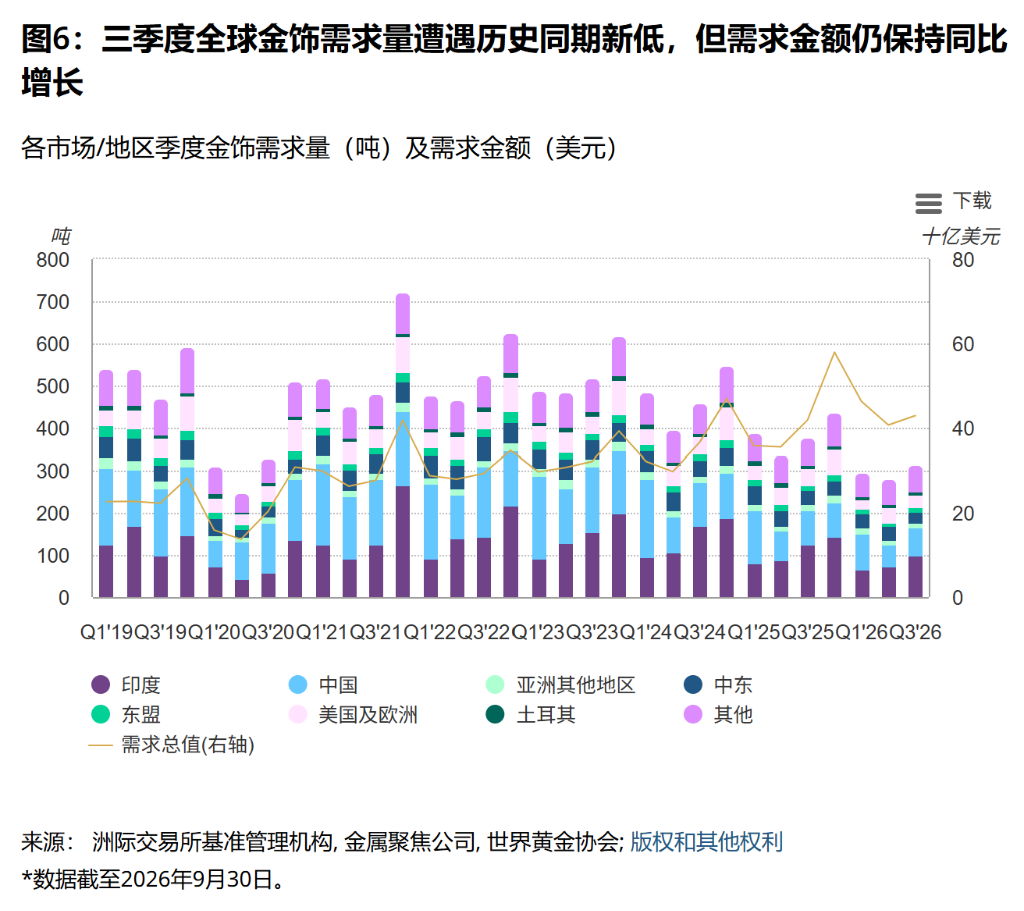
Gold jewelry consumption in China declined by 22% year-on-year to 66 tonnes, with year-to-date cumulative consumption down 27% to 202 tonnes. In India, gold jewelry consumption fell by 20% year-on-year to 100 tonnes; a roughly 45% year-on-year increase in domestic gold prices significantly eroded purchasing power, while the misalignment of festival timings deferred some demand to the fourth quarter.
Consumption volumes in all major regions recorded year-on-year declines: the United States dropped by 18% to 21 tonnes, Europe (excluding the CIS) fell by 11% to 11 tonnes, the Middle East decreased by 22% to 26 tonnes, and Vietnam saw the largest drop at 39%.
The divergence between consumption volume and value was a prominent feature this quarter. Although tonnage demand hit a historic low for the period, global gold jewelry expenditure in the third quarter still increased slightly by 2% year-on-year to USD 43 billion. Year-to-date, global gold jewelry expenditure rose by 15% year-on-year, approaching USD 130 billion. The WGC expects that persistently high gold prices will continue to weigh on gold jewelry consumption in the fourth quarter, with the consumer trend toward lighter-weight and lower-purity products unlikely to reverse in the short term.
Gold mine production reached a quarterly record high, while overall supply remained tight.
On the supply side, gold mine production in the third quarter increased by 3% year-on-year to 1,071 tonnes, setting a new historical high for the third quarter. However, due to an 8% year-on-year decline in recycled gold supply to 314 tonnes and a continued contraction in producers' net hedging, total gold supply still decreased slightly by 1% year-on-year to 1,369 tonnes.
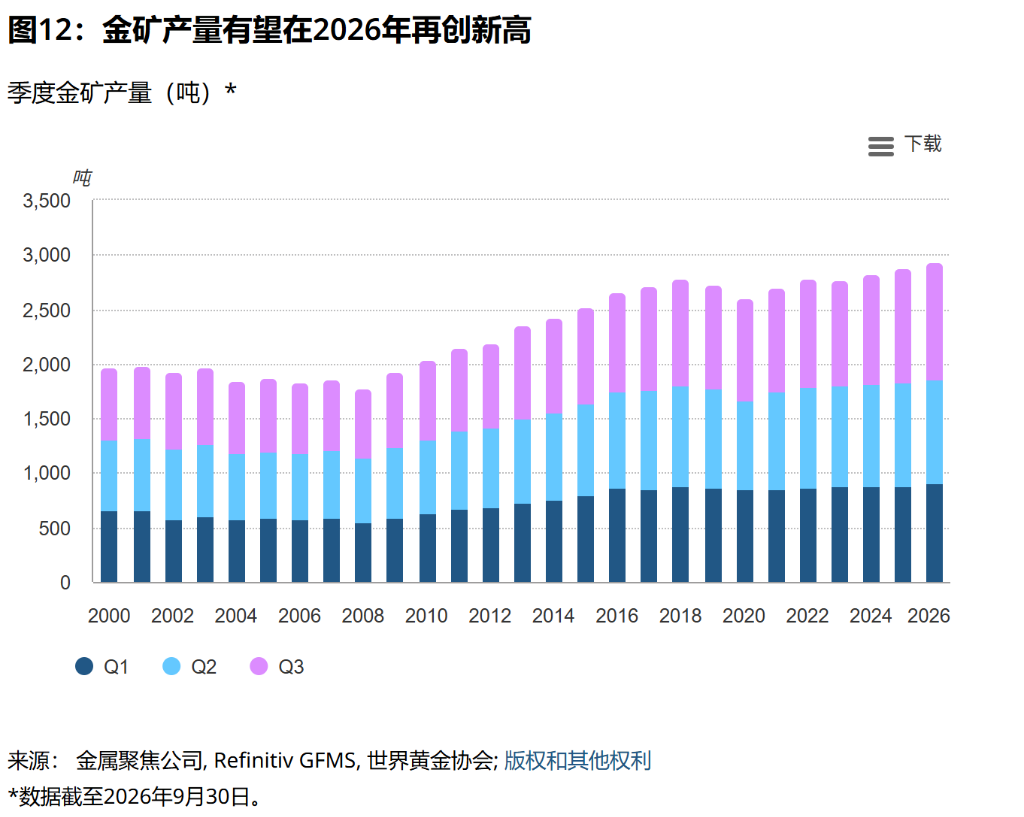
Notable production growth was observed in Canada (up 22% year-on-year), Indonesia (up 21% year-on-year), and Chile (up 19% year-on-year), primarily driven by recent new mine commissions and improved ore grades. Conversely, production in Namibia, Turkey, and Australia declined due to adjustments in mining sequences or lower ore grades.
The WGC noted that the supply of recycled gold remains relatively unresponsive to the current high gold price environment. Although the average gold price in the third quarter fell by 5% quarter-on-quarter, leading to a corresponding decline in recycled gold supply, rising energy costs, higher inflation, and increased unemployment pressure have not yet triggered large-scale liquidation of gold by consumers facing financial distress.
Looking at the full year, the WGC expects that although gold mine production is poised to hit another annual record high, sluggish recycled gold supply will partially offset this growth, leading to a slight decline in total gold supply for the year.