
Apple raised approximately $7 billion in this bond issuance, divided into seven tranches with maturities ranging from two to ten years. The initial pricing range for the longest maturity tranche was 80 basis points over U.S. Treasuries. Proceeds from the bonds will be used for general corporate purposes, including share repurchases, dividend payments, and capital expenditures. Analysts note that Apple's shareholder returns take precedence over AI-related capital spending in its capital allocation priorities.
Apple plans to re-enter the investment-grade bond market after more than a year, aiming to raise about $7 billion, with the proceeds primarily used for share buybacks, reflecting a significant divergence in capital allocation between this tech giant and its peers.
According to Bloomberg, citing people familiar with the matter, the size of this offering has not yet been finalized and may be adjusted based on investor demand. Proceeds from the bonds will be used for general corporate purposes, including share repurchases, dividend payments, and capital expenditures.
 Apple's latest bond issuance is divided into seven tranches, with maturities ranging from two to ten years. The initial pricing range for the longest maturity tranche is 80 basis points over U.S. Treasuries. Apple's previous bond offering was in May 2025, when it raised $4.5 billion.
This bond issuance will further boost the already robust wave of bond offerings by large tech companies. At the same time, analysts point out that Apple's move reflects opportunistic financing more than funding needs driven by AI infrastructure development.
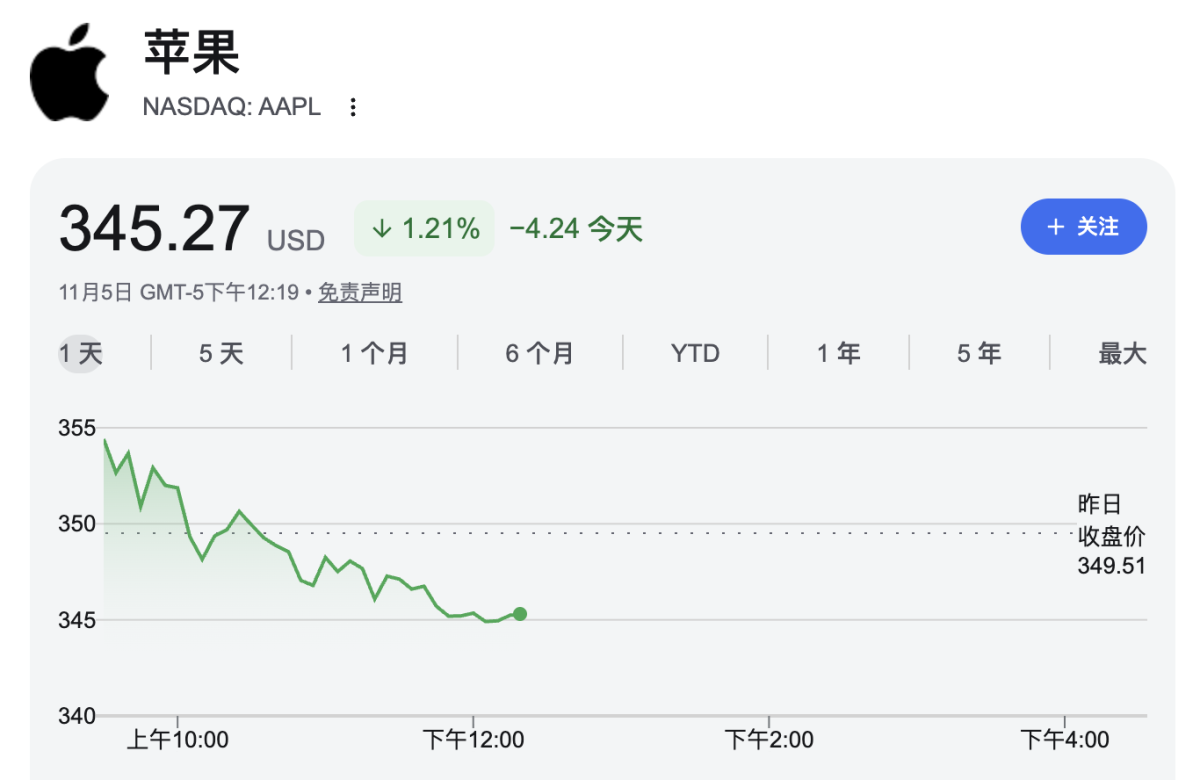
On Thursday, Apple opened higher and closed lower; as of press time, it was down 1.2%, the second-smallest decline among the Mag7, with only Google falling less than Apple.
Opportunistic financing, rather than AI-driven expansion
Bloomberg analyst Robert Schiffman said, "Apple's return to the bond market looks more like an opportunistic move than a financing-driven one, and the funds raised will be used for share buybacks and dividends."
He further pointed out that, for Apple, "shareholder returns take precedence over the massive AI infrastructure spending faced by its hyperscale cloud computing peers."
This assessment contrasts with the recent financing strategies of Microsoft, Oracle, and Meta. Since last week, these three companies have collectively raised $50 billion in the U.S. market, with the funds primarily used to support their respective artificial intelligence infrastructure investment plans.
Notably, AI-related bonds issued recently by major tech companies have generally carried higher yields, as investor uncertainty has grown over whether heavy AI investments will translate into tangible returns, prompting demands for greater risk premiums.
Issued as a seven-tranche structure, with the four major state-owned banks acting as joint underwriters.
According to insiders, this Apple bond issuance is divided into seven tranches, with maturities ranging from two to ten years, offering investors a diversified selection of terms. The initial pricing range for the longest-term tranche is 80 basis points over U.S. Treasuries.
This bond offering was underwritten by Bank of America, Deutsche Bank, Goldman Sachs, and JPMorgan. Apple's previous U.S. dollar bond issuance was in May 2025, when it raised $4.5 billion.
Because the proceeds from this bond issue will flow back to shareholders first rather than being invested in emerging technology infrastructure, its market positioning differs from the current wave of bond offerings by large tech companies and may attract fixed-income investors who favor a steady capital-return approach.
Editor/Liam