In the Hong Kong stock allocation strategy proposed by China International Capital Corporation, what are the key levels corresponding to the Hang Seng Index in baseline, optimistic, and pessimistic scenarios? What structural characteristics does the current capital flow in the Hong Kong stock market present?
On April 14, Financial Associated Press reported (edited by Hu Jiarong) that after experiencing the "reciprocal tariffs" impact of the Trump administration, the Hong Kong stock market showed a V-shaped fluctuation trend. China International Capital Corporation pointed out, $Hang Seng Index (800000.HK)$ the fluctuation is centered around the 20,500 point mark, which is close to the extreme emotional pricing level during the trade friction period in 2018. It is worth noting that:
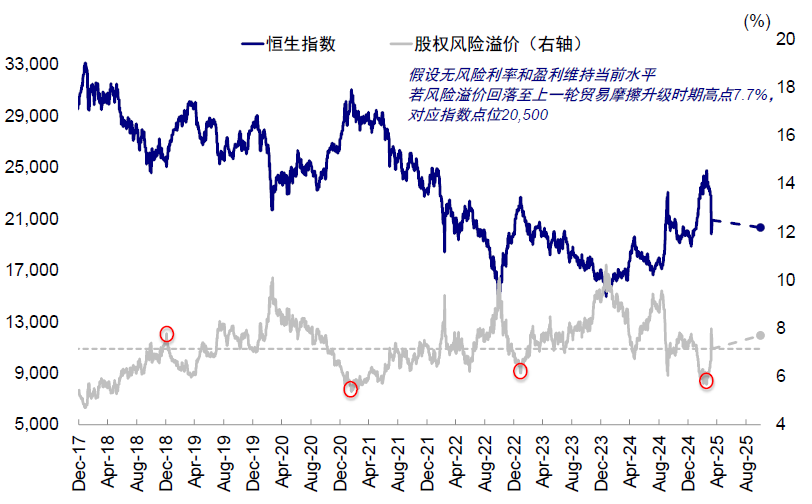
The risk premium indicator shows that the current equity risk premium (ERP) of the Hang Seng Index has rapidly risen to 8.2%, significantly higher than the extreme level of 7.7% at the end of 2018.
The dynamic PE of the Technology Sector has fallen to 14 times, a 26% contraction from the March peak of 19.1 times, re-entering a value range.
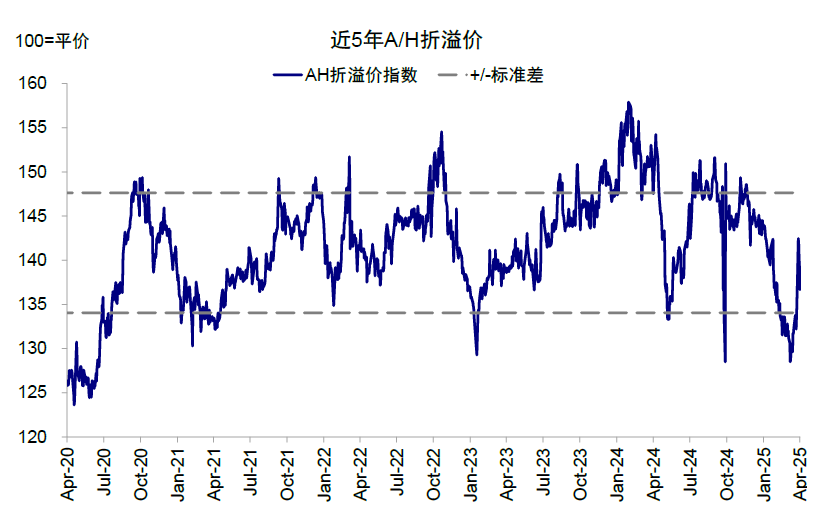
The AH premium index surged to 142%, expanding the cost-performance advantage of Hong Kong stocks relative to A-shares to nearly 10%.
Core contradiction: the race between tariff impacts and policy offsets.
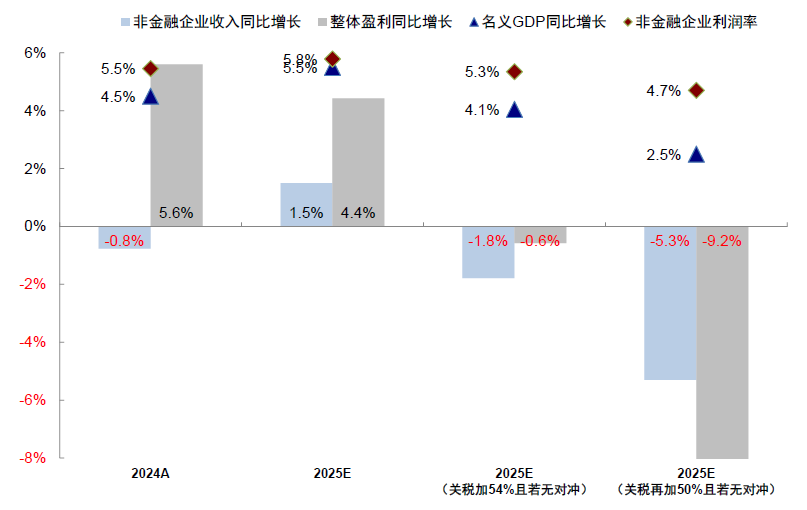
China International Capital Corporation's calculations show that every 54 percentage points increase in US tariffs will drag down the profit growth rate of the Hong Kong stock market by 4-5 percentage points. However, the market direction will depend on two major factors:
The "desensitization" process of tariffs: the current weighted tariffs of 165% have exceeded the price elasticity threshold, leading to diminishing marginal effects.
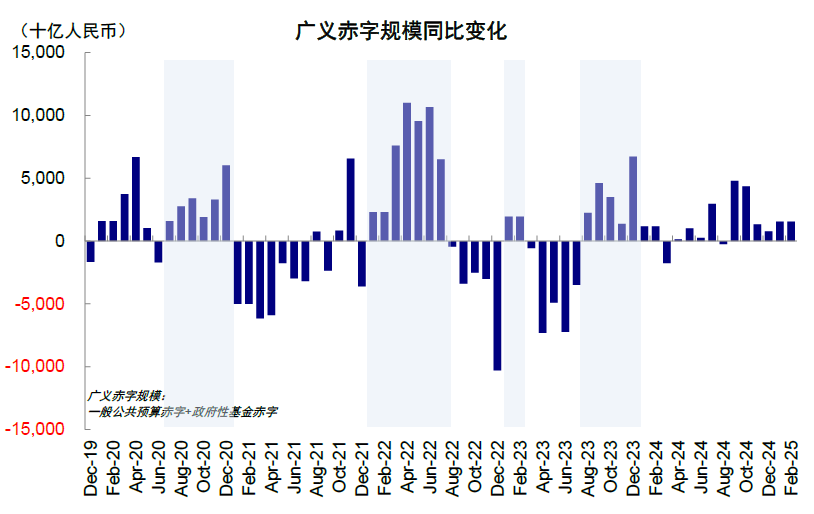
The intensity of policy hedging: Broad fiscal pulse changes will become key, with a focus on the policy orientation of the Politburo meeting.
****
Funding pattern: Southbound dominance and foreign capital's wait-and-see approach.
The funding situation shows characteristics of 'internal heat and external cold':
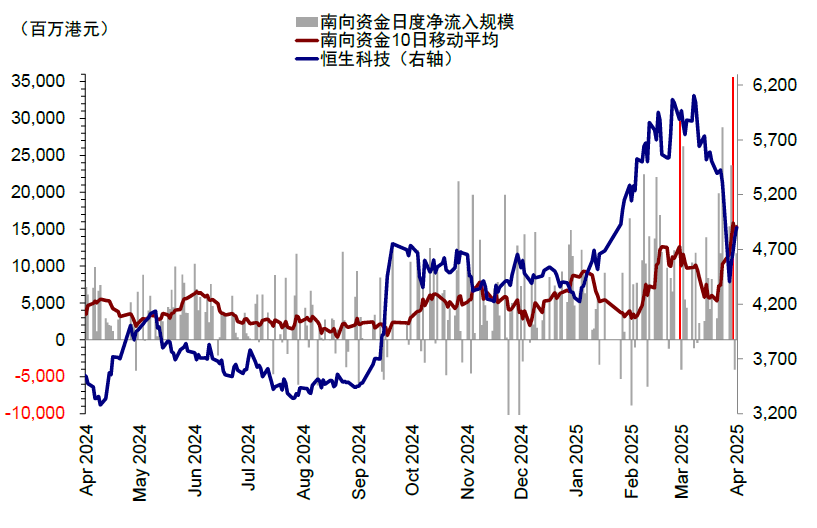
Southbound capital: Daily average inflow of 8.94 billion HKD reached a record high, with a cumulative inflow of over 580 billion HKD this year, with insurance capital and public offerings still having 300 billion HKD available for allocation.
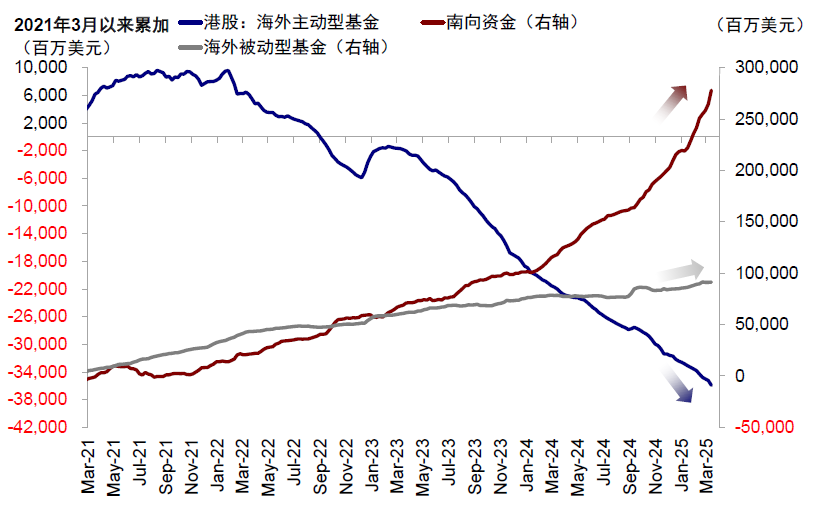
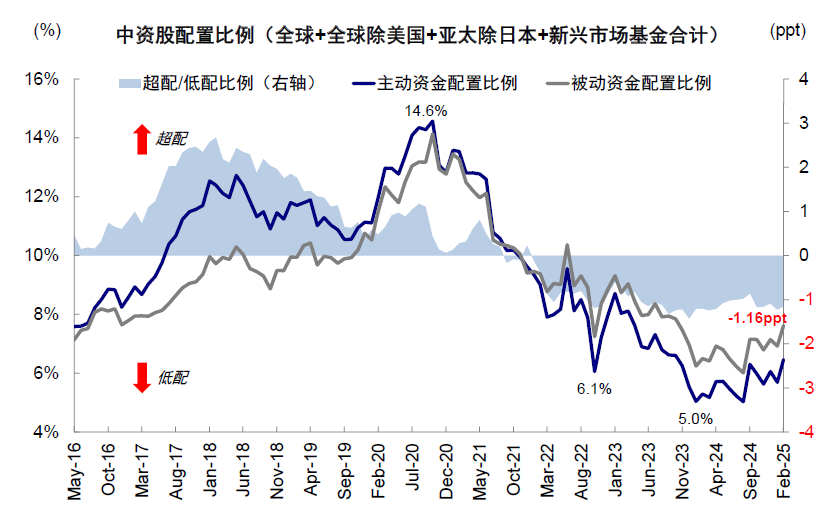
Overseas capital: Actively managed foreign capital is accelerating its exit, with EPFR reporting a weekly outflow of 0.69 billion USD, and allocation ratio dropping to a historical low of 6.5%.
Potential risks of financial sanctions are also worthy of close attention.
In addition to tariffs, potential risks of financial sanctions are also worthy of close attention, especially for Hong Kong stocks and Chinese concept stocks.
The levels of impact, from high to low, are as follows: directly including some Chinese companies on their restricted list, forcing all USA investors to liquidate, for example, the USA NS-CMIC list (Non SDN-Chinese Military-Industrial Complex Companies List); USA investors are subject to an additional capital gains tax on investments in Chinese stocks; excluding Chinese stocks from large global index benchmarks or ETFs like MSCI; concerns regarding the listing status and audit issues of Chinese concept stocks.
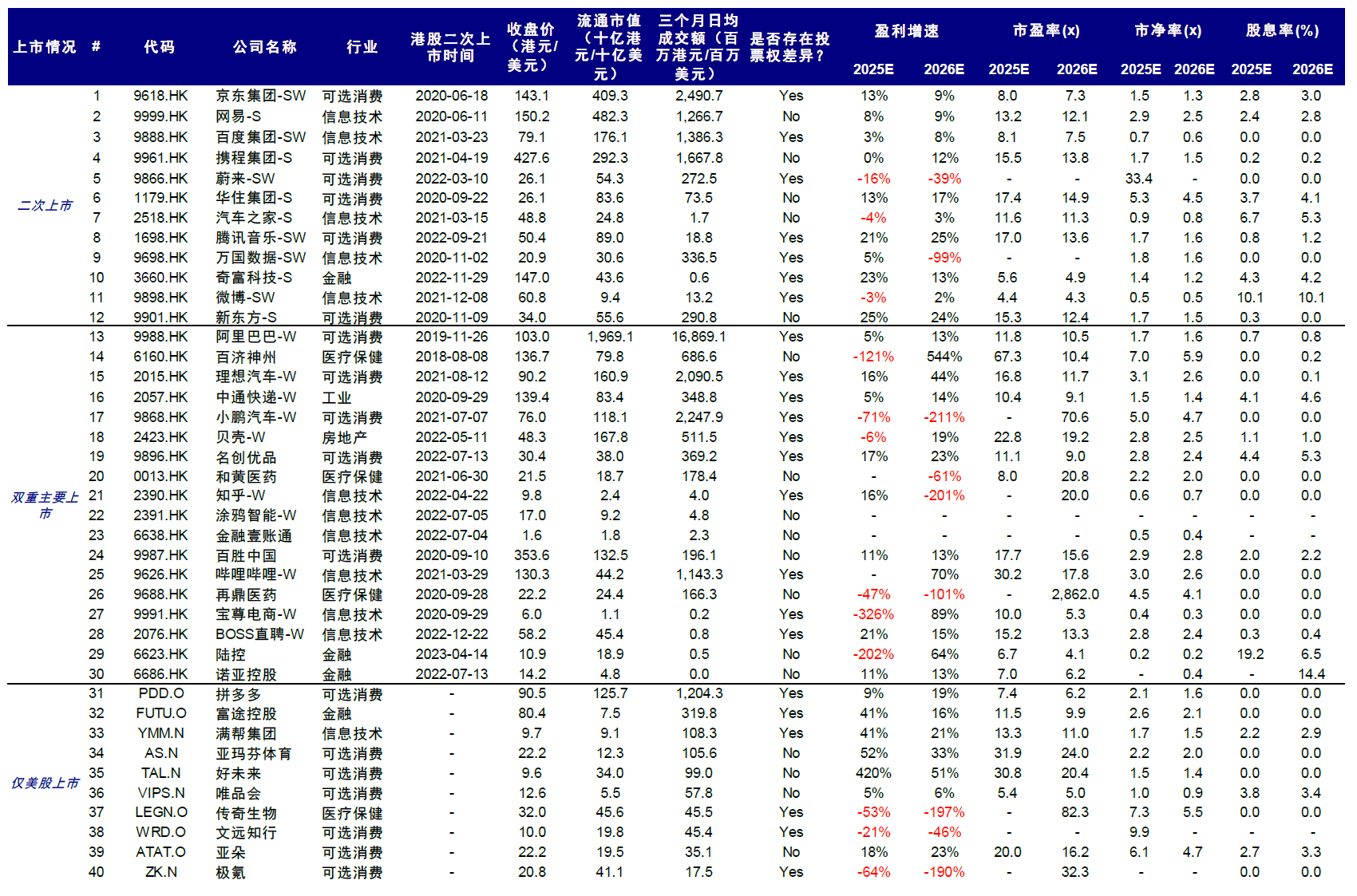
However, after experiencing the "Delisting wave of Chinese concept stocks" in the past few years, especially in 2022, the vast majority of large Chinese private stocks listed in the USA (such as $Alibaba (BABA.US)$、 $JD-SW (09618.HK)$ 、$Baidu (BIDU.US)$Thus, most of the companies that are significantly affected by (Delisted) are small-cap companies that do not yet meet the conditions to return to the Hong Kong stock market.
How will the market be allocated in the future?
Overall, in terms of index space, based on different assumptions regarding market sentiment and fundamental earnings, China International Capital Corporation estimates,
Under baseline conditions, if market sentiment remains unchanged (with a risk premium of 7.7% at the peak of the previous round of Sino-US trade friction) and without considering the impact of earnings revisions, the corresponding Hang Seng Index would be around 20,500 points.
In a positive scenario, market sentiment recovers to pre-tariff shock levels, without earnings downgrade (policy hedging) but also temporarily without the boost from the Technology sector, the Hang Seng Index could return to 23,000-24,000 points. If further optimism arises, assuming sentiment recovers to the level of early 2021 (which means there are significant developments regarding tariffs, and the Technology narrative is once again strengthened), earnings could reflect a growth of 4-5% (policy hedging + realization of part of the Technology earnings), leading to a corresponding Hang Seng Index of around 25,000-26,000 points.
In a pessimistic scenario, market sentiment remains unchanged, and earnings growth declines to around -10% (due to sluggish tariff negotiations and domestic policies not being timely), leading to a corresponding Hang Seng Index of around 18,000 points.
In terms of operating strategies, China International Capital Corporation recommends that investors adopt a 'pyramidal' scaling approach, adding 10% for every 500 points below 20,500 points, focusing on capturing the dual rotation opportunities of valuation recovery in the Technology sector and high dividend assets. For heavily invested investors, hedging through Equity Index futures can lock in downside risks while keeping 10%-15% Cash to cope with potential black swan events.
Editor/Lee