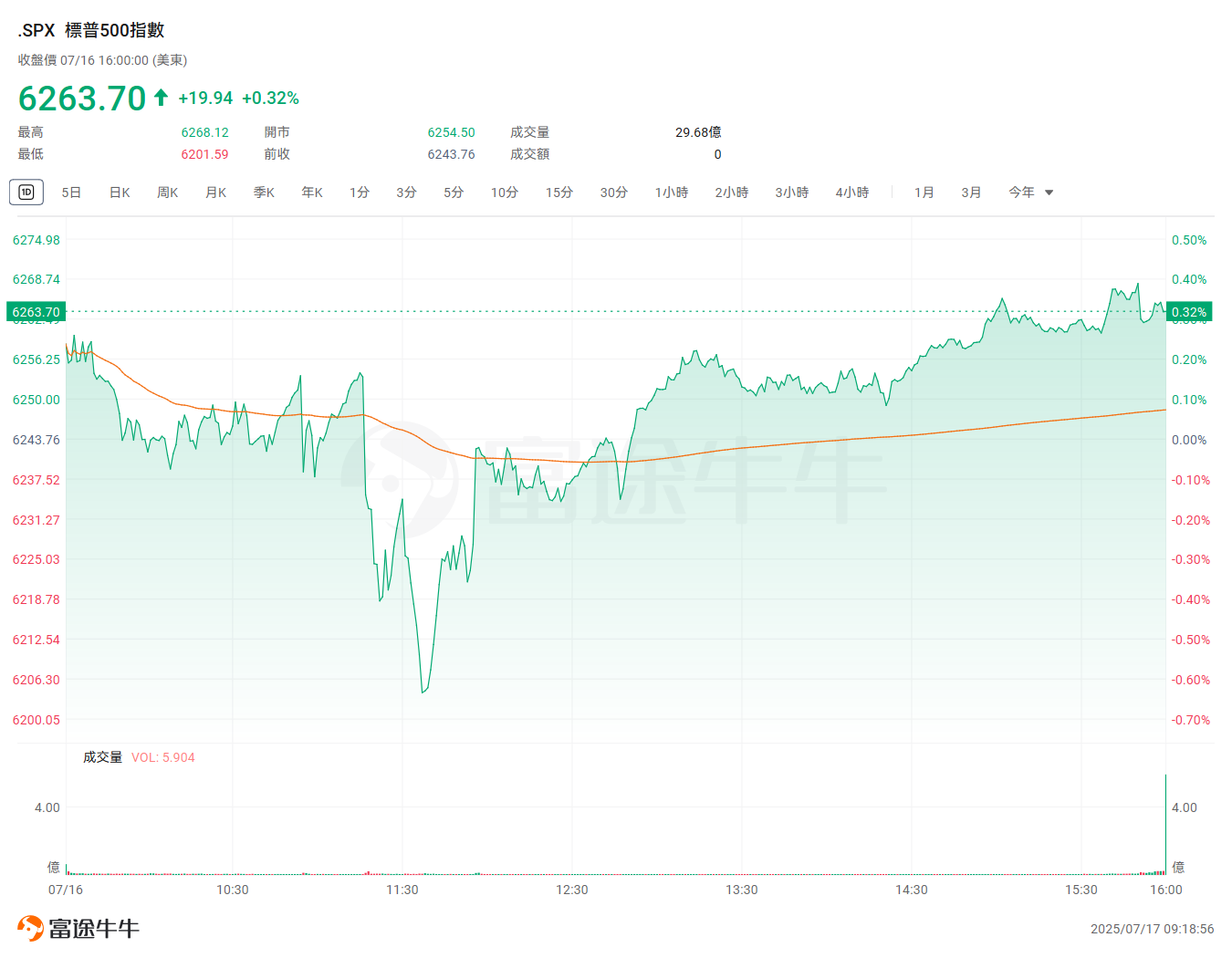
On Wednesday evening, the U.S. stock market experienced a 'fire Powell' drill. A White House official revealed that Trump might soon remove Powell from his position, and subsequent reports indicated that Powell was to be interviewed on Wednesday, with Trump having drafted a letter of dismissal.
Following the news, U.S. stocks and the dollar rapidly declined, while short-term Treasury bonds rose as investors bet that a new chair would cater to the president's desire for interest rate cuts. Gold and Bitcoin also increased in value.
Less than an hour later, Trump denied the possibility, stating that he did not plan to remove Federal Reserve Chair Jerome Powell, but still hinted that there could be 'just cause.' The market subsequently reversed its earlier trend.
 Trump has been eager for interest rate cuts, and significant, rapid ones at that, but the Federal Reserve Chair he nominated during his first term, Jerome Powell, was reappointed during the Biden administration. Powell maintains that Trump's tariff policies have introduced substantial uncertainty into the U.S. inflation outlook, and thus refuses to cut rates immediately, preferring to wait and see.
The conflict between Trump and Powell has become public and increasingly intense. Trump has tried various methods to make Powell 'compliant,' such as:
First, continuously criticizing Powell to create immense psychological pressure: Trump has repeatedly attacked Powell in public, even giving him the nickname 'Mr. Too Late' and insulting him as a 'moron' and 'blockhead.'
Second, frequently threatening to fire Powell, but later backing down due to concerns about market confidence in the dollar. However, he has also expressed that he would welcome Powell's voluntary resignation. The White House is also investigating whether Powell 'cost the country a large amount of money' in the $2.5 billion renovation project of the Federal Reserve headquarters, attempting to use this as a reason to dismiss him.
Additionally, he has a Plan B, which involves nominating a successor to the Federal Reserve Chair early and having them frequently speak out, thereby reducing Powell's influence.
Under the U.S. system, the president cannot dismiss Powell due to policy disagreements; he can only be removed for statutory reasons such as 'malfeasance or neglect of duty' through a Senate vote. However, the president can nominate someone (subject to Senate approval) to serve as the Federal Reserve Chair, and this nominee is referred to as the 'shadow Fed chair.'
The term 'shadow Fed chair' refers to a candidate appointed in advance of the current Fed Chair Jerome Powell's term ending, to communicate and participate in policy discussions during the remainder of Powell's tenure, thereby influencing monetary policy. Who are the potential nominees at this point?

Who are the potential candidates for nomination?
U.S. Treasury Secretary Bessent (Scott Bessent)
U.S. Treasury Secretary Scott Bessent (Scott Bessent) stated earlier this month that the Trump administration is currently focused on finding Powell's successor this fall.
President Trump said on Tuesday that Bessent is a potential candidate to replace Federal Reserve Chair Jerome Powell, but he is satisfied with Bessent's work at the Treasury. Trump told reporters at Joint Base Andrews in Maryland: "(Bessent) is an option, and he’s very good. But he’s not (the top choice), because I like what he’s doing now, right?"
In addition to U.S. Treasury Secretary Scott Bessent, other potential candidates for the Federal Reserve Chair include Christopher Waller, Kevin Hassett, Kevin Warsh, David Malpass, and Michelle Bowman. These individuals all have backgrounds in economic policy and are closely associated with the Trump administration.
Federal Reserve Governor Christopher Waller
Christopher Waller, a member of the Federal Reserve Board, is well-versed in the central bank's internal thinking. On Thursday, Waller reiterated that the Fed might consider a rate cut later this month, as he believes any inflation from tariffs would be temporary. His remarks once again highlight the current divisions within the Fed. He stated, 'I think we (our monetary policy) are too tight, and we might consider lowering the policy rate in July. This has nothing to do with politics.'
We haven't seen much tariff-driven inflation. For this reason, I have always believed that we can start lowering the policy rate from the current level,' he added.
These views align with those of President Trump, who has repeatedly pressured Fed Chair Jerome Powell to cut rates, arguing that tariffs have not led to a resurgence in inflation and that reducing interest on U.S. debt could save money.
Kevin Hassett, Director of the White House Economic Council,
The 63-year-old Hassett is one of the recent frontrunners for the position of Fed Chair, with Trump believing he would be more responsive to his calls for rate cuts than the current Chair, Jerome Powell.
Hassett has a close relationship with Trump, having served him for nearly a decade. He is one of the few advisors who has both won the president’s favor and maintained his trust. During Trump's first term, Hassett held two positions, later joining a private equity firm founded by Trump’s son-in-law, Jared Kushner, and providing economic policy advice during Trump's 2024 presidential campaign.
Hassett, who served as the Chairman of the Council of Economic Advisers, is a conservative economist who taught at Columbia University and worked at right-wing think tanks such as the American Enterprise Institute. Early in his career, he was an economist at the Fed. He has publicly advocated for rate cuts, echoing Trump’s view that the Fed should be more supportive of economic growth.
It is worth noting that Hassett's views on interest rate policy have undergone significant changes. He previously defended the independence and policy decisions of the Fed. Hassett now criticizes the Fed's substantial rate cut in September last year as 'a political maneuver to help former Vice President Kamala Harris' campaign,' but in the fall, he told the Financial Times that the rate cut was reasonable based on the labor market slowdown data available to the Fed at the time.
Former Federal Reserve Governor Kevin Warsh
In early this month, former Federal Reserve Governor Kevin Warsh stated that he does not believe U.S. tariffs will lead to inflation and that the Federal Reserve should lower interest rates. He argued that the Fed's poor economic policies are stifling growth and that the institution needs systemic changes, as it is overstaffed and in need of new talent.
When discussing inflation and central bank independence, Warsh said that the Fed's predicament is self-inflicted. He noted that inflation remains above target because the Fed acted too late after the pandemic, failing to address the post-pandemic surge. Moreover, its reluctance to reflect on this policy mistake has undermined its standing among the public and investors.
Warsh, who served as a member of the Federal Reserve Board from 2006 to 2011, has called for raising interest rates, even during the height of the financial crisis, frequently warning of impending inflation. This was a concern he reiterated last year. However, this year, Warsh has become a strong advocate for lowering interest rates, a shift that occurred amid President Trump's intense pressure on the Fed to cut rates.
Trump has made it clear that he would not select a candidate who is not ready to deliver, but Warsh is not without his advantages. Trump has previously stated, “I should have nominated Warsh instead of Powell.”
Federal Reserve Vice Chair Michelle Bowman
Bowman was nominated by Trump to the Federal Reserve Board in 2018 and was nominated as the Federal Reserve's regulatory vice chair on June 9, 2025, with a term ending in 2029.
Bowman, following the statement by Federal Reserve Governor Christopher Waller supporting a July rate cut, is another Fed member who supports a rate reduction. If inflation pressures remain contained, she indicated her support for a rate cut as early as July. 'Fed Wire' Timiraos pointed out that Bowman, who had previously been highly focused on inflation concerns, has made a meaningful shift in her stance. Among the Fed officials who have spoken since the last meeting, the two officials appointed during Trump’s first term were the first to express their intention to cut rates at the next Fed meeting in July.
However, Bowman's confirmation vote for the role of vice chair for supervision in the Senate was not particularly smooth, with a 48-46 vote (in June 2025) indicating a divided Senate. A nomination for the chair position may face similar resistance.
David Malpass, former World Bank President
Malpass’s strength lies in his consistent calls over several months for the Federal Reserve to cut interest rates to boost growth. “The Federal Reserve is really important for growth, and Trump is right; we need lower interest rates and lower bond yields to achieve growth,” Malpass said as early as March, pointing out that the Fed’s economic forecasts were too low. In June, he reiterated the case for rate cuts in an op-ed in The Wall Street Journal.
Trump appointed Malpass as the World Bank President during his first term, a position he held from 2019 to 2023. He also served as Under Secretary of the Treasury for International Affairs in the Trump administration from 2017 to 2019. Malpass has 24 years of experience as an economist on Wall Street and held senior economic positions under former Presidents Reagan and George W. Bush.
What impact would the nomination of one of them as the Federal Reserve Chair have on the U.S. stock market?
Powell’s term will end in May 2026, and Trump is expected to nominate a new candidate in the second half of 2025.
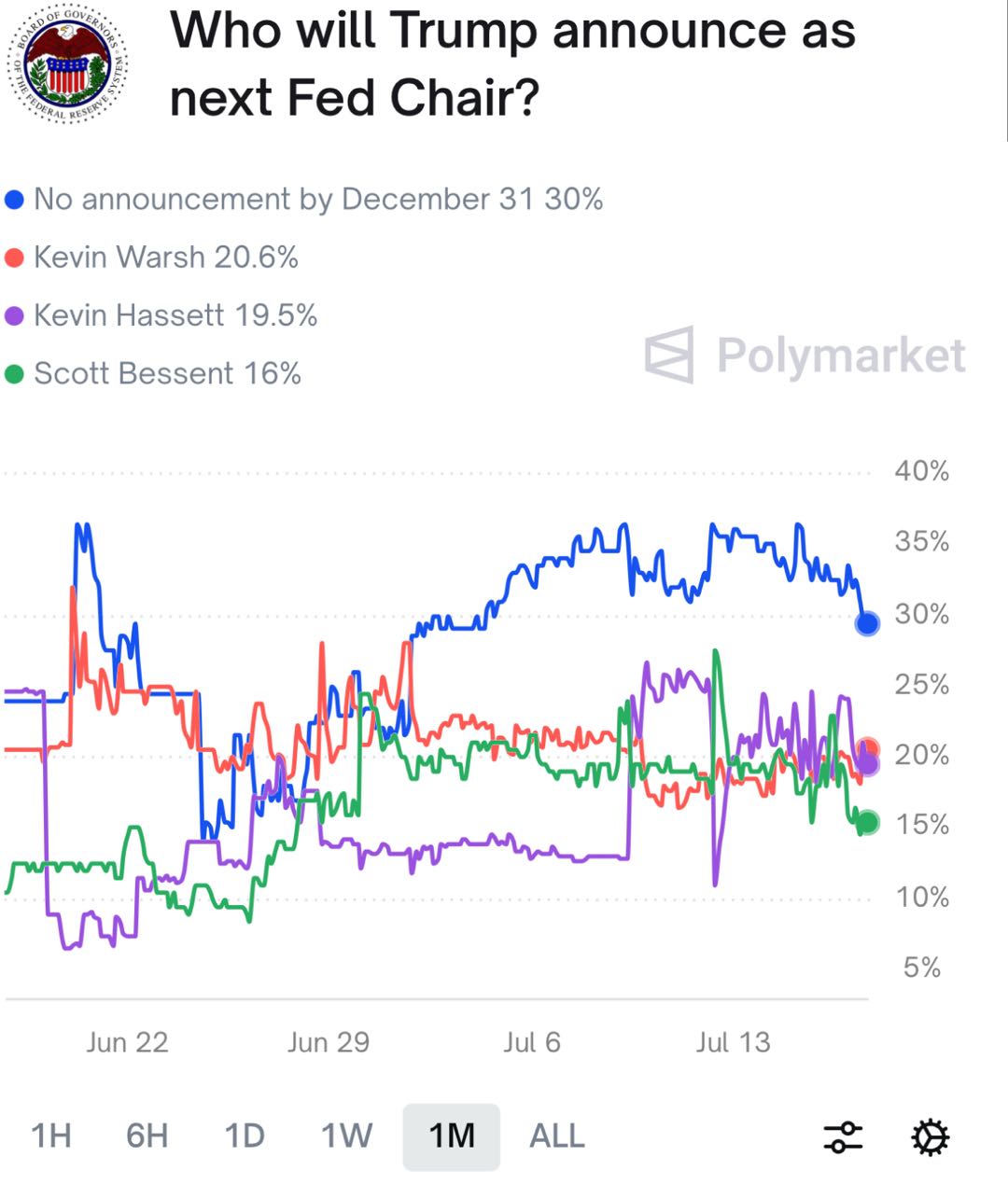
According to the July global fund manager survey by Bank of America, 26% of respondents bet on current Treasury Secretary Bessent becoming the next Federal Reserve Chair; Walsh received 17% support, Waller 14%, and Hassett 7%. According to the gambling market data from polymarket, there is a 30% chance that no candidate will be announced by the end of the year, with Walsh at 20.6%, Hassett at 19.5%, and Bessent at 16%.
Although these candidates are currently dovish, a short-term appointment by Trump of any one of them could signal a rate cut, leading to a 'cliff-like' reduction in interest rates. However, their past stances on interest rate policy differ, and this could result in different movements in the U.S. stock market:
If Hasset and Bessent are nominated as Fed Chair, the market will experience short-term volatility due to concerns about the Fed's independence, which may trigger risk-averse sentiment;
Wash is a former Fed member with a history of “hawkish” stances, a traditional hawk who has been concerned about inflation. He recently criticized the Fed for “failing to control inflation,” but supports deregulation. The U.S. stock market may face overall pressure;
Waller and Bowman are both members of the Fed, advocating for a rate cut in July. Their positions are close to Powell’s but more dovish, and the market reaction may be muted;
If Malpass is nominated, the U.S. stock market may see a short-term rise, as he has been calling for a Fed rate cut to boost growth over the past few months.
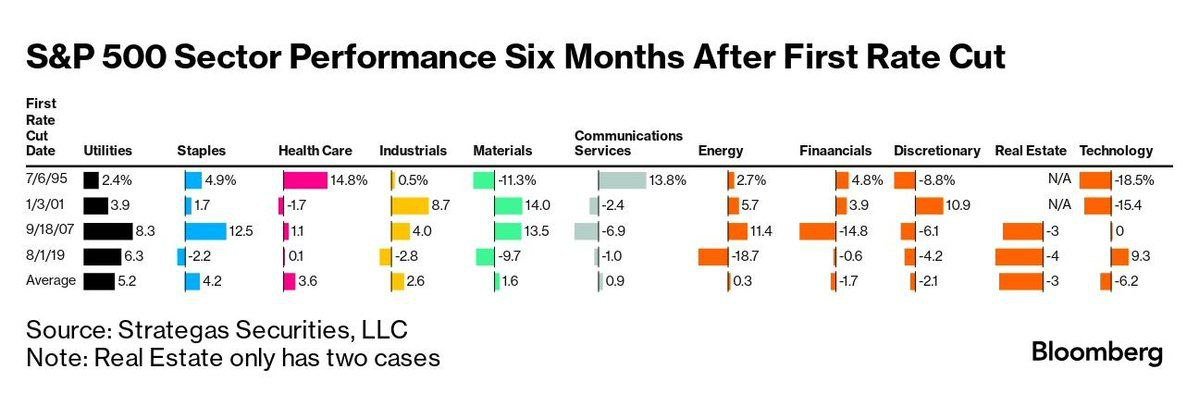
Investors need to pay attention to the timing of the nominations. If Trump nominates a dovish candidate before September, the U.S. stock market may experience a phase of upward movement. Attention should also be given to potential regulatory relaxation or interest rate-sensitive technology stocks. Historically, defensive sectors such as utilities, consumer staples, and healthcare have benefited from rate-cut environments, with their average performance ranking among the top three in the S&P.
Risk warnings: Trump might dismiss Powell early through existing policies; the nominated “shadow Fed chair” could shift to a “hawkish” stance; U.S. inflation may cool down; the Fed may cut rates earlier, in July; Trump’s views may change, becoming bullish on Powell.
Finally, mooer, who do you think is likely to be nominated as the “Fed Chair”?
 Get more analysis and insights?Ask Futubull AI!Precise answers, comprehensive insights, and the ability to seize key opportunities!

Editor/Rocky