
①Goldman Sachs stated that 2025 is an especially intriguing year as it is characterized by three words: Noise, Quiet, and Transition. ②Looking ahead to 2026, these three characteristics are likely to persist, with Goldman Sachs' latest research report highlighting ten key investment themes for 2026.
Cailian Press, January 4 (Editor: Xiaoxiang) As 2025 comes to a close and 2026 begins, Goldman Sachs’ industry analysts are currently focusing on several themes worth watching in the coming year.
In its latest research report released at the turn of the year, Goldman Sachs noted that the U.S. stock market declined in trading on the last day of 2025 (Wednesday), but the full-year performance still showed a gain of nearly 17%. Investors this year have digested a wealth of information, from tariffs to AI, from geopolitical risks to economic stimulus policies. Since the brief bursting of the tech bubble in 2021, the market has performed almost identically each year—continuing to rise. Could this lay the groundwork for a similar trend in 2026?
 Goldman Sachs stated that 2025 is an especially intriguing year as it is characterized by three words: Noise, Quiet, and Transition. Looking ahead to 2026, these three characteristics are likely to persist:
Noise: Presidents tend to be less 'noisy' in their second year in office, but the upcoming midterm elections may bring political changes at both state and congressional levels. Additionally, the U.S. Supreme Court is set to rule on a series of cases that could impact the markets, including the legality of tariffs imposed during the Trump administration.
Quiet: Goldman Sachs believes that 'steady' is the most appropriate term to describe the economic and stock price forecasts for 2026. Economically, U.S. GDP growth is projected to be 2.6% in 2026, higher than 2.1% in 2025 but slightly below the growth rate in 2024, driven by tariff reductions, economic stimulus measures, and productivity gains fueled by artificial intelligence. In terms of corporate earnings, the earnings per share (EPS) growth rate of the S&P 500 Index is expected to rise from 10.5% in 2025 to 12.1% in 2026. Regarding the target level of the S&P 500, Goldman Sachs predicts it will reach 7,600 points by the end of 2026, representing an increase of about 11% from current levels. Although this return is lower than the 16.8% gain in 2025, it will still be a robust performance for the stock market.
Transition: The transition in 2026 may be marked by a more pronounced shift toward a broader group of beneficiaries of artificial intelligence. In 2025, almost all major stock markets outperformed the U.S., whether measured in local currency or U.S. dollars. Looking ahead to the next year, Goldman Sachs’ team recommends investing in multiple pro-cyclical sectors, including Russell 2000 index stocks, non-residential construction stocks, consumer stocks targeting middle-income consumers, and companies benefiting from AI-driven productivity enhancements—those that can reduce costs or increase revenue by adopting AI-powered technologies and solutions.
Below are the ten key investment themes for 2026 mentioned in Goldman Sachs' report:
AI and Electricity
The AI infrastructure theme is showing signs of transitioning into a new phase. Since the summer, the share prices of many previously reliable leading companies—such as NVIDIA, Microsoft, and Amazon—have stagnated, while emerging players (e.g., Qualcomm) are actively positioning themselves, and 'winners' in the AI space (like Google) are beginning to emerge.
Stock prices of storage producers such as Micron and connector companies like Amphenol and TE Connectivity have surged. The power sector in AI infrastructure construction is also undergoing a transformation: while gas turbine supplier GE Vernova continues to strengthen, and companies responsible for installing these systems, such as Quanta Services and EME, continue to thrive amid dual scarcity in both market and field services, the momentum of utility stocks has stalled. Goldman Sachs' November report delves into the next phase of AI-driven trading, including companies that may become more efficient through the implementation of AI-powered tools.
Drug Development
In the GLP-1 space, the transformation trend may be even more pronounced. Eli Lilly and Co’s stock continues to outperform the broader market, but Novo-Nordisk A/S’s shares have nearly halved in 2025 due to headwinds from both pricing and sales volume, leading to a 33% reduction in earnings-per-share expectations for 2026. Goldman Sachs forecasts that this shift will extend to new weight-loss products awaiting approval in 2026. As numerous drugs and therapies are set to be approved in the coming year, Goldman Sachs also observes a transition from obesity drugs to a Cardiology Renaissance.
The boundaries between physical store sales, online commerce, and advertising are becoming increasingly blurred.
Goldman Sachs has emphasized the blurring lines between physical store sales, online commerce, and advertising in multiple outlook reports. Strategist Eric Sheridan, who has long focused on this area, noted in the report 'Internet: Top Ten Industry Themes and Key Stock Outlook for 2026' that e-commerce platforms are creating profit opportunities through advertising and marketing agreements. Another strategist, Kate McShane, pointed out that retailers are continually expanding diversified revenue channels such as media, membership programs, and e-commerce. She highlighted the introduction of faster delivery speeds, enhanced value propositions, and 'intelligent commerce' solutions, which will reshape the industry landscape in the coming year.
China Rising
Goldman Sachs economists predict that despite an environment of increasing tariff barriers, China will achieve higher-than-expected growth driven by technological advancements and sustained export advantages. The impact of China's economic recovery on global trade and the technology landscape will be closely monitored in the coming year.
Profit Growth Driven by Productivity
The Goldman Sachs team noted that with technology-driven productivity improvements supporting growth over the next year, there is a possibility of 'jobless expansion.' However, given the shrinking labor force due to continued restrictions on immigration, such productivity gains may be necessary. Ultimately, increased productivity could be key to offsetting the combined effects of aging populations and declining birth rates.
Alternative Investments
By 2025, the private credit market has surpassed private equity and continues to attract an influx of retail capital. Strategists at Goldman Sachs previously noted the advantageous position of brokers like Coinbase and Robinhood in expanding markets such as cryptocurrencies, stablecoins, and prediction markets. Additionally, gold investment is becoming increasingly popular.
Military Evolution
In the United States, the Space Force is actively incorporating innovative capabilities, as demonstrated by the contract awarded in December for a new satellite tracking system. Companies with native drone and satellite technology expertise, such as AeroVironment (AVAV) and Rocket Lab Corporation (RKLB), may gain a significant competitive edge. Meanwhile, the European continent is restarting its militarization process, with an estimated need to invest up to $160 billion over the next five years just to catch up with Russia.
Humanoid robots and autonomous vehicles
With advancements in technology, the ability to manufacture hardware that simulates everyday activities is improving. In a report published in October, the Goldman Sachs team assessed the potential impact of humanoid robot development on profit growth for leading industrial tech companies like Tesla. The Goldman Sachs team also conducted field research on China’s robotics ecosystem, concluding that Chinese manufacturers are optimistically preparing production capacity in anticipation of actual orders. Moreover, China is taking the lead in autonomous driving, with projections indicating that the country’s driverless taxi market will reach $47 billion by 2035.
Nuclear Renaissance and the Rise of Rare Earths
Over the past few decades, three nuclear power plant accidents—Three Mile Island, Chernobyl, and Fukushima—had long stalled the development of nuclear energy. However, surging demand is now driving a nuclear renaissance, fueled by the artificial intelligence revolution's growing need for energy, particularly clean energy. Rare earth metals are becoming key components in the tech sector, which remains dominated by Chinese resources.
10. Policy Uncertainty
Finally, policy direction remains a major market theme. Goldman Sachs believes that as we approach 2026, the impact of policy on markets may be more pronounced than usual (as seen in 2025). Why? In terms of monetary policy, discussions surrounding the Federal Reserve's next steps, leadership changes, and broader implications for U.S. monetary policy will dominate markets at least through the first half of the year. Divisions persist within the Federal Reserve—December meeting minutes show that most FOMC members anticipate further interest rate cuts, while some believe policy will remain unchanged for a period of time.
As 2026 approaches, traders at Goldman Sachs are closely monitoring a series of catalysts that could influence market trends, including:
The anticipated ruling by the Supreme Court on the legality of the Trump administration's tariff regime;
The Federal Reserve's January and March meetings (and, of course, subsequent ones);
The appointment of a new Federal Reserve Chair;
The U.S. midterm elections in November;
The World Cup and Winter Olympics events.
Goldman Sachs reminded in its final note that one key point to keep in mind when looking ahead to 2026 is that current stock market valuations are at their highest level since the late 1990s.
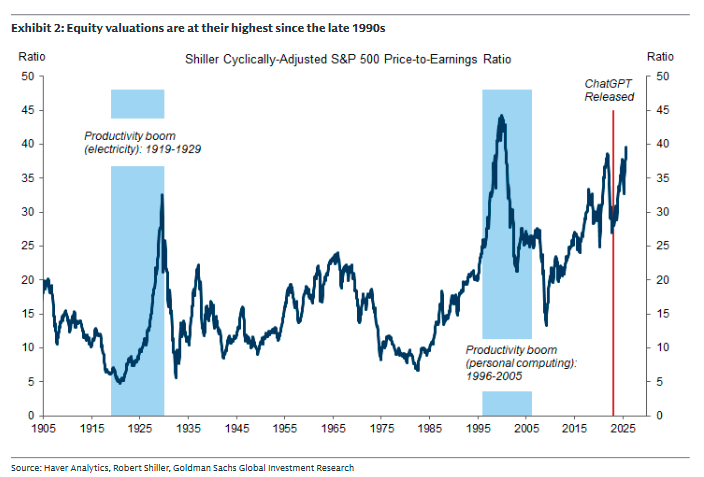
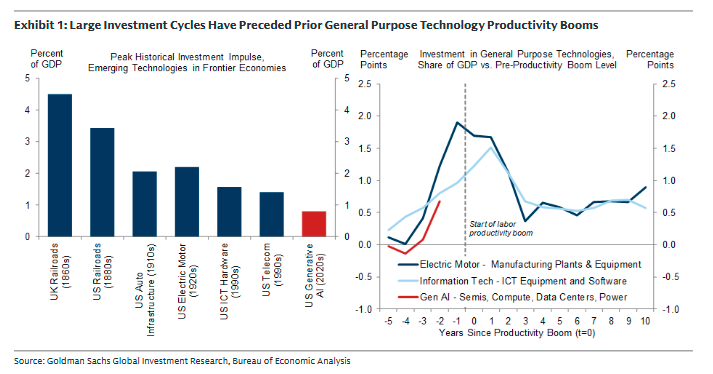
One key question that remains to be answered is whether the wave of artificial intelligence can drive profit growth like the electric motor and the software/hardware revolution did?
Editor/Liam