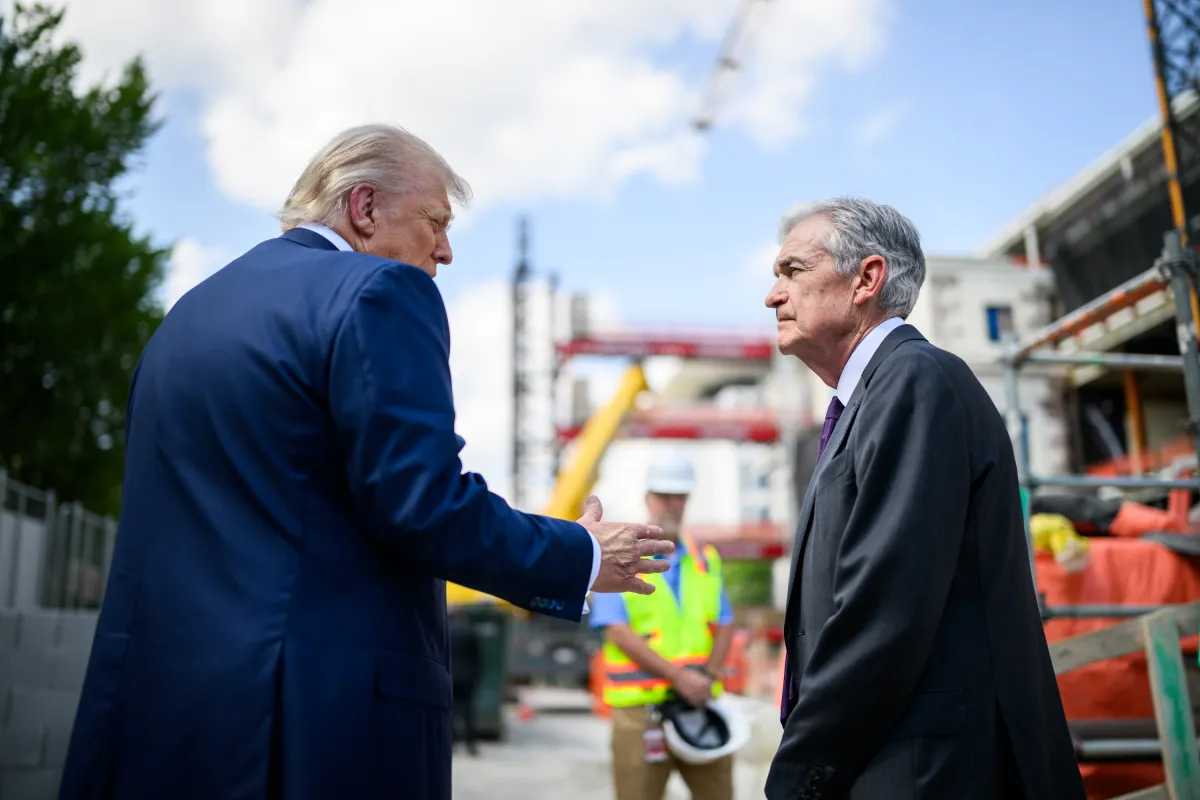
Trump made another strong statement: U.S. troops will remain around Iran, currently loading ammunition and regrouping, looking forward to the next conquest. Within 24 hours, his statements fluctuated repeatedly; he also claimed that the U.S. 15-point plan is the basis for negotiation, while Iran's 10-point proposal has been discarded. The public can no longer discern the truth.
U.S. President Trump stated on Wednesday local time that American troops would remain deployed within and around Iran until Tehran fully complied with a 'genuine agreement' reached by both sides. He warned that any breach of the agreement would trigger a military response more intense than ever before.
"All U.S. ships, aircraft, and military personnel... will remain in their current positions within and around Iran until the 'genuine agreement' is fully adhered to," Trump wrote on the Truth Social platform.
 "If, for any reason, compliance fails... then the 'firing' will begin, on a scale, with an impact and intensity surpassing anything anyone has ever witnessed."
Trump reiterated that both parties had agreed: Iran would not develop nuclear weapons, and the Strait of Hormuz would remain open and secure for commercial shipping.
"In the meantime, our great military is 'reloading ammunition and resting,' and in fact, they are looking forward to the next 'conquest,'" Trump added.
He concluded the post, published just before midnight, with the words: "America is back!"
This statement came a day after Washington and Tehran, under mediation by Pakistan, reached a two-week ceasefire agreement. The deal halted approximately six weeks of fighting and triggered a brief rebound in global markets, fueled by optimism about the potential resumption of energy shipments through the Strait of Hormuz.
Iran stated that safe passage through the strait was possible but required coordination with the Iranian armed forces.
Trump also took to social media to claim that The New York Times and CNN respectively reported a 'completely false ten-point clause' regarding the Iran ceasefire negotiations, "aimed at discrediting those involved in the peace process. These ten points are entirely fabricated – evil losers!!! Make America Great Again."
Trump's contradictory statements sparked confusion over the ceasefire.
Trump's announcement of a two-week ceasefire with Iran has reassured global markets. However, a series of contradictory statements and actions since the announcement indicate that fundamental differences remain, making the fragile truce even more precarious.
Bloomberg News reported that starting from early Wednesday local time, Trump posted a series of messages on social media regarding the Strait of Hormuz, Iran’s nuclear materials, tariffs, sanctions, and negotiation parameters for a long-term peace agreement. Many of his posts contained dubious or incomplete claims.
Most critically, Trump insisted on Tuesday that any ceasefire depends on the reopening of the strait. However, this waterway remained effectively closed as of Wednesday.
Meanwhile, fighting continues – Kuwaiti military forces stated that a 'fierce' salvo of Iranian attack drones caused significant damage to energy, power, and desalination facilities.
When Trump initially announced the deal, he only explicitly stated that attacks on Iran should cease, leaving unresolved issues related to another front in the war – Lebanon. Israeli forces are currently battling Tehran-backed Hezbollah militants there. Israeli Prime Minister Netanyahu stated on Wednesday that he believes the ceasefire does not apply to Lebanon, a view inconsistent with Iran and mediator Pakistan.
According to the semi-official Tasnim News Agency, Israel's attacks on Lebanon prompted Tehran to threaten that it would withdraw from the agreement if the strikes continue. It was not until Wednesday morning local time that Trump clarified his position: Lebanon is not within the scope of the ceasefire. He dismissed concerns that this could lead to the collapse of the agreement, stating in a PBS phone interview: 'That will work itself out too. It’s fine.'
These are just some of the more obvious contradictions. The so-called ceasefire agreement was reached after Trump threatened to 'obliterate Iranian civilization.' This demonstrates the risks of conducting diplomatic negotiations via social media posts ahead of this weekend’s talks in Islamabad.
'These two weeks may be bumpy,' said Dennis Ross, a former Middle East envoy for President Clinton and now a fellow at the Washington Institute for Near East Policy. 'It is also important to clarify what commitments both sides have made.'
Investors still view these developments as a breather. U.S. stocks rose on Wednesday, with oil prices falling below $95 per barrel.
However, Trump's statements following the ceasefire have created additional confusion about what both parties actually agreed to or are negotiating.
On Wednesday, Trump also altered the key points that needed to be discussed in the upcoming negotiations between the United States and Iran. He described the U.S. 15-point plan as the basis for negotiations, rather than the Iranian 10-point list which both sides had previously considered as the starting point. Iran's list included provisions such as Iran's control over the Strait of Hormuz and its right to uranium enrichment — clear red lines for Washington.
Trump and his administration later strongly criticized media reports about Iran’s 10-point plan. On Wednesday, Trump insisted that the U.S. plan would form the basis for negotiations. He stated that 'many of the 15 points have already been agreed upon,' but Iran had previously rejected them.
On Wednesday, White House Press Secretary Karoline Leavitt told reporters that Iran's initial proposal was 'completely unserious, unacceptable, and entirely discarded — Trump and the U.S. negotiators really threw it into the trash.' 'It is utterly absurd to think that President Trump would accept Iran’s wish list as part of an agreement,' she said.
Just 24 hours after Trump threatened Iran with apocalyptic destruction, he proposed cooperating with Tehran to 'remove' its nuclear materials and suggested establishing a joint venture to charge tolls on ships passing through the Strait of Hormuz. It remains entirely unclear whether Tehran, other countries in the region, or Asian and European nations reliant on energy shipments through the Persian Gulf would agree to such a U.S. plan.
He also insisted that Iran had undergone a 'regime change' that would prove highly productive, although the country's theocratic leadership structure remains intact.
Editor/melody