
Source: Qile Club
Author: Montier
Warren Buffett often reminds us of the importance of not releasing the hawk until the rabbit is in sight. When a good opportunity arises, your patience will be rewarded. However, most investors seem to lack the patience to wait, taking action on every opportunity they can find and swinging at every pitch.
Lesson One: Markets are not efficient.
As I have previously observed, the Efficient Market Hypothesis (EMH) is akin to the Monty Python sketch 'The Dead Parrot.' No matter how many times you declare that the parrot is dead, its adherents insist that it is merely resting.
Lesson Two: Relative performance is a dangerous game.
 Although practitioners generally do not believe in the Efficient Market Hypothesis, they still tend to endorse its derivative theory—the Capital Asset Pricing Model (CAPM). This questionable theory is based on numerous flawed assumptions (for instance, investors can establish long or short positions of any size in any stock without affecting the stock's price, and all investors analyze stocks through mean-variance optimization).
This has directly led to the separation of alpha and beta, with investors dedicating substantial time to this approach. Regrettably, these concepts are merely peripheral. The late, great Sir John Templeton put it well: 'The true objective of investing is to maximize after-tax real returns.'
The alpha/beta investment framework fosters an obsession with market benchmarks, giving rise to a new class of investors who care solely about aligning with the mainstream. Their investment approach reflects Keynes' observation: 'It is better to fail conventionally than to succeed unconventionally.'
Lesson Three: This time is no different from the past.
Understanding historical bubbles can help protect your capital. Benjamin Graham believed that investors should 'possess an adequate understanding of stock market history, particularly major booms and busts. With such background knowledge, investors may be able to make more valuable judgments about the opportunities and dangers in the market.' In reflecting on history, there is nothing more important than understanding bubbles.
Although the specific details of bubbles continually change, their fundamental patterns and modes of evolution remain strikingly similar. The framework for analyzing bubbles dates back to a paper written in 1876 by John Stuart Mill. Mill was an extraordinary individual—learned, multilingual, a philosopher, poet, economist, and member of parliament. He significantly advanced social justice, writing extensively against slavery and advocating for expanded voting rights. Based on our limited perspective, his insights into bubble dynamics are among the most useful. Mill stated, 'Economic crises are fundamentally unrelated to financial resources; they result from human perceptions.'
His model was later adopted multiple times, forming the framework for bubble theories by Hyman Minsky and Charles Kindleberger. This model divides the rise and collapse of bubbles into five stages:
New investment hotspot --> Credit creation --> Extreme euphoria --> Critical state/financial distress --> Capital flight
New investment hotspot: The birth of prosperity. A new investment hotspot is generally an exogenous shock that creates new profit opportunities in certain areas while eliminating opportunities in others. As long as the profits from newly created opportunities are greater than those of the disappearing ones, investment and production will increase, with investments appearing both in financial assets and physical assets. This, in fact, marks the birth of prosperity. Stuart noted, "New confidence emerges early in this phase, but its growth remains slow."
Credit creation: The growth phase of the bubble. Just as fire cannot spread without oxygen, prosperity requires credit to feed it. Minsky argued that monetary expansion and credit creation are largely endogenous factors. This means not only do existing banks issue currency, but the formation of new banks, the development of new credit instruments, and the expansion of personal credit outside the banking system also serve a currency-issuing function. Stuart observed that during this phase, "Interest rates are generally very low, credit growth becomes increasingly robust, businesses continue to multiply, and profits continue to rise."
Extreme euphoria: Everyone begins buying into the new investment hotspot. It is believed that prices can only rise and not fall; traditional valuation standards are discarded, and new metrics are introduced to justify current prices. A wave of excessive optimism and overconfidence sweeps through the market, leading people to overestimate returns and underestimate risks, with widespread belief in their ability to control the situation. Everyone starts discussing a new era, and Sir John Templeton’s most dangerous phrase in investing—"This time is different"—can be heard everywhere.
Stuart wrote, "Pathological overconfidence appears in the market, healthy confidence degenerates into a shallow and pathological belief, and the investing public, caught up in euphoria, stops considering key questions: Can capital generate quick returns? Are investments exceeding one’s capabilities?... Unfortunately, in the absence of appropriate foresight and self-control, the trend is that speculative growth peaks precisely when it is at its most precarious."
Critical state/financial distress: This leads to a critical state, often characterized by insiders cashing out, followed by financial distress, where the massive leverage built during the boom period starts becoming a severe problem. Fraud frequently occurs during this phase.
Capital flight: The final stage of the bubble's lifecycle is capital flight. Investors, frightened by various events, become unwilling to stay in the market, causing asset prices to plummet. Stuart remarked, "Generally speaking, it is not panic that destroys capital; panic merely reveals the scale of capital previously destroyed by hopeless and unprofitable investments. The collapse of major banks and commercial institutions is a symptom of the disease, not the disease itself."
Stuart found that recovery after a bubble is a prolonged process. "Economic downturns, business failures, and reduced investment values diminish many people's purchasing power... Profits remain low for extended periods due to constrained demand... Only time can restore shattered courage and heal deep wounds."
Since bubbles repeatedly occur in the same manner, this raises the question: Why do people fail to foresee the impending consequences? Unfortunately, we must overcome at least five behavioral barriers to avoid bubbles.
First, excessive optimism. Everyone believes they are less likely than the average person to become addicted to alcohol, get divorced, or lose their job. This tendency to only focus on positive outcomes prevents us from recognizing predictable dangers.
Second, in addition to our excessive optimism, we also suffer from the illusion of control, believing we can influence outcomes of events that are beyond our control. Various illusions exist within pseudo-financial sciences, such as the Value at Risk (VaR) measurement method, which assumes that quantifying risk equates to controlling it—a notion considered one of the greatest fallacies in modern finance. VaR merely informs us of potential losses under a given probability, for instance, the maximum loss in a single day with a 95% confidence level. Such risk management techniques are akin to purchasing a car with airbags that work only if no collision occurs—a false sense of security.
The third obstacle to identifying predictable sudden events is self-serving bias. We are inherently inclined to interpret information and act based on our self-interest. As Warren Buffett once said, “Never ask a barber if you need a haircut.” If you had been a risk manager in 2006 questioning whether some collateralized debt obligations (CDOs) held by your bank might be problematic, you would have likely lost your job, replaced by another risk manager who approved the trades. Whenever large sums of money are being made, pointing out obvious flaws in actions and expecting people to stop is unrealistic.
Fourth, a lack of foresight leads to an overemphasis on short-term gains. When making decisions, we often neglect future consequences, summarized in the adage, 'Let us eat and drink, for tomorrow we shall die.' This overlooks the fact that, at any given moment, the odds of living until tomorrow versus not are approximately 260,000:1. Saint Augustine’s prayer—“Grant me chastity, but not yet”—epitomizes a lack of foresight. Many in the financial world think, 'One more year of bull market, a few more bonuses, and I promise I will retire next year to enjoy life fully.'
Negligence-induced blindness impedes our ability to detect foreseeable disruptions. Frankly, there are things we deliberately ignore. In a classic experiment, participants watched a video of two teams playing basketball—one wearing white jerseys and the other black—and were asked to count the number of passes made by the white team. Midway through, a person dressed as a gorilla entered the court, beat their chest, and exited. When asked about the number of passes, the typical answer ranged between 14 and 17. When questioned about anything unusual, nearly 60% of viewers failed to notice the gorilla. After being informed about the gorilla and shown the video again, most viewers insisted it was not the same video they had watched earlier, claiming the first did not feature a gorilla! They were simply too focused on counting passes. I suspect something similar happens in finance—investors become so engrossed in details and noise that they fail to observe the bigger picture.
Lesson Four: Value Matters
In its simplest form, value investing involves buying assets when they are undervalued and avoiding overpriced ones. While this principle seems self-evident, I must emphasize that I have encountered many investors who prefer to distort reality rather than acknowledge the true state of value.
Lesson Five: Do Not Act Without Evidence
According to data provided by the New York Stock Exchange, the average holding period for stocks listed on the exchange is six months. It appears investors behave like individuals with untreated attention deficit hyperactivity disorder. In other words, the average investor seems fixated on the next one or two quarterly reports, forgetting that stocks represent long-term investments. This shortsightedness creates opportunities for those willing to invest for the long term.
Warren Buffett often reminds us of the importance of not releasing the hawk until the rabbit is in sight. When a good opportunity arises, your patience will be rewarded. However, most investors seem to lack the patience to wait, taking action on every opportunity they can find and swinging at every pitch.
Lesson Six: Market Sentiment Matters
Investor returns are not only affected by valuation; market sentiment can also have a significant impact on investor returns. While the notion that markets are driven by fear and greed may seem like a cliché, it is actually quite close to the truth. The market swings back and forth like a pendulum between irrational exuberance and deep despair. In February 1931, Keynes wrote:
"The market is now filled with fear, and prices reflect very little of ultimate value... Various indescribable anxieties determine prices... During prosperous times, many people are very willing to buy... believing that profits will continue to grow exponentially."
Lesson Seven: Leverage does not turn bad investments into good ones, but it can turn good investments into bad ones.
Leverage is a dangerous beast – it does not make bad investments good, but it can make good investments bad. Applying substantial leverage to projects with minimal returns does not transform them into good investments. From a value perspective, leverage has a darker side – it can potentially turn good investments into bad ones!
Leverage can limit your staying power, converting temporary losses (i.e., price fluctuations) into permanent losses. Stuart noted the risks posed by leverage, which can easily lead to assets being forced into fire-sale liquidations. "Traders who use borrowed capital beyond their capacity find that during crises, their luck completely runs out, and they are compelled to sell their products at extremely low prices to repay maturing debts."
Keynes also believed: "Investors who ignore short-term market volatility need more resources to ensure safety and should not engage in large-scale investments using borrowed money."
Lesson Eight: Excessive quantitative thinking obscures real risks.
The financial industry has turned the art of complicating simple things into an industry. Nowhere else (at least outside academia) welcomes overly complex structures and elegant (but unsubstantiated) mathematics more than the financial sector. As for why there is such enthusiasm for unnecessary complexity, it is clear that this makes it much easier to charge high fees.
Two of my investment heroes were well aware of the dangers posed by incomprehensible mathematics. Ben Graham wrote: "Mathematics is generally believed to produce precise and reliable results, but in the stock market, the more intricate, complex, and abstruse the mathematics, the more uncertain and speculative the results... Whenever calculus or advanced algebra is employed, consider it a warning signal that the operator is attempting to substitute theory for experience, disguising speculative behavior deceptively as investment."
Keynes was also alert to the flaws of excessive quantification: "With the freedom to choose coefficients and incorporate time lags, anyone can concoct a formula that fits historical data within a limited range quite nicely... I believe this is deception through a jumble of meaningless numbers, but it certainly fools many people."
The area most in need of skepticism is the assessment of risk. What often accompanies over-quantification is an exceedingly narrow definition of risk. The risk management industry seems to believe that 'managing risk ensures the usefulness of this risk management approach,' akin to the notion that 'if you build it, they will come.' In the investment world, risk is frequently equated with volatility, which is fundamentally flawed. Risk is not volatility; risk is the possibility of permanent loss of capital. Volatility creates opportunities. As Keynes said, 'Volatility brings bargains and uncertainty because the uncertainty caused by volatility prevents many from taking advantage of the opportunities it presents.'
If we abandon our obsession with quantified risk measurement methods and instead seek to understand the trinity of risk, we will benefit greatly. From an investment perspective, there are three main pathways to permanent loss of capital – valuation risk (buying overvalued assets), business risk (fundamental issues), and financing risk (leverage). A thorough understanding of these three elements allows for a deeper comprehension of the true nature of risk.
Lesson Nine: The macro environment is not unimportant.
Martin Whitman, in his value investing book, stated: 'Graham and Dodd considered macro factors... a critical element in analyzing corporate securities, but value investors tend to deem such macro factors as irrelevant.' If that is indeed the case, I am pleased to say that I am a Graham-and-Dodd-style investor.
Ignoring top-down macro analysis can prove extremely costly. The credit crisis serves as an excellent example to illustrate why having a top-down perspective is beneficial and how it can enhance bottom-up stock selection. For value investors, the past 12 months have been unusual, as the previously unified camp of value investors has now split into two distinct factions.
Seth Klarman also holds the view that top-down and bottom-up approaches are complementary. In Klarman’s insightful book 'Margin of Safety,' he points out that inflationary environments significantly impact value investors. Both top-down and bottom-up approaches offer unique insights.
Lesson Ten: Seek inexpensive insurance.
We should always avoid purchasing expensive insurance. The general public tends to think about buying insurance only after the fact. For instance, when I lived in Japan, the cost of earthquake insurance always rose after an earthquake! Thus, as usual, contrarian actions in purchasing insurance can yield substantial rewards.
Insurance can play a significant role in an investment portfolio. If we acknowledge the limitations of our ability to predict the future, we can use inexpensive insurance to protect ourselves against unforeseen events. Currently, we face numerous immeasurable uncertainties, such as the potential return of inflation, the moral hazard posed by prolonged accommodative monetary policies, and whether or not governments will decide to end quantitative easing and when. It is worthwhile to seek affordable insurance mechanisms to protect investors from these unpredictable factors.
— Will we learn from these lessons?
Regrettably, evidence from history and psychology both suggest that we are unlikely to learn from our mistakes. There are numerous biases in our behavior that make it difficult for us to draw lessons from errors.
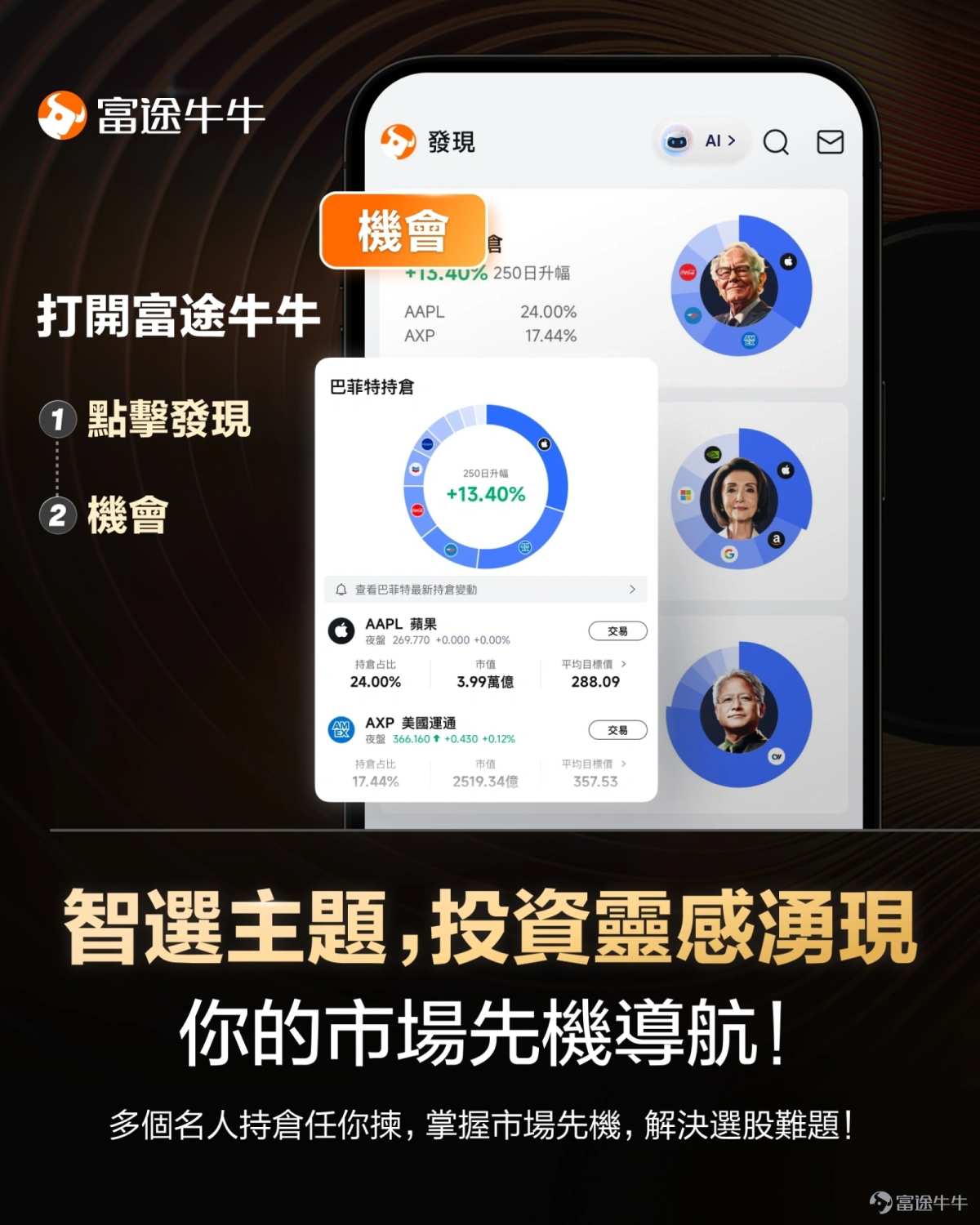
 Futubull【机会页】Celebrity portfolio tracking opportunities have been launched! Multiple celebrity portfolios are available for selection, allowing you to follow the strategies of major players with one click, accurately locking in high-quality investment targets, and investing with greater confidence!
Editor /rice