
Short-term inflation concerns have eased, but medium-term risks remain.
The increase in the U.S. Producer Price Index (PPI) for March was lower than market expectations across the board, alleviating short-term inflation concerns to some extent. However, the ongoing accumulation of upstream price pressures continues to keep the market on alert.
The latest official data shows that the U.S. Producer Price Index (PPI) rose 4% year-on-year in March, the highest level since February 2023, but significantly below market expectations of 4.6%. On a month-on-month basis, it increased by 0.5%, also well below the expected rise of 1.2%, following a 0.7% increase in the previous period.
 Core PPI also showed moderate growth. The core PPI, excluding food and energy, rose only 0.1% month-on-month, far below expectations of 0.5% and the previous reading of 0.5%. Year-on-year, it increased by 3.8%, slightly down from the prior value of 3.9%.
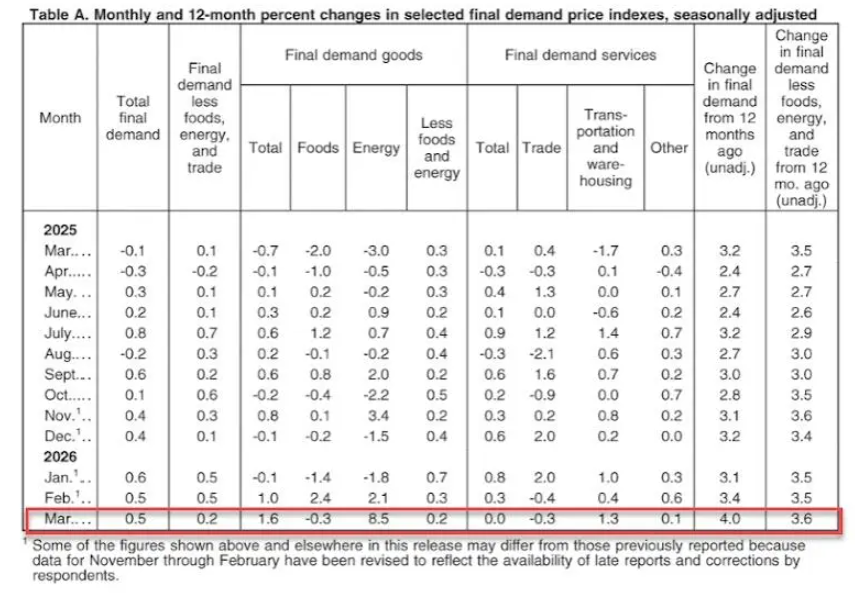
Although the energy component remained the main driver of the March PPI increase, its actual rise was relatively 'muted' compared to oil price movements. The overall moderate trend of the data provides some comfort to investors who had anticipated higher inflation.
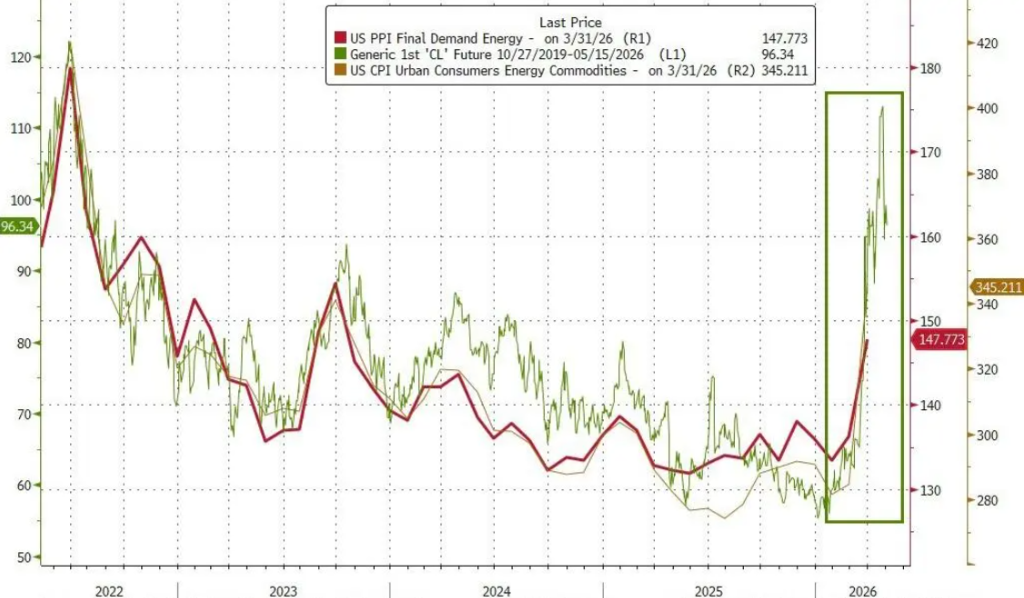
Limited impact from energy drivers: Has the inflation narrative of 'Iran war shocks' been debunked?
Before the release of this round of PPI data, the narrative logic that 'tensions with Iran would impact energy prices and drive up inflation in March' was prevalent in the market, forming a high risk premium in expectations.
However, the data shows that although the energy component remains the largest contributor to the March PPI increase, the actual performance of the energy PPI index is notably weaker compared to the movement of oil prices during the same period, indicating that price transmission effects in the energy sector have been somewhat restrained.
According to Bloomberg data, while the contribution of energy costs to overall inflation figures is notable, it has not become as 'uncontrollable' as previously anticipated. This aligns with the similar pattern observed in the U.S. March CPI data — the actual extent of energy shock transmission again fell short of the market's pessimistic forecasts. For investors, short-term panic over energy-driven inflation may ease.
Upstream inflation pipeline pressures are accelerating, signaling non-negligible medium-term risks.
Despite the overall moderation in March data, Bloomberg reports indicate that upstream price indicators measuring 'pipeline pressures' for inflation are rising rapidly, suggesting potential downstream transmission risks persist and may intensify in the coming months.
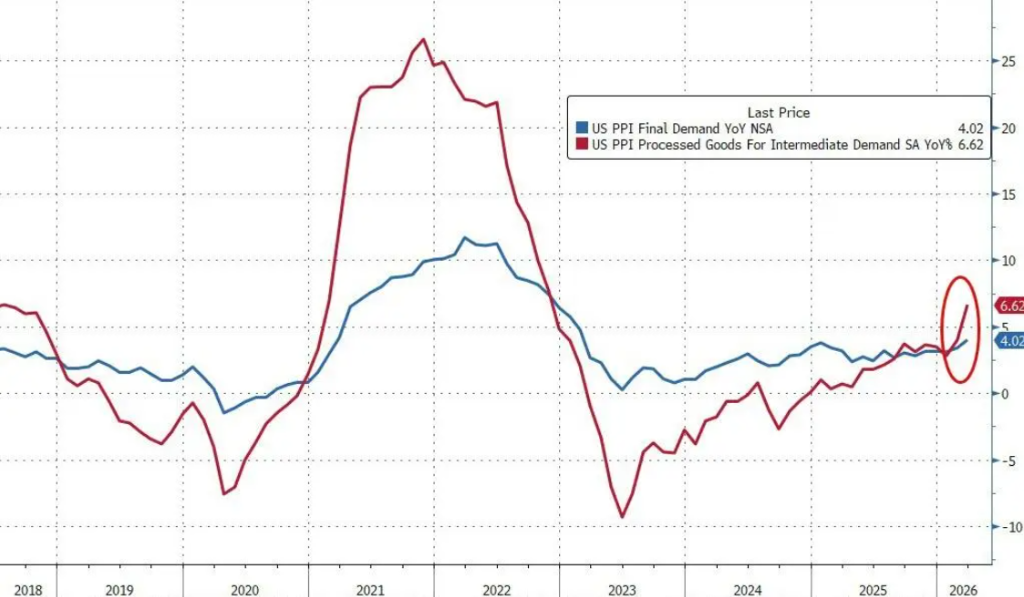
This suggests that the lower-than-expected PPI data for March reflects more of a short-term energy shock that did not fully materialize, rather than a substantive easing of inflationary pressures. If upstream price pressures continue to accumulate and transmit to the consumer end, inflation data in subsequent months may still have the potential to rise again. For investors who track PPI as a forward-looking inflation signal, the persistent increase in pipeline pressure indicators represents an undeniable risk signal in the current data.
Editor/melody