Top News
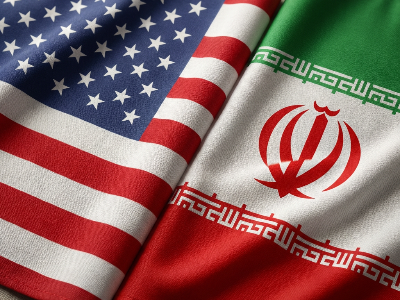
The weekend US-Iran talks presented a stark contrast between 'optimistic announcements vs. Iran's denial'.
Trump made multiple statements on the 19th, claiming that the US had proposed a 'fair and reasonable' agreement, announcing that a delegation would arrive in Islamabad on the evening of the 20th to initiate the second round of face-to-face negotiations, and warning that if no agreement was reached by the 22nd, Iran’s power plants, bridges would be destroyed and port blockades maintained; Iranian media exclusively clarified on the 19th that the 'second round of negotiation news was inaccurate', emphasizing refusal to resume talks as long as the maritime blockade persisted, with core disputes still focusing on uranium enrichment disposal, nuclear activity suspension, and control over the Strait of Hormuz. With the April 22 ceasefire agreement expiration approaching, the situation remains uncertain, and the negotiation outlook is unclear. The following is a compilation of messages from the weekend (Beijing time):
April 18: Iran opens the strait, Trump warns of renewed conflict by the 22nd
Iran’s foreign minister announced the opening of the Strait of Hormuz while the US military maintained the port blockade; Trump stated that both sides were very close to an agreement but would resume military strikes if no agreement was reached by the 22nd. American media simultaneously revealed that the next round of face-to-face negotiations might take place in Islamabad, Pakistan, as early as the 20th, potentially involving Vice President Vance, focusing on a three-page peace plan, though significant differences remained on key issues.
April 19: Trump announces delegation to Islamabad, Iran denies negotiation news
Trump announced on Truth Social and in interviews that the US delegation would arrive in Islamabad on the evening of the 20th, emphasizing the agreement was 'fair and reasonable,' threatening destruction of Iran’s power plants, bridges, and maintaining the blockade if negotiations failed; the White House confirmed that Vance or Witkof, Kushner might lead the delegation, with Pakistan prepared to host. However, Iran’s IRNA exclusively clarified that the 'second round of negotiation news was inaccurate,' refusing to resume talks as long as the maritime blockade persisted; Speaker Ghalibaf noted significant disagreements remained on key issues like uranium enrichment, and Iran planned to introduce a strait management law banning Israel-linked vessels. The negotiation outlook remains unclear.
Contrasting narratives from the US and Iran prompt analysts to predict: Friday’s gains will see a pullback on Monday
Traders are preparing for turbulence at the market open this week as the ongoing standoff around the Strait of Hormuz reignites uncertainties Wall Street was eager to ignore. Trump stated last Friday that the US and Iran were nearly finalizing an agreement, sparking market euphoria, but by the weekend, Iran again closed the Strait of Hormuz. This sudden shift reflects that last week’s rebound was largely based on hope rather than solutions. Martin Hennecke, head of investment consulting at St. James’s Place, remarked, 'Investors appear to have celebrated prematurely,' and the weekend developments 'may lead to a short-term pullback of recent market gains.'
An incredible rapid reversal! Up 20% since the end of March, Mag 7 leads the US stock market to new highs.
Tech giants have made a strong comeback, reshaping the US stock market landscape at an astonishing pace. Since the lows in March, the Mag 7 group has rebounded by over 20%, collectively reclaiming approximately $4 trillion in market value within just a few weeks. After significant valuation compression, hyperscale cloud computing companies such as Microsoft have regained their appeal. The recovery in expectations for AI commercialization, coupled with projected earnings growth of 19%, has further bolstered market confidence in tech stocks. Despite lingering concerns over hedge fund sell-offs and capital expenditure, as well as ongoing divergence between bullish and bearish views, institutions have set their sights on this wave of 'catch-up rally.'
U.S. Customs to Initiate Tariff Refunds on April 20
US Customs and Border Protection previously announced on the 14th that it had largely completed the first phase of development of new functionalities for its customs clearance system designed to issue large-scale refunds to importers, with related tariff refund operations set to commence on the 20th. The agency plans to deploy the tariff refund system using a phased development approach, adding more features in subsequent phases to address more complex business scenarios. On February 20, the US Supreme Court issued a ruling determining that the International Emergency Economic Powers Act did not authorize the president to impose large-scale tariffs. On March 4, a judge at the US Court of International Trade ruled that Customs and Border Protection must not collect tariffs under the International Emergency Economic Powers Act during tariff liquidation. This implies that tariffs previously collected under this law must be refunded.
Anthropic launches AI creative tool for 'design novices'
AI star company Anthropic announced the launch of the experimental design tool Claude Design on Friday, aiming to allow workers without a design background to use AI to materialize their creative ideas. According to the company, Claude Design is powered by the latest flagship large model, Claude Opus 4.7, which was just released on Thursday. It mainly targets people who “have ideas but lack a design background” and can create “exquisite visual works” such as design drafts, product prototypes, slides, and one-page introductions through natural language prompts and historical databases.
DeepSeek reportedly initiates external financing for the first time
According to The Information, DeepSeek is in talks with investors for its first round of external equity financing, planning to raise no less than $300 million at a valuation of no less than $10 billion. If this news is true, it will mark the formal opening of the capital market doors by this AI star company, long known for its “no financing” stance. Regarding these rumors, neither DeepSeek nor Huanchi Quantitative has issued an official response so far. However, a person from a large state-owned equity institution revealed that the news is “very likely to be true,” but “it’s completely impossible to invest at the moment.” As for “more information, it’s inconvenient to disclose.” Meanwhile, multiple venture capital institution insiders also indicated that for popular projects like DeepSeek, financing shares usually need to be “secured competitively.”
Optical fiber prices surge; high prosperity may continue until the end of 2027
Since the beginning of this year, China’s optical fiber industry has shown a rare prosperous trend of both volume and price increases. Prices of some optical fiber varieties have surged by 650% compared to the same period last year. Leading companies have seen production and sales grow several times year-on-year, with current orders already scheduled into the first quarter of next year. Analysts believe that the core driver of this price surge is not only the explosive demand but also rigid bottlenecks on the supply side. The key barrier for optical fibers lies in the upstream optical fiber preform, which has a production expansion cycle of 1.5 to 2 years, high technological barriers, and requires significant investment. Additionally, during the previous industry downturn, many small and medium-sized manufacturers exited the market, while leading companies expanded cautiously, resulting in a severe shortage of global supply capacity.
U.S. stock market recap
Nasdaq rises for 13 consecutive sessions, tying the longest winning streak since 1992
Last Friday, following announcements by Iran and the United States that the Strait of Hormuz was “fully open” to merchant ships, all three major U.S. stock indexes closed more than 1% higher, with the S&P 500 and Nasdaq continuing to set new record highs.
At the close, the S&P 500 Index rose 1.2%, to 7,126.06 points; the Nasdaq Composite Index gained 1.52%, to 24,468.48 points; and the Dow Jones Industrial Average climbed 1.79%, to 49,447.43 points. The Russell 2000 Index, representing U.S. small-cap stocks, surged 2.11%, hitting a new record high for the second consecutive day.
For the week, the Nasdaq rose 6.84%, the S&P 500 gained 4.54%, and the Dow advanced 3.19%, with all three indexes recording their largest weekly gains since April last year. After Friday's close, the Nasdaq had posted gains for 13 consecutive trading days, matching the longest winning streak since 1992. The S&P 500 has risen 9% so far this month, marking its largest monthly gain since 2020.

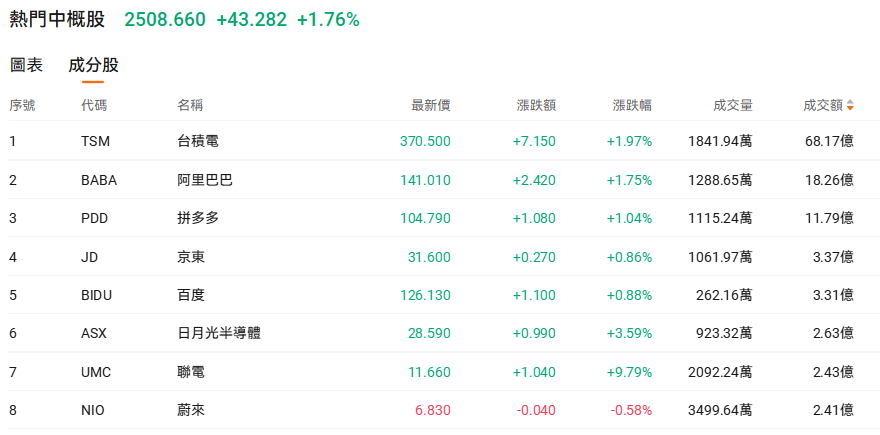
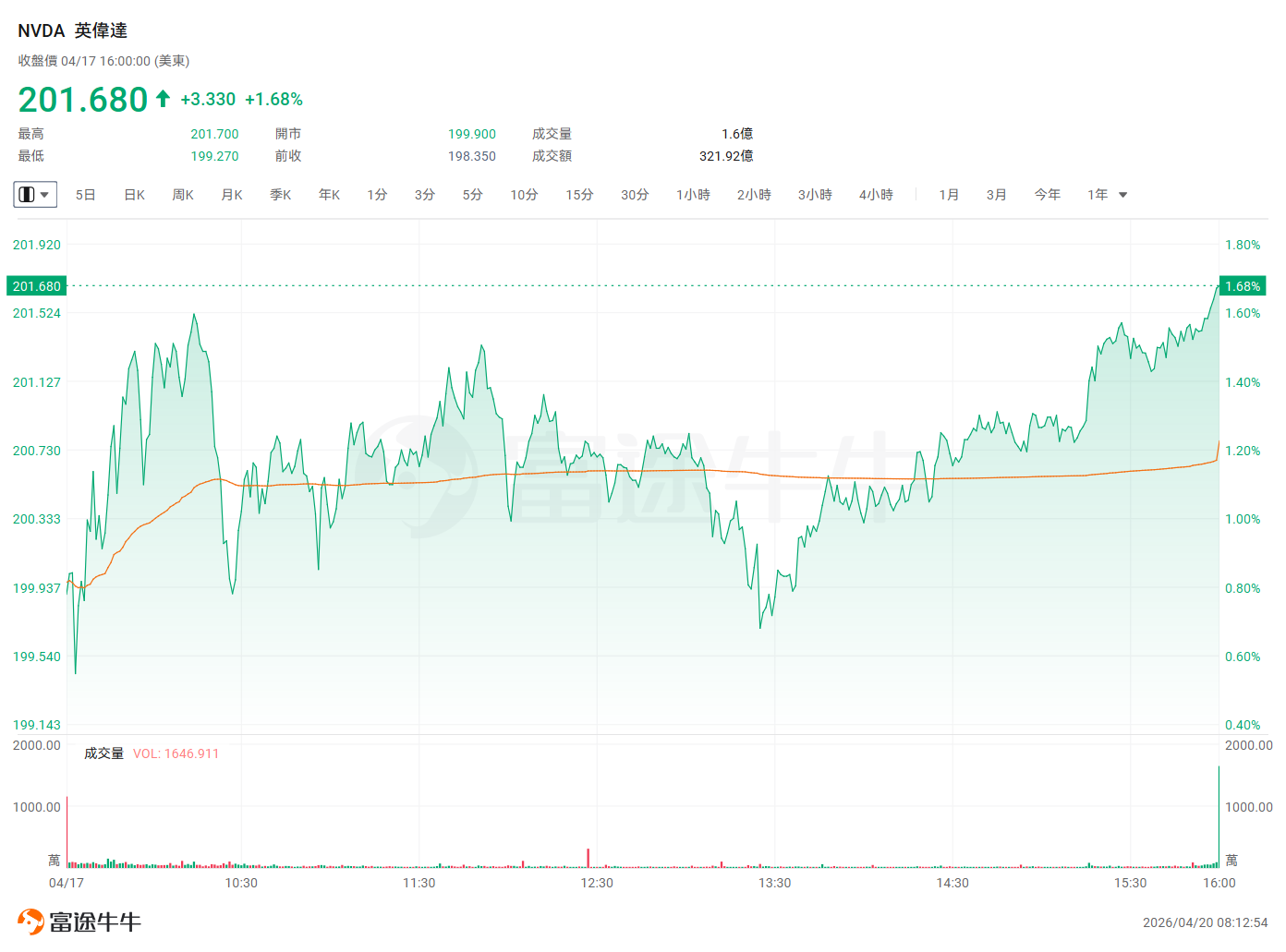
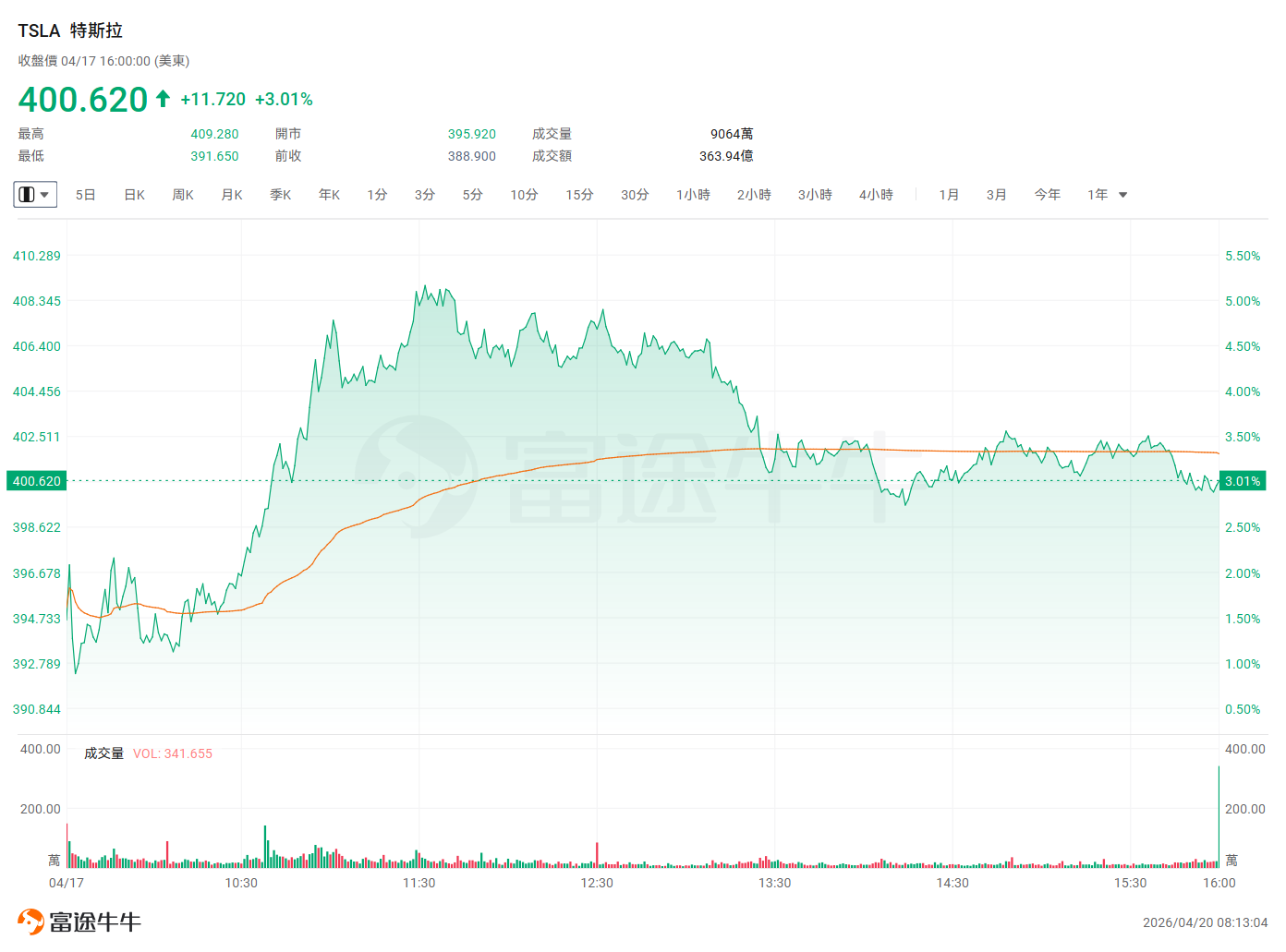
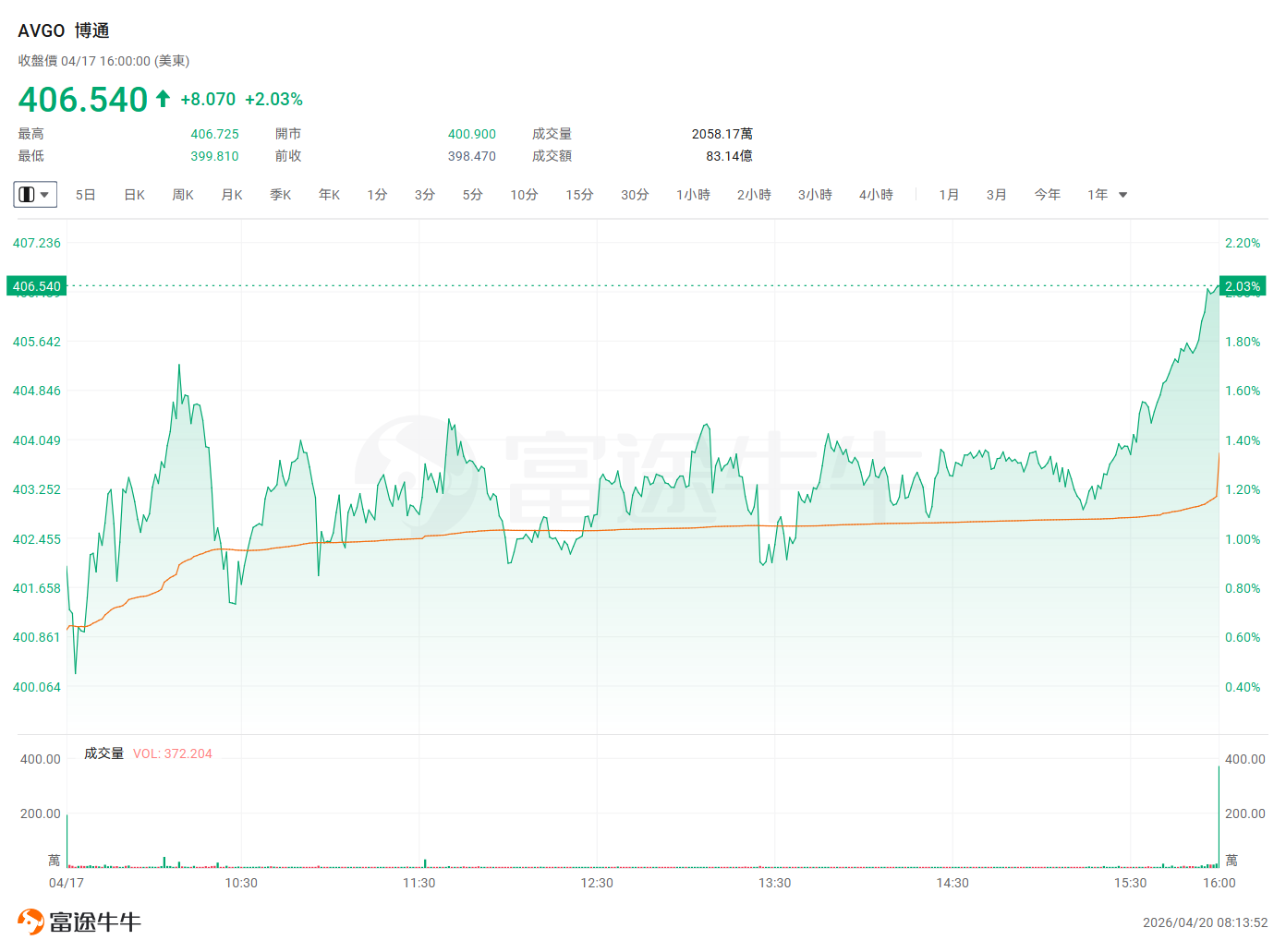
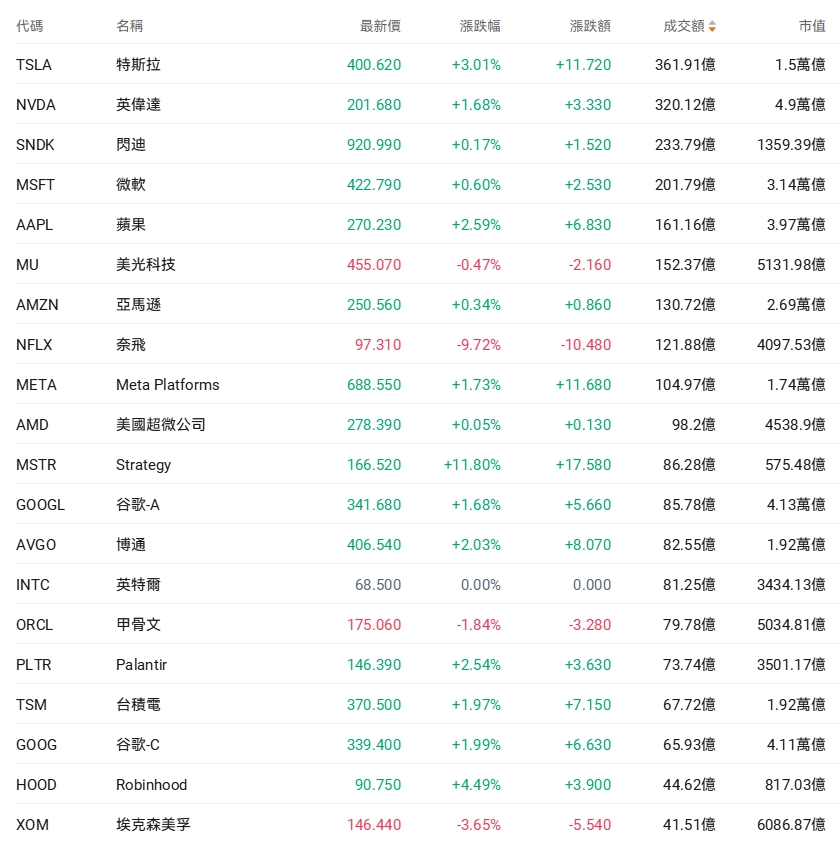
In terms of popular technology stocks, as of Friday’s close, NVIDIA rose 1.68%, Google-A increased by 1.68%, Apple gained 2.59%, Microsoft added 0.6%, Amazon edged up 0.34%, Broadcom climbed 2.03%, Taiwan Semiconductor rose 1.97%, Meta Platforms gained 1.73%, and Tesla advanced 3.01%.
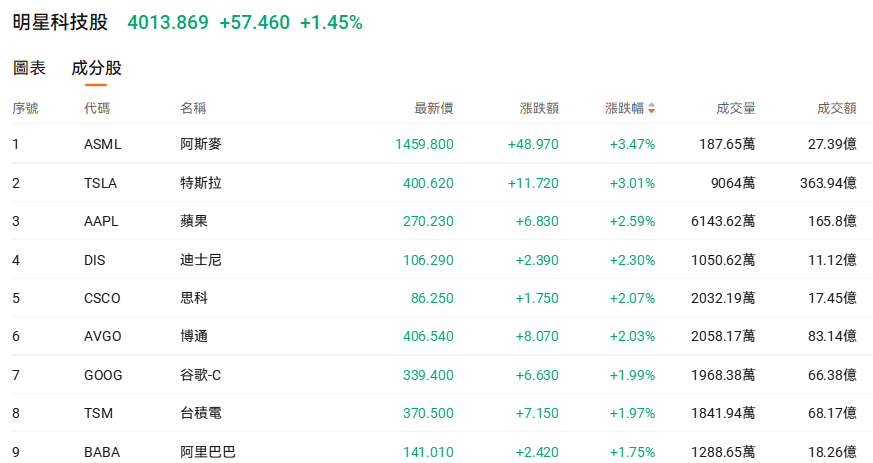
The Nasdaq China Golden Dragon Index closed up 0.53% last Friday, marking its sixth consecutive trading day of gains, with a cumulative increase of 6.23% for the week. By the close, Alibaba was up 1.75%, PDD Holdings rose 1.04%, NetEase fell 0.15%, JD.com gained 0.86%, Baidu increased by 0.88%, Trip.com climbed 0.91%, Li Auto dropped 0.7%, Bilibili declined 0.4%, and Nio fell 0.73%.
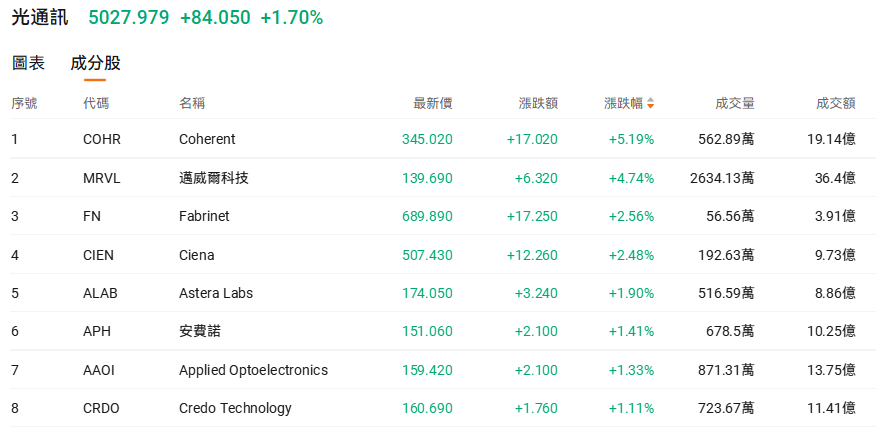
Optical communications stock Coherent surged 5.19%, while AAOI rose 1.33%, both continuing to hit new all-time highs.
Individual stock information
NVIDIA avoids exploitative practices: Jensen Huang states that GPUs are priced reasonably and will not be subject to opportunistic price hikes.
In a well-known podcast interview with Dwarkesh Patel, Dwarkesh posed a question. $NVIDIA(NVDA.US)$ Regarding whether they would sell products to the highest bidder during GPU shortages, NVIDIA CEO Jensen Huang responded to their pricing strategy, stating they would not do so. Huang emphasized that NVIDIA has never engaged in auction-based GPU allocation; it is not part of their ethos. Instead, they focus on setting a fair price, leaving customers to decide whether or not to purchase. He also dismissed the possibility of taking advantage of the situation to raise prices, noting that other chip companies might do so, but NVIDIA would never. Their goal is to be a trustworthy cornerstone of the entire industry, ensuring customers never have to worry or speculate about whether NVIDIA would exploit such situations.
Tesla has expanded its robotaxi services to Dallas and Houston.
$Tesla(TSLA.US)$ Last Saturday, the electric vehicle manufacturer announced the launch of robotaxis in Dallas and Houston, marking a further expansion of Tesla's emerging service in the U.S. since its debut in Austin, Texas, last year. Tesla’s official robotaxi account on X announced the service rollout, accompanied by two videos showcasing its best-selling Model Y SUV operating in these cities without human drivers or monitors in the front seats. Two maps outlining the service areas were also released, though details such as fleet size and pricing remain undisclosed. “Try out Tesla robotaxis in Dallas and Houston!” said Tesla CEO Elon Musk when retweeting the X post.
Elon Musk: SpaceX and Tesla will remain key clients of Taiwan Semiconductor.
Musk stated that $SpaceX (temporary code) (FT0002)$and$Tesla(TSLA.US)$ will always be Taiwan Semiconductor (TSM.US) Taiwan Semiconductor (TSM)’s key client. However, TSMC cannot produce the required number of chips. If TSMC could manufacture enough chips, we wouldn’t need the 'Terafab' chip factory project. This statement came in response to comments made by TSMC CEO C. C. Wei during an earnings call. In the meeting, Wei emphasized that Intel and Tesla, while being TSMC clients, are also significant competitors. He highlighted three cardinal rules of the foundry industry: staying technologically ahead, maintaining excellent manufacturing capabilities, and building customer trust systems. He specifically referenced the importance of service quality stressed by NVIDIA founder Jensen Huang.
Apple rose nearly 3% last Friday to reach a new high, with its Q1 shipments in China surging 20% year-over-year.
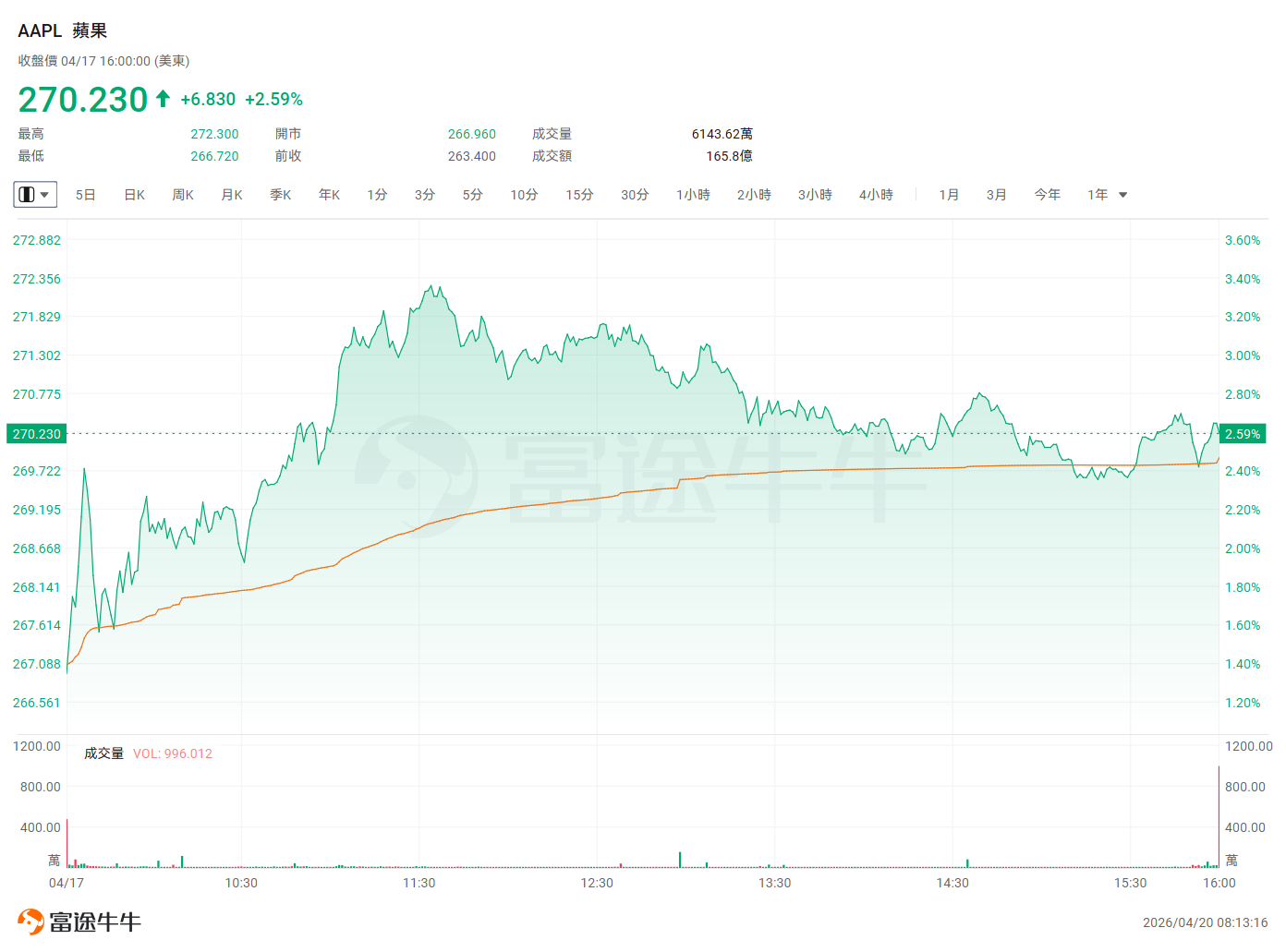
$Apple(AAPL.US)$ Last Friday, Apple closed up 2.59% at $270.23. According to market research data, Apple's iPhone shipments in the Chinese market surged 20% year-over-year in Q1, indicating a recovery in its market share in China. In its latest research report, Bank of America (BofA) referred to Apple as "one of the highest-quality tech stocks," praising its differentiated AI strategy and maintaining a "Buy" rating. BofA analysts believe that Apple's deployment in on-device AI will create a unique competitive advantage, potentially driving a new wave of device replacement cycles.
SanDisk will join the Nasdaq 100 Index before the market opens on April 20.
$SanDisk (SNDK.US)$ It will be included in the Nasdaq 100 Index on April 20, replacing the software stock. Atlassian (TEAM.US) Mandatory purchases by passive funds provided additional support. Analysts from Citi, Jefferies, and other Wall Street firms raised their target prices to between $980 and $1,000, driven by strong AI-powered storage demand as the core rationale.
Reports suggest that Berkshire Hathaway’s new leadership has sold off holdings previously managed by departing investment managers.
Market rumors on Saturday indicated that $Berkshire Hathaway-B (BRK.B.US)$ New CEO Greg Abel has sold the shares previously managed by Todd Combs, who recently moved to JPMorgan. Combs was one of the two investment managers recruited by Buffett. Insiders also mentioned that Abel is unlikely to hire additional personnel to assist in managing the portfolio.
Meta paid Broadcom 15.6 billion yuan last year.
Technology company $Meta Platforms(META.US)$ disclosed in its shareholders' meeting documents that the company will allocate resources in fiscal year 2025 to $Broadcom (AVGO.US)$ A payment of $2.3 billion (approximately RMB 15.68 billion) was made to cover chip design, development, and engineering services provided by Broadcom, as well as directly or indirectly procured Broadcom components, with a total value of approximately $2.3 billion. Earlier this week, Meta Platforms and Broadcom announced an expanded partnership to jointly develop Meta’s next-generation AI chips, leading to Broadcom CEO Hock Tan joining Meta’s board of directors.
Google is in talks with Marvell Technology to manufacture a new type of artificial intelligence chip.
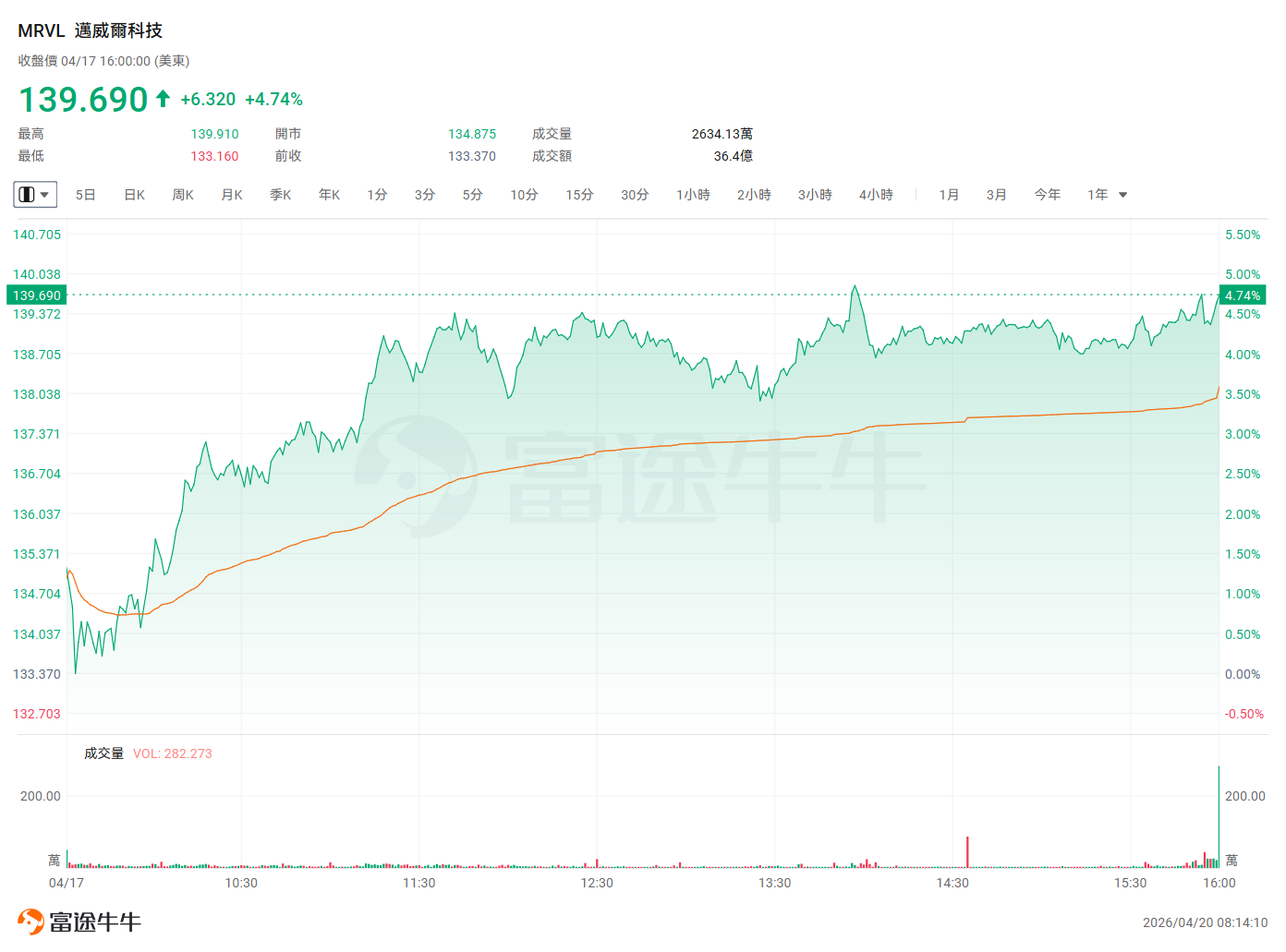
Alphabet’s $Google-C(GOOG.US)$ is in discussions with $Marvell Technology (MRVL.US)$ to develop two new chips aimed at running artificial intelligence models more efficiently. One of the chips is a processing-in-memory unit designed to work alongside Google’s Tensor Processing Unit (TPU), while the other is a new TPU specifically built for running AI models. Google has been pushing to position its TPU as a viable alternative to NVIDIA’s dominant GPUs. Sales of TPUs have become a major driver of growth in Google Cloud’s revenue, as Google seeks to demonstrate to investors that its AI investments are yielding returns. The two companies aim to finalize the design of the processing-in-memory unit as early as next year, followed by trial production.
Eli Lilly and Co's oral weight-loss drug saw significantly fewer prescriptions in its first week on the market compared to a similar product from Novo-Nordisk A/S.
Eli Lilly and Co (LLY.US) The oral weight-loss drug Foundayo received 1,390 prescriptions in its first week on the market, far fewer than the launch performance of Novo-Nordisk A/S's oral version of Wegovy. Market expectations for Eli Lilly and Co’s oral GLP-1 drug were high, making the weak first-week data noteworthy. Analysts pointed out that the oral weight-loss drug market is still in its early stages of penetration, and the initial data may have been influenced by factors such as physician prescribing habits and insurance coverage. It is therefore premature to draw conclusions at this stage. $Novo-Nordisk A/S (NVO.US)$ Market expectations for Eli Lilly and Co’s oral GLP-1 drug were high, making the weak first-week data noteworthy. Analysts pointed out that the oral weight-loss drug market is still in its early stages of penetration, and the initial data may have been influenced by factors such as physician prescribing habits and insurance coverage. It is therefore premature to draw conclusions at this stage.
SK Hynix has begun production of the SOCAMM2 chip dedicated to NVIDIA’s Vera Rubin.
SK Hynix announced it has started mass production of a chip specifically designed for $NVIDIA(NVDA.US)$ The SOCAMM2 memory chip, designed for the next-generation Vera Rubin AI acceleration chip. This move marks the entry of the Vera Rubin platform supply chain into a substantive shipping phase, holding significant importance for NVIDIA's AI data center product roadmap. The SOCAMM2 features a high-bandwidth, low-power design, providing a more efficient memory solution for large-scale AI inference and training. SK Hynix has further solidified its leading position in the AI memory sector through this project and deepened its strategic partnership with NVIDIA, benefiting the entire AI chip and HBM memory supply chain.
Kailera Therapeutics, a rising star in weight-loss drugs, debuted on the US stock market, closing up 62.5% on Friday.
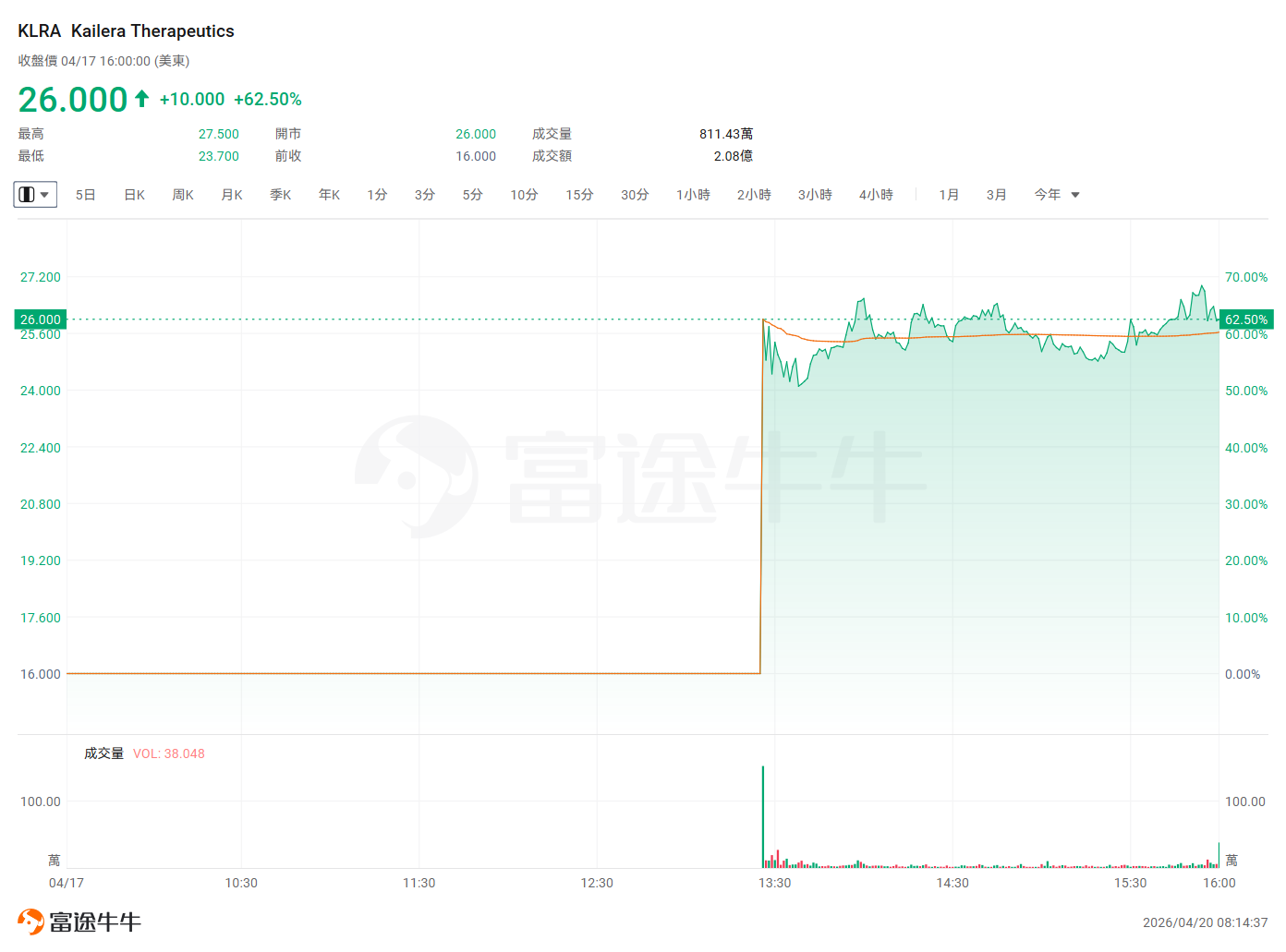
$Kailera Therapeutics(KLRA.US)$ The company officially listed on the US stock market on Friday, surging over 50% at the opening and closing up 62.5%. As a new entrant in the GLP-1 space, Kailera focuses on developing next-generation weight-loss drugs, and its IPO reflects strong investor expectations for continued growth in the weight-loss drug sector.
Top 20 by trading value
Hong Kong Market Outlook
Southbound capital increased holdings of Hong Kong stocks by over HKD 17 billion, net buying nearly HKD 4.1 billion worth of Tracker Fund shares while net selling over HKD 100 million worth of Cambridge Technology shares.
On April 17 (Friday), southbound capital net purchased Hong Kong stocks worth HKD 17.01 billion.
$Tracker Fund (02800.HK)$、$Hang Seng China Enterprises (02828.HK)$、$China Mobile(00941.HK)$were net bought for HKD 4.075 billion, HKD 1.289 billion, and HKD 913 million respectively;
$Cambridge Technology (06166.HK)$with net sales reaching HKD 120 million.
Orient Securities and Shanghai Securities are planning a merger and reorganization. After the merger, total assets are expected to exceed 600 billion yuan, placing the company among the top ten in the industry.
On the afternoon of April 19, $Orient Securities (03958.HK)$ / Oriental Securities (600958.SH) Oriental Securities announced a trading halt due to the planning of a significant matter. The company is considering acquiring 100% of Shanghai Securities' equity through the issuance of A-shares and cash payments. Trading of Oriental Securities’ A-shares will be suspended starting from the market opening on April 20, with an expected suspension period not exceeding 10 trading days.
Today's Focus
Keywords: China’s April LPR quote, Shenghong Technology’s gray market
In terms of financial events, China's Loan Prime Rate (LPR) for April will be released. The market generally expects the LPR for maturities over five years to remain at 3.5%, while the one-year LPR will stay at 3%, marking the eleventh consecutive month without change.
In terms of new stock listings, an 'artificial intelligence and high-performance computing PCB product supplier' $Shenghong Technology(02476.HK)$ will conduct grey market trading.
In terms of performance, $Daheng CNC (03200.HK)$、 $Zions Bancorporation (ZION.US)$ is scheduled to release its earnings on the 20th.

Futubull AI Morning Reading:
When everyone goes mad, you must remain calm.
— Jim Rogers
 Looking to pick stocks or diagnose stock performance? Want to know the opportunities and risks in your portfolio? For all investment-related questions,just ask Futubull AI!

Editor/Rocky