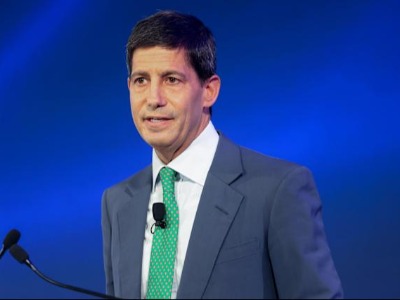
Wash's reform blueprint not only appears bold but also directly addresses many of the current weaknesses of the Federal Reserve. As the upcoming Senate nomination hearing approaches, how will this prospective new 'leader' of the Federal Reserve reshape the future of the world’s largest central bank?
Kevin Warsh, handpicked by President Trump to succeed Jerome Powell as the Federal Reserve Chair, is formulating a series of ambitious reform plans: institutional changes, lower policy interest rates, a new approach to inflation, a significantly reduced balance sheet, an independent Federal Reserve, a more focused mandate, enhanced coordination with the U.S. Treasury Department, and less 'noise' from the Fed's 19 policymakers.
As San Francisco Federal Reserve President Mary Daly said last Friday: 'He will undoubtedly bring his own ideas and blueprint for governance when he takes office. Ultimately, however, the actual trajectory of the economy will dictate what we truly need to address, which is the path every Federal Reserve Chair, all policymakers, and the entire staff must follow.'
 At Warsh’s nomination confirmation hearing on Tuesday, lawmakers are certain to pose numerous questions about these reform proposals.
Below are excerpts from his previous remarks on these topics:
Institutional Changes
On July 17, 2025, in an interview with CNBC, Warsh stated, 'The overall functioning of monetary policy has been broken for quite some time. The central bank that stands today has fundamentally mutated compared to when I first joined in 2006. We don’t need that kind of ‘policy continuity’ which has led to the biggest macroeconomic policy mistakes in 45 years, divided the nation, and triggered runaway inflation. When a central bank loses credibility, such continuity is meaningless... We need a thorough institutional overhaul at the Federal Reserve.'
Lower Interest Rates
Regarding interest rates, on July 8, 2025, Warsh said in an interview with Fox Business, 'Interest rates should have been lower.'
In November of the same year, he also wrote in a Wall Street Journal op-ed, 'The bloated balance sheet of the Federal Reserve, originally designed to bail out large corporations during the crisis period, can now be substantially slimmed down. The vast space freed up from this could translate into lower interest rates, thereby genuinely benefiting households and small to medium-sized enterprises.'
Inflation Issues
On inflation, Warsh said during a speech at the International Monetary Fund on April 25, 2025, 'The cognitive fallacies behind this great inflation stem from a mix of several factors: the naïve belief that central banks’ price stability goals could be automatically achieved... the assumption that those massive and black-box-like Dynamic Stochastic General Equilibrium (DSGE) models are built on realistic foundations... the idea that monetary policy has nothing to do with money supply... the notion that central banks are powerless bystanders in the face of forces beyond their control... and even blaming Putin-induced geopolitical shocks and the pandemic for surging inflation, rather than reflecting on the government’s reckless spending and money printing.'
Moreover, he believes that the development of artificial intelligence technology will reduce inflation. In a CNBC interview in July of the same year, he stated, 'Artificial intelligence will significantly lower the costs of almost everything... I think we may currently be at the starting point of a structural decline in prices.'
Balance sheet reduction
As is well known, Warsh has consistently advocated for reducing the Federal Reserve's balance sheet. At the Reagan National Economic Forum in Simi Valley, California, on May 30, 2025, he stated, 'My recommendation is to scale down the size of the balance sheet... Interestingly, if you have a smaller balance sheet, you can actually achieve lower interest rates... (The Fed’s current balance sheet) is several trillion dollars larger than necessary.'
The Independence of the Federal Reserve
In a speech at the Shadow Open Market Committee in New York on March 26, 2010, Warsh said, 'The greatest asset of the Federal Reserve is its institutional credibility. This credibility is rooted not only in its reputation for fighting inflation but also extends even further. It is closely tied to the Fed’s various actions and balance sheet commitments. This credibility is essential. It strengthens the weight of our external communications and lends more authority to our economic assessments. It amplifies the ripple effects of announced adjustments to short-term policy rates on long-term interest rates.'
He added, 'In a sense, it is the true ‘money multiplier’ in the implementation of monetary policy... Fortunately, making this asset shine and passing it on to today’s central bankers does not require perfect foresight or infallible judgment. But it does require absolute independence to resist fleeting political whims in Washington, Wall Street’s insatiable greed, and the extremely harmful short-sightedness that can derail monetary policy.'
Narrowing the scope of responsibilities
In a speech at the International Monetary Fund on April 25, 2025, Warsh called on the Federal Reserve not to blindly expand its powers, saying, 'The more the Fed meddles in matters beyond its mandate, the more it undermines its core ability to ensure price stability and full employment. At the same time, it becomes more vulnerable to political pressures. The Fed’s tendency to blindly expand its powers signals an existential risk.'
The relationship between the Federal Reserve and the U.S. Treasury
On July 17, 2025, Wash stated in an interview with CNBC, 'If a new agreement can be reached, and... the Federal Reserve Chair and the Treasury Secretary can thoughtfully and clearly communicate to the market: 'This is our established goal for$US Federal Reserve Total Assets (USFTA.EC)$the size of the Federal Reserve's balance sheet,' while the U.S. Treasury could also specify: 'This is our debt issuance schedule,' and assuming that by the end of this administration's term, our balance sheet will reach an equilibrium state, then the market will have clear expectations about the future... This does not mean that the Federal Reserve has to align entirely with the government. It refers to coordinated cooperation between the Federal Reserve and the U.S. Treasury on goals that the Fed deems extremely important and strives to achieve, as well as forming a consistent understanding on how to communicate these messages to the market.'
Federal Reserve transparency and 'noisy noise'
As early as the confirmation hearing for his nomination as a governor in 2006, Kevin Warsh stated, 'Under Chairman Greenspan’s leadership, the Federal Reserve has taken practical and effective measures over the past decade to articulate and explain its policy intentions with greater transparency. As a result, market volatility has been significantly reduced, and our capital markets have become deeper, broader, and more dynamic than ever before.'
Ten years later, in an op-ed titled 'The Fed Needs New Thinking,' he criticized the Federal Reserve, saying, 'The Fed’s so-called forward guidance, which promises to maintain low interest rates for an extended period, sells ambiguous policies under the banner of clarity. Under the guise of transparency, it allows various communication voices to devolve into a cacophony of confusion.'
In November last year, Warsh criticized Fed officials in a column for frequently making public appearances to 'drop hints,' writing, 'It would be better for the Fed’s top brass to refrain from sharing their latest musings every chance they get. The habit of flip-flopping on statements with every new data release is not only commonplace but also highly counterproductive.'
 Stay ahead with key financial updates and discover investment opportunities early! Open Futubull > Market > US Stocks >Economic Calendar, seize the investment opportunity!

Editor/Rocky