Source: Thought Steel Imprint
What is fault tolerance?
The term 'fault tolerance' is commonly used in games, referring to the idea that you are not easily eliminated even after making a mistake. A real-life example is the QR code. Often, we have only scanned half of it when the system has already recognized it. This is because QR codes have a fault tolerance requirement—so long as a few key areas are not obstructed, the code can still be scanned successfully.
We often think about how to avoid making mistakes, but there is a decision-making philosophy that suggests if mistakes are inevitable, it might be better to consider how to mitigate their consequences?
Method one for increasing fault tolerance: Margin of safety
 The most common method to increase fault tolerance is the margin of safety, which in layman's terms means 'buying cheap' — but not all instances of 'buying cheap' can enhance fault tolerance.
There are two types of 'buying cheap':
One type involves investors believing that the upside potential outweighs the downside risk, reflecting an 'odds-based mindset.' These investments typically involve companies undergoing long-term declines, where a turnaround is anticipated, but the probability of success is not high.
This kind of 'buying cheap' does not provide a margin of safety and cannot increase fault tolerance because the fundamentals are difficult to predict, and many well-known leading companies attract too many speculators. Consequently, stock prices may not have reached a bottom and could easily drop further.
Another investment philosophy places more emphasis on minimizing downside risk (rather than maximizing upside potential), with a low probability of losses, representing a 'probability-based mindset.'
The defining characteristic of such companies is that they operate in low-growth, declining traditional industries, including some labor-intensive general manufacturing sectors, raw material enterprises with seemingly little technological sophistication, and obscure industries whose materials are hard to comprehend. These businesses are primarily concentrated in machinery equipment, traditional materials, basic chemicals, and similar sectors.
These industries share the common characteristic of experiencing a significant decline in demand, which has driven investors away, resulting in extremely low valuation levels. However, the demand will not disappear entirely and tends to stabilize after falling to a certain extent.
They are not widely recognized former high-fliers that have plummeted in value, but rather long-neglected sectors drifting aimlessly at the bottom. Many of these stocks are unknown to most investors, with ROE consistently ranging between 5% and 10%.
However, upon closer examination of their fundamentals and financial data, these companies are far from poor performers. Some have low gross margins but high net margins with minimal expenses, while others generate modest profits but carry almost no interest-bearing debt. Certain firms operate in niche markets with limited growth potential but enjoy highly stable demand, much like colleagues who may never achieve great things but also avoid major mistakes.
The reason for their robust financial health lies in another shared trait—favorable competitive dynamics and slow technological progress. After all, no company is willing to make substantial investments in a declining sector, and existing smaller players cannot endure such 'low-margin, non-growing' businesses. The inevitable outcome is 'no growth, no competition, stable profits,' often surpassing industries requiring heavy R&D investment for cutting-edge technologies, and with virtually no risk of being phased out due to technological shifts.
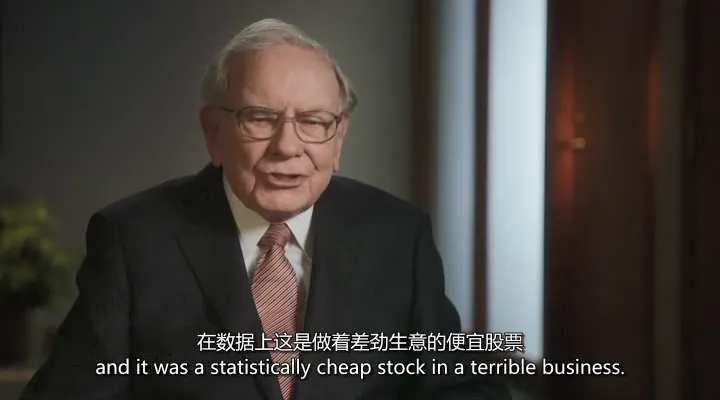
Both scenarios involve 'buying cheap,' but the outcomes differ. In the first case, a misstep in purchasing at a low price is likely to result in further declines. In contrast, a mistake made in the latter scenario typically leads to stagnation rather than losses, making it the approach with a higher margin of error.
The former type of investment opportunity resembles value arbitrage, whereas the latter aligns more closely with deep value investing. Many fund managers favoring this style hold portfolios dominated by obscure companies, each appearing incapable of significant gains. Yet, every quarter, one or two unexpectedly surge, contributing all the portfolio's profits before disappearing from the next quarterly lineup.
Such funds have emerged as standout performers, significantly outpacing the market over the past six months.
Thus, 'buying cheap' is only superficial; these companies are perpetually undervalued, and when you finally take notice, they may actually be at their most expensive.
A margin of safety represents an error tolerance in stock selection, complemented by trading error tolerance—such as stop-loss mechanisms.
Method Two for Increasing Error Tolerance: Counter-Logic
The most common method for individual investors to enhance fault tolerance is the 'stop-loss method,' which involves unconditionally selling after a fixed percentage of loss to control losses.
However, the problem with a fixed percentage stop-loss is that while it limits the extent of losses per mistake, it increases the proportion of losing trades. Thus, stop-loss can only improve short-term fault tolerance but has no effect in the long term.
More importantly, as value investors, a decline in stock price signifies an increase in cost performance, suggesting that one should buy rather than sell. Stop-loss contradicts the principles of value investing. Most stock price fluctuations within a few days are random movements or influenced by fund trading, and do not conceal fundamental information.
Of course, anyone can make judgment errors; even if the judgment is correct, execution may fail, and even if execution is correct, the environment might change. When there is an error, it must be corrected.
Therefore, stop-loss itself is not wrong, but what is incorrect is 'stopping loss based on declines.' The true condition for 'stopping loss' is when fundamentals may have changed.
In any investment logic, there inevitably exists a corresponding 'counter-logic':
Developing new products, its 'counter-logic' is development failure;
The launch of a major new product, its 'counter-logic' is poor sales, or even though sales are good, they affect the sales volume of older products;
Expanding production capacity, its 'counter-logic' is the inability to meet quality standards consistently;
Partnering with a large customer, its 'counter-logic' is the loss of operational autonomy, a significant increase in accounts receivable, or even dramatic fluctuations in performance.
Successful investors can accommodate two completely opposing logics in their minds, so as to suspend or alter their investment strategies at any time:
This is the difference between research and actual investment. When conducting research, it suffices to believe that a certain logic makes sense and has profit potential. However, before committing real capital, one must identify the 'counter-logic' to this logic and establish corresponding signals for both. This is the first method to enhance error tolerance: simultaneously investing in both logic and counter-logic.
Thus, fundamental stop-loss is a preemptive measure. Once a 'counter-logic' condition arises, the investment must be terminated, rather than starting with overly optimistic expectations and then overreacting to minor setbacks.
However, many investors may feel that while causes of failure are easy to identify, finding signals in actual investments is quite challenging.
In addition to common methods such as staying within one’s circle of competence, conducting in-depth research, and continuous tracking, there is another way to improve 'error tolerance': reducing 'key variables' that cannot be controlled in investments.
Method three for improving error tolerance: Reducing uncontrollable variables
There is an old investment adage: Do not seek alpha in a downward beta environment.
Alpha and beta are relative concepts with multiple interpretations, but their most common meanings are 'individual stocks versus sectors.' For instance, if a stock rises by 10% while its sector rises by 7%, the stock's alpha is 3%, and the sector's beta is 7%. This means that 7% of the return comes from correctly choosing the sector, while 3% results from selecting the right stock.
‘Seeking alpha in a downward beta’ is like rowing against the current. Even if you could earn 10%, if the sector declines by 10%, your net result will be zero.
However, I personally disagree with this statement because sector beta and individual stock alpha represent two entirely different research capabilities.
Whether it is beta or alpha, it is necessary to study the fundamentals and prosperity of the industry, but their differences are more pronounced, and the requirements for capabilities vary significantly:
Beta is a top-down investment approach, with research methods more focused on logical deduction. It requires consideration of the macro environment, market style, and capital preferences, making it a strategy-oriented type of research.
In contrast, alpha is a bottom-up investment approach, with research methods more focused on empirical investigation. To deeply understand products and the management level of enterprises, extensive field research is required, including visits to suppliers and distributors, consultations with industry experts, and in some industries, mastery of high-frequency data.
Human abilities are biased. When analyzing the attribution of account returns, if alpha falls short of the overall account return, it indicates that you are more skilled in top-down logical deduction; if alpha exceeds the overall account return, it suggests that you excel in bottom-up empirical thinking.
The method of 'not seeking upward alpha in a downward beta' requires the ability to simultaneously assess and track both beta and alpha returns, adding unknown factors into the analysis and, as a result, increasing the likelihood of errors.
A good investment system should either focus on alpha or beta exclusively.
Buffett's investments are primarily based on long-term alpha of individual stocks, rarely considering industry beta or macro factors.
The 'buying at a low price' method mentioned in the first approach often leads fund managers to concentrate their holdings in traditional industries with little beta, as only these industries offer opportunities to buy cheaply, representing a system that abandons beta.
Conversely, many investment masters who excel in asset allocation completely abandon stock-specific alpha and pursue beta in sectors or broader asset classes. David Swensen, an asset allocation master, argued that among the three sources of investment returns—asset allocation, timing, and stock selection—over the long term, 90% of returns come from asset allocation, while timing and stock selection contribute only 10%.
These two approaches, the former purely for risk hedging and the latter capable of capturing alpha returns from two individual stocks simultaneously, both abandon beta and focus exclusively on alpha.
For the vast majority of investors, if the investment is based on the fundamentals of a specific Chinese concept stock company, while the sector beta of Chinese concept stocks is entirely driven by political risks—something uncontrollable—they would only dare to go all-in or even leverage after excluding such risks.
Similarly, if you are strongly optimistic about Chinese concept stocks as a whole, the best approach is to buy an ETF for Chinese concept stocks, thereby eliminating the risk associated with individual stock alpha.
More importantly, such judgments are crucial for investments. Once a hedge position is established for uncontrollable risks, your primary strategy will not be caught in a dilemma or paralyzed by hesitation, and your other decisions will become purer and bolder in terms of taking positions.
Just as高空作业 requires safety ropes, the role of many allocation-oriented positions may not necessarily be to generate profits themselves but rather to enable other positions to make money.
Become an investor with high 'fault tolerance.'
Munger once said: 'If we remove our ten most successful investments, we would be a joke.'
This statement works both ways. A retail investor suffering heavy losses, if removing just five (though removing ten would suffice) of their worst investments over the years, might actually become a top expert.
A true expert is not someone who never makes mistakes but someone who avoids fatal errors. Investors with high 'fault tolerance' often exhibit the following characteristics:
Skilled at calculating gains and losses, tolerating minor mistakes in exchange for significant achievements;
Adapted to changing environments and adept at handling various complex situations;
Believe in the Pareto Principle, focusing more on your strengths rather than overcoming weaknesses.
If some risks cannot be absolutely avoided, it is better to focus your energy on what you can control. A person who cannot tolerate any mistake will waste their life correcting errors instead of expanding achievements.
 Futubull【机会页】Celebrity portfolio tracking opportunities have been launched! Multiple celebrity portfolios are available for selection, allowing you to follow the strategies of major players with one click, accurately locking in high-quality investment targets, and investing with greater confidence!

Editor /rice