
Just now, Bitcoin broke through the $78,000 mark.
On the morning of April 22, Trump said in a phone interview with CNBC's 'Squawk Box': "I don't want to extend the ceasefire. We don't have that much time left. I expect bombing to begin because I think it's a better position to take."
A few hours after making that statement, he posted on Truth Social, announcing an indefinite extension of the ceasefire until Iran submits a proposal and negotiations somehow conclude.
 The 'face-saving measure' for Trump this time was the intervention of Pakistan's Chief of Army Staff and Prime Minister. He also added that this decision was related to the 'serious division within the Iranian government.'
Those familiar with Trump know that this is his typical TACO maneuver.
BlockBeats Note: TACO stands for 'Trump Always Chickens Out,' meaning Trump always backs down. The term was first coined by Financial Times columnist Robert Armstrong last year and has since been widely used by traders to specifically describe Trump's pattern of issuing extreme threats followed by policy reversals.
How was this ceasefire extended?
It appears that this was not an active diplomatic victory but a passive decision made due to a lack of better options before the deadline.
And this traces back to the Islamabad talks on April 11.
At that time, Vice President Vance led the U.S. delegation to fly to Pakistan for negotiations with Iran that lasted 21 hours. This was the highest-level direct talks between the U.S. and Iran since the 1979 Islamic Revolution. When Vance left, he claimed that Iran had 'refused to accept U.S. conditions.' The core demand of the United States was only one: Iran must make a clear commitment to 'not seeking nuclear weapons'—not just a pledge not to build nuclear bombs, but also a commitment not to retain any technological capabilities that could rapidly lead to nuclear weaponization. Iran did not agree to this. Iranian chief negotiator and parliamentary speaker Kalibaf stated that the United States must first decide 'whether it can win our trust.'
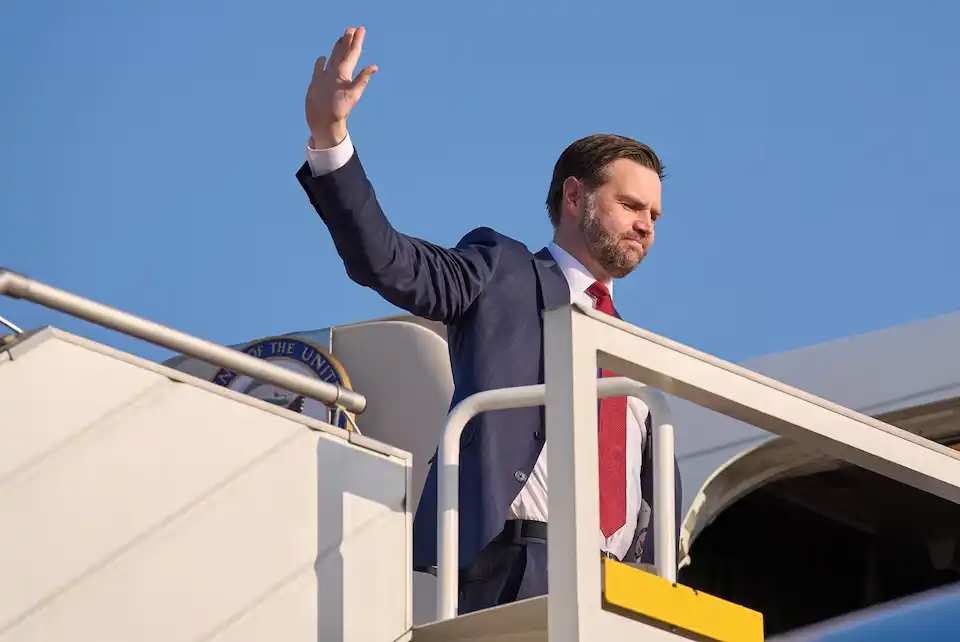
On April 12, Vance made a gesture while boarding Air Force Two after peace talks with Iran in Islamabad, Pakistan. Image Source: Jacquelyn Martin/Pool via REUTERS/File Photo Purchase Licensing Rights
Following the breakdown of the negotiations, the United States promptly announced a maritime blockade of the Strait of Hormuz.
A two-week ceasefire framework was established on April 8, set to expire on April 22. On the eve of its expiration, the situation deteriorated sharply: Iran had yet to confirm whether it would attend the second round of negotiations, and Pakistan's Information Minister publicly stated that the 'formal response has not arrived.' In anticipation, Pakistan heightened security measures around Islamabad, with inspection personnel already present near the Islamabad Serena Hotel—a detail that itself indicates Pakistan is still awaiting Iran’s confirmation of attendance.
Vance was originally scheduled to fly to Islamabad again but postponed the trip indefinitely following a series of internal meetings at the White House. A report by The Wall Street Journal was more direct: Trump privately discussed canceling the trip altogether because Iran was unwilling to compromise on uranium enrichment. Subsequently, Iran’s negotiating team formally informed the U.S. through Pakistani intermediaries that participating in the talks under these circumstances was a waste of time, as the U.S. was obstructing any substantive agreement.
Meanwhile, Trump also faced significant pressure from within the domestic political landscape.
Deutsche Bank developed a 'stress index' that integrates inflation expectations and U.S. Treasury yields to predict inflection points for White House policy adjustments. According to this framework, when crude oil prices approach $95–$100 per barrel, the White House's tone noticeably softens; when the 10-year Treasury yield approaches 4.5%, actual pressure for policy adjustments becomes evident.
Currently, WTI crude has already breached $90. If tensions escalate further after the ceasefire expires, it is not inconceivable for oil prices to surpass $100 per barrel. Gasoline prices at the pump exceeding $4 per gallon historically deal a severe blow to public approval ratings of U.S. leaders.
Additionally, Trump plans to visit China in mid-May and wants to appear as a 'victor' rather than a 'wartime president.' This timing gives Iran additional leverage for negotiation and motivates Washington to adopt a more flexible stance regarding deadlines.
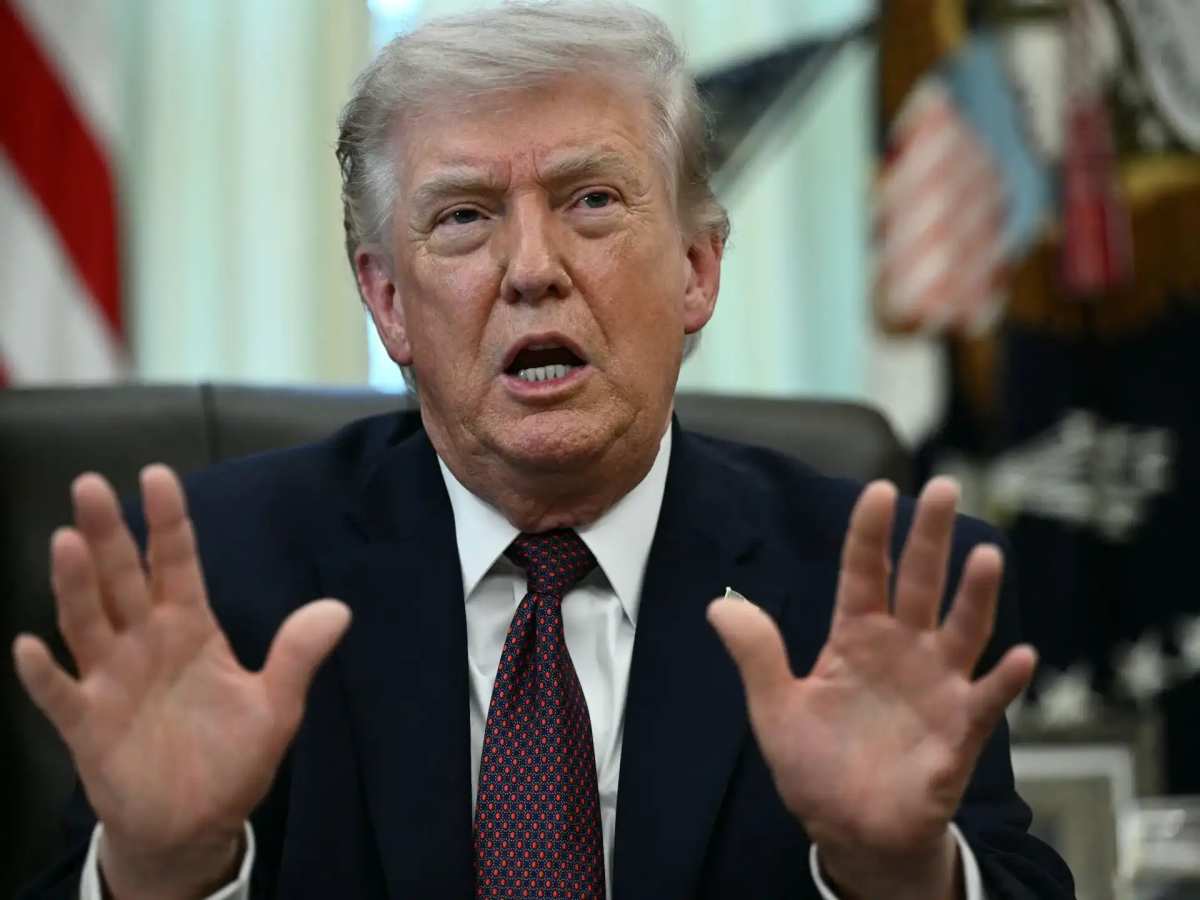
The phrase 'indefinite extension,' understood in this context, appears more like a domestic political gesture rather than a diplomatic concession toward Iran. It provides Trump space to delay without declaring failure.
In this state of affairs, Trump announced the extension.
Axios’ analysis is incisive: although this extension has avoided the resumption of war and large-scale regional escalation, it is undermining Trump’s own negotiating leverage. The credibility of a threat of force depends precisely on the authenticity of the countdown. Every TACO erodes the credibility of the next threat.
Internal divisions within Iran
Iran's response is divided, with clear tension between moderates and hardliners.
The tone of Iran’s state television is one of victory: Iran is the "winner on the battlefield," and control over the Strait of Hormuz is the most valuable card in this conflict. Iran agreed to a temporary suspension of military operations, but emphasized that "the war is not over." Meanwhile, Iranian state television warned that the precondition for negotiations is that no topics “infringing upon Iran’s independence and dignity” should be discussed, primarily including defensive and missile capabilities, nuclear capacity, and technology.
The rhetoric from the hardliners is more direct. An advisor to Iran’s parliamentary speaker stated, “Trump’s ceasefire extension is meaningless; the losing side cannot dictate terms,” and warned that the extension was merely “buying time for a surprise attack.”
However, there are also moderate voices within Iran. Iran’s ambassador to the United Nations, Iravani, stated that the government had received “some signals” indicating the U.S. was prepared to lift the blockade, and once the blockade was removed, “the next round of negotiations would take place in Islamabad.” He also emphasized that the U.S. naval blockade itself violated the ceasefire agreement, and lifting it was a prerequisite for new talks. When asked about his confidence in the prospects of negotiations, he replied: “We should give it a chance; we remain hopeful.”
The core contradiction remains unresolved: the U.S. demands complete denuclearization, while Iran insists on the lifting of the blockade first. Both sides are using delays to create space.
What’s next for Bitcoin?
It is very clear that over the past two weeks, the price of Bitcoin has been almost entirely driven by geopolitical narratives in the Middle East rather than macroeconomic factors.
Last Friday, Bitcoin surged to $78,300, hitting its highest level since early February. Subsequently, after Iran announced the closure of the Strait of Hormuz, the price retreated to the $75,000–$76,000 range. On April 19, following the U.S. military’s seizure of the cargo ship “TOUSKA,” Bitcoin briefly fell below $74,000. On April 21, after news of the ceasefire extension emerged, the price rebounded above $76,000 on the same day, driving an overall increase of over 1% in the cryptocurrency market, with total market capitalization rising to $2.55 trillion.
Every price point corresponds to a specific event on the battlefield.
At the institutional level, demand has not disappeared. Bitcoin spot ETFs recorded approximately $1.29 billion in net inflows between April 14 and 17, with even higher numbers the week around April 10, reaching about $1.1 billion. These timeframes closely align with expectations of a ceasefire before and after the Islamabad negotiations.
Rachel Lucas, an analyst at BTC Markets, stated: "Bitcoin's current resilience is less due to narratives and more a result of market mechanisms. Institutional buyers, particularly corporate funds, are aggressively accumulating during every pullback." The analyst also pointed out that this recovery coincides with market attention on the confirmation hearing for Fed Chair candidate Warsh – investors are simultaneously betting on the direction of monetary policy.
However, the data signals within the internal structure are less optimistic.
After Bitcoin returned to $75,000, the perpetual contract funding rate remained persistently negative. A negative funding rate indicates that short positions still dominate the derivatives market. In other words, while spot prices are rising, structural bullish forces have not caught up, and this rally has been primarily driven by short covering rather than new long positions entering the market.
Data from Deribit supports this assessment: approximately $1.5 billion worth of Bitcoin put options are concentrated near $60,000, while $1.3 billion worth of call options are clustered around $75,000. Together, these figures form an options structure with ambiguous directional bias.
Thielen, head of research at 10x Research, agrees with this signal. He noted that this rally has not been accompanied by significant call option buying, and the market is essentially driven by short-covering rather than a trend-based upward movement.
Hughes of Tokenize Capital stated that the rally may weaken next month, with further downside risks in August.
Even more pessimistically, CryptoQuant's on-chain data model shows downward pressure on the current Bitcoin price, with the potential to test support around $70,000 in the medium term. If on-chain momentum continues to weaken, a deeper correction could reach the $56,000 range. Morgan Stanley strategist Denny Galindo noted that Bitcoin is currently in the 'autumn' phase of its four-year cycle, with winter approaching.
If the ceasefire continues and substantial opening signals emerge in the Strait of Hormuz, some analysts believe Bitcoin could challenge $80,000 by the end of April. However, this forecast relies on a lengthy chain of prerequisites: the ceasefire must hold, blockades must be lifted, negotiations must progress, global energy supply expectations must stabilize, and only then can market risk appetite truly expand.
Tariffs, threats to allies, and pressure on the Federal Reserve almost always trigger a TACO moment as expected, rewarding those who bet on reversals.
However, TACO is not a law of nature but a predictive model based on past behavior. A war with Iran and trade negotiations differ fundamentally in nature. It involves military casualties, national sovereignty, domestic political red lines, and every cycle of TACO consumes the remaining mutual trust between negotiators and the market’s room for maneuvering with TACO. This also implies that one day, TACO might completely fail.