Top News
Trump stated that U.S.-Iran peace talks might resume as early as Friday, but Iran accused him of 'lying again.' Israeli media reported that the ceasefire period would end on the 26th.
Israeli media: The ceasefire deadline set by Trump for Iran will expire on the 26th.
Iran stated that it has not changed its plan to refrain from participating in negotiations so far.
The Iranian President: Always open to resolving issues through dialogue and agreements.
The Iranian Speaker of Parliament: Lifting the maritime blockade is essential for a meaningful full ceasefire; reopening the Strait of Hormuz would be impossible if there are serious violations of the ceasefire agreement. Previously, U.S. media reported that Trump was willing to grant Iran an additional 3 to 5 days of ceasefire but would not extend it 'indefinitely.'
Sources from Pakistan indicated that under its mediation, the likelihood of resuming negotiations within the next 36 to 72 hours had increased.
Iran: Received 'certain signals' suggesting that the United States is prepared to lift the blockade.
After formally declining to attend the negotiations in Islamabad on the 22nd, Iran's Permanent Representative to the United Nations revealed that he had received a 'signal' from the U.S. indicating readiness to lift the maritime blockade: 'Once they lift the blockade, I believe the next round of talks will be held in Islamabad.' Meanwhile, the second round of talks between Israel and Lebanon is scheduled to take place in the U.S. on the 23rd, as multi-front strategic competition in the Middle East continues to intensify.
The latest approval rating for Trump was released, showing 'America heading in the wrong direction.'
The latest poll shows that Trump's approval rating has dropped to 33%, a decline of 5 percentage points since March. Military actions against Iran have driven up living costs, with surging fuel prices causing a significant drop in support for Trump's economic policies, falling from 38% in March to 30%. Approximately 73% of respondents believe the U.S. economy is 'very' or 'somewhat' poor, while 72% think America is heading in the wrong direction.
The easy part is over! Goldman Sachs trading desk: We are in the 'final stage of systemic support.'
The Goldman Sachs trading desk has warned that the systematic buying driving the U.S. stock rebound is entering its 'final phase,' and the 'easy money' has already been made. At the same time, rising energy costs are eroding corporate profits and consumer purchasing power, while unusual movements in junk stocks suggest increasingly chaotic positioning. Although a ceasefire agreement briefly calmed sentiment, it has done little to ease geopolitical tensions. The market is transitioning from passive momentum chasing to a new phase of actively assessing fundamentals.
A $5 Trillion Opportunity! AI Is Not Only Power-Hungry but Also Driving a Surge in Demand for Water Resources and Metals
Bank of America noted that the expansion of AI data centers is triggering a comprehensive crisis across power, water resources, and critical metals, which the market has yet to fully price in. It forecasts that by 2030, annual electricity consumption by data centers will exceed Japan's total electricity usage, while water consumption will equal New York City's total drinking water consumption. Simultaneously, there will be structural shortages and sharp price increases for metals such as copper, aluminum, gallium, and germanium. The real bottleneck lies not in cost but in 'deliverability' and mismatches in construction timelines. The competition in AI is extending from computing power to a reassessment of energy and resource infrastructure.
Howard Marks: Markets Turn Pessimistic Amid Fourfold Pressures, S&P P/E Ratio of 22 Still Not Cheap
The current P/E ratio of the S&P 500 is approximately 22 times, still significantly higher than the historical average. Marks believes that it is “far from cheap.” Amid impacts from multiple factors such as geopolitics and AI, market sentiment has shifted towards pessimism. Moreover, in terms of investment philosophy, he stated that “waiting for the bottom is the most foolish thing to do,” as bottoms can only be confirmed in hindsight, and “value” remains the sole criterion for buying. Regarding when to sell, investors should disregard their purchase costs and ask themselves, “Would I buy at the current price?” Exiting too early would be the biggest mistake.
U.S. stock market recap
Strong corporate earnings, coupled with Trump's brief extension of the ceasefire agreement, drove the three major U.S. stock indices higher, with the S&P 500 and Nasdaq reaching new highs. Technology stocks led this round of gains.

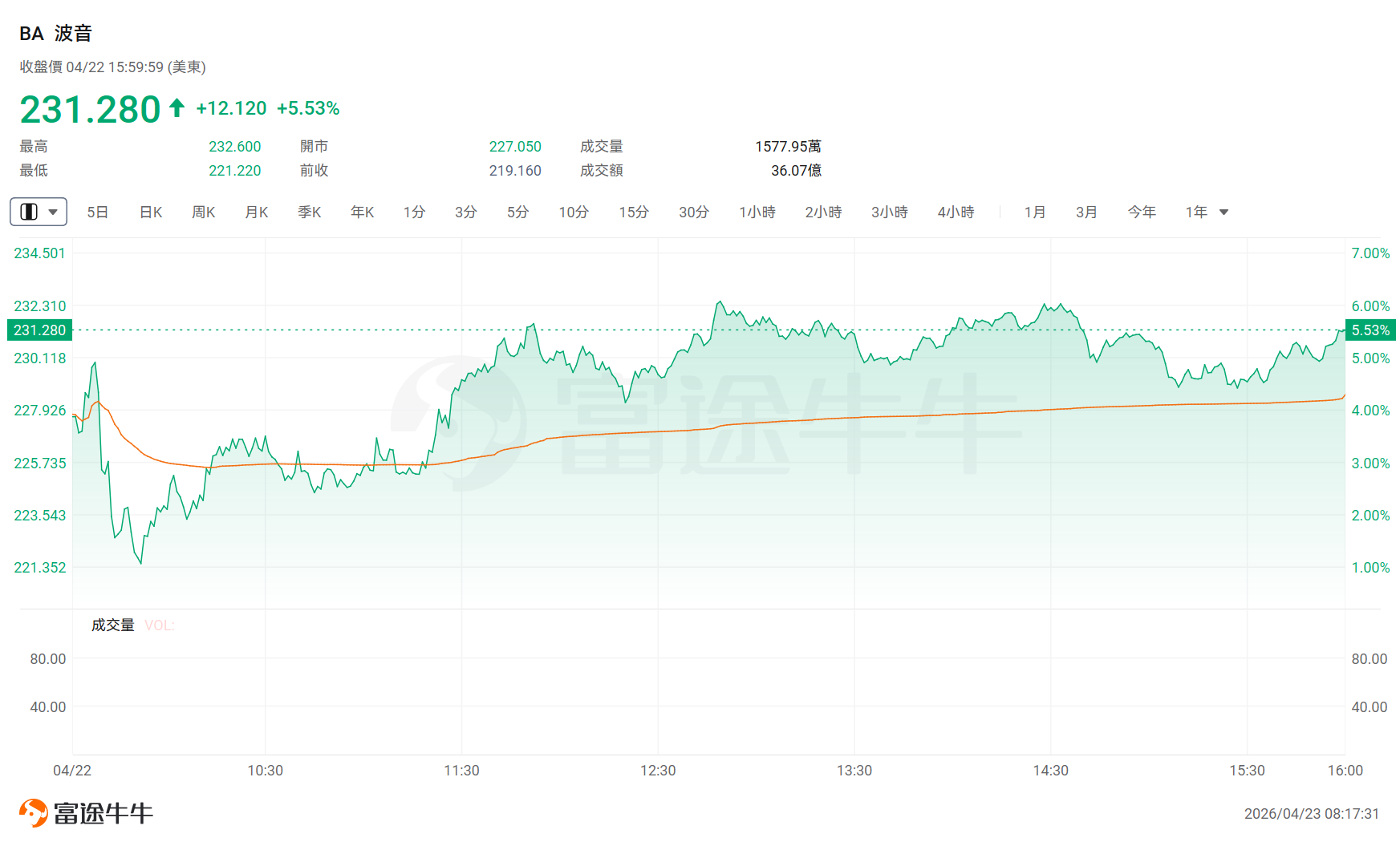
The Philadelphia Semiconductor Index closed up approximately 2.7%, marking its 16th consecutive trading day of gains, the longest streak in history. All seven major U.S. technology giants closed higher, with software stocks rising for the eighth consecutive session, rebounding nearly 20% from the April lows. Boeing surged over 5.5% as its quarterly loss was smaller than expected.
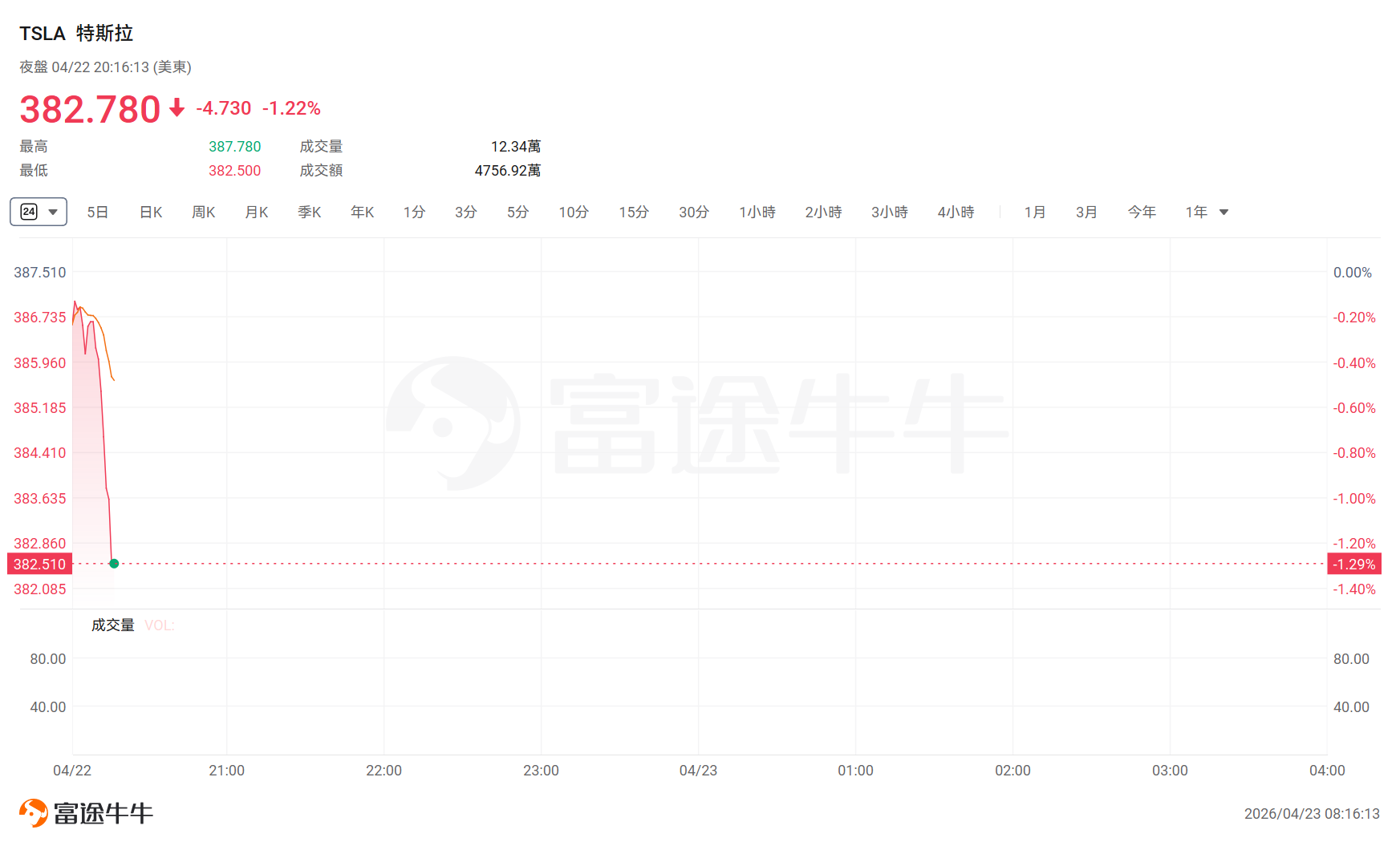
After-hours trading saw Tesla jump 4% initially but later reversed to fall more than 2%. Texas Instruments soared 10%, while software giant ServiceNow plummeted over 13%, weighing on the SaaS sector, and IBM fell more than 6%.
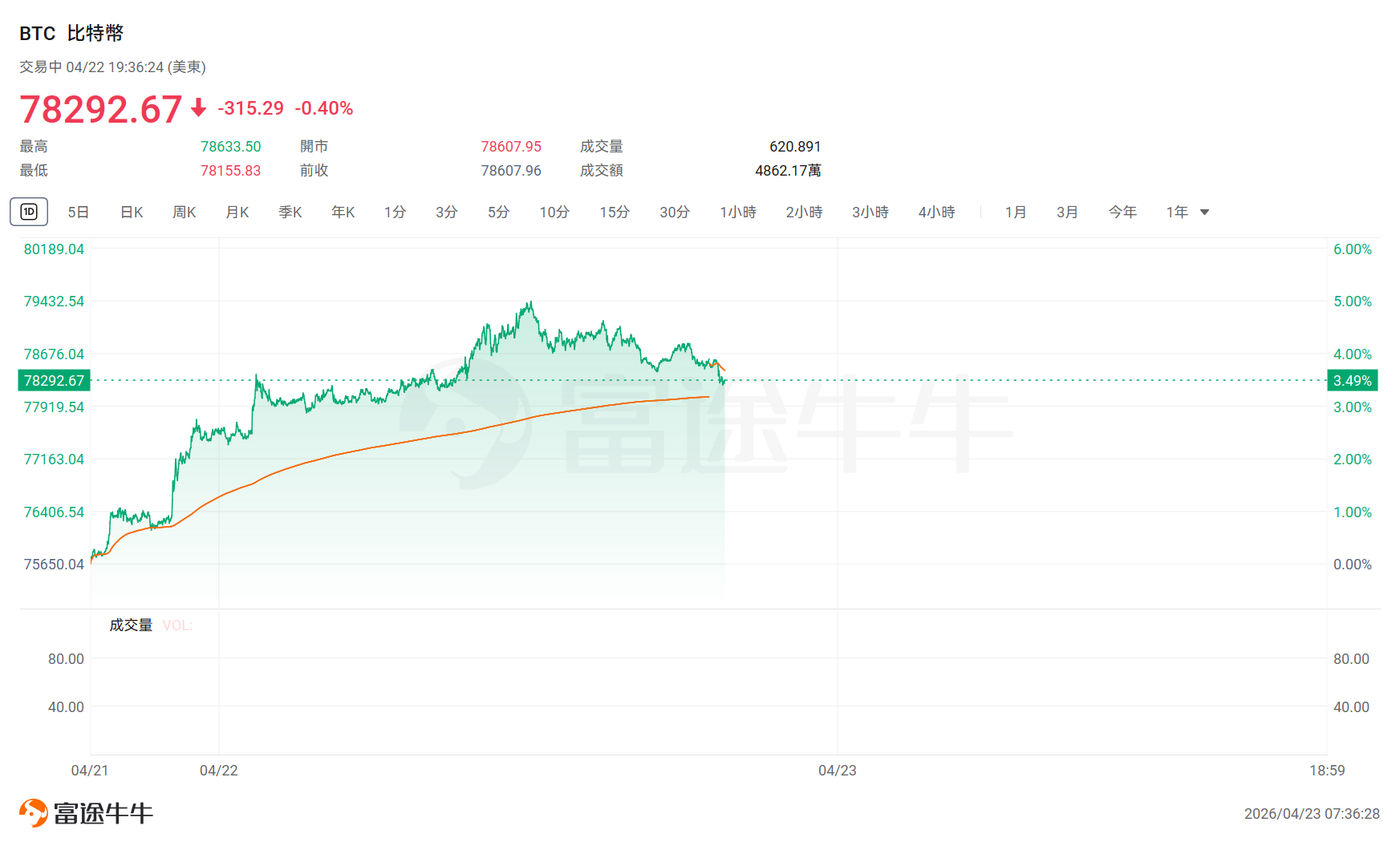
The U.S. dollar rose 0.18%, rebounding for two consecutive trading sessions. Bitcoin gained 3.6%, breaking above $79,000 intraday to reach a new high since February 2.
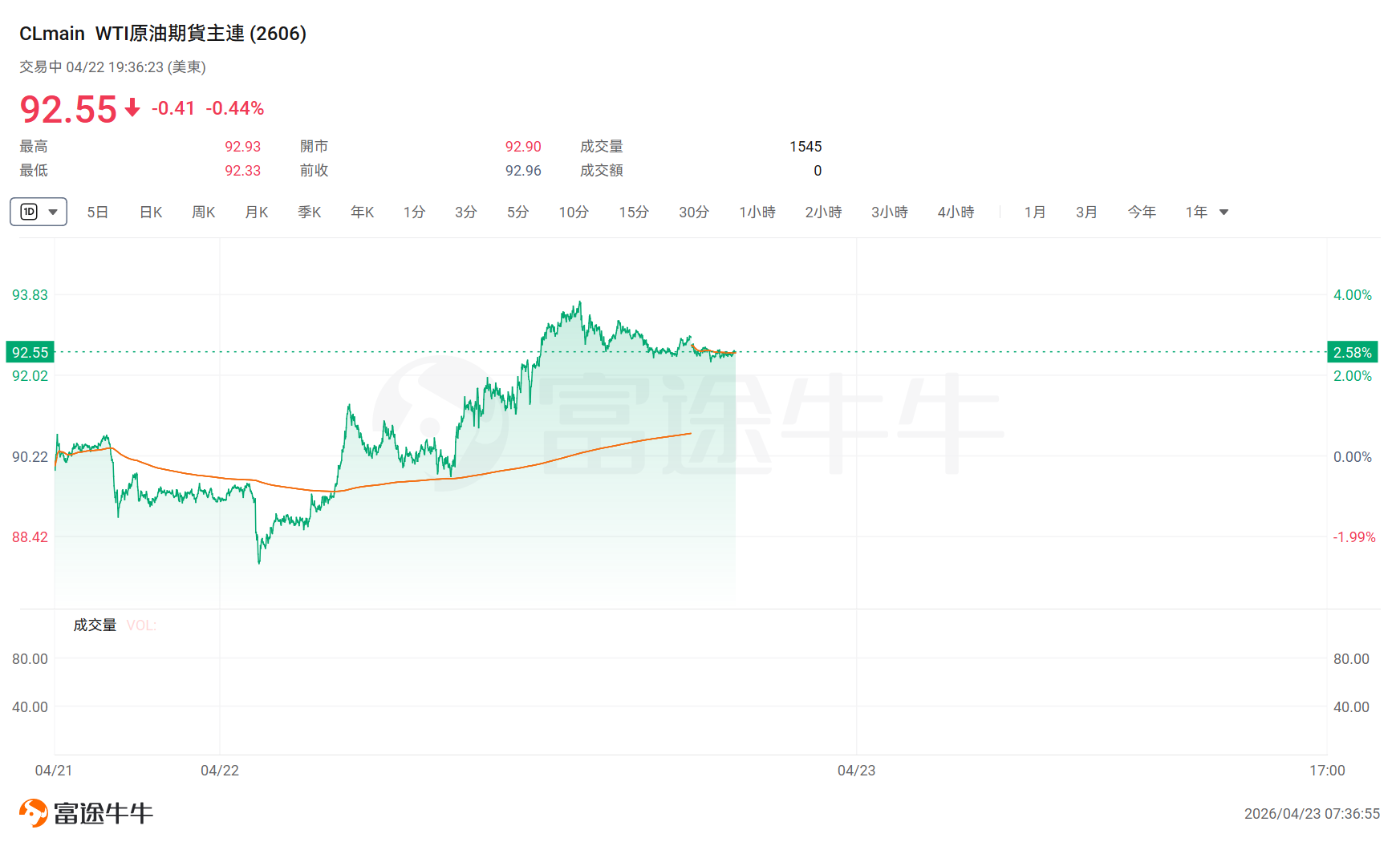
Spot gold prices retreated after an initial spike, rising more than 1% at one point during the day. Silver gained 1.3%. WTI crude oil futures climbed 3.67%, while Brent crude futures closed up 3.48% at $101.91 per barrel.
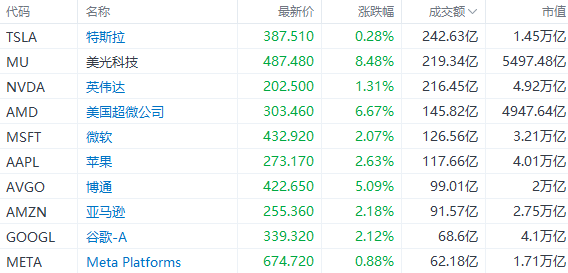
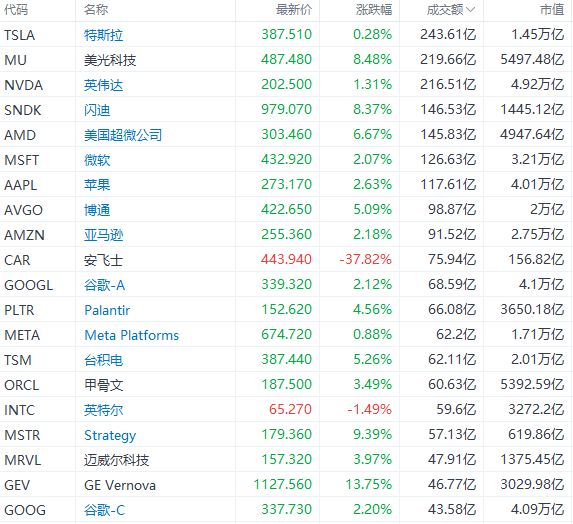
Among popular technology stocks, Micron Technology rose 8.48%, AMD gained 6.67%, and Broadcom increased by 5.09% as of yesterday's close.
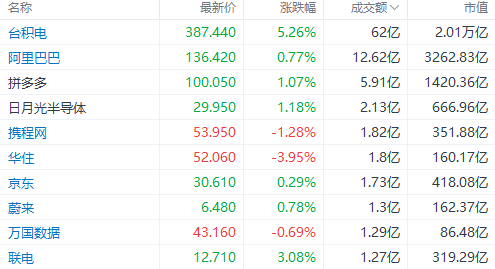
Among popular Chinese stocks, Taiwan Semiconductor rose 5.26%, United Microelectronics gained 3.08%, Trip.com Group fell 1.28%, and Huazhu Group dropped 3.95% at the close.
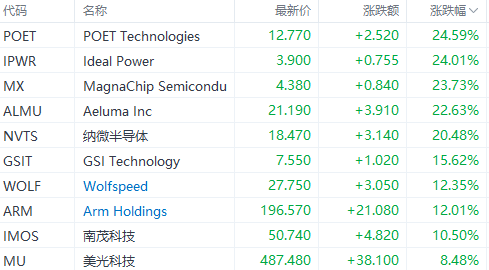
$Semiconductors (LIST2015.US)$The semiconductor and optical communications sectors extended their winning streaks amid continued momentum from AI-driven demand narratives. The Philadelphia Semiconductor Index set a record for the longest consecutive rally, with POET Technologies surging 24.59% and Ideal Power rising 24.01%.
Individual stock information
Tesla's Q1 revenue achieved the highest growth rate in nearly three years, with profits significantly surpassing expectations and cash flow doubling; Musk forecasts a substantial increase in expenditures.
Tesla's total revenue and automotive business income in Q1 both increased by 16% year-over-year, citing a rebound in vehicle demand in Europe and North America; energy business revenue declined by 12% after previous growth; service revenue accelerated by 42%, with paid Robotaxi mileage nearly doubling quarter-over-quarter; gross margin rose to 21%, hitting a three-year high; capital expenditure was 40% lower than expected, and Tesla invested $20 billion in SpaceX. Tesla stated that its collaboration with SpaceX aims to build the largest chip factory; Cortex 2 has been launched, and development of the Dojo 3 custom chip is progressing; preparations for the Optimus factory will commence in Q2, with the first-generation production line targeting an annual output of 1 million units, and the second-generation line aiming for 10 million units. After the earnings report, the stock price rose more than 4% in after-hours trading; however, it reversed course and dropped over 2% after Elon Musk mentioned a significant increase in capital expenditure, followed by the CFO stating that capital expenditure this year would exceed $25 billion.
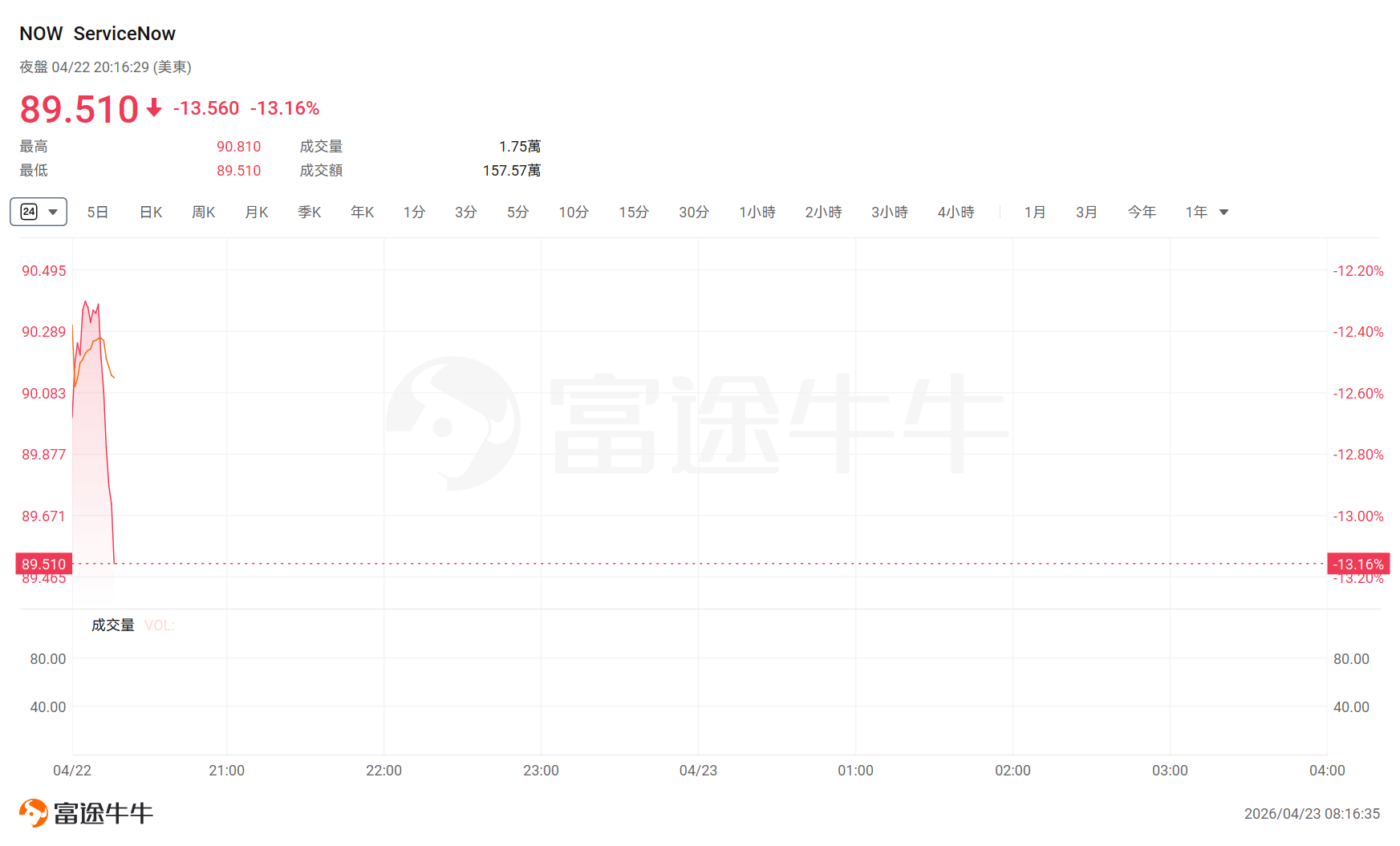
Post-earnings plunge weighs on the SaaS sector! ServiceNow's results meet expectations, but concerns over the impact of Middle East conflicts and AI-related uncertainties persist.
ServiceNow reported Q1 revenue of $3.77 billion, up 22% year-over-year, meeting expectations, with Q2 guidance slightly exceeding forecasts. However, conflicts in the Middle East delayed large order deliveries, pressuring short-term profit margins.M&ACompounded by Wall Street's ongoing skepticism about enterprise software prospects in the AI era, ServiceNow shares plunged 13.55% after-hours following the earnings release, dragging down the entire SaaS sector.
Far exceeding expectations! SK Hynix achieved a net profit of 40 trillion Korean won in the first quarter, representing a year-on-year increase of 500%, as memory prices continued to soar.
SK Hynix's performance in the first quarter of fiscal year 2026 set new historical records across all key metrics, with revenue, operating profit, and net profit reaching their highest levels ever for a single quarter. This underscores the ongoing tightening of supply and demand dynamics in the high-performance memory market.
The company's revenue for the first quarter reached 52.58 trillion Korean won, a 60% increase from the previous quarter and a year-on-year growth rate of 198%. Operating profit was 37.61 trillion Korean won, surging 96% from the previous quarter and skyrocketing 405% year-on-year, corresponding to an operating profit margin of 72%, the highest level in a single quarter on record. Net profit was 40.35 trillion Korean won, with a net profit margin of 77%.
The core drivers behind this performance leap were significant price increases for DRAM and NAND products, coupled with the growing share of high-value-added product portfolios. The company noted that as AI computing continues to drive strategic demand for memory, the supply of high-performance storage remains constrained, and a favorable pricing environment is expected to persist for some time.
Too Expensive! Taiwan Semiconductor: No Plans to Deploy ASML Holding's Latest Lithography Machine Before 2029
At a unit price of $410 million! Taiwan Semiconductor’s co-deputy chief operating officer stated that ASML Holding’s latest lithography machine (High-NA EUV) is too expensive, and the company currently has no plans to use it for mass production of chips, with related decisions postponed at least until 2029. As ASML Holding's largest customer, this statement hindered its commercialization progress. IBM(IBM.US) Q1 results exceeded expectations but failed to eliminate concerns about 'AI disruption': overall and software revenue growth both slowed, maintaining unchanged full-year guidance. Following this news, ASML Holding’s stock price briefly fell by 2%.
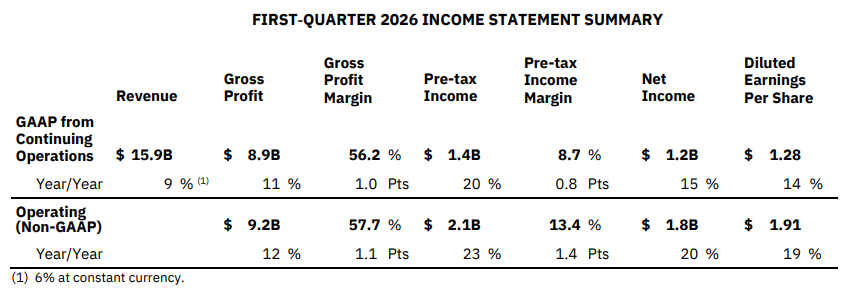
IBM's Q1 results beat expectations but failed to alleviate concerns about 'AI disruption': both overall and software revenue growth slowed, with the company maintaining its full-year guidance unchanged.
Previously, this tech giant reiterated its full-year performance forecast despite reporting better-than-expected first-quarter results. The company failed to alleviate investor concerns that artificial intelligence might disrupt its business.
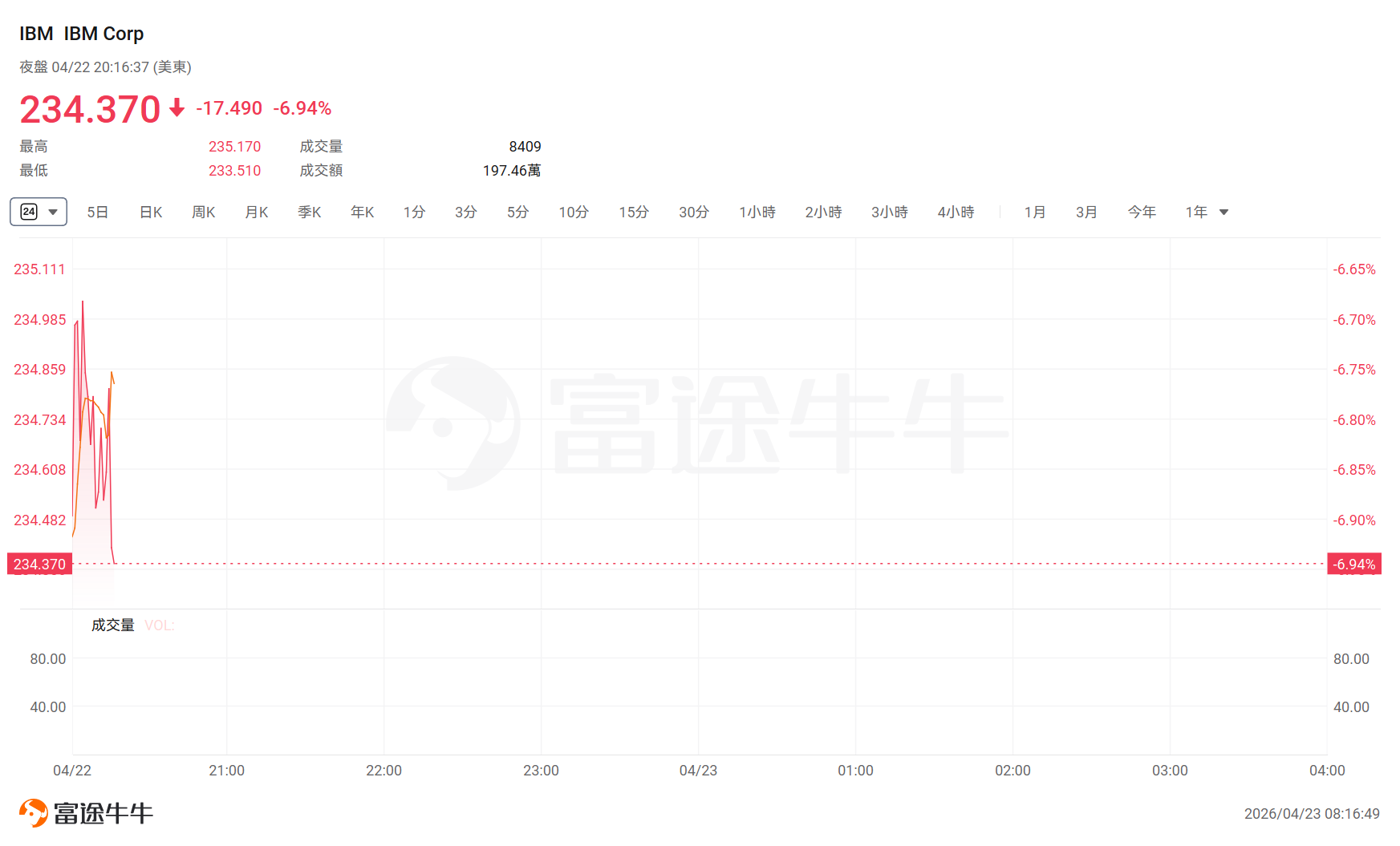
The company stated in a release on Wednesday that software revenue for the quarter ending March 31 grew 11% to $7.05 billion, slightly above the expected $7.02 billion. Total revenue increased 9% to $15.9 billion, surpassing analysts’ average estimate of $15.7 billion. Adjusted earnings per share were $1.91, also higher than expected.
NVIDIA-backed data storage software company Vast Data completed a new round of financing worth approximately $1 billion, with its valuation soaring to $30 billion.
NVIDIA-backed data storage software company Vast Data announced the completion of a new round of financing worth approximately $1 billion, raising its valuation to $30 billion, more than tripling from its $9.1 billion valuation in 2023. This underscores the continued rise in capital market enthusiasm for AI infrastructure.
Company co-founder and CEO Renen Hallak stated that this round of financing includes both primary and secondary funding, with the latter allowing employees and early investors to sell part of their shares, thereby providing the company with greater flexibility regarding whether and when to proceed with an IPO.
This round of financing was jointly led by Drive Capital and Access Industries, with existing shareholders including NVIDIA, Fidelity Investments, and NEA participating as follow-on investors.
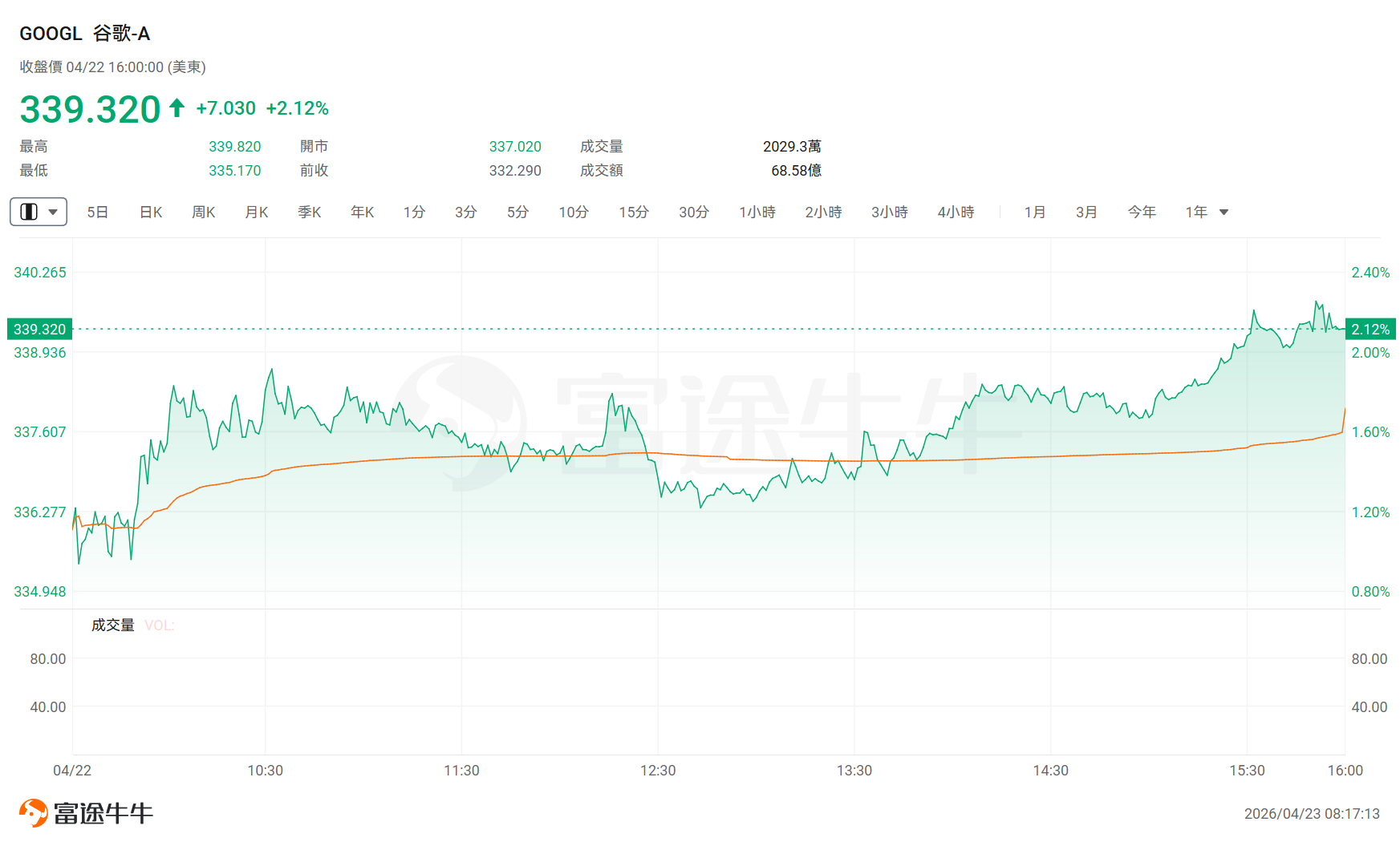
A ‘software-hardware’ integrated strategy to break through the AI competition! At Google Cloud Next, the company unveiled a full suite of AI agents alongside its self-developed Tensor Processing Units (TPU) 8t/8i.
As competition in artificial intelligence (AI) intensifies, Google is attempting to reclaim technological leadership through a 'software-hardware integration' strategy. At this year's Google Cloud Next annual conference held in Las Vegas, Google’s cloud division not only launched a new set of AI agent development tools to rival OpenAI and Anthropic but also introduced the latest generation of its self-developed Tensor Processing Unit (TPU) series, challenging NVIDIA(NVDA.US)'s dominance in the AI chip sector.
Backlog hits a record high of $695 billion! Boeing's Q1 revenue increases by 14% to $22.2 billion, with net losses narrowing.
Boeing reported revenue of $22.2 billion for the first quarter of 2026, representing a 14% year-over-year increase and surpassing market expectations. The net loss narrowed to $7 million. Deliveries of commercial aircraft rose by 10%, with the backlog across its three main business segments reaching a record high of $695 billion. Although operating cash flow remained negative, the company repaid $7 billion in debt during the quarter and doubled capital expenditures to $1.275 billion, advancing both production ramp-up and deleveraging efforts simultaneously.
Top 20 by trading value
Hong Kong Market Outlook
On Wednesday, April 22, southbound capital recorded a net purchase of Hong Kong stocks amounting to HKD 4.89 billion.
$CNOOC (00883.HK)$、$GEELY AUTO (00175.HK)$、$POP MART (09992.HK)$Net inflows amounted to HKD 475 million, HKD 332 million, and HKD 331 million respectively;
$BABA-W (09988.HK)$、$TENCENT (00700.HK)$、$YOFC (06869.HK)$Net outflows totaled HKD 1.062 billion, HKD 1.028 billion, and HKD 666 million respectively.
Hengrui Pharma's Q1 revenue increased by 13% year-over-year, with net profit rising by 22%. The proportion of revenue from innovative drugs exceeded 60% for the first time.
Hengrui Pharma's Q1 report shows that the company achieved revenue of RMB 8.141 billion, representing a year-on-year increase of 12.98%; net profit attributable to shareholders reached RMB 2.282 billion, up by 21.78% year-on-year. Revenue from innovative drugs accounted for more than 60% for the first time, reaching 61.69%, with non-oncology product revenue increasing by 92.13% year-on-year, indicating significant diversification. The company invested RMB 2.224 billion in research and development during the reporting period, received approval for three innovative achievements, and had eight new drug marketing applications accepted, accelerating the progress of its pipeline.
Today's Focus
Keywords: U.S. initial jobless claims for the week ending April 18, Intel earnings report
In terms of economic data, the U.S. initial jobless claims for the week ending April 18 will be released at 20:30.
In terms of new stocks, $HUAQIN (03296.HK)$ will officially go public.
In terms of earnings, U.S. stocks $Freeport-McMoRan (FCX.US)$ 、 $Lockheed Martin (LMT.US)$ will release its earnings before the market opens on the 23rd, $Intel (INTC.US)$ 、 $Newmont (NEM.US)$ 、 $SAP SE (SAP.US)$ will release after the market closes, and Hong Kong stocks $CHINA TELECOM (00728.HK)$ 、 $CHALCO (02600.HK)$ will publish its financial results.

Futubull AI Morning Reading:
When everyone goes mad, you must remain calm.
— Jim Rogers
 Looking to pick stocks or diagnose stock performance? Want to know the opportunities and risks in your portfolio? For all investment-related questions,just ask Futubull AI!

Editor/Lee