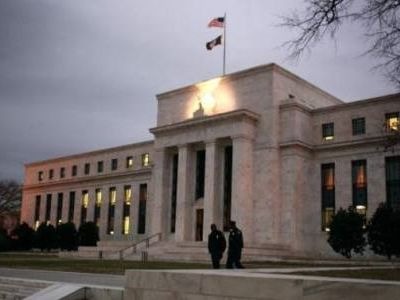
As Powell's tenure draws to a close, his successor Warsh aims to dismantle the 'forward guidance' and dot plot. This signifies the potential collapse of a 15-year foundation for global asset pricing. The premium on certainty is coming to an end, and equity, bond, and currency markets are about to lose their 'anchor.' A storm affecting the pricing models of all assets has quietly begun.
Next Wednesday, Powell will step up to the podium and conclude this meeting with a decision that holds no suspense — keeping interest rates unchanged.
What the market is truly waiting for is not this decision.
 On Friday, the U.S. Department of Justice dropped its criminal investigation into Powell. The biggest political obstacle that had been used to block Trump's nominee — Kevin Warsh — was thus removed. Data from the prediction market Kalshi on the same day showed that the probability of Warsh being officially confirmed before Powell’s term expires on May 15 had jumped from 30% to 84%.
In other words, the press conference on April 29 is very likely to be Powell’s last appearance on stage as the Fed Chair.
Warsh intends to dismantle the foundation.
On April 21, Warsh sat before the Senate Banking Committee and made the following statement: 'Too many Fed officials, both current and former, have pre-emptively expressed their views on where they believe interest rates should be at the next meeting, the next quarter, or next year.'
The reach of this statement far exceeds any single decision on rate hikes or cuts.
During the same hearing, he explicitly called for the abolition of the 'dot plot' — the chart published quarterly that displays the interest rate projections of 19 FOMC members. He criticized core PCE as a 'rough estimate,' described inflation as 'a choice,' and characterized the high inflation of 2021–22 as a policy error rather than the result of external shocks. As for the regular press conferences after each FOMC meeting, he declined to commit to continuing them, stating, 'The pursuit of truth is more important than repetition.'
He also hinted at potentially reducing the number of annual meetings but did not provide a specific figure.
Forward guidance — the mechanism by which the Fed informs the market in advance of its intentions — is a system established by Bernanke after 2008. From calendar-based commitments to conditional commitments, and then to post-FOMC press conferences, dot plots, and meticulously parsed statements, this framework has quietly become the implicit foundation of global asset pricing over the past 15 years.
Wash said that he intended to dismantle this base.
Powell has already begun stepping back.
Those who have read the minutes of the FOMC press conferences in January and March this year should have noticed something.
On January 28, Powell stated: 'The committee is not attempting to specify when or under what criteria interest rates will be cut.' Compared to his usual forward-looking statements over the past few years, this statement was notably softer. By March 18, he had gone a step further – when pressed on whether forward guidance might change, he made the rare public admission: 'There is currently no consensus within the committee on how to alter communication methods.'
This is an incumbent chairman saying: we have discussed this matter internally.
In plain terms, before leaving office, Powell has been proactively loosening the constraints of forward guidance. This is not entirely due to pressure from Wash’s agenda but seems more like a deliberate effort to create space for his successor. The two directions converge strangely: one gradually fading out during the last few press conferences of the predecessor, while the other has already announced plans at the confirmation hearing.
The loss of anchoring did not begin on the day Wash took office.
This is not just a story about the bond market.
Over the past 15 years, the assumption that 'the Federal Reserve will tell you in advance what it plans to do' has been deeply internalized into the pricing models of nearly every type of asset.
What the stock market first felt was volatility at the valuation level. A key premise enabling high PE growth stocks to maintain their current multiples is that the future path of the discount rate can be predicted – when you know where interest rates will be and where they are headed, the discounted cash flow model can generate a credible number. Once Wash's framework takes effect, this premise disappears. When the model begins to fluctuate, the valuation multiples of growth stocks become far more fragile than those of value stocks. This is not a directional interest rate shock but rather an issue with the visibility of the discount rate itself, which has a more enduring destructive impact on valuations. The watershed lies in whether Wash provides an alternative framework: if he announces some form of 'data-dependent scenario-based guidance' after taking office, the compression in growth stock valuations would be much smaller compared to complete silence.
The vulnerabilities in the credit market are more concealed. The refinancing decisions of corporate bonds depend on "having a basic grasp of the interest rate path for the next three years." Once this visibility disappears, credit spreads will need to compensate for additional uncertainty premiums — and current spreads are at extremely tight levels not seen in 25 years, leaving almost no buffer. The widening of spreads from this point will not be slow. There is only one condition for this to fail: if Warsh's "no forward guidance" is interpreted by the Senate and the market as merely a minor adjustment in communication style rather than a systemic shift.
On the exchange rate front, the situation is even more concealed. Many emerging market central banks over the past decade have relied on the Fed’s forward guidance as a policy reference framework — if this reference suddenly becomes unreadable, calibrating domestic exchange rate policies will become more difficult, and currency volatility will naturally rise. During the 2013 "Taper Tantrum," currencies of emerging markets with weaker reserves fell by 6%–15% within a few months. While foreign exchange reserve conditions in emerging markets have improved today, global growth expectations are weaker (the IMF has just revised down its forecast for global growth in 2026 to 3.1%), and this time, the growth premium is thinner.
The MOVE Index currently stands at around 67, below its historical average of 75–80. Implied volatility in the bond market is at a historically low level, and the market continues to enjoy the certainty premium provided by forward guidance free of charge.
During the year of the "Taper Tantrum," the MOVE exceeded 125 at its peak. Back then, what the market was panicking about was "QE tapering" — the direction was known; only the scale was changing. This time, what is being faced is the disappearance of the communication framework itself, making the source of uncertainty more fundamental. A move of the MOVE Index toward 75–80 would signal an early reaction in the bond market; once it breaks above 90, historical data shows that volatility in equity and credit markets tends to follow.
How to Read the Press Conference on the Day
If Warsh is confirmed by the Senate before May 15 — with an 84% probability currently — April 29 will mark Powell’s last appearance before the media as chairman. With less than three weeks remaining until May 15, if the confirmation proceeds smoothly, the transition will be clean: Powell steps down, and Warsh takes over without overlap.
But during these three weeks, the market will not wait quietly. Warsh's statements during his hearing were clear enough, and the market will reinterpret every word Powell says at his press conference through the lens of Warsh’s agenda — not because both are serving simultaneously, but because the market has already begun pricing in that new framework.
He will not comment on Warsh, will not explicitly defend forward guidance, and will not pre-endorse his successor. He will consistently say, "We make decisions meeting by meeting," emphasize "data dependence," and choose the least controversial path for interest rate decisions.
At the start of the press conference, the first to move will be Treasury futures — the market will watch whether his wording on inflation leans hawkish or dovish, which will determine the initial policy conditions when Warsh takes over. During the Q&A session, reporters will almost certainly press him on "how do you view the reform of forward guidance," and that response will be worth reading word by word.
The more Powell emphasizes the value of forward guidance at the press conference, the more the market will expect Warsh to push harder to dismantle it.
The surprise of this press conference lies in what was left unsaid.
Key events to watch in the coming period
The timeline for the Senate vote is the first watershed. The DOJ's withdrawal of charges removed the biggest obstacle for Senator Tillis, but his public statements after the withdrawal still leave an information gap. If the Banking Committee successfully passes the nomination in the first week of May, the full Senate is expected to vote during the week of May 11–14 – if completed within this window, Wash will take office on May 15, the day Powell steps down; if delayed, Powell will preside over one more press conference as acting chairman, scheduled for June 16–17. The market logic behind these two scenarios is starkly different: the former would lead to a concentrated burst of pricing expectations without forward guidance during the second week of May; the latter would stretch and ease the pressure, giving the market more breathing room.
Wash’s first public statement after confirmation is more important than the confirmation itself. Once the transition is complete, the nature of uncertainty will shift – from 'who is in charge' to 'will he really follow through on what he said during the hearing?' Historically, no major central bank has completely abolished forward guidance without providing any alternative. When the Reserve Bank of Australia abandoned yield curve control in 2021, it set up a transitional period. If Wash announces some form of 'conditional scenario-based guidance,' the market impact would be significantly mitigated; if he chooses total silence, that would mark the formal beginning of the 'no signal era.'
The MOVE Index provides the most direct observation window. A move from 67 toward 75–80 signals the bond market taking action first; a break above 90 would trigger volatility in equities and credit markets. The magnitude of data shocks between each FOMC meeting is also worth monitoring.
Central banks globally following the Fed is not a tail risk but a variable that needs preemptive calibration. Over the past decade, both the ECB and the Bank of Japan have treated the Fed’s policy path as a key external reference. Once this framework becomes unreadable, divergence among national monetary policies will widen, and the logic of cross-market transmission will grow more complex – with currency volatility being the most underestimated transmission channel in this chain.
The FOMC meeting on June 16–17 is the ultimate validation point. This will likely be Wash’s first meeting as chair – the first statement without a dot plot, the first press conference potentially altering format or frequency. All assessments regarding 'systemic change' will need to be reconciled there.
The current mainstream market expectation is treating all of this as personnel news – waiting until Wash officially takes office before reacting. However, losing the anchor is a process, not a single moment, and this process begins next Wednesday.
Editor/Jeffy