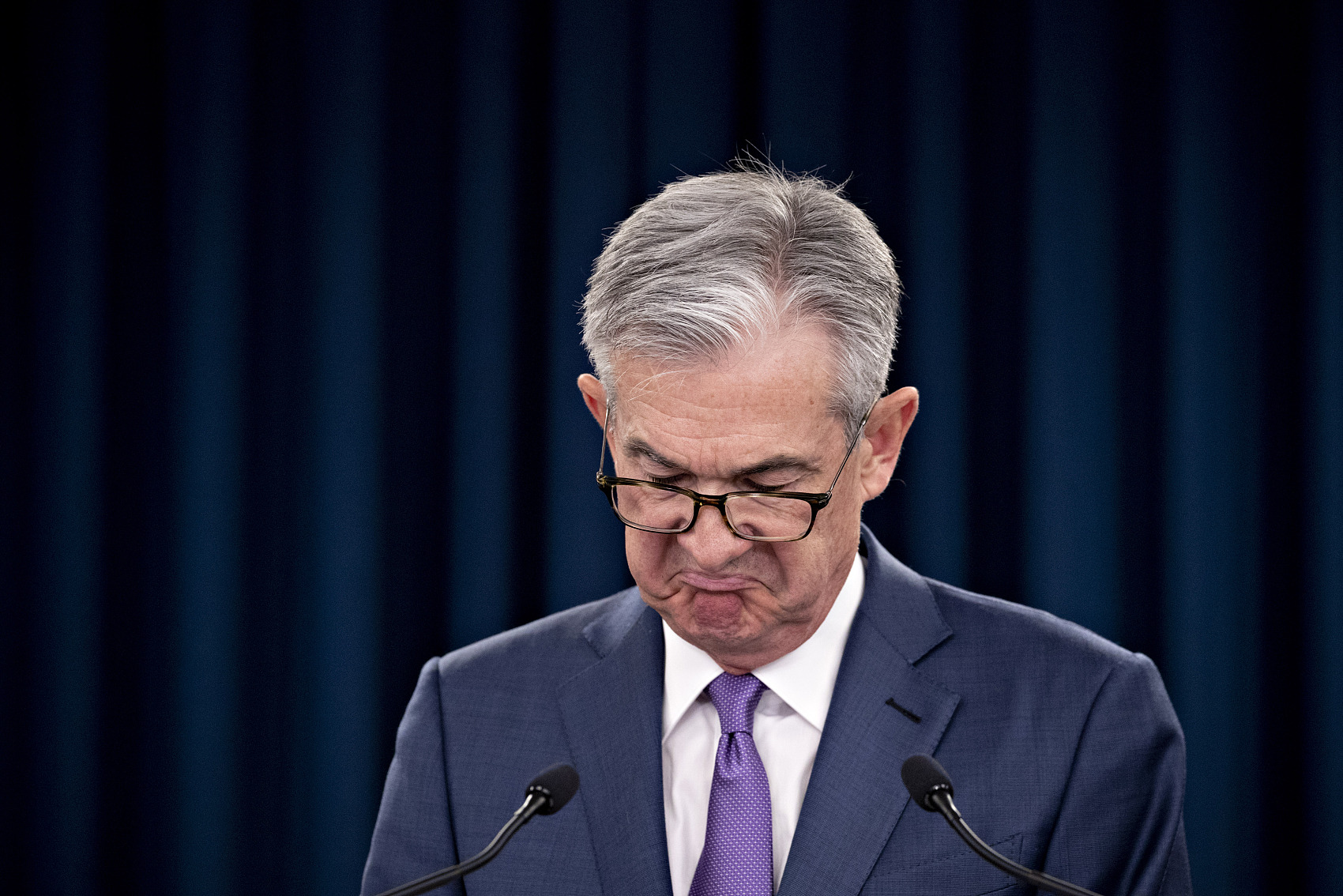
①This Wednesday local time, Federal Reserve Chair Powell is likely to host his last interest rate meeting press conference as the head of the Federal Reserve; ②and this may also mark the end of regular Q&A sessions between the highest-ranking officials of the Federal Reserve and journalists.
This Wednesday local time (early Thursday morning Beijing time), Powell is likely to chair his last interest rate decision press conference as the Federal Reserve Chair — which may also mark the end of regular Q&A sessions between the Fed’s highest-ranking officials and reporters.
Many investors and economic experts are currently paying close attention to such press conferences. Supporters of having the Federal Reserve Chair regularly attend media events argue that it allows the world's most important central bank to lead the narrative surrounding its interest rate adjustments, aiding the market in digesting the Federal Reserve’s policies.
 However, some critics, including Kevin Warsh, Trump's nominee to succeed as Federal Reserve Chair, believe that communication by Federal Reserve officials has been too frequent. Warsh, who is likely to be confirmed before the Fed's next policy meeting in mid-June, has hinted that he might completely stop holding such regular press conferences.
For this reason, Julia Coronado, former senior Fed staffer and president of MacroPolicy Perspectives, stated that Powell standing at the podium for the last time on Wednesday is “highly significant.”
“I expect Powell to defend, either directly or indirectly, the value of transparency and the importance of addressing the public and reporters to explain their positions,” she added.
The Fed's regular press conferences have spanned three chairmanships.
Federal Reserve officials meet every six weeks, holding eight interest rate meetings annually to formulate monetary policy. Former Federal Reserve Chair Bernanke began holding press conferences after some of these meetings in 2011 — four times a year at the time — in an effort to increase the transparency of the central bank’s policies. Since then, this practice has continued through the tenures of Yellen and Powell.
“In the past, the mystique of central banking lay in not letting anyone know what you were doing,” Bernanke said at the time.
Powell further increased the frequency of press conferences in 2019, less than a year into his tenure, beginning to hold them after every meeting. When announcing this change, Powell stated that he wanted to outline the economic situation in “plain English” because monetary policy affects everyone.
"We believe that if we can explain as clearly as possible the actions we might take and the reasons behind them, the overall outcome may be better," Powell said at the time. "To that end, we have tried to clarify our expectations regarding the evolution of the economy and potential changes in the policy stance."
However, in recent years, many industry insiders have begun to notice that over time, Powell has become more cautious in responding to journalists' questions.
"The attention generated by impromptu responses may have exceeded his expectations or intentions," said Vincent Reinhardt, chief economist at BNY Mellon Investment Management. "Over time, he has increasingly adhered to the briefing materials. The sharp edges of his rhetoric have been smoothed out, reducing controversy but also diluting the informational content."
This has led Harvard University economics professor Greg Mankiw to believe that by 2024, Powell’s cautious approach at the podium had turned press conferences into a waste of time.
"When the Fed chair answers journalists' questions, he seems to always try to convey as little information as possible using as many words as possible," Mankiw wrote in a blog post. "From the Fed's perspective, the ideal press conference seems to contain no new information, primarily consisting of repetition and platitudes."
Will Warsh push the Fed to 'go silent'?
Notably, during his testimony before the Senate Banking Committee last week, Warsh hinted that he might no longer commit to holding a press conference after every interest rate decision meeting.
When Arizona Democratic Senator Ruben Gallego asked whether he would stick to holding eight press conferences per year, Warsh responded: "Whenever a press conference is held, there is an expectation that some significant message will be conveyed."
He reiterated previous criticisms that Fed officials speak too much. "Currently, press conferences are held regularly. If you ask for my personal opinion, the Fed Chair and other central bank officials on the FOMC speak quite frequently, while transparency is not actually lacking."
Warsh even plans to abandon the Fed’s long-standing commitment to forward guidance. Warsh believes that this type of forward guidance does not effectively stabilize markets; instead, it may constrain the Fed’s decision-making flexibility and must therefore be abandoned.
Of course, despite Wash's criticism that the Federal Reserve is overly 'talkative,' some experts believe he may find it hard to resist the temptation to use this opportunity to shape public perception of the Federal Reserve under his leadership. Matt Luzzetti, Chief U.S. Economist at Deutsche Bank, stated that he doubts whether Wash will ultimately end the practice of holding press conferences after every meeting.
"The press conference provides him with a powerful and frequent platform to immediately stamp his imprint on the Federal Reserve's statements and dominate the narrative after every policy decision," Luzzetti wrote in a note to clients. "Abandoning this stage would be a missed opportunity."
Moreover, the central bank's lack of communication mechanisms may also lead to a repeat of historical market volatility, with associated risks not to be underestimated. For example, an unexpected sharp interest rate hike by the Federal Reserve in early 1994 caught the markets off guard, leading to the bankruptcy of Orange County, California later that year. This was the largest municipal bankruptcy in U.S. history at the time.
"Such volatility is of no benefit to the economy," Coronado pointed out, making it more appropriate for the Federal Reserve to "clearly explain its actions and the reasons behind them."
In any case, at this week’s interest rate meeting, the Federal Reserve is almost certain not to adjust interest rates. With the ongoing conflict in Iran, economic prospects remain uncertain; and as inflation has surged sharply recently, the anticipated interest rate cuts later this year seem increasingly distant.
Reporters are likely to press Powell, whose term as Federal Reserve Chair is coming to an end, on whether he will continue to serve on the Federal Reserve Board after his chairmanship ends on May 15.
U.S. Attorney Jeanine Pirro announced last Friday that the criminal investigation into Powell would be terminated. Ian Katz, Managing Director at Capital Alpha, stated that it is unclear whether this announcement will affect Powell's decision to remain on the Federal Reserve Board. Although his term as chairman is ending, Powell can technically continue to serve as a Fed governor until his term expires in January 2028, if he so chooses.
 Stay ahead with key financial updates and discover investment opportunities early! Open Futubull > Market > US Stocks >Economic Calendar/selected macroeconomic data, seize the investment opportunity!

Editor /rice