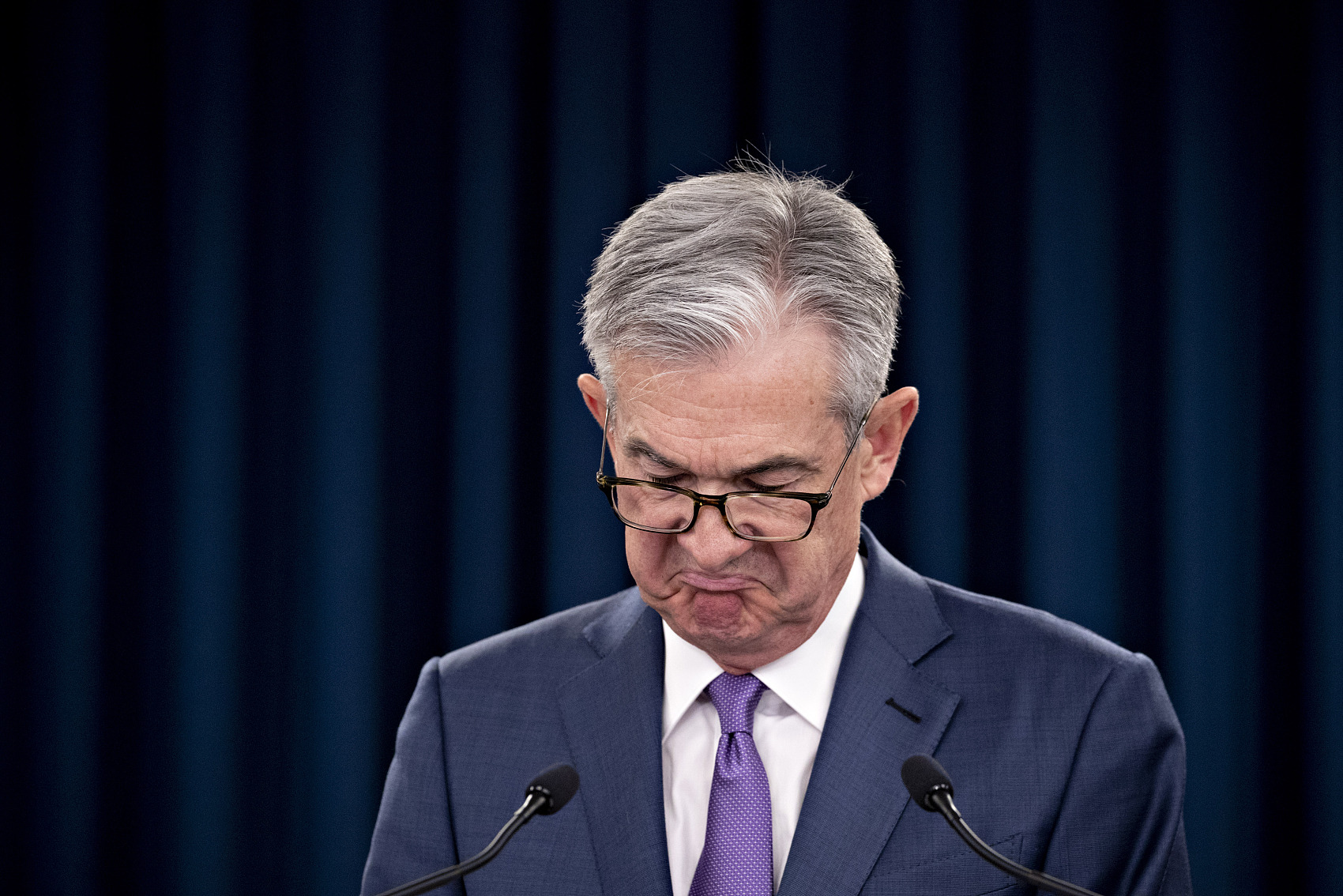
Under the heavy pressure of surging oil prices, the market is not only focused on whether the statement will contain a hidden signal of an 'interest rate hike' but is also closely watching Powell’s decision regarding his future. Will the outgoing Chair Powell choose to take a firm stand against the White House's ambition to reshape the central bank?
The Federal Open Market Committee (FOMC) will announce its latest interest rate decision at 2:00 AM Beijing time on Thursday, followed by a press conference hosted by Chairman Powell at 2:30 AM — this is very likely to be his 63rd and final policy communication in his eight-year tenure leading the Federal Reserve. The market widely expects that the Fed will keep the benchmark overnight interest rate unchanged at 3.50% to 3.75% for the third consecutive time, with no adjustments since December of last year.
Behind this unchanging decision are persistently high energy prices and the ongoing conflict with Iran. The U.S.-Iran conflict erupted on February 28, when officials judged that the impact would depend on the duration of the conflict and whether oil prices could return to pre-war levels near $70 per barrel. Eight weeks later, while the gunfire has ceased, economic tensions continue to escalate: The U.S. is blocking Iranian vessels attempting to exit the Strait of Hormuz, while Iran is preventing other ships from passing through this critical waterway.
 Brent crude futures, the global benchmark for oil pricing, have surged approximately 50% since the onset of the conflict, directly driving up gasoline and energy costs, resulting in the largest increase in the U.S. consumer price index in nearly four years in March. Bond market bets indicate that policy rates will remain at current levels until the middle of 2027, significantly narrowing the window for rate cuts.
Sticky inflation sparks rate hike discussions as statement wording remains undecided
Facing persistently elevated energy prices, some policymakers have begun laying the groundwork for potential interest rate hikes. In his final public comments before the blackout period for this meeting, Federal Reserve Governor Waller stated bluntly last week: 'The longer energy prices remain high and the Strait remains constrained, the greater the likelihood that high inflation will permeate various goods and services, and supply chain effects will begin to emerge, slowing real economic activity and employment.'
He acknowledged that the Federal Reserve may need to simultaneously address a weakening labor market and high inflation, describing the situation as 'extremely complicated.' These remarks notably cooled his previous stance advocating for rate cuts due to concerns about weakening employment.
During the policy discussions held on March 17-18, several officials mentioned the possibility of raising interest rates. St. Louis Fed President Musallem stated in an interview with Reuters earlier this month that the current policy is 'in a good state,' and maintaining it unchanged for a period might be appropriate.
He also warned that prolonged high oil prices would not only push up overall inflation but also raise core inflation. 'At that point, the risk of inflation expectations becoming unanchored will become too significant to ignore.' Once risks become pressing, a rate hike would naturally follow.
Even Milan, the most steadfast advocate for rate cuts, has considered slowing the pace of suggested cuts due to the inflation outlook being 'less optimistic.'
There is almost no opposition to keeping rates unchanged at present. The real suspense lies in whether the post-meeting policy statement will adjust forward guidance to signal that the next interest rate move might not solely involve cuts.
Economists at Bank of America noted in a report that the Federal Reserve "will firmly stay on hold at the April meeting," with upside risks to inflation from the Iran conflict still lingering and some improvement in labor market data. "The biggest suspense lies in whether the forward guidance in the statement will hint at a two-way policy risk. We believe it will not, but the outcome will be highly anticipated. Powell's tone may appear more hawkish."
With personnel obstacles removed, Powell’s continuation becomes the focal point.
On the day of the interest rate decision, the nomination process at the Senate level will also proceed simultaneously. The U.S. Department of Justice dropped its criminal investigation into Powell related to the renovation project of the Federal Reserve headquarters last Friday, fulfilling a key condition set by Republican Senator Thom Tillis.
Tillis had previously threatened to block the confirmation of Kevin Warsh’s nomination using the investigation as justification. After receiving assurances on Sunday that the probe had been fully concluded, he relented. The Senate Banking Committee subsequently scheduled a vote to advance Warsh’s nomination for April 29, paving the way for a full Senate confirmation vote before May 11. Just hours later, the Fed is set to announce its April interest rate decision.
Powell's term as Federal Reserve Chair will expire on May 15. He had previously set the conclusion of the investigation as a precondition for leaving the Board of Governors. Last month, he indicated he might stay on, stating he would "make this decision based on what I believe is in the best interest of the institution and the people we serve." This aligns with his consistent stance since receiving a subpoena from the Justice Department in January—Powell has consistently argued that the investigation amounted to political intimidation stemming from Trump’s dissatisfaction with interest rate decisions during his tenure.
By tradition, a departing chair usually resigns from their position as a governor simultaneously. However, Powell’s term as a governor extends until January 2028, coinciding with the final year of Trump’s term. If Powell chooses to remain, it will serve as an important stress test for White House interference in the Fed’s independence. Trump once publicly mocked him as "Mr. Too Late" due to Powell’s perceived insufficient rate cuts.
If Warsh’s nomination is approved smoothly, he will simultaneously fill both the chair and governor positions, prompting interim governor Milan to step down. Milan, who has been a strong advocate for rate cuts, will attend his sixth and final Federal Reserve meeting this week, becoming the shortest-serving governor since the 1950s.
A larger structural variable hinges on Powell’s personal decision. Should he relinquish his governor seat (whose term extends until January 31, 2028) along with stepping down as chair on May 15, Trump will have the opportunity to appoint another governor, thereby securing four personally appointed members on the seven-member board—including Waller, Bowman, and the incoming Warsh.
This configuration could provide institutional support for the White House to pursue more aggressive actions. One widely discussed possibility is the removal of regional Fed presidents, which could disrupt the Fed’s traditional governance structure. Powell’s ultimate decision to stay or leave will directly influence the pace and intensity with which Warsh—and by extension, Trump—can reshape the Fed’s operational framework.
Editor/KOKO