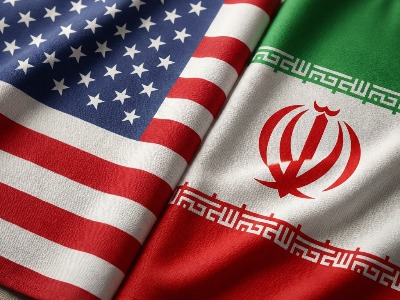
Source: Wall Street News
According to U.S. media reports, due to Trump's dissatisfaction with Iran's negotiation proposal, Iran may submit a revised version through Pakistan as a mediator in the coming days. Trump stated that Iran had informed the U.S. that they are “on the verge of collapse” and are striving to address leadership issues. The Iranian military announced that the war is not yet over and its forces remain on high alert; it has achieved “absolute control” over the Strait of Hormuz, and foreign vessels must comply with Iran’s regulations when passing through. The U.S. announced sanctions against 35 Iran-related entities and individuals, while the U.S. military stated that its maritime blockade has already diverted 39 vessels. On Tuesday, a merchant ship was intercepted in the Arabian Sea for allegedly violating the blockade against Iran.
As the Iran-US nuclear negotiations reach an impasse, diplomatic maneuvering and military posturing around the Strait of Hormuz are simultaneously intensifying.
 According to Xinhua News Agency citing US media reports on Tuesday, Eastern Time on the 28th, due to President Trump’s dissatisfaction with Iran’s latest negotiation proposal, Iran may submit a revised version through the mediator Pakistan in the coming days. On the same day, Trump posted on social media that “Iran wants the US” to quickly reopen the Strait of Hormuz, implying immense pressure on Iran.
In contrast, Iran’s military statements were markedly different. According to CCTV News, the deputy commander of the Islamic Revolutionary Guard Corps Navy stated on Tuesday that Iran has achieved “absolute control” over the Strait of Hormuz and requires passing vessels to pay transit fees, with foreign ships needing to comply with Iranian rules, including communication in Persian. These conflicting signals have left the market uncertain about the prospects for passage through this critical energy channel.
Pakistan may receive Iran’s revised proposal within a few days
According to Xinhua News Agency, an insider familiar with the mediation process told US media that Iranian Foreign Minister Araghchi will return to Tehran after concluding his visit to Russia on Tuesday, where he is expected to report the situation to Iran’s leadership and hold consultations.
According to the media, Pakistan is expected to receive Iran’s revised proposal within a few days, but the situation could change at any time. The final outcome largely depends on whether Iran will present a proposal more acceptable to the US.
Iran recently submitted a new negotiation proposal to the US via Pakistan. According to media reports over the weekend, Iran conveyed through Pakistan to the US that the conflict could end under conditions where the US lifts the maritime blockade, establishes a new legal framework for strait passage, and guarantees no further military action against Iran, leaving nuclear negotiations to be addressed subsequently.
According to CCTV News, Iran conveyed a three-phase negotiation framework to the US through intermediaries: the first phase focuses on fully ending the war and obtaining assurances to prevent renewed warfare against Iran and Lebanon; if an agreement is reached in the first phase, all parties will move into the second phase, which will focus exclusively on managing the Strait of Hormuz; the third phase pertains to nuclear issue discussions, but Iran will not participate in nuclear negotiations until agreements are reached in the first two phases.
White House Press Secretary Leavitt confirmed on Monday, the 27th, that Trump convened the national security team to discuss a new proposal submitted by Iran. According to Xinhua News Agency, U.S. officials later told the media that Trump was dissatisfied with the proposal because its first two phases did not address Iran's nuclear issue. According to U.S. media, Trump did not directly reject the proposal at Monday’s meeting but implied that Iran lacked sincerity in negotiations, as it neither committed to halting uranium enrichment activities nor promised never to develop nuclear weapons.
Trump Exerts Pressure; Iranian Military Responds Firmly
According to Xinhua News Agency, Trump wrote on social media on Tuesday, the 28th: "Iran has just informed us that they are in a state of 'collapse.' They want us to 'reopen the Strait of Hormuz' as soon as possible. Meanwhile, they are grappling with leadership issues."
Xinhua News Agency noted that Trump had repeatedly claimed internal divisions within Iran, which Iranian authorities have refuted. Supreme Leader Mojtaba Khamenei posted on social media on the evening of the 23rd, stating that enemies were waging media campaigns to manipulate public opinion and undermine Iran’s unity and security.
According to reports from Iranian media cited by Xinhua News Agency on Tuesday, the 28th, Iranian Army Spokesperson Mohammad Aqraminia stated that the military believes the current situation remains in a state of war. Ground forces have been deployed nationwide, standing ready to respond to threats.
In another report by Xinhua News Agency, an Iranian military spokesperson said on Tuesday that the conflict has not ended, and the current situation is still categorized as a state of war. The Iranian Armed Forces have completed a full update of their target list and combat equipment.
Xinhua News Agency also cited Iranian media on Tuesday, reporting that Iranian Defense Ministry Spokesperson Reza Talaei-Nik stated that the United States has no right to dictate terms or make 'illegal demands' to an independent sovereign nation and must cease its 'illegal and unreasonable actions.'
The statement from the Iranian Defense Ministry emphasized that while Iran continues to strengthen its national defense capabilities to meet the needs of the armed forces, it remains open to cooperation in the defense sector with other independent sovereign nations.
Sovereignty Dispute Over the Strait of Hormuz: Iran Asserts Control, Qatar Warns of Chain Reaction Risks
According to CCTV News, the Deputy Commander of Iran’s Islamic Revolutionary Guard Corps Navy clearly stated on the 28th that Iran has achieved 'absolute control' over the Strait of Hormuz, emphasizing that the territorial sovereignty of the strait cannot be violated. Foreign vessels passing through must comply with Iranian regulations. He also remarked, "Without the order of the Supreme Leader and the will of the people, Iran will not allow even a single liter of oil to leave the strait."
According to CCTV, the Permanent Mission of Iran to the United Nations issued a statement on Tuesday, stating that Iran, as the main coastal state of the Strait of Hormuz, has the right to take all necessary measures within its territorial waters to address security threats. The statement condemned the 'illegal actions' of the United States for endangering international navigation safety and reiterated that any consequences of transportation disruptions in the Persian Gulf region should be borne by the US.
Qatari Foreign Ministry Spokesperson Ansari said at a press conference on Tuesday that Qatar firmly opposes the use of the Strait of Hormuz as a pressure tool, emphasizing that any interference with maritime shipping would have serious consequences for global energy security and supply chains. According to CCTV News, Ansari called for enhanced global coordination, and Qatar supports all international efforts aimed at ensuring the security and reopening of the Strait of Hormuz.
US Intensifies Sanctions; US Military Reports 39 Ships Diverted Due to Maritime Blockade
While diplomatic negotiations remain deadlocked, US pressure on the economic and military fronts has not ceased.
According to CCTV News, the US announced sanctions on Tuesday against 35 Iran-related entities and individuals for assisting in evading sanctions and providing financial support to Iran. US Treasury Secretary Bessent stated that any institutions involved in or assisting Iran's 'shadow banking' system will face severe consequences.
According to reports from Xinhua News Agency and CCTV News, the US Central Command announced on Tuesday that the US military had continued its blockade operations against Iranian ports in the Middle East, resulting in 39 ships changing course under US demands thus far.
The US Central Command reported on social media that the US military boarded and inspected a merchant ship suspected of violating the US blockade of Iranian ports in the Arabian Sea on Tuesday. After confirming that the ship was not heading to Iran, it was released.
Central Command stated that the merchant ship, named 'Blue Star 3,' was suspected of attempting to sail to Iran. Soldiers from the 31st Marine Expeditionary Unit of the US military boarded the vessel for inspection. After confirming that its itinerary did not include docking at Iranian ports, the ship was released.
According to Xinhua News Agency, Iran's Permanent Representative to the United Nations, Iravani, previously stated at a UN Security Council session that the US is 'blatantly violating international law' by continuously imposing illegal blockades on Iran, forcibly seizing Iranian vessels and crew members, likening their actions to those of 'pirates and terrorists.'
Editor/Rocky