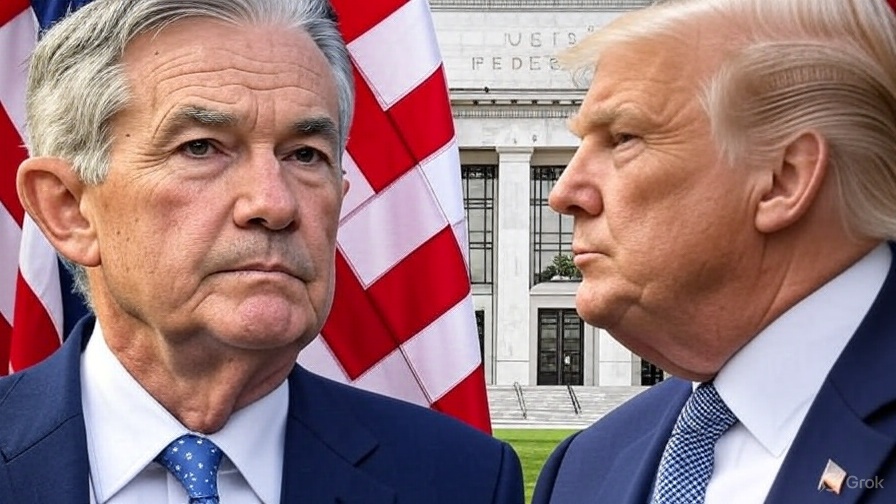
① Federal Reserve Chairman Powell is approaching his farewell moment. This week's Federal Reserve meeting will be his last during his term; ② On the eve of the Federal Reserve’s interest rate decision, let us take a moment to review Powell's "economic report card"; ③ Analysts have stated that, historically speaking, Powell's tenure will likely receive a positive evaluation.
Cailian Press, April 29 (Edited by Bian Chun) Federal Reserve Chairman Powell is approaching his farewell moment.
After leading the Federal Reserve for eight years, Powell’s term as chairman will conclude on May 15, and this week’s Federal Reserve meeting will be his last during his term. Kevin Warsh, nominated by President Trump, is expected to gain Senate approval to become his successor.
In December last year, Powell stated: "I truly hope to hand over this job to my successor with the U.S. economy in good shape. I hope inflation is under control, returning to the 2% level, while the labor market remains strong."
On the eve of the Federal Reserve's interest rate decision, let us take a look back at Powell's "economic report card."
Unemployment Rate Generally at a Historical Low but Surged During the COVID-19 Pandemic
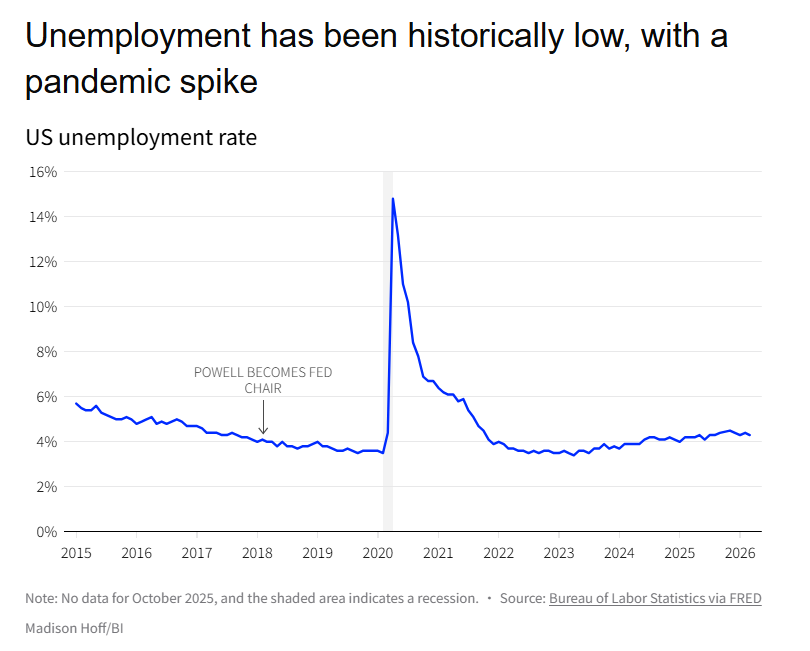
During the first two years of Powell's tenure as Federal Reserve Chairman, the U.S. unemployment rate was notably low. However, in April 2020, the situation changed abruptly as the outbreak of the COVID-19 pandemic pushed the unemployment rate to 14.8%, the highest level since 1948, primarily due to furloughs, layoffs, and business closures.
Since then, the unemployment rate has gradually declined, hovering around 4% in recent years—though still at a historical low, it remains higher than the levels at the beginning of Powell’s term. Meanwhile, labor force participation has weakened, dropping to its lowest level since the 1970s in March this year after excluding pandemic-related factors.
Job Growth Was Once Strong but Momentum Has Weakened in Recent Years
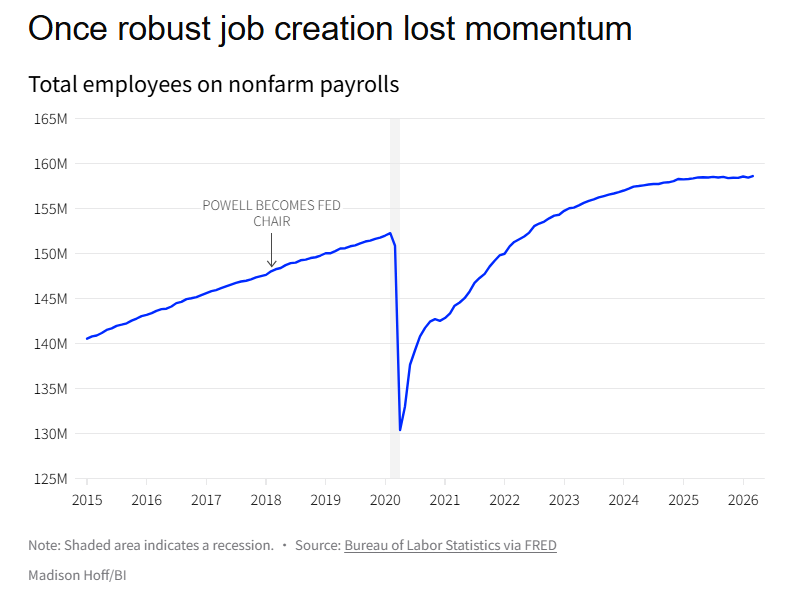
During Powell’s term, the job market faced a series of headwinds: the pandemic, a slowdown in immigration, and policies promoting high borrowing costs to address persistent inflation.
It took about two years for employment to recover from the historic decline caused by the COVID-19 pandemic—much faster than the six-year recovery period following the 2008 financial crisis.
After the pandemic, the United States experienced a 'Great Resignation'—at that time, with a booming labor market, workers left their jobs in search of better opportunities. However, this trend has now subsided.
The characteristics of the job market over the past few years have instead been sluggish hiring, declining employer demand, and a drop in resignation rates.
By sector, the leisure and hospitality industries were hit hardest at the beginning of the pandemic, while in recent years, the technology sector has seen significant layoffs due to over-hiring in the early 2020s. Currently, the thriving healthcare industry has become a key pillar supporting the sluggish job market.
Persistently high inflation
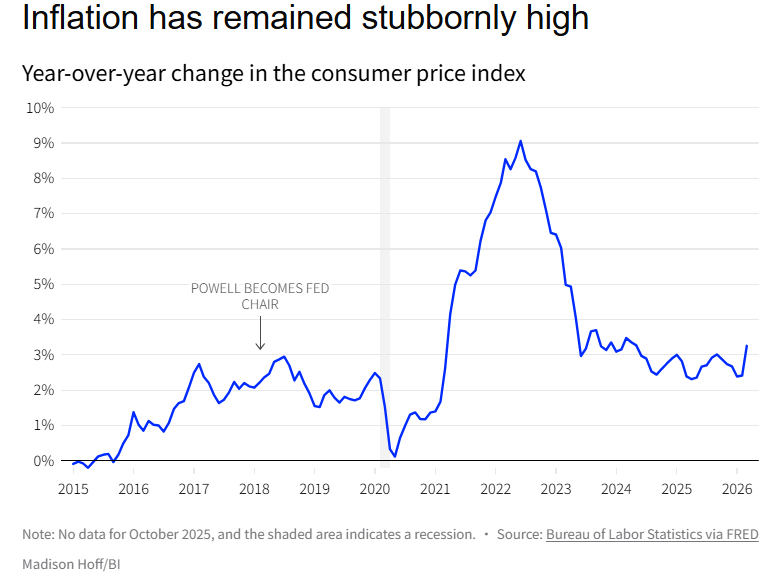
At the end of 2020, the U.S. CPI inflation rate was approximately 1%, but it surged to 9.1% by June 2022. By early 2026, inflation had once fallen back to near 2%, but it rebounded again in March due to tensions involving Iran.
Bankrate financial analyst Stephen Kates stated that under Powell's tenure, U.S. inflation remained persistently high, and the rapid surge in inflation in 2022 was primarily driven by 'strong consumer demand, extremely loose monetary and fiscal policies.'
Kates also noted: 'In hindsight, it is not difficult to see that the Federal Reserve was too slow in its initial response to inflation. However, it is undeniable that once the Fed began its tightening cycle, it implemented one of the fastest interest rate hike paces in history.'
The chaotic situation in recent years has also exacerbated inflation issues on the supply side. Jason Draho, Head of Asset Allocation for the Americas at UBS Global Wealth Management, stated that inflation was driven by 'supply chain disruptions and imbalances caused by the pandemic,' which were further intensified by the outbreak of the Russia-Ukraine war, leading to higher oil prices.
Core inflation continues to rise moderately
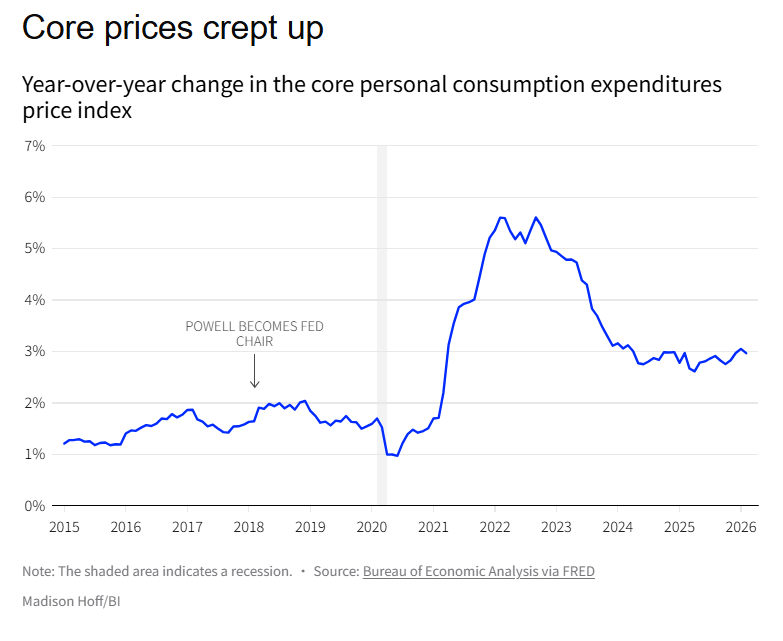
The core PCE price index, which the Federal Reserve focuses on, rose from 1.6% in February 2018 to approximately 3% in February 2026, surpassing the 2% target. This index excludes the more volatile food and energy prices.
Draho stated: 'Various inflation shocks have occurred over the past two years, with events such as tariff policies and tensions involving Iran constraining the Federal Reserve's progress in combating inflation. The difficulty of policy formulation has significantly increased, but the overall trend still indicates that inflation will eventually decline, and these events should represent one-time shocks.'
Monetary policy has remained in a moderately tight state.
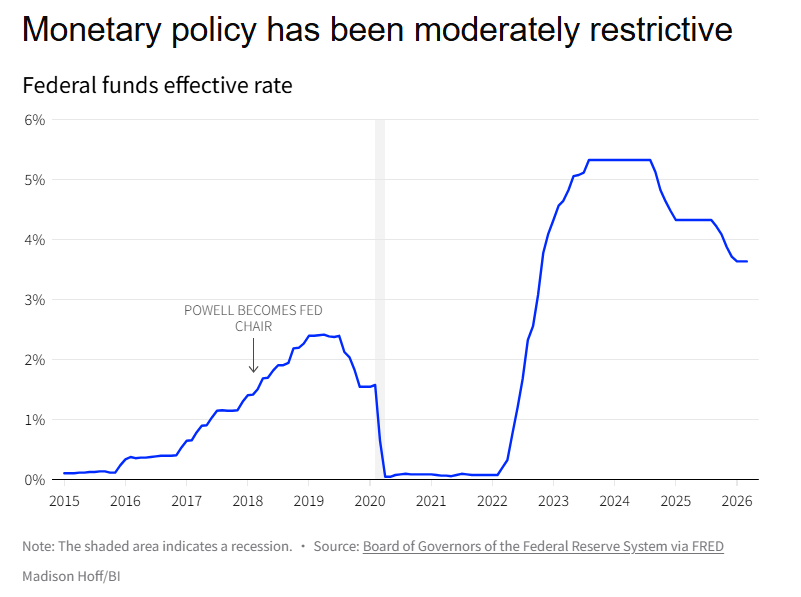
In response to the surge in inflation post-pandemic, Powell and the Federal Open Market Committee (FOMC) sharply raised interest rates and then slowly initiated a rate-cutting cycle last year.
Kate remarked, 'At a critical juncture, the global economy is rife with uncertainty, and formulating monetary policy amidst this fog is an exceptionally challenging task.'
He added that despite continuous political and legal pressures from the Trump administration demanding interest rate cuts, Powell steadfastly adhered to the Federal Reserve's dual mandate of price stability and maximum employment.
Kate noted, 'Historically, Powell’s tenure is likely to be viewed positively, and his performance will serve as a reference for future monetary policy formulation.' She also described Powell as a consensus builder within the Federal Reserve.
Editor /rice