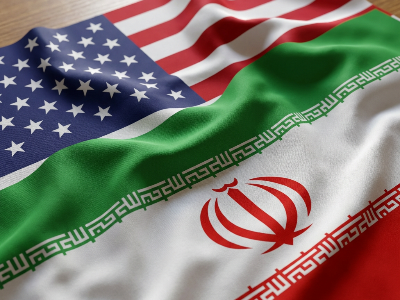
A senior Iranian security official condemned the U.S. blockade in the Strait of Hormuz as 'piratical behavior,' vowing a swift counteraction. He explicitly stated that Iran possesses greater resilience and highlighted the stark contrast in public sentiment between the two nations.
According to a report by Press TV, Iran's state-run English international news channel, on the 29th, a senior Iranian security official stated on Wednesday that the United States is engaging in "piracy and plunder" under the guise of a so-called "maritime blockade" in the Strait of Hormuz. Iran will soon respond with a "practical and unprecedented military action."
Following this news, both WTI and Brent crude oil prices surged continuously in the short term, rising nearly 3.5% during the day. Concerns over inflation driven by rising energy prices may dampen the Federal Reserve’s motivation to cut interest rates, further pressuring precious metals to decline. Spot gold fell over 1% during the day, dropping below $4,550 per ounce. Spot silver once fell to touch $72 per ounce, hitting a new low since April 7, with a daily drop exceeding 1.5%.
 Previously, according to CCTV News, the chief correspondent learned on the 28th local time that U.S. President Trump had instructed his aides to prepare for a prolonged blockade of Iran. A U.S. official indicated that Trump has directed his aides to prepare for imposing a long-term blockade on Iran. This move aims to strike at the financial sources of the Iranian regime, forcing Iran to make concessions on its long-refused nuclear issue through a high-risk approach.
The aforementioned senior Iranian official pointed out that Iran’s armed forces, under the unified command of the Khatam al-Anbiya Central Headquarters, have made it clear that their “patience has limits.” If Washington maintains its illegal blockade of the Strait of Hormuz, Iran will inevitably carry out punitive retaliation.
He emphasized that Iran has proven in recent forced conflicts that the United States is no longer facing a passive or predictable opponent. Under the "wise, brave, and decisive leadership" of Iran's Islamic Revolution leader Khamenei, the heroic resistance of the Iranian people and armed forces has rendered all options ineffective and eroded U.S. credibility.
The official explained that Iran’s armed forces have exercised restraint thus far to leave room for diplomacy, allowing the U.S. to recognize and accept Iran's conditions for permanently ending the conflict.
This "strategic pause" provides Trump with a dignified path to exit the current quagmire. However, he warned: if the U.S. continues to stubbornly refuse negotiations and ignores Iran’s conditions, Iran’s response to the maritime blockade will be drastically different and unprecedentedly firm.
The official bluntly stated that the U.S.’s maintenance of the blockade on the Strait of Hormuz is essentially maritime plunder, which, while affecting all countries including Iran, will impact Iran far less than the U.S. Iran possesses stronger resilience, including decades of experience dealing with sanctions; thousands of kilometers of land borders capable of diverting trade; and pre-deployed counter-blockade contingency plans.
Notably, he also specifically compared public opinion in the two nations: The Iranian public unanimously attributes the current crisis to the U.S., while domestic U.S. sentiment does not support the government and widely opposes initiating an "unprovoked war" against Iran and its consequences.
On February 28, the U.S.-Israel coalition launched an unprovoked and illegal aggressive war against Iran during nuclear talks, prompting Iran to retaliate strongly. After nearly 60 days of warfare, the U.S. suffered setbacks both on the battlefield and at the negotiating table and was eager to find an exit strategy. Last week, after a two-week ceasefire expired, Trump unilaterally extended the ceasefire indefinitely and secretly contacted Iran through Pakistan to seek resumption of talks, highlighting his urgent desire to disengage.
A senior Iranian official issued a final warning: the United States' continued blockade of the Strait of Hormuz could ultimately cost America far more than Iran. Iran's highest military command body is prepared to launch a decisive counterattack, completely dismantling the remaining 'options' available to the United States.
Editor/Lambor