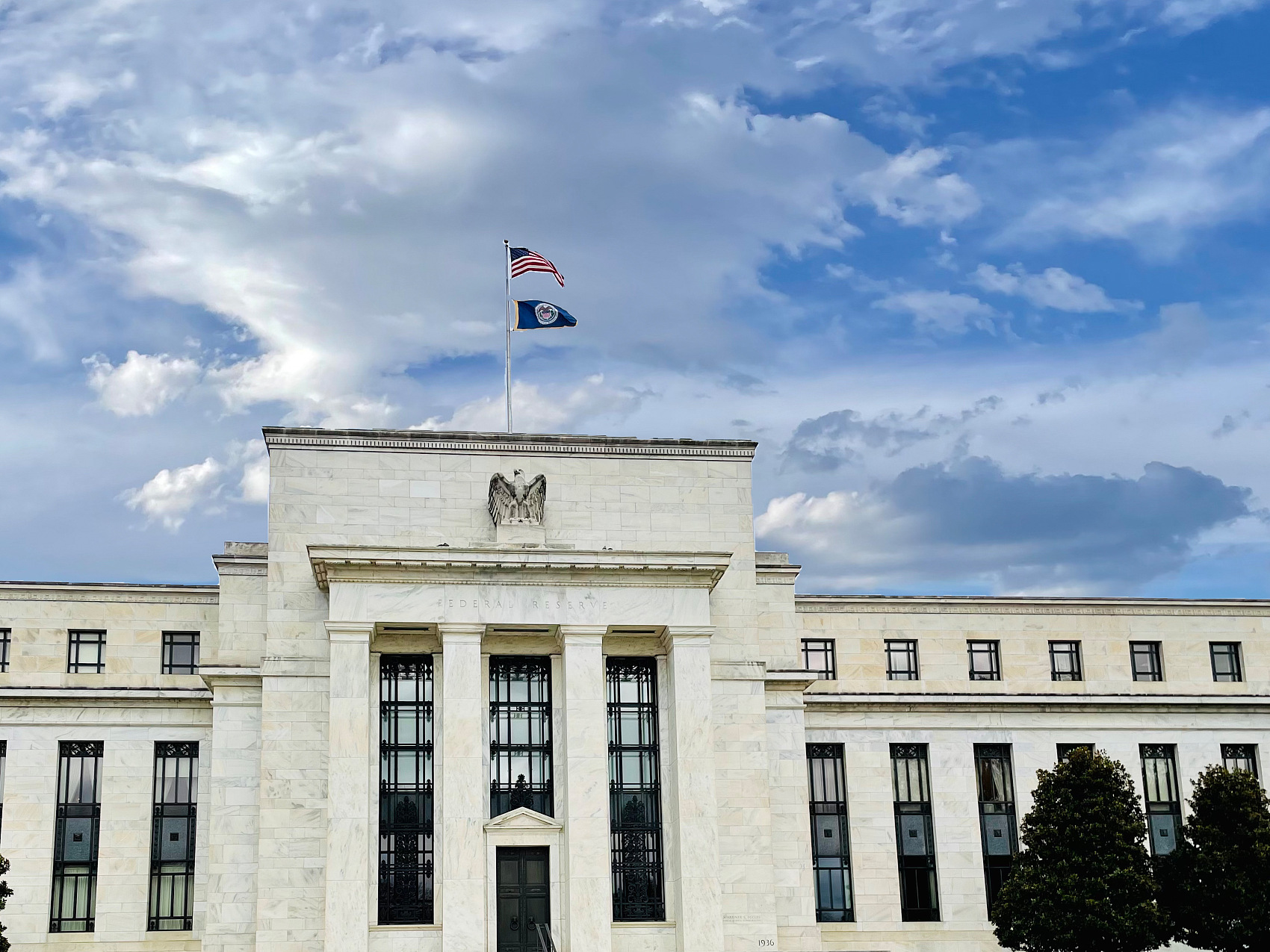
The Federal Reserve kept interest rates unchanged for the third consecutive time, but internal voting showed divisions, with one official advocating for a rate cut and three others opposing the release of easing signals. Uncertainty over the economic outlook has been further amplified by tensions in the Middle East and fluctuations in energy prices.
On April 30 Beijing time, the Federal Reserve maintained the benchmark interest rate at 3.50%-3.75% unchanged for the third consecutive meeting, in line with market expectations. The FOMC passed the resolution with an 8-to-4 vote. Miran dissented, advocating for a 0.25 percentage point rate cut; Hammack, Kashkari, and Logan also dissented, opposing the inclusion of forward guidance suggesting future easing in the statement.
Live broadcast of Powell's press conference>>
Full text of the interest rate decision
 Recent indicators suggest that economic activity has expanded at a solid pace. Overall job growth has been relatively weak, and the unemployment rate has remained largely unchanged over recent months. Inflation remains elevated, partly reflecting recent increases in global energy prices.
The Committee is committed to achieving maximum employment and maintaining inflation at 2% over the long run. Developments in the Middle East are heightening uncertainties about the economic outlook. The Committee closely monitors risks related to both aspects of its dual mandate.
To support these goals, the Committee decided to maintain the target range for the federal funds rate at 3.5%-3.75%. In determining the extent and timing of future adjustments to this target range, the Committee will carefully assess incoming data, changes in the outlook, and the balance of risks. The Committee remains firmly committed to supporting maximum employment and bringing inflation back to the 2% target.
In assessing the appropriate stance of monetary policy, the Committee will continue to monitor the implications of incoming information for the economic outlook. If risks emerge that could impede the achievement of the Committee’s goals, the Committee is prepared to adjust the stance of monetary policy as needed. The Committee’s assessments will take into account a wide range of information, including labor market conditions, inflationary pressures and inflation expectations, as well as developments in financial and international markets.
Voting in favor of this monetary policy action were: Jerome H. Powell, Chair; John C. Williams, Vice Chair; Michael S. Barr; Michelle W. Bowman; Lisa D. Cook; Philip N. Jefferson; Anna Paulson; and Christopher J. Waller.
Voting against this action were: Stephen I. Miran, who preferred to lower the target range for the federal funds rate by 0.25 percentage points at this meeting; and Beth M. Hammack, Neel Kashkari, and Lorie K. Logan, who supported keeping the target range for the federal funds rate unchanged but opposed including a bias toward future easing in the current statement.
Latest statement resolution from the Federal Reserve
Below is a detailed comparison between the content of the Federal Reserve’s current and previous statements.
Editor/Rocky