Federal Reserve Chair Powell announced at his last press conference in office that interest rates are close to neutral and stated he will remain as a governor after stepping down as chair to await the conclusion of the investigation.
On Wednesday local time, the Federal Reserve announced it would keep the target range for the federal funds rate unchanged at 3.5% to 3.75%. During the subsequent press conference, Powell, who is set to step down as Fed Chair on May 15, responded to questions regarding inflation data, the path to rate cuts, and recent political pressures on the Federal Reserve.
He emphasized that the current monetary policy stance is 'in a very good position,' stressing that rate cuts still need to wait despite the dual shocks of oil prices and tariffs. He warned that political interference would lead to catastrophic consequences for markets and the economy.
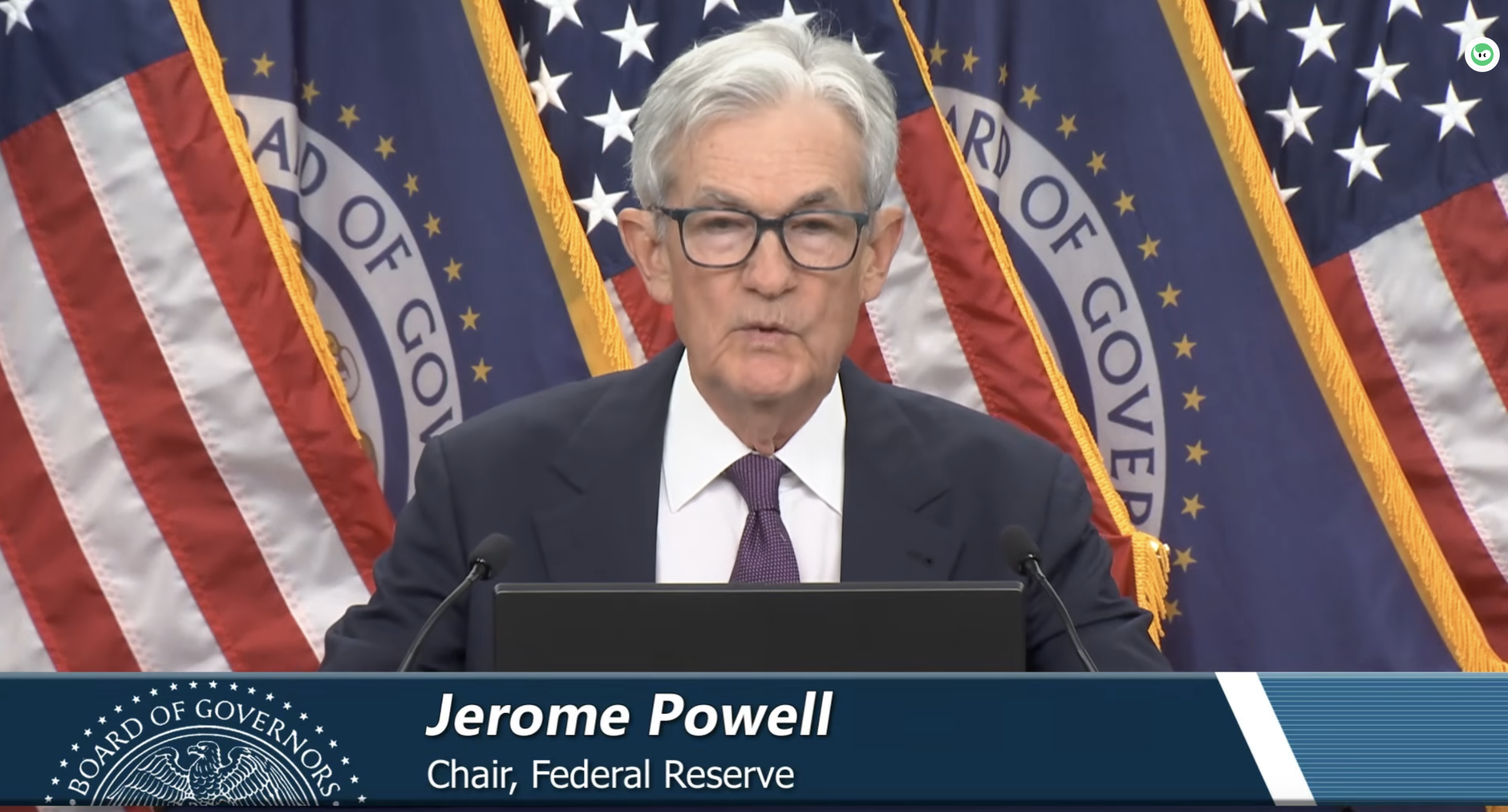
Will continue as a governor, pledging never to be a 'shadow chair.'
 As Powell’s last press conference during his tenure as Fed Chair, his personal future became the absolute focus of the market. Regarding his decision to stay on as a Fed governor (with a term until 2028) after his chairmanship ends on May 15, Powell gave an extremely straightforward explanation:
"What I am really concerned about is a series of legal attacks against the Federal Reserve, which threaten our ability to implement monetary policy without considering political factors. These legal actions from the government are unprecedented in our 113-year history... What has happened in the past three months has left me with no choice but to stay on at least until things settle."
Regarding the recent criminal investigation turmoil by the Department of Justice, Powell made it clear:
"I will not leave the Board until the investigation is thoroughly concluded in a transparent and definitive manner."
Despite staying on, Powell strongly downplayed any potential interference in the future of the Federal Reserve, addressing market concerns that he might hinder the new chair's governance. He pledged to maintain a low profile:
"I will never act as a shadow chair or anything like that; that is something I will never do... I plan to keep a low profile as a governor, striving to support the chair and the direction the chair wants to pursue."
Interest rates are approaching neutral levels, and the impacts of energy and tariff shocks will eventually fade.
On the interest rate path and inflation guidance that the market is most focused on, Powell demonstrated remarkable patience. He believes that the current interest rate is already 'very close to the neutral rate.'
“I have always believed that the neutral rate lies between 3% and 4%. We are slightly above 3.5%. So this is entirely within what I consider a reasonable range.”
Powell noted that due to a slight cooling in the labor market, the current policy stance might be at the 'upper end of mild restriction or neutrality.' In this advantageous position, the Federal Reserve has the confidence to 'wait and let events unfold.'
Regarding the recent rebound in inflation, Powell attributed it to energy conflicts and tariffs. He maintained that:
“Tariffs lead to one-time price increases, and their impact will diminish over time... We do indeed expect this to occur within the next two quarters.”
As for the rise in oil prices driven by tensions in the Middle East, he acknowledged that it would push up overall inflation in the short term and might even 'deal a blow to GDP' by eroding consumers’ disposable income, but before that happens, the Fed does not need to rush to change interest rates or forward guidance.
Furthermore, regarding the modifications to the dot plot and the statement’s wording about an 'easing bias,' Powell admitted that although the number of committee members supporting the change in phrasing is growing and some members raised objections, the majority currently believe that 'there is no need to make such a move at this meeting.'
He also quipped: “I was never a big fan of the dot plot, but you can’t beat something with nothing.”
The U.S. economy demonstrates strong resilience as Powell hands over to his successor, Warsh.
Looking back at his term, Powell reflected on the unprecedented challenges faced by the Federal Reserve:
"We have indeed experienced four supply shocks — the pandemic, the invasion of Ukraine, tariffs, and now Iran and the oil price surge. Each one had the potential to drive both inflation and unemployment higher."
Nevertheless, the U.S. economy has remained resilient. Powell specifically highlighted that part of the reason for economic growth at 2% or higher is "simply the seemingly insatiable demand for data centers across the United States."
Facing the upcoming transition of power, Powell expressed full confidence and congratulated his successor Kevin Warsh, describing it as a "very normal, standard transition process."
When asked whether he believed Warsh could withstand political pressure from the White House, Powell responded firmly:
"He made a very strong case for that during his hearing, and I believe him."
Warning of Institutional Crisis: Political Interference Could Destroy Market Trust
Throughout the press conference, Powell issued his sternest warning about the risks facing the Federal Reserve's independence. He pointed out that because elected politicians are always campaigning and desire low interest rates, removing political control is a core cornerstone in combating inflation.
Regarding the proposal to strip voting rights from regional Fed presidents, Powell delivered a scathing critique:
"If every administration could do this, it would mark the beginning of the end of the Federal Reserve's ability to independently set monetary policy. At that point, you'd just be another cabinet agency."
He directly addressed the market and the public, stating:
"Do not think of it as whether an institution is independent or not. Think of it this way: you want the people who make monetary policy to do so for the benefit of the public... while ignoring political considerations entirely, completely disregarding them. If we were to act otherwise (complying with politics), we would lose credibility. The markets would lose confidence in us, and our ability to control inflation and any respect would vanish."
The original transcript of the press conference is as follows:
Powell
Good afternoon. My colleagues and I remain steadfastly focused on achieving our dual-mandate goals—promoting maximum employment and price stability for the benefit of the American people. The U.S. economy has been expanding at a solid pace. While job growth remains subdued, the unemployment rate has shown little change in recent months. Inflation has risen and remains elevated, partly reflecting the recent increase in global energy prices. Today, the Federal Market Committee decided to keep our policy rate unchanged. We believe that the current stance of monetary policy is appropriate and will help us make progress toward our goals of maximum employment and 2% inflation. Developments in the Middle East have heightened the significant uncertainty surrounding the economic outlook, and we will closely monitor risks to both aspects of our dual mandate. After briefly reviewing recent economic developments, I will offer further insights into monetary policy.
Powell
Recent indicators suggest that economic activity has continued to expand at a solid pace. Consumer spending has shown resilience, and business fixed investment has continued to grow at a brisk pace. By contrast, activity in the housing sector remains weak. In the labor market, the unemployment rate stood at 4.3% in March, showing little change over recent months. Job growth remains subdued. Over the past year, the slowdown in employment growth largely reflects slower labor force growth due to reduced immigration and a decline in labor force participation, although labor demand has also weakened significantly. Other indicators, including job openings, layoffs, hiring, and nominal wage growth, have shown little overall change in recent months. Inflation has risen recently and remains elevated relative to our long-term goal of 2%.
Powell
Estimates based on the consumer price index and other data show that overall PCE prices rose by 3.5% over the 12 months ending in March, driven by a sharp increase in global oil prices caused by the conflict in the Middle East. Excluding the volatile food and energy categories, core PCE prices increased by 3.2% over the 12 months ending in March. This relatively high rate primarily reflects the impact of tariffs on prices in the goods sector. This year, short-term measures of inflation expectations have risen, likely due to the substantial increase in oil prices. Most longer-term expectation measures remain consistent with our 2% inflation target. Our monetary policy actions are guided by our dual mandate to promote maximum employment and price stability for the American people. At today’s meeting, the committee decided to maintain the target range for the federal funds rate at 3.5% to 3.75%. The economic outlook remains highly uncertain, with the conflict in the Middle East exacerbating this uncertainty. In the near term, higher energy prices will push up overall inflation. Beyond that, the scope and duration of the potential impact on the economy remain unclear, as does the future course of the conflict itself.
Powell
We will continue to closely monitor risks related to both aspects of our dual mandate. We are well-positioned to determine the extent and timing of additional adjustments to the policy rate based on incoming data, evolving outlooks, and the balance of risks. There is no preset path for monetary policy, and decisions will be made meeting by meeting.
Powell
This will be my final press conference as Chair, and I would like to conclude by sharing a few thoughts. First, I want to congratulate Kevin Warsh on his advancement this morning by the Senate Banking Committee. This is an important step forward, and I wish him all the best in the process ahead.
Powell
The Federal Reserve System has only one fundamental purpose: to foster economic conditions that enable American families and businesses to thrive. Price stability, a strong job market, and a financial system they can rely on – every decision we make, whether about interest rates, regulatory matters, or other issues, serves this purpose. Our decisions reflect the collective judgment of colleagues on the Board and the Federal Open Market Committee, who have demonstrated analytical rigor, principled judgment, and a genuine commitment to the public good. Our collaboration and deliberative processes have long embodied a shared dedication to seeking consensus in service of our mission.
Powell
This institution is resilient, highly capable, and composed of exceptionally talented and dedicated professionals. It has been my honor to work alongside so many great public servants on the Board and throughout the Federal Reserve System. The effectiveness of the Fed’s work depends on the public’s understanding of it. And you, the press, play an essential role in helping the public understand us, what we do, and how the people we serve benefit from your rigorous reporting.
Powell
I welcome the announcement by the U.S. Attorney for the District of Columbia last Friday that the criminal investigation has concluded. However, she also noted that she would not hesitate to reopen the investigation if necessary. Over the weekend, the Department of Justice assured us that unless referred by the Fed's Inspector General, they would not reopen the investigation. Absent such referral, even if they appeal a recent court ruling, they would not seek to use the appeal to reopen the investigation or issue new subpoenas.
Powell
I have said that I will not leave the Board until the investigation is truly and thoroughly concluded in a transparent and definitive manner. I am keeping that commitment. I am encouraged by recent developments and am closely monitoring the remaining steps in this process. My decisions on these matters will continue to be based entirely on what I believe is in the best interest of this institution and the people we serve. After my term as Chair ends on May 15, I will remain a member of the Board for an indefinite period. I plan to maintain a low profile during my time as a member.
Powell
There is only one Chair of the Federal Reserve Board at any given time. Once Kevin Warsh is confirmed and sworn in, he will become that Chair. Upon being sworn in as Chair of the Board, his new colleagues will also elect him as Chair of the Federal Open Market Committee. As I have often noted from this podium, our success in achieving our goals is critically important for all Americans. I believe the Federal Reserve will continue to operate with objectivity, integrity, and a deep commitment to serving the American people. Thank you, and I look forward to answering your questions.
Q1:
Could you speak about what led you to decide to stay on the Board? What criteria are you weighing, and how long might you stay? Thank you.
Powell
Certainly. You know, what I'm really concerned about is a series of legal attacks on the Federal Reserve that threaten our ability to conduct monetary policy without political considerations. Let me clarify that this has nothing to do with verbal criticisms from elected officials. I have never suggested that verbal criticism is a problem, nor does anyone else here think so. But these legal actions coming from the administration are unprecedented in our 113-year history, and there continues to be a threat of more such actions. I am concerned that these attacks are harming this institution and putting at risk something that is genuinely important to the public.
Powell
That is the ability to conduct monetary policy without political considerations. This is absolutely crucial for our economy and for the people we serve, who need to rely on a central bank that operates in this way and remains free from political influence over the long term. It is part of the absolute foundation of this amazing economy of ours. It is one of many reasons why the U.S. economy is envied around the world. This institutional framework distinguishes successful nations from unsuccessful ones. This matters not just for those working at the Federal Reserve at any given time but, more importantly, for the people we serve—it is vital to ensure that the Fed can conduct monetary policy in a manner that avoids political entanglement, and does not seek to help or harm any particular politician or political party. It is about the fundamental interests of the people we serve. As for when I will leave, I will leave when I deem it appropriate. Any other questions? No.
Q1:
I have only one follow-up question: How do you respond to the criticism that your remaining on the Board is actually a political act, depriving President Trump of the majority he would otherwise have had on the Board if you had left?
Powell
I don't see it that way at all. As I mentioned, the reason I stayed is precisely because of what has already transpired. I had planned to retire. But the events of the past three months have left me feeling that I had no choice but to stay at least until things settle down.
Powell
Moreover, I don’t think it will be an impediment. My intention is not to interfere. You know, I’ve been a governor for nearly six years. I understand how difficult the chairman’s role is—especially when you consider how challenging it is to reach consensus with 19 opinionated individuals.
Powell
You collaborate with the chair. You work to express your views but also to support the chair whenever possible or appropriate. I believe this is the approach most people take, and it’s the approach I intend to take.
Q2:
Mr. Chairman. I’d like to ask about the inflation outlook. In March, you described the standard practice of 'looking through' energy shocks as conditional on inflation expectations remaining anchored. Since that meeting, there has been little progress in reopening key energy trade routes. Could you help us understand how the inflation outlook has evolved between meetings? First, from the timeline you outlined in March, what is the prospect for resolving tariff pass-through issues, and second, how does the current energy shock layer on top of that?
Powell
You know, this is how I see it. For a long time, we have been operating on the assumption that tariffs would lead to a one-time price increase, and that impact would fade over time. In other words, there would be no further changes. Therefore, measured inflation would not keep rising due to sustained higher levels. Now is when this situation is happening. You know, we do expect this to occur over the next two quarters. So we will be watching very closely to see if what we have always thought would happen indeed does, as this is a key part of the forecast. We need to really see this in terms of energy.
Powell
It's hard to say. As I mentioned, in the textbook, you look through it, oh, an oil shock, because they tend to be temporary and often reverse. And monetary policy has long and variable lags. So you wouldn't necessarily react immediately. I think this is especially true given that we've been above 2% inflation for several years and we've been looking through tariff shocks. So I think we will be very cautious about this issue. But the question of looking through energy is not currently before us. It hasn’t even peaked yet, and I think we would like to see the negative impacts recede and progress on the tariff issues before considering rate cuts.
Q2:
If I may follow up, today’s statement retained wording that was given certain significance in the past when the committee was actively cutting rates. Given that the inflation outlook now is quite different compared to one or two meetings ago, why does this easing bias still exist? What needs to happen for it to be removed?
Powell
As you recall, we discussed this at our last meeting, and I addressed it during the press conference after the March meeting. Today, we did the same. We had a fairly lively discussion on this issue and the guidance. Does it still fit the circumstances? I would say, you know, there is a considerable portion of the committee that might support changing that language to a more neutral stance, making the likelihood of a rate hike and a rate cut roughly equal. That number increased between the two meetings, for reasons that are not hard to understand. I mean, it’s a good question, right? You see inflation ticking up slightly during the inter-meeting period. Core inflation is now at 3.2, though it has only moved a little in the wrong direction. And we know that headline inflation from the Gulf region is coming. We don’t know by how much. We just need to watch.
Powell
So people will focus on this, and it makes perfect sense that we have lively discussions about it. You see three people dissenting on the language. I think all of them agree that the interest rate decision was correct. So the majority of the committee didn’t want to do that. And I, I don’t think we needed to do that at this meeting. The question is, why do we need to do it now? You know, we have a lot to learn. There is so much uncertainty about the path forward. There is no rush to make that decision now because what happens in the next 30 days, 60 days, or even before the next meeting could really change the context around that language. So, you know, relative to March, this was a closer call within the committee. To me, it makes perfect sense. Claire.
Q3:
Returning to the question of easing bias, we are now seeing oil prices close to $120 per barrel, referring to the Brent crude benchmark. If, in six weeks, oil prices remain at these levels, what would be your guess, or your best guess, as to whether the easing bias will still appear in the statement? Thank you.
Powell
I don’t want to speculate. You know, first of all, by that point we will likely have a new leadership, and the new leadership will play a very important role in this. So I won’t be standing here at this podium answering your questions anymore, so I don’t know. As I mentioned, all I can say is that we had a good discussion about it today. You know, during the inter-meeting period, this issue has become increasingly worth discussing. We discussed it. Most people still feel there is no need to shift to that level, and I share that view. However, I understand. You know, at some point, action will be taken, theoretically as early as the next meeting.
Q3:
Thank you. Following up, the new leadership seems less enthusiastic about press conferences and dot plots. What advice would you give him regarding these communication tools?
Powell
I am not going to give him any advice through you today, but, you know, I think overall, communication... I think every incoming chair will look at communication issues, and that’s a very healthy thing. I mean, communication is highly complex, you know, and there are always new things to explore. If that happens, it will feel appropriate when it does. That is entirely fitting. Meal.
Q4:
Hi, Mr. Chairman, could you tell us whether you have had any contact with the incoming chairman? To what extent is this a normal transition process compared to all the unusual things around us? And what can we expect when he steps up to this podium in a few weeks?
Powell
How many weeks? I haven’t seen him since a dinner in January when I congratulated him. We had a pleasant chat for a few minutes. Haven’t seen him since. I don’t know what the normal process is. You know, last time it was with Janet Yellen, with whom I worked for six years. So, you know, our offices were just down the hall from each other. So this is quite different. I believe it will be a very normal, standard transition process. That’s my expectation. I have every reason to believe it will be so. Quick question.
Q4:
A follow-up question: the Supreme Court’s ruling on Governor Cook’s factors and when you might step down from your role as governor?
Powell
I really don't think so. I mean, I’m more focused on the other things I mentioned.
Q5:
I’d like to ask a question about your term. During your tenure as Chair, you often spoke about how disadvantaged Americans benefited from prolonged low unemployment.
In the new framework adopted by the Fed in 2020, some economists said that this elevated the Fed’s employment mandate. Are you concerned that the subsequent pandemic-driven inflation surge may make future Fed Chairs less willing to pursue a hot labor market? Should they be worried?
Powell
I don’t know the answer to that question. What we experienced in the mid-2010s was an extended period of extremely low unemployment without any inflationary response. We all took note of that. We also noticed that the largest wage gains went to those at the bottom of the income spectrum. There are numerous reports showing, and it felt like a fairly stable equilibrium where a lot of benefits flowed to those at the lower end of the income scale, including companies... you know, setting up programs in shelters and training them before they even got out. It was a set of very healthy social dynamics. So certainly, I think anyone would want to return to that state.
Powell
I don’t think anything that caused the global pandemic inflation has anything to do with overemphasizing the employment mandate. I mean, it was a global shock that was essentially very similar everywhere, related to lockdowns, reopenings, stimulus measures, etc. I mean, you can look at a chart containing ten large economies and not be able to tell which one is the United States, which one is Germany, France, and so on. So I don’t think that insight bears any responsibility for the high inflation we experienced. What I mean is, I think it has always been about balance. You have to stay strong on both sides of our dual mandate. And we, for example, now, we don’t think the labor market is a source of inflation, so we don’t need to worry about that. We haven’t needed to worry about that for a long time. In fact, during the pandemic recovery, the labor market was super overheated and tight, and at that time we had to worry, but now we don’t.
Q5:
On another issue, do you need more assurances from the Department of Justice before stepping down? Is that what you're waiting for?
Powell
Or what else? Actually, I am waiting for the investigation to truly conclude in an exhaustive and transparent manner. I am waiting for that. I will leave when I deem it appropriate.
Q6:
Could you elaborate more or describe the discussion regarding the two-sided perspective and interest rates, as some members of the Open Market Committee have been hinting that even without the war, we might still need to raise interest rates because inflation is not declining fast enough. Is there a sense that interest rates may have to rise? Or is this just to some extent a warning to people that you are concerned about the impact of the war, so no one... The three dissenters and others who could have supported this, as well as... you know, the voters and non-voters who lean towards it, they all support the right decision, right? So people aren't saying we need to raise interest rates now.
Powell
It’s more about, you know, shouldn’t we feel that we should remain neutral? What is the market doing? Some think it aligns with market behavior. Again, it's a very fair question. But you know, these changes... it’s a form of forward guidance. You don’t want to make... you want to make these changes in a way that remains sustainable and continues to make sense, rather than needing to reverse them quickly. So I think we just... a group of us, including myself, feel that we don’t need to rush on this. The market isn’t confused about our reaction function. We don’t have a problem to solve here.
Powell
But the other side of the argument is also a good one. As I mentioned, it’s a debate that can certainly take place and a good discussion. And this is the result. You have three dissenters supporting a two-sided warning. You’ve chosen to stay on as a governor yourself. You’re facing criticism from elected officials and many others who accuse the Fed of being too slow on inflation during 2020-21. Are you concerned about the Fed's credibility in this context? Is that one reason why you want to stay? That’s not really how I think about it. I mean, monetary policy will be made by 19 people. There’s a lot of stability there. Think about it — every new Fed chair faces the same situation: you have 18 colleagues on the Federal Open Market Committee, 11 of whom vote in any given year. Your job is to build consensus, talk to them, understand them, and, you know, get inside their thinking so you can bring them together into a consensus and move forward. That’s what every Fed chair has to do. I think Kevin Warsh actually did quite well; he had the ability and skill to do that very effectively, I believe. So I’m not particularly worried about that process. You know, I think it will sort itself out.
Q7:
You mentioned that as a remaining governor, you intend to keep a low profile. I was just wondering if you could give us more details on what that specifically looks like, and how you... elaborate specifically, especially regarding policy discussions, how you intervene without becoming a shadow chair or exerting undue influence over the process.
Powell
Yes, you know, that’s something I would never do. You know, the idea of being a shadow chair or anything like that... I don’t know exactly what the specifics would look like, but I’m going back to being a governor.
Powell
I respect the role of the chair. You know, I’m not sure. I served as a governor for six years, and I know what that feels like. I know. And I had a very front-row seat, especially with Chair Yellen, with whom I was close, and when I... worked with Chair Bernanke for two years. But, you know, I was a newcomer then. So I understand what it feels like and I have great sympathy for how difficult it is to bring that group together into a consensus. I’ve always felt, you know, I didn’t want to unnecessarily add to that difficulty. It means trying to support the chair and the direction the chair wants to go. Whether you can or can’t. And I think that’s how it has always worked, because the chair only has one vote, plus the ability to develop consensus. If people aren’t willing... you know, if they’re completely inflexible, then how can you make it work? So that’s why the power the chair has is really about building relationships, working with people, and then coming up with something that has consensus. And I, you know, I plan to be a very constructive participant in that process. It’s really out of respect for the office of the chair.
Q8:
In your view, as an incoming governor, how do you see the risk of oil prices spilling over into core inflation in the coming weeks? Because it seems, especially from comments by some reserve bank presidents, that they are expressing heightened concerns about this spillover and core inflation. And, you know, we now have three dissenters. How do you see the correlation outlook?
Powell
You know, these prospects are real. But remember, they are real. The real question is that we have to wait and see. We need to observe. The good news is that we believe our policy stance is in a very good position, allowing us to wait and see. You know, we are at the high end of neutrality, perhaps slightly restrictive. The labor market is showing increasing signs of stability, while inflation is somewhat 'misbehaving.' Therefore, perhaps a slight restriction or the high end of neutrality is exactly the right place. So we can wait here and see how things develop before taking action. We will see to what extent this will translate into core inflation. Of course, you've already seen it in ticket prices, but you may see it in many other places. You know, we just don't know yet. It's too uncertain because how long will the straits be closed? You can imagine any number of scenarios, but we won’t know until we really know. Fortunately, we are in a favorable position where we can wait and let events unfold. Let me tell you.
Q9:
Thank you, Mr. Chairman. You began holding post-meeting press conferences after every meeting, not just those with SCPs. Could you discuss why you think this is a net positive move?
Powell
So we... When we held press conferences quarterly, we always said we could act at any meeting, but we only acted during the quarterly SCP meetings that had press conferences. If you think about it, during the pandemic, we took a lot of actions at every meeting, sometimes even between meetings. If there were press conferences after every meeting, I think that would be quite challenging. This has become the industry norm, the standard practice. I don’t know if it has to stay this way. I mean, it’s just something people have gotten used to. And I do think it is very helpful, you know. I mean, I try to convey a message on behalf of the committee, not 18 individuals going out to convey their own messages. That would be all over the place because, thank goodness, we do have a wide range of diverse opinions.
Q9:
Thank you. Another thing I wanted to ask about was last year’s communication review. Could you describe last year’s debate? What changes were considered, what did you want, and what prevented action on those changes?
Powell
Yes, I am not going to go into very specific details, but we quickly found out that making changes, making really big changes—for example, to the dot plot or the Summary of Economic Projections—did not happen. We couldn’t come up with anything that had broad support within the committee, so we moved on. We didn’t do much that could have been done in this area. And, you know, I was never a big fan of the dot plot, but you can’t beat 'something' with 'nothing.' And you know, there is a practice... We have studied a lot of things, and as I said, I think every new chair looks at our suite of communications and considers what might be changed. We are the only major central bank that does not release forecasts because we have a 19-member committee. You know, trying to do this at the board level is hard. At the committee level, it is hard. If staff were to do it, it would also be hard. So, you know, it has worked. I think our communication is fine. But seeking to do it differently and better is the most natural thing in the world.
Q10:
Should we interpret that the hawkish outcome from the Fed is merely an extension of the pause and rate cuts? And to what extent is there a growing belief within the committee that current monetary policy is actually not restrictive at all? Despite this major energy shock, the economy has held up fairly well. The unemployment rate has edged down slightly. Even before the conflict, inflation was moving sideways, and now it's picking up again. So where does the committee stand in this debate? You know, our position is that we believe our policy... we think our policy rate is in a good place. If we need to raise rates, we will certainly signal that and we will certainly do it. If we need to cut rates, if a rate cut is appropriate, then we'll signal the opposite. I think because we feel like we're in a good position to move in either direction. Right now, no one is calling for a rate hike, so it really depends on how things evolve. You know, that's just the reality.
Powell
As I mentioned, you know, CLO, you know, this time the question of changing guidance was closer than ever before, but ultimately, we didn’t change it. Regarding the war, at what point do you think the risks to growth will outweigh the risks to inflation as the conflict continues? You know, you can only discover that empirically. Given that we are a major energy exporter and our economy is far less dependent on oil than in the 1970s, the impact on the U.S. is actually much smaller compared to Western Europe or Asia. We feel these impacts much more significantly. The effects we're feeling right now, under the current circumstances and to some extent already priced in, are relatively quick outcomes. If this situation persists longer and prices rise further, then we'll feel an even greater impact. Of course, I'm referring to headline inflation figures. It's very clear that people across the country are experiencing higher gasoline prices, which is painful. These increases may continue, and other items will begin to reflect higher airfare prices (which I've already mentioned), as well as other products and services dependent on oil and its derivatives, and people will start to feel that. Edward.
Q11:
I’ll just ask you directly. The market predicts no rate cuts at all this year. Do you think we are at a neutral interest rate level? Why or why not?
Powell
You know, the neutral rate—we can't know it with precision. But I think it's very close to the neutral rate. Yes, I’ve always thought it’s between 3% and 4%. We’re slightly above 3.5%.
Powell
So it's entirely within what I consider a reasonable range but on the higher end of a reasonably neutral rate. You know, I think the labor market might still be cooling off slightly. I don’t think there’s much reason—actually, no reason—to think that policy appears significantly restrictive. Perhaps it’s mildly restrictive or neutral; that’s how I would characterize it.
Q11:
I would like to follow up on some other questions about your future. This is the first time we have seen four dissenters since October 1992. Are you handing over a divided Federal Reserve?
Powell
You know, what needs to be remembered is that we have always had vigorous debates, and I must say, these debates are excellent. They are really very good. We are in an exceptionally difficult situation. So we have indeed experienced four supply shocks. In fact, you could say more than four. But at the very least, we have gone through the pandemic, the invasion of Ukraine, tariffs, and now Iran and oil, with soaring oil prices. Each supply shock has the potential to... That's right, push inflation higher and unemployment higher.
Powell
What would you do? You know, it’s really hard for central banks to know what to do. So the right thing to do is to try to balance the achievement of these two goals, which is exactly what our framework requires us to do.
Powell
But these are very tough, difficult judgments. You have to forecast each variable. You have to consider how long it will take to get back to target. You have to think about how restrictive the policy is. Therefore, it is natural that there is a range of views within the committee. You know, people will look at issues in different ways. They will have different risk tolerances, and so on.
Powell
I mean, it would be strange if everyone agreed. I think this is to some extent a function of the series of exceptionally challenging supply shocks that we have been dealing with for five or six years.
Q12:
Are you confident that Wash will withstand political pressure from President Trump?
Powell
He made a very strong case for it during the hearing, and I believe his statement.
Q13:
Regarding the current gasoline prices, which have exceeded $4 per gallon, and inflation just hitting a two-year high, should Americans expect to pay higher gasoline prices for the rest of the year? In your view, does this rule out the possibility of interest rate cuts? Secondly, by remaining as a Federal Reserve governor, what message do you think you are sending to the president?
Powell
I don't know how gasoline prices will behave for the rest of the year. It will depend on how long the strait remains closed and how quickly it can reopen, among other factors. But remember, when gasoline prices rise, that's disposable income being taken out of people's pockets. So they will spend less on other things. This will be a hit to GDP. So, you know, the question is whether spending will decline enough to offset the inflationary impact. The answer isn’t obvious. Should you adjust interest rates because of that? We must see how things evolve. As for the message sent by staying on, I stand by what I said earlier. Victoria.
Q14:
During your tenure, the independence of the Federal Reserve has faced pressure from multiple fronts. I’m just wondering, from a practical standpoint, where do you think the independence of the Federal Reserve comes from? Is it the law? Political support from Congress? Or is it the actions of the Federal Reserve that sustain its independence?
Powell
You know, to a significant extent, it's the law. And, you know, we've had to go to court and so far successfully defended it. But you know, the law... does create an environment in which the Federal Reserve is able, and is directed, to conduct monetary policy without political considerations. So I think some of it comes from the law, but not only that.
Powell
There’s also a set of practices. There is a boundary line between the Fed and the government, between the Fed and the Treasury Department. We need to respect those boundaries regarding what the Fed is responsible for, what the Treasury is responsible for, and what other parts of the government are responsible for. So some of it is legal. In fact, at the end of the day, everything is legal.
Powell
But it’s not just about monetary policy. You know, we don’t... we don’t want to use our tools to... we don’t want to use our tools to achieve objectives that are clearly beyond our mandate. Every administration looks at our tools and thinks repurposing them for other uses would be a good thing. But that would drag us into politics and fiscal policy. So we have consistently resisted that.
Q14:
Well, perhaps to rephrase the question, do you believe the independence of the Federal Reserve is as strong now as when you first became chairman? And if so, why?
Powell
Look, I think it’s at risk. I mean, I think these... you know, these legal attacks, if you will, as I mentioned, you know, we... the institution is being hit with that. We’ve had to resort to... you know, the courts to enforce our laws... you know, it’s less about independence and more about the ability to conduct monetary policy without political considerations. That’s what we’re talking about. We’ve had to do that, and so far we’ve succeeded. But that’s not over. None of this is over. And, you know, it’s very important. It has nothing to do with the people who work at the Fed or the institution itself, but rather the benefits of having a central bank that makes decisions based on analysis and our best thinking rather than trying to help or hurt politicians. You know, there’s a bright line between central banks that do the former and those that do the latter. And successful countries, all successful advanced economies, precisely for this reason, have established very strong protections for their central banks. So that’s the key point.
Powell
I, you know, I believe, as I said in my remarks, that the Federal Reserve will continue... to make decisions based on analysis, rigorous analysis, and not political considerations. But we have to fight for that. I, you know, I would like to believe, you know, I hope we can move past that era and return to respecting legal mandates and conventions, which is to let the Fed do its job. You know, we are an institution full of people working hard for the public good to get things right. We're all human. Don't expect perfection, but do expect us to make decisions without political considerations and bring the best analysis we can. Katarina Sariva, Bloomberg News.
Powell
How would you describe what you've heard from your colleagues about the decision regarding your reappointment? Did you receive their support? And then, did you hear concerns from your colleagues about the ongoing legal attacks from the executive branch? Is that something... you know, that others... have discussed with you? So I think I don't want to report on what my colleagues think. They can speak for themselves.
Powell
But, you know, yes, there is a general concern that these things may continue. That's all I can say about that. You know, that would be a problem. So, then I also wanted to ask about Governor Waller’s speech on the Reserve Banks. What are your thoughts on centralizing some of those functions in the way he described? And are you concerned that something like that could become a slippery slope leading to further consolidation of Reserve Bank functions to the point where the central bank might lose that crucial regional information? So we strive to be good stewards of public funds and pursue efficiency. Chris Waller, in particular, is very passionate about this. Of course, the Reserve Banks and the presidents are too. You know, the question is how to achieve it? We, certainly, as Chris also mentioned in his speech, you know, we want to have 12 strong, independent Reserve Banks with their own staff and monetary policy perspectives, etc. But, you know, there are certain things that all 12 banks are doing, and those things could certainly be done more efficiently and cost-effectively in one location. So there is some back-and-forth discussion going on right now, but everyone is aligned. Another thing he talked about was the idea of removing Reserve Bank presidents due to differing monetary policy views. I fully agree with him on that. If every administration could do that, it would mark the beginning of the end of the Fed's ability to independently set monetary policy. At that point, we’d just be another cabinet agency. So it’s not something I would support. Chris has said the same thing. Christine.
Q15:
When the history books are written, how do you think your stewardship of the Fed over the past eight years will be remembered?
Powell
You know, I just want to say, that's for others to decide. I'll give you a do-over.
Q15:
Alright, let me ask you another question. Misbehaving inflation, and then you talked about four major shocks, supply shocks, over the past five years, and inflation still remains misbehaving. What message do you have for American households who feel that inflation has been out of control since the reopening post-COVID?
Powell
You know, we are committed to bringing inflation sustainably back down to 2%. That is our goal. We will persist until we achieve it. These events keep happening, continuously pushing costs higher. You know, the best thing we can do is to use our tools to guide inflation back down to 2%. I think trying to reach the target too quickly could come at a very high cost in terms of unemployment and other areas, but we aim to achieve our goal over time with as little harm as possible. And, you know, our commitment to this is endless and unshakable.
Q15:
Beyond inflation, how would you describe the economy? I mean, given all the blows, it remains remarkably resilient.
Powell
I don't know if you can call it 'remarkably resilient.' So I would say it is actually quite resilient, because, if I may rephrase, that's a positive thing. You know, overall economic growth has indeed been robust. Part of the reason is that consumer spending has held up fairly well. The latest data looks good, and another part of the reason is simply the seemingly insatiable demand for data centers across the United States. Therefore, a significant amount of business investment has gone into building data centers, and there is good reason to believe this will continue. So your economy is growing at a rate of 2% or higher. Dpfp, which stands for Domestic Private Final Purchases, actually reflects momentum more accurately, and that figure is actually higher.
Powell
So, you know, that's a good thing. If you look at the unemployment rate, it’s 4.3%. So that’s a low rate. It is very close to mainstream estimates of the natural rate. We've been at this level for a long time. So, for those without jobs, it doesn’t feel like a strong labor market because the quit rate is really low, the hiring rate is really low, and there is virtually no net new job creation. So, in a sense, the labor market is in balance, but it’s an unusual and unsettling kind of balance. Those without jobs will find it hard to enter unless someone quits. So, overall, it’s fairly good.
Powell
You know, inflation is the issue we need to work on. It's partly due to tariffs. We think inflation this year should subside because it's a one-time increase that shouldn't repeat, and this should start happening fairly soon. The energy inflation we're experiencing should pass relatively quickly; we just need to see how things unfold. Meanwhile, you know, we believe our policy stance is in a favorable position, allowing us to stay steady and wait for developments. Jennifer.
Q16:
Three members opposed retaining the easing bias in the statement, while you mentioned that most currently do not see the need to shift to new language. So, does the majority of the committee still lean towards a rate cut? Or has the committee’s inclination shifted from cutting rates to maintaining or raising them?
Powell
I... So I think, you know, the center is moving toward a more neutral position, which is also what the market is expressing. I just think that when you change guidance like that, there’s a lot of signaling involved, so we just... I think most of us feel there’s no need to signal that right now. But maybe someday there will be. The reason is that... you know, we’re kind of waiting to see how events unfold in the Middle East and their impact on the U.S. economy. So... there’s a group of us who feel we don’t need to rush into it. We understand that. Of course, if we want to raise rates, we would shift to a tightening bias, and before that, we’d move to a neutral bias.
Powell
But there was a divergence of opinion on whether to do it at this meeting, and at this meeting, except for one person, we all agreed that the interest rate decision—keeping rates unchanged—was correct.
Q17:
You just said you believe the independence of the Federal Reserve is at risk. Would it be fair to say you want to continue serving as a governor as a form of checks and balances?
Powell
I want to stay until... I will stay until I feel it is appropriate to leave. Yes, that is indeed the driving force. I am not trying to be a high-profile dissenter or anything like that. I am more focused on other aspects of this matter, hoping to see things calm down and that we are returning to a traditional model — working with existing staff, bringing them together to form a consensus, and respecting that consensus. That is what I hope to see.
Q18:
You have made many difficult decisions during your tenure at the Federal Reserve. As your term as Chair is coming to an end, looking back at your term and potential legacy, are there any decisions you are particularly proud of? Are there any decisions that, in hindsight, you wish you could reconsider?
Powell
Yes, I think... it's difficult. At this point, I don't want to single out any one thing. You know, I just want to say that all of us, collectively, have consistently strived to do what we believe is best for the American people based on our tools and the goals Congress has given us.
Powell
It has been very challenging because we have been in a situation of supply shocks. The supply shocks actually lasted for six years, which is a very different scenario from what the Federal Reserve and other central banks have been doing for a long time — demand management. And, you know, while there has always been an inflation mandate, inflation has been very low for 25 years. So it’s a very different world, a more challenging world, where you have to balance between two objectives. By the way, central banks with an inflation mandate also have to do exactly the same thing because they are balancing economic activity as well. So it has been challenging. And we, you know, during these truly challenging times, have done our best. I am very proud of the work I and my colleagues have done over these years.
Q18:
To follow up on the discussion about the independence of the Federal Reserve, could you explain to the public why this concept of Fed independence, which might sound a bit academic to some, is so crucial? I mean, if the Supreme Court were to rule against Lisa Cook again, or if the Federal Reserve in the future decided to make decisions more based on the political calendar rather than economic data, what would the consequences be?
Powell
Every major developed economy in the world has made the same decision as the United States, which is that they want to separate the formulation of monetary policy and the setting of interest rates from the direct control of elected politicians in order to support the economy in achieving maximum employment and price stability. The reason is that elected politicians are always campaigning, and they always want low interest rates. Over time, this would lead to inflation.
Powell
So, after centuries of experience, the entire world has shifted to a different model, and it has worked well. I mean, this is an era where inflation has been under control for 40 years.
Powell
Then we had the pandemic, and the whole world experienced inflation. Now our inflation has almost completely returned to the target level, very close, but is now being hit by energy shocks (in the U.S.) as well as tariff shocks.
Powell
So, what I would say to the public is, this is the backstory. Don't think of it as whether an institution is independent or not. Think of it this way: you want the people who formulate monetary policy and set interest rates to do so for the benefit of the public, striving to achieve the economic goals of maximum employment and price stability, focusing solely on that and ignoring political considerations, completely disregarding them.
Powell
This is not a bipartisan issue; it is a nonpartisan issue. So we... we just want to directly serve the American people and do these things. We wouldn’t think, oh, I want to do this because the president said it’s a good idea, or because an election is coming up, I want to speed up or slow down the economy. I mean, think about it. If we did that, we wouldn’t have credibility. The markets would lose confidence in us, and our ability to control inflation and any respect would disappear. Let me say, regardless of what people say, the markets believe we will achieve a 2% inflation rate.
Powell
If you look at long-term expectations, the market believes... There is no indication that our credibility in the market has been undermined. Not at all. People do understand that this is our commitment, and we will achieve it, and it has been priced into the market. If you disagree, you can continue to bet against the market. But the market is pricing in the credibility of the Federal Reserve.
Q19:
We've talked a lot about gasoline prices, and you even mentioned airfare, both of which have risen significantly due to the Iran war. So I wonder, do you see this leading to a significant drop in consumer spending in other parts of the economy? And if so, how concerned are you that this will become a drag on growth?
Powell
You haven't seen that in spending yet. Really not. I mean, as one of your colleagues put it, the economy has been resilient, not just this time but remarkably so for many years. The U.S. economy has weathered shocks again and again, and consumers are still spending. That's what the banks will tell you, that's what the credit card companies will tell you. The latest retail sales data we received shows people are still spending. You know, in a world where if gas prices continue to rise sharply, that will take money away from what people could spend on other things—how long can that last? But for now, we actually haven’t seen any slowdown, certainly not from that. But logically, you would think so because people spend a certain amount of money. If they spend 25% more on gas, then you know that’s going to crowd out other spending. So again, we haven’t seen it yet.
Q19:
One last thing. You mentioned those Southeast Asian economies that are particularly dependent on oil. A lot of what Americans consume is made by them. So, was there any discussion today about whether these costs being passed on to consumers are a real concern? And whether this could push up inflation?
Powell
All of these elements are factored into the models we use to calculate inflation. So, you know, they are just components. You can ask any similar question. They have their place, and the staff monitor that and price in scenarios such as rising prices. So far, the impact hasn't been that significant. You know, we are a large economy. The import sector accounts for only 10% of the economy. We are not like European countries where 50% of GDP comes from external sectors. And as I mentioned, we are an oil exporter. So we don’t feel the same level of pain, and we are less likely to feel the kind of pain felt by Western European economies and certainly Asian economies. Thank you very much, everyone. I won’t see you next time.
Looking to pick stocks or analyze them? Want to know the opportunities and risks in your portfolio? For all your investment-related questions,just ask Futubull AI!