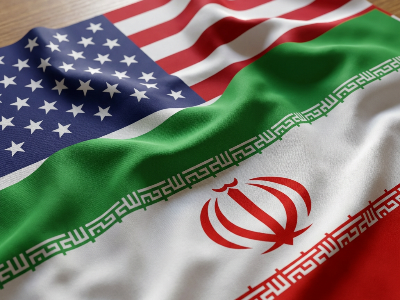
Iran delivered a new negotiation proposal to the United States via Pakistan. The market's expectations for a peaceful resolution have increased, causing an abrupt short-term drop in international oil prices, while gold retreated to the 4600 mark...
According to reports by Iran's official media on Friday, Iran has submitted a new peace negotiation proposal to the United States via Pakistani mediators. The Islamic Republic News Agency (IRNA) stated that the text of this proposal was officially handed over to the Pakistani government on Thursday evening.
CBS News subsequently cited Pakistani officials as saying that Iran’s latest response to the U.S.-proposed peace agreement terms had been delivered to U.S. officials. This confirmed reports by Iranian official media that Iran had made a new proposal and at least agreed to hold a second round of direct peace talks.
 At the opening of the U.S. stock market today, both the Nasdaq and the S&P 500 indices hit record highs.
International oil prices plummeted during trading, with both WTI and Brent crude oil dropping more than $1 in a short period. Brent crude fell below $108 per barrel. Spot gold and silver surged, with gold reaching $4,600 per ounce and silver climbing to $75 per ounce.
CBS News noted that Iran’s previous proposal had attempted to postpone any discussions related to nuclear issues until later, a plan rejected by Trump. However, given that Iran has presented a new proposal, the likelihood of reaching an agreement is greater than before, according to optimistic remarks from Pakistani officials. Meanwhile, Al Jazeera cited sources as saying that nuclear negotiations are unlikely to succeed, and the focus may shift toward ending the war.
Earlier this week, Iran proposed a negotiation plan that would delay discussions on its nuclear program until after the formal end of the conflict and resolution of shipping issues. However, Trump insisted on addressing the nuclear issue from the outset.
An Axios reporter on the X platform cited a source as saying that on Monday, White House envoy Witkof sent a list of amendments focused on reincorporating the nuclear issue into the draft text. One of the amendments reportedly requires Iran to commit that, for as long as negotiations continue, it will not attempt to move any enriched uranium out of its bombed nuclear facilities or restart any activities at these sites.
How will the ‘neither war nor peace’ deadlock be broken?
On February 28 this year, U.S.-Israeli coalition forces launched a large-scale surprise attack on Iran, triggering the outbreak of war. A ceasefire began on April 8, but since then, only one round of direct negotiations between U.S. and Iranian representatives has taken place, and it ended in failure.
During the ceasefire, Iran continued to blockade the Strait of Hormuz, causing disruptions to global supplies of oil, natural gas, and fertilizers. In response, the United States imposed a counter-blockade on Iranian ports, creating an economic stalemate.
The Wall Street Journal reported on Thursday, citing sources, that Trump had instructed security officials to prepare for a prolonged blockade lasting several months, directly triggering a sharp spike in international oil prices.
Moreover, according to reports from multiple media outlets citing U.S. officials, Trump is seriously considering resuming large-scale military operations, including launching "brief but intense" strikes against Iran's infrastructure, to break the negotiation deadlock.
When recently asked whether he was "eager to break the ceasefire agreement," Trump responded, "I don't know if we need to do that," and later added, "We might actually need to."
Despite the breakdown of negotiations, the ceasefire has been maintained. Gholamhossein Mohseni Ejei, Iran's Chief Justice, publicly stated on Friday: "The Islamic Republic has never shied away from negotiations."
However, he firmly added: "We will never accept any imposed conditions." This statement, released by Mizan Online, a news agency affiliated with Iran's judiciary, highlights the limited room for compromise between the two sides.
Ejei emphasized that Tehran has no intention of restarting the war: "We do not welcome war, nor do we want it to happen, and we certainly do not wish for its continuation."
The ceasefire has not alleviated market anxiety. Current oil prices remain nearly 70% higher than pre-war levels, with expectations of a prolonged closure of the Strait of Hormuz continuing to disrupt the global energy market.
Meanwhile, the U.S. is embroiled in a legal debate over whether Trump has exceeded the deadline for obtaining congressional authorization for military action against Iran. The U.S. War Powers Resolution requires the president to secure congressional approval within 60 days of initiating hostilities.
Government officials, including Defense Secretary Pete Hegseth, have insisted that the ceasefire means the 60-day countdown has been suspended. A senior government official told AFP on Thursday evening: "The hostile actions that began on February 28 have ceased, rendering the War Powers Resolution inapplicable."
The Trump administration faces mounting domestic pressure as the war shows no clear path to victory, inflation surges due to the conflict, and the November midterm elections approach. U.S. economic data released on Thursday showed slower-than-expected growth, with the inflation rate rising to 3.5%.
Iran's economy has suffered another severe blow from war on top of years of sanctions. Data from Iran's Statistical Center indicates that inflation had already exceeded 45% before the war and has recently risen further to 53.7%.
Trump has repeatedly criticized allies for failing to assist in reopening the Strait of Hormuz. France and the UK led the formation of a multi-national escort coalition, but made it clear that they would only act after peace was achieved. On Thursday, a US official confirmed to Agence France-Presse that the United States would lead its own coalition, named the 'Maritime Freedom Alliance,' aimed at restoring shipping through the strait.
French Foreign Minister Jean-Noel Barrot promptly stated that the plans by France and the UK are intended to be complementary, rather than competitive, to the new US coalition, emphasizing that the actions of the US are 'of a different nature and more supportive.'
Editor/Lambor