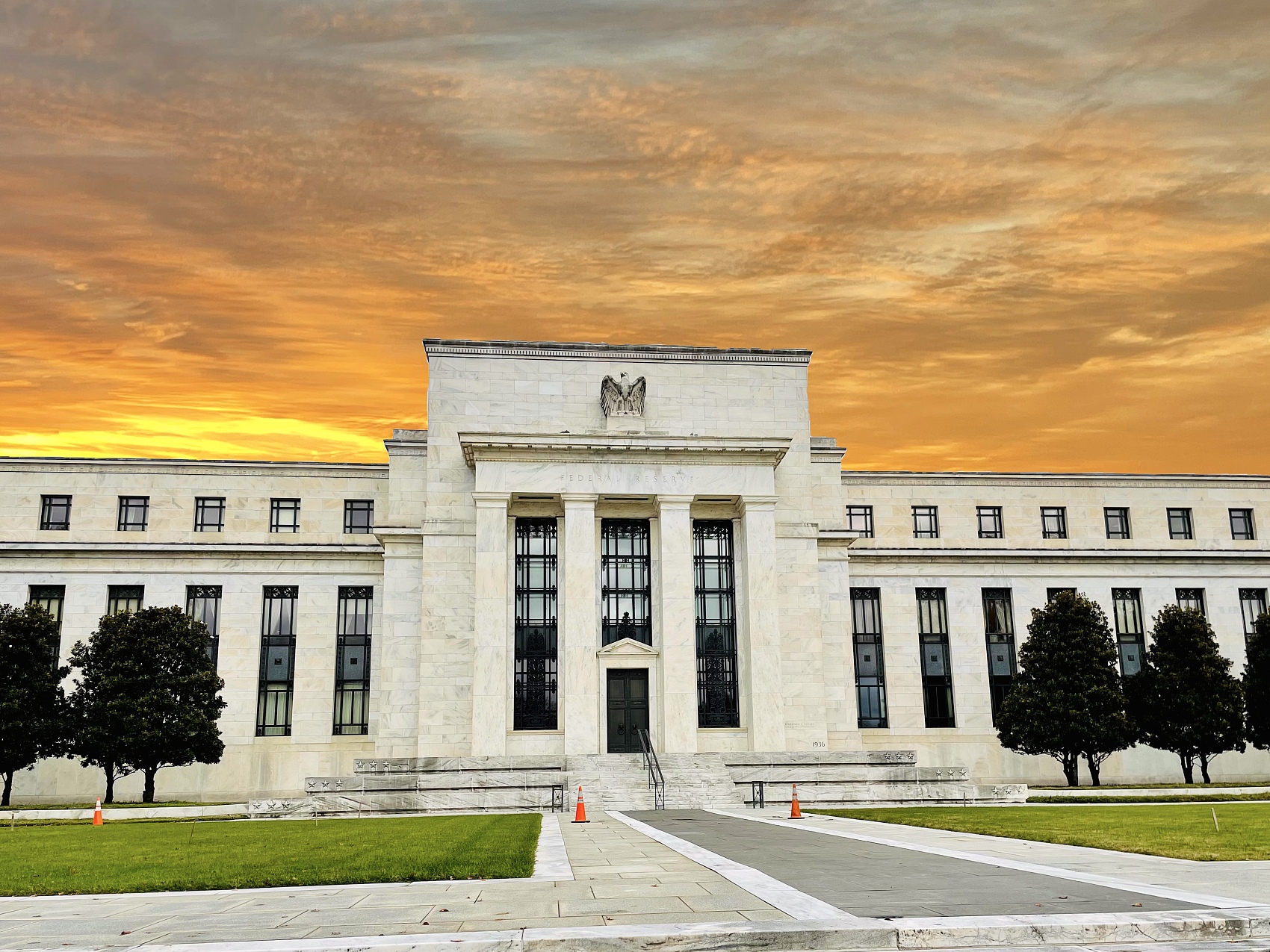
Earlier, Jerome Powell’s designated successor, Kevin Warsh, hinted that the Federal Reserve’s 'independence' might not apply in matters of international affairs. His remarks immediately sparked an uproar among global central banks.
Comments by Kevin Warsh, the nominee for Federal Reserve Chair, regarding the Fed's role in the global financial system have drawn significant attention from central banks worldwide. During his confirmation hearing, he stated that the Federal Reserve’s independence in interest rate decisions does not necessarily extend to its broader functions—particularly in international financial affairs—which require coordination with the U.S. President’s administration and Congress.
This statement has unsettled policymakers in multiple countries. Given the U.S. dollar’s central role in the global financial system, the Federal Reserve has long assumed a critical responsibility for stabilizing markets during crises, continuously expanding its toolkit to ensure liquidity provision. Any retrenchment in its overseas support could pose a shock to global market stability.
 U.S. President Trump has nominated Warsh to lead the Federal Reserve; the swearing-in date has not yet been announced. Meanwhile, the Federal Reserve Board confirmed Powell as interim chair last Friday.
Liquidity mechanisms underpin the foundation of the dollar system
Multiple policymakers have indicated that they are closely monitoring Warsh’s remarks—both in public and private discussions—and await further clarification.
These officials generally believe that a sharp policy pivot in the near term is unlikely, largely because the Fed’s liquidity facilities serve not only foreign financial systems but also directly benefit U.S. interests. Global banks hold trillions of dollars in U.S. Treasury securities; if liquidity strains force fire sales, the resulting turmoil would ultimately reverberate back into U.S. markets.
Currently, the Federal Reserve provides dollar liquidity on a standing basis—backed by collateral—to the European Central Bank, the Bank of Canada, the Bank of Japan, the Bank of England, and the Swiss National Bank. Other countries can access funding through higher-threshold channels. This arrangement is viewed as a critical defense line against overseas market turbulence spilling back into the United States.
An anonymous ECB policymaker stated bluntly: “This is absolutely a double-edged sword. The entire world relies on the dollar—if access to dollars becomes less smooth, everyone will pay a price—including the United States itself.”
Many observers argue that if the Federal Reserve is perceived as unreliable, it would accelerate efforts by countries to de-dollarize, potentially reinforcing or even hastening the dollar’s decline in global market share over the past 15 years.
Limited alternatives exist
Nevertheless, alternative options are not realistic in the short term. Even a signal indicating tightening U.S. dollar liquidity would be sufficient to trigger significant market volatility. Precedents for similar actions exist, such as the Trump administration providing Argentina with $20 billion in liquidity support ahead of last year’s election.
Recently, countries in the Gulf and Asia have also made requests to address spillover risks stemming from energy shocks and the conflict involving Iran. It was reported that South Korean President Lee Jae-myung discussed this issue during his meeting this month with U.S. Treasury Secretary Bessent.
From a market impact perspective, Japan is particularly sensitive. Takahide Kiuchi, former member of the Bank of Japan’s Policy Board and currently an economist at Nomura Research Institute, noted that shifts in Federal Reserve policy could transmit risks through multiple channels.
He stated, “Wasserman Schultz might attempt to walk a tightrope: pursuing a dovish interest rate policy aligned with Trump’s preferences on one hand, while guiding a hawkish balance sheet policy on the other.” In his view, if this triggers turmoil in U.S. markets and coincides with rising oil prices driven by the Iran conflict, Japan’s 10-year government bond yields could rise further, thereby impacting Japan’s economy and stock market.
Regarding the potential erosion of the U.S. dollar’s dominance, some argue that capital could partially shift toward the euro. The European Central Bank has also been promoting greater international use of the euro in recent years. However, sources indicate that the eurozone’s current institutional framework remains insufficient to absorb significantly higher global demand, making internal reforms a necessary precondition.
Although central banks can alleviate short-term pressures through emergency arrangements, the Federal Reserve is still regarded as the irreplaceable “lender of last resort” in systemic crises.
Spyros Andreopoulos, founder of Thin Ice Macroeconomics, remarked, “You really don’t have many good alternatives” to circumvent this reality, noting that the approximately $30 trillion Eurodollar market inherently creates a structural shortage of dollar supply within the system.
However, most respondents believe Wasserman Schultz’s remarks should not be overinterpreted. As a seasoned central banker who experienced the financial crisis, he fully understands the importance of maintaining financial stability.
Carsten Brzeski, economist at ING, stated, “His comments were directed more toward Trump than toward his European counterparts.”
Moreover, institutional checks and balances are also seen as stabilizing factors. Fed decisions rely on a collective voting mechanism, making it difficult for the chair to unilaterally drive major policy shifts. Bank of Canada Governor Tiff Macklem recalled, “During the 2008 financial crisis, I worked alongside him. I believe the Fed’s culture and approach will continue just as they have in the past.”
Editor/melody