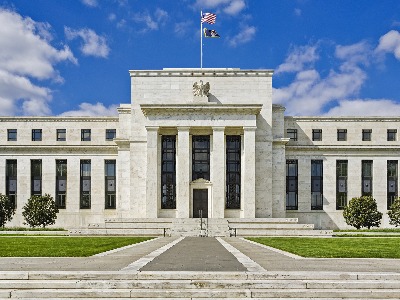
With Waller officially taking the helm at the Federal Reserve, market expectations for the central bank's monetary policy have become highly volatile; however, asset management giant BlackRock believes the Fed actually has ample grounds to cut rates...
As Waller was formally sworn in as Federal Reserve Chair last Friday, markets are pricing in the likelihood of a rate hike by the Fed this year, yet BlackRock has offered a divergent view.
In an interview, Navin Saigal, Head of Global Fixed Income for Asia Pacific at BlackRock, stated that under Waller’s leadership, the Fed has sufficient grounds to pivot toward a more accommodative stance.
 When asked about the possibility of a rate hike, Saigal responded bluntly: “If you forced me to choose between hiking and cutting rates, I believe there are actually enough factors supporting a rate cut.” He further noted that the labor market could come under pressure, making policy options more likely to involve holding steady or shifting toward rate cuts.
This view stands in stark contrast to prevailing expectations in the bond market. Investors widely assume that Waller will prioritize safeguarding the Fed’s credibility on inflation control over accommodating former U.S. President Trump’s preference for lower interest rates.
Market pricing indicates that traders see it as nearly certain the Fed will begin a rate-hike cycle before December—a sharp reversal from just three months ago, when markets anticipated significant rate cuts.
Inflationary Pressures and Rising Yields
Geopolitical turmoil in the Middle East—particularly the conflict involving Iran—has driven up fuel and commodity prices, continuously lifting inflation expectations. This shift has directly reinforced market bets on rate hikes.
As one of the indicators most sensitive to policy, $U.S. 2-Year Treasury Notes Yield (US2Y.BD)$ has risen from a low of 3.36% in March to 4.12% as of last Friday, briefly touching 4.14% amid the volatility—the highest level in over a year and nearly 40 basis points above the upper bound of the federal funds rate target range.
At the same time,$U.S. 30-Year Treasury Bonds Yield (US30Y.BD)$It briefly surged to 5.2% last week—the highest level since 2007—before retreating to 5.06%.
The shift in market expectations, combined with resilient U.S. economic data and a stock market rally fueled by artificial intelligence investment, has heightened investor concerns that inflation may remain above the Fed’s 2% target for an extended period.
Economic Structural Shifts and Policy Uncertainty
Saigal noted that while investments related to artificial intelligence are supporting the economy, the underlying rationale involves substituting technology for labor, which could exert pressure on the labor market in the future. He stated that over the next year or so, if clear signals about the economic trajectory remain absent, 'the safest course of action may be to hold off on making moves.'
Meanwhile, positions within the Federal Reserve are also shifting. Christopher Waller, a Fed governor appointed by Trump who had previously advocated cutting rates to safeguard employment, indicated last Friday that the next policy move could equally be a rate hike. Vice Chair Philip Jefferson and New York Fed President John Williams are among the officials scheduled to speak this week, offering further policy signals.
Trump expressed his hope that Warsh would independently lead the Federal Reserve, despite having repeatedly called publicly for lower borrowing costs.
Changing interest rate expectations have already begun influencing investment positioning. As yields rise and markets increasingly price in the prospect of higher rates, some institutional investors—including Chitrang Purani, portfolio manager at Capital Group—have started favoring short-term U.S. Treasuries.
However, Purani believes the threshold for policy tightening remains high. He said, 'I do think the bar for raising rates is still quite high, as this Fed—and Warsh—may prefer to exercise additional patience before taking their next step, to fully understand how inflation is transmitting into the labor market and financial conditions.'
He added that under Warsh’s leadership, the Federal Reserve’s approach to reacting to economic data is not expected to undergo any substantial change.
Aside from policy signals, markets will also focus this week on$U.S. 2-Year Treasury Notes Yield (US2Y.BD)$、$U.S. 5-Year Treasury Notes Yield (US5Y.BD)$and$U.S. 7-Year Treasury Notes Yield (US7Y.BD)$auction results to gauge shifts in investor demand and interest rate path expectations.
Editor/melody