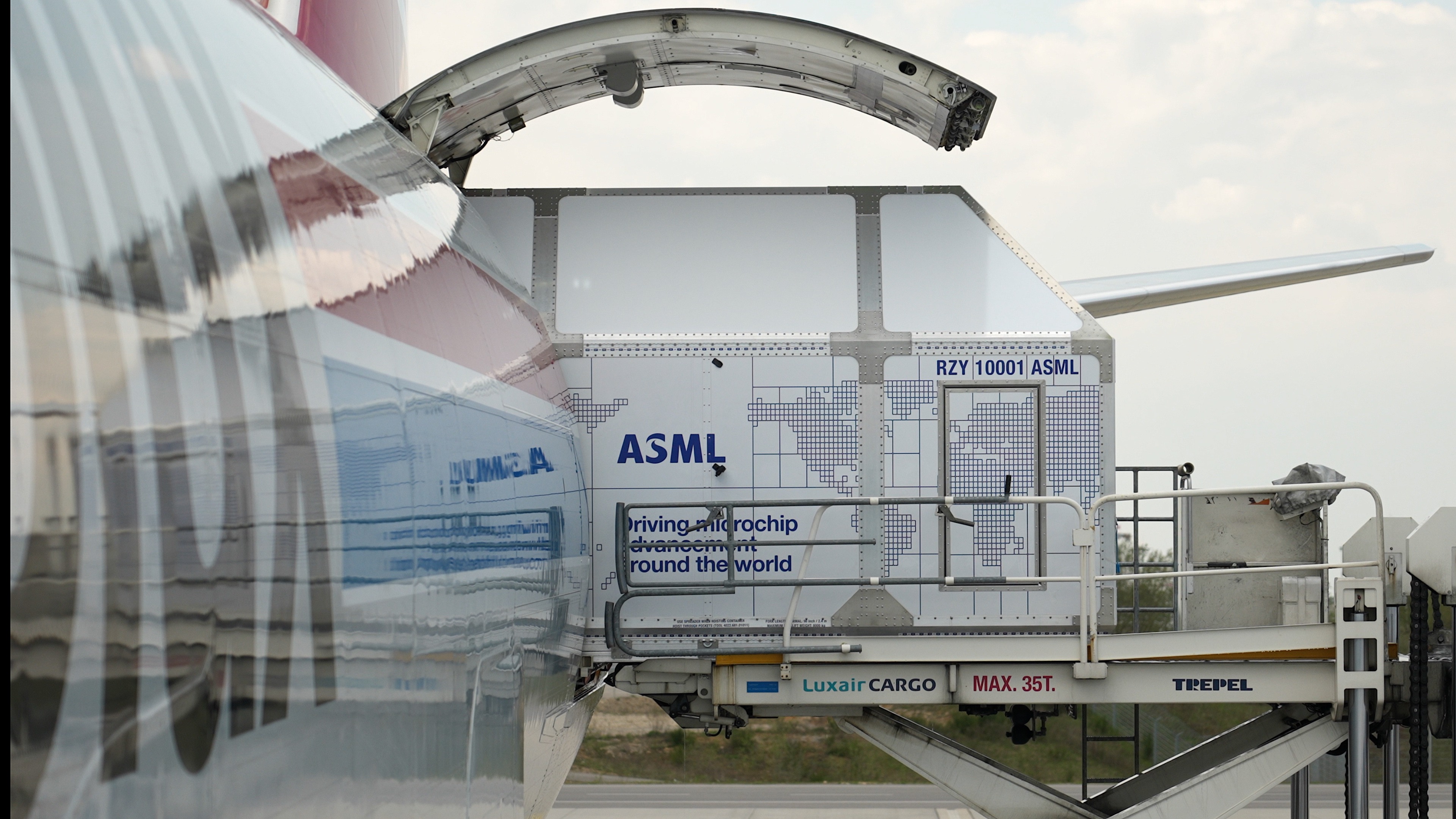
Goldman Sachs believes the semiconductor capital expenditure cycle still has significant upside potential: EUV capacity is expanding steadily, with deliveries expected to exceed 80 units in 2027; CPU demand intensity could surpass that of GPUs, becoming a new growth engine for AI; memory and logic customers are placing long-cycle orders with advance payments, substantially improving visibility; High-NA technology faces lower adoption barriers in the memory segment and is likely to achieve scale adoption earlier than in logic chips; DUV demand in China remains resilient.
As a core player in the global semiconductor supply chain, Dutch lithography giant $ASML Holding (ASML.US)$ is emerging as a “second-order winner” of the artificial intelligence (AI) boom.
Recently, a Goldman Sachs analyst team led by Alexander Duval published a research report following an on-site visit to ASML’s headquarters and meetings with senior executives, including CEO Christophe Fouquet. The report states that market evidence indicates AI infrastructure demand continues to expand rather than peak, leaving significant upside potential in the semiconductor capital expenditure cycle.
 The Goldman Sachs report conveys highly positive signals from this survey: ASML will deliver more than 60 extreme ultraviolet (EUV) lithography systems this year and is on track to exceed 80 units by 2027; CPU demand is becoming a new growth driver on par with GPUs; memory customers are accelerating orders and making advance payments; adoption of High NA technology in the memory segment may outpace that in logic chips; and demand from China remains robust, with further upside expected for deep ultraviolet (DUV) equipment.
Goldman Sachs maintains its Buy rating on ASML, with a 12-month price target of €1,600, implying a 2027 forward price-to-earnings multiple of 37x.
Capacity expansion is progressing smoothly, and room for further demand acceleration driven by AI remains
ASML management clearly stated that EUV capacity expansion is advancing steadily as planned, with strong ramp-up progress for 2026 and a positive momentum expected to extend into 2027. Key supporting factors include continuous optimization of production cycle times, significantly enhanced supply chain execution capabilities (including optical components), and refined delivery scheduling frameworks.
Management reiterated its guidance to deliver more than 60 EUV systems this year and outlined a clear pathway toward exceeding 80 units annually by 2027. Notably, the current capacity ramp-up is smoother than in previous cycles, with exceptionally high near-term delivery visibility.
More importantly, ASML believes there remains considerable room for further demand acceleration—particularly as large-scale AI infrastructure build-out plans currently emerging suggest future infrastructure investment will significantly surpass current expectations. Memory customers are already expediting wafer fab construction timelines and view the incremental capacity’s return on investment as highly attractive, further reinforcing the rationale for sustained high-intensity investment.
The logic/foundry customer mix continues to improve, with CPUs emerging as an AI demand driver comparable to GPUs
Goldman Sachs analysts noted that ASML's customer base in the foundry/logic chip segment continues to improve. Taking Samsung Foundry as an example, it is actively capitalizing on opportunities in logic and memory integration.
From the demand side, CPUs have become a significant driver of growth, with current demand intensity potentially exceeding that of GPUs—owing to the irreplaceable role CPUs play in supporting increasingly complex AI workloads.
According to Goldman Sachs, this diversification of demand across customers and computing architectures implies that ASML’s growth foundation is more balanced and sustainable, rather than dependent on a single customer or application scenario.
Visibility into orders from both memory and logic customers has improved significantly, with an increase in long-cycle commitments.
In this survey, ASML specifically emphasized that demand visibility from both its logic and memory customer segments has markedly improved. Customers are placing orders with longer lead times and demonstrating stronger willingness to make advance payments, providing ASML with demand certainty not just for the next year but over a longer time horizon.
Goldman Sachs believes that this deep engagement from both market segments somewhat mitigates execution risks associated with capacity expansion and provides a more constructive underpinning for the outlook through 2027–2028.
High NA technology faces lower adoption barriers in the memory segment and is expected to achieve large-scale application earlier than in logic chips.
Regarding the adoption pathway for new technologies, ASML indicated that High NA (high numerical aperture) EUV technology has relatively lower adoption barriers in the memory segment—customers can directly replace specific existing photomasks without requiring additional stitching processes, provided that High NA tools have reached sufficient maturity.
This implies that the timing of High NA adoption in the memory segment could precede its application in logic chips, depending on the technology insertion schedule.
Additionally, ASML observed that customers are becoming increasingly positive about expanding the number of EUV layers used in DRAM production, having fully recognized the advantages of EUV in terms of fab efficiency, cycle time, and cost structure.
Goldman Sachs expects the number of EUV layers used in memory applications to reach double digits by 2030 (compared to approximately five layers in 2025), aligning with ASML’s previously provided guidance range during its Capital Markets Day.
Demand from China remains resilient, and the intensity of demand for DUV equipment is expected to further increase.
ASML regards China as one of its key end markets, and overall demand remains robust. Management indicated that current export controls have a relatively limited incremental impact on near-term business, and related scenarios have already been incorporated into the 2026 financial guidance.
Due to restrictions on EUV equipment procurement, Chinese customers commonly adopt alternative technology paths based on multi-layer stacking to advance their process nodes—a method that entails higher lithography tool utilization density, particularly driving demand for deep ultraviolet (DUV) systems.
Chinese manufacturers’ reliance on DUV stacking processes instead of EUV-based scaling in advanced nodes has objectively led to dependence on equipment-intensive manufacturing pathways, thereby sustaining ongoing procurement demand for ASML’s DUV systems.
Goldman Sachs believes this demand structure helps support gross margin levels for ASML’s relevant product lines.
Synthesizing the above five points, Goldman Sachs’ core view is that continued advancement of cutting-edge AI models will require more GPUs, CPUs, HBM, DRAM, and other advanced logic chips—all of which necessitate additional EUV and DUV lithography tools. ASML’s high visibility into 2027–2028 indicates further upside potential in the semiconductor capital expenditure cycle. According to the latest U.S. data, AI-related capital expenditures alone have already reached USD 800 billion this year.
Editor/Lambor