
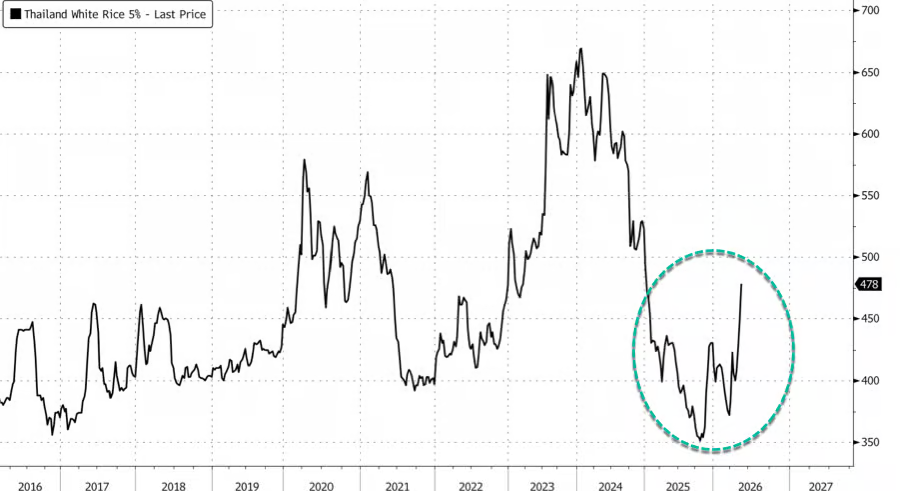
A UBS Group report notes that food inflation in Asia is facing dual pressures from El Niño and fertilizer price shocks. The probability of El Niño persisting through late 2026 to early 2027 is as high as 96%, potentially disrupting harvest seasons in South and Southeast Asia due to drought conditions. Thai white rice prices surged by 20% in May alone. Meanwhile, fertilizer prices remain structurally tight due to Middle East conflicts, with cost pass-through effects expected to gradually materialize starting April 2027.
Asian food prices are facing dual pressures. UBS Group analysts have warned that the combined impact of an El Niño climate event and fertilizer price shocks triggered by Middle East conflicts is unfolding simultaneously, potentially driving Asian inflation significantly higher from late this year through 2027.
A report led by UBS Group analyst Leigha Miyata stated that the probability of an El Niño event occurring between May and July 2026 has risen to 82%, and the likelihood of it persisting from December 2026 to February 2027 has climbed even higher to 96%. This suggests that major agricultural regions in Asia could face heightened drought risks, adversely affecting yields of key crops such as rice.
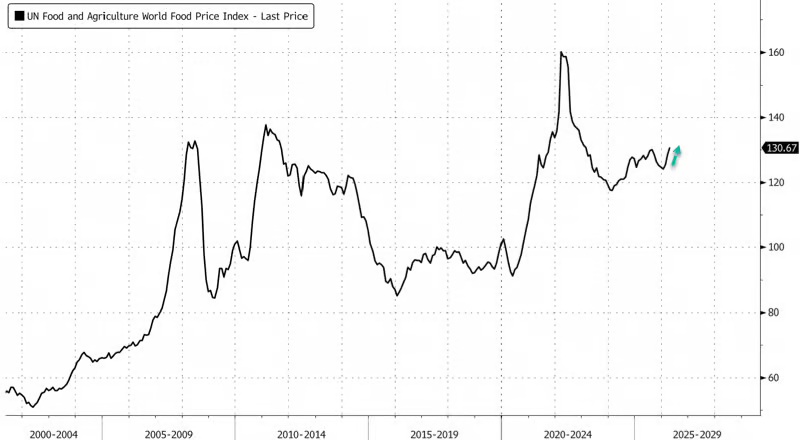
 Meanwhile, the FAO Food Price Index averaged 130.7 points in April, up 1.6% month-over-month, marking its third consecutive monthly increase. Thai white rice prices surged by 20% in May alone—the largest single-month gain since 2008—while Chicago rice futures rose 15% last month.
These signals indicate that food inflationary pressures are already emerging across multiple Asian economies. The Philippines’ inflation rate jumped sharply from 2.3% in February and 3.9% in March to 7.1% in April; Thailand shifted from deflation in February–March to recording 2.9% inflation in April. UBS Group economists expect Asian inflation to rise further, driven by base effects.
Rising El Niño probabilities threaten harvests in South and Southeast Asia
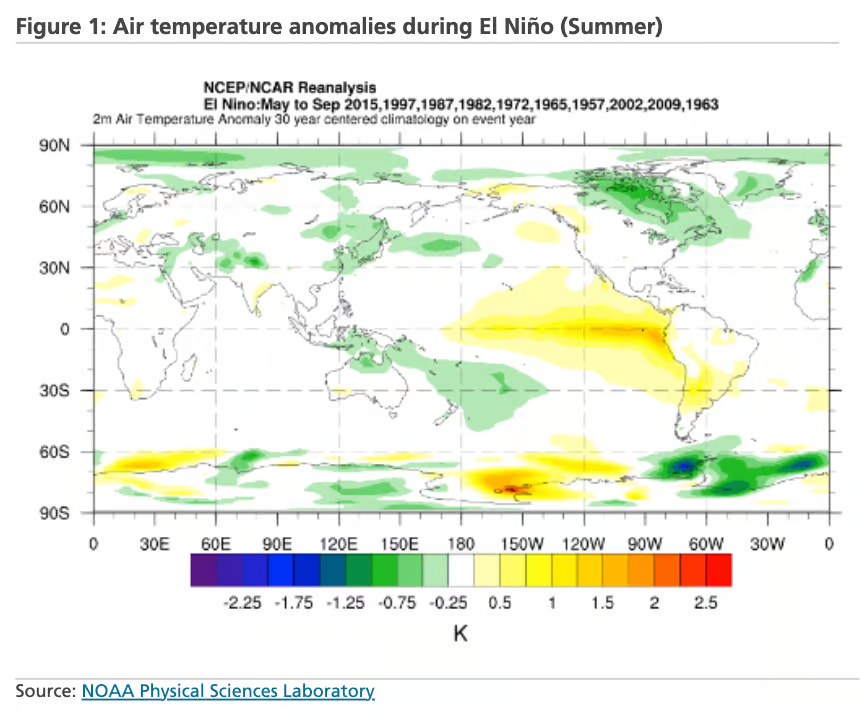
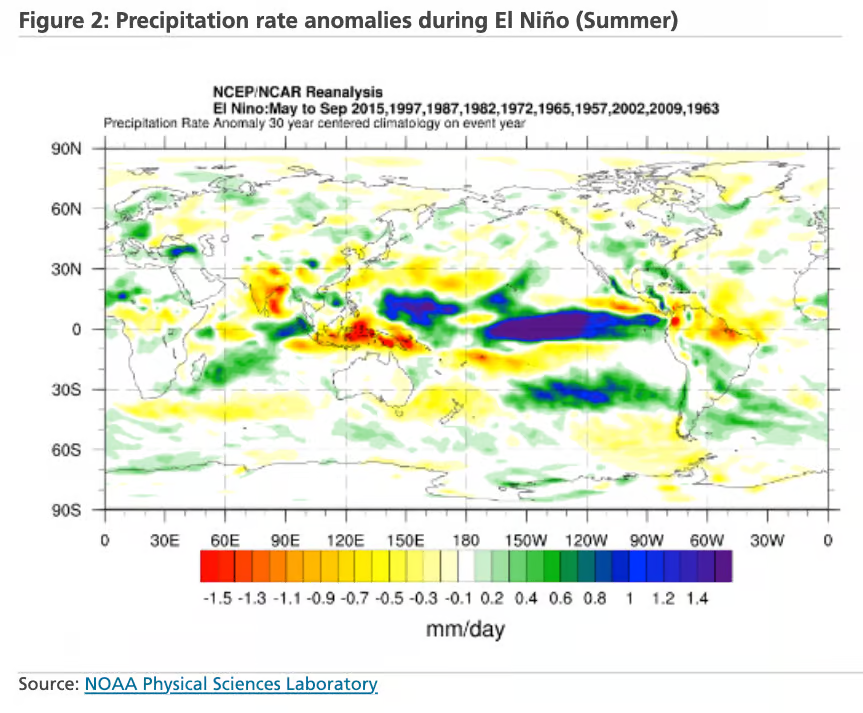
According to data from the U.S. National Oceanic and Atmospheric Administration (NOAA), the probability of El Niño persisting from late 2026 into early 2027 has approached near-certainty levels. Miyata noted in the report that historical patterns show above-average temperatures in Indonesia and northern Australia during El Niño episodes, along with reduced rainfall across South and Southeast Asia, posing direct threats to agricultural output.
If El Niño materializes as expected, UBS Group forecasts that drought impacts will affect harvesting seasons in South and Southeast Asia between September 2026 and April 2027. The report specifically highlighted Thailand and India as likely to suffer the most pronounced negative effects in the Asia-Pacific region, while grain-importing countries such as Japan will also face stronger upward pressure on import prices.
Moreover, in the event of a 'super El Niño,' typically cooler temperatures in Korea and Japan could reverse course, leading to extreme heatwaves and heavy rainfall that would further disrupt regional agricultural production.
Fertilizer price shocks are propagating along the supply chain
Since the outbreak of conflict in the Middle East, fertilizer prices have remained under sustained pressure. UBS Group data shows that while urea prices have retreated by approximately USD 190 per ton (a decline of about 23%) from their April peak, they have still posted a cumulative gain of 23% since the escalation of tensions involving Iran. Ammonia prices have maintained a stable-to-firm trend, and urea ammonium nitrate (UAN) solution prices have likewise remained steady.
UBS Group’s chemicals team noted that the market has passed the seasonally tightest phase of supply, and Q2 could mark the year's price peak. However, constrained trade flows and capacity limitations are expected to sustain a structurally tight supply situation, supporting fertilizer prices above the cost curve from the second half of 2026 through 2027. The report also indicated that the substantive impact of rising fertilizer costs on crop yields is expected to gradually materialize starting April 2027.
In addition, plastic packaging prices in Japan have reportedly risen by 20% to 30%, and transportation costs are also increasing. These factors are expected to further push up retail food prices, although they have not yet been fully reflected in Japan’s inflation data.
El Niño’s Ripple Effects on Asset Prices: From Sugar to Thermal Coal
The UBS Group report outlines the potential impacts of El Niño across multiple asset classes. In agriculture, a tightening global sugar supply-demand balance combined with large speculative short positions could trigger a sharp price rally if El Niño disrupts India’s monsoon, potentially reducing sugar output by approximately 3 to 8 million metric tons year-over-year.
In the energy sector, extreme heat will boost electricity demand in Asia—particularly for cooling—thereby increasing demand for and imports of thermal coal and tightening seaborne market supplies. Meanwhile, hydropower generation in Latin America and Africa could decline due to reduced rainfall, further underpinning coal demand.
Policy Responses Have Taken Effect, but the Inflationary Trend Remains Unreversible
UBS Group economists noted that following the outbreak of the Iran conflict, several Asian economies swiftly implemented policy measures that partially suppressed initial inflation readings. Nevertheless, the report clearly forecasts that inflation will continue to rise in the period ahead.
Based on current data, inflation is trending upward across major Asian economies, with the exception of Indonesia and Japan. Corn futures prices for 2026 and 2027 have risen by approximately 4% and 5%, respectively, since the Iran conflict erupted. In Japan, while year-over-year food inflation eased slightly from 4.6% in April to 4.1% in May, it still increased by 0.3% month-over-month. UBS Group expects Japan’s national CPI to edge up modestly from 1.4% in April to 1.5% in May, suggesting that April may have marked a cyclical low point in this round of inflation.
Overall, the confluence of energy and fertilizer price shocks, El Niño-related climate risks, and base effects will exert persistent upward pressure on food inflation in Asia from the second half of 2026 through 2027, posing significant risks to consumers, central bank policy trajectories, and regional asset prices alike.
Editor/Deng