Macroeconomic Highlights
Trump says he would not rule out meeting Iran's Supreme Leader if a deal is reached.
On Thursday local time, U.S. President Trump stated that if the United States and Iran ultimately reach an agreement, he would not rule out the possibility of meeting Iran’s newly appointed Supreme Leader. He reiterated that the U.S. will never allow Iran to possess nuclear weapons and claimed that prior U.S. strikes on Iranian nuclear facilities had 'completely destroyed' those sites.
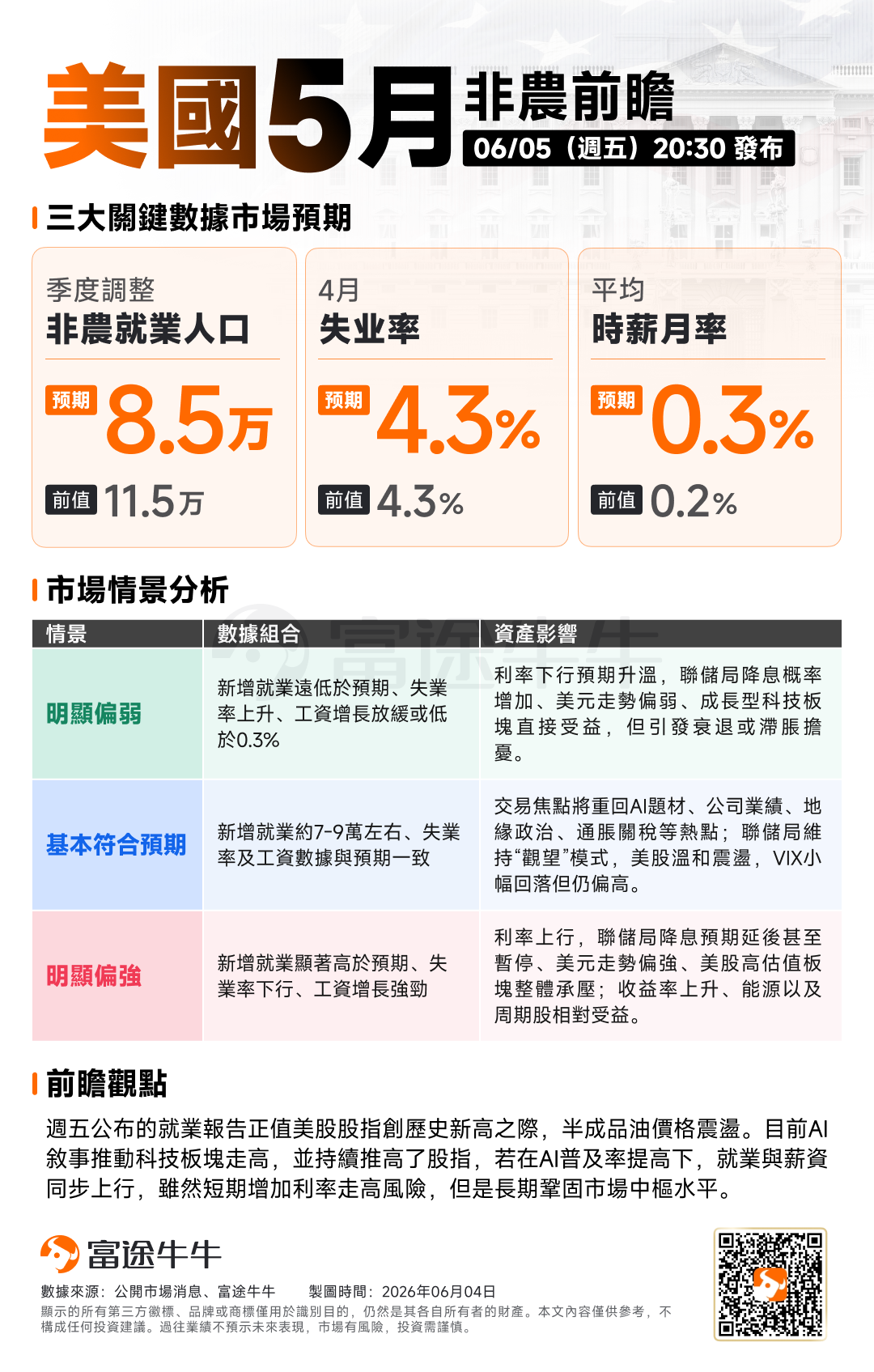
Nonfarm payrolls for May take center stage in markets tonight at 20:30.
 The closely watched U.S. nonfarm payroll report for May will be released tonight at 20:30. Markets currently expect approximately 85,000 jobs to have been added in May, with the unemployment rate likely remaining stable. If the actual figures align with expectations, it would mark the strongest three-month streak of job growth in the U.S. labor market in over a year.
Bessent faces heated congressional grilling: avoids controversy over Trump’s 'audit exemption,' claims Iran conflict has paused and oil prices will eventually fall
On Thursday, U.S. Treasury Secretary Bessent testified before the House Ways and Means Committee. During the hearing, Bessent repeatedly declined to answer questions regarding Trump’s alleged exemption from IRS audits and rebuffed lawmakers accusing the Trump administration of corruption as engaging in 'defamation.' He characterized recent inflation as a temporary fluctuation, describing rising energy prices as a one-off shock. When asked whether Trump-era tariffs had driven up consumer prices, he said their impact was negligible. On potential future waivers for Russian oil imports, he expressed a preference for country-specific exemptions rather than a blanket approach. He also reaffirmed that U.S. Treasury issuance would remain routine and predictable and continued to pressure Canada and Europe on digital taxes.
Federal Reserve officials: The current choice is between remaining patient or raising interest rates; inflation is the top economic risk, and AI has not yet had an impact.
Federal Reserve officials spoke extensively on Thursday (Eastern Time), with three regional Fed presidents delivering relatively hawkish signals on inflation and interest rate direction. Kansas City Fed President (and FOMC voter in 2026) Jeffrey Schmid noted that the key question now is whether the Fed should maintain patience, emphasizing the need to assess whether elevated inflation is temporary and whether rate hikes are necessary to rein it in. San Francisco Fed President (and 2025 voter) Mary Daly said the Fed is prepared for policy moves in either direction and cautioned that providing more forward guidance at this stage could be misleading. She added that AI could lower inflation within five to ten years but noted no significant productivity gains have materialized yet, calling 2027 a 'litmus test' for the AI industry. Richmond Fed President (also a 2025 voter) Tom Barkin stated that the labor market remains balanced and showed no signs of labor shortages.
U.S. judge warns: Justice Department appeal could disrupt Trump tariff refund process
On Wednesday, Judge Richard Eaton of the U.S. Court of International Trade responded directly to the Justice Department’s appeal of his ruling through an open letter, challenging the government’s legal position and warning that appellate court intervention could disrupt the online application system, which has already processed at least $85 billion in refunds. The Justice Department countered that the refund system was voluntarily established and that the judge lacks authority to secure nationwide refunds for companies that have not filed lawsuits. A public hearing scheduled for June 9 marks the next critical milestone.
Ignoring warnings from the South Korean government, the Korean won fell to its lowest level since 2009.
The Korean won remained under pressure on Thursday, falling to a more-than-16-year low despite renewed verbal intervention from South Korean authorities, reflecting the systemic stress facing Asian currencies amid escalating Middle East tensions. $US Dollar/South Korean Won (USDKRW.FX)$ It briefly touched 1,540.74 and was last quoted at 1,533.79. Meanwhile, foreign investors sold $4.6 billion worth of South Korean equities in a single day, bringing their year-to-date net selling to $74 billion.
U.S. Stock Market Update
The Dow surged nearly 900 points to a record high, while Broadcom triggered a sell-off in chip stocks that weighed on the Nasdaq.
On Thursday, the three major U.S. stock indexes closed mixed. Investor sentiment was lifted by expectations that the Middle East conflict could soon end, but disappointing earnings from chip giant Broadcom sparked a selloff in semiconductor stocks, causing the Nasdaq Composite to close slightly lower. At the close, the Dow rose 1.73% to 51,561.93; the Nasdaq fell 0.09% to 26,830.96; and the S&P 500 gained 0.41% to 7,584.32.

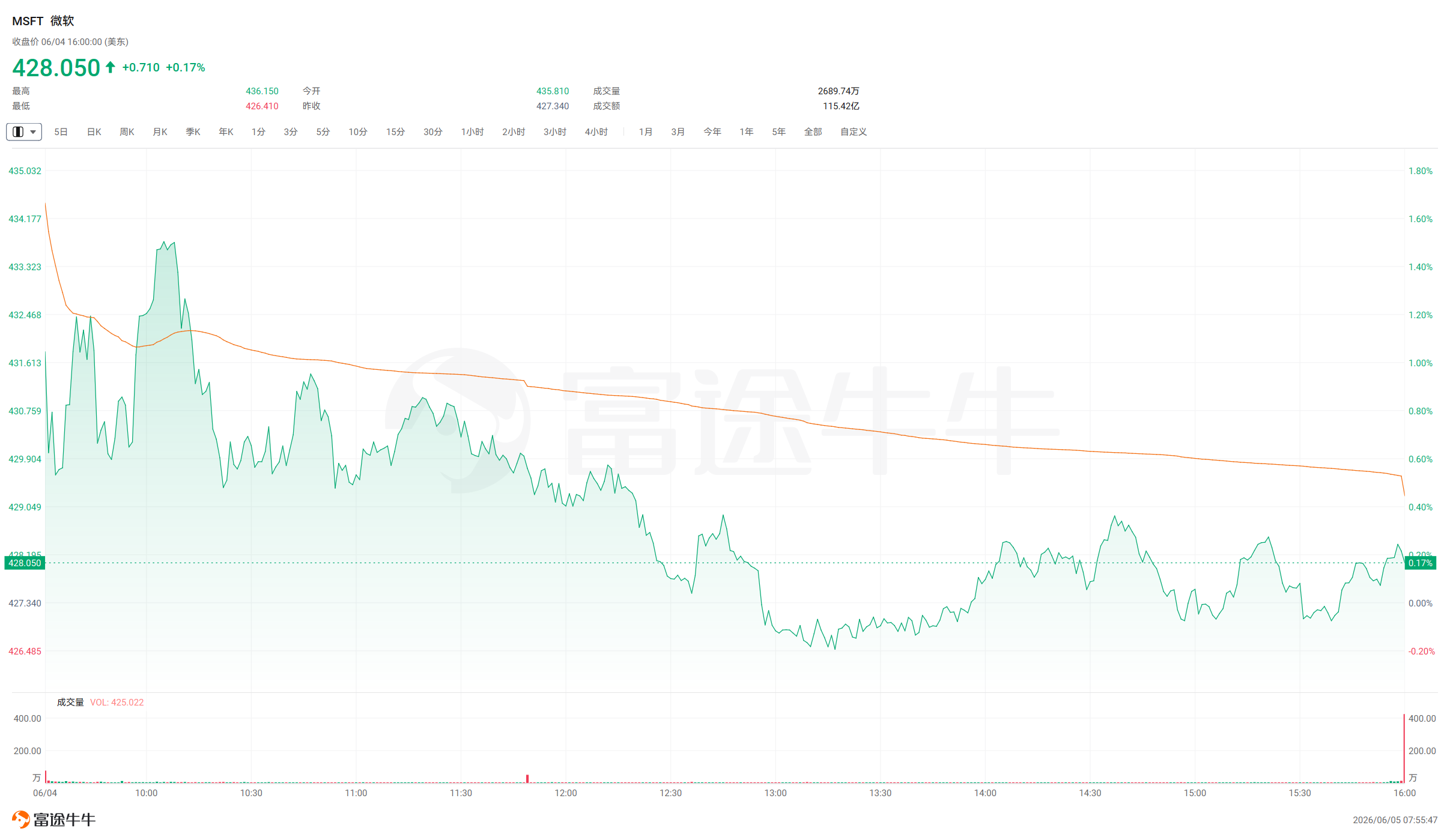
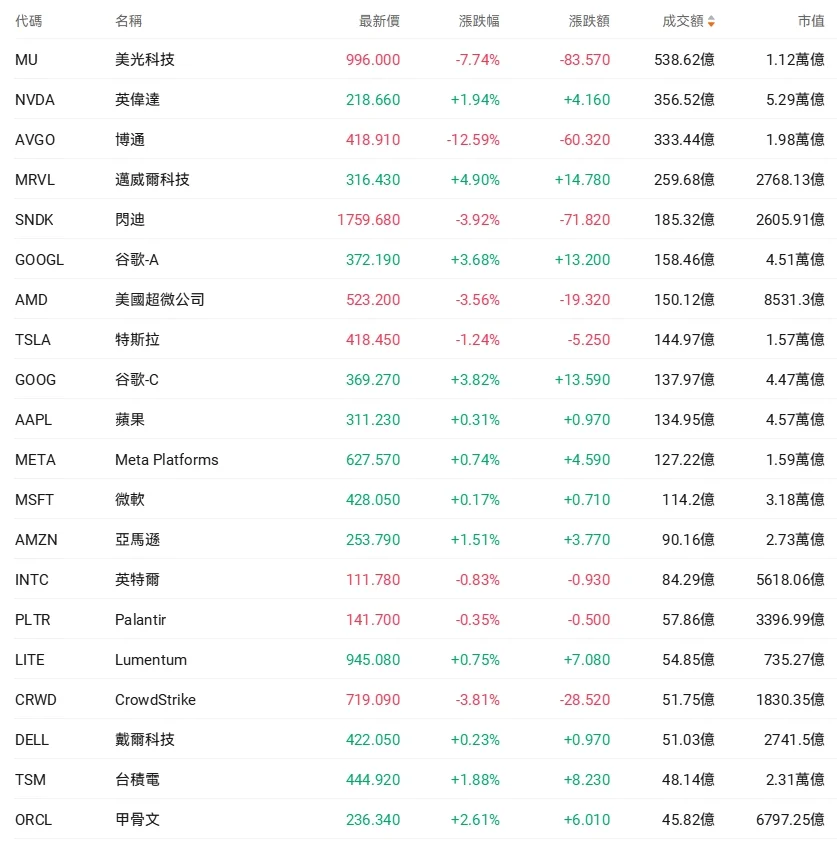
$Star Tech Stocks (LIST2518.US)$ Most stocks advanced, with Alphabet A up 3.68%, NVIDIA rising 1.94%, Amazon gaining 1.51%, Meta climbing 0.74%, Apple increasing 0.31%, Microsoft edging up 0.17%, and Tesla declining 1.24%.
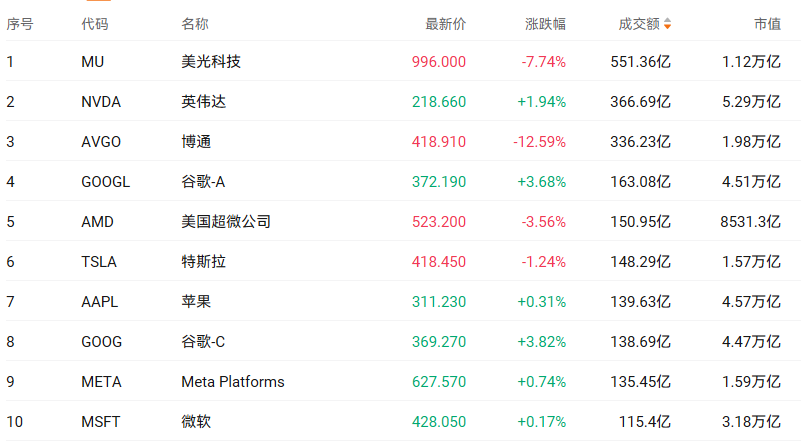
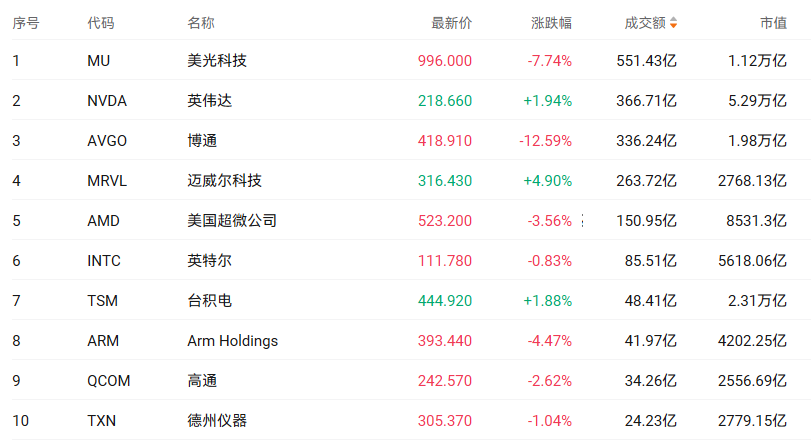
Aside from Broadcom’s sharp decline, $Semiconductors (LIST2015.US)$ the sector showed clear divergence: Marvell Technology rose 4.9%, while Advanced Micro Devices (AMD), Micron Technology, and Qualcomm fell between 2.6% and 7.7%.
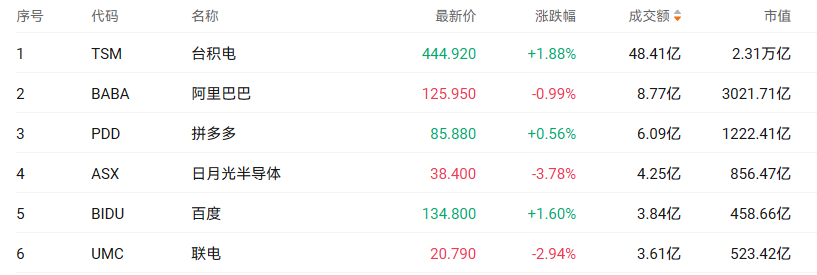
The Nasdaq Golden Dragon China Index closed down 0.60% at 6,597.34. $Popular Chinese Concept Stocks (LIST2517.US)$ Among its components, 21Vianet dropped 6%, Li Auto fell 2.8%, Bilibili rose 0.90%, Tencent gained 0.1%, Xiaomi climbed 0.6%, PDD Holdings advanced 0.6%, and Baidu increased 1.6%.
Stock-specific news
Anthropic: High computing costs are the primary driver behind its IPO, and it calls for a global pause on frontier AI development.
According to Bloomberg, Daniela Amodei, co-founder and president of Anthropic, said at the Bloomberg Technology Summit on Thursday that AI model training is an “extremely capital-intensive business” and that public markets are “very well suited” to finance such ventures. This came just days after the developer of the Claude model confidentially filed its IPO prospectus. On the same day, Anthropic published a blog post revealing internal data showing that the capabilities of its most advanced models are rapidly accelerating, and it urged leading AI labs to seriously consider slowing down their development pace.
Goldman Sachs: SpaceX's capital expenditures are projected to reach $360 billion by 2028.
$Space Exploration Technologies (SPCX.US)$ The IPO roadshow has been launched, with plans to offer approximately 556 million Class A ordinary shares to the public. Goldman Sachs analysts estimate that SpaceX’s total cash burn will reach USD 120 billion this year and next, with an additional USD 230 billion expected to be spent by 2030. Goldman Sachs forecasts that SpaceX’s capital expenditures will amount to approximately USD 360 billion by 2028, of which around 80% will be allocated to artificial intelligence.
Forecasts indicate that SpaceX’s revenue is expected to reach USD 474 billion by 2030, with AI-related revenue accounting for two-thirds of total sales. This figure represents a 25-fold increase compared to the company’s revenue of USD 18.7 billion last year. Goldman Sachs expects SpaceX’s revenue this year to more than double, reaching USD 38 billion, potentially reflecting its partnership agreement with AI giant Anthropic.
Broadcom’s AI guidance deemed 'underwhelming' triggers sell-off, but Wall Street calls it an overreaction: The real inflection point arrives in 2028
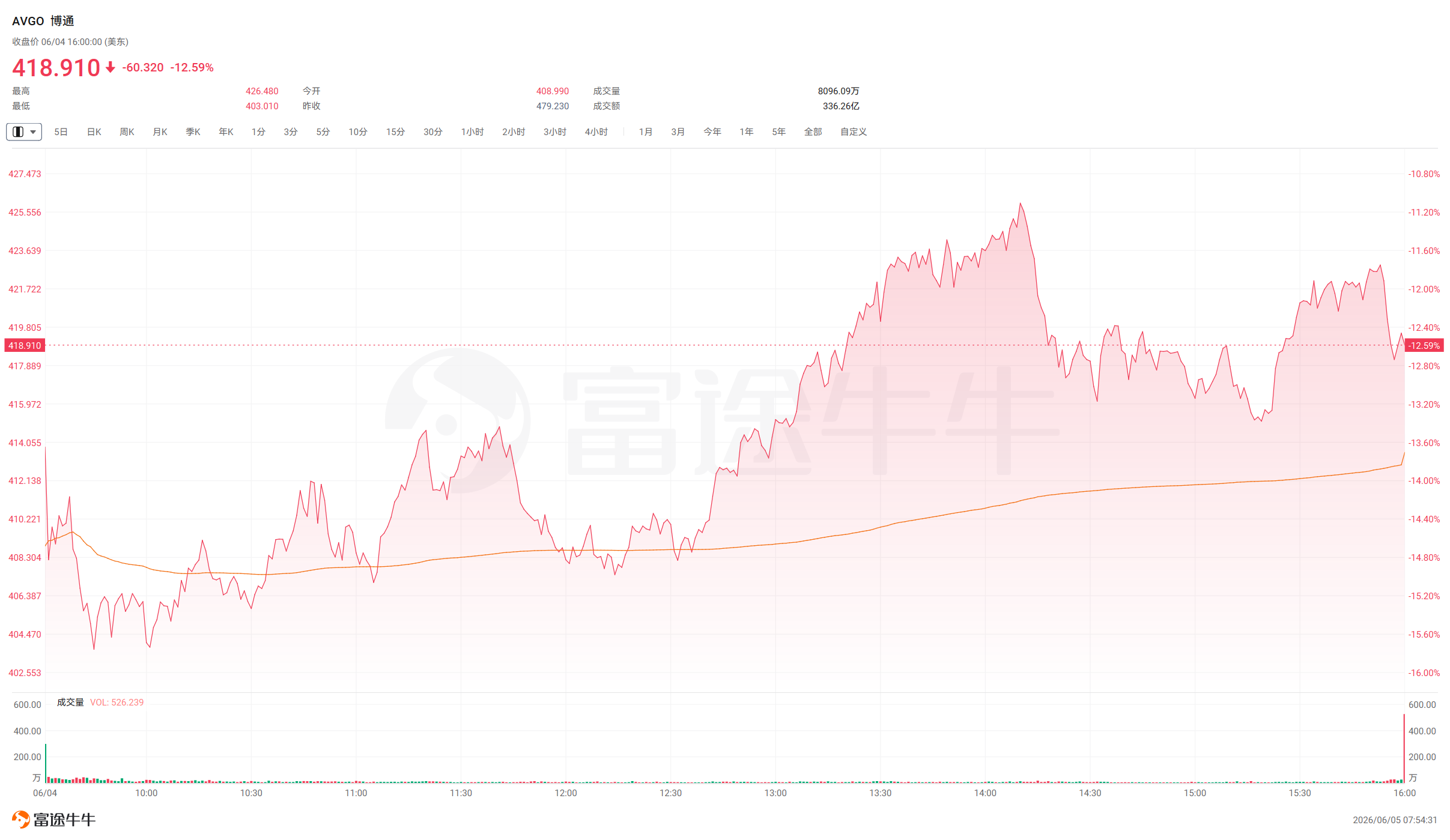
$Broadcom (AVGO.US)$ A post-earnings sell-off sent shares down 12% on Thursday. In response, Wall Street analysts quickly pushed back, calling it a misjudgment—Broadcom’s true growth momentum won’t fully materialize until after 2027. Deutsche Bank analyst Ross Seymore noted that the lack of an upward revision to Broadcom’s long-term guidance 'primarily stems from management’s conservative stance, rather than market share erosion or delays in data center buildouts.' He forecasts Broadcom’s AI revenue will reach USD 125 billion in fiscal year 2027 (approximately 25% above the company’s current guidance) and further surge to around USD 190 billion in fiscal year 2028. Deutsche Bank simultaneously raised its calendar-year 2027 revenue and earnings-per-share forecasts by approximately 15% each.
Ciena beats expectations with strong quarterly results and raises full-year guidance, yet shares still drop over 13%
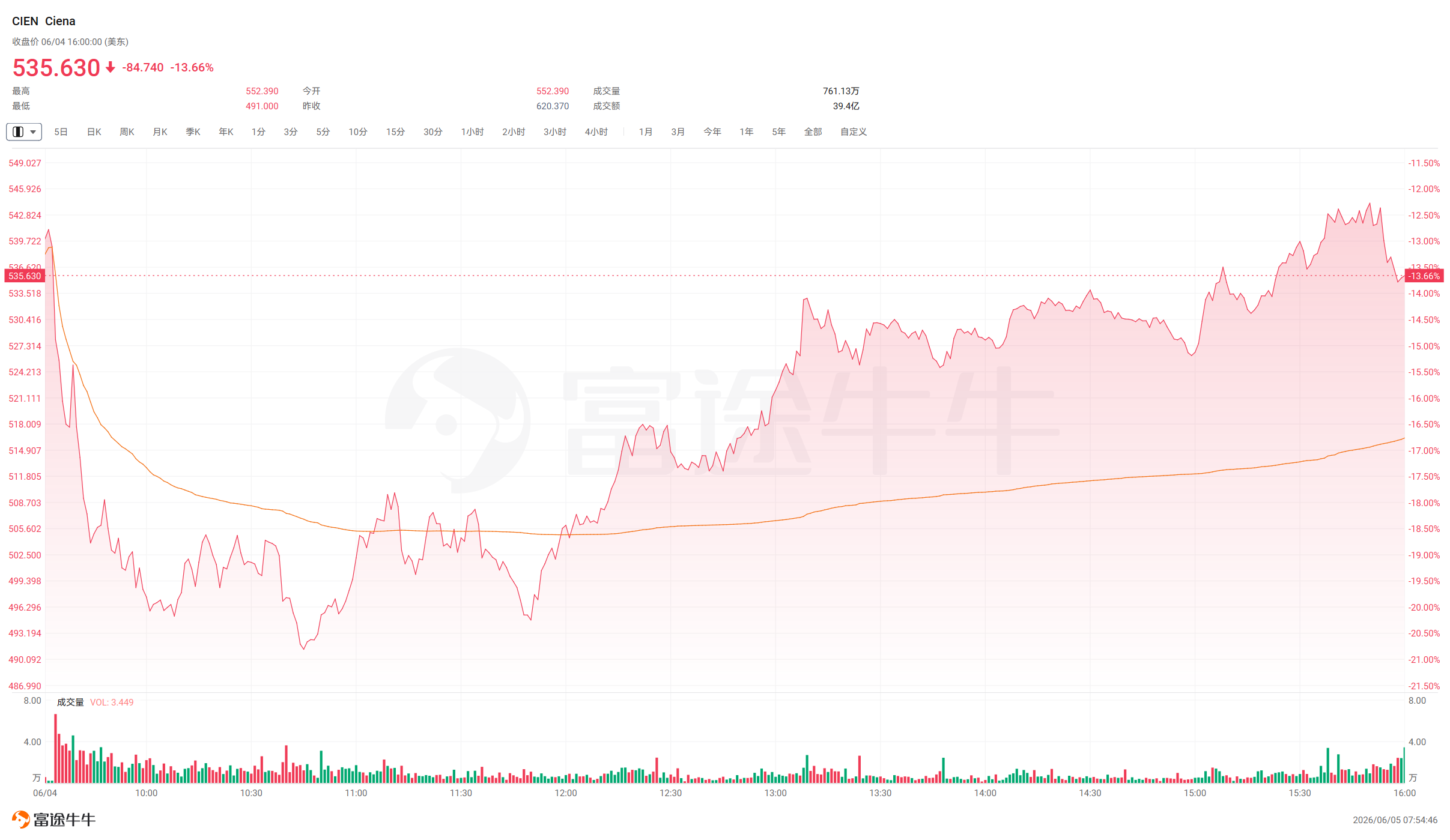
Second fiscal quarter $Ciena(CIEN.US)$ Revenue increased 40% year-over-year, and EPS surged 290%, both accelerating beyond expectations. Guidance for both the third fiscal quarter and the full fiscal year exceeded market expectations, with the full-year midpoint aligning with the upper end of the prior guidance range—though the degree of outperformance was modest and offered limited upside surprise. Additionally, the third-quarter margin guidance was largely flat compared to the prior quarter. Following the earnings release, Ciena shares closed down nearly 13.7% on Thursday, though they remain up over 120% year-to-date. Analysts note that the sell-off was not due to weak results—in fact, both performance and guidance were relatively strong. A more plausible explanation is that the market had already priced in elevated expectations for AI, data center interconnect, and optical networking demand; while the results were solid, they were insufficient to justify further re-rating, prompting investors to take profits and reassess the trajectory of future growth and margin expansion.
Quantum computing giant Quantinuum rises modestly 0.6% on its IPO debut
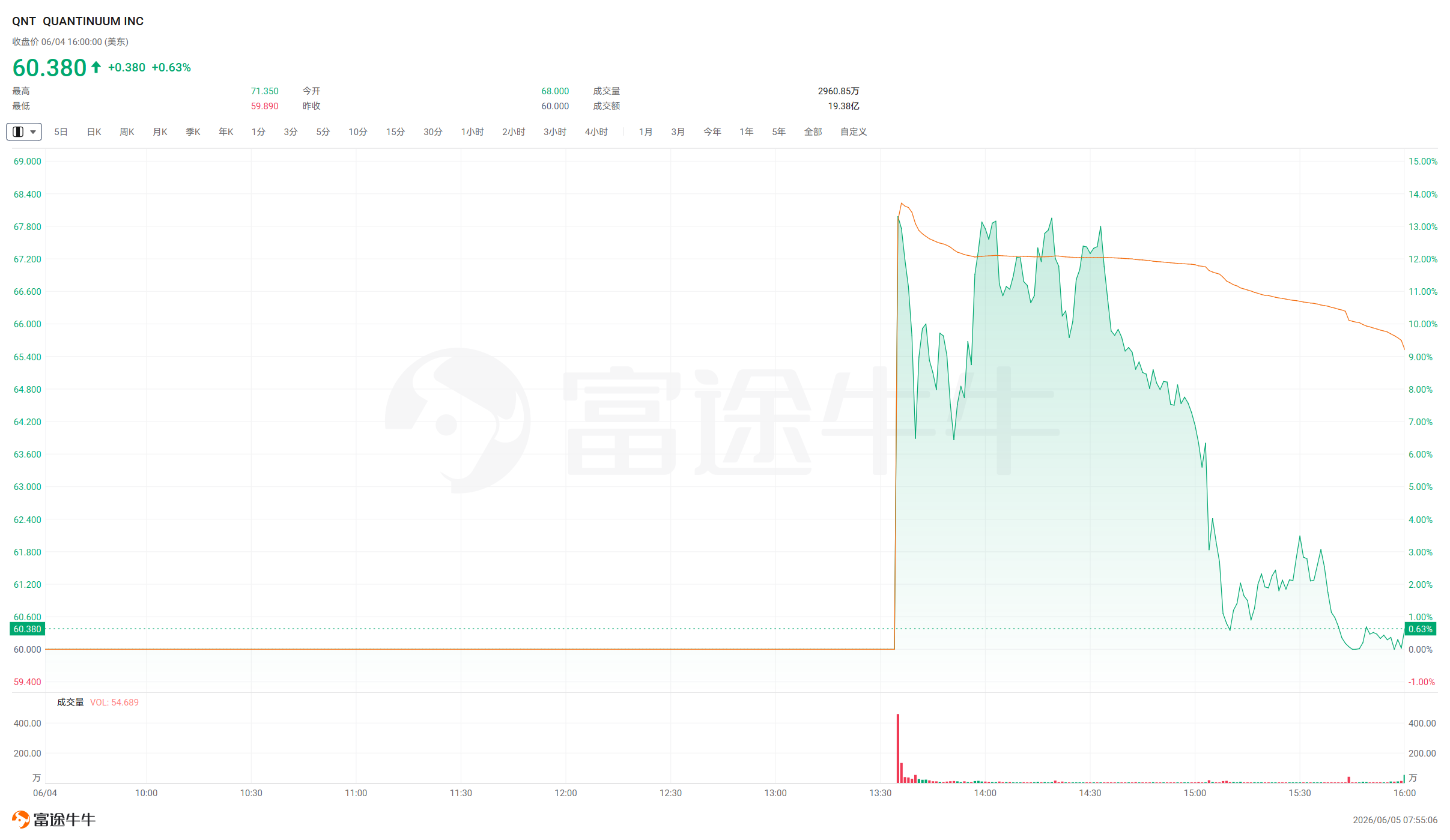
Quantum computing company $QUANTINUUM INC (QNT.US)$ Listed on Nasdaq, the company opened 13% higher on its first trading day, achieving a market valuation of USD 17.6 billion, and ultimately closed up 0.63%. Despite a 73% year-over-year plunge in first-quarter revenue and an expanded net loss of USD 136.5 million, enthusiasm for the sector remains high, fueled by the Trump administration’s USD 2 billion investment in quantum computing firms and aggressive bets by tech giants like Google.
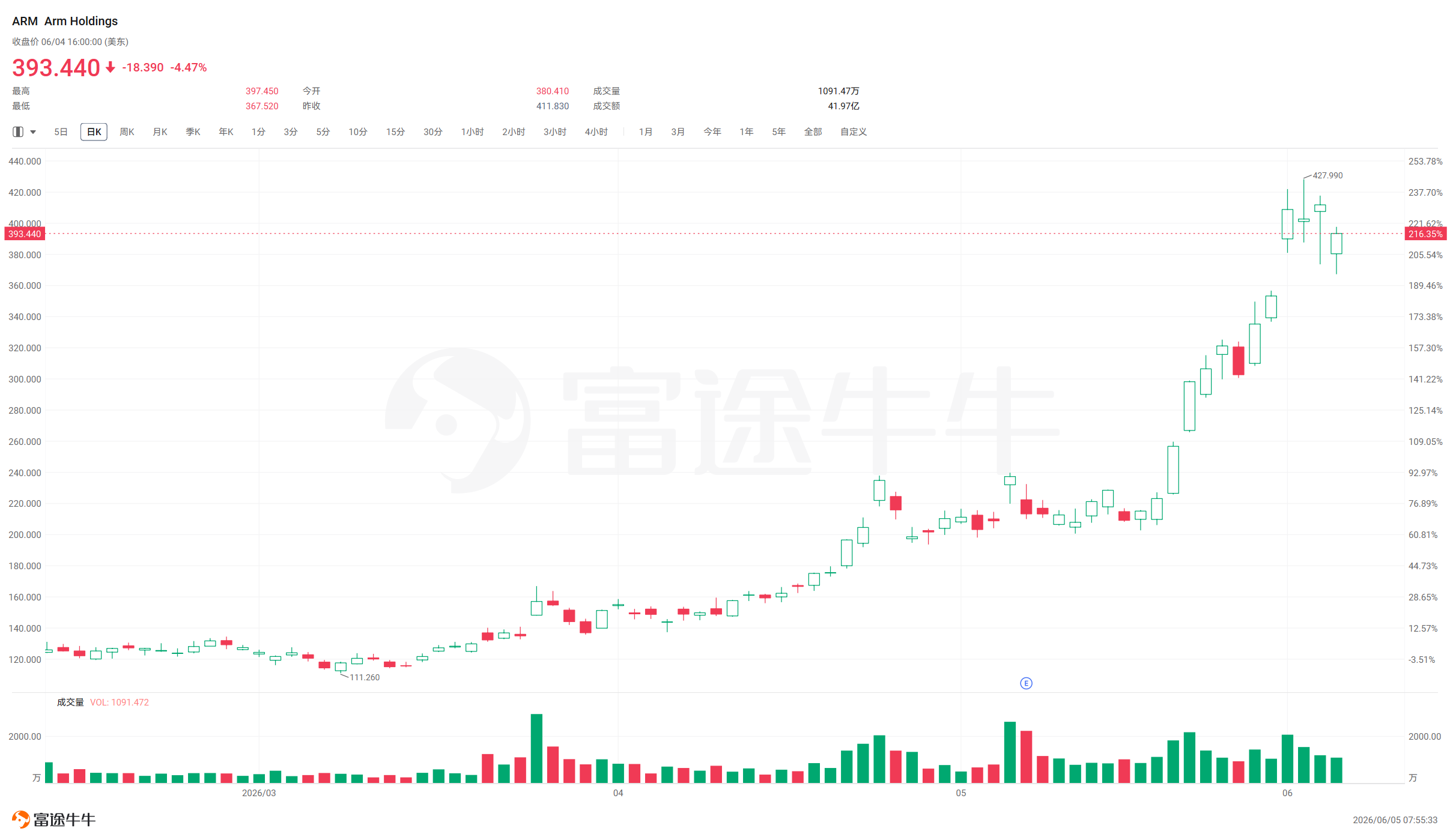
Arm’s share price has nearly doubled over several weeks, with a forward price-to-earnings ratio of 170x, placing it among the most highly valued stocks.
Since May 15 $Arm Holdings(ARM.US)$ it has surged 79% cumulatively, compared with a 14% gain in the Philadelphia Semiconductor Index and just a 1.9% increase in the S&P 500 over the same period. Arm Holdings currently trades at a price-to-earnings ratio of over 170x based on expected earnings for the next 12 months; by net income, its valuation ranks second only to Tesla and Live Nation Entertainment within the S&P 500. Several analysts noted that Arm’s fundamentals remain strong, but its valuation is excessively high.
Microsoft CEO: Overreliance on OpenAI Once Put the Company at a Disadvantage; Software Is Not Dead, but Traditional SaaS Has Reached an Inflection Point
Microsoft (MSFT.US) In a recent interview, CEO Satya Nadella revealed that Microsoft is strengthening its foundational control in the AI era by developing its own MAI large language model while maintaining the dual advantage of its partnership with OpenAI. Amid tight computing capacity, Microsoft has declined to sell GPUs to AI labs for quick profits, prioritizing enterprise clients and high-margin businesses instead. He also predicted that traditional SaaS will shift toward a “subscription plus usage-based” pricing model and emphasized bets on AI agents and end-to-cloud collaboration as new engines for future growth.
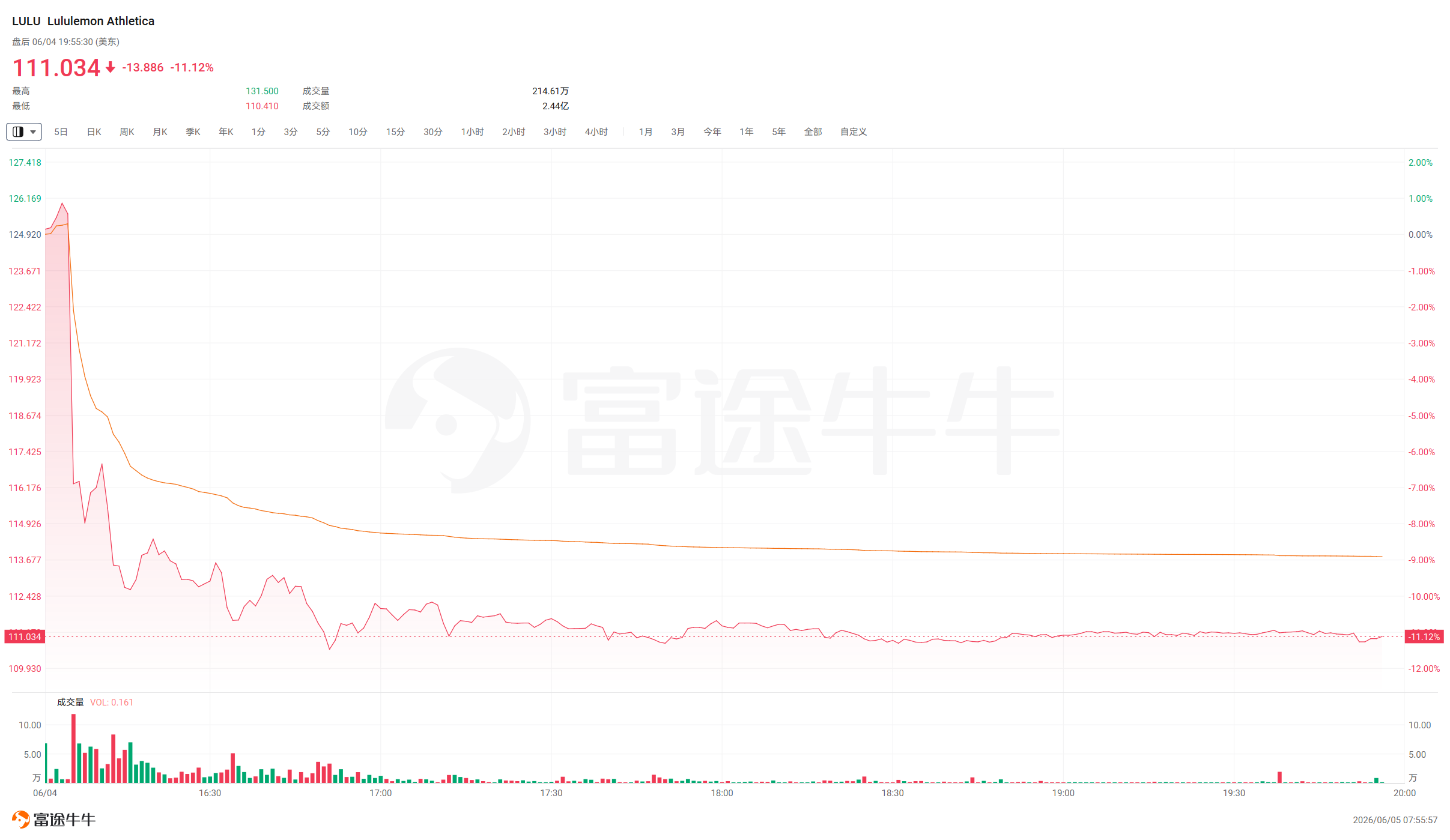
Lululemon Athletica Lowers Full-Year Revenue Guidance
The U.S. athletic apparel brand $Lululemon Athletica(LULU.US)$ plunged 11% in after-hours trading. The company reported first-fiscal-quarter revenue of $2.5 billion, surpassing the market expectation of $2.433 billion. However, it now forecasts full-year revenue of $11.0–11.15 billion, down from its previous guidance of $11.35–11.5 billion. Interim CEO Meghan Frank attributed the downward revision to “negative media sentiment” and recent product launches that failed to resonate with consumers. As of Thursday’s close, Lululemon’s stock had already tumbled approximately 40% year-to-date.
Top 20 by trading value
Hong Kong Market Outlook
Southbound capital recorded net purchases of over HK$7 billion in Hua Hong Semiconductor and over HK$5 billion in Pop Mart, while net selling Tencent by more than HK$5 billion.
On Thursday, June 4, southbound capital posted a net outflow of HK$3.15 billion from the Hong Kong market.
Huahong Semiconductor (01347.HK)、$Pop Mart (09992.HK)$、$CNOOC Limited (00883.HK)$received net purchases of HK$7.09 billion, HK$5.52 billion, and HK$2.48 billion, respectively;
$China Hongqiao Group (01378.HK)$、Tencent (00700.HK)、$Meituan-W(03690.HK)$were net sold by HK$581 million, HK$522 million, and HK$472 million, respectively.
Tencent Cloud AI Industry Application Conference is approaching, with a series of new intelligent agent applications to be launched.
Yesterday, market rumors circulated that WeChat is collaborating with multiple smartphone manufacturers to launch an Agent-to-Agent (A2A) assistant feature. On June 4, Tencent (00700.HK) Customer service confirmed that the report is accurate: WeChat is working with smartphone manufacturers including Huawei, Xiaomi, OPPO, and vivo to roll out the A2A assistant feature, enabling users to initiate WeChat voice or video calls or send messages through their device’s built-in AI assistant.
According to Tencent Cloud’s official account, Tencent will host its 2026 AI Industry Application Conference in Beijing. As Tencent’s most significant annual platform for AI product launches, the event will unveil a series of new intelligent agent applications and announce updates on infrastructure enhancements, including advancements in infra. Additionally, Tang Daosheng, Senior Executive Vice President of Tencent and CEO of Cloud & Smart Industries Group, will join Yao Shunyu, Chief AI Scientist at Tencent, for an on-stage dialogue to discuss Tencent’s latest strategic direction and insights for the next phase of AI development.
Leapmotor: Chairman Zhu Jiangming and shareholder Fu Liquan jointly purchased approximately HK$490 million worth of H shares.
$Leapmotor (09863.HK)$ In a filing with the Hong Kong Stock Exchange, the company announced that Chairman Zhu Jiangming and shareholder Fu Liquan recently spent approximately HK$490 million to acquire 11.62 million H shares, increasing their combined stake to 24.71%.
China Energy Engineering Corporation (CEEC): A joint venture formed by its subsidiary has signed an EPC contract worth USD 1.687 billion for a gas-fired combined-cycle power plant project.
China Energy Engineering Corporation (03996.HK) The announcement stated that a joint venture established by a subsidiary of the company, acting as the general contractor, has signed an EPC contract for the Abu Dhabi Twyrel C Gas-Fired Combined-Cycle Power Plant Project with the project company. The contract value amounts to USD 1.687 billion (approximately RMB 11.42 billion). Located in the Emirate of Abu Dhabi, United Arab Emirates, the project involves the construction of a dual-fuel gas-fired combined-cycle power plant with a net output capacity of 2,600 MW.
Today's Focus
Keywords: U.S. nonfarm payrolls, U.S.-Iran talks
On the economic data front, the eurozone’s revised year-on-year GDP growth rate for Q1 and the U.S. nonfarm payrolls report for May will be released.
20:30, U.S. unemployment rate for May
20:30, U.S. nonfarm payrolls for May, seasonally adjusted
On major developments, the next round of U.S.-Iran talks may take place on June 5.
In terms of new stocks,$Lung Fung Group (02290.HK)$ 、 $Tianchen Bio-B (01779.HK)$ 、 $Dajin Heavy Industry (01081.HK)$ has officially listed on the Hong Kong Stock Exchange.
 Looking to pick stocks or diagnose stock performance? Want to know the opportunities and risks in your portfolio? For all investment-related questions,just ask Futubull AI!

Editor/KOKO