
U.S. nonfarm payrolls rose by 172,000 in May, significantly exceeding expectations, prompting an immediate drop in gold prices. The probability of a Federal Reserve rate hike in December has risen to 63%. Economists noted that the current improvement in employment stems more from low layoff levels than from widespread hiring expansions by businesses.
U.S. Maynonfarm payrollsJob growth exceeded market expectations, indicating continued resilience in the labor market. The U.S. Bureau of Labor Statistics reported that nonfarm payrolls rose by 172,000 in May on a seasonally adjusted basis, surpassing the expected increase of 85,000. The U.S. unemployment rate stood at 4.3% in May, holding steady for the second consecutive month and in line with market expectations.
Revisions to March and April data added a combined 93,000 jobs compared to prior estimates, resulting in the strongest three-month employment gain in over two years. Specifically, March nonfarm payroll gains were revised upward to 214,000, while April’s figure was revised from 115,000 to 179,000.
 Average hourly earnings in May rose 0.3% month-over-month, matching expectations and up from the previous reading of 0.20%. Year-over-year wage growth came in at 3.4%, also in line with forecasts and down from the prior 3.60%.
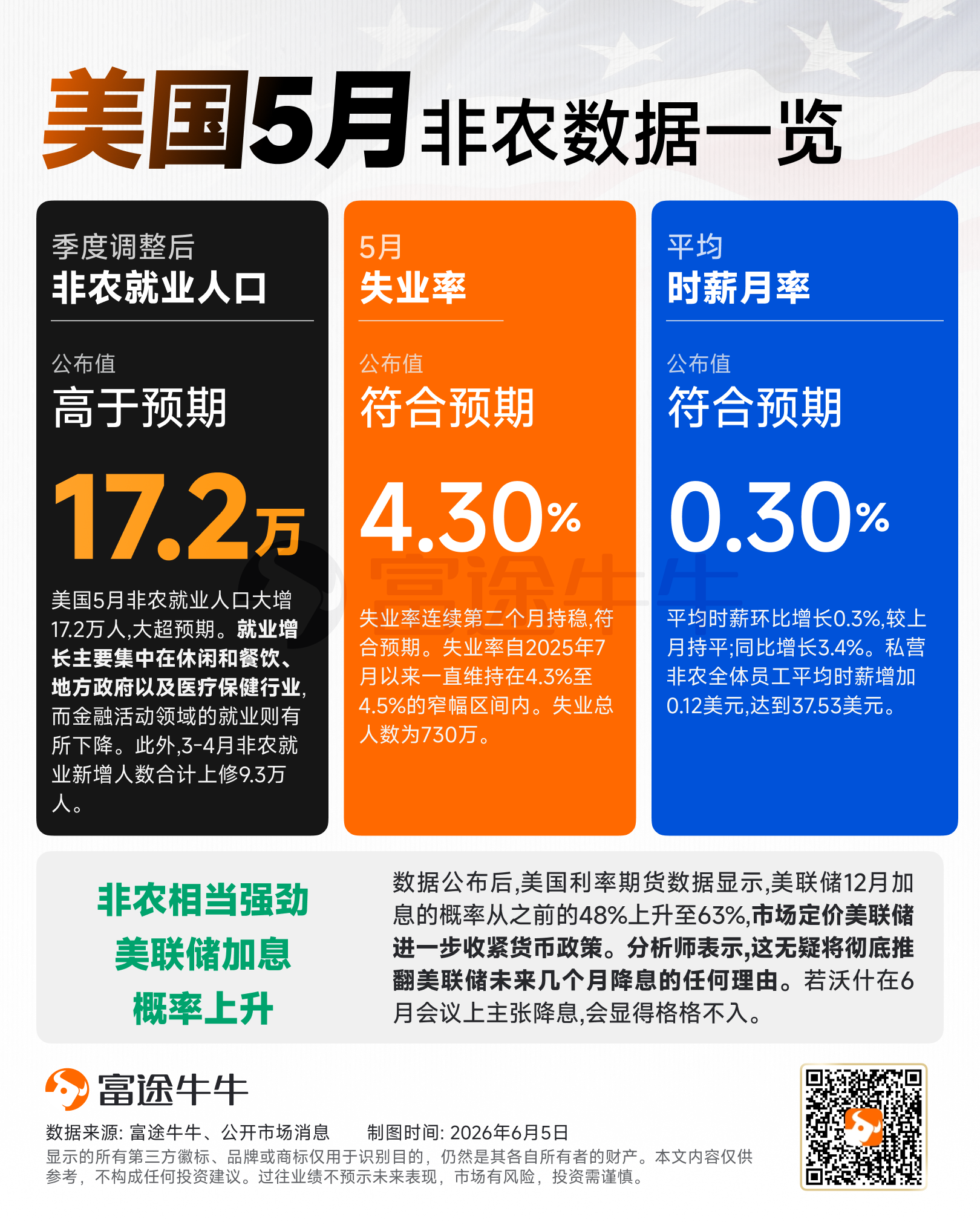
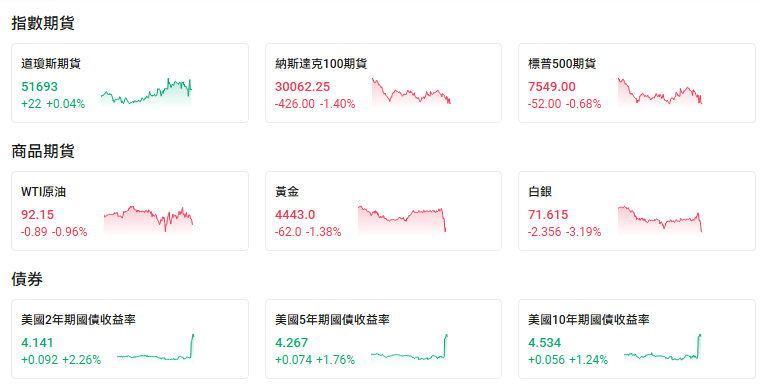
Following the release of data significantly exceeding expectations, the U.S. dollar index rose 15 points in the short term, while spot gold prices dropped nearly $20. Markets now price in a Federal Reserve rate hike by January next year, with the probability of a December rate increase rising from 48% to 63%.
Sustained job creation and economic growth further reinforce the resilience of the U.S. economy amid a complex external environment.
From an industry perspective, job gains have become more broadly distributed. The leisure and hospitality sector added 70,000 positions, far exceeding its average monthly gain of 14,000 over the past year; local government added 55,000 jobs; healthcare employment rose by 35,000, consistent with its long-term average; and social assistance added 12,000 positions.
Additionally, both construction and manufacturing also recorded employment gains, indicating improved hiring demand across multiple sectors.
Economists note that recent labor market improvements stem more from low layoff levels than from aggressive hiring expansion by businesses. In an uncertain environment, firms have adopted cautious staffing strategies, creating what is described as a 'slow-hire, slow-fire' labor market dynamic. However, early signs suggest artificial intelligence is beginning to affect employment structures.
Data indicate that the level of monthly job creation needed to keep pace with growth in the working-age population has declined to between zero and 50,000. This lower 'breakeven' threshold is primarily attributable to tighter immigration policies—reduced labor force growth has alleviated upward pressure on the unemployment rate.
Although tensions between the U.S. and Iran have pushed up energy prices and disrupted shipments of various goods through the Strait of Hormuz, these developments have not yet had a significant impact on the labor market.
Improved corporate profits have provided support for stabilizing employment. Economists believe that tax and tariff rebate measures have enhanced corporate profitability, enabling firms to avoid large-scale layoffs. Data show that U.S. corporate profits increased by $40.4 billion in the first quarter of 2026 and have continued to grow since the second quarter of 2025.
Previously, the U.S. Supreme Court ruled in February 2026 to eliminate the relevant tariffs, and some companies have already begun applying for refunds.
According to institutional analyst Anstey, this nonfarm payrolls report will undoubtedly completely undermine any rationale for the Federal Reserve to cut interest rates in the coming months. If Waller were to start advocating for rate cuts at this month’s policy meeting, he would appear out of step with the prevailing sentiment.
Following cumulative rate cuts of 75 basis points in late 2025, the Federal Reserve has largely maintained a wait-and-see stance in 2026 and has not yet clarified its next policy move. Several policymakers have indicated that the path for interest rates will be determined based on economic performance throughout the year.
At the macro level, the U.S. economy remains broadly resilient. Data show that real gross domestic product (GDP) grew at an annualized rate of 1.6% in the first quarter of 2026; the Atlanta Fed currently projects a growth rate of approximately 3% for the second quarter.
 Looking to pick stocks or analyze them? Want to know the opportunities and risks in your portfolio? For all your investment-related questions,just ask Futubull AI!

Editor/Rocky