
Setting aside discussions of AI and fundraising, a Silicon Valley billionaire with a net worth in the tens of billions has organized a game of "Werewolf"? The reality show "MAFIA," orchestrated by a top-tier venture capitalist, presents an Americanized version of Werewolf under the camera's lens—not merely a game, but a high-pressure "personality revelation experiment." Sam Altman dissects each participant’s reasoning with the same analytical rigor he applies to AI models, and the intense confrontations around the table lay bare the fundamental traits that drive their success in business.
If you were asked to imagine a private gathering of Silicon Valley’s most powerful figures, you would most likely think of artificial intelligence, the chip wars, robotics, defense technology, or the next generation of the internet.
After all, seated in the room were OpenAI founder Sam Altman, Palmer Luckey—the founder of defense-tech unicorn Anduril—Figma founder Dylan Field, Signal founder Moxie Marlinspike, and a group of investors who collectively steer hundreds of billions of dollars in capital flows.
 But a recent gathering in San Francisco was nothing like that.
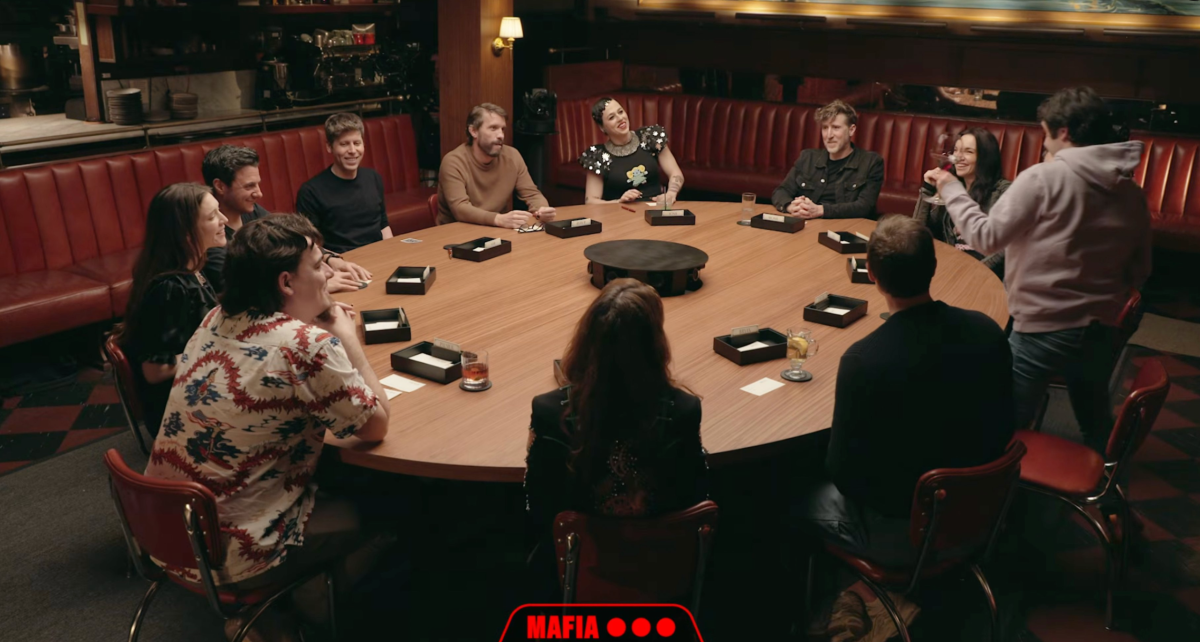
No one discussed AI models, nor did anyone talk about fundraising or valuations. Instead, this group of Silicon Valley’s smartest and most influential individuals sat around a round table, intently playing a game of Werewolf.
More precisely, the American version of Werewolf—Mafia.
Even more intriguingly, this was not a private get-together among friends, but a reality TV show formally filmed and publicly broadcast.
The show is titled “MAFIA,” produced by Founders Fund—one of Silicon Valley’s most legendary and controversial venture capital firms.
Founders Fund may not be as widely recognized as Sequoia or Hillhouse, but once you hear its portfolio companies, its significance becomes immediately apparent: Facebook, SpaceX, Palantir, Stripe, Airbnb, Anduril, and OpenAI have all appeared on its investment roster.
Founded by Peter Thiel and other members of the so-called “PayPal Mafia,” this firm has participated in nearly every major technological wave in Silicon Valley over the past two decades. Now, it has done something that appears entirely unrelated to investing—producing a reality show.
Of course, if one interprets “MAFIA” merely as a tech-industry reality show, they might underestimate Founders Fund’s true intent.
It resembles more of a public experiment disguised as an entertainment show.
Why are a group of billionaires so obsessed with Werewolf?
The show opened with a surreal scene.
The location was the legendary Tosca Cafe in San Francisco, where the iconic 'PayPal Mafia' group photo was once taken.
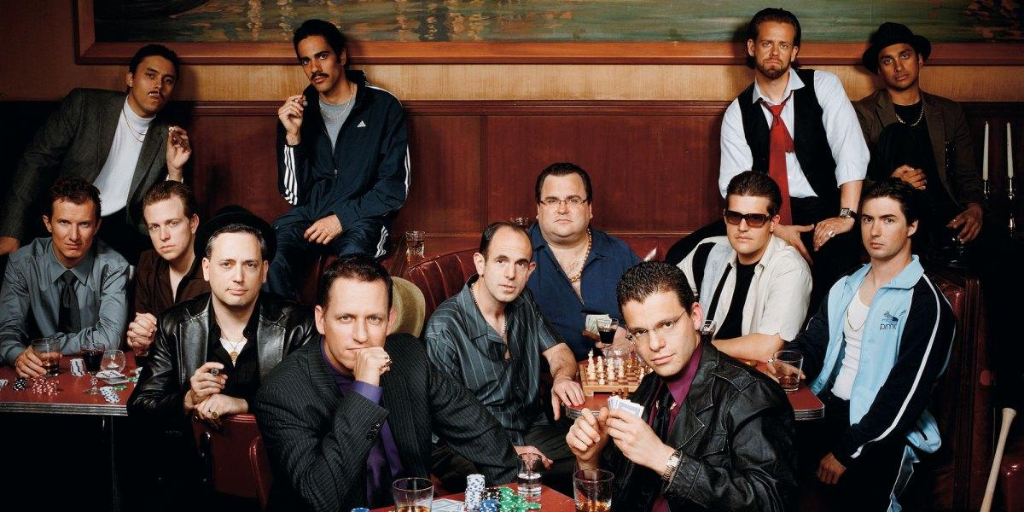
(The iconic 'PayPal Mafia' group photo refers to a famous team photograph in Silicon Valley tech history, taken during an early gathering of PayPal's core members. It has since been widely cited as a symbol of this group's profound influence on the subsequent Silicon Valley startup ecosystem.)
Seated around the table this time were the new generation of Silicon Valley’s power elite:
- Sam Altman (Co-founder and CEO of OpenAI)
- Palmer Luckey (Founder of Anduril Industries)
- Dylan Field (Co-founder and CEO of Figma)
- Moxie Marlinspike (Co-founder of Signal)
- Bryan Johnson (initiator of the “Don’t Die” initiative)
- Trae Stephens (Partner at Founders Fund)
- Ryan Petersen (Founder and CEO of Flexport)
If one were to simply sum up the market capitalizations and influence of these individuals’ companies, this table could almost be regarded as a micro “global tech economy.”
Yet the first thing they did was: close their eyes, kill someone, and vote.
According to Mike Solana, Founders Fund’s head of marketing, this seemingly absurd setup is in fact a deliberate rebellion against traditional VC content formats.
Over the past decade or so, the most common narrative in tech circles has been founders recounting standardized personal stories on podcasts: passionate about coding, experienced startup failures, and set out to change the world.
After hearing enough of these stories, everyone starts to sound alike.
But Werewolf is different.
It doesn’t give you time to prepare, nor does it allow you to craft your narrative.
You must assess others’ intentions within an extremely short timeframe and make decisions under conditions of severe information asymmetry; the behavioral patterns that emerge under such pressure often reveal a truer reflection of one’s personality than any interview could.
Thus, the game essentially became a 'personality revelation experiment.'
Sam Altman dissected each participant’s statements with the same analytical rigor he applies to AI models; Palmer Luckey maintained his trademark irreverent style and, within minutes of the game’s start, drew collective suspicion due to his excessive activity; meanwhile, Moxie Marlinspike, founder of Signal, delivered the show’s most remarkable moment—shifting everyone’s frame of thinking with just a single sentence.
Silicon Valley Titans at the Table
The game spiraled out of control from the very first night.
After Dylan Field, founder of Figma, was eliminated by the mafia in the first round, the situation rapidly descended into an information vacuum, forcing everyone to rely on intuition and experience to reason through the chaos.
AI policy expert Ryan Beiermeister was the first to challenge Trae Stephens and Bryan Johnson, questioning their exaggerated reactions upon hearing the news of the death. Bryan Johnson responded with self-deprecating humor, quipping that they had 'watched too many Korean dramas.'
Amid the ensuing cacophony of voices, Sam Altman spoke up. With exceptional calmness and analytical precision, he began dissecting other players’ statements and defenses.
When Moxie, founder of Signal, confidently accused biohacker Josie Zayner of being a mafia member, Altman sensed something amiss:
“Moxie, as a seasoned player, is taking a huge risk by accusing a newcomer so decisively—that’s very interesting... Such absolute certainty in speech feels very ‘mafia-like.’ Moxie, I think you’re the most likely to be the mafia.”
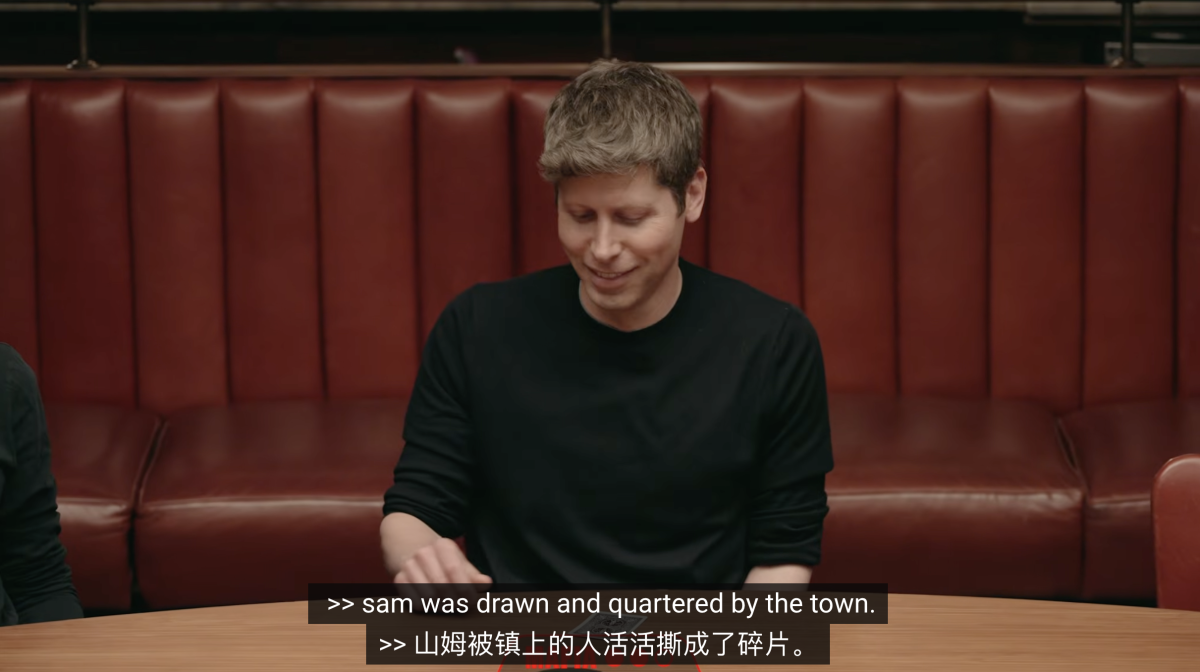
However, this transparent strategy instantly made him a target for everyone. Altman was unfortunately eliminated in the third night's vote.
When the host announced that he had been 'drawn and quartered' by the townspeople, the audience burst into laughter. Someone even added, 'At least this proves he isn’t a superintelligent AI.'
Silicon Valley’s New Wealth Code in the Age of Infotainment
After its debut on YouTube and X, the reality show 'MAFIA' quickly drew attention across the tech community, with the first episode surpassing ten thousand views in a short period of time.
As traditional media continues to decline and some talk shows have ceased broadcasting, Silicon Valley’s top venture capitalists are stepping boldly into content creation. From a16z’s early heavy investment in media networks, to OpenAI’s recent acquisition of the tech talk show TBPN, and now Founders Fund producing its own entertainment variety show, the underlying business logic remains strikingly consistent.
In today’s socially mediated society, the path to power and influence is increasingly paved with 'infotainment.'
Whether it’s Bryan Johnson gaining attention online by showcasing his eccentric anti-aging routines or Elon Musk leveraging his personal influencer network to fuel his business empire, Silicon Valley’s new elite understand better than anyone that in the internet era, controlling traffic, shaping narratives, and even delivering savvy public performances have become core forms of commercial capital.
Although the venture capital titans are merely playing a game at this long table, their precise defensive tactics, logical deconstruction, highly persuasive rhetoric, and decisive decision-making under conditions of incomplete information precisely reflect the foundational traits that drive their success in the real world of business.