
Eli Lilly and Co (LLY.US) stated that a recent analysis of late-stage clinical trial data showed its investigational weight-loss therapy, Foundayo, enabled women with overweight or obesity to achieve significant weight reduction.
According to Zhitong Finance APP, $Eli Lilly and Co (LLY.US)$ The company stated that a new analysis of late-stage clinical trial data shows its investigational weight-loss therapy, Foundayo, enables significant weight reduction in overweight or obese women, regardless of menopausal transition status (premenopausal, perimenopausal, or postmenopausal).
The findings were presented Sunday at the American Diabetes Association’s (ADA) annual scientific meeting, based on an analysis of data from over 1,500 women who participated in the company’s ATTAIN-1 and ATTAIN-2 trials.
 Menopause is a biological transition marked by declining reproductive hormone levels in women, often resulting in changes to metabolism and body composition. Many women experience increased fat accumulation—particularly in the abdominal area—during this period and find it more difficult to lose weight.
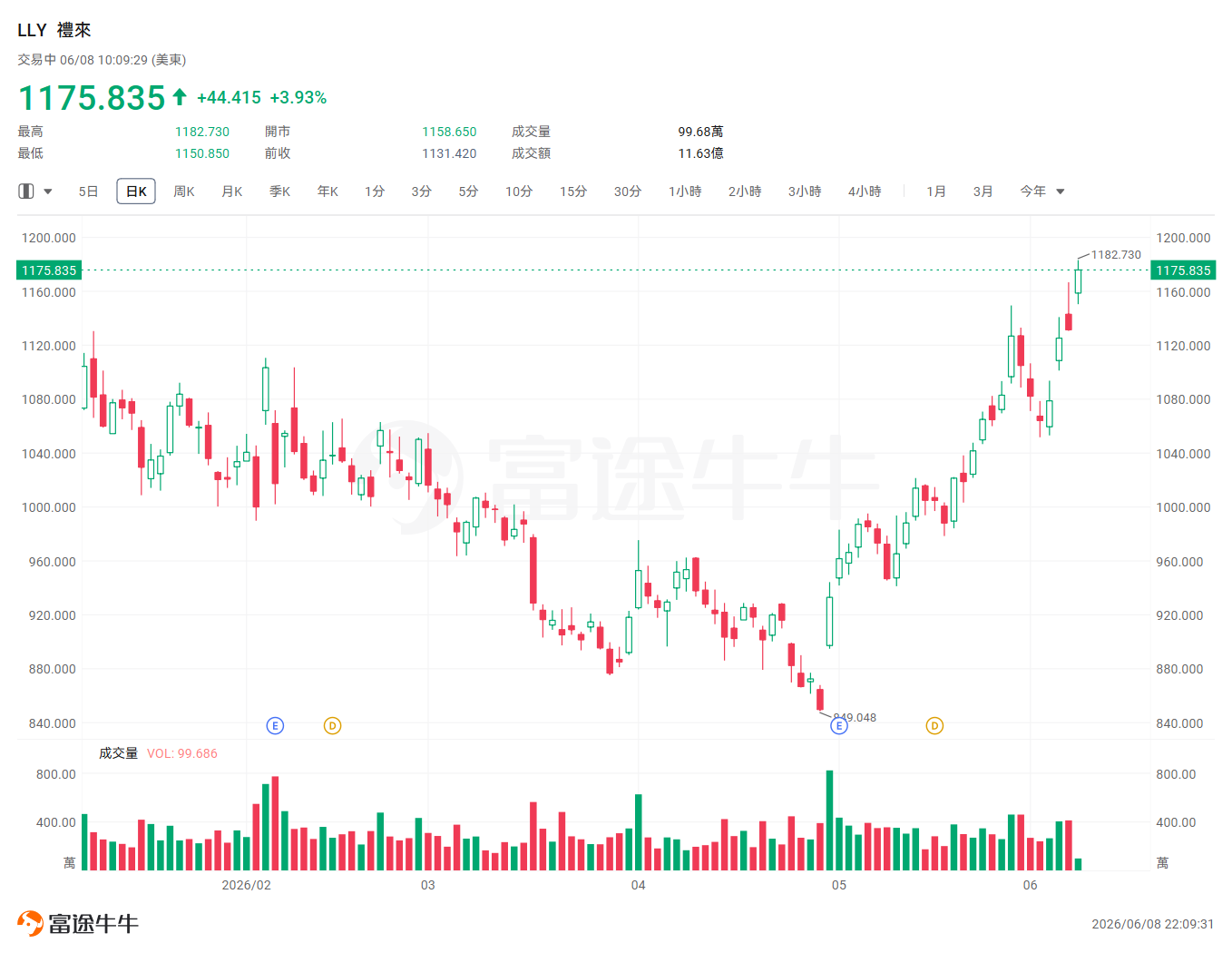
As of now, Eli Lilly and Co.'s U.S. shares have risen more than 4%, reaching a record high.
The weight-loss drug market is highly competitive.
These data could help Eli Lilly expand the potential market for its obesity portfolio by demonstrating the drug’s effectiveness in a large and often overlooked patient population. Weight-loss drug manufacturers are increasingly seeking evidence of their therapies’ efficacy in specific demographic groups and medical conditions, which can support physician adoption, reimbursement negotiations with insurers, and future regulatory submissions.
The results also reinforce Eli Lilly’s strategic positioning to maintain leadership in the rapidly growing weight-loss treatment market.
Foundayo is Eli Lilly’s investigational weight-loss drug and has not yet been approved. This analysis was conducted after completion of the original trials, known as a 'post hoc analysis.' While such analyses can identify trends within existing data, they are generally considered less rigorous than pre-specified endpoints defined before the study began.
Significant efficacy observed across menopausal statuses
In the ATTAIN-1 trial, which enrolled individuals with obesity or overweight, women treated with the highest dose of Foundayo lost between 12.8% and 14.4% of their body weight over 72 weeks, depending on menopausal status.
Premenopausal women lost an average of 28 pounds (12.7 kg), perimenopausal women approximately 30 pounds, and postmenopausal women about 28 pounds (12.7 kg).
Perimenopause refers to the transitional period before menopause, during which hormone levels fluctuate and menstrual cycles become irregular. Postmenopause refers to the years following the occurrence of menopause.
Eli Lilly and Co stated that in the ATTAIN-1 trial, 80% to 83% of women achieved at least a 5% reduction in body weight—a threshold physicians typically consider clinically meaningful, as it can improve risk factors associated with heart disease and diabetes.
Eli Lilly and Co reported that 41% to 52% of women achieved at least a 15% reduction in body weight.
The therapy also reduced waist circumference by up to 4.9 inches (12.45 cm). Waist circumference is commonly used as a measure of abdominal fat, which is associated with an elevated risk of cardiovascular disease, diabetes, and other metabolic disorders.
In the ATTAIN-2 trial involving patients with type 2 diabetes, women receiving the highest dose experienced weight loss ranging from 8.9% to 13.6%.
Postmenopausal women in the study achieved the greatest weight loss, averaging nearly 28 pounds (12.7 kg). Up to 44.2% of participants achieved at least a 15% reduction in body weight.
Rachel Batterham, an executive at Eli Lilly and Co, stated that the findings indicate the drug achieves meaningful weight loss regardless of menopausal stage—a period during which many women report increased difficulty with weight management.
The company noted that although a large number of women are affected by menopause and menopause-related weight gain, menopausal status is rarely considered as a factor in weight-loss treatment research.