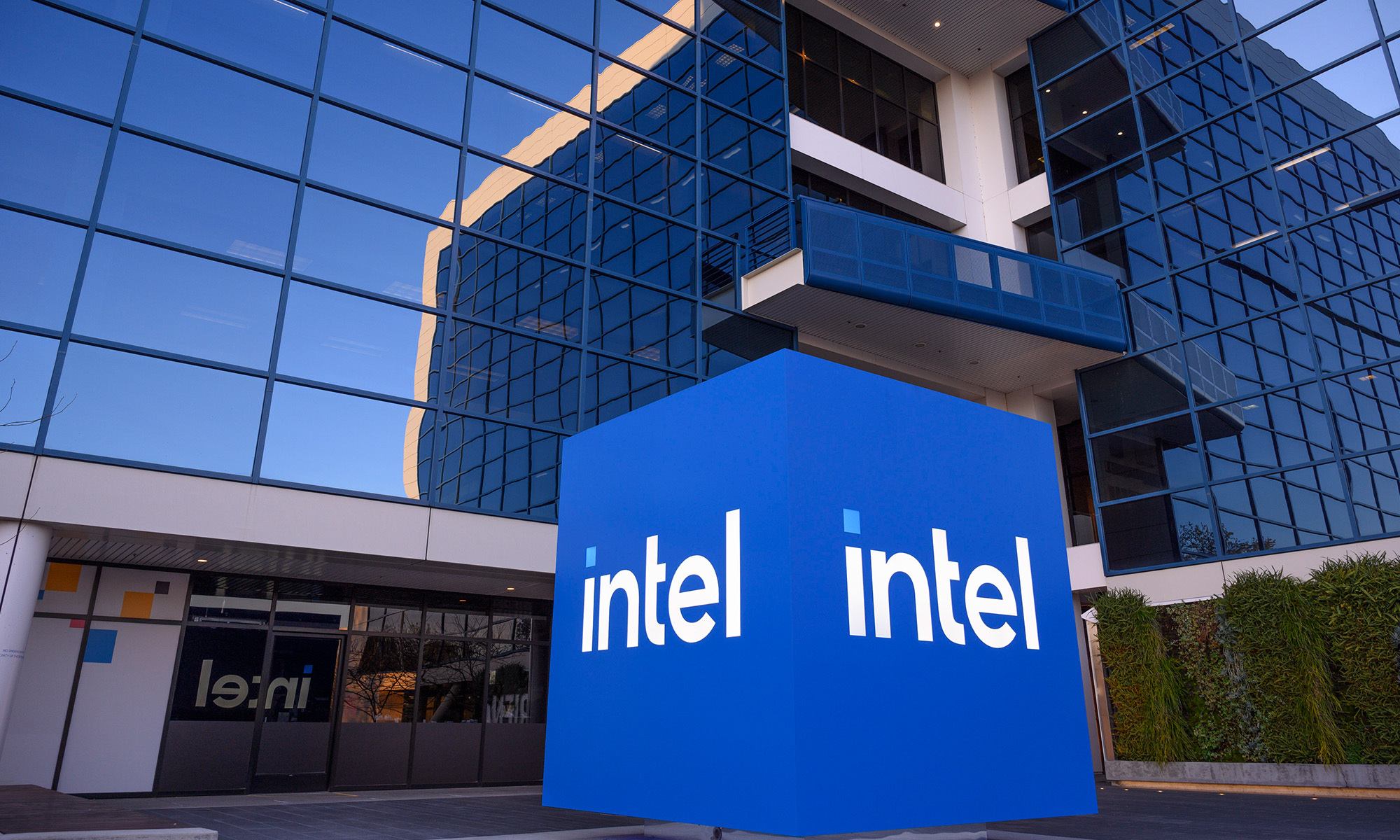
Amid a severe capacity crunch at Taiwan Semiconductor, tech giants such as Google and NVIDIA are now listing Intel as an alternative foundry partner. Google has already placed an order with Intel for over three million Tensor Processing Units (TPUs) slated for delivery in 2028, while NVIDIA is testing Intel’s 18A process node and EMIB packaging technology for its new architecture expected in 2028. SK Hynix is also conducting compatibility tests, presenting Intel with a significant window of opportunity to break through in its foundry business.
Overwhelmed by the surging demand for AI chips, Taiwan Semiconductor is inadvertently handing Intel a strategic opportunity.
According to a report by The Information on the 8th, citing four informed sources, several major AI chip design companies, including Google and NVIDIA, have quietly begun adding Intel as an alternative foundry partner. Google has formally placed an order with Intel to produce over three million Tensor Processing Units (TPUs) in 2028. During Intel’s earnings call in April, Chief Financial Officer David Zinsner stated that demand for its advanced packaging business has surged from the previously anticipated level of several hundred million dollars to a scale of several billion dollars annually.
 NVIDIA has not yet placed a formal order but is already testing Intel’s advanced packaging technology and its leading-edge 18A manufacturing process. These efforts are tied to NVIDIA’s next-generation GPU architecture, codenamed 'Feynman,' which is expected to launch in 2028. Meanwhile, SK Hynix, one of the world’s largest suppliers of high-bandwidth memory (HBM), is also testing the compatibility of its memory modules with Intel’s packaging technology. If successful, this would further validate Intel’s credentials as a foundry supplier.
Taiwan Semiconductor CEO C.C. Wei acknowledged at the company’s shareholder meeting last Thursday that global chip supply will fail to keep pace with the growth in AI demand over the next few years. Even with Taiwan Semiconductor’s ongoing capacity expansion in the U.S., it will struggle to meet the needs of its American clients. This supply gap presents Intel—the long-time laggard behind Taiwan Semiconductor—with its biggest business breakthrough opportunity in years.
Google leads the shift, locking in TPU mass production with Intel
Google has gone the furthest in this transition. According to reports, after months of testing Intel’s advanced packaging technology, Google has placed an order with Intel to manufacture more than 3 million TPUs in 2028.
TPUs are Google’s proprietary AI chips, used for training and running AI models. Google has already begun selling TPU computing capacity to companies such as Apple and Meta Platforms. According to Morgan Stanley’s latest forecast, Google is expected to produce over 6 million TPUs between 2027 and 2028, with the Intel-manufactured order accounting for roughly half of its 2028 output.
NVIDIA tests 18A and packaging technology, targeting 2028 flagship architecture
NVIDIA’s evaluation of Intel remains in the assessment phase but has already taken concrete steps. NVIDIA is testing whether Intel’s technology can be used to produce a new processor that integrates four graphics chips into a single package—a project directly linked to the Feynman series of GPUs.
NVIDIA is simultaneously conducting early trials of Intel’s 18A manufacturing process through multi-project wafer (MPW) tape-outs—in which multiple customers share a single wafer to jointly test design feasibility and share costs. The 18A process is widely regarded in the industry as comparable to the upcoming 2-nanometer technologies from Taiwan Semiconductor and Samsung Electronics. Intel is already using 18A to produce its own PC and server processors, serving as internal validation before pursuing major external customers.
Taiwan Semiconductor faces severe capacity constraints across the board, potentially giving Intel a cost advantage.
Taiwan Semiconductor’s capacity pressures are concentrated in two areas: its leading-edge wafer fabrication lines are fully booked, and its advanced packaging lines—used to integrate AI processors with high-bandwidth memory (HBM)—are also in short supply.
Tightness on the packaging side has been evident since 2023. As AI chip designs increasingly adopt multi-chiplet architectures, the bottleneck has continued to worsen. Take NVIDIA’s flagship Blackwell chip as an example: it integrates two processor dies and high-bandwidth memory within a single package, making packaging a critical factor determining chip data transfer speeds. According to NVIDIA CEO Jensen Huang, NVIDIA has now surpassed Apple to become Taiwan Semiconductor’s largest customer.
Intel’s packaging technology, known as EMIB (Embedded Multi-die Interconnect Bridge), addresses the same challenge as Taiwan Semiconductor’s CoWoS technology but through a different approach: CoWoS uses a large silicon interposer to connect processors and memory, whereas EMIB embeds smaller silicon bridges only where needed within the package, which may offer lower costs for certain chip designs.
To bolster customer confidence in supply security, Intel partnered last year with Amkor Technology, one of the world’s largest outsourced semiconductor assembly and test providers, to expand EMIB capacity in South Korea, Portugal, and Arizona, thereby offering customers alternative sourcing options beyond Intel’s own facilities. SK hynix is currently testing the compatibility of its high-bandwidth memory with Intel’s packaging solution—if this memory giant confirms technical reliability, it would significantly enhance overall confidence among AI chip designers in Intel’s packaging platform.
The opportunity is real, but rebuilding trust remains the greatest challenge.
Despite the promising potential orders, Intel still faces a formidable test. Transferring critical AI chip orders from Taiwan Semiconductor to a new supplier requires the latter to demonstrate the ability to deliver advanced technologies at scale with high yields—a level of trust that Taiwan Semiconductor earned over years from top-tier chip design companies such as NVIDIA, Google, and Apple.
Intel’s foundry business has had a rocky history. Former CEO Pat Gelsinger launched Intel Foundry Services in 2021, but the division subsequently missed multiple manufacturing milestones and recorded operating losses for several consecutive years, leading to Gelsinger’s departure at the end of 2024. Moreover, Intel still relies on Taiwan Semiconductor to manufacture some of its own chips, highlighting the limitations of its current internal production capabilities.
Intel’s most realistic breakthrough may lie in advanced packaging. If it can establish a solid foothold there and then extend into the core arena of wafer fabrication, it would mark a substantive return of this semiconductor giant to the foundry market. However, there remains a significant gap between customer interest in testing and full-scale production commitments.
Editor/Lambor